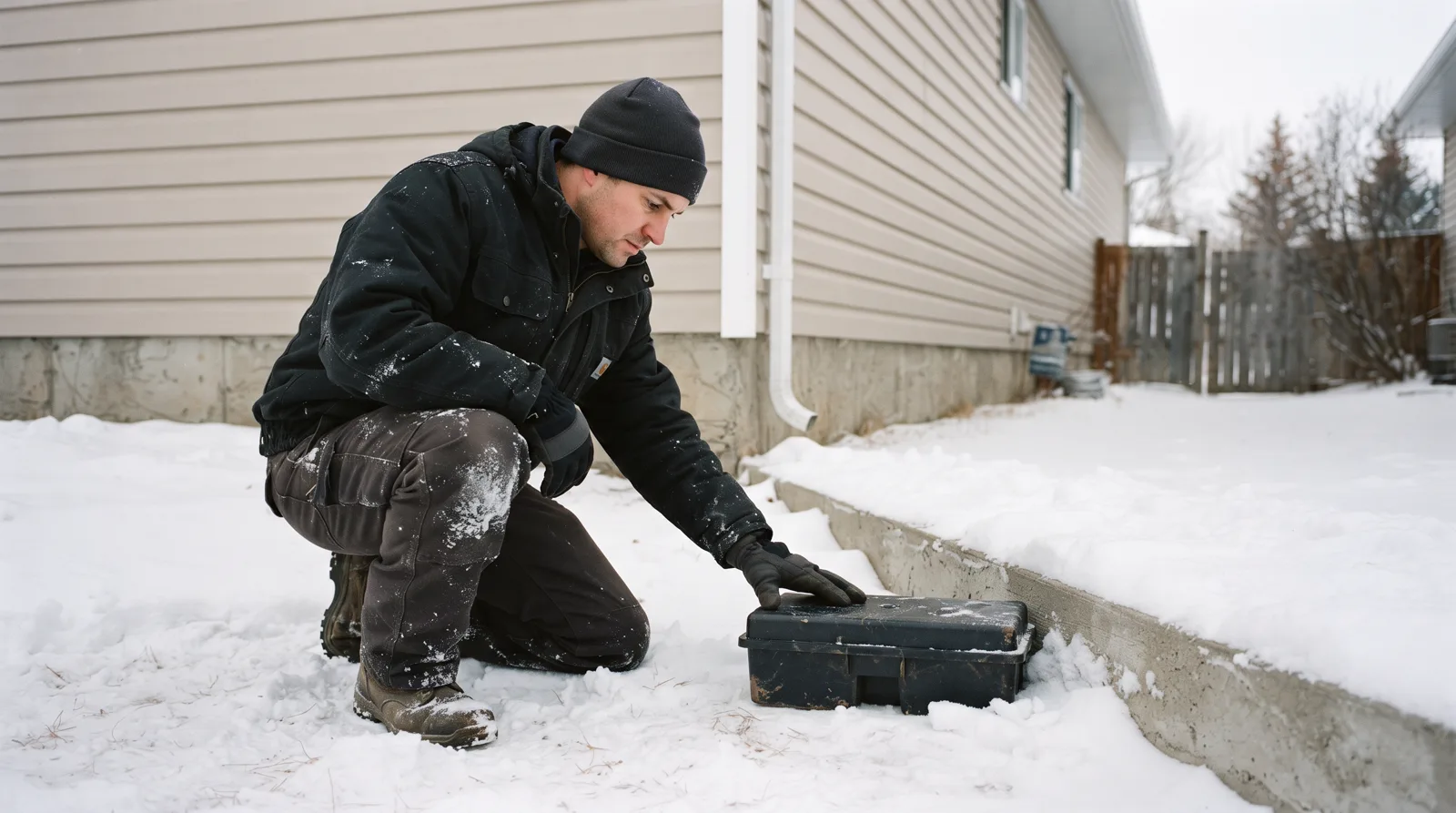
Ant Control in Spruce Grove Colony Elimination, Not Just Surface Spray.
Connect with licensed exterminators who locate and eliminate the colony, not just the ants you see. Urgent requests prioritized across the Tri-Region.
Complete Ant Control Services
From inspection to colony elimination and prevention, matched to your situation.
Carpenter Ant Colony Elimination
Locate parent and satellite colonies in walls, insulation or wood structures. Targeted treatment eliminates the queen and stops reproduction. Follow-up confirms eradication.
Pavement & House Ant Control
Interior and perimeter treatment for common pavement ants, odorous house ants and pharaoh ants. Bait stations and barrier spray tailored to the species and entry points.
Inspection & Species ID
Free or low-cost inspection identifies the species, colony location and damage level. Carpenter ants require different treatment than pavement ants. Accurate ID prevents wasted effort and cost.
Preventative Barrier Treatment
Perimeter spray and granular application creates a chemical barrier around the foundation. Prevents spring and summer invasions. Typically applied April to June in Alberta.
Structural Damage Assessment
Carpenter ants hollow out wood for nesting. Pros trained to identify compromised joists, sills and framing. Connects you with remediation if structural repair is needed.
Seasonal Monitoring Plans
Quarterly inspections and barrier refresh. Catches new colonies early, before damage spreads. Common for rural properties near wooded areas or older homes with recurring issues.
Why Alberta Ant Problems Are Different
❄️ Freeze-Thaw Entry Points
Alberta's wild temperature swings crack foundations, siding and window frames. Ants exploit those gaps every spring. Professionals seal entry points and treat cracks before colonies move in.
🌲 Wood Siding & Older Homes
Spruce Grove and Stony Plain have many 1970s to 1990s homes with wood trim and siding. Carpenter ants nest in damp or rotting wood. Inspectors check soffits, fascia and deck posts for moisture and galleries.
☀️ Spring & Summer Activity Peaks
Carpenter ants emerge April to June when snow melts and moisture saturates wood. Winged reproductives swarm indoors May through July. Early treatment stops colonies before they split and spread.
💨 Chinook Wind & Moisture Cycles
Rapid thaws dump moisture into foundations and crawlspaces. Damp wood attracts carpenter ants. Proper drainage, ventilation and moisture barriers reduce nest sites. Pros assess and recommend fixes.
What it costs here
Everything You Need to Know About Ant Control in Spruce Grove
Species identification, treatment methods, costs, prevention and when to call a professional.
How Professional Ant Control Works in Spruce Grove Homes
Professional ant control starts with a thorough inspection of your property to locate nests, identify the ant species, and map out entry points and trailing patterns. The pest control specialist we connect you with will check common problem areas like kitchen cabinets, bathroom fixtures, basement corners, window frames, and the perimeter of your foundation. In Spruce Grove and Parkland County homes, carpenter ants often nest in moisture-damaged wood near sump pumps, laundry rooms, or areas where roof drainage pools against the foundation. Accurate species identification determines the treatment strategy, because carpenter ants require a completely different approach than pavement ants or odorous house ants.
Spruce Grove properties typically face three main ant species. Carpenter ants are large, black or reddish-black ants that excavate wood to build nests, often causing structural damage over time. Pavement ants are smaller, brown ants that nest under driveways, sidewalks, and foundation slabs, then enter homes through cracks in search of food. Odorous house ants are tiny, dark brown ants that release a rotten coconut smell when crushed and form massive colonies that can split and spread throughout a home. Each species responds to different baits and treatment methods, so a visual inspection and sometimes lab identification are necessary before any product is applied.
Treatment methods vary by species and infestation severity. Carpenter ant elimination typically involves a combination of perimeter spray treatment, crack and crevice dusting with residual insecticide, and targeted bait placements near trails and nesting sites. Pavement and odorous house ant control relies heavily on slow-acting bait that worker ants carry back to the colony, poisoning the queen and brood over several days. Exterior perimeter treatments create a chemical barrier around your foundation, preventing new colonies from moving in during spring and summer. Indoor treatments focus on baseboards, wall voids, electrical outlets, plumbing penetrations, and any other pathways ants use to move through the structure.
Professional control outperforms DIY approaches because licensed pest control technicians use commercial-grade products not available in retail stores, apply them at precise concentrations that kill colonies without triggering avoidance behavior, and know where to look for hidden nests that homeowners miss. A single can of consumer ant spray kills visible ants but drives the colony deeper into walls or causes it to split into multiple satellite nests, making the problem worse. The specialist we match you with has the equipment to dust wall voids, inject treatments into cracks, and apply residual barriers that remain effective for weeks or months, depending on the product and environmental conditions.
Why Alberta's Climate Creates Perfect Conditions for Ant Infestations
Spring thaw is the single biggest trigger for ant problems in Spruce Grove, Stony Plain, and Acheson. After months of dormancy underground or inside wall voids, ant colonies become active as soon as soil temperatures rise above 10 degrees Celsius. Worker ants emerge in massive numbers searching for food and water to feed the queen and new brood. Homes with even tiny cracks in the foundation, gaps around window frames, or openings where utility lines enter the structure become highways for hundreds or thousands of ants moving indoors. March through June is peak season for ant calls in Parkland County, and properties near wooded areas or older neighborhoods with mature trees see the heaviest activity.
Freeze-thaw cycles common to Alberta winters create the entry points that ants exploit every spring. Concrete foundations expand and contract dozens of times between November and April, forming hairline cracks that widen over the years. Mortar between bricks deteriorates faster in climates with extreme temperature swings, leaving gaps that ants can detect and follow. Window and door frames shift slightly as the building settles, breaking caulk seals and creating openings. Ants can squeeze through gaps as narrow as one millimeter, so openings invisible to homeowners are wide-open highways to a colony of 10,000 workers searching for food and nesting sites.
Carpenter ants thrive in Alberta homes because our climate produces exactly the moisture conditions they need to excavate wood. Basements in Spruce Grove and surrounding areas experience condensation on cold water pipes, minor foundation seepage after heavy rain or rapid snowmelt, and humidity from laundry areas and bathrooms. Any wood in contact with moisture for more than a few weeks becomes soft enough for carpenter ants to chew and hollow out. Deck posts, window sills, door frames, basement studs near the floor, and any lumber stored in damp crawl spaces are prime targets. Unlike termites, carpenter ants do not eat the wood, they remove it to create galleries and nesting chambers, but the structural damage accumulates over months and years if left untreated.
Chinook winds occasionally disrupt normal ant dormancy patterns by warming the air and ground mid-winter, waking colonies weeks ahead of schedule. When outdoor temperatures spike to 10 or 15 degrees in January or February, ants can become active indoors even while snow still covers the yard. Homeowners sometimes spot ant trails in the kitchen or bathroom during a chinook event, then see the ants disappear when temperatures drop again. This start-and-stop activity confuses people into thinking the problem resolved itself, but the colony is simply waiting underground or inside the walls for the next warm period. Early detection and treatment prevent a minor mid-winter sighting from turning into a full-scale infestation in April.
Warning Signs That Tell You It's Time to Call a Pest Control Pro
Seeing more than a few ants inside your home during spring or summer is the clearest sign that a colony has moved within range of your foundation or is already nesting inside the structure. A lone scout ant wandering across the kitchen counter might be random, but a trail of 10 or 20 ants following the same path along the baseboard or up the wall means workers have found a food source and are recruiting the rest of the colony. Ants leave invisible pheromone trails that other workers follow, so you will see the same route used over and over until the food source is exhausted or the colony is eliminated. Kitchens and bathrooms are the most common indoor locations because ants need water as much as they need food, and leaky faucets, condensation, or pet water bowls provide everything a colony requires.
Carpenter ant warning signs are more subtle but far more serious because they indicate structural damage is already occurring. Small piles of sawdust or wood shavings near baseboards, door frames, window sills, or corners of the basement are a telltale sign that carpenter ants are excavating galleries nearby. The sawdust, called frass, is coarser than termite dust and often contains bits of dead ants and insect parts. Tapping on wood near suspected nesting areas and hearing a hollow sound instead of a solid thud indicates the interior has been chewed out. You might also hear faint rustling or crinkling sounds inside walls at night when the house is quiet and carpenter ants are most active. Any of these signs require immediate inspection, because a mature carpenter ant colony can remove several cubic inches of wood per month.
Winged ants appearing indoors, especially in spring or early summer, mean a mature colony is nearby and attempting to reproduce. Winged ants are reproductive males and females that leave the nest in swarms to mate and establish new colonies. If you see winged ants inside your home, the parent colony is likely within 100 meters of your foundation, possibly inside a wall void, under the basement slab, or in a tree stump or woodpile in the yard. Winged ants are often mistaken for termites, but ants have a pinched waist, bent antennae, and two pairs of wings with different lengths, while termites have a thick waist, straight antennae, and two pairs of equal-length wings. Finding wings scattered on window sills or floors after the swarm event confirms that the ants successfully mated and are attempting to establish new nests, making rapid treatment essential to prevent multiple infestations.
- Ant trails along walls, baseboards, or countertops, especially in kitchens and bathrooms
- Piles of sawdust or wood shavings near door frames, windows, or basement corners
- Hollow-sounding wood when tapped, particularly near moisture sources
- Winged ants indoors during spring or summer, or discarded wings on sills and floors
- Rustling or crinkling sounds inside walls at night
- Ants emerging from cracks in the foundation, around window frames, or near utility penetrations
The Ant Elimination Process: What Actually Happens
Initial Inspection and Species Identification
The pest control specialist we match you with begins with a detailed inspection of the interior and exterior of your property to locate nests, identify the ant species, and assess the extent of the infestation. Interior inspection covers kitchens, bathrooms, basements, crawl spaces, and any other areas where moisture or food sources attract ants. The technician checks baseboards, electrical outlets, plumbing penetrations, window frames, door thresholds, and corners where ants commonly trail. Exterior inspection focuses on the foundation perimeter, cracks in concrete, gaps around utility lines, woodpiles, mulch beds, tree stumps, and any outdoor structures like sheds or decks where ants might nest.
Species identification determines the treatment strategy and the products used. Carpenter ants require a combination of residual sprays, dusts, and baits, while pavement ants and odorous house ants respond better to slow-acting bait systems that workers carry back to the colony. The technician collects a specimen if necessary to confirm the species, examines the size, color, behavior, and nesting location, and explains which treatment approach will be most effective. Accurate identification also helps set realistic expectations for how long elimination will take, because carpenter ant colonies can take several weeks to fully eradicate, while smaller pavement ant colonies may be controlled within days.
Treatment Application and Targeted Control
Treatment begins with a perimeter spray application around the entire foundation, creating a chemical barrier that prevents new ants from entering and kills returning workers before they reach the nest. The licensed technician applies a residual insecticide to the base of the foundation wall, expansion joints, cracks, weep holes, and any other gaps where ants enter. Interior treatment targets baseboards, wall voids, electrical boxes, plumbing chases, and areas where ants have been observed trailing. Crack and crevice dusting with a long-lasting insecticide dust reaches deep into wall voids and other hidden spaces where liquid sprays cannot penetrate.
Bait placements are critical for colony elimination, especially for species like odorous house ants that form massive, multi-queen colonies. The technician places gel baits, granular baits, or bait stations near active trails, entry points, and suspected nesting areas. Worker ants consume the bait and carry it back to the colony, feeding it to other workers, larvae, and queens. The bait is formulated to act slowly enough that workers do not die before reaching the nest, ensuring the toxin spreads throughout the colony. Bait takes anywhere from a few days to two weeks to eliminate a colony, depending on species and colony size, and homeowners are instructed not to spray or disturb the bait placements during this period.
Follow-Up Visits and Long-Term Prevention
Follow-up visits confirm that the colony has been eliminated and address any secondary infestations or satellite nests that were not detected during the initial treatment. Most ant control services include at least one follow-up visit within two to four weeks of the initial application, and additional visits are scheduled if ant activity persists. The technician inspects previously treated areas, checks bait stations, and reapplies product if necessary. Carpenter ant jobs often require multiple visits because colonies can be large and widely dispersed, with satellite nests in several locations around the property.
Prevention recommendations focus on sealing entry points, eliminating moisture sources, and removing food attractants that draw ants back to the structure. The pest control pro will identify cracks in the foundation, gaps around windows and doors, openings where utility lines enter, and any other vulnerabilities that need caulking or repair. Recommendations typically include fixing leaky faucets, improving basement ventilation to reduce humidity, moving firewood and mulch away from the foundation, trimming tree branches that touch the roof, and storing food in sealed containers. Exterior perimeter treatments can be reapplied seasonally to maintain a protective barrier during peak ant season from March through September.
What Ant Control Really Costs in Spruce Grove and the Tri-Region
A single service call for a minor pavement ant issue in Spruce Grove typically runs $250 to $450, covering inspection, interior spot treatment and a limited exterior barrier. Carpenter ant infestations that require wall drilling, dust injection into voids and a full perimeter barrier usually cost $600 to $1,200 for an average sized bungalow. Multi-colony problems or homes with walkout basements, detached garages and extensive landscaping can push the total to $1,500 to $2,500 when satellite nests are confirmed on the property. Every estimate should itemize the inspection fee, the treatment fee and any follow-up visits included in the initial quote.
The biggest cost driver is the size and scope of the infestation. A single carpenter ant colony concentrated in one wall cavity is straightforward to treat, while a property with three separate nests (main house, garage and wood pile) requires more material, more drilling and more labour hours. Alberta's deep frost line means foundation cracks and gaps around service penetrations are common entry points, and sealing those during the same visit adds $100 to $300 to the bill. Snow load damage to soffits and eaves creates hidden moisture pockets that attract carpenter ants, and if the pest control pro identifies structural repair needs, expect a separate quote for carpentry work before the final treatment.
Seasonal timing affects price in the Tri-Region. May and June are peak call months when winged reproductives swarm and homeowners panic, so some companies charge a premium for immediate service or skip the first-time customer discount. Booking in late summer or early fall when demand drops can save 10 to 15 percent on the same work. Multi-year maintenance contracts that include two annual barrier refreshes and unlimited follow-up visits for new activity typically cost $400 to $700 per year after the initial knockdown treatment, and they make sense if your property has a history of recurring infestations or sits near a wooded ravine where re-infestation risk stays high.
Comparing Treatment Methods: What Works for Alberta Carpenter Ants
Liquid Barrier Treatments
Most pros in Spruce Grove start with a liquid non-repellent insecticide applied as a continuous barrier around the foundation and into wall voids where carpenter ants have been sighted. The active ingredient transfers from ant to ant, killing the colony over seven to 14 days without triggering avoidance behaviour. This method works well for homes with accessible crawl spaces and clear perimeters, and it delivers visible results faster than baiting alone. The downside is that freeze-thaw cycles in Alberta can crack the barrier by the following spring, so annual reapplication is standard practice. Liquid treatments also require drilling small access holes through drywall or siding to reach hidden voids, and those holes must be properly sealed afterward to prevent moisture intrusion during chinook thaw events.
Non-repellent formulations like fipronil or imidacloprid are preferred over older pyrethroids because carpenter ants will cross a treated zone without detecting it, carrying the toxin back to the nest. Repellent products cause ants to scatter and establish satellite colonies in untreated areas, turning one problem into three. A competent applicator will explain which active ingredient they are using, provide the product label and confirm that the formulation is rated for structural pest control in Alberta. Never accept vague answers like 'industry standard spray' or 'professional grade treatment' without seeing the label and safety data sheet.
Baiting Systems
Gel and granular baits work by attracting foraging ants with a slow-acting toxicant that gets carried back to the colony and fed to larvae and the queen. Baiting is less invasive than drilling and spraying, making it the preferred choice for finished basements, condos and homes where occupants are sensitive to spray odours. The major limitation is time: it can take four to six weeks to eliminate a large carpenter ant colony through baiting alone, and some homeowners lose patience when they continue to see ants during the first two weeks. Baiting also depends on ants actively foraging, so if the colony is in a dormant state during cold snaps or if a competing food source (aphid honeydew on landscaping plants) is more attractive, bait uptake drops and the treatment stalls.
In the Tri-Region, combination strategies that pair perimeter liquid barrier with interior bait stations deliver faster knockdown and longer residual protection. The barrier intercepts ants entering from outside while the bait targets the indoor colony. This hybrid approach costs 15 to 25 percent more than barrier alone but reduces the need for repeat visits and minimizes the risk of missing a satellite nest. Ask the pro how they plan to monitor bait uptake and whether the quote includes replacing depleted stations at no extra charge during the active treatment window.
Dust and Foam Applications
Insecticidal dusts like boric acid or diatomaceous earth are blown into wall voids, attic spaces and crawl spaces where liquid cannot reach or would create moisture problems. Dust remains effective for months or even years as long as it stays dry, making it ideal for the low-humidity conditions inside Alberta attic spaces during winter. Foam formulations expand to fill irregular voids and cracks, delivering active ingredient deep into the structure where carpenter ants tunnel. Both methods require specialized equipment and a clear understanding of where the colony is located, because over-application wastes material and under-application leaves untreated harborage sites.
Dust works best as a supplementary treatment rather than a standalone solution. A typical protocol involves drilling access holes every metre along the affected wall, injecting dust through a hand bulb or electric duster, then sealing the holes with colour-matched caulk or foam. The pro should wear respiratory protection during application and confirm that the dust formulation is registered for indoor structural use in Canada. Some older dusts like silica gel are highly effective but create serious inhalation hazards if the applicator cuts corners on safety, so verify that the crew follows proper PPE and ventilation protocols before they start.
Mistakes That Cost You More: What to Avoid When Hiring
The biggest mistake homeowners make is hiring based on the lowest quote without verifying that the scope of work matches the actual problem. A $200 estimate that covers only a single interior spray leaves the exterior colonies untouched, and you will see ants again within two weeks. A $900 quote that includes drilling, dust application, perimeter barrier and two follow-up visits may look expensive next to a $300 spray-and-leave offer, but the higher price reflects a complete protocol that addresses the root cause. Always compare itemized scopes rather than bottom-line numbers, and ask what happens if ants reappear after the initial treatment. Legitimate pros include a 30 to 90 day warranty period with unlimited callbacks at no charge, while fly-by-night operators disappear after cashing the first cheque.
Another common trap is accepting vague timelines and non-specific treatment plans. Phrases like 'we will spray as needed' or 'we use a multi-step process' mean nothing without details on which products, how many applications and what the expected timeline looks like. Demand a written treatment plan that names the active ingredients, specifies the application method for each area (interior spray, exterior barrier, void injection) and confirms the follow-up schedule. In Alberta, any commercial pesticide application inside a dwelling requires the applicator to hold a valid Pest Management Regulatory Agency license, and you have the right to see that license number before signing a contract. If the company resists showing credentials or claims 'we are exempt because we only use natural products', walk away.
Skipping the WCB and insurance verification is a high-risk move that can backfire badly if the applicator gets injured on your property or causes accidental damage during drilling or chemical application. Alberta law requires any business with paid employees to carry and any pest control company working inside structures should carry a minimum of $2 million in general liability insurance. A legitimate contractor will provide a certificate of insurance and WCB clearance letter without hesitation, and those documents should be current within 30 days of the service date. Never accept expired certificates or photocopies that look altered, and never let anyone start work who refuses to prove coverage. If an uninsured worker falls through your attic hatch or spills pesticide on your hardwood, you are personally liable for medical costs and property damage because your homeowner policy excludes uninsured contractor activity.
How to Hire the Right Ant Control Pro
Start by requesting at least three written quotes that break down inspection fees, treatment costs, product names and follow-up visits. A professional estimate should specify whether the price covers one application or multiple visits, what warranty period applies and what triggers a callback at no charge. Ask how the pro will locate the nest before treating, because randomly spraying baseboards without identifying the colony location is a waste of money. Thermal imaging cameras, moisture meters and direct visual inspection of suspected voids are standard tools for competent carpenter ant work, and the inspector should spend 30 to 45 minutes walking the entire property rather than glancing at the kitchen and leaving.
Verify credentials before signing anything. In Alberta, commercial pesticide applicators must be certified under the federal Pest Control Products Act, and you can confirm license status through the provincial pesticide registry or by asking to see the applicator's wallet card. Check online reviews on Google and the Better Business Bureau, but ignore obviously fake five-star reviews posted in clusters on the same day. Look for detailed accounts that mention the technician's name, describe the treatment process and explain how long it took for ant activity to stop. Recent reviews matter more than old ones, because staff turnover in the pest control industry is high and the crew that earned glowing reviews three years ago may no longer work for the company.
Ask about guarantees and what happens if the ants return within the warranty window. A 90-day service warranty that includes unlimited follow-up visits with no trip charge is the industry standard for carpenter ant work in the Tri-Region. Some companies offer conditional guarantees that void coverage if you landscape over the treated perimeter or fail to fix a leaking gutter, and those exclusions should be spelled out in writing before you sign. Get the contract and the product labels in your hands before the crew starts, and never agree to pay the full amount up front. A reasonable deposit is 25 to 35 percent, with the balance due only after the initial treatment is complete and you have confirmed that the crew sealed all access holes and cleaned up drill dust.
How Tri-Region Services Helps
Tri-Region Services routes your request to one local pest control professional who has confirmed credentials, liability coverage before joining the network. You receive a single written quote that itemizes the inspection, treatment and follow-up plan, with no obligation to proceed if the price or timeline does not fit your needs. The pro matched to your job is local to Spruce Grove, Stony Plain or Parkland County, so response times stay short and the applicator understands Alberta-specific challenges like chinook-driven moisture swings and deep frost penetration. You avoid the guesswork and credential-checking legwork, and the referral comes at no cost to you. The quote and the workmanship warranty are direct between you and the licensed contractor, and Tri-Region confirms only that the professional meets the baseline standards before dispatch.
How We Verify Every Exterminator
Tri-Region confirms credentials, coverage and accountability before any dispatch.
Pesticide License Verified
Alberta requires a valid pesticide applicator certificate for commercial treatments. We confirm current licensing before matching.
liability insurance Confirmed
Liability insurance stated at signup. Ask to see the certificate before work begins.
Liability Insurance Checked
Minimum $2 million general liability coverage confirmed current. Covers accidental property damage or treatment issues.
Reference Verification Process
New applicants provide three recent commercial or residential references. We contact them before approving the pro for dispatch.
Treatment Plan Approval Required
The pro explains species, treatment method, products used and safety precautions before starting. You approve the plan in writing.
Work Guarantee Confirmed in Writing
Warranty terms come from the pro doing the work. We verify the offer is in writing and covers colony re-emergence, not just surface re-treatment.
This page is not tied to a contractor's brand. Leads route straight to your one local partner. Verified reviews can appear here once that partner has them (never fabricated).
Serving the whole Tri-Region
8 Questions Homeowners Ask
When are ants most active in Spruce Grove and Stony Plain?+
How do I know if I have carpenter ants or just regular ants?+
Are carpenter ants common in Spruce Grove and Parkland County?+
How long does ant control treatment take to work?+
Is ant control treatment safe for pets and kids?+
Do I need to leave my home during ant control treatment?+
How much does ant control cost in Spruce Grove?+
Can carpenter ants actually damage my home?+
Get your free quote
Tell us what you need and a local pro will get right back to you.
- ✓ Sent straight to a local business
- ✓ You choose who you hire
- ✓ Free, with no obligation