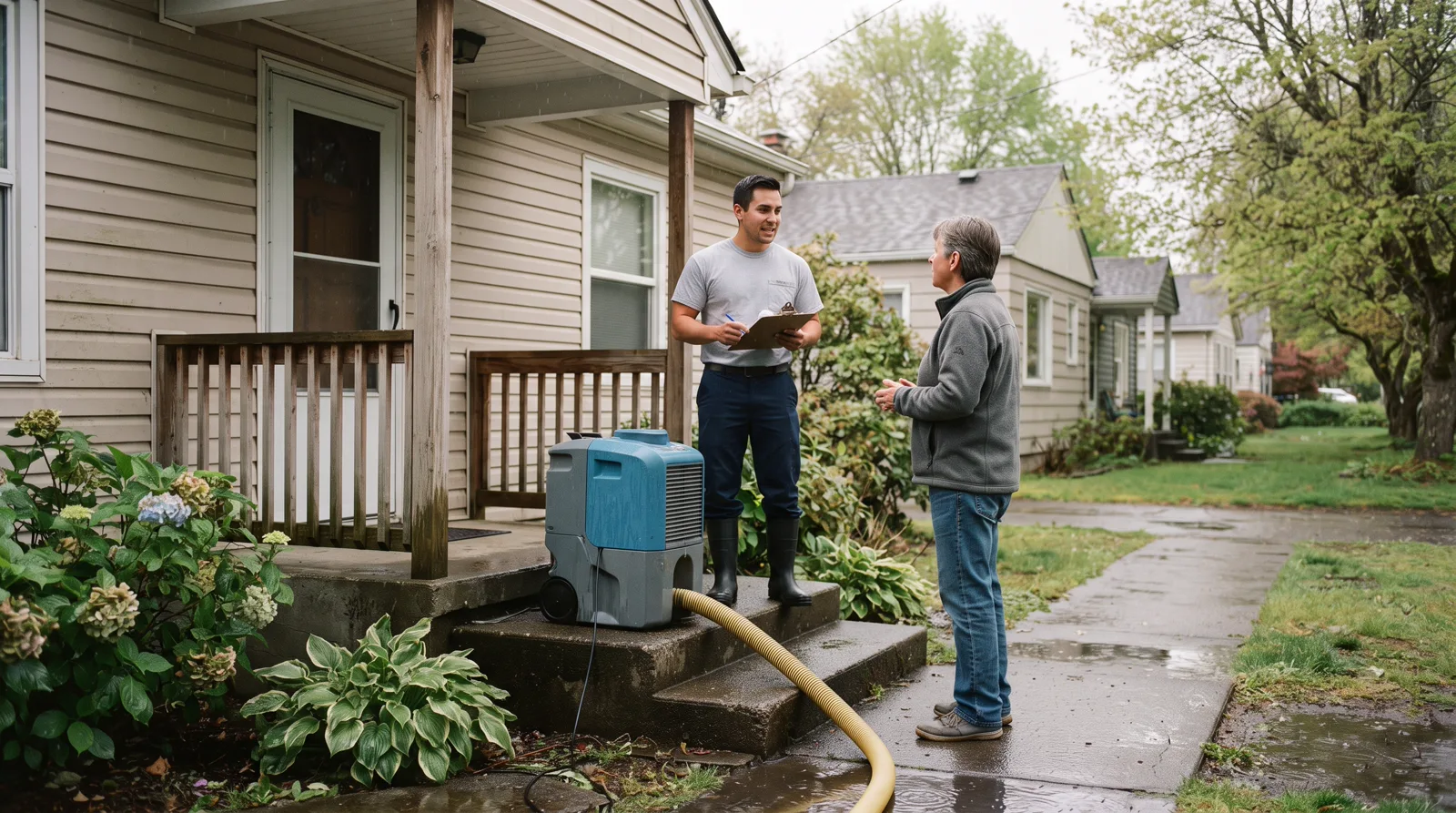
Basement Flood Cleanup Emergency Requests Prioritized.
When your basement floods, every hour counts. Local pros extract water, dry the structure, prevent mold, and restore your space to safe, livable condition.
Complete Basement Flood Recovery
From first call to final walkthrough, local pros handle every step so you can focus on your family and insurance paperwork.
Emergency Water Extraction
Truck-mounted extractors remove standing water in under two hours. Local pros pump out groundwater, appliance leaks, sump failures, or sewer backups, then pull saturated water from carpet pad, drywall, and subfloor before it spreads.
Structural Drying & Dehumidification
Industrial air movers and commercial dehumidifiers run 24/7 for three to seven days. Daily moisture readings track progress. Local pros dry studs, insulation, concrete, and rim joists to prevent rot, warp, and mold colonization.
Sewage & Contaminated Water Cleanup
If your flood came from a toilet overflow, sewer backup, or drain failure, local pros treat it as Category 3 contaminated water. Full PPE, antimicrobial treatment, and safe disposal of porous materials that cannot be salvaged.
Mold Prevention & Remediation
If water sat longer than 48 hours, mold spores are likely colonizing. We contain the area, HEPA vacuum surfaces, apply antimicrobial, remove unsalvageable material, and verify air quality before sealing the space.
Contents Pack-Out & Restoration
We inventory, photograph, pack, and move salvageable belongings to our climate-controlled facility. Furniture, electronics, documents, and clothing are cleaned, dried, deodorized, and returned when your basement is ready.
Reconstruction & Finishing
Once dry and safe, we rebuild what the flood destroyed. New drywall, baseboards, flooring, paint, trim. One contractor, one timeline, no handoff to a third party. You get your basement back, not a construction zone.
Why Basements Flood Here and How We Fix Them
❄️ Spring Melt & Clay Soil Pressure
Parkland County soil is heavy clay that swells when wet and shrinks when dry, flexing foundations year after year. Rapid April snowmelt saturates the ground faster than it can drain, pushing water through foundation cracks, window wells, and older weeping tile systems.
🌀 Summer Storms & Sump Pump Overload
June and July thunderstorms can drop 40 to 60 mm in an hour. If your sump pump loses power, clogs, or cannot keep pace, the pit overflows into your basement. We see this every season in Spruce Grove subdivisions built on low grade or near retention ponds.
🧊 Freeze-Thaw Foundation Damage
Alberta winters cycle below and above zero for months. Water seeps into hairline foundation cracks, freezes, expands, and widens the crack. By spring, those microcracks are highways for groundwater, and older homes in Stony Plain with poured concrete often show this pattern.
🏠 Older Weeping Tile & Drainage Systems
Homes built before 1990 often have clay or tar paper weeping tile that collapses or clogs with silt. When exterior drainage fails, hydrostatic pressure forces water through the foundation. Acheson acreages on septic or rural drainage see this frequently after heavy rain or melt.
What it costs here
Everything You Need to Know About Basement Flood Cleanup in Spruce Grove
What happens when you call, how long it takes, what insurance covers, and how to prevent the next flood.
Why Basement Flooding Happens in Spruce Grove and Parkland County
Basement flooding in Spruce Grove, Stony Plain, Parkland County and Acheson stems from a specific combination of Alberta weather patterns, soil conditions and aging infrastructure that creates perfect conditions for water intrusion. The region sits on heavy clay soil that expands dramatically when wet and contracts when dry, creating seasonal foundation movement that opens cracks and gaps. Spring runoff from rapid snowmelt, sometimes amplified by chinook winds that can melt a meter of snow in 48 hours, overwhelms municipal storm systems and saturates the ground faster than it can drain. Summer storms drop intense rainfall in short bursts, and the relatively flat terrain means water pools rather than running off naturally.
The freeze-thaw cycle here is particularly brutal for basements. Winter frost penetrates up to 2.4 meters deep in this climate zone, and when spring arrives the thaw happens from the top down. This creates a layer of saturated soil sitting on frozen ground that cannot absorb it, forcing groundwater laterally toward foundation walls. Homes built before 1990 often lack proper exterior waterproofing or have deteriorated weeping tile systems that no longer function. Even newer homes can flood if lot grading settled over time, if downspouts dump water too close to the foundation, or if the backfill soil was poorly compacted during construction.
Sewer backups are another major cause in older neighborhoods where combined storm and sanitary systems still exist. When heavy rain overwhelms the system, sewage can reverse flow into basement drains. Sump pump failures during power outages or mechanical breakdowns leave basements vulnerable during the exact moments when they are most needed. Hot water tank ruptures, washing machine hose failures and furnace condensate line freezes add to the risk. Understanding the specific cause of your flood determines the cleanup approach, the contamination level you are dealing with, and whether insurance will cover the loss.
Recognizing the Warning Signs: When You Need Professional Cleanup
Obvious flooding with standing water is clear, but many basement water problems start subtly and escalate into major damage if ignored. The smell is often the first warning: a musty, earthy odor that lingers even when you cannot see moisture indicates hidden water in wall cavities, insulation or under flooring. Efflorescence, the white chalky residue on concrete walls, shows that water is wicking through the foundation and evaporating on the interior surface, leaving mineral deposits behind. Peeling paint, bubbling drywall or warped baseboards signal moisture infiltration that has compromised building materials.
If your basement carpet feels damp or cold underfoot in spots, or if you see rust stains around floor drains or at the base of metal shelving, water is present even if you never saw it flood. Mold growth appears as black, green or brown patches on walls, ceiling tiles, stored boxes or furniture, and it develops within 24 to 48 hours of water exposure. A sudden increase in humidity, condensation on windows or pipes, or a noticeable temperature drop in the basement compared to upstairs all indicate moisture problems that need immediate attention.
You need professional cleanup if water depth exceeded 5 centimeters, if the water contained sewage or came from outside sources, if porous materials like drywall or insulation got saturated, or if more than 24 hours passed before you started drying. Trying to handle contaminated water or large volumes yourself creates health risks from bacteria, viruses and mold spores. Professional crews have industrial extraction and drying equipment that removes moisture from building cavities you cannot reach with a shop vacuum. Insurance companies often require documentation from certified restoration firms to process claims, so calling professionals early protects your coverage and prevents secondary damage that costs far more than the initial cleanup.
The Basement Flood Cleanup Process: What Actually Happens
Emergency Water Extraction and Safety Assessment
The first step is always safety. Professional crews assess electrical hazards, structural stability and contamination level before entering a flooded basement. If standing water is near electrical panels, outlets or appliances, power to the basement must be shut off at the main breaker. They identify the water source and stop it if still active, whether that means shutting off a valve, plugging a crack temporarily, or confirming a storm surge has receded. Gas appliances are checked for pilot light status and ventilation to prevent carbon monoxide buildup in the enclosed space.
Water extraction begins immediately using truck-mounted or portable pumps for deep water, followed by industrial wet vacuums for the remaining layer. Speed matters because every hour of saturation allows water to wick higher into drywall, deeper into insulation, and further into wood framing. Submersible pumps handle high volumes quickly but can leave a film of water behind, so extraction wands with powerful suction follow to pull moisture from carpet, padding and concrete pores. The crew documents water levels with photos and measurements for insurance purposes and creates an inventory of affected items.
Salvageable contents are moved to dry areas or removed from the basement entirely. Non-porous items like metal, glass and hard plastic can usually be cleaned and dried. Porous materials including upholstered furniture, mattresses, particle board shelving and cardboard boxes often must be discarded if they absorbed contaminated water or stayed wet beyond 48 hours. The assessment determines how much drywall, insulation, trim and flooring must be removed to access hidden moisture and prevent mold growth inside wall and floor cavities.
Moisture Removal and Structural Drying
After visible water is extracted, the real work of drying begins. Industrial dehumidifiers, air movers and specialized drying equipment run continuously to pull moisture from building materials and circulate air into every corner, closet and cavity. Moisture meters track progress by measuring humidity levels in the air and moisture content in wood, drywall and concrete. A basement that looks dry to the eye can still hold enough moisture in framing and subfloors to grow mold, so professionals dry to specific target readings, not just until surfaces feel dry.
In Alberta's climate, drying a flooded basement typically takes three to seven days depending on the volume of water, outdoor humidity, and how much material was removed. Concrete foundations and floors dry slowly because concrete is porous and thick, and cold ground temperatures on the exterior side slow evaporation. Insulation in exterior walls often must be removed because it acts like a sponge, holding water against framing and vapor barriers where air movement cannot reach it. Baseboard and lower drywall sections are usually cut out to allow air flow into the wall cavity and to access the bottom plate of the framing, which sits directly on the concrete and absorbs ground moisture.
Temperature control is critical. Warmer air holds more moisture, so heating the space accelerates drying, but if the basement is too warm relative to outdoor temperatures, condensation forms on cold foundation walls and re-wets surfaces. Professional crews balance heat, dehumidification and air movement to create optimal drying conditions. They monitor daily and adjust equipment placement and settings based on meter readings. Drying is considered complete only when moisture levels match the baseline readings of unaffected areas of the home, ensuring no hidden pockets remain that could cause future problems.
Cleaning, Disinfection and Odor Control
Once structural drying is complete, all affected surfaces are cleaned and disinfected. The specific methods depend on the contamination category of the water. Clean water from a broken supply line requires basic cleaning, while sewage backups or flooding from exterior sources demand antimicrobial treatment of all contacted surfaces. Concrete floors and walls are scrubbed with commercial-grade cleaners, and any remaining residue or sediment is removed. Wood framing exposed during material removal is treated with antimicrobial solutions to kill bacteria and inhibit mold spores.
Odor control is a separate challenge because smells can linger in porous materials even after visible contamination is gone. Thermal fogging, ozone treatment or hydroxyl generators are used to neutralize odors at the molecular level rather than just masking them. These treatments require the space to be unoccupied for a period while they work, and proper ventilation afterward to clear any residual ozone or treatment agents. HEPA air scrubbers run during and after cleaning to capture airborne mold spores, dust and bacteria stirred up during the process.
All discarded materials are bagged and removed from the property following local waste disposal regulations. Contaminated items cannot simply go in your regular trash pickup. The crew performs a final inspection with moisture meters to confirm all areas are dry, checks for any remaining odors, and ensures the space is clean and safe for reconstruction. At this stage the basement is an empty shell, dried to baseline moisture levels, disinfected and ready for rebuilding, but not yet livable.
Understanding Water Categories and Contamination Levels
Not all basement floods are equal, and the contamination level determines cleanup methods, safety precautions and costs. Category 1 water is clean water from a source that does not pose a health risk, such as a broken copper supply line, a leaking water heater tank, or rainwater that entered through a window well before contacting the ground. This water can be extracted and the area dried without extensive disinfection, though you still need to act fast before materials degrade or the water becomes contaminated by contact with building materials and contents. Category 1 is the least expensive to remediate and rarely requires full material removal if addressed within 24 hours.
Category 2 water, called gray water, contains some level of contamination that could cause discomfort or illness if ingested. This includes discharge from washing machines, dishwashers, sump pumps or floor drains, and water that has been standing long enough to start growing bacteria. It also applies to clean water that sat for more than 48 hours and began degrading. Gray water cleanup requires antimicrobial treatment, and porous materials that absorbed it, like carpet padding, insulation and drywall, are typically removed rather than dried in place. The cost is moderate, and the health risk is manageable with proper protective equipment, but you should not attempt this level of cleanup yourself.
Category 3 water, known as black water, is grossly contaminated and poses serious health risks from bacteria, viruses, parasites and toxic substances. Sewage backups, flooding from rivers or storm water that contacted soil, and any water that has been stagnant for days fall into this category. Black water cleanup requires full protective gear including respirators, and all porous materials that contacted it must be removed and disposed of as contaminated waste. Concrete and framing are thoroughly disinfected with hospital-grade antimicrobial agents. This is the most expensive and labor-intensive category, and insurance coverage varies depending on the source. Understanding which category applies to your situation guides realistic expectations for cost, timeline and what can be saved versus what must be thrown away.
What Basement Flood Cleanup Really Costs in Spruce Grove and the Tri-Region
A minor basement flood affecting under 500 square feet with clean water from a broken supply line typically costs $2,000 to $4,500 for complete cleanup and drying in the Spruce Grove area. That includes emergency water extraction, industrial dehumidifiers running for three to five days, air movers, antimicrobial treatment, and disposal of unsalvageable materials like soaked drywall or carpet pad. A moderate flood covering 500 to 1,000 square feet with category two water (from a sump pump failure or washing machine overflow) generally runs $4,500 to $9,000, because the contamination level requires more aggressive cleaning and longer drying times. Severe floods involving sewage backup, standing water over 12 inches deep, or damage spanning multiple rooms can easily reach $12,000 to $25,000 or more, especially if structural drying, mold remediation, or rebuilding finished spaces is required.
Several Alberta-specific factors drive these costs higher than you might expect. Most home insurance policies in this province carry a $1,000 to $2,500 deductible for water damage, and overland flood coverage (the kind caused by spring runoff or heavy rain) is often a separate endorsement many homeowners don't carry. That means out-of-pocket expense is real. Our deep frost line, typically four feet in the Parkland County area, makes foundation cracks and weeping tile failures common after severe freeze-thaw cycles, and repairing those issues adds $3,000 to $8,000 to the total if the flood source isn't fixed. Mold grows fast in cool, damp basements even in winter when furnaces cycle and create condensation, so any delay in professional drying can trigger a separate mold remediation project costing $2,000 to $6,000. Permit requirements in Spruce Grove and Stony Plain also add time and cost if you're rebuilding walls or replacing electrical, since any work beyond simple cleanup must meet current Alberta Building Code standards.
Hidden costs catch homeowners off guard. If the flood reached your furnace, hot water heater, or electrical panel, expect another $1,500 to $5,000 for appliance replacement or panel upgrades, and those aren't always covered under basic water damage claims. Disposing of contaminated materials isn't free: a typical basement cleanout generates two to four tons of waste, and landfill tipping fees plus bin rental in the Tri-Region run $400 to $900. If you have finished basement spaces with custom built-ins, home theater equipment, or gym flooring, replacement costs climb quickly because insurance depreciation often pays only 50 to 70 percent of new value for items over five years old. Finally, temporary dehumidifier and air mover rental for DIY attempts costs $80 to $150 per day per unit from local tool rental shops, and most floods need three to five units running for at least four days, meaning you can spend $1,200 to $3,000 on equipment rental alone while still not achieving the thorough drying a professional crew delivers with commercial-grade gear.
Comparing Water Removal Methods, Drying Strategies, and Material Choices
Water extraction is the first critical step, and the method matters. Submersible pumps work well for standing water over two inches deep and can move 2,000 to 3,000 gallons per hour, but they leave a film of water on the floor that continues soaking into drywall and insulation. Truck-mounted extraction units, the kind restoration companies use, apply powerful suction to pull water from carpet, pad, and even subfloor, removing 80 to 90 percent of moisture in one pass. Wet-dry shop vacuums are too slow for anything beyond a small spill; they move only 10 to 15 gallons per hour and require constant emptying. For sewage backups, only professionals with category three water extraction equipment should handle removal, because standard vacuums and pumps spread contamination and create serious health risks. In cold weather, extraction must happen fast: if your basement is unheated and outdoor temperatures drop below freezing, standing water can freeze overnight, expanding into cracks and causing structural damage no amount of drying will fix.
Drying strategy separates amateurs from pros. Portable dehumidifiers sold at hardware stores pull maybe 50 to 70 pints per day and work fine for small spaces, but a flooded basement needs commercial refrigerant or desiccant dehumidifiers that remove 150 to 300 pints daily and operate efficiently even in cool temperatures common in Alberta basements. Air movers, not just fans, create the rapid airflow needed to evaporate moisture trapped in walls, under flooring, and inside cavities. Professionals position air movers in a specific pattern to create circulation across all wet surfaces and direct humid air toward dehumidifier intakes, cutting drying time from two weeks down to four or five days. Thermal imaging cameras let techs see hidden moisture inside wall cavities and under floors, so they know exactly where to place equipment and when drying is truly complete. Skipping this step means guessing, and trapped moisture leads to mold, rot, and recurring musty smells that never fully go away.
Deciding what to salvage versus replace is where many homeowners make expensive mistakes. Drywall soaked above the one-foot line almost always needs replacement, because even if it dries, mud and tape joints weaken and mold spores embed in the paper facing. Carpet can sometimes be saved if it's clean water, extraction happens within 24 hours, and the pad is replaced, but any category two or three water means both carpet and pad go to the landfill. Hardwood and engineered flooring react differently: solid hardwood can often be dried and refinished if cupping isn't severe, but engineered products delaminate and must be replaced. Insulation is tricky; fiberglass batts hold water and lose R-value even after drying, so most pros remove and replace any wet insulation, especially in our climate where proper insulation matters for heating costs. Finished materials like baseboards, door casings, and built-in cabinetry made from MDF or particleboard swell and crumble when wet, and no amount of drying brings them back. Solid wood trim can usually be saved if dried properly. The key decision point is speed: materials dried within 48 hours have a much better chance of survival than those left wet for four or five days while you wait for an adjuster or try to DIY the job.
Mistakes Homeowners Make and Contractor Traps to Avoid
The biggest mistake is delaying professional help while you try to handle cleanup yourself. Every hour of delay increases damage, especially in basements where moisture wicks up drywall and into framing. Homeowners often underestimate how much water remains after surface removal; a flooded basement with one inch of standing water means hundreds of gallons soaked into porous materials, and without proper extraction and drying equipment, that moisture stays trapped for weeks. Another common error is turning up the heat and opening windows to speed drying. In Alberta's dry climate, that intuition seems right, but without dehumidifiers running simultaneously, you just drive moisture deeper into walls and create ideal conditions for mold growth in hidden cavities. Using bleach to clean up is equally misguided: bleach doesn't kill mold on porous surfaces like drywall or wood, and it creates toxic fumes in enclosed spaces. Professional antimicrobial treatments are EPA-registered and designed for post-flood use, while household bleach offers only surface cleaning and a false sense of security.
Contractor red flags are easy to spot if you know what to look for. Any company that quotes a final price over the phone without seeing the damage is guessing, and that guess will always be low to get in the door, with change orders and extras piling up once work starts. Be wary of contractors who push you to sign insurance assignment of benefits forms, which give them direct payment authority and remove your leverage if the work is shoddy or incomplete. In Alberta, legitimate restoration companies carry liability insurance for their workers, commercial general liability insurance of at least two million dollars, and IICRC certification in water damage restoration. If a contractor can't produce proof of all three on the spot, walk away. High-pressure tactics, like claiming they can start immediately but only if you sign today, are another warning sign; reputable companies are busy and may have a one or two day wait, but they don't use fear to force decisions. Finally, avoid contractors who discourage you from filing an insurance claim or offer a cash discount to skip the claim process. That's a sign they're either underinsured themselves or planning to cut corners you won't notice until mold appears six months later.
Insurance claim mistakes specific to Alberta can cost you thousands in denied or reduced payouts. The most common error is not documenting everything before cleanup starts. Take photos and video of every affected area, every damaged item, and water level marks on walls before moving or disposing of anything, because adjusters need proof of loss and won't take your word for it after the fact. Another mistake is assuming your policy covers the flood when it doesn't; sewer backup coverage, overland flooding, and even sump pump failure are often optional endorsements that must be added separately to standard policies. Read your policy or call your broker before you file, so you know what's covered and can tailor your claim accordingly. Many homeowners also fail to mitigate damage promptly, which is a policy requirement; if you wait three days to call a restoration company because you're hoping to avoid a claim, and mold develops in that time, the insurer can deny the mold damage as resulting from your failure to act. Finally, don't let your contractor talk to your adjuster without you present. You are the policyholder, and the relationship is between you and the insurer, not the contractor and the insurer. Contractors who try to negotiate directly are often inflating claims or adding unnecessary work, and that can trigger audits or denials that harm you, not them.
How to Hire the Right Basement Flood Cleanup Pro in the Tri-Region
Start by verifying credentials that actually matter in Alberta. Any company you consider should hold current WCB coverage, which you can verify by asking for their WCB account number and checking it on the WCB Alberta website. This protects you from liability if a worker is injured on your property. They should also carry commercial general liability insurance of at least two million dollars and provide a certificate of insurance naming you as an additional insured for the duration of the project. IICRC (Institute of Inspection, Cleaning and Restoration Certification) credentials are the industry standard for water damage restoration, and techs should hold Water Damage Restoration Technician or Applied Structural Drying Technician certifications at a minimum. In Spruce Grove and Stony Plain, reputable companies will also have business licenses from the town and be registered with the Better Business Bureau, although BBB ratings alone don't guarantee quality. If the company offers mold remediation as well, they should follow the IICRC S520 standard for mold remediation, and techs should have Mold Remediation Technician certification. Don't hire anyone who can't produce all of this paperwork within five minutes of being asked.
Ask specific questions before you commit to anyone. How quickly can they arrive on-site after your call, and is there an after-hours or weekend surcharge? Emergency response matters, but you need to know the real cost. What equipment will they use, and do they own it or rent it? Companies that own truck-mounted extractors, commercial dehumidifiers, and moisture meters are serious about restoration work; those who rent from a tool shop are probably side-hustlers. How long do they estimate the drying process will take, and what factors could extend that timeline? Honest contractors will say three to seven days depending on conditions, and explain that concrete floors, finished spaces, and cold temperatures all slow drying. What's included in their quote, and what's extra? A legitimate estimate should break out water extraction, drying equipment rental, antimicrobial treatment, disposal, and any demolition or rebuild work as separate line items, so you know exactly what you're paying for. Will they work directly with your insurance company, and do they require assignment of benefits? You want a company willing to provide documentation and talk to adjusters, but you don't want to sign over control of your claim. Finally, ask for three local references from jobs completed in the last six months, and actually call them. A contractor with nothing to hide will hand over references without hesitation.
Get at least three written quotes before making a decision, and compare them carefully. The lowest bid is rarely the best choice, because it usually means shortcuts, rented equipment, or uninsured labor. The highest bid might include services you don't need, like full mold remediation when only drying is required, or premium finishes when basic code-compliant repairs are fine for a storage area. Look for quotes that are detailed, not vague lump sums, and that include a timeline with milestones like extraction complete, drying equipment removed, and final moisture test passed. Check that each quote includes antimicrobial treatment, because that's essential to prevent mold and should never be an optional add-on. Ask about payment terms; reputable companies typically want a deposit of 10 to 25 percent to start, progress payments tied to completed phases, and final payment only after you've inspected and approved the work. Avoid anyone demanding 50 percent or more upfront, or full payment before the job is done. Finally, make sure the quote includes a warranty, usually one to three years, covering the quality of workmanship and guaranteeing no mold growth if you discover moisture issues later. If something feels wrong or rushed, trust that instinct and keep looking.
How Tri-Region Services Helps
Tri-Region Services takes the guesswork out of finding a trustworthy basement flood cleanup contractor in Spruce Grove, Stony Plain, Parkland County, and Acheson. When you contact us, we route your request to one pre-vetted, fully insured local professional who will come to your property, assess the damage in person, and provide a free written quote with no obligation. Every contractor in our network has stated they carry commercial liability insurance, IICRC certification, and a track record of quality work in the Tri-Region. You won't get three quotes or a bidding war; you'll get one qualified pro who shows up fast, gives you an honest assessment, and delivers the cleanup and restoration your basement needs. That's how local service should work: simple, reliable, and focused on solving your problem, not creating more stress.
Why Tri-Region Homeowners Trust These Crews
Emergency restoration is high stakes. Here is what separates a real crew from a guy with a wet vac.
Emergency Requests Prioritized
We answer after midnight, on weekends, and during statutory holidays, and a truck rolls within the hour.
Insurance Claims Documentation
We photograph damage, log equipment placement, track moisture readings daily, and send reports your adjuster actually accepts.
IICRC Certified Water Damage Technicians
Every crew member holds current Water Damage Restoration Technician certification, not just the owner.
Insurance on file
If someone gets hurt on your property or something is damaged, you are protected, and so is the crew working in your home.
Moisture Meters & Thermal Imaging
We do not guess when your basement is dry. Calibrated tools measure moisture in wood, concrete, and drywall to the decimal.
One Team, Start to Finish
No handoff to another contractor for rebuild. The crew that extracts the water also hangs your new drywall and matches your paint.
This page is not tied to a contractor's brand. Leads route straight to your one local partner. Verified reviews can appear here once that partner has them (never fabricated).
Serving the whole Tri-Region
8 Questions Homeowners Ask After a Flood
How fast can you get here after I call?+
Does home insurance cover basement flood cleanup?+
How long does basement flood cleanup take?+
What if mold is already growing?+
Can I stay in my home during cleanup?+
What causes basement floods in this area?+
How do I prevent another flood?+
What equipment do you use to dry my basement?+
Get your free quote
Tell us what you need and a local pro will get right back to you.
- ✓ Sent straight to a local business
- ✓ You choose who you hire
- ✓ Free, with no obligation