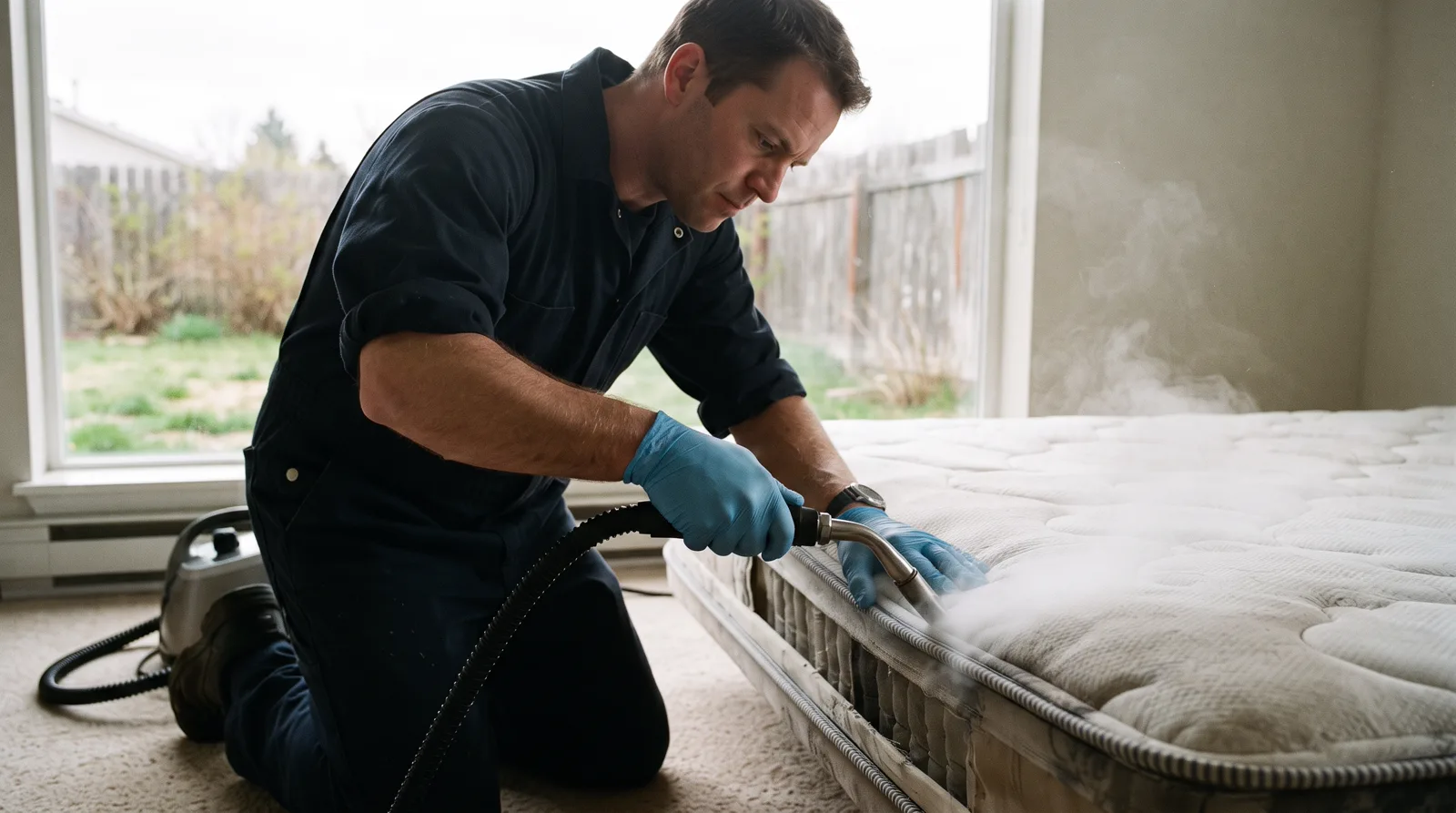
Bed Bug Removal in Stony Plain Sleep Easy Again.
Discreet bed bug extermination with verified local pros. Heat treatment, chemical options and prevention plans for homes and multi-unit buildings.
Complete Bed Bug Solutions
From inspection to long-term prevention, covering every stage of the problem.
Canine or Visual Inspection
Trained detection dogs or thorough manual inspection of bedrooms, furniture, baseboards and outlets. Identifies extent of infestation and guides treatment choice. Report provided same day.
Whole-Room Heat Treatment
Electric heaters raise room temperature to 50°C to 57°C for 90 minutes, killing all life stages including eggs. Single treatment, minimal prep, no chemical residue. Best for severe infestations.
Residual Chemical Treatment
Targeted spray to baseboards, bed frames, cracks and furniture with Health Canada registered products. Requires 2 to 3 visits spaced 10 to 14 days apart. Prep list provided.
Steam & Vacuum Treatment
High-temperature steam applied to mattress seams, box springs, couches and cracks. HEPA vacuum follows. Chemical-free option, safe for children and pets. Often combined with other methods.
Mattress & Box Spring Encasement
Certified bed bug proof encasements trap any survivors and prevent new infestations. Installed after treatment. Keep on for minimum 18 months to starve trapped bugs.
Prevention & Monitoring Plan
Interceptor traps under bed legs, caulking of cracks, clutter reduction guidance and follow-up inspection schedule. Prevents re-infestation from neighbors or travel.
Bed Bugs in Stony Plain & Spruce Grove
🏠 Older Homes & Multi-Unit Buildings
Many Stony Plain and Spruce Grove homes were built before 1990 with shared walls, baseboards and electrical runs that let bed bugs travel between units. Treatment often requires neighbor coordination, which local pros handle with landlords and condo boards daily.
❄️ Heated Homes Year-Round
Alberta winters do not kill bed bugs because indoor temperatures stay comfortable. Bed bugs thrive at 18°C to 27°C, exactly the range most Tri-Region homes maintain. Heat treatment timing is flexible here, with no seasonal wait required.
✈️ Work Camps & Travel Exposure
Oil patch workers rotating to Fort McMurray or Grande Prairie camps, plus families traveling to visit relatives, bring bed bugs home in luggage. Preventive inspection after work rotations or trips is common in Parkland County and catches problems early.
🧱 Furnace Rooms & Crawl Spaces
Bed bugs hide in warm utility areas during treatment, then re-emerge weeks later. Local pros inspect furnace rooms, water heater closets and crawl spaces standard, a step often missed by out-of-town services unfamiliar with Alberta basement layouts.
What it costs here
Everything You Need to Know About Bed Bug Removal in Stony Plain
Signs, treatment options, prep steps and how to avoid bringing them back.
Why Bed Bugs Thrive in Stony Plain and Parkland County Homes
Bed bugs survive year-round in Alberta homes because our indoor heating creates the exact temperature range they need to reproduce. From October through April, most Stony Plain homes maintain indoor temperatures between 18°C and 24°C to stay comfortable during cold snaps and chinook cycles. That range happens to be the optimal breeding zone for bed bugs, which means winter heating turns your bedroom into an incubator. The insects do not care about outdoor frost or snow load on your roof. They live in your mattress seams, baseboards and furniture, feeding every five to ten days and laying eggs in cracks you cannot see without magnification.
Parkland County and Spruce Grove housing stock includes a mix of older bungalows, townhouse complexes and newer subdivisions, all of which are vulnerable. Bed bugs spread through shared walls in multi-unit buildings, hitching onto luggage after trips to Edmonton or other travel, and arriving in second-hand furniture purchased online or at estate sales. Stony Plain's proximity to Highway 16A and the Yellowhead means regular traffic flow from Edmonton, Jasper and points west, and every traveler who stays in a hotel or visits family can unknowingly carry bed bugs home in a suitcase or coat. Once inside, the bugs establish harborage sites in bedrooms and spread to adjacent rooms over weeks or months.
Local pest control professionals report steady bed bug calls throughout the year, not just in summer. The assumption that cold weather kills bed bugs is false when it comes to heated homes. Bed bugs can survive for months without feeding if they enter a dormant state, so even an empty bedroom or a vacation property left unheated for part of the winter can harbor an infestation that resumes once heat and human presence return. Alberta's building code requires adequate insulation and heating, which keeps indoor environments stable and hospitable for pests that would otherwise die outdoors. Understanding this reality is the first step toward recognizing that bed bug removal is not a seasonal issue but a year-round need tied to how we heat and occupy our homes.
How to Know You Actually Have Bed Bugs (Not Just Bites)
Waking up with bites is not proof of bed bugs. Mosquitoes, fleas, spider bites and skin reactions to detergent or fabric can all produce red welts that look similar. Bed bug bites typically appear in clusters or lines on exposed skin, often on arms, shoulders, neck or legs, because the insects feed multiple times in one session as they move across your body. The bites are painless when they happen, since bed bug saliva contains an anesthetic, and the itching or redness shows up hours or days later. However, about thirty percent of people show no reaction to bed bug bites at all, which means you can have an active infestation and never develop visible welts.
The most reliable signs are physical evidence of the bugs themselves or their waste. Check the seams and tufts of your mattress, the cracks in your bed frame, and the edges of your box spring for live bugs, shed skins or tiny black fecal spots that look like ground pepper. Adult bed bugs are about the size of an apple seed, reddish-brown and flat when unfed, but swollen and darker after a blood meal. Nymphs are smaller and translucent, difficult to spot without good lighting. You may also see rusty or reddish smears on sheets or pillowcases where bugs were crushed during the night. Bed bug fecal spots appear on fabric, wood, wallpaper and baseboards near harborage sites, and they do not wipe away easily because the waste contains digested blood.
Inspect beyond the bed. Bed bugs hide in nightstands, dressers, upholstered furniture, electrical outlets, picture frames and even behind loose wallpaper or baseboards. They prefer to stay within a few meters of where people sleep, but heavy infestations spread to adjacent rooms and living areas. If you see multiple signs in more than one location, or if you find live bugs during a daytime inspection, you have an infestation that requires professional treatment. Do not rely on DIY sprays or foggers bought at hardware stores. Those products drive bed bugs deeper into cracks and make the problem harder to eliminate, and they pose health risks if used incorrectly in occupied homes.
What Professional Bed Bug Removal Actually Involves
Effective bed bug treatment in Alberta homes typically uses heat or a combination of heat and targeted insecticide application. Heat treatment involves raising the temperature in the affected rooms or the entire home to 50°C or higher for several hours, which kills bed bugs and eggs at all life stages. The pros performing the work bring portable heaters and fans, seal the treatment area with plastic sheeting to contain heat, and monitor temperatures with remote sensors to ensure every corner reaches lethal levels. Heat treatment is fast, chemical-free and allows you to reoccupy the home the same day once the space cools down, but it requires significant preparation on your part and costs more than chemical-only options.
Chemical treatment uses EPA-registered insecticides applied to baseboards, bed frames, furniture and other harborage sites where bed bugs hide. The products used by licensed pest control professionals are stronger and longer-lasting than anything available in retail stores, and they are applied in precise locations rather than sprayed indiscriminately. Most chemical treatments require two or three visits spaced two weeks apart to catch newly hatched nymphs that survived the first application as eggs. You must vacate the treated rooms for several hours after each spray, and you cannot wash or vacuum treated surfaces for a specified period to allow the insecticide to work. Chemical treatment costs less than heat but takes longer to fully eliminate the infestation.
Preparation is the same regardless of method and involves a major household disruption. You must wash all bedding, clothing and fabric items in hot water and dry them on high heat for at least thirty minutes, then seal them in plastic bags until treatment is complete. You must remove clutter from floors and closets, pull furniture away from walls, empty drawers and disassemble bed frames so the pros can access every crack and crevice. You must vacuum thoroughly and dispose of the vacuum bag in a sealed plastic bag outside your home. If you skip or shortcut any of these steps, the treatment will fail because bed bugs will survive in untreated hiding spots and reinfest the home within weeks. The pros verify preparation before they start treatment, and confirmed prep compliance is part of what makes the service effective.
The Treatment Process from Inspection to Final Clearance
The process begins with a professional inspection to confirm the infestation and identify the extent of the problem. The inspector checks bedrooms, living areas and adjacent rooms for live bugs, eggs, shed skins and fecal spotting. In some cases, the inspector uses a trained canine to detect bed bugs hidden in walls or furniture, though visual inspection by an experienced technician is the standard method in most Stony Plain and Spruce Grove homes. The inspection report tells you which rooms are infested, how severe the problem is, and what treatment method is recommended. You receive a written treatment plan and a detailed prep checklist before any work is scheduled.
Prep work takes one to three days depending on the size of your home and the severity of the infestation. You wash and bag all fabric items, declutter and vacuum, and move furniture as instructed. The pros performing the treatment arrive on the scheduled day with equipment and materials, verify that prep is complete, and begin the heat or chemical application. Heat treatment typically takes six to eight hours for a whole home, during which you must leave the property. Chemical treatment takes two to four hours per visit, and you must stay out of treated rooms for the rest of the day. The pros confirm treatment completion, provide post-treatment instructions, and schedule a follow-up inspection two to three weeks later.
Post-treatment monitoring is critical. You inspect your bed and sleeping areas daily for any signs of surviving or newly hatched bed bugs. You avoid reintroducing clutter or second-hand items until the infestation is confirmed eliminated. The follow-up inspection verifies that no live bugs or new fecal spotting has appeared since treatment. If evidence of bed bugs is found during follow-up, a second treatment is applied at no additional cost under most service agreements confirmed before the initial work begins. Full clearance means no signs of bed bugs for at least three weeks after the final treatment, at which point you can resume normal household routines and bring previously bagged items back into use.
What Bed Bug Removal Really Costs in the Tri-Region
A single-bedroom apartment heat treatment in Stony Plain typically runs $800 to $1,400, while a three-bedroom house in Parkland County can reach $2,200 to $3,800 depending on clutter level and infestation severity. Chemical-only treatments start lower at $400 to $900 for a small space, but nearly always require two or three follow-up visits at $200 to $400 each, bringing total cost close to heat anyway. Combination protocols (heat plus residual chemical barrier) sit in the $1,600 to $4,200 range for a typical Spruce Grove bungalow and deliver the highest first-visit kill rate, which matters when you cannot afford a second round of bites.
Three factors drive price more than anything else: square footage treated, degree of infestation, and prep work completeness. A light infestation caught early in one bedroom costs half what a heavy whole-home spread does, because the pro can isolate treatment and skip heating adjacent rooms. Clutter is the silent cost multiplier. If the crew has to move and inspect every item on your bedroom floor, bag linens, pull furniture from walls, and disassemble bed frames because you did not prep, expect labor surcharges of $150 to $400. Pros in rural Parkland County sometimes add a travel fee of $50 to $100 for properties outside Spruce Grove and Stony Plain, since drive time eats into the tight schedule a heat truck runs.
Alberta's freeze-thaw cycle and older housing stock also shape pricing. Many Stony Plain homes built before 1990 have baseboard heaters, wall vents, and electrical panels that limit how high a heat treatment company can safely push room temperature. If your house cannot sustain 55 degrees Celsius for 90 minutes without tripping breakers or warping trim, the pro may need to run two shorter sessions or add chemical insurance, both of which cost more. Always ask whether your home's electrical capacity and heating infrastructure can handle whole-structure thermal remediation before you commit to heat, because discovering mid-job that it cannot leaves you paying for a partial treatment and a mandatory chemical follow-up you did not budget for.
Comparing Bed Bug Treatment Methods
Heat Treatment
Whole-room or whole-home heat is the fastest path to a complete kill when done correctly. Industrial heaters raise every surface in the treatment zone to 50 to 55 degrees Celsius and hold that temperature for 60 to 90 minutes, which kills all life stages of bed bugs, including eggs that chemical sprays often miss. The pro will use remote sensors and infrared cameras to confirm every corner, baseboard, and furniture cavity hit lethal temp, then monitor for the full dwell time. Heat leaves no residue, requires no re-entry waiting period, and works in one visit if the home is prepped right and the infestation has not spread to wall voids the heat cannot reach.
The downside is cost, electrical demand, and prep intensity. You must remove anything that melts, warps, or explodes under sustained high heat: aerosol cans, medications, vinyl records, certain plastics, candles, makeup, houseplants, pets, and anything battery-powered. Most Spruce Grove providers will give you a detailed prep checklist two days before treatment, and if you skip steps, they either refuse to start or charge you hourly to do it themselves. Heat also offers no residual protection, so if you bring bugs back in on a coat or a piece of furniture the week after treatment, you are starting over. For that reason, many pros apply a light residual barrier chemical around bed legs and baseboards immediately after the heat cycle, bundling both methods.
Chemical Treatment
Insecticide application costs less up front and provides weeks of residual kill, meaning any bug that walks through a treated crack dies days later. Modern bed bug chemistry relies on products like Temprid, Aprehend (a fungal spray), or Crossfire, all of which the province permits for indoor use when applied by a licensed pesticide operator. A good chemical protocol involves crack-and-crevice treatment along baseboards, behind outlet covers, under carpet edges, in bed frame joints, and along the seams of upholstered furniture. The pro will return 10 to 14 days later to treat any nymphs that hatched from eggs the first application missed, because no chemical sold in Canada kills eggs reliably on contact.
Chemical treatments demand more from the homeowner. You must vacate the home for four to six hours after each spray, launder all bedding and clothing in hot water, seal treated mattresses in encasements, and avoid mopping or wiping treated surfaces for two weeks so the residual barrier stays active. If you have infants, asthmatics, or pets, you need to discuss product choice carefully, because some formulations carry stronger odor and longer re-entry restrictions. The main risk with chemical-only approaches is resistance. Bed bug populations in Edmonton and surrounding areas have shown reduced susceptibility to pyrethroids, the most common active ingredient, which is why experienced pros now use rotation protocols or non-pyrethroid options and always plan for at least two visits.
Combination Protocols
Combining heat and chemical gets you the speed of thermal kill plus the insurance of a residual barrier, and it is the approach most Tri-Region pros recommend for moderate to heavy infestations. The typical sequence is heat treatment to eliminate the existing population in one session, followed immediately by a perimeter spray of residual insecticide around sleeping areas, furniture legs, and entry points. That way, any bug you missed in a suitcase or any hitchhiker you bring home in the next month walks through poison before it reaches your bed and re-establishes a colony.
Combination jobs cost more than either method alone, usually landing in the $1,600 to $4,200 range depending on home size and infestation spread. The tradeoff is peace of mind and a much lower callback rate. If your infestation is severe, if you live in a multi-unit building where bugs can migrate from neighboring suites, or if you travel frequently for work and face high re-introduction risk, the combination approach is the only one that addresses both the current problem and future exposure. Just confirm the chemical product the pro plans to use, verify it is licensed for indoor residential application in Alberta, and ask whether you need to do anything differently during prep because some heat-sensitive items also react to certain spray carriers.
Mistakes and Contractor Traps to Avoid
The biggest homeowner mistake is incomplete preparation. If you do not wash and dry every piece of fabric in your bedroom on high heat, vacuum every crack and seam, pull furniture away from walls, and remove clutter from floors and closets, the treatment will miss bugs hiding in the mess. Pros find live bed bugs inside picture frames, behind wall-mounted TVs, in stacks of paper, and inside shoes left on the closet floor. When you skip prep, you guarantee a second visit and a second bill. Many Stony Plain residents underestimate how much work proper prep involves and try to do it the morning of treatment. Start three days early, work room by room, and bag everything you launder in sealed plastic until the pro gives the all-clear.
On the contractor side, red flags include any company that quotes over the telephone without inspecting your home first, promises a one-visit guarantee with chemical treatment alone, or refuses to provide proof of pesticide applicator license and liability coverage. Bed bug work in Alberta requires a valid pesticide applicator certificate issued by the province, and every legitimate operator carries commercial general liability. If the person quoting your job cannot produce either on request, walk away. Another trap is the bait-and-switch estimate: a low headline price that balloons once the crew arrives and discovers your infestation is heavier than the telephone description suggested. A written quote based on an in-person inspection protects you from that, because it locks scope and price before any work starts.
Some outfits push unnecessary add-ons like mattress disposal, professional cleaning, or pesticide-impregnated mattress covers at marked-up prices. You do not need to throw out your mattress unless it is structurally damaged, and you can buy certified bed bug encasements online for half what a contractor charges. Focus on the core treatment, verify the follow-up visit schedule and cost in writing, and ask whether prep assistance is included or billed separately. The best pros provide a detailed prep checklist, confirm their treatment method and products in the quote, and explain exactly what happens if bugs reappear within the service warranty window, which should be at least 30 days for heat and 60 days for chemical or combination treatments.
How to Hire the Right Bed Bug Pro
Start by verifying that the company or individual holds a current Alberta pesticide applicator license, which you can confirm by asking for the certificate number and checking it against provincial records. Every operator applying restricted-use insecticides indoors must carry this credential, and if they dodge the question or claim they only use heat so licensing does not apply, that is false. Heat equipment in commercial use still falls under occupational health and safety regulations, and any serious operator will carry both the pesticide ticket and commercial liability coverage. Ask for proof of insurance that names bed bug treatment specifically, because some general pest control policies exclude it due to the callback risk and litigation history.
Request a written quote that itemizes square footage treated, treatment method, products used (if chemical), number of included follow-up visits, and the warranty or callback policy. A good quote will also list what you must do before treatment day, what the pro will do on-site, and how long you need to stay out of the home afterward. Compare at least two quotes, but do not choose on price alone. The cheapest bid is often chemical-only with no follow-up included, which sounds affordable until you pay for two or three return visits at $300 each. Ask how the company handles re-infestation within the warranty window: do they retreat for free, or is there a service-call charge? What evidence do they need that you prepped correctly and followed their post-treatment instructions? These details separate pros who stand behind their work from those who blame the homeowner and bill you again.
Finally, ask about timing and scheduling. Bed bug work is time-sensitive because every day you delay allows the population to grow and spread to new rooms, but a pro who promises same-day or next-day service without inspecting your home first is either desperate for work or running a high-volume, low-quality operation. A thorough provider will schedule an inspection within two to three days, deliver a written quote within 24 hours of that visit, and book treatment within the following week. If the operator tries to start spraying chemicals the same day they walk in for the estimate, stop them. You deserve time to review the quote, verify their credentials, and prepare your home properly, and any rush to treat before you are ready is a red flag, not a service advantage.
How Tri-Region Services Helps
Tri-Region Services routes your bed bug inquiry to one vetted local operator who tells us they hold pesticide licensing and liability coverage. You get a single in-person inspection and a written quote with no obligation, which makes it easy to compare scope, method, and price without fielding calls from multiple companies. The pro who responds is based in or serves Stony Plain, Spruce Grove, and Parkland County regularly, so travel fees stay minimal and they understand the housing stock, electrical constraints, and prep challenges common in the area. If the first quote does not fit your timeline or budget, let us know and we will route your request to a different provider. The goal is a transparent, no-pressure process that gets you from first bite to confirmed elimination without the guesswork of searching online reviews or gambling on whoever answers the phone first.
How We Select Exterminators
Every bed bug removal pro in the Tri-Region network meets these standards before dispatch.
Pest Management License Verified
Current Alberta pest management license and liability coverage stated at signup.
Heat Treatment Equipment Owned
Pros offering heat treatment provide proof of calibrated equipment and operator training records.
Multi-Unit Experience Documented
For apartments and condos, we match you with pros who show prior building-wide treatment projects.
Written Treatment Plan Provided
Every quoted job includes a written plan with method, number of visits and prep requirements before you commit.
Post-Treatment Inspection Included
Follow-up inspection window is confirmed in writing, not left to your guess or phone tag.
Direct Line to the Pro Doing the Work
You receive contact info for the actual exterminator before the first visit, not a call center.
This page is not tied to a contractor's brand. Leads route straight to your one local partner. Verified reviews can appear here once that partner has them (never fabricated).
Serving the whole Tri-Region
7 Bed Bug Questions Stony Plain Homeowners Ask
How do I know if I have bed bugs or just mosquito bites?+
Does heat treatment really work better than chemicals?+
What prep work do I need to do before treatment?+
Can bed bugs survive in Alberta winter if I leave my windows open?+
Will my neighbors know I have bed bugs if I get treatment?+
How much does bed bug removal cost in Stony Plain and Spruce Grove?+
How soon can I sleep in my bed again after treatment?+
What stops bed bugs from coming back after treatment?+
Get your free quote
Tell us what you need and a local pro will get right back to you.
- ✓ Sent straight to a local business
- ✓ You choose who you hire
- ✓ Free, with no obligation