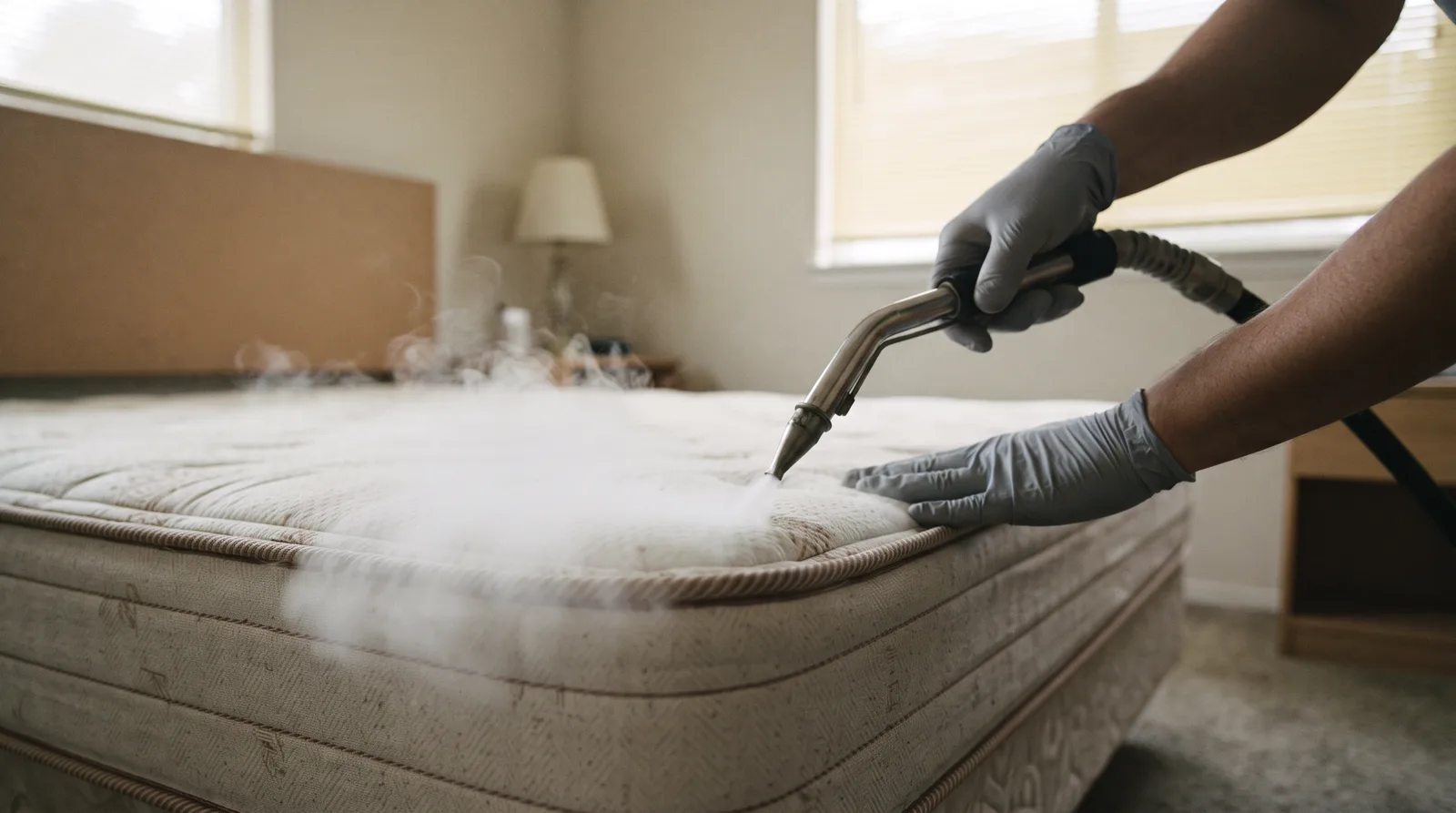
Bed Bug Treatment That Actually Eliminates the Problem.
Heat treatment, chemical treatment, or combination plans. The pest control specialist we match you with confirms the method and guarantee in writing before any work starts.
Bed Bug Treatment Services Across Spruce Grove
Every treatment plan includes inspection, chosen method, and follow-up. The pro confirms the approach before booking.
Inspection and Assessment
Visual inspection of bedrooms, baseboards, furniture and mattress seams. The specialist identifies infestation level, shows you evidence, and recommends a treatment plan. Inspection fee typically applies toward treatment if you book same day.
Heat Treatment
Specialized equipment heats rooms to 50°C or higher for several hours, killing bed bugs and eggs in all life stages. No chemicals, safe for most belongings. Works in one session for most homes. The pro confirms heat safety for electronics and heat-sensitive items before starting.
Chemical Treatment
Targeted spray application to baseboards, bed frames, cracks and known hiding spots. Requires two to three treatments spaced 10 to 14 days apart to catch newly hatched bugs. Lower cost than heat, but longer timeline. The specialist explains which products are used and safety waiting periods.
Combination Treatment
Heat treatment for immediate knockdown, followed by residual chemical application to prevent re-infestation. Recommended for severe infestations or multi-unit buildings where bugs can migrate from neighbouring units. The pro maps out the treatment sequence before booking.
Follow-Up Inspection and Re-Treatment
Return visit 10 to 21 days after initial treatment to check for surviving bugs or new hatch activity. If live bugs are found, a second treatment is applied at no additional charge under most elimination guarantees. Follow-up schedule confirmed in the original service agreement.
Multi-Unit Building Treatment
Treatment for apartment buildings, townhouse complexes, or duplexes where bed bugs can move between units through walls and shared ventilation. The pest control pro inspects adjacent units, treats the infested suite and creates a barrier in neighbouring spaces. Coordination with property management confirmed before starting.
Why Bed Bugs Thrive in Alberta Homes
❄️ Alberta Winters Keep Them Indoors Year-Round
Bed bugs cannot survive outside in Alberta cold, so they stay inside homes 365 days a year. There is no seasonal die-off like with other pests. Once they are in, they stay until treated. Infestations can grow undetected through fall and winter, making early spring a common discovery time when people start changing bedding more often.
🏘️ Multi-Unit Buildings in Spruce Grove and Stony Plain
Apartment buildings, townhouses and seniors complexes are common in the Tri-Region, and bed bugs move easily through shared walls, electrical conduits and ventilation ducts. Treating one unit without checking neighbours often leads to re-infestation within weeks. The pest control specialist we connect you with will recommend adjacent unit inspection if you are in a multi-unit building.
✈️ Travel and Visitor Traffic Bring Bed Bugs Home
Bed bugs hitch rides in luggage, clothing and bags from hotels, Airbnbs, and visitors' homes. Edmonton International Airport, work camps, and family visits around holidays are common entry points. Once home, they spread from suitcases to bedrooms in days. The pro can show you where to check after travel and how to isolate luggage before unpacking.
👨👩👧 Safe Treatment Methods for Families and Pets
Heat treatment is chemical-free and safe for children, pets and people with sensitivities. Chemical treatments require temporary evacuation, usually four to six hours, and the specialist confirms which products are used, their safety data, and the re-entry waiting period before booking. Most chemical treatments used in Alberta are low-toxicity and pet-safe once dry.
What it costs here
Everything You Need to Know About Bed Bug Treatment in Spruce Grove
How to identify bed bugs, choose the right treatment method, prepare your home, and prevent re-infestation.
What Bed Bug Treatment Actually Involves
Professional bed bug treatment in Spruce Grove and the surrounding area typically combines chemical application with heat or steam treatment, and sometimes requires two or three visits spaced 10 to 14 days apart to catch newly hatched nymphs. The licensed pest control professional we match you with will inspect every room where people sleep, rest, or sit for extended periods, because bed bugs travel surprisingly far from the bedroom once an infestation matures. Treatment focuses on cracks, baseboards, furniture joints, electrical outlets, and any clutter where bugs hide during daylight. A thorough job takes three to six hours for an average three bedroom home, and you'll need to vacate during chemical application and for several hours afterward depending on the products used.
Heat treatment uses specialized equipment to raise the temperature in your home to 55 degrees Celsius or higher for several hours, which kills bed bugs and their eggs in one session without chemicals. This method works well for severe infestations or for households with young children, pets, or chemical sensitivities, but it costs significantly more upfront, typically $2,000 to $4,500 for a full home treatment compared to $400 to $1,500 for chemical methods. The equipment is loud, uses a lot of power, and requires you to remove anything that can melt or warp, including candles, crayons, vinyl records, certain plastics, and some electronics. Heat is faster but chemical treatments are more common in Parkland County because they cost less and most infestations are caught before they spread to every room.
Integrated pest management combines both approaches: chemical treatment for the main infestation zones, steam or spot heat for furniture and belongings that can't be sprayed, and monitoring traps placed under bed legs and along baseboards to catch stragglers. The pest control professional we connect you with will explain which combination makes sense for your specific situation based on the size of the infestation, the layout of your home, whether you have crawl spaces or shared walls with neighbors, and your budget. No method works instantly, and you'll see dead and dying bugs for a week or two after treatment, which is normal and actually confirms the treatment is working.
Why Bed Bugs Are a Growing Problem in Spruce Grove and Parkland County
Bed bugs arrive in Spruce Grove, Stony Plain, and Acheson the same way they arrive everywhere: hitching a ride on luggage, clothing, used furniture, or boxes moved from an infested location. Families returning from vacation, students moving between rentals, seniors downsizing and buying second-hand furniture, and anyone shopping at thrift stores or accepting donations all create pathways for bed bugs to enter a previously clean home. The Edmonton metro area sees steady travel for work, sports tournaments, and family visits, and bed bugs are expert stowaways. One pregnant female in a suitcase or a couch cushion is enough to start an infestation that reaches hundreds of bugs within three months.
Alberta's indoor climate actually favors bed bugs year-round because we heat our homes to 20 to 22 degrees Celsius all winter, which is the ideal temperature range for bed bug reproduction and feeding. Unlike outdoor pests that die off or go dormant in our deep freeze winters, bed bugs live entirely indoors and don't care what the temperature is outside. Older homes in Spruce Grove with baseboard heaters, wall-to-wall carpet, and wood trim provide countless hiding spots, and multi-unit buildings with shared walls or ventilation systems allow bugs to spread from one unit to another even if your own housekeeping is spotless. The bug you find in your bedroom may have started two doors down.
The used furniture market in Parkland County has grown over the past decade as more people buy and sell through online classifieds, estate sales, and community swap groups, and bed bugs exploit that trend ruthlessly. A free couch, a thrift store dresser, or a mattress purchased from someone moving out of an apartment can carry a hidden population of bugs that explodes once it's in your warm home. Students and young families furnishing a first home or rental on a budget are especially vulnerable, and by the time the bites start, the bugs have already spread from the initial piece of furniture to the bed frame, nightstand, and baseboards. Once established, bed bugs are nearly impossible to eliminate without professional help.
Warning Signs You Have a Bed Bug Infestation
The earliest sign of bed bugs is usually unexplained bites that appear overnight, often in a line or cluster on exposed skin like your arms, shoulders, neck, or legs. The bites look like small red welts, sometimes with a darker red dot in the center, and they itch intensely for several days. Not everyone reacts to bed bug bites, so one person in the household might be covered in welts while another has no visible marks even though both are being bitten. The bites themselves don't confirm bed bugs because they resemble mosquito bites, spider bites, or hives, so you need to find physical evidence of the bugs to be sure.
Physical evidence includes live bugs, which are reddish brown, flat, oval, and about the size of an apple seed when fully grown, or smaller and pale tan if they're nymphs that haven't fed yet. Check the seams and folds of your mattress, the cracks in your bed frame, behind the headboard, along baseboards especially near the bed, inside electrical outlet covers, and in any clutter or storage boxes near where you sleep. Bed bugs leave dark brown or black fecal stains on fabric that look like tiny ink dots or smears, and you'll often see these on sheets, pillowcases, the mattress seam, or the wall behind the bed before you spot a live bug. You might also find tiny pale yellow eggs or translucent shed skins clustered in cracks and corners.
A sweet musty smell often develops once an infestation is well established, described as smelling like raspberries, almonds, or coriander, though not everyone can detect it and the smell is rarely strong enough to notice early. Blood spots on your sheets from bugs that were crushed during the night or from bites that bled slightly are another clue, though they can also come from scratching in your sleep. If you wake up with new bites several nights in a row, find dark stains on your mattress, or spot even one live bug, it's time to call a licensed pest control professional for an inspection. Waiting to see if it gets worse only gives the population time to grow and spread to other rooms.
The Professional Bed Bug Treatment Process from Start to Finish
The process starts with a thorough inspection by the licensed pest control professional we match you with, who will check your bedroom first and then expand to other rooms, furniture, and storage areas to determine how far the infestation has spread. Expect the inspector to pull your bed away from the wall, remove bedding, inspect the mattress and box spring seams, check behind the headboard, look inside nightstands and dressers, examine baseboards and carpet edges, and even check electrical outlets and picture frames if the infestation looks advanced. The inspection typically takes 30 to 60 minutes for an average home, and the professional will give you a written report identifying where bugs were found, an estimate of infestation severity, and a recommended treatment plan with upfront pricing.
Once you approve the treatment plan, you'll receive a detailed preparation checklist that must be completed before treatment day, and this step is critical because poor preparation leads to incomplete treatment and continued infestation. You'll need to wash all bedding, clothing, and fabric items in hot water and dry them on high heat for at least 30 minutes, then seal them in plastic bags until after treatment. Remove clutter from floors, closets, and under beds, vacuum thoroughly, and move furniture a few inches away from walls so the technician can treat baseboards and cracks. If heat treatment is being used, you'll also need to remove heat-sensitive items. The pest control professional will walk you through the checklist and answer questions, and most provide a printed or emailed version you can follow step by step.
Treatment day usually requires you to leave the home for four to six hours if chemical sprays are being used, or up to eight hours for heat treatment depending on the size of your home and the equipment being run. The professional applies residual insecticide to all identified harborage areas, cracks, baseboards, bed frames, and furniture, or sets up heating equipment and monitors temperature levels to ensure lethal heat reaches every room and hidden space. You'll be told exactly when it's safe to return, and you should follow any post-treatment instructions carefully, such as not mopping or wiping down treated surfaces for a set period, keeping pets and children away from treated areas until dry, and avoiding heavy cleaning that could remove the residual insecticide barrier.
A follow-up inspection and possible re-treatment is scheduled 10 to 14 days after the initial visit to catch any nymphs that hatched from eggs since the first treatment, because no chemical or heat treatment kills 100 percent of eggs reliably. The pest control professional confirms whether the infestation is eliminated, applies additional treatment if live bugs or new evidence is found, and provides monitoring advice so you can catch any future re-infestation early. Most professionals in the network offer a service guarantee covering re-treatment within 30 to 90 days if bed bugs reappear, and the specific terms are confirmed in writing before the initial treatment begins. The entire process from inspection to final clearance typically takes three to five weeks.
What Bed Bug Treatment Actually Costs in Spruce Grove and Parkland County
A single room heat treatment typically runs $400 to $800 in the Tri-Region, while whole home heat treatments range from $1,200 to $3,500 depending on square footage and infestation severity. Chemical spray treatments cost less up front, usually $300 to $600 for a two bedroom home, but often require two or three follow up visits at $150 to $250 each because eggs survive the initial application and hatch seven to ten days later. Multi-unit buildings face higher costs because treating one suite without treating adjacent units just moves the bugs next door, so expect $2,000 to $5,000 for a fourplex if the landlord addresses the problem properly.
The biggest cost driver is the level of infestation and how much preparation the homeowner can handle themselves. Light infestations caught early, where bugs are confined to the bed frame and mattress seams, cost far less than heavy infestations that have spread into baseboards, electrical outlets, furniture joints, and closet clutter. Pros charge more when they need to move and treat every item in a room, or when clutter prevents access to hiding spots. A hoarder situation can double or triple the base price because the technician has to bag and treat hundreds of items, and the risk of reinfestation from missed harbourage points goes up. Alberta's dry winter air helps heat treatments work faster because lower humidity means the target temperature of 50°C penetrates materials more effectively, but older homes with poor insulation in Stony Plain and Spruce Grove may need longer heat exposure to reach lethal temperatures inside wall voids, adding $200 to $400 to the quote.
Size of the home, number of bedrooms, and whether you need whole home treatment or targeted room treatment all shift the final number. A studio apartment heat treatment might cost $400, while a five bedroom two storey house with a finished basement can hit $3,500 if bugs have spread throughout. Companies that use monitoring and canine inspections charge an extra $200 to $400 for the dog's time, but that cost pays off if it prevents a second unnecessary treatment or finds satellite infestations the homeowner missed. Furniture disposal is another hidden cost. Heavily infested mattresses, box springs, and upholstered furniture sometimes have to go to the landfill, and that can add $100 to $300 in disposal fees and replacement expense. The pro you hire should walk the space, assess the infestation level, and give a written quote that breaks down room-by-room costs, the number of visits included, and whether follow up inspections thirty and sixty days out are part of the package or billed separately.
Comparing Treatment Methods: Heat, Chemical, and Integrated Approaches
Heat treatment kills bed bugs at all life stages in a single visit when done correctly. Commercial heaters raise the room temperature to 50°C to 57°C and hold it there for four to six hours, ensuring the heat penetrates into furniture joints, baseboards, and wall voids where bugs hide. The advantage is speed and thoroughness with no chemical residue, which matters in homes with infants, pets, or residents sensitive to pesticides. The downside is cost, the need to remove heat sensitive items like vinyl records, aerosol cans, medications, and electronics, and the fact that heat offers no residual protection. If a bug hitchhikes back into the home on a backpack or jacket a week later, you are starting over. Heat works best for severe infestations where you need immediate control and are willing to combine it with monitoring traps and vigilant inspection afterward.
Chemical treatments rely on pesticides applied as sprays, dusts, or aerosols to cracks, crevices, bed frames, and harbourage points. Pyrethroids are common but many bed bug populations in urban Alberta have developed resistance, so pros increasingly use neonicotinoids, insect growth regulators, or desiccant dusts like diatomaceous earth and silica gel that physically damage the bugs' waxy coating and cause dehydration. Chemical treatments cost less and leave a residual barrier that kills bugs for weeks or months after application, but they require two or three visits spaced ten to fourteen days apart to catch newly hatched nymphs. You also have to prep the space by washing and bagging all bedding and clothing, which is labour intensive. Chemical treatments work well for light to moderate infestations where the homeowner is organized enough to follow the prep checklist and can tolerate a multi-visit process.
Integrated pest management combines heat or chemical knockdown with monitoring, encasements, and behaviour changes to prevent reinfestation. A typical IPM plan starts with a thorough inspection using monitoring devices or a canine team to map the infestation, follows with heat or chemical treatment to eliminate the active population, installs mattress and box spring encasements to trap any survivors and prevent future colonization, and sets up climb up interceptors under bed legs to monitor for new activity. The pro trains the homeowner to inspect regularly, reduce clutter, and recognize early warning signs. IPM costs more up front, often $1,500 to $4,000 for a whole home program, but it has the highest long term success rate because it addresses the conditions that allowed the infestation in the first place. Alberta's cold winters mean bed bugs do not survive outdoors, so reinfestation almost always comes from bringing bugs in on used furniture, luggage after travel, or visitors. An IPM approach teaches you how to inspect those risk points and catch problems when they are still small and cheap to fix.
Common Mistakes and Contractor Red Flags to Avoid
The biggest homeowner mistake is trying to solve a bed bug problem with hardware store spray cans and foggers. Over the counter pyrethroids rarely reach the concentrations needed to kill resistant bed bugs, and foggers just scatter the population into wall voids and adjacent rooms, turning a one bedroom problem into a whole home infestation. Bug bombs also leave pesticide residue on countertops, dishes, and children's toys, creating a health risk without actually solving the bug problem. Another common error is throwing out the mattress without treating the rest of the room. Bed bugs live in the bed frame, baseboards, nightstands, and clutter just as often as they live in the mattress, so disposing of the mattress and buying a new one just gives the surviving bugs a fresh place to colonize. Many Spruce Grove homeowners have spent $800 on a new mattress only to find it infested again within two weeks because they never addressed the harbourage points around the room.
On the contractor side, the clearest red flag is a company that guarantees total elimination in one visit with no follow up. Bed bugs are notoriously difficult to eradicate, and any honest pro will tell you that monitoring and follow up inspections are essential to confirm success. A guarantee without conditions usually means the company will blame reinfestation on the homeowner and refuse to honor the warranty. Another warning sign is a quote given over the phone without an in-person inspection. Infestation levels vary wildly, and a responsible company needs to see the space, assess clutter and access issues, and identify all the harbourage points before pricing the job. Quotes that are half the market rate often come from unlicensed operators using diluted or expired pesticides, or from contractors who rush the job and miss critical treatment areas.
Ask whether the company is licensed to apply pesticides in Alberta. Structural pest control falls under provincial pesticide regulations, and the technician doing the work should hold a valid certificate and be able to show proof of liability coverage and active Insurance stated at signup by the referring service or verifiable through public records. Be cautious of contractors who insist on treating the entire home when the infestation is clearly confined to one or two rooms. Upselling whole home treatment when it is not needed is a classic revenue grab. Also watch for pros who refuse to provide a written quote, a treatment plan that lists the products being used, and a timeline for follow up visits. Legitimate operators document everything because they know bed bug cases can drag on for months and clear records prevent disputes. If the contractor pressures you to sign same day or dismisses your questions about their methods, walk away and find someone who treats you like a partner in solving the problem, not a transaction to close.
Hiring a Qualified Bed Bug Exterminator in Spruce Grove and Stony Plain
Start by confirming the company or individual holds a valid Alberta pesticide applicator certificate and can provide documentation of liability coverage and WCB clearance. In Alberta, anyone applying restricted pesticides for hire must be certified, and working with an unlicensed operator puts you at risk if something goes wrong or if the treatment fails and you need to escalate to legal action or insurance claims. Ask for references from recent bed bug jobs in the Tri-Region and follow up with at least two of them. Bed bug work is stressful and invasive, so hearing how the contractor communicated, whether they showed up on time, and whether the treatment actually worked gives you insight you will not get from a website testimonial.
Request a written quote that breaks down the cost per room, the number of visits included, the products or methods being used, and the terms of any guarantee or warranty. The quote should specify what prep work you are responsible for, like washing bedding and bagging clothing, and what the contractor will handle. It should also state clearly whether follow up inspections at thirty and sixty days are included or billed separately, and what happens if the infestation persists after the initial treatment. A vague quote that just lists a total price with no detail is a sign the contractor is either inexperienced or plans to add charges later. Reputable pros know that transparency up front prevents conflict later, and they build detailed quotes as a matter of routine.
Finally, trust your gut about communication and professionalism. Bed bug treatments require cooperation between you and the contractor. You need to prep the space correctly, follow re-entry instructions after chemical treatments, and monitor for signs of remaining activity. If the person quoting the job talks down to you, dismisses your concerns, or refuses to explain their process in plain language, the relationship will only get worse when the treatment is underway. Look for a pro who listens, asks questions about your specific situation, and tailors the treatment plan to your home rather than selling a one size fits all package.
How Tri-Region Services Helps
Tri-Region Services connects Spruce Grove, Stony Plain, and Parkland County residents with one vetted, local bed bug exterminator for a free written quote. The pros in the referral network have confirmed liability coverage stated at signup, and they specialize in residential pest control with a track record in the Tri-Region. You describe the problem, we match you with a qualified professional, and they assess your situation in person and provide a detailed quote with no obligation. One call, one pro, and a clear path to getting your home back.
How Tri-Region Verifies Every Pest Control Specialist
We only connect you with pros who meet these standards before dispatch.
Liability Coverage Stated at Signup
liability insurance registration and commercial liability insurance stated at signup pest control specialist is added to the network.
Treatment Method Explained Before Booking
The pro walks through heat versus chemical options, what to expect, and which method fits your situation before you commit.
Urgent Requests Prioritized
Bed bug requests go out to matched specialists immediately, and urgent infestations in bedrooms with children are prioritized.
Elimination Guarantee in Writing
The pest control pro provides a written guarantee covering follow-up treatments at no extra charge if live bugs reappear within the guarantee period.
Safe for Children and Pets, Confirmed Up Front
The specialist confirms which treatment chemicals are used, their safety profile, and required waiting times before re-entry.
Follow-Up Inspection Included in Service
A return visit 10 to 21 days after treatment is standard to verify elimination and apply any necessary second treatment under the guarantee.
This page is not tied to a contractor's brand. Leads route straight to your one local partner. Verified reviews can appear here once that partner has them (never fabricated).
Serving the whole Tri-Region
8 Questions About Bed Bug Treatment in Spruce Grove
How do I know if I have bed bugs in my Spruce Grove home?+
What is the difference between heat treatment and chemical treatment for bed bugs?+
How long does bed bug treatment take in a typical Spruce Grove home?+
Do I need to leave my home during bed bug treatment?+
How soon will bed bugs be gone after treatment?+
What if bed bugs come back after treatment?+
Are bed bug treatments safe for pets and kids in my Spruce Grove home?+
How much does bed bug treatment cost in Spruce Grove?+
Get your free quote
Tell us what you need and a local pro will get right back to you.
- ✓ Sent straight to a local business
- ✓ You choose who you hire
- ✓ Free, with no obligation