Chimney · Spruce Grove
Chimney Cleaning in Spruce Grove: Why It Matters Before Burning Season
Every October the phones at Spruce Grove chimney companies start ringing off the hook. Homeowners who have not touched their fireplace since March suddenly remember they need a clean flue before the first real cold snap. By the time November rolls around the reputable sweeps are booked two to three weeks out. If you wait until you smell smoke backing up into the living room you have already waited too long.
What Creosote Actually Does Inside Your Flue
Creosote is not just soot. It is a tar-like residue that forms when wood smoke cools and condenses on the interior walls of your chimney. In the Spruce Grove area where nighttime lows regularly hit minus twenty from December through February the temperature differential between the hot flue gases and the cold masonry is extreme. That differential drives faster condensation and thicker creosote buildup.
There are three stages of creosote. Stage one is a fine black powder that brushes away easily. Stage two is a shiny hard glaze that requires rotary tools or chemical treatments. Stage three is a thick tar-like coating that can fuel a chimney fire burning at two thousand degrees Fahrenheit. Most chimney fires in Parkland County start at stage two or three because the homeowner did not realize the buildup had progressed beyond what a basic brush could handle.
A typical cord of seasoned spruce or pine burned in an older non-EPA stove produces roughly fifteen to twenty pounds of creosote over a heating season. Burn wet wood or choke down the air supply for overnight burns and that number doubles. The math is simple. More creosote equals higher fire risk.
WETT Inspections Are Not Optional If You Have Insurance
Alberta insurance companies follow the guidelines set by Wood Energy Technology Transfer. If you have a wood burning appliance, fireplace insert, free standing stove, pellet stove, or even an outdoor boiler, your policy likely requires a WETT inspection at installation and again after any major change or incident. Many policies also require a Level One inspection annually or at minimum every two years.
A Level One inspection covers all readily accessible portions of the venting system and appliance. The technician checks clearances to combustibles, flue condition, door gaskets, and proper operation. A Level Two adds video scanning of the flue interior and is required when you change fuel types, reline the chimney, or after a chimney fire. Level Three involves demolition to access concealed areas and is rare.
In Spruce Grove and Stony Plain the most common insurance trigger is a home sale. The buyer's inspector flags the wood stove. The insurer demands a current WETT report before they bind coverage. If you cannot produce one you either pay for an emergency inspection or you lose the sale. We have seen this delay closings by two weeks in January when every WETT technician in the capital region is slammed.
When to Book in the Tri-Region
The sweet spot for booking is the last two weeks of August through the end of September. The weather is still mild so technicians can work on roofs without ice cleats. The schedule is open. You get your pick of morning slots. By October fifteenth the calendar fills with reactive calls, people who smelled smoke or failed a WETT during a real estate transaction.
If you heat primarily with wood you should schedule twice per year. Once in late summer before the season starts. Once in late March after the heavy burn season ends. The spring cleaning removes the acidic creosote that would otherwise sit in the flue all summer eating away at the liner. It also gives you a clean baseline for the next WETT inspection.
For occasional users, weekend fires only, an annual cleaning in September is sufficient. Burn one cord or less per year and you can stretch to every eighteen months provided you pass a Level One visual check. Keep the receipt. Your insurance adjuster will ask for it.
What a Proper Cleaning Includes
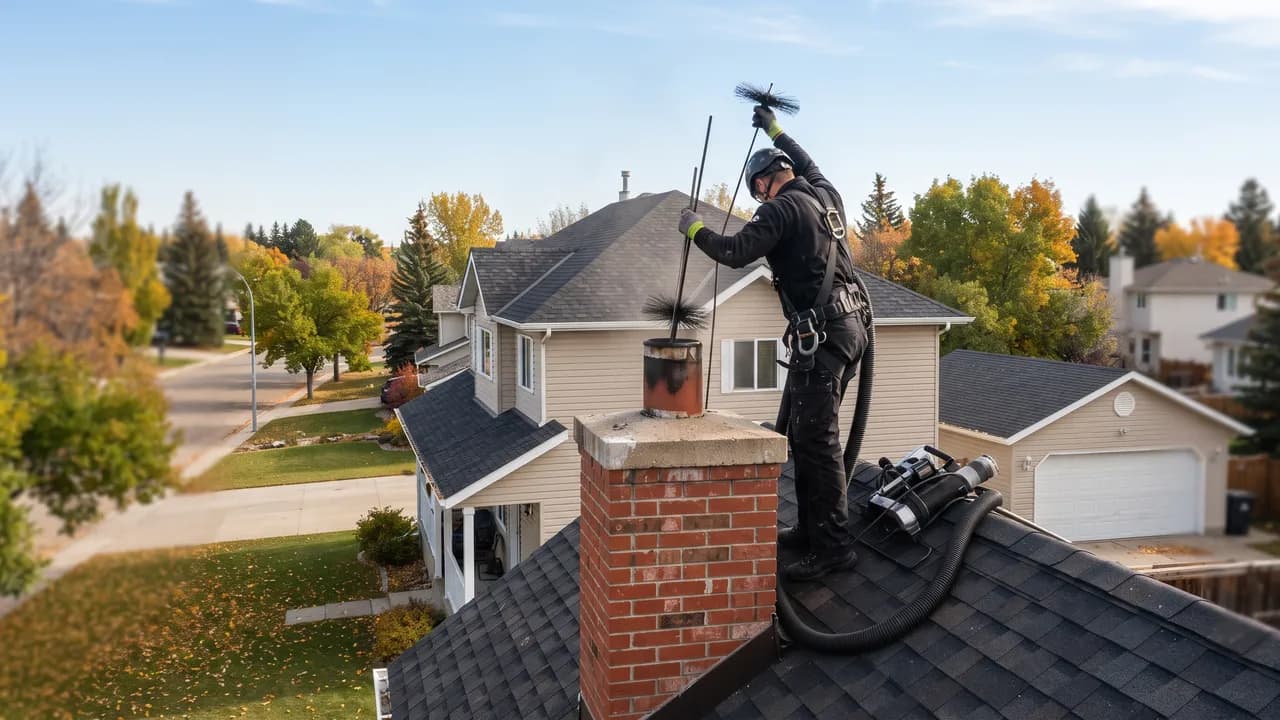
A professional chimney cleaning in Spruce Grove should cover every component from the appliance outlet to the termination cap. The technician brushes the flue liner with the correct diameter brush, six inch for most fireplace inserts, eight inch for many free standing stoves. They vacuum the smoke chamber, the smoke shelf, and the firebox. They remove and clean the damper plate if accessible. They inspect the chimney cap for corrosion, missing mesh, or bird nests.
They also check the exterior. Mortar joints on masonry chimneys deteriorate fast in our freeze thaw cycles. The crown wash, that sloped concrete top, cracks and lets water in. Water plus creosote equals acid that eats the liner from the outside in. A good sweep flags these issues before they become a five thousand dollar rebuild.
For factory built metal chimneys the technician checks the storm collar, the flashing, and the support brackets. Wind storms off the open fields west of Highway 779 regularly loosen brackets on exposed chimneys. A loose chimney shifts in high winds and pulls the flashing away from the roof deck. That is a leak waiting for the next chinook melt.
Common Spruce Grove Chimney Problems
- Short chimneys on bungalows. Many sixties and seventies ranches in Broxton Park and Lakewood have chimneys that barely clear the roof ridge. They suffer from poor draft in cold weather and heavy creosote buildup because the flue gases cool too fast.
- Exterior masonry chimneys on the north wall. These stay frozen all winter. The cold flue creates a reverse draft at startup. Smoke rolls into the room until the flue warms. An insulated liner solves this but many homeowners skip it to save money.
- Aluminum liners in masonry chimneys. Installed in the nineties during the gas conversion boom. Aluminum fails fast with wood heat. It corrodes, collapses, and blocks the flue. Stainless steel 316 or 316Ti is the only correct liner for solid fuel.
- Missing or damaged rain caps. Water is the enemy. A twenty dollar cap prevents thousands in liner replacement. Yet half the chimneys we inspect in Spruce Grove have no cap or a rusted through one.
- Improper clearances to combustibles. DIY stove installations in garages and workshops often violate the eighteen inch clearance to drywall or the thirty six inch clearance to the ceiling. WETT inspectors fail these every time.
Insurance Claims and Documentation
If you ever have a chimney fire the first thing your adjuster asks for is the most recent cleaning receipt and WETT report. No paperwork means denied claim. We have worked with homeowners in Parkland County who lost coverage because they could not prove maintenance. The fire department report notes heavy creosote. The insurer cites negligence. The payout disappears.
Keep a folder, physical or digital, with every receipt, every WETT report, every photo of the cleaned flue. Note the date, the technician name, the company, and the scope of work. If the sweep finds cracks in the flue tiles take a photo of the video scan. That documentation proves you acted responsibly.
Some insurers offer a discount for annual WETT inspections. Ask your broker. The discount rarely covers the inspection cost but it creates a paper trail that protects you at renewal time.
Choosing a Chimney Company in the Tri-Region
Not everyone with a brush and a ladder is qualified. Look for WETT certified technicians. Ask for their certification number and verify it on the WETT Inc website. Ask for liability insurance, two million minimum. Ask for references from jobs in Spruce Grove, Stony Plain, or Parkland County within the last twelve months.
Red flags: cash only pricing, no written quote, no WETT number, pressure to reline immediately without showing you the video scan, no business license from the City of Spruce Grove or Parkland County. A legitimate company provides a written report with photos, a clear scope of work, and a warranty on labor.
Price range for a standard cleaning and Level One inspection in our area runs two hundred fifty to three hundred fifty dollars. Add a video scan and you are at four hundred to five hundred. A stainless steel reline for a two story chimney runs forty five hundred to seventy five hundred depending on access and liner diameter. Get two quotes but compare apples to apples, same liner grade, same warranty, same cleanup standard.
What You Can Do Between Professional Visits
- Burn only seasoned wood below twenty percent moisture. A twenty dollar moisture meter from Princess Auto pays for itself in one cord.
- Never burn cardboard, treated lumber, Christmas trees, or garbage. These create intense heat spikes and toxic creosote.
- Run the stove hot for twenty minutes each morning to burn off overnight creosote. A magnetic stove pipe thermometer helps you hit the three hundred to five hundred degree sweet spot.
- Check the chimney cap from the ground with binoculars after every major wind storm. Missing mesh means birds. Birds mean nests. Nests mean blockage and carbon monoxide risk.
- Install a carbon monoxide detector on every level and within five meters of every bedroom. Test monthly. Replace every seven years.
Pellet Stoves Need Attention Too
Pellet stoves produce less creosote but they produce fine fly ash that accumulates in horizontal vent runs and elbows. The exhaust fan pushes ash into the vent where it builds up and restricts flow. The stove then burns poorly, produces more ash, and the cycle accelerates. Clean the vent annually. Vacuum the burn pot weekly during season. Clean the heat exchanger tubes monthly. Most Spruce Grove pellet owners skip the vent cleaning and wonder why their stove shuts down on safety error in January.
Gas Fireplaces Are Not Maintenance Free
Direct vent gas fireplaces need the glass cleaned, the burner ports cleared, the pilot assembly inspected, and the vent termination checked for corrosion or bird nests. The ceramic logs degrade over time and can block the pilot. A yellow flame indicates incomplete combustion and carbon monoxide risk. Annual service by a gas fitter with a combustion analyzer is cheap insurance. Many Spruce Grove HVAC companies offer this as a fall tune up package.
Booking Your Appointment
Do not wait for the first snowfall. The best chimney companies in the Tri-Region book solid by Thanksgiving. If you need a chimney cleaning in Spruce Grove this season, call in August or September. Ask for a morning slot so the technician has daylight for roof work. Confirm they bring a video camera for the scan. Confirm they provide a written WETT report if you need one for insurance.
If you are buying a home with a wood burning appliance, make the WETT inspection a condition of your offer. Schedule it during the inspection window. Negotiate repairs or a price reduction based on the findings. We have seen buyers save fifteen thousand dollars on a reline because the seller did not know the chimney was condemned.
If you are selling, get the WETT done before you list. A clean report is a selling feature. A dirty chimney is a negotiation lever for the buyer. The cost of cleaning and inspection is negligible compared to the leverage it gives you.
Winter in Spruce Grove is long. A safe, efficient fireplace makes it bearable. A neglected chimney makes it dangerous. The difference is a phone call in August.
Frequently asked questions
How often should I clean my chimney in Spruce Grove if I burn wood every night from October to April?
Twice per year. Once in late summer before the season starts and once in late March after heavy use ends. The spring cleaning removes acidic creosote that would corrode the liner over summer.
Does my Alberta home insurance require a WETT inspection for my wood stove?
Most policies require a WETT inspection at installation and after any major change. Many also require a Level One inspection annually or every two years. Check your policy wording or ask your broker for the specific requirement.
What is the typical cost for a chimney cleaning and Level One WETT inspection in Spruce Grove?
Expect two hundred fifty to three hundred fifty dollars for a standard cleaning with Level One inspection. Add a video scan and the price rises to four hundred to five hundred dollars.
Can I clean my own chimney and satisfy insurance requirements?
No. Insurance companies require documentation from a WETT certified technician. A DIY cleaning leaves no paper trail and will not satisfy your policy conditions.
What are signs my chimney needs cleaning right now?
Smoke backing into the room, a strong tar smell even when the stove is cold, reduced draft, visible shiny creosote glaze inside the flue, or a chimney cap clogged with debris.
Are pellet stove vents cleaned the same way as wood stove chimneys?
The process differs. Pellet vents accumulate fine fly ash in horizontal runs and elbows. They require specialized vacuum equipment and brushes sized for three or four inch pellet vent pipe. Annual cleaning is still necessary.
Need a local contractor in the Tri-Region?
Browse verified local pros for Spruce Grove, Stony Plain and Parkland County.
Browse the directory