HVAC · Spruce Grove
Furnace Not Working in the Cold? A Spruce Grove Troubleshooting Guide
It is minus twenty-eight before windchill. The kind of morning that makes you question every life choice that led you to the Edmonton capital region. You shuffle to the thermostat. The display reads twenty but the air coming from the vents feels like a walk through Kinsmen Park in January. Your furnace is not working and the house is dropping fast.
This scenario plays out across Spruce Grove, Stony Plain and Parkland County every winter. The good news is that many no-heat calls trace back to simple issues you can verify in five minutes. The bad news is that some symptoms point to cracked heat exchangers, failed inducer motors or gas valve problems that demand a licensed gas fitter immediately. Knowing the difference saves you money and keeps your family safe.
Start With the Three-Minute Rule
Before you pick up the phone, run through these checks. They cost nothing and resolve a surprising share of service calls.
Thermostat Power and Settings
- Batteries. If your thermostat runs on AA or AAA cells, swap them fresh. A dying battery can hold the display but lack the voltage to close the relay that signals the furnace.
- Mode. Confirm it is set to Heat not Off or Cool. Sounds obvious but happens more than you would think after a shoulder-season weekend.
- Fan switch. Set to Auto not On. On runs the blower continuously which can push cool air between heating cycles.
- Temperature differential. Raise the setpoint at least three degrees above room temperature. Some systems have a built-in deadband that prevents short cycling.
Breaker and Disconnect
- Main panel. Locate the double-pole breaker labeled Furnace or Air Handler. Flip it fully off then fully on. A tripped breaker often sits in the middle position not fully off.
- Furnace disconnect. Most installs in the Tri-Region have a switch on the side of the unit or a pull-out disconnect box within sight. Verify it is engaged.
- Blower compartment door. Many modern furnaces have a safety switch that kills power if the blower door is not latched tight. Check after any recent filter change.
Filter Condition
A clogged filter restricts airflow enough to trip the high-limit switch. The furnace fires, overheats, shuts down on safety, cools, tries again. You get short cycles and lukewarm air. Pull the filter. Hold it to a light. If you cannot see light through the pleats, replace it. Standard one-inch filters in this climate should be checked monthly from November through March. Four-inch media filters can stretch to three months but verify anyway.
When the Basics Check Out
You have fresh batteries, breakers on, filter clean, thermostat calling for heat. The furnace still sits silent or cycles without delivering warmth. Now the diagnostic tree branches into territory where tools and licensing matter.
Ignition Sequence Failures
Stand near the furnace and listen for the startup sequence. You should hear:
- Inducer motor starts (a steady whir)
- Pressure switch proves draft (a click)
- Hot surface igniter glows (visible through the sight glass on many models)
- Gas valve opens (a soft thunk)
- Burners light (a smooth roar)
- Blower delays thirty to sixty seconds then ramps up
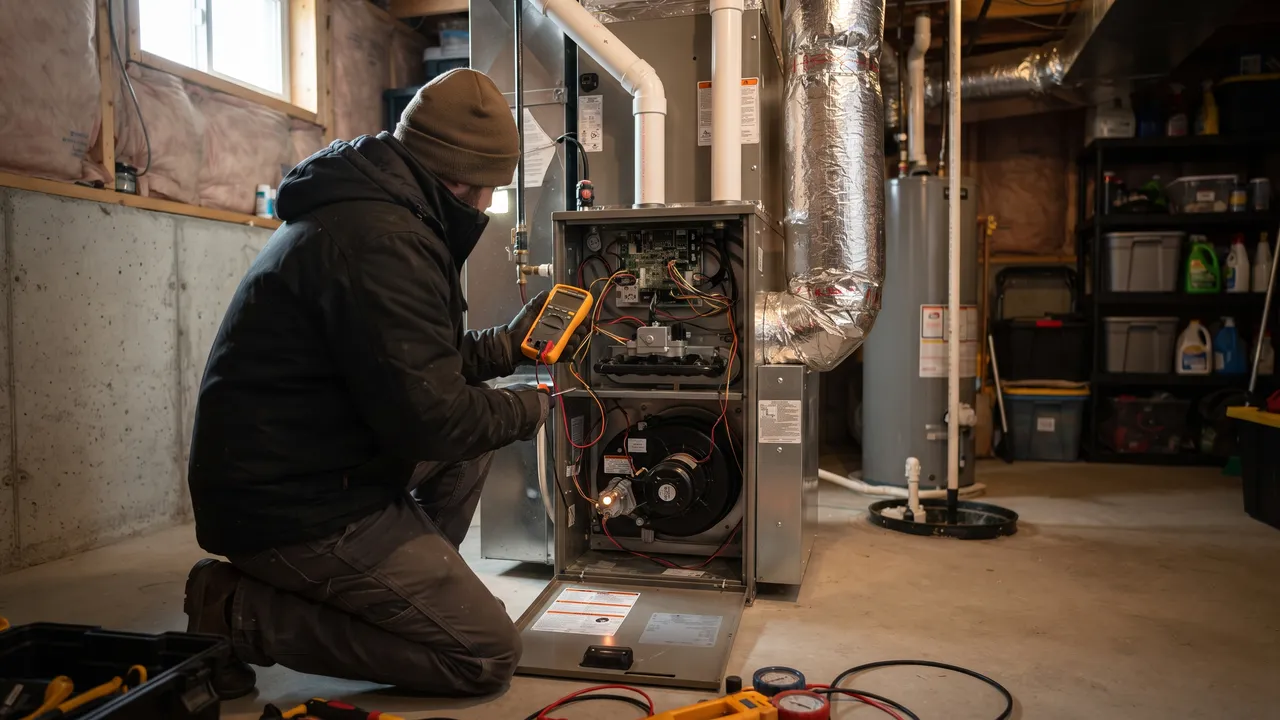
If the sequence stops at step one, the inducer motor or its capacitor may be failed. If it stops at step two, the pressure switch or its tubing could be blocked by condensate or a bird nest in the vent termination. If the igniter glows but no gas flows, the gas valve or control board is suspect. If burners light but the blower never comes on, the high-limit switch may be open or the blower motor itself is dead.
None of these are DIER repairs. Gas valve diagnosis requires a manometer and combustion analyzer. Pressure switch testing needs a magnehelic gauge. Control board swaps demand proper programming for your specific model. This is where you call a professional from local HVAC contractors who carry the right meters and parts for the brands common in Spruce Grove homes: Carrier, Lennox, Goodman, Trane, Napoleon, Keeprite.
Condensate Blockages in High-Efficiency Units
Ninety-plus percent AFUE furnaces produce gallons of condensate each heating day. The drain line runs to a floor drain or a condensate pump. If that line freezes in an unheated garage or clogs with algae, the furnace safety switch cuts power to the gas valve. Check the drain line for ice at the exterior termination. Pour warm water down the trap if accessible. If the problem recurs, the line pitch or insulation needs correction by a tech.
No-Heat Emergency Protocol
Alberta nights can hit minus thirty-five. When the indoor temperature drops below fifteen degrees, pipes risk freezing and occupants face genuine health risk. Treat this as an emergency.
Immediate Actions
- Close interior doors to concentrate heat in occupied rooms
- Run faucets at a pencil-thin trickle to keep water moving
- Layer clothing and use electric space heaters on dedicated circuits only
- Never use oven, barbecue or unvented propane heaters indoors
- Call a contractor who offers twenty-four hour no-heat response
Many Spruce Grove heating companies prioritize no-heat calls above scheduled maintenance. When you phone, state clearly: no heat, indoor temperature, household includes seniors infants or medical equipment. That triage information gets you placed correctly in the dispatch queue.
What the Tech Will Need
Have ready the furnace model and serial number from the rating plate inside the blower compartment. Note any error code flashing on the control board LED. Describe what you heard during startup attempts. This information lets the tech bring the right parts on the first truck roll which matters when supply houses in Acheson or Nisku may not stock your specific board or gas valve.
Preventive Reality for Parkland County Homes
The Tri-Region sees wide temperature swings. Chinook thaws followed by deep freezes stress heat exchangers through rapid expansion and contraction. Rural properties on well water often have higher mineral content that accelerates condensate drain clogging. Homes near the Yellowhead corridor accumulate more dust from traffic which loads filters faster.
An annual fall tune-up catches cracked heat exchangers before they leak carbon monoxide. It verifies gas pressure at the manifold, checks combustion analysis numbers, cleans the flame sensor, tests safety switches and confirms vent termination clearances. Most manufacturers require documented annual maintenance to honor warranty claims on heat exchangers and compressors.
If your furnace is over fifteen years old, start budgeting for replacement. The efficiency jump from eighty percent to ninety-six percent AFUE cuts gas consumption roughly sixteen percent. On a typical two-thousand-square-foot Spruce Grove home that can mean three to four hundred dollars per heating season at current FortisAlberta rates. Rebates through the Canada Greener Homes Grant and local utility programs often cover a meaningful chunk of the install cost.
Choosing the Right Contractor
Not every company with a magnetic sign on a white van holds a Gas Fitter Class A or B ticket. In Alberta, anyone working on gas-fired equipment must be a certified gas fitter employed by a company with a valid Gas Contractor License from the Alberta Safety Codes Authority. Ask for the license number. Verify it on the ASCA public registry if you want to be thorough.
Look for contractors who:
- Provide written diagnostics with photos before repair authorization
- Stock common parts for major brands on their trucks
- Offer flat-rate pricing for standard repairs
- Carry liability insurance
- Employ technicians who live in Spruce Grove, Stony Plain or Parkland County
Local techs know the common venting configurations in Westgrove, Broxton Park, Heritage Estates and the acreages south of Highway 16. They understand the snow drift patterns that bury sidewall terminations on corner lots. That context speeds diagnosis and prevents repeat visits.
Final Word
A furnace that quits at three AM on a minus thirty night is not a mystery. It is a machine that has been cycling thousands of times since October. The components that fail are predictable. The safety systems that shut it down are doing their job. Your job is to rule out the simple stuff, recognize when the tools exceed your toolbox, and call a licensed gas fitter who can restore heat safely and legally.
Keep the number of a trusted Tri-Region HVAC contractor in your phone contacts before you need it. When the cold hits, you will be glad you did.
Frequently asked questions
My furnace turns on but blows cold air. What should I check first?
Check the thermostat fan setting. If it is set to On instead of Auto, the blower runs continuously and pushes unheated air between cycles. Switch to Auto and wait five minutes. If the air stays cold, the high-limit switch may have tripped from a dirty filter or the gas valve is not opening. Replace the filter and verify the gas valve at the meter is on. If those check out, call a licensed gas fitter.
How do I know if my furnace error code is something I can fix?
Most modern furnaces flash an LED code through the blower compartment sight glass. Count the flashes and match to the legend on the wiring diagram inside the door. Codes for open pressure switch, open high-limit or flame sensor fault often trace to a dirty filter, blocked vent or dusty flame sensor. You can clean the flame sensor with fine steel wool if you are comfortable removing it. Any code referencing gas valve, control board or inducer motor requires a gas fitter.
Is it safe to run my furnace with a cracked heat exchanger if I have a CO detector?
No. A cracked heat exchanger allows combustion products including carbon monoxide to mix with household air. CO detectors are a last line of defense not a license to operate unsafe equipment. Alberta gas code requires immediate red-tag and shutoff. Continued operation risks lethal exposure especially during long run cycles in deep cold. Replace the heat exchanger or the furnace.
Why does my furnace short cycle every few minutes?
Short cycling usually means the furnace overheats and trips the high-limit switch. Common causes: dirty filter, closed supply registers, blocked return air, undersized ductwork or a failing blower motor. Check the filter first. Ensure all supply registers are open and returns unobstructed. If the problem persists, the blower motor may not be moving enough air or the heat exchanger could be fouled. A tech needs to measure temperature rise across the heat exchanger.
What should I do if my furnace vent is buried in snow?
High-efficiency furnaces use PVC vent pipes that terminate near grade level. Deep snow or drifting can block the intake or exhaust. Shovel a three-foot radius around both pipes. Do not use heat guns or open flame to melt ice on PVC. If icing recurs, the vent pitch or termination kit may need modification by a gas fitter to meet code clearances above expected snow depth.
How much does an emergency no-heat service call cost in Spruce Grove?
After-hours diagnostic fees typically range from one hundred fifty to three hundred dollars plus parts and labour. Weekday daytime calls run ninety to one hundred fifty for the first hour. Many companies waive the diagnostic fee if you proceed with the repair. Ask for the fee structure when you call. Always confirm the technician holds a valid Alberta Gas Fitter certificate before authorizing work.
Need a local contractor in the Tri-Region?
Browse verified local pros for Spruce Grove, Stony Plain and Parkland County.
Browse the directory