Roofing · Spruce Grove
Ice Dams in the Tri-Region: Why They Form and How to Stop Them
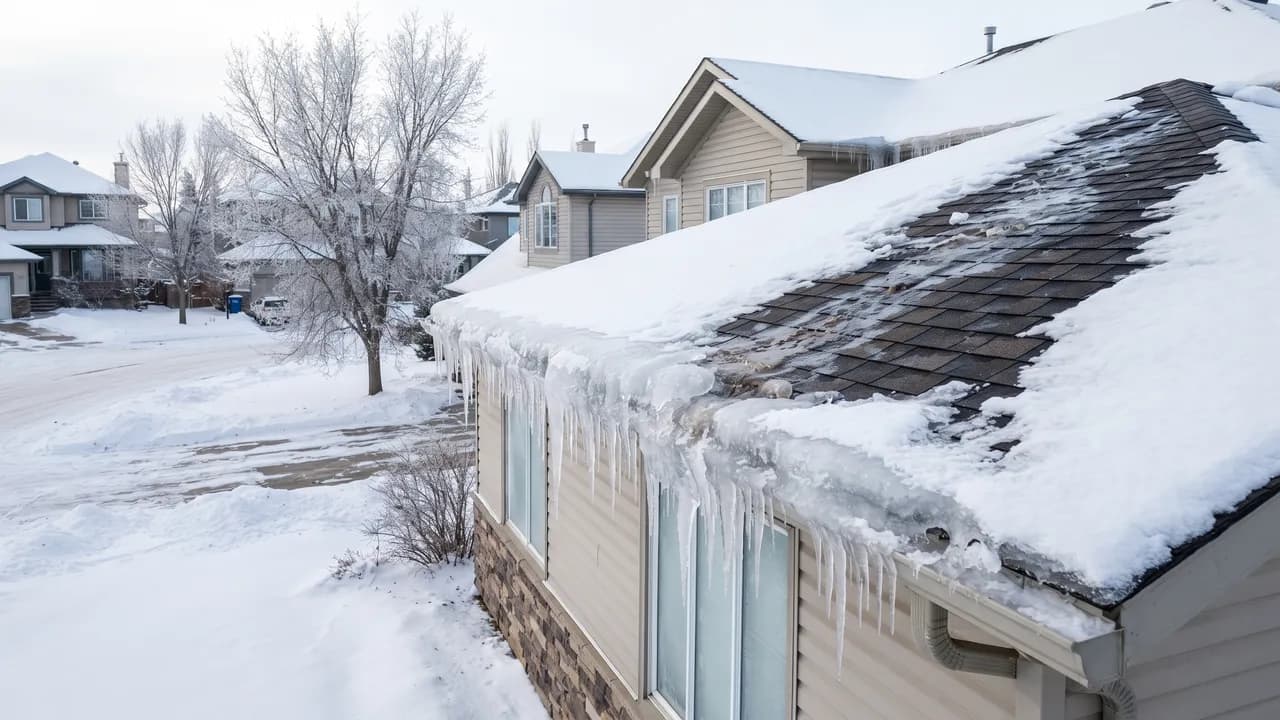
If you have lived through a winter in Spruce Grove or Stony Plain you have seen them. Thick ridges of ice clinging to eavestroughs. Icicles the size of fence posts hanging off the roof edge. Water staining interior ceilings by February. Ice dams are not just a nuisance. They are a sign your roof system is losing the battle against heat loss and freeze-thaw cycles that define our region.
The Tri-Region sits in a climate zone that delivers the perfect recipe for ice dams. We get deep cold snaps where temperatures sit below minus twenty for weeks. Then a chinook rolls in and shoots daytime highs above zero. Snow on the roof melts from both directions. Heat escaping from the attic melts the bottom layer. Sun and warm air melt the top. Water runs down until it hits the cold eave overhang where no heat reaches. It freezes. A dam forms. The next meltwater pools behind it and works its way under shingles.
Why Tri-Region Homes Are Especially Vulnerable
Housing stock across Spruce Grove Stony Plain and Parkland County varies widely. You have 1970s split-levels in Broxton Park with original attic insulation. You have 1990s two-stories in Woodhaven with complex roof lines and multiple valleys. You have newer infill builds in Stony Plain's Heritage Estates where tight envelopes still suffer from bath fan venting into the attic instead of through the roof. Every era has its weak points.
The common thread is attic temperature. When your attic sits more than five degrees warmer than outside air snow melt accelerates. In our region that temperature gap is easy to hit. A poorly sealed attic hatch. Recessed lights leaking warm air. Bathroom exhaust fans dumping moisture and heat straight into the trusses. Ductwork running uninsulated through the attic space. Each flaw adds heat to the roof deck.
Roof geometry matters too. Homes in Lakewood and Eastborn often have low-slope sections over garages or porches. These areas hold snow longer and melt slower creating ideal dam territory. Dormers and skylights interrupt insulation continuity. Complex valleys on newer executive builds in Genesis on the Lakes concentrate water flow into narrow channels that freeze fast.
The Damage Chain Reaction
Ice dams destroy more than shingles. The cycle works like this. Water backs up under shingles and soaks roof sheathing. Rot starts in plywood or OSB. Mold follows in the attic insulation. Water tracks down wall cavities ruining drywall and promoting mold inside living spaces. The weight of ice tears eavestroughs off fascia boards. Fascia rots. Soffits pull away. By spring you are looking at structural repair not just a roof patch.
I have seen homes in Spruce Grove's Deer Park where a single bad winter caused fifteen thousand dollars in sheathing replacement and interior repairs. The homeowner thought the stain on the bedroom ceiling was a one-time leak. It was the third year of progressive sheathing rot they could not see from the ground.
Fix the Root Cause Not the Symptom
Chipping ice off the eaves with a hammer damages shingles and risks injury. Heat cables use electricity and only melt a narrow path. They do not stop the dam from forming higher up. The only lasting fix is keeping the roof deck cold. That means three things working together. Air sealing. Insulation. Ventilation.
Air Sealing Comes First
You cannot insulate your way out of air leaks. Warm moist air from the house carries far more heat than conduction through fiberglass. Top plates where interior walls meet the attic floor are major leak sites. So are plumbing stacks electrical penetrations and the chimney chase. In Parkland County acreages with open-web floor trusses the chase ways act like chimneys pulling conditioned air up and out.
A blower door test combined with thermal imaging finds these leaks. Target the big holes first. Seal the attic hatch with weatherstripping and rigid foam. Box off recessed lights with airtight covers rated for insulation contact. Foam around pipe and wire penetrations. Ensure bathroom and kitchen exhaust fans vent through the roof not into the soffit or gable.
Insulation Depth and Continuity
Current Alberta building code calls for R-50 in attics. That is roughly sixteen inches of blown cellulose or eighteen inches of fiberglass. Most homes built before 2010 sit at R-20 to R-30. Adding insulation pays back fast in heating savings alone. But depth without continuity fails. The insulation must cover the top plates all the way to the eave without blocking soffit vents. This is where raised heel trusses or insulation baffles earn their keep.
In older Spruce Grove bungalows the roof pitch often leaves almost no space at the eave. Spray foam applied to the underside of the roof deck creates a conditioned attic and solves the space crunch. It costs more upfront but eliminates the ventilation balancing act entirely. For many Tri-Region homeowners it is the cleanest solution.
Ventilation That Actually Moves Air
Soffit vents and ridge vents only work if air flows between them. Insulation stuffed into the eaves blocks the intake. Baffles keep the channel open. Ridge vent must run the full length of the peak. Turbine vents or box vents spaced every ten feet work on older roofs without continuous ridge. Gable vents alone create dead zones. The goal is a complete wash of cold air across the entire roof deck underside.
I have inspected attics in Stony Plain's Southridge where the ridge vent was installed but the soffits were solid vinyl with no perforations. Zero airflow. The attic hit thirty degrees Celsius on a minus ten day. The fix was simple. Perforated soffit panels and baffles. The ice dams stopped the next winter.
When to Call a Professional
Some air sealing is DIY friendly. Caulk and foam from the hardware store handle plumbing penetrations and top plates if you can reach them. Blown insulation requires a machine and knowledge of density settings. Spray foam requires certified installers. Ventilation upgrades involve roof work and fall protection.
If you see any of these signs bring in a pro. Water stains on interior ceilings or walls. Ice buildup thicker than two inches at the eave. Icicles forming daily through cold snaps. Shingles curling or granule loss at the roof edge. Eavestroughs pulling away from fascia. Attic frost on nail tips or sheathing in January.
A qualified roofer assesses the full system not just the shingles. They check flashing condition valley integrity and penetration boots. They evaluate whether the roof structure can handle added insulation weight. They spot hail damage or wind lift that insurance may cover. Local roofing contractors know the specific failure patterns common to Tri-Region neighborhoods.
Eavestrough damage often goes hand in hand with ice dams. The weight of ice bends hangers snaps spikes and pulls fascia loose. Spring runoff then overshoots the damaged trough and erodes grade around the foundation. Eavestrough specialists can install heavier gauge troughs larger downspouts and hidden hanger systems that resist ice loading better than spike-and-ferrule.
Insulation contractors bring the diagnostic tools. Blower door testing thermal imaging and combustion safety checks for homes with natural draft appliances. They calculate the exact R-value needed and specify the right product for your attic configuration. Insulation pros familiar with Parkland County building stock know which vintage homes have vermiculite that may contain asbestos and require abatement before any work starts.
Seasonal Maintenance That Helps
Even a well-sealed insulated and vented roof benefits from smart winter habits. Use a roof rake with a telescoping pole to pull snow off the lower three feet of roof after heavy falls. Stand on the ground. Never climb a snow-covered ladder. Clear snow from around roof vents so they can exhaust. Keep downspout extensions connected and directed away from the foundation.
If a dam forms despite prevention create channels through the ice with calcium chloride in a nylon stocking laid vertically up the roof. Do not use rock salt. It kills landscaping and corrodes flashing. The channel lets trapped water drain. This is emergency mitigation not a fix. Plan the real repair for spring when the roof is dry and safe to work on.
The Cost of Waiting
Delaying action compounds damage exponentially. Sheathing rot spreads laterally along trusses. Mold remediation adds thousands. Interior repairs mean paint drywall and possibly flooring. Foundation erosion from overflowing eavestroughs undermines footings. A three thousand dollar insulation and ventilation upgrade prevents fifty thousand in structural repair.
Tri-Region winters are not getting gentler. The freeze-thaw swings are intensifying. Homes that survived twenty years on marginal attics are now failing because the climate baseline shifted. The houses staying dry are the ones where the attic temperature matches the outdoor temperature within a few degrees. That is the standard to aim for.
Start with an assessment. Know where your house sits on the spectrum. Then prioritize the fixes that move the needle most. Air sealing first. Insulation second. Ventilation third. Eavestrough reinforcement as needed. Roof replacement only when the shingles are truly done. That sequence saves money and prevents the panic call when water drips through the bedroom light fixture in February.
Frequently asked questions
How do I know if my attic has enough insulation for Tri-Region winters?
Measure the depth. You need roughly sixteen inches of blown cellulose or eighteen inches of fiberglass to hit R-50. If you can see the tops of the joists you are under-insulated. A thermal image on a cold night shows heat loss zones instantly.
Can I just add more insulation without air sealing first?
No. Air leaks carry warm moist air through the new insulation condensing on the cold roof deck. The insulation traps moisture against the wood accelerating rot. Seal the leaks then insulate.
Why do my eavestroughs keep pulling away every spring?
Ice dams form at the eave because the roof overhang stays cold. The ice weight bends hangers and pulls spikes. Upgrading to hidden hangers with three-inch screws into the fascia board resists this better. Fixing the attic heat loss stops the dam from forming in the first place.
Are heat cables a good long-term solution?
Heat cables only melt a thin path through the ice. They do not prevent dams from forming higher up the roof. They use significant electricity and create a false sense of security. They are a band-aid not a cure.
What is the typical cost to fix ice dam causes in Spruce Grove?
Air sealing and blown insulation top-up for a typical bungalow runs three to six thousand dollars. Spray foam on the roof deck runs eight to fifteen thousand. Ventilation upgrades add one to three thousand. Compare that to ten to fifty thousand for sheathing and interior repair.
How fast can a contractor respond in January when I have active leaking?
Most Tri-Region roofers offer emergency tarp service within twenty-four hours. Permanent repair waits for a dry window. Book the diagnostic in fall so the fix happens before the deep freeze hits.
Need a local contractor in the Tri-Region?
Browse verified local pros for Spruce Grove, Stony Plain and Parkland County.
Browse the directory