Seasonal · Spruce Grove
The Spring Home Maintenance Checklist for Tri-Region Homeowners
Spring in the Tri-Region does not arrive on a calendar date. It shows up when the snow finally pulls back from the boulevards along Jennifer Heil Way and the melt water starts running down the storm drains near Century Crossing. For homeowners in Spruce Grove, Stony Plain and Parkland County that signals the start of the annual inspection season. The freeze thaw cycle we just lived through is hard on roofs, hard on concrete and hard on anything that sits at grade level. A systematic walk around the property now prevents the emergency calls in July.
Start at the roofline
The first place to look is up. Asphalt shingles take a beating when daytime highs hover above zero and nights drop below minus ten. That daily expansion and contraction loosens granules and lifts tabs. Walk the perimeter with binoculars before you ever set foot on a ladder. Look for missing shingles along the ridge, curling edges on the south facing slope and any granules collecting in the eavestrough below. If you spot three or more problem areas on a single slope it is time to call a pro. A qualified crew from local roofing specialists can confirm whether you need a targeted repair or a full replacement before the summer storm season rolls in off the Rockies.
Eavestrough and downspout reality check
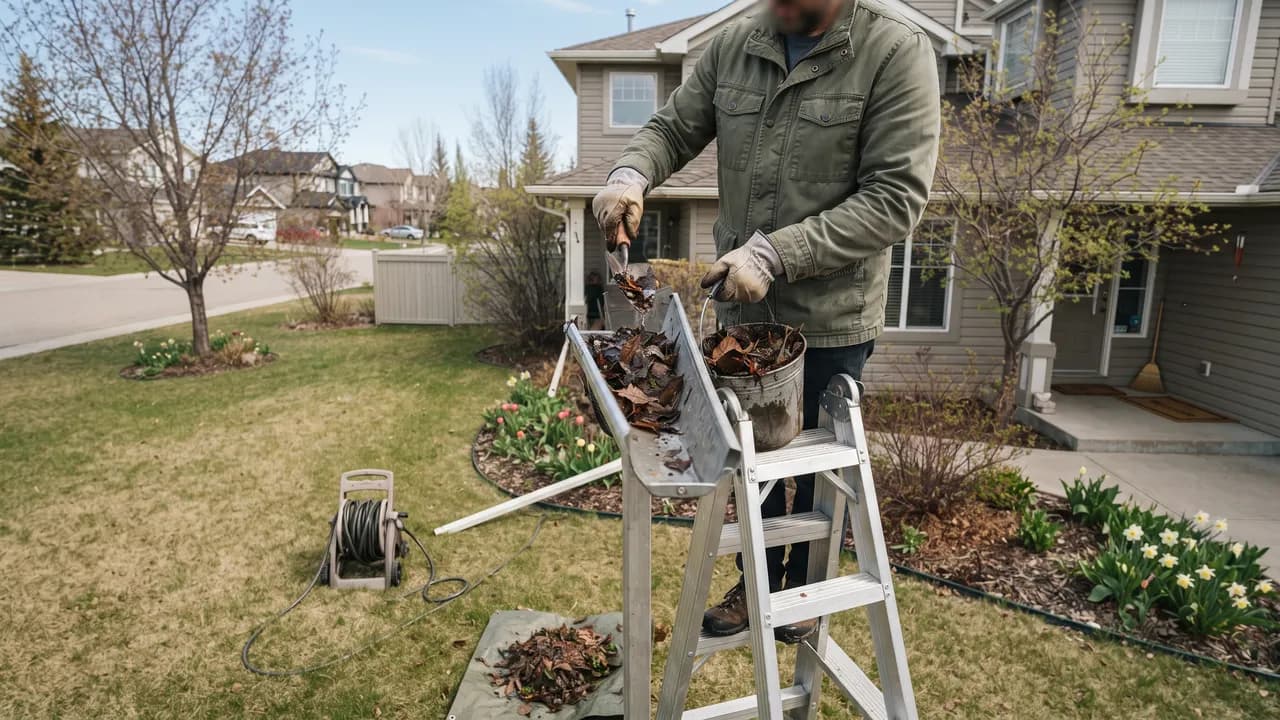
While you are looking at the roof, check the gutters. The melt water test is simple. Run a garden hose into the farthest corner of the trough and watch the flow. Water should move steadily toward the downspout with no pooling. Pooling means either a sagged section or a clogged elbow. Sagged sections usually trace back to a loose hanger bracket that pulled free under ice weight. Clogged elbows are often packed with shingle granules and poplar cotton from the trees lining Grove Drive. Clean them now or you will be digging wet sludge out of a downspout in a thunderstorm. If the troughs are pulling away from the fascia or you see rust holes at the seams, reach out to eavestrough installers who know the proper slope for our long straight runs.
Driveways and walkways
Concrete and asphalt in the Tri-Region move. The clay subsoil under Parkland County swells when wet and shrinks when dry. That movement cracks driveways along the control joints and heaves sidewalk slabs at the expansion gaps. Walk every hard surface with a piece of chalk. Circle every crack wider than a credit card. Mark any slab that has lifted more than a quarter inch relative to its neighbor. Those trip hazards are a liability if a visitor catches a toe. Hairline cracks can be sealed with a polyurethane caulk rated for freeze thaw. Wider gaps need a backer rod and a self leveling sealant. If you have a section that has settled toward the foundation, that is a drainage problem not a concrete problem. A concrete contractor can mudjack or polyjack the slab back to grade and re-establish positive slope away from the house.
Window wells and grade drainage
Every basement window well in Spruce Grove and Stony Plain should have a clear drain tile connection at the bottom. Pull the plastic cover off and shine a flashlight down. You are looking for standing water, leaf mats or a crushed drain pipe. If the well holds water after a rain, the drain is blocked or the grade has settled toward the foundation. Regrade the soil so it slopes away at a minimum five percent for the first six feet. Top up with clay based fill, not topsoil. Topsoil acts like a sponge. Clay sheds water. While you are there, check the window seals. The rubber gaskets on slider windows dry out after a few winters. A bead of exterior grade silicone keeps the draft out and the moisture off the sill.
HVAC and air conditioning
Do not wait for the first thirty degree day to discover your condenser fan motor seized. Pull the disconnect at the outdoor unit. Remove the top grille. Vacuum the coil fins with a soft brush attachment. Bent fins restrict airflow. Straighten them with a fin comb from any hardware store on McLeod Avenue. Check the suction line insulation. Missing or crumbling foam lets the line sweat and drip into the furnace cabinet. Replace it with three eighths inch closed cell foam and UV resistant tape. Inside, swap the furnace filter for a MERV 11 pleated media. A restrictive filter makes the blower work harder and shortens the heat exchanger life. If the system is over twelve years old or you heard a new rattle last cooling season, book a HVAC tune up now. Spring scheduling is wide open. July scheduling is not.
Attic ventilation check
While the HVAC tech is on site, ask them to peek in the attic. Proper ventilation prevents the ice dams that plagued many neighbourhoods along Westgrove Drive last January. You need one square foot of net free vent area for every three hundred square feet of attic floor. Half low at the soffits, half high at the ridge or roof vents. Bathroom fans must vent to the exterior, not into the soffit. If you see frost on the roof nails in March, you have a ventilation problem. Fix it before the next heating bill arrives.
Landscaping and yard systems
The yard wakes up fast once the ground thaws. Irrigation systems need a blow out check before you pressurize the lines. A cracked lateral line under the sod wastes thousands of litres and creates a swamp in the back yard. Walk each zone while it runs. Flag any geysers or soggy patches. Tree roots from the mature spruce along the back lanes love to crush poly pipe. If you are adding beds or expanding the patio, call for locates before you dig. The gas line and fibre runs are shallow in the newer developments around Prescott and Westwind. A landscape contractor can design a drainage plan that works with our clay soil instead of fighting it. French drains, dry creek beds and proper grading keep the basement dry and the patio level.
Fence and deck inspection
Pressure treated posts rot at ground level. Probe the base of every fence post with a screwdriver. Soft wood means replacement. Deck ledger boards should have flashed connections to the house rim joist. Missing flashing is the number one cause of rot in the rim joist and the sill plate. Stain or seal horizontal surfaces every two years. Vertical surfaces can go four. Use a penetrating oil based product for the deck boards. Film forming products peel on horizontal surfaces in our UV intense summers.
Exterior caulking and paint
Walk the siding with a tube of polyurethane caulk. Hit every joint where dissimilar materials meet. Brick to vinyl. Stucco to wood trim. Window flange to siding. The freeze thaw cycle opens these joints every year. A three dollar tube of caulk prevents a three thousand dollar rot repair. Check the paint on the front door and the garage door. South facing doors fade fast. A light sand and a coat of exterior acrylic extends the life of the substrate. If the garage door panels are rusting at the bottom, wire brush the rust, prime with rust converter and topcoat with a direct to metal enamel.
Sump pump and backwater valve
Pour a five gallon pail of water into the sump pit. The pump should start, clear the pit and shut off. If it runs dry or short cycles, replace the float switch. Test the battery backup by pulling the main power. The backup should take over seamlessly. If you do not have a backup, install one. A power outage during a June storm is exactly when the primary pump fails. The backwater valve on the main sewer line needs annual exercise. Open the cleanout cap. Flush a toilet. Watch the flapper swing free. If it sticks, clean the hinge pin. A stuck flapper lets sewage back up into the basement floor drain. That is not a smell you want in August.
Final walk and documentation
Take photos of every repair item you find. Date stamp them. Keep a folder on your phone or in the cloud. When you hire a contractor you can show them exactly what you saw and where. It saves time on the estimate and prevents scope creep. Share the folder with your insurance broker at renewal. Some carriers offer a discount for documented preventive maintenance. More importantly, you have a baseline for next year. The house tells you what it needs if you listen. The spring walk is how you listen.
The Tri-Region climate does not forgive deferred maintenance. The clay moves. The temperature swings. The wind drives rain sideways. A weekend with a ladder, a flashlight and a caulk gun pays for itself in avoided emergencies. Start at the roof. End at the sump pit. Touch every system in between. Your house will thank you with a dry basement, a cool living room and a solid foundation for another Alberta summer.
Frequently asked questions
When is the best time to book roof repairs in Spruce Grove?
Book roof inspections in April or May once the snow is gone but before the summer storm season. Roofing crews fill up fast after the first major hail event in June.
How do I know if my eavestroughs need replacement versus repair?
If you see rust holes at the seams, multiple loose hangers or troughs pulling away from the fascia more than a half inch, replacement is usually more cost effective than repeated repairs.
What causes driveway heaving in Parkland County?
The heavy clay subsoil expands when saturated and contracts when dry. Poor drainage toward the slab accelerates the cycle. Proper grading and a functional drain tile system reduce movement.
Should I cover my AC unit over winter?
Most manufacturers recommend against full covers because they trap moisture and attract rodents. A piece of plywood weighted on top protects the fan from ice without creating a mouse hotel.
How often should I test my sump pump in Stony Plain?
Test monthly during the melt season March through June and quarterly the rest of the year. Pour water until the float triggers. Verify discharge flows away from the foundation.
What is the minimum slope for grading away from the foundation?
Alberta Building Code requires a minimum five percent slope for the first six feet. Use clay based fill, not topsoil, to achieve and maintain that grade.
Need a local contractor in the Tri-Region?
Browse verified local pros for Spruce Grove, Stony Plain and Parkland County.
Browse the directory