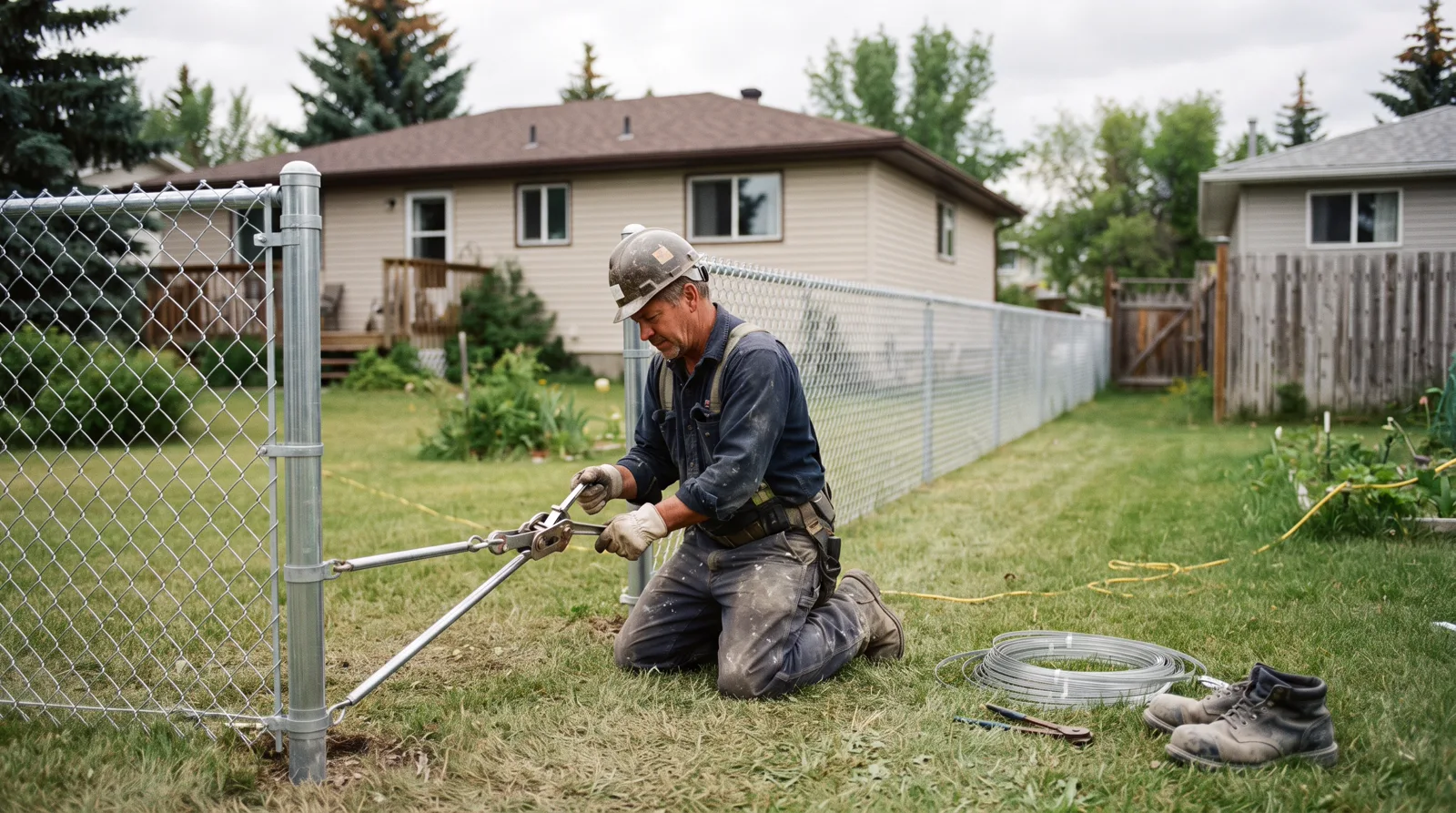
Chain Link Fence Installation Built for Alberta Winters.
Durable, affordable perimeter fencing for yards, dog runs, and commercial properties. Posts set below frost line, engineered for freeze-thaw cycles.
Chain Link Fence Services
From backyard dog runs to full commercial perimeters, local pros install and repair every type of chain link system.
Residential Perimeter Fencing
Four to six foot galvanized or vinyl-coated chain link around your property. Posts set in concrete below frost line, top rail for rigidity, tension wire at grade. Walk gates included. Ideal for defining boundaries, keeping kids and pets safe, and meeting insurance requirements without blocking sightlines.
Dog Runs & Pet Enclosures
Custom-sized chain link kennels with shade cover options and dig-proof footer wire. We use nine or eleven gauge fabric for strength against jumping and chewing. Gates latch securely and swing inward. Popular sizes are 10x20 feet or 15x30 feet. Gravel base keeps paws clean and drainage fast.
Commercial & Industrial Security
Six to eight foot galvanized chain link with barbed wire or privacy slat options for equipment yards, storage compounds, and loading docks. Posts on six foot centers with heavier gauge fabric and reinforced corners. Cantilever or double-swing gates for vehicle access. Code-compliant installations with proper setbacks and tension.
Gates: Walk, Drive & Cantilever
Single walk gates (three or four feet wide) with self-closing hinges and keyed locks. Double-swing drive gates (ten to sixteen feet opening) with drop rods or chain latch. Cantilever sliding gates for tight driveways or commercial yards. All frames welded steel, powder coated or galvanized, with matching chain link fabric and tension bars.
Privacy Slat Installation
Vertical polyethylene slats woven through existing or new chain link for 80% to 95% privacy. Blocks wind and reduces noise. Available in eight colors including forest green, black, beige, and gray. Slats lock into the diamond mesh and resist Alberta UV and temperature swings. Perfect for pool enclosures, patios, or screening unsightly views.
Repairs & Post Replacement
Fix sagging gates, replace rusted or frost-heaved posts, re-tension loose fabric, and patch torn sections. We dig out failed posts, pour new footings below frost line, and splice in matching fabric. Common after spring thaw when clay soil shifts. Most repairs completed in half a day.
Why Chain Link Works in Spruce Grove, Stony Plain & Parkland County
❄️ Four Foot Frost Line Compliance
Alberta Building Code requires fence posts sunk four feet minimum to sit below the frost line. We auger or hand-dig to depth, set posts in concrete, and backfill with crushed gravel for drainage. This prevents spring frost heave that lifts shallow posts and racks the fence out of plumb.
🏛️ Municipal Permits & Setbacks
Spruce Grove and Stony Plain require permits for fences over six feet or within corner-lot sightline triangles. The contractor pulls permits, confirms setbacks from property lines (typically six inches to three feet), and submit drawings when needed. Parkland County has separate rules for acreages, especially near road allowances and utility rights-of-way.
🌾 Clay Soil & Drainage Realities
Heavy clay soil around Spruce Grove holds water and expands when frozen, pushing posts sideways. We set posts in six inch diameter concrete collars and slope the grade away from the fence line. For low spots or spring runoff paths, we add weep holes or drainage rock to keep water from pooling against terminal posts.
💨 Wind Load & Open Mesh Advantage
Chain link allows wind to pass through the diamond mesh, unlike solid wood or vinyl that catches gusts and stresses posts. This makes it ideal for exposed acreage perimeters and commercial yards in Parkland County where chinook winds hit 70 km/h. Top rail and tension wire keep fabric taut even in sustained wind.
What it costs here
Everything You Need to Know About Chain Link Fencing in Spruce Grove
Material grades, installation methods, permit rules, maintenance tips, and how to choose the right height and gauge for your property.
What Chain Link Fence Installation Actually Involves in Spruce Grove
Chain link fencing is a woven galvanized steel wire mesh stretched between steel posts and secured with tension wire, top rails, and fittings. The mesh itself is made from wire ranging from 6 gauge (thick, heavy-duty) to 11 gauge (lighter residential), woven in a diamond pattern with openings typically 2 inches or 2.25 inches across. The galvanizing process coats the steel in zinc to resist rust, which matters in Alberta where winter road salt, spring melt runoff, and freeze-thaw cycles attack bare metal aggressively. A typical residential installation uses 9 gauge mesh on galvanized steel posts set in concrete, with terminal posts (corners and ends) thicker and more heavily braced than line posts. The mesh is pulled tight with a come-along or fence stretcher, then tied to the framework with aluminum wire ties every 12 to 18 inches. Properly installed chain link can last 20 to 30 years in Alberta conditions without structural failure, though surface rust and gradual wire thinning eventually require replacement.
The installation framework consists of three post types. Terminal posts go at corners, ends, and gates, usually 2.5 inch or 3 inch outer diameter steel pipe, set in concrete footings that extend below the frost line. Line posts, spaced 8 to 10 feet apart along straight runs, are typically 2 inch diameter and also set in concrete but with slightly smaller footings. Gate posts match terminal posts in size and require deeper footings to handle the stress of daily swinging and latching. Top rail, a horizontal pipe running through loops at the top of the mesh, keeps the fence height consistent and adds rigidity. Tension wire, a smaller gauge cable running through the bottom of the mesh, prevents animals from pushing under and keeps the fence taut near ground level. In Spruce Grove and Parkland County, the frost line sits around 4 feet deep, so every post footing must extend at least that far to avoid heaving when the ground freezes and thaws dozens of times between October and April.
Chain link works well in Alberta for visibility and wind resistance. Unlike solid wood or vinyl fences that catch wind like sails and can blow over during chinook gusts or summer storms, chain link lets air pass through the mesh. This makes it the standard choice for industrial yards, dog kennels, baseball backstops, and perimeter security where you need containment without creating a wind load. Residential buyers choose chain link when cost, durability, and low maintenance outweigh privacy. You can add privacy slats (vertical plastic or metal strips woven through the mesh) or plant climbing vines for screening, but the base fence remains functional even if those additions wear out. For properties backing onto green space, ravines, or acreages where wildlife movement and sightlines matter, chain link provides a boundary without blocking the view or trapping deer and coyotes inside your yard.
Alberta Climate Conditions That Drive the Need for Chain Link Fencing
Alberta's freeze-thaw cycle punishes rigid fencing systems. From late October through early April, daytime temperatures can swing from minus 15°C to plus 5°C within 24 hours, especially during chinook events. This constant expansion and contraction cracks concrete, splits wood, and breaks brittle vinyl. Chain link, being flexible steel mesh, moves with the ground instead of fighting it. When frost heave lifts a post footing slightly in January, the mesh sags but doesn't snap. When the ground settles in March melt, the tension wire pulls the mesh taut again. This resilience explains why chain link remains standing in commercial and municipal applications decades after installation, while wood fences near highways and rail yards often lean or collapse within 10 years. The key is proper post-setting depth and concrete mix rated for freeze-thaw exposure, not the mesh itself, but once installed correctly, the fence tolerates Alberta's ground movement far better than solid panel systems.
Snow load and wind pressure test every fence along the Front Ranges and Parkland County. A typical Alberta winter dumps 120 to 150 centimeters of snow, much of it heavy wet snow that slides off roofs or gets piled by plows against fence lines. Solid fences bear the full weight of these snow berms, leading to leaning posts and broken panels. Chain link sheds snow through the mesh openings and doesn't accumulate dangerous loads. Chinook winds, which can gust to 100 kilometers per hour or more in exposed areas west of Spruce Grove, create enormous lateral pressure on tall solid fences. A 6 foot wood fence in a 100 kilometer per hour wind experiences hundreds of pounds of force trying to tip it over. Chain link in the same wind barely flexes because 85% of the surface area is open air. This is why you see chain link around schools, playgrounds, and industrial sites in Acheson and Stony Plain, where wind exposure and snow management are critical and fence failure could mean liability or operational shutdowns.
Hail damage, a recurring summer threat across Parkland County, destroys vinyl fencing and dents metal panels but passes harmlessly through chain link mesh. A severe hailstorm with 2 to 3 centimeter stones can shred vinyl privacy slats and crack PVC posts in minutes. Chain link mesh, being open weave, offers no surface for hail to strike. The galvanized coating may show minor pitting after decades of hail exposure, but the structural integrity remains intact. This durability extends the functional lifespan in a climate where hail, wind, snow, freeze-thaw, and UV exposure all attack fences simultaneously. Homeowners replacing damaged wood or vinyl fences after storm seasons often switch to chain link for perimeter sections, saving decorative fencing for small highly visible areas and using chain link where weather resistance and cost-effectiveness matter more than aesthetics.
When You Actually Need Chain Link Fence Installation
Residential properties need chain link when secure containment outweighs privacy concerns. Dog owners with high-energy or escape-prone breeds (huskies, German shepherds, terriers) require fencing that resists digging under, jumping over, and chewing through. A 5 or 6 foot chain link fence with tension wire buried 6 inches below grade and mesh extending to ground level stops most dogs from escaping. Adding a dig guard (L-shaped mesh extension laid flat underground along the fence line) defeats determined diggers. For families with young children, chain link provides a visible barrier that lets parents see into the yard from the house while keeping toddlers from wandering into the street or neighboring properties. Property line disputes also drive installations. When a survey reveals your neighbor's shed or garden encroaches on your lot, a fence built on the true boundary, installed by a licensed contractor following Parkland County setback bylaws, settles the matter permanently. Chain link is often chosen here because it's cost-effective for long runs and doesn't create shade or drainage issues that could escalate neighborly tensions.
Commercial and industrial properties install chain link to meet insurance, WCB, and liability requirements. Equipment yards storing heavy machinery, vehicles, or materials must be fenced and gated to prevent unauthorized access, theft, and injury. Insurance underwriters for contractors and manufacturers in Acheson often require 6 foot perimeter fencing with barbed wire or privacy screening as a condition of coverage, and chain link with a top rail and tension wire meets those standards at a fraction of the cost of welded wire or ornamental iron. WCB regulations for construction sites and material storage demand secure boundaries to protect the public from trenches, equipment, and stored materials. A chain link fence with lockable gates and proper signage fulfills these obligations without the maintenance burden of wood (which rots and requires painting) or the expense of decorative metal. Many businesses add windscreen mesh or branded privacy slats to the chain link for aesthetics and to prevent passersby from seeing inventory, combining security with visual screening.
Replacement timing depends on visible structural failure, not just cosmetic rust. Surface oxidation (light orange or brown discoloration on the mesh) is normal after 10 to 15 years and doesn't compromise strength. Rust-through, where holes form in the wire and you can break strands by hand, signals the end of the fence's lifespan. Leaning posts, especially terminal posts at corners or gates, indicate footing failure from frost heave, soil erosion, or inadequate depth at installation. If a post leans more than 5 degrees off vertical, the entire fence section loses tension and the mesh sags. Sagging mesh that touches the ground or leaves gaps larger than 4 inches at the bottom defeats the purpose of the fence, whether that's dog containment, security, or property definition. Gates that no longer latch securely, have bent frames, or drag on the ground also justify replacement. At that point, most property owners replace the entire fence rather than patching sections, because new galvanizing technology and heavier gauge options available today will outlast repairs to 20 or 30 year old mesh.
The Installation Process Step by Step from Site Assessment to Final Tensioning
Every chain link installation begins with site assessment and permit verification. In Spruce Grove and Parkland County, property owners must call Alberta One Call at least two business days before digging to locate underground utilities (gas, power, phone, water, sewer, fiber optic). Hitting a gas line or electrical conduit during post hole digging can cause explosions, electrocution, or service outages that result in fines and liability. Once utilities are marked, the installer measures the fence line, identifies property corners using the legal survey or property pins, and checks municipal setback requirements. Parkland County typically requires fences to sit at least 3 feet inside the property line unless a boundary fence agreement exists with the neighbor. Spruce Grove has similar rules, and both municipalities require permits for fences over 6 feet tall or located in front yards. The permit application includes a site plan showing fence location, height, and gate positions, and approval usually takes 7 to 14 business days. Skipping permits can result in orders to remove the fence, fines, and disputes when selling the property.
Post hole digging and setting follows the permit and utility clearance. Terminal post holes are dug 10 to 12 inches in diameter and at least 48 inches deep to reach below the frost line, using a manual post hole digger, power auger, or skid steer auger depending on soil conditions. Parkland County soils range from clay to sandy loam, and clay requires more effort but holds posts more securely. Line post holes are slightly smaller, around 8 inches diameter, but still extend to frost depth. Concrete for footings should be a minimum 25 megapascal mix rated for freeze-thaw exposure, often with air entrainment to resist cracking. Each post is set plumb (perfectly vertical, checked with a level) and braced temporarily while the concrete cures. In summer heat, concrete may set enough to remove braces in 24 hours, but in cooler spring or fall temperatures, installers wait 48 to 72 hours before tensioning the mesh. Posts must be aligned in a straight line or smooth curve, with consistent spacing, or the finished fence will look crooked and the mesh won't tension evenly.
Mesh installation and tensioning turn the posts and rails into a functional fence. The top rail slides through the knuckle (looped top edge) of the mesh at one terminal post, and the mesh is unrolled along the fence line to the next terminal post. Tension bands (metal straps with bolt holes) are attached to the terminal posts every 12 to 15 inches vertically, and a tension bar (a flat steel bar slightly narrower than the fence height) is woven through the first row of mesh diamonds. Bolts through the tension bands clamp the bar and mesh tightly to the terminal post. At the far end, the installer uses a fence stretcher or come-along to pull the mesh taut, removing all sag and ripple, then secures it with another tension bar and tension bands. The mesh should be tight enough that pressing the center of a 10 foot section deflects it no more than 2 inches. Tension wire, if used, is threaded through the mesh near the bottom and stapled or clamped to each line post to prevent sagging at ground level. Aluminum tie wires are looped around the mesh and top rail every 12 to 18 inches to lock the mesh in position. Gates are hung last, with hinges and latches adjusted so the gate swings freely and latches securely without binding or dragging.
Post-installation care and inspection ensure the fence performs as intended. Walk the fence line and check that all tie wires are tight, all tension bands are bolted securely, and no sharp wire ends protrude where someone could snag clothing or skin. Any excess mesh at the ends should be cut with bolt cutters and the cut ends twisted back into the fence or capped with edge protectors. If the fence includes barbed wire (common for commercial security), it's typically strung on outriggers angled 45 degrees at the top of the fence, adding 12 to 18 inches of height and a significant deterrent. For residential fences, inspect the bottom edge to ensure the mesh reaches within 2 inches of the ground and the tension wire prevents pushing or digging under. Mark gate locations clearly and test latches from both sides. In Alberta, expect minor settling over the first winter as freeze-thaw cycles work on the new footings. A reputable installer will return in spring to re-tension any sections that have loosened, tighten bolts, and confirm the fence remains plumb and secure. Properly installed and maintained, the fence should require no further work for 15 to 20 years beyond occasional cleaning and inspection for rust or damage.
What Chain Link Fence Installation Really Costs in Spruce Grove and the Tri-Region
A basic four-foot residential chain link fence in Spruce Grove typically runs $18 to $28 per linear foot installed, meaning a 150-foot perimeter costs roughly $2,700 to $4,200. That price includes galvanized nine-gauge fabric, two-inch line posts every eight feet, corner and end posts, top rail, and basic installation with concrete footings below frost line. Taller fences cost more: five-foot fabric adds $3 to $5 per foot, and six-foot commercial height adds $6 to $9 per foot over the base price. These are real installed prices in Parkland County as of 2026, and they reflect Alberta labour rates, materials trucked to the region, and the extra digging required for frost-stable footings.
Gates are a separate line item and one of the biggest cost variables. A simple three-foot walk gate with frame and latch costs $200 to $350 installed. A double drive gate wide enough for a truck, say twelve feet, runs $800 to $1,400 depending on whether you want a drop rod, roller wheels, or a lockable slide bolt. If you need a gate near a slope or tight corner, fabrication and alignment take longer and the price climbs. Some contractors quote fence by the foot but bury gate costs in a separate allowance, so always ask for an itemized breakdown showing linear footage, number of gates, and corner or end-post counts.
Vinyl coating, also called colour coating or PVC-coated fabric, adds $4 to $7 per linear foot. Black and green are standard; custom colours or thicker coatings cost more. Coating makes the fence look cleaner and last longer in our freeze-thaw cycles, but it does add to the upfront price. Privacy slats, which are thin vertical strips woven through the mesh, cost another $1.50 to $3.00 per foot depending on material and colour. Windscreen fabric, sometimes used on tennis courts or to block highway views, is similar in price. These upgrades are purely optional but popular in subdivisions where neighbours are close or you want to block a view of storage yards or gravel pits.
Ground conditions and access drive the biggest hidden costs. If your yard has heavy clay, buried rock, or old concrete footings from a previous fence, digging takes longer and may require a rental auger or jackhammer. Spruce Grove and Stony Plain have variable soil: some lots are sandy, some have clay, and acreages near Highway 16A or Township Road 534 can hit gravel seams. Difficult digging can add $200 to $600 to the total job depending on how many posts are affected. If the crew cannot get a truck or mini excavator into the backyard, everything gets hand-carried and that adds labour hours. Sloped or uneven ground requires stepped panels or raked fabric, which takes more time to measure, cut, and tension properly.
Comparing Your Chain Link Options: Fabric, Height, Coating, and Gates
Galvanized chain link is the industry standard and the most affordable. The fabric is steel wire coated with zinc to resist rust, and it welds together into a diamond mesh. Nine-gauge wire is typical for residential fences; eleven-gauge is lighter and cheaper but less rigid and more prone to sagging if a dog or snow load pushes on it. Commercial or high-security fences use six-gauge fabric, which is heavy, taut, and expensive. For a typical Spruce Grove yard, nine-gauge galvanized is the right balance of strength, cost, and longevity. It will rust eventually, usually starting near the ground where moisture and road salt collect, but a properly installed fence easily lasts fifteen to twenty-five years before serious deterioration.
Vinyl-coated fabric costs more but looks better and handles Alberta winters better. The PVC coating is baked onto the wire before it is woven into mesh, so every strand is protected. Black and dark green are the most common colours and they blend into landscaping much better than bright galvanized steel. The coating resists rust, hides scratches better than bare metal, and does not get as brittle in extreme cold. It can crack or peel if something sharp scrapes it repeatedly, but normal wear and snow load do not damage it. If curb appeal matters or you live in a newer subdivision with appearance covenants, vinyl coating is worth the extra cost. Just confirm the contractor is using factory-coated fabric, not field-applied paint, which peels within a season.
Height matters for function and price. Four feet is legal minimum for most residential lots and works fine if the goal is simply marking a boundary or containing small dogs. Five feet is better for medium or large dogs, and it is tall enough to make casual trespassing awkward without feeling like a prison yard. Six feet is the standard for commercial sites, school playgrounds, or if you have livestock or aggressive dogs. Anything over six feet usually requires an engineered drawing and a development permit in most municipalities. Spruce Grove and Parkland County do not require permits for standard residential chain link under six feet if it meets setback rules, but Stony Plain has stricter fence bylaws near corner lots and you should always check your local office before starting.
Gates are where most homeowners underestimate both cost and importance. A cheap gate sags within a year, drags on the ground, and the latch stops working. A properly built gate has a welded or bolted frame with diagonal bracing, heavy-duty hinges bolted through the post, and a latch that holds tension even when the fence flexes. Walk gates should swing freely and latch with one hand. Drive gates need to be wide enough for your truck with a load of firewood or a trailer, and they should have a drop rod or bottom guide to prevent sagging. If you park equipment, a skid steer, or an RV in the yard, build the gate wider than you think you need and use commercial-grade hardware. Retrofitting a gate later is expensive because the posts may need to be reset and fabric cut and retensioned.
Common Mistakes and Contractor Traps to Avoid
The biggest mistake homeowners make is choosing a contractor based solely on the lowest quote. A lowball price usually means shallow footings, lighter-gauge fabric, or fewer posts to save material and labour. In Parkland County, frost heaves can push a post right out of the ground if the concrete footing is not deep enough. The building code and common practice both call for footings below the frost line, which is roughly four feet deep in this region. A proper corner post gets a footing twelve inches in diameter and four to five feet deep, filled with concrete and allowed to cure before the fence is tensioned. A cheap crew pours six inches of concrete in a narrow hole and moves on, and within two winters the post leans or lifts. Fixing a failed post means excavating, resetting, and retensioning the entire run of fence, which costs more than doing it right the first time.
Another common mistake is ignoring property lines and setback rules. Chain link is often installed right on the boundary, but municipal bylaws and your subdivision's restrictive covenants may require the fence to sit six inches or more inside your property line. If you build on or over the line, your neighbour can force you to move it and you pay for the removal and reinstall. In Spruce Grove and Stony Plain, you also need to respect setbacks from sidewalks, utility easements, and corner sight lines. If there is an underground gas line, power line, or water main near the fence route, you must call Alberta One Call at least two business days before digging. Contractors are required to do this, but not all do, and if they hit a line you could face fines, service outages, and repair bills. Always confirm your contractor pulled a locate ticket and check that the flags or paint marks are recent.
Beware of contractors who quote by the job without walking the site or who give a price over the phone. Every yard is different: slopes, trees, buried utilities, existing structures, and soil type all affect labour and materials. A legitimate contractor visits the property, measures carefully, asks about gates and height preferences, and provides an itemized written quote. If the quote does not specify fabric gauge, post spacing, footing depth, number of gates, or coating type, ask for those details in writing before you sign. Vague quotes leave room for the contractor to cut corners or add surprise charges midway through the job.
Watch for contractors who are not properly insured or who offer to save you money by skipping permits. In Alberta, anyone doing construction work on your property should carry liability insurance if they have employees, and they should have liability insurance in case they damage your property, hit a utility line, or injure someone. Ask to see proof of both before work starts. If a worker is hurt on your property and the contractor has no WCB, you could be held liable. Permits are less common for chain link than for tall wood privacy fences, but some municipalities require them for fences over a certain height or within setback zones. Skipping a required permit can result in a stop-work order and you may be forced to remove the fence or apply for a retroactive permit with penalties.
How to Hire the Right Chain Link Fence Contractor
Start by getting at least three written quotes from contractors who operate in Spruce Grove, Stony Plain, or Parkland County year-round. Local contractors understand Alberta frost depth, building codes, and soil conditions, and they are easier to reach if something needs adjustment or warranty work. Each quote should itemize linear footage, fabric gauge and height, post type and spacing, number and size of gates, footing depth and diameter, and whether the price includes removal of an old fence or grading. If one quote is significantly lower than the others, ask why: it may be thinner fabric, fewer posts, or shallower footings. Do not assume all contractors are quoting the same quality of work.
Ask each contractor for recent references, ideally from jobs completed in the past year in your area. Call or message those references and ask specific questions: Did the fence go up on schedule? Were there any surprise costs? Did the gates work properly from day one? Are the posts still straight after freeze and thaw cycles? How did the contractor handle cleanup and site restoration? A good contractor has happy customers who will vouch for their work. If a contractor cannot or will not provide local references, that is a red flag. Also check online reviews on Google, Facebook, or local community groups, but be aware that reviews can be faked or exaggerated. Personal references are more reliable.
Confirm the contractor pulls permits if required, calls for utility locates, and carries liability insurance and liability insurance. Ask to see proof of coverage before signing a contract. Make sure the contract specifies start and completion dates, payment terms, warranty terms, and what happens if weather or unforeseen conditions delay the job. A reasonable deposit is twenty to thirty percent, with the balance due on completion. Never pay the full price upfront. If the contractor demands full payment before starting or insists on cash only with no receipt, walk away. Legitimate contractors operate as registered businesses, provide invoices, and accept payment by cheque, e-transfer, or credit card.
How Tri-Region Services Helps
Tri-Region Services connects Spruce Grove, Stony Plain, and Parkland County homeowners with one carefully vetted, fully insured local fencing contractor who specializes in chain link installation. We screen for liability insurance, liability insurance, and a track record of clean, code-compliant work in Alberta freeze-thaw conditions. When you contact us, we send your project details directly to that contractor and they provide a free written quote with itemized pricing and a timeline. You get one expert opinion without the hassle of calling around or worrying about insurance gaps and lowball bids. If the contractor is booked or the project is outside their scope, we let you know right away so you are not left waiting. It is a straightforward referral: no bidding war, no sales pressure, just a direct connection to a local pro who will do the job right.
Why Homeowners Trust Our Chain Link Installers
Every contractor in our network carries proper licensing, insurance, and local references. No guesswork, no shortcuts.
Licensed Registered
All installers hold valid business licenses, protecting you from liability if someone gets hurt on your property during the job.
Liability Insurance Verified
Two million dollars minimum general liability on every crew stated at signup.
Frost-Line Post Depth Guarantee
We document post depth with photos during concrete pour, so you have proof the installation meets Alberta Building Code if you ever sell or refinance.
Permit Handling Included
The contractor pulls municipal permits in Spruce Grove, Stony Plain, and Parkland County when required, and schedules inspections so you stay compliant.
Written Warranty on Workmanship
One to three year warranty covering post shifts, fabric sag, and gate alignment issues caused by installation errors.
Local References on Request
Every installer provides three recent Tri-Region job addresses and phone numbers so you can verify quality and professionalism before signing.
This page is not tied to a contractor's brand. Leads route straight to your one local partner. Verified reviews can appear here once that partner has them (never fabricated).
Serving the whole Tri-Region
8 Chain Link Fence Questions
How deep do chain link fence posts need to be in Spruce Grove and Stony Plain?+
Do I need a permit to install a chain link fence in the Tri-Region?+
What is better for Alberta winters: galvanized or vinyl-coated chain link?+
How long does a chain link fence last in Alberta with freeze-thaw cycles?+
Can I add privacy slats to an existing chain link fence?+
What gauge chain link fabric should I use for a dog run or pet enclosure?+
How much does chain link fencing cost compared to wood privacy fencing in Spruce Grove?+
Will spring frost heave damage my chain link fence posts in Parkland County clay soil?+
Get your free quote
Tell us what you need and a local pro will get right back to you.
- ✓ Sent straight to a local business
- ✓ You choose who you hire
- ✓ Free, with no obligation