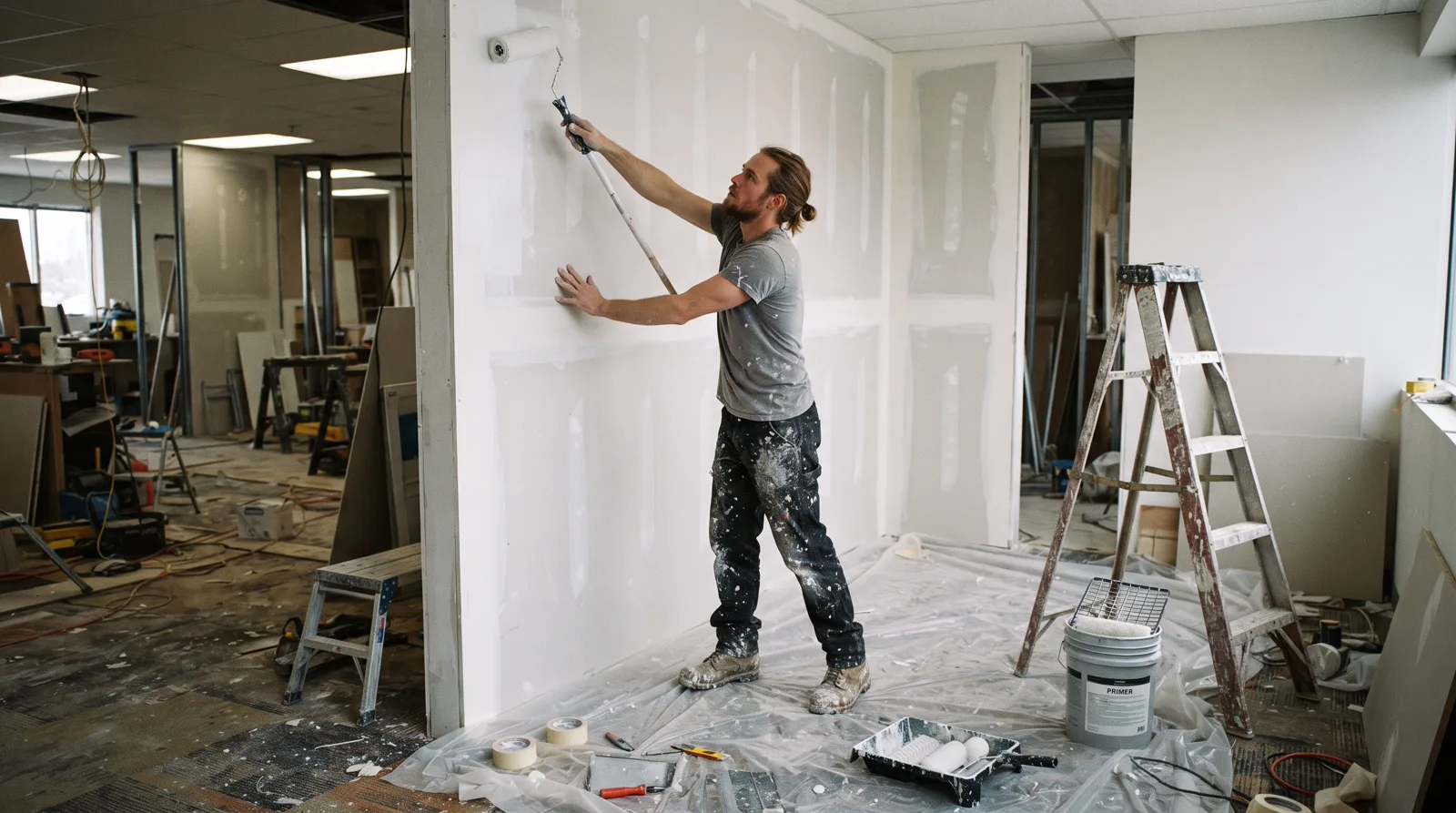
Commercial Painting That Keeps Your Business Running Smooth.
Licensed commercial painters for offices, retail, warehouses and multi-unit properties across the Tri-Region. After hours, weekends, and fast turnaround to minimize downtime.
Commercial Painting Services Across the Tri-Region
From small offices to large warehouses, local pros handle every type of commercial property with minimal disruption to your operations.
Office Interior Painting
Walls, ceilings, trim and accent walls for professional offices, boardrooms, and reception areas. Low VOC paint safe for occupied buildings. Evening and weekend scheduling available to avoid disrupting your team.
Retail Store Painting
Storefronts, showrooms, fitting rooms and display areas painted to match your brand. We work after close or during slow hours. Fast turnaround to get you back open, includes surface prep and minor drywall repair.
Restaurant & Hospitality Painting
Dining rooms, kitchens, bars and washrooms painted with commercial grade coatings that meet health and fire code. Washable, stain resistant finishes. Scheduled around your hours to minimize lost revenue.
Warehouse & Industrial Painting
High durability coatings for concrete floors, block walls, metal surfaces and high traffic areas. Epoxy floor options. Line marking and safety zone painting. Work around your shipping and receiving schedule.
Exterior Commercial Painting
Storefronts, siding, fascia, soffits and doors painted with weather resistant coatings rated for Alberta freeze-thaw cycles and chinook winds. Pressure washing, caulking and surface prep included. Spring and summer scheduling recommended.
Strata & Multi-Unit Painting
Common areas, hallways, stairwells, parkades and exterior siding for condos, townhomes and apartment buildings. Tenant scheduling coordination, low odor coatings, and strata board communication. Insurance and WCB certificates provided.
Why Commercial Painting Here Is Different
📋 Spruce Grove & Parkland Permits
Most interior commercial painting does not require a permit, but exterior work on commercial buildings in Spruce Grove may require a development permit if you are changing the colour scheme or doing structural repairs. Stony Plain and Parkland County have similar rules. We confirm permit requirements before starting and can handle the application if needed.
❄️ Freeze-Thaw & Chinook Damage
Alberta's rapid temperature swings crack and peel exterior paint faster than anywhere else. Commercial buildings with large flat surfaces and metal cladding are especially vulnerable. We use elastomeric coatings and proper surface prep to handle expansion and contraction, and we only paint exterior surfaces when temperatures are stable above 10°C for 48 hours.
🦺 WCB & Liability Requirements
Any contractor working on a commercial property in Alberta must carry liability insurance. Many property managers and strata boards require a certificate of insurance before work begins. We provide both automatically with every quote, and our WCB account is in good standing with zero claims history.
🌙 After Hours & Weekend Scheduling
Most commercial clients cannot shut down during business hours. We schedule painting for evenings, weekends, or overnight to avoid disrupting customers or staff. For retail and restaurant clients, we work in sections so you can stay partially open. Fast dry commercial coatings mean painted areas are ready for light use within hours.
What it costs here
Everything You Need to Know About Commercial Painting in Spruce Grove
Permits, scheduling, coatings, timelines, and what to expect when hiring a commercial painter in the Tri-Region.
What Commercial Painting Actually Involves in Spruce Grove
Commercial painting is not residential work scaled up. The scope, liability, and coordination demands are fundamentally different. A commercial project might mean repainting a 10,000 square foot retail space in Spruce Grove while the business stays open, or refreshing an office building in Acheson over a weekend to avoid disrupting operations. You are paying for expertise in surface preparation, product selection for high traffic areas, and the ability to work around your schedule without compromising quality. The contractor must carry liability insurance for their crew, liability insurance that protects your property and any tenants or customers on site, and demonstrate they understand Alberta building codes for fire rated assemblies and ventilation requirements during application.
The paint systems used in commercial settings differ from residential finishes. High traffic lobbies, retail spaces, and industrial offices need coatings that resist scuffing, staining, and frequent cleaning with commercial grade products. Alkyd enamels, epoxy coatings for floors and high wear zones, and low VOC latex formulations that meet indoor air quality standards are common. In food service or medical facilities, antimicrobial additives and washable finishes rated for institutional use become mandatory. Your painter should specify products by technical data sheet, not just brand name, and explain why a particular system suits your use case. A two coat system over properly primed and sanded surfaces is the minimum for durability, and corners cut on prep or product grade will show within months under commercial use conditions.
Coordination and site protection separate competent commercial contractors from those who should stay in the residential lane. Protecting flooring, furniture, equipment, and inventory requires more than canvas drop sheets. Dust barriers, ventilation management to prevent overspray migration, and staging work in phases to keep portions of your building operational are all part of the service. If you run a retail store, the crew might work nights or Sundays when you are closed. If you manage an office, they might tackle one floor at a time to avoid displacing the entire staff. The project timeline must account for Alberta weather when exterior work is involved, meaning late spring through early fall for optimal curing, and for the realities of drying time between coats in our dry climate, which can actually shorten schedules compared to humid regions but requires careful moisture control on fresh drywall or plaster.
How Alberta Weather Accelerates Commercial Paint Failure
Alberta's climate is uniquely hard on building exteriors and even interior finishes near doors, loading docks, and HVAC equipment. Temperature swings from minus 30 Celsius in January to plus 30 in July, combined with intense UV exposure at our latitude and altitude, break down paint binders and cause chalking and fading faster than in moderate climates. Chinook winds in winter bring rapid thaw and refreeze cycles that drive moisture into micro cracks, then expand as ice, lifting paint films from substrates. Exterior metal surfaces, common on commercial buildings for trim, overhead doors, and cladding, expand and contract enough to fracture rigid coatings if the wrong product is used. A quality commercial exterior paint system in Spruce Grove might last 7 to 10 years on well prepped surfaces, but buildings facing south and west, or those near high traffic roads where de-icing salt spray is constant, will show distress sooner.
Interior paint in commercial buildings also ages faster than in homes due to HVAC cycling, higher occupancy, and cleaning routines. Retail spaces and restaurant kitchens see grease, moisture, and temperature extremes that degrade finishes. Office buildings with poor humidity control in winter, common when heating systems run hard and fresh air exchange is minimized to save energy, can experience paint failure on exterior walls where condensation forms. The dryness of Alberta air also means dust and static cling, so walls near high traffic areas accumulate grime that embeds into flat latex and requires repainting sooner. Choosing a satin or semi-gloss sheen in lobbies, hallways, and common areas makes cleaning practical and extends the time between repaints, but only if the surface prep and primer work was done correctly at the outset.
- Chinook wind cycles cause freeze-thaw damage that lifts exterior coatings from wood and masonry
- High UV exposure at Alberta's latitude fades and chalks paint faster than in southern climates
- Dry winter air and HVAC cycling stress interior finishes, especially near exterior walls
- Road salt spray and de-icing chemicals accelerate corrosion on metal and degrade paint films
- Buildings with south and west exposure need more frequent maintenance than shaded elevations
The Real Warning Signs Your Commercial Building Needs Repainting
Peeling, chalking, and visible substrate are the obvious red flags, but other signs matter more from a business perspective. If your building's exterior looks tired or faded compared to neighboring properties, you are losing curb appeal and signaling to customers or tenants that maintenance is deferred. Retail and service businesses in Spruce Grove and Stony Plain compete on first impressions, and a worn paint job costs you traffic before a potential customer even reaches the door. For office and industrial buildings, poor exterior condition affects lease rates and tenant retention. A commercial property investor or business owner preparing to sell or refinance should repaint as part of the value maximization strategy, because appraisers and buyers will discount for deferred maintenance.
Interior spaces give you different warning signs. Scuff marks, stains, and dirt that will not clean off signal the paint has lost its protective qualities and is absorbing grime into the film. High traffic areas like lobbies, corridors, and break rooms show wear first, and if your cleaning crew is scrubbing harder or using harsher products to keep walls presentable, you are past the point where paint is doing its job. Rebranding or tenant turnover also creates the need for repainting, because color choices and finishes that suited one occupant may not align with the next. If you are refreshing flooring, upgrading lighting, or renovating other building systems, painting at the same time avoids the cost and disruption of mobilizing contractors twice.
Exterior Failure Modes to Watch For
Chalking is the white powdery residue that rubs off when you touch the painted surface, caused by UV breakdown of the binder. It is normal wear, but heavy chalking means the coating is no longer protecting the substrate. Peeling and blistering indicate moisture intrusion or poor adhesion, often because the previous paint job skipped primer or was applied over a contaminated or glossy surface without proper sanding. Cracking and alligatoring, where the paint film develops a pattern of deep fissures, signal age and brittleness, common on south facing walls and metal surfaces that expand in summer heat. Any of these conditions allow water infiltration, which in Alberta's freeze thaw cycles will cause accelerating damage to wood, stucco, or masonry underneath.
Interior Issues That Justify Repainting
Staining from water leaks, roof or plumbing failures, or HVAC condensation must be addressed at the source, but once the leak is fixed the affected areas need stain blocking primer and fresh paint to avoid visible discoloration and potential mold growth. Drywall repairs from tenant improvements, equipment installations, or damage also require texture matching and painting to blend the patch. If your building has odor issues from previous tenants, painting alone will not solve it, but using a stain and odor blocking primer and topcoating with low VOC paint is part of the remediation. High touch surfaces like door frames, baseboards, and wall areas near light switches accumulate body oils and grime that flat paint cannot shed, so switching to a washable finish or simply refreshing those zones improves the overall appearance without repainting entire rooms.
The Step by Step Process for a Commercial Painting Project
The process starts with a site visit and scope definition, not a phone quote. A credible commercial painting contractor in Spruce Grove will walk the property with you, note surface types and conditions, measure areas to be painted, and ask about your operational constraints. They should inquire whether you need work done after hours or on weekends, whether odor and VOC levels matter due to occupancy or ventilation limits, and what your timeline looks like. Expect questions about access to mechanical rooms, electrical panels, and building systems that might need temporary shutdown or protection. The estimate should be written, itemized by area or phase, and specify products by name and coverage rates. Verbal quotes or single lump sums with no detail are red flags. A contractor who provides a detailed scope, proof of WCB and liability insurance, and references from similar commercial projects is worth the time to evaluate, even if they are not the lowest bid.
Surface preparation is where quality is won or lost, and it takes more time than the actual painting. Pressure washing and scraping loose material on exteriors, sanding glossy or rough surfaces for adhesion, filling cracks and gaps with appropriate caulking or filler, and priming bare substrates or stain prone areas are non-negotiable steps. Skipping or rushing prep because the client wants the job done faster is how contractors fail and why some commercial buildings need repainting every three years instead of every eight. In Alberta, exterior prep must account for moisture content in wood siding or stucco, which can be high in spring after snow melt or after rain. Painting over damp surfaces traps moisture and causes blistering and early failure. Interior prep includes moving or protecting furniture and equipment, masking trim and fixtures, and repairing any drywall damage or surface defects that will telegraph through the new paint.
Application follows prep, and on commercial projects the timing and coordination matter as much as technique. Exterior painting in Spruce Grove happens between May and September, when overnight temperatures stay above 10 Celsius and daytime humidity is low enough for proper curing. Two coats minimum over primed surfaces is standard, with drying time between coats per the product data sheet, not just until it feels dry. Rushed recoat intervals cause wrinkling, poor durability, and adhesion issues. Interior painting can happen year round, but ventilation and odor management are critical in occupied buildings. Low VOC or zero VOC products reduce off gassing, and scheduling work when the building is closed or less occupied minimizes complaints. The crew should protect your HVAC returns with filters or barriers to prevent dust and overspray from entering the ductwork, and clean up daily if the project runs over multiple days.
The final walkthrough and any touch up work happen before the contractor invoices final payment. Walk every painted area with the project lead, check for missed spots, drips, or overspray, and verify that all masking and protection has been removed and the site left clean. On exterior projects, inspect from multiple angles and in different light conditions, because defects like missed trim or uneven coverage show up depending on sun angle. Ask for leftover paint in labeled containers with the product name and color formula, stored for your future touch up needs. Most quality commercial paint jobs in Alberta will show minor settling or shrinkage cracks in caulked joints after the first heating season, and a good contractor will include a spring touch up visit in the scope or at minimal cost. Document the project with photos and keep the contract, invoice, and product specifications in your building maintenance file for the next time you need to coordinate work or provide records to a tenant or buyer.
What Commercial Painting Costs in the Tri-Region and What Drives the Price
Commercial painting in Spruce Grove, Stony Plain and Acheson typically runs between $1.50 and $4.50 per square foot of wall and ceiling area, but that range widens fast depending on your building type, surface condition and timeline. A small retail shop with drywall in good shape might land at the low end, while a warehouse with peeling epoxy floors, 20 foot ceilings and a two week turnaround pushes toward the top. Square footage is only the starting point. The real cost drivers are height, surface prep, access constraints, downtime requirements and the coatings you choose. A 5,000 square foot office suite painted during regular business hours costs more than the same space done over three weekends, because the crew works shorter shifts, protects more furniture and coordinates around your staff.
Ceiling height and access difficulty add labor and equipment cost immediately. A ground floor storefront with eight foot ceilings needs ladders and drop sheets. A Spruce Grove auto body shop with 18 foot ceilings and overhead doors requires scaffolding or hydraulic lifts, and the rental alone runs $200 to $600 per week depending on configuration. Parkland County industrial buildings with mezzanines, exposed ductwork or high bay lighting add complexity that slows production and increases fall protection requirements under Alberta OHS rules. Painters charge for that time and risk. Surface prep is the other major variable. If your drywall is smooth and previously painted with quality product, prep is light. If you have water stains, patch work, nicotine residue or failing latex over oil, the crew spends days sanding, priming and filling before the first finish coat goes on. Prep can easily represent 40 to 60 percent of total labor hours on a tough commercial job.
Alberta specific factors also shape pricing. Cold weather limits exterior work from November through March, so interior commercial projects stack up in winter and crews stay busy. liability insurance is mandatory for any contractor with employees, and that premium is baked into every quote. Liability insurance for commercial work, especially in occupied buildings, runs higher than residential because the exposure is greater. A painter working in an Acheson warehouse full of inventory or a Stony Plain medical clinic with patients on site carries $2 million or more in general liability, and that cost appears in the rate. Paint material itself varies widely. Builder grade latex for a back room runs $40 to $70 per gallon. Low VOC or zero VOC commercial coatings for occupied office space cost $60 to $100 per gallon. Specialty products like epoxy floor paint, anti microbial coatings for healthcare or high hide primers for stain blocking push the material budget higher. A project using premium Sherwin Williams or Benjamin Moore commercial lines will quote differently than one specced with economy store brands, and the difference in durability and coverage shows up within the first year.
Comparing Methods, Materials and Scheduling Approaches
Commercial painters use three main application methods, and each suits different situations. Airless spray is the fastest way to cover large open areas like warehouses, retail sales floors or corridors. The equipment pumps paint at high pressure through a tip that atomizes it into a fine mist, delivering even coverage at speeds no roller can match. Spray works beautifully on new drywall or previously painted smooth surfaces, but it creates overspray that drifts and settles. Every window, fixture, floor and piece of equipment needs masking or plastic protection. Cleanup and prep take longer, and the method wastes more paint than rolling. Most Spruce Grove and Acheson commercial crews use spray for ceilings and large unobstructed walls, then switch to rollers and brushes for trim, doors and edges. Rolling offers more control and less waste, making it the go to method for offices with furniture, tight retail spaces or anywhere masking would take longer than the actual painting. Brushwork handles detail: door frames, baseboards, corners and cut ins around fixtures. A skilled commercial crew matches the method to the task and often uses all three techniques on a single project.
Paint selection has a direct impact on durability, indoor air quality and maintenance cost over time. Latex acrylic is the workhorse for most commercial interiors. It cleans up with water, dries fast, has low odor and holds up well under normal use. For high traffic areas like hallways, lobbies or retail change rooms, specify a scrubbable satin or semi gloss sheen rather than flat. The slight gloss resists scuffing and wipes clean without leaving marks. Low VOC and zero VOC formulations have become standard in occupied buildings, especially schools, medical offices and daycares, because they off gas fewer volatile organic compounds during and after application. Alberta building code does not mandate low VOC paint, but many commercial leases and corporate policies do, and the small premium over conventional latex is worth the air quality benefit. Epoxy and urethane coatings come into play for floors, especially in automotive shops, warehouses and food service areas where chemical resistance and abrasion resistance matter. These products cure hard and last years, but they require surface prep that includes grinding or acid etching, and they smell strong during application. Plan for ventilation and off hours work if you go this route.
Scheduling and phasing can save money or blow the budget depending on how you structure the work. Painting an empty building before tenant improvements is the cheapest scenario. The crew has full access, no furniture to protect, no business interruption risk and they can spray everything in a fraction of the time. Occupied commercial buildings require coordination. Some businesses choose after hours or weekend work to avoid disruption. The painter charges a premium for evenings and weekends, typically 15 to 30 percent over regular rates, because crew availability is limited and hourly labor cost is higher. Phased approaches, where you paint one section at a time while the rest of the business operates, add setup and breakdown time every shift but keep your operation running. An office might paint three floors over three weeks, relocating staff temporarily to accommodate the crew. Retail stores often schedule repaints during slow seasons or around holiday closures. The key is balancing cost against downtime tolerance. If losing a week of revenue costs more than the after hours premium, nights and weekends make sense. If your business can flex or you have vacancy, daytime painting at standard rates wins.
Mistakes and Contractor Traps to Avoid
The biggest mistake commercial property owners make is failing to verify WCB coverage and liability insurance before signing a contract. Alberta law requires any painting contractor with employees to carry and if your painter does not, you become liable for workplace injuries that happen on your property. Ask for a WCB clearance letter dated within the past 60 days and call the WCB coverage inquiry line to confirm the account is active. Liability insurance is just as critical. A commercial general liability policy with at least $2 million coverage protects you if the crew damages tenant improvements, spills paint on expensive equipment or causes an injury to a third party. Request a certificate of insurance naming your business or property as an additional insured, and verify it directly with the insurer. Contractors who balk at providing proof or offer excuses are showing you a red flag. Legitimate commercial painting companies expect these requests and have the documents ready.
Choosing a contractor based solely on the lowest bid is another common trap. A suspiciously low quote usually means corners will be cut, and in commercial painting the corners that get cut are surface prep, quality coatings and labor hours. A Spruce Grove contractor who quotes half the price of three other companies is either underestimating the work, planning to use substandard materials or operating without proper insurance and safety compliance. When the project starts, you will see one coat instead of two, inadequate masking, poor surface prep and a crew rushing to make up for an unrealistic bid. The repainting cost within two years wipes out any upfront savings. Instead, evaluate quotes on scope, not just price. Do all the bids include the same surface prep steps, the same number of coats, the same paint brands and sheens? Are they quoting the same areas and factoring in the same access challenges? A detailed written scope of work is the only way to compare bids fairly. If a quote lacks specifics, ask the contractor to break it down by prep, materials, labor and any additional services like minor drywall repair or fixture removal.
Ignoring surface preparation is a trap that plays out after the crew leaves. Paint only performs as well as the surface underneath. If your walls have grease, dust, loose previous coatings, unpatched holes or moisture stains, no amount of premium paint will deliver a durable finish. Contractors under time pressure or working from a lowball bid skip the tedious prep work and go straight to rolling. The paint looks fine for a few months, then it starts peeling, blistering or showing underlying stains. Proper prep includes washing or degreasing surfaces, scraping or sanding loose coatings, patching cracks and holes with appropriate filler, priming stained or repaired areas and allowing everything to dry fully before topcoats. This work is not glamorous and it takes time, but it is the foundation of a commercial paint job that lasts. Ask your contractor what prep steps are included and watch the first day or two of work to confirm they are actually doing it. If the crew shows up and starts spraying within an hour, prep was skipped. Walk the job, point it out and insist on proper process before another gallon goes on the wall.
Permit and Code Compliance Issues
Most interior commercial repainting does not require a building permit in Alberta municipalities, but there are exceptions. If the work includes structural changes, drywall replacement, fire rated assembly alterations or upgrades that trigger occupancy classification changes, a permit is required and the paint contractor may not be the right party to pull it. Spruce Grove, Stony Plain and Parkland County each have development and building departments that can clarify whether your project needs approval. Some commercial leases require landlord notification or approval before painting, especially if you plan to change colors or modify common areas. Failing to get that approval can result in a forced repaint at your expense when the lease ends. Fire code also matters in certain commercial settings. Painting over exit signs, fire extinguisher locations, emergency lighting or fire rated doors without maintaining required markings and visibility is a code violation. Your contractor should know these rules, but ultimately compliance responsibility falls on the building owner or tenant.
How to Hire the Right Commercial Painting Pro
Start by asking for references from similar commercial projects in the Tri-Region. A contractor who has painted office buildings in Stony Plain, retail spaces in Spruce Grove or industrial facilities in Acheson will understand local expectations, climate factors and code requirements better than someone working their first Alberta commercial job. Call those references and ask specific questions: Did the crew show up on time? Was the site left clean each day? Did the project finish on schedule and on budget? Were there any issues with quality or warranty follow up? A painter with a strong local track record will give you contact information without hesitation. Be cautious of contractors who cannot or will not provide references, or who only offer first names and verbal assurances. Written references with company names and phone numbers carry weight.
Evaluate the detail and clarity of the written quote. A professional commercial painting estimate includes square footage or linear footage of areas being painted, specific paint products by brand and product line, sheen levels, number of coats, surface prep steps, start and completion dates, payment schedule and warranty terms. Vague descriptions like 'paint office' or 'standard prep' tell you nothing. You need to know whether the quote includes moving furniture, protecting floors, patching minor drywall damage, priming stained areas and cleaning up debris. If those details are missing, ask the contractor to revise the quote with full scope outlined. A good commercial painter wants the same clarity you do, because it protects both parties from misunderstandings and scope creep. Payment terms should be reasonable and tied to progress. A deposit of 10 to 25 percent is normal to secure scheduling and purchase materials. Avoid contractors who demand half or more upfront, especially before work begins. Standard practice is a deposit, a progress payment at a defined milestone like prep completion or halfway through the project, and final payment on completion after walkthrough and approval.
Red flags to watch for include lack of physical business address, no company website or online presence, unwillingness to provide written contracts, pressure to pay cash for a discount, and failure to provide insurance or WCB documentation. A legitimate commercial painting contractor operates as a registered business with a municipal business license, maintains a shop or office location even if it is small, and communicates professionally by email and phone. They should offer a written warranty covering workmanship for at least one year and be willing to return for touch ups if issues arise from their work. If a contractor shows up in an unmarked vehicle, has no branded clothing or signage and insists on cash payment, you are dealing with an unlicensed operator who will vanish the moment a problem surfaces. The small savings are not worth the risk. Alberta has no mandatory licensing for painters, but professional commercial contractors carry the insurance and business infrastructure that protects you and signals they plan to be around next year when you need warranty service.
How Tri-Region Services Helps
Tri-Region Services connects you to one pre-vetted, fully insured local commercial painting contractor who serves Spruce Grove, Stony Plain, Parkland County and Acheson. Pros state that they carry liability insurance when they sign up, and we show that on their listing, so you skip the research and risk. Request a quote through our platform and you will receive a free written estimate with full scope breakdown, transparent pricing and clear timelines. No bidding war, no sorting through dozens of cold calls. Just one qualified professional who knows Alberta commercial painting and can start your project on a timeline that works for your business.
Why Property Managers and Business Owners Choose Us
Every contractor listed here is licensed and insured. No fly by night crews.
Licensed
Every painter carries liability insurance, with certificates provided before work starts.
After Hours & Weekend Availability
We schedule around your business hours to minimize disruption and lost revenue.
Low VOC Commercial Coatings
Safe for occupied buildings with minimal odor and fast dry times.
Written Warranty
Two year workmanship warranty on all commercial painting, covering peeling, cracking and adhesion failure.
Fast Turnaround
Most small to mid size commercial jobs completed in one to five days.
Clear Communication
Daily updates, photo documentation, and direct access to the crew lead throughout the project.
This page is not tied to a contractor's brand. Leads route straight to your one local partner. Verified reviews can appear here once that partner has them (never fabricated).
Serving the whole Tri-Region
7 Questions About Commercial Painting
Do I need a permit to paint my commercial building in Spruce Grove?+
How long does it take to paint a commercial space?+
Can you paint during business hours without disrupting customers?+
What are VOC regulations for commercial painting in Alberta?+
Is liability insurance required for commercial painting contractors?+
How much does it cost to paint a small office in Spruce Grove?+
Do commercial painters provide free estimates?+
What is the warranty on commercial painting?+
Get your free quote
Tell us what you need and a local pro will get right back to you.
- ✓ Sent straight to a local business
- ✓ You choose who you hire
- ✓ Free, with no obligation