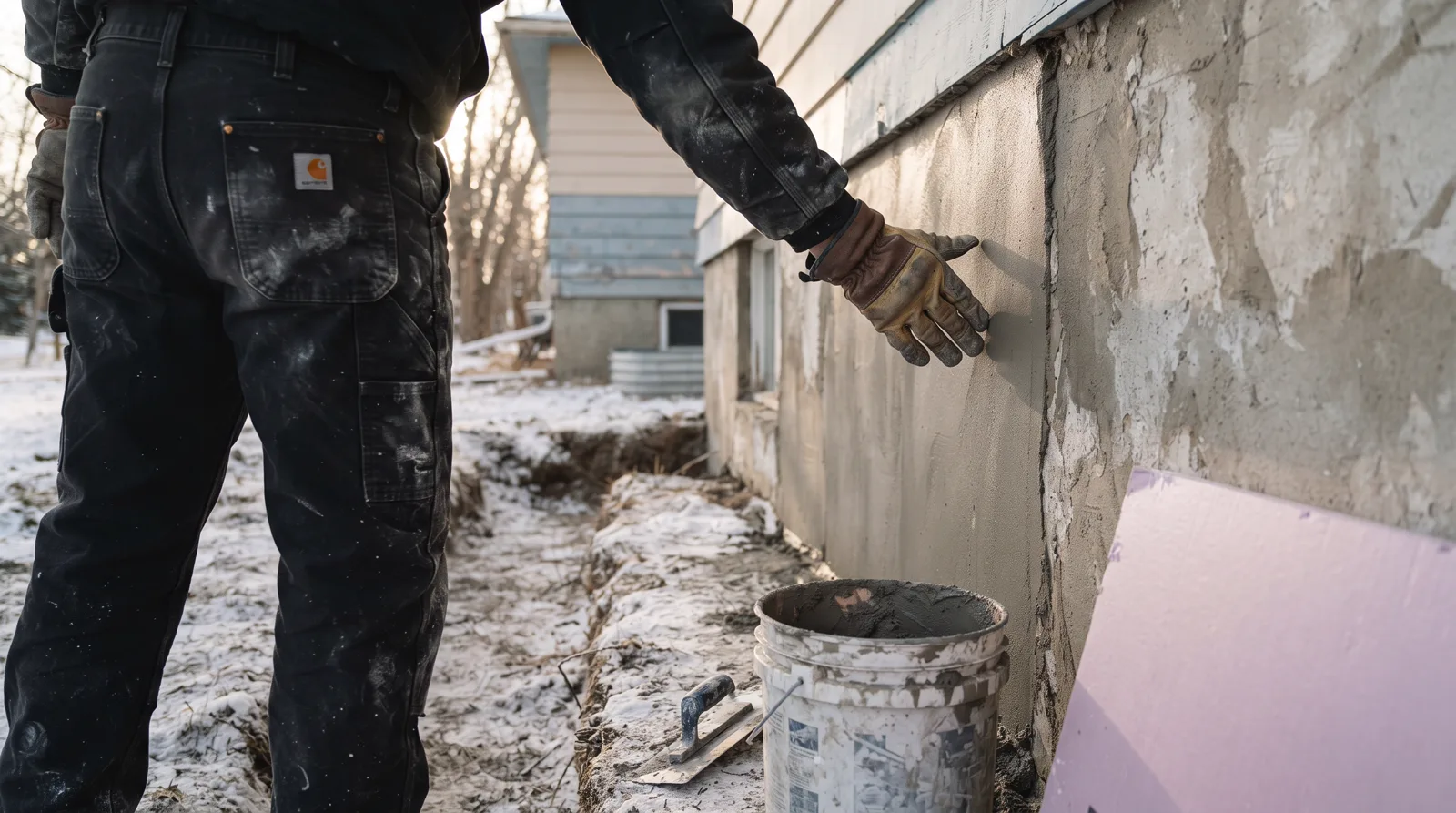
Foundation Repair Built for Alberta's Freeze-Thaw Punishment.
Cracks, bowing walls, settling foundations. Licensed structural repair crews who understand clay soil, deep frost, and rapid temperature swings.
Foundation Services for Residential & Light Commercial
From hairline cracks to major structural stabilization, matched to the problem and the building code.
Epoxy & Polyurethane Crack Injection
Structural-grade injection for vertical and diagonal cracks. Stops water infiltration and restores wall integrity. Most common fix for shrinkage and minor settlement cracks in poured concrete.
Basement Wall Stabilization
Carbon fiber straps, steel I-beams, or helical anchors to stop inward bowing and prevent catastrophic failure. Required when horizontal cracks appear or walls lean more than 1 inch. Engineer assessment included.
Foundation Underpinning
Extending foundation depth with new concrete piers or helical piles when original footings are above frost line or soil has failed. Common on older Parkland County farmhouses built before modern code.
Exterior Waterproofing & Drainage
Full perimeter excavation, rubberized membrane application, weeping tile replacement, and proper grading. Addresses the root cause of most foundation water problems. Includes sump pump tie-in if needed.
Slab Jacking & Foundation Leveling
Polyurethane foam or cement grout injection to lift settled slabs and level uneven floors. Faster and less invasive than full replacement. Works well for garages, porches, and interior slabs on grade.
New Foundation Pour & Formwork
Engineered footings and walls for additions, garages, or replacement sections. Includes excavation to 1.2m or deeper, rebar placement, insulated concrete forms if specified, and damp-proofing. Permit and inspection coordination included.
Why Alberta Foundations Fail (and How We Fix Them)
❄️ Freeze-Thaw Cycles Crack Everything
Alberta sees 80 to 120 freeze-thaw cycles per year. Water enters tiny cracks, freezes, expands, and wedges concrete apart. This is why even new foundations develop hairline cracks within five years. Proper sealing and drainage stop the cycle before it becomes structural.
🌊 Clay Soil Expands and Contracts
Parkland County and Spruce Grove sit on expansive clay. It swells when wet, shrinks when dry, and moves your foundation with it. Foundations need proper compaction, gravel drainage layers, and sometimes engineered fill to stay stable long term.
🧊 Frost Depth Code: 1.2 Meters Minimum
Alberta Building Code requires footings at least 1.2m below grade to sit below the frost line. Older homes, additions done without permits, and some rural builds skipped this. Shallow footings heave every winter and settle every spring, causing chronic cracking.
🌡️ Chinook Temperature Swings Stress Structures
A chinook can swing temperatures 30°C in 24 hours. Concrete, soil, and frost layers expand and contract at different rates, creating shear stress at the foundation line. Proper joint placement and reinforcement design absorb this movement without cracking.
What it costs here
Everything You Need to Know About Foundation Repair in Alberta
How to recognize problems early, what fixes actually work, and how to avoid contractors who make it worse.
What Concrete Foundation Repair Actually Involves in Alberta
Concrete foundation repair in Spruce Grove addresses structural damage caused by soil movement, freeze-thaw cycles, and water infiltration. Unlike cosmetic fixes, foundation work targets the load-bearing elements that keep your home level and structurally sound. Alberta foundations face unique stresses: frost depths reaching 1.8 to 2.1 meters in Parkland County, expansive clay soils that swell when wet and shrink when dry, and chinook wind events that accelerate freeze-thaw cycling. Repair methods range from epoxy crack injection for minor settling to full underpinning for homes with significant subsidence. The goal is always to stabilize the structure, prevent further movement, and restore the foundation's ability to carry the building load safely.
Most Spruce Grove homes sit on poured concrete or concrete block foundations installed between the 1970s and today. Older homes in Stony Plain may have rubble stone or early concrete mix foundations that were never designed for the soil and climate loads we now understand. When clay soil beneath the footing expands during spring melt or shrinks during dry summers, the foundation can crack, tilt, or settle unevenly. Chinook winds in winter create rapid temperature swings that stress concrete, opening hairline cracks that widen over years. Foundation repair contractors assess whether the damage is active or dormant, structural or cosmetic, and whether soil stabilization or structural reinforcement is required before any work begins.
The scope of repair depends on the failure mode. Vertical cracks wider than six millimeters often indicate settlement and may need underpinning with helical piers or push piers driven to stable soil or bedrock. Horizontal cracks or bowing walls signal lateral soil pressure from poor drainage or hydrostatic buildup and typically require wall anchors or carbon fiber reinforcement. Hairline shrinkage cracks may only need epoxy or polyurethane injection to prevent water entry. A qualified contractor will distinguish between foundation movement that has stopped and active settling that requires engineering intervention. Alberta building code requires that any structural repair affecting load paths be reviewed by a professional engineer, and most insurance claims for foundation damage hinge on documented structural risk, not cosmetic appearance.
Why Foundations Fail in Spruce Grove and Parkland County
The primary culprit is expansive clay soil. Much of the Parkland County area sits on glacial till and lacustrine clay deposits that can expand up to ten percent in volume when saturated and shrink dramatically when dry. When clay under one corner of your foundation swells during spring runoff and the opposite corner shrinks during a dry July, differential movement cracks the concrete. This cycle repeats every year, widening existing cracks and creating new ones. Builders in the region know to dig footings below the frost line and compact granular fill under basement slabs, but older homes and budget builds sometimes skip proper subsurface drainage, leaving the foundation vulnerable to seasonal soil shifts.
Freeze-thaw is the second major driver. Alberta winters push frost deep into the ground, and chinook winds can raise temperatures fifteen degrees Celsius in a few hours, melting snow and driving water into the soil around your foundation. When that water refreezes, it expands with tremendous force, lifting footings and cracking walls. A poorly graded lot that slopes toward the house funnels meltwater and rain against the foundation, saturating the backfill and increasing hydrostatic pressure. Over time, this pressure bows basement walls inward, cracks poured concrete, and displaces concrete block. Homes built before modern weeping tile and exterior waterproofing standards are especially at risk.
Construction quality and age also matter. Homes built during boom periods in the 1980s and early 2000s sometimes used thinner foundation walls, inadequate rebar, or poorly mixed concrete to save costs. Concrete cures over weeks, and cold-weather pours that were not properly protected can have reduced strength. Older homes in Stony Plain may lack the four-inch perimeter drain tile that modern code requires, leaving no path for groundwater to escape. Even well-built foundations degrade over decades as freeze-thaw cycles, soil movement, and minor settling accumulate stress. By the time visible cracks appear, the underlying issue has often been developing for years.
Warning Signs Your Foundation Needs Repair
Structural and Interior Indicators
Cracks in basement walls are the most obvious red flag. Vertical cracks wider than a quarter inch, stair-step cracks in concrete block, or horizontal cracks anywhere on the wall indicate movement or stress beyond normal settling. If you can fit a coin into the crack or see daylight through it, the foundation has moved significantly. Doors and windows that suddenly stick or no longer latch properly suggest the frame has shifted out of square, a common symptom of differential settling. Floors that slope toward one corner or feel springy near load-bearing walls point to foundation movement or compromised support beams resting on a settling footing.
Interior finishes often reveal hidden problems. Drywall cracks that reappear after patching, especially diagonal cracks running from door corners or stair-step patterns in block walls, track foundation movement. Gaps between walls and ceilings or between baseboards and floors indicate the structure is shifting. In basements, watch for efflorescence, the white powdery deposit left when water seeps through concrete and evaporates. Persistent moisture, musty odors, or mold growth on lower walls signal chronic water infiltration through foundation cracks or failed waterproofing. These are not cosmetic issues: they indicate the foundation is no longer keeping water out, and the problem will worsen with every freeze-thaw cycle.
Exterior and Grading Warning Signs
Walk your property's perimeter and look for soil pulling away from the foundation, especially after a dry period. A gap wider than two centimeters suggests the clay has shrunk significantly, leaving the footing unsupported. Pooling water near the foundation after rain or snowmelt means your grading is wrong, and that water is loading the soil and driving hydrostatic pressure against the wall. Cracks in the foundation visible from outside, particularly horizontal cracks or outward bulging in the lower third of the wall, indicate serious lateral pressure that can lead to wall failure if not addressed.
Check for sagging or uneven rooflines, which can result from one corner of the house settling faster than the others. Cracked or separated chimney brickwork, especially where the chimney meets the roofline, often correlates with foundation movement, since chimneys are heavy and settle independently if their footing fails. Concrete garage floors or driveways that have tilted toward or away from the house over time suggest broad soil movement affecting the entire building pad. These exterior signs confirm that the problem is not isolated to one wall or one crack but involves the soil and structure as a system.
The Foundation Repair Process from Assessment to Completion
Initial Inspection and Diagnosis
A qualified foundation contractor begins with a visual inspection of the interior and exterior, measuring crack widths, checking for plumb on walls, and using a level to map any floor slope. They will ask about the home's age, construction type, drainage history, and when you first noticed problems. Experienced contractors can often distinguish active settlement from old movement that has stabilized by looking at crack edges: clean, sharp edges suggest recent movement, while dirty or weathered cracks indicate old damage. They may install crack monitors, simple graduated plastic tabs that span a crack and reveal if it is widening over weeks or months.
If the damage is significant or the cause unclear, the contractor will recommend a geotechnical or structural engineering assessment. Engineers bore soil samples to check bearing capacity, moisture content, and soil type, and they calculate the loads and stresses on the foundation. In Alberta, any repair affecting the building's structural integrity must be designed or reviewed by a professional engineer and permitted through your municipality. Insurance companies also require an engineering report before approving coverage for foundation repairs. This step adds cost, typically $1,500 to $4,000 depending on scope, but it ensures the repair addresses the root cause and meets code.
Repair Methods and Execution
For active settlement, underpinning is the standard solution. Contractors excavate sections around the footing and drive helical piers or hydraulic push piers down to stable soil or bedrock, then hydraulically lift the foundation back to level and lock the piers in place. This process is invasive and expensive, typically $10,000 to $30,000 for a full perimeter, but it permanently stabilizes the structure. Helical piers work well in clay because they bypass unstable surface soil and anchor in competent material below. The work requires excavation, shoring, and careful lifting to avoid cracking the structure further, and it must be done in stages to prevent overstressing the concrete.
For cracks without active movement, epoxy or polyurethane injection seals the fracture and restores some tensile strength. Contractors drill entry ports along the crack and inject resin under pressure, filling voids and bonding the concrete. Epoxy is rigid and strong, ideal for structural cracks, while polyurethane foam is flexible and expands to fill gaps, better for waterproofing. Injection costs $400 to $1,200 per crack depending on length and depth. If the crack is still moving, injection alone will fail: the repair will crack again within months. That is why proper diagnosis is critical.
Bowing or leaning walls require lateral reinforcement. Contractors install carbon fiber straps or steel I-beams on the interior face of the wall to prevent further inward movement, or they anchor the wall to stable soil outside using helical tiebacks. Wall anchors involve excavating outside the foundation, driving anchors into undisturbed soil, and tensioning steel rods that pull the wall outward. Over months, the contractor can gradually straighten the wall. Carbon fiber is less invasive and works for walls with less than five centimeters of deflection, while anchors handle severe bowing. Costs range from $4,000 to $15,000 depending on wall length and deflection. Both methods require permits and engineering in Alberta.
Drainage, Waterproofing, and Prevention
Repairing the foundation without fixing drainage is throwing money away. Contractors will regrade the lot to slope away from the house, extend downspouts at least two meters from the foundation, and install or repair weeping tile around the footing perimeter. Exterior waterproofing involves excavating to the footing, applying rubberized membrane or spray-on coating, and wrapping the drain tile in filter fabric before backfilling with clean gravel. Interior weeping tile and sump pump systems are less invasive and cost $3,500 to $8,000, but they manage water after it reaches the foundation rather than keeping it away. Exterior systems are more effective long term but cost $12,000 to $25,000 for a full perimeter.
Prevention also means managing soil moisture. Soaker hoses or drip irrigation near the foundation during dry summers keep clay from shrinking excessively, reducing seasonal movement. Avoid planting large trees within three meters of the foundation: their roots steal moisture and destabilize soil. In winter, clear snow away from the foundation before chinooks hit so meltwater does not pool against the wall. These small steps reduce the stress that leads to cracks and settlement, extending the life of any repair and protecting your investment.
What Foundation Repair Actually Costs in the Tri-Region
Foundation repair pricing in Spruce Grove, Stony Plain and Parkland County varies widely because no two foundation problems are identical. A straightforward crack injection on a newer home might cost $800 to $1,500, while stabilizing a settling corner with helical piers can run $3,500 to $7,000 per pier location. Full perimeter underpinning on an older bungalow can easily reach $25,000 to $60,000 depending on depth, access and soil conditions. These ranges reflect real Alberta labour rates, material costs and the engineering oversight required when working below grade in freeze-thaw climates.
Several factors push costs up or down. Soil type matters: if your property sits on expansive clay (common west of Edmonton), the contractor may need to install piers deeper to reach stable load-bearing strata, adding材料 and time. Access is another driver. A foundation wall tight against a fence, deck or neighbour's property line forces hand excavation instead of machine digging, doubling labour hours. Permit and engineering fees add $800 to $2,500 to most projects; the City of Spruce Grove and Parkland County both require a building permit and stamped drawings for structural foundation work, and inspectors will red-tag unpermitted repairs during resale home inspections.
Timing also plays a role. Contractors are busiest from May through September, so booking in shoulder seasons (April or late October before hard frost) can sometimes yield better rates or faster scheduling. Emergency calls for actively heaving foundations or water intrusion command premium pricing because crews must mobilize quickly and work in less-than-ideal conditions. Always ask for an itemized quote that breaks out labour, materials, permits, engineering, backfill and site restoration separately so you can compare apples to apples across bids and spot any padding or missing line items.
Comparing Foundation Repair Methods for Alberta Conditions
Helical piers (also called screw piles) are the workhorse solution for settling foundations in our region. A hydraulic machine screws steel shafts with helix plates deep into the soil until they reach dense, stable layers, often eight to twelve feet down or more in soft clay areas. Brackets attach the pier to the foundation footing, transferring the building load onto solid ground and often lifting the settled section back toward level. Helical piers handle Alberta freeze-thaw cycles well because they extend below the frost line (roughly four feet here) and do not rely on surface soils that heave and contract seasonally. Expect $1,200 to $2,000 per pier installed, and most projects need four to eight piers depending on span and load.
Steel push piers work similarly but are driven (not screwed) until they hit refusal on bedrock or very dense soil. They are common when the bearing layer is deeper or when soil is too rocky for helical threads to bite cleanly. Push piers cost slightly more per unit, typically $1,500 to $2,500 each, because the hydraulic rams and installation process are more labour-intensive. Both pier types require excavation along the footing, so budget for backfill, compaction and grading afterward. In Parkland County, any excavation deeper than four feet triggers shoring and safety requirements under provincial occupational health and safety rules, which a reputable contractor will follow without cutting corners.
Polyurethane foam injection (sometimes called slab jacking or foam leveling) suits situations where the foundation itself is sound but the floor slab has settled due to soil washout or compaction. A technician drills penny-sized holes through the concrete and pumps expanding polyurethane foam underneath, which fills voids and lifts the slab. It is fast, minimally invasive and costs $5 to $15 per square foot depending on depth and void size. However, foam injection does not fix structural cracks in foundation walls, and it is not a permanent solution if ongoing water infiltration continues to wash out soil. It works best for garage floors, basement slabs and sidewalks where the settling is cosmetic or causes minor trip hazards rather than threatening the building envelope.
Epoxy or polyurethane crack injection seals non-structural hairline and vertical cracks to stop water seepage. A contractor injects resin under pressure, bonding the crack faces together and creating a waterproof seal. This repair typically costs $400 to $900 per crack and works well for poured concrete foundations with cracks narrower than a quarter inch that are not actively widening. It does not address the underlying movement or settlement that caused the crack, so if your home is still shifting, the crack may reopen nearby. For older rubble or block foundations common in Stony Plain's pre-1970s housing stock, crack injection is less effective because the mortar joints and porous block do not hold resin reliably; those foundations often need interior waterproofing membranes or exterior excavation and parge coating instead.
Common Foundation Repair Mistakes and Contractor Red Flags
One frequent mistake is treating symptoms instead of causes. Homeowners see a wet basement, hire someone to patch cracks or install a sump pump, then discover ongoing settlement because surface water was never diverted away from the foundation in the first place. Proper grading, eavestroughs and downspout extensions are unglamorous but critical; the ground should slope at least six inches over ten feet away from the house. In heavy clay soils around Acheson and west Parkland County, poor drainage can saturate the clay, causing it to expand and lift the foundation in spring, then shrink and drop it in summer. If a contractor quotes crack repair without assessing drainage and soil conditions, they are missing the root problem.
Another red flag is a contractor who dismisses the need for permits or engineering. Alberta's Safety Codes Act mandates permits for structural work, and lenders or title insurers can refuse to close a sale if unpermitted foundation repairs appear on a home inspection report. A legitimate contractor will pull the permit, arrange for a geotechnical or structural engineer to review the repair plan if required, and schedule inspections at key stages (footing exposure, pier installation, backfill). If someone offers a cash discount to skip permits, you are assuming liability for code violations and future insurability headaches. Parkland County and the City of Spruce Grove both conduct random compliance checks, and retroactively permitting completed work costs more and may require invasive verification that the repair meets code.
Beware of high-pressure sales tactics and one-day-only pricing. Foundation repair is a considered purchase; reputable contractors understand you will get multiple quotes and take time to review scope, methods and references. If a salesperson uses scare language (your house will collapse, your family is in danger, this price expires tonight), walk away. Similarly, avoid contractors who cannot provide proof of WCB coverage and commercial general liability insurance of at least two million dollars. Foundation work is hazardous, with deep excavations, heavy equipment and structural loads. If a worker is injured on your property and the contractor has no liability insurance, you can be held liable under Alberta law. Always verify coverage directly with WCB Alberta online or by phone before signing a contract.
How to Choose the Right Foundation Contractor
Start by confirming the contractor holds an active business license in the municipality where you live. Spruce Grove, Stony Plain and Parkland County all maintain public business registries. Check online reviews on Google and HomeStars, but read critically: look for patterns (do they show up on time, clean up properly, handle surprises transparently) rather than star counts alone. Ask for at least three local references from projects completed in the past two years and actually call them. Ask the references whether the work was permitted, whether the final cost matched the quote, and whether they would hire the contractor again. A contractor confident in their work will provide references without hesitation.
Request a detailed written quote that specifies repair method, materials, depth and number of piers or injection points, warranty terms, permit and engineering fees, and a payment schedule. Never pay the full amount upfront; a typical schedule is one third deposit, one third when materials arrive on site, and final payment after inspection approval and site cleanup. Compare at least three quotes side by side. The lowest bid is not always the best value if it omits permits, uses thinner steel, or skips backfill compaction. The highest bid may include belt-and-suspenders engineering that your situation does not require. Look for the bid that transparently addresses your specific problem with a method suited to Alberta soil and climate, backed by proper insurance and references.
Ask about warranties. Reputable foundation contractors offer transferable warranties of at least five years on labour and materials, and some pier systems carry manufacturer warranties of 25 years or more. Read the warranty exclusions: most do not cover damage from future landscaping changes, plumbing leaks, or drainage neglect. Confirm that the contractor will return for a one-year follow-up inspection to check for any minor settling or crack movement and make adjustments if needed at no charge. Finally, trust your gut. If a contractor is evasive about permits, reluctant to answer technical questions, or pushes you toward the most expensive option without explaining why simpler methods will not work, keep looking. Foundation repair is a long-term investment in your home's structural integrity and resale value, so choosing a contractor you trust and who communicates clearly is worth the extra time.
How Tri-Region Services Helps
Tri-Region Services eliminates the guesswork by connecting you with one thoroughly vetted, fully insured foundation contractor in your area who will provide a free written quote with no obligation. Every pro in our network tells us they carry minimum two million dollar liability insurance, and a track record of permitted, code-compliant work in Spruce Grove, Stony Plain, Parkland County and Acheson. You get one qualified referral, not a list of strangers to research. The contractor will assess your foundation, explain the recommended repair method in plain language, and provide a transparent quote that covers permits, engineering and warranty. You choose whether to proceed, and there is never any cost or pressure to use the referral. Our goal is to make foundation repair straightforward and trustworthy for Tri-Region homeowners.
How We Screen Foundation Contractors
Foundation work is structural. We only list pros who meet insurance, engineering, and warranty standards.
Licensed with Liability & liability insurance
Every contractor tells us they carry minimum $2M liability and liability insurance clearance letters before they touch your foundation.
Structural Engineer Review Available
Major repairs include engineer assessment and stamped drawings when required by permit or insurance.
Written Warranties on Materials & Labor
Minimum 5 years on crack injection, 10+ years on stabilization and underpinning work.
Building Permit Coordination Included
Contractors pull permits, schedule inspections, and provide you with signed-off documentation for resale.
Photo Documentation Before & After
Full visual record of damage, repair process, and completed work for your insurance and property records.
Local References from Real Projects
Every contractor provides verifiable Tri-Region job sites and homeowner contacts you can call.
This page is not tied to a contractor's brand. Leads route straight to your one local partner. Verified reviews can appear here once that partner has them (never fabricated).
Serving the whole Tri-Region
7 Questions Homeowners Ask About Foundation Repair
How deep do foundations need to be in Spruce Grove and Stony Plain?+
What actually causes foundation cracks around here?+
When should I actually be worried about a crack?+
Do I need a building permit for foundation repair in Parkland County?+
How long does a typical foundation repair take?+
Will my home insurance cover foundation problems?+
Can you fix foundation problems in winter?+
What is the difference between crack injection and underpinning?+
Get your free quote
Tell us what you need and a local pro will get right back to you.
- ✓ Sent straight to a local business
- ✓ You choose who you hire
- ✓ Free, with no obligation