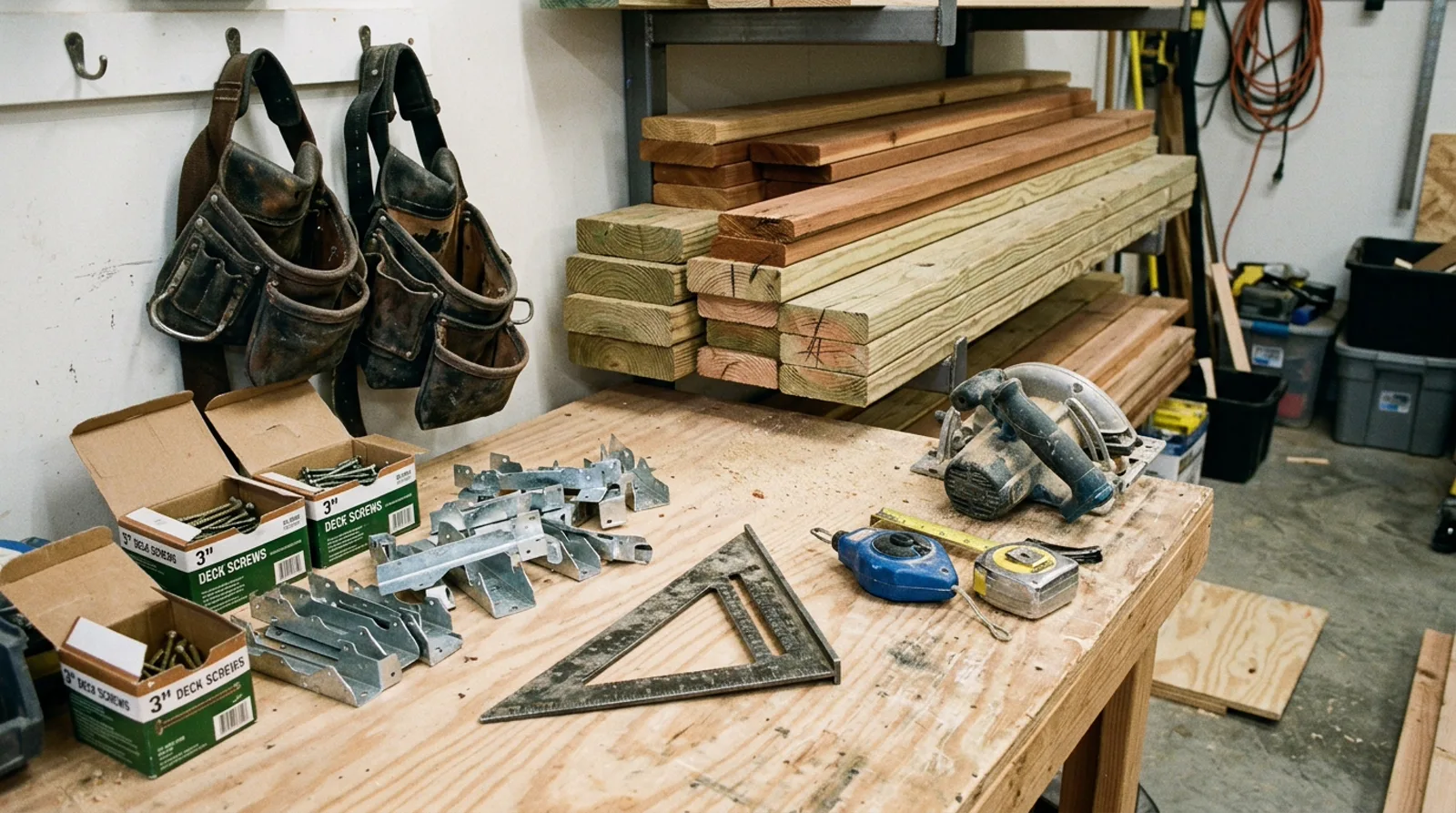
Deck Builders Engineered for Alberta Weather.
Custom outdoor decks built to handle frost heaving, snow loads and freeze-thaw cycles. Pressure-treated, composite or cedar construction with proper footings and drainage.
Deck Construction Services in the Tri-Region
From simple ground-level platforms to multi-story elevated decks with stairs, railings and custom features. Every project engineered to meet Alberta Building Code and local permit requirements.
Pressure-Treated Wood Decks
Most common choice for Tri-Region homes. Ground contact rated lumber, galvanized fasteners, concrete footings to 4 feet. Framingham joists on 12 or 16 inch centers for snow load. Treated lumber resists rot and insect damage for 15 to 25 years with proper maintenance.
Composite Decking Systems
Low maintenance capped composite boards over treated wood framing. No annual staining or sealing. Resists fading, cracking and mold. Hidden fastener systems for clean look. Popular brands available: Trex, TimberTech, Azek. Material warranty typically 25 to 50 years.
Cedar Deck Construction
Natural aromatic western red cedar. Naturally resistant to decay and insects. Beautiful grain patterns and warm color that weathers to silver-gray if left unsealed. Requires annual cleaning and staining to maintain original tone. Lightweight yet strong, ideal for elevated decks.
Multi-Level Deck Systems
Tiered deck platforms with stairs, landings and transitions. Ideal for sloped yards or creating distinct outdoor zones (dining, lounging, hot tub). Requires engineered beam sizing and ledger board attachment to house. Often paired with pergolas, privacy screens or planters.
Deck Repairs and Refacing
Replace rotted boards, rebuild failing railings, reinforce sagging joists or update surface boards while keeping the frame. Common for decks 10 to 15 years old where structure is sound but surface is weathered. Can upgrade to composite boards on existing treated frame if joists are solid.
Railings, Stairs and Guards
Code-compliant railings for elevated decks over 24 inches high. Aluminum, composite, wood or cable rail systems. Stairs with proper rise, run and handrails. Guards at 36 or 42 inch height depending on deck elevation. Balusters spaced to pass 4 inch sphere test for child safety.
Why Alberta Decks Need Different Engineering
❄️ Frost Heaving and Deep Footings
Alberta frost line reaches 4 feet deep in winter. Deck footings poured shallower will heave and shift as ground freezes and thaws, cracking the frame within a few seasons. We dig to 4 feet minimum, pour Sonotubes with rebar and embed post brackets in concrete. This prevents movement and keeps the deck level for decades.
🏔️ Snow Load Capacity Requirements
Alberta Building Code requires decks to support 50 pounds per square foot live load plus the weight of the structure itself. That means your deck must hold a foot of wet spring snow on top of furniture and people. We size joists, beams and posts to meet or exceed this, using 2x8 or 2x10 joists on tight spacing and proper span tables.
🌬️ Chinook Wind and Fastener Standards
Chinook winds can gust over 100 km/h in the Tri-Region, especially on exposed rural properties in Parkland County. We use structural screws or through-bolts for ledger board attachment to the house, not just nails. Railing posts are through-bolted to rim joists. Surface boards get two fasteners per joist crossing to prevent lifting and rattling.
📋 Parkland County and City Permit Differences
Spruce Grove and Stony Plain have similar building permit processes, but Parkland County has different setback rules and sometimes requires engineered drawings for elevated decks. Local pros handle permit applications, site plans and inspections for all three jurisdictions. Typical turnaround is 2 to 4 weeks for approval depending on complexity.
What it costs here
Everything You Need to Know About Deck Building in Spruce Grove
From planning and permits to material selection, framing, finishing and long-term maintenance. Written for Alberta homeowners.
Understanding Deck Construction in Spruce Grove's Climate
Building a deck in Spruce Grove, Stony Plain, or Parkland County is fundamentally different from building one in Vancouver or Ontario. Alberta's extreme temperature swings, from minus 30°C winter lows to plus 30°C summer highs, create expansion and contraction cycles that stress every fastener, board, and post anchor. Frost heave is not a theoretical risk here. It is a certainty. The ground freezes to depths of 1.2 to 1.8 metres depending on the winter, and any deck footing that does not reach below the frost line will shift, crack, and fail within two or three freeze-thaw cycles. Professional deck builders in this region know that shortcuts on footings are not forgiven by the ground.
Material choice matters more here than in milder climates. Pressure-treated lumber is the workhorse material because it resists rot and insect damage, but even treated wood will crack and splinter under UV exposure and moisture cycling. Composite decking costs more upfront, typically $8 to $15 per square foot versus $4 to $7 for treated lumber, but it does not warp, crack, or require annual staining. Cedar is beautiful and naturally rot-resistant, but it grays quickly under Alberta sun and needs regular sealing to maintain its colour. The choice is not just aesthetic. It directly affects how much maintenance you will commit to over the next 15 years and whether your deck survives hail storms without denting or splitting.
Alberta hail is another variable that separates competent builders from amateurs. A severe hailstorm in Spruce Grove or Acheson can shred cheap composite boards, punch holes in hollow PVC railings, and shatter glass panels in modern cable railing systems. Builders who understand this specify impact-resistant materials and avoid thin-wall products that look sleek in a showroom but fail under real conditions. Snow load is equally critical. The building code requires decks to support 50 pounds per square foot of live load, which includes snow accumulation. A poorly braced deck with undersized joists will sag visibly after a heavy February snowfall, and sagging means water pools instead of draining, which accelerates rot and creates ice patches that make the deck unusable and dangerous until spring.
Warning Signs Your Property Needs a Deck or Deck Replacement
The most obvious sign is not having a functional outdoor space when your home backs onto a yard you never use. If you have a back door that opens onto bare grass or a cracked concrete pad, you are missing usable square footage that directly increases property value and livability. Homeowners in Parkland County and Spruce Grove consistently report that a well-built deck extends their living season by months, allowing them to enjoy cool spring evenings and late September afternoons that would otherwise be wasted. Builders see this repeatedly: families install a deck and immediately start spending evenings outside instead of retreating indoors after dinner. The return on investment is not just financial. It is lifestyle.
For existing decks, the warning signs are structural and visible if you know where to look. Soft or spongy boards underfoot indicate rot in the joists or decking itself, often caused by trapped moisture where boards sit tight against each other without drainage gaps. Check the ledger board, which is the horizontal beam that attaches the deck to your house. If you see gaps between the ledger and the house wall, rust stains around lag bolts, or any movement when you push on the railing, the attachment is failing. This is not cosmetic. A ledger failure can collapse an entire deck while people are standing on it. Builders in Alberta see ledger rot constantly, especially on decks built 15 or 20 years ago before modern flashing and membrane standards were enforced.
Railing wobble is another red flag that homeowners often ignore until it becomes dangerous. Building codes require railings to withstand 200 pounds of horizontal force, which simulates someone falling against the rail or kids roughhousing. If your railing moves more than a centimetre when you push it hard, the post connections are loose or rotted and need replacement before someone leans on it and goes over. Stair issues are equally common. Stringers that have pulled away from the deck frame, treads that are cupped or split, or risers that vary in height are tripping hazards and code violations. Professional deck inspections in Spruce Grove regularly find stairs that were built without proper hardware, relying only on nails that have rusted and loosened over a decade of freeze-thaw movement.
Surface stains and discoloration tell a maintenance story. If your treated lumber deck has turned black or green in shaded areas, that is mold and mildew growth from standing water. It means the deck is not draining properly, either because boards are spaced too tight or the deck pitch is flat or negative. Composite decks that show white chalking or fading have exceeded their UV resistance and are breaking down. Splinters and cracks in walking surfaces are immediate safety problems, especially for kids and pets. Once a deck starts splintering, it degrades quickly. Sanding helps temporarily, but if the wood is checking deeply, replacement is the only permanent fix.
The Alberta Building Code and Permit Reality for Decks
Every municipality in the region, including Spruce Grove, Stony Plain, Parkland County, and Acheson, requires a building permit for any deck that is more than 0.6 metres above grade. That threshold is roughly two feet, which means almost every residential deck requires a permit. The permit process exists to ensure your deck meets structural, safety, and setback requirements, and it protects you as the homeowner if something goes wrong. Unpermitted decks are discovered during home sales when inspectors flag them, and municipalities can force demolition or expensive after-the-fact permitting that includes engineering reports and opened-up framing inspections. Reputable deck builders pull permits as a standard part of the contract because they know their work will pass inspection and because they carry liability insurance that requires code compliance.
Permit applications require a site plan showing the deck location relative to property lines, house walls, and utility easements. Setback rules vary slightly by municipality, but generally decks must be at least 1.2 metres from side and rear property lines unless you have a variance or written consent from your neighbour. Decks cannot block utility access or cover septic fields. The permit package also includes structural drawings showing footing depth and diameter, beam and joist sizing, span tables, and connection details. Most builders use pre-approved deck plan templates that the municipality has already reviewed, which speeds approval. Typical permit fees range from $150 to $400 depending on the deck size and complexity. Turnaround is usually one to three weeks if the application is complete.
Footing and Foundation Requirements
Alberta's frost depth drives footing rules. Deck footings must extend at least 1.2 metres below finished grade to sit below the frost line, and in areas with poor drainage or heavy clay soils, 1.5 metres is safer. Builders typically use 10-inch or 12-inch diameter concrete sonotubes set in augered holes, with a bell-shaped base to resist frost heave. Each footing supports a post, and the post must be anchored with an embedded saddle bracket or a post base that sits on the cured concrete. Simply setting a wooden post into wet concrete or directly on a buried footing is not allowed and will fail inspection. The inspector checks footing depth, diameter, concrete mix, and proper anchoring before allowing the frame to be built over them.
Footing spacing depends on the deck design and load calculations, but typical residential decks use footings every 1.8 to 2.4 metres along the beam lines. Cantilevers and elevated decks require additional footings and diagonal bracing to meet lateral load requirements, which account for wind and seismic forces. Builders in Parkland County sometimes encounter bedrock or high groundwater during augering, which requires adjusting footing locations or using engineered helical piles. This adds cost, typically $200 to $500 per problem footing, but it is necessary for a safe and code-compliant structure.
Ledger Attachment and Flashing
The ledger board connection is the most critical detail on any attached deck. The ledger is bolted or screwed to the house rim joist through the siding, and it carries half the deck load. Alberta code requires half-inch lag bolts or through bolts spaced every 40 centimetres, installed into solid wood framing, not into engineered lumber or sheathing alone. Builders must remove siding and install metal flashing above the ledger to prevent water from running down the house wall and soaking the ledger-to-house interface. Without flashing, rot develops invisibly behind the ledger, and the deck pulls away from the house over time. Inspectors pay close attention to ledger details and will fail a deck if flashing is missing or improperly lapped.
The Complete Deck Building Process: What Actually Happens
The process begins with a site consultation where the builder assesses your yard, discusses how you want to use the deck, and identifies any site challenges like slopes, buried utilities, or drainage issues. Good builders ask about furniture placement, barbecue locations, sun exposure, and whether you want built-in features like bench seating or planter boxes. They measure the space, take photos, and note utility locations marked by a Click Before You Dig request, which is free and mandatory before any digging starts. Within a week, you receive a written quote that breaks down materials, labour, permit fees, and timelines. Quotes for basic ground-level decks in Spruce Grove typically range from $8,000 to $18,000 depending on size and materials, while elevated or multi-level decks run $18,000 to $40,000 or more.
Once you accept the quote and sign the contract, the builder applies for the building permit and orders materials. Lead times for treated lumber and standard composite decking are usually one to two weeks in spring and summer, but specialty products or custom railings can take four to eight weeks. The builder schedules the project around permit approval and material delivery. Most residential decks take three to ten days of actual construction time, spread over two to three weeks to allow for concrete curing and inspection scheduling. Weather delays are common in Alberta. Rain stops work because wet framing is unsafe and concrete footings cannot be poured in standing water. Extreme heat over 30°C can cause composite decking to expand during installation, leading to buckling when it cools, so experienced builders avoid midday installation in July and August.
Site Preparation and Footing Installation
Construction starts with layout and excavation. The crew strings lines to mark the deck perimeter and footing locations, then uses a gas-powered auger to drill holes for the sonotubes. Holes are inspected for depth and diameter, then the sonotubes are set and braced plumb. Concrete is mixed on site or delivered by truck, then poured into the tubes and vibrated to remove air pockets. Post anchors are embedded while the concrete is wet, positioned precisely so posts will be plumb and aligned. The concrete cures for at least 48 hours before framing begins, longer in cool weather. Builders schedule the footing inspection during this curing period so the inspector can verify depth and concrete quality before the holes are backfilled.
Framing, Decking, and Railing Installation
Once footings pass inspection, the crew installs posts, beams, and joists. Posts are cut to height and bolted to the anchors, then beams are bolted to the posts using galvanized hardware. Joists run perpendicular to the decking direction, spaced 40 centimetres on centre for composite decking or 30 to 40 centimetres for wood, depending on the span. The ledger is installed with flashing, and rim joists close the frame perimeter. Builders check the frame for square and level before installing joist hangers and blocking. The framing inspection happens at this stage, with everything exposed. Inspectors check joist sizing and spacing, beam spans, hardware type and placement, and ledger attachment. Passing this inspection allows the crew to install decking.
Decking boards are fastened with hidden clips for composite materials or face-screwed for wood, starting from the house and working outward. Builders leave expansion gaps between composite boards and stagger joints in wood decking for strength and appearance. Boards are cut to length with a mitre saw, and edges are trimmed flush after installation. Once decking is complete, railing posts are bolted through the rim joist and reinforced with blocking. Top and bottom rails are installed, then balusters or cable infill. Stairs are framed with stringers cut to code-compliant rise and run dimensions, typically 18 to 20 centimetre treads and 18 to 20 centimetre risers. Handrails are added to stairs and ramps. The final inspection covers railing height and strength, stair dimensions, guardrail spacing, and overall workmanship.
Finishing and Handover
After passing final inspection, the builder cleans the site, hauls away waste lumber and packaging, and applies any requested finishes. Wood decks are sometimes left untreated for a season to let the lumber dry and stabilize before staining, or they are sealed immediately with a water-repellent finish. Composite decks require no finishing but are cleaned of construction dust and debris. The builder walks you through maintenance requirements, provides warranty documentation, and confirms that the permit has been closed with the municipality. Reputable builders offer workmanship warranties ranging from one to five years and help you understand material warranties, which vary from 10 years for treated lumber to 25 years or more for premium composite products. You receive copies of the approved permit, inspection records, and any engineered drawings for your property file.
What It Really Costs to Build a Deck in Spruce Grove (and What Drives the Price)
A basic ground-level pressure-treated deck in Spruce Grove, roughly 12 feet by 16 feet, typically runs $6,000 to $10,000 installed, including materials, labour, and a City of Spruce Grove building permit. Step up to a second-story elevated deck with stairs, composite decking, and aluminum or glass railings, and you're looking at $15,000 to $30,000 or more, depending on size, access, and site conditions. These are honest, real-world ranges from local contractors serving Parkland County and the Tri-Region, not internet averages imported from Toronto or Vancouver. Labour in Alberta is competitive, but material costs have climbed since 2021, and permits, inspections, and frost-depth footings all add to the bill in ways that don't apply in milder climates.
The single biggest cost driver is material choice. Pressure-treated pine or spruce framing with matching decking is the most affordable option, running roughly $8 to $15 per square foot for materials alone. Composite decking from brands like Trex, TimberTech, or Fiberon costs $25 to $40 per square foot installed, nearly triple the price of wood, but it never needs staining, resists fading and mold, and holds up better under Alberta's freeze-thaw cycle and summer UV. PVC decking (fully synthetic, no wood fiber) pushes costs higher still, $30 to $50 per square foot, but it's the most durable and lowest-maintenance choice if your budget allows. Railing adds another $50 to $150 per linear foot depending on whether you choose simple wood pickets, powder-coated aluminum, tempered-glass panels, or cable rail.
Labour accounts for 40 to 60 percent of the total project cost in Spruce Grove and Stony Plain. A two-person crew will frame, deck, and rail a straightforward 12-by-16 platform in two to four days, depending on weather, site access, and whether they hit rock or clay during footing excavation. Elevated decks, wraparound designs, multi-level layouts, or builds on sloped lots take longer and cost more because of the engineering, additional posts and beams, stair stringers, and safety precautions required when working at height. If your yard backs onto a wet area or has poor drainage, expect added cost for grading, gravel fill, or a drainage membrane under the deck to prevent frost heave and rot.
Alberta-specific factors push costs higher than the Canadian average. Footings must extend below the frost line, which is 4 feet deep in the Spruce Grove area per the Alberta Building Code. That means digging or augering twelve to twenty holes (depending on deck size) to 4 feet, pouring concrete sono-tubes, and installing galvanized post brackets, all before a single deck board goes down. Snow load is another consideration: the code requires decks to support at least 45 pounds per square foot live load (people and furniture) plus 25 to 35 pounds per square foot snow load, so joist spacing, beam sizing, and footing count are more robust than in coastal or southern regions. A City of Spruce Grove or Parkland County building permit runs $150 to $400 depending on deck size and value, and you'll pay for at least one mandatory inspection before the deck is approved for use. Any contractor who tells you to skip the permit is setting you up for headaches when you sell your home or file an insurance claim after a windstorm.
Comparing Your Deck Options: Materials, Designs, and Trade-offs
Pressure-treated lumber remains the default deck material in Spruce Grove and Acheson because it's affordable, widely available, and performs well if maintained. Modern pressure-treated wood is rated for ground contact and resists rot and insects for decades, but it requires annual cleaning and staining or sealing to prevent greying, splintering, and checking (surface cracks caused by freeze-thaw cycles). Cedar is a premium wood option: it's naturally rot-resistant, smells great, and looks beautiful when new, but it costs roughly double the price of treated lumber and still needs regular sealing to maintain color. Both wood options will move and warp slightly as they dry and acclimate to Alberta's extreme temperature swings, from minus 30°C in January to plus 30°C in July. Expect some cupping, twisting, and seasonal gaps, especially in the first year.
Composite decking has become the material of choice for homeowners in Stony Plain and Parkland County who want a deck that looks good with minimal effort. Composites are manufactured from wood fiber and recycled plastic, formed into grooved boards that resist fading, staining, scratching, and mold. They don't splinter, so they're safe for bare feet and pets, and most brands carry 25-year warranties covering fade and stain. The downside is upfront cost (two to three times more than wood) and a slightly hotter surface in direct summer sun compared to natural wood. Quality varies widely: bargain-brand composites from big-box stores may fade to a chalky grey within five years, while premium lines from Trex, TimberTech, or Azek hold their color and texture for decades. Hidden fastener systems (clips that attach from below) create a clean, screw-free surface, but they add labor time and cost.
PVC or all-plastic decking is the most durable and low-maintenance option available, made entirely from synthetic polymers with no wood content, so it can't rot, warp, or feed mold. PVC boards are lighter than composites, completely waterproof, and available in realistic wood-grain textures and colors that stay vibrant even after years of Alberta sun, hail, and freeze-thaw. The trade-off is price: $30 to $50 per square foot installed, making PVC decks a premium investment. PVC also expands and contracts more than wood or composite with temperature swings, so proper gapping and fastening technique is critical. If you plan to stay in your Spruce Grove home for ten-plus years and want a deck you can wash off once a year and forget about, PVC delivers the best long-term value per hour of maintenance saved.
Ground-Level vs. Elevated Decks: Cost and Complexity
A ground-level deck sits low to the yard, usually 12 to 18 inches above grade, and requires minimal railing (Alberta code requires railings only if the walking surface is more than 24 inches above grade). Ground-level decks are faster and cheaper to build, use less lumber, and are easier to access for maintenance and snow clearing. They work well on flat lots in Spruce Grove or Acheson where the yard grades gently away from the house. The main limitation is drainage: if your yard holds water after spring melt or heavy rain, a low deck will sit in moisture, promoting rot and attracting mosquitoes.
Elevated decks are required when your main floor sits several feet above yard level, common in walkout or bi-level homes throughout Parkland County. These decks need taller posts, diagonal bracing for lateral stability (wind and snow loads), stairs with code-compliant risers and treads, and full-height railings with balusters or pickets spaced no more than 4 inches apart (child-safety requirement). Elevated decks cost more to build and take longer, but they provide level access from your main living space, open up sightlines to your yard, and keep snow and mud off your deck surface. If your home backs onto a ravine, green space, or open farmland, an elevated deck with glass or cable railings maximizes the view and creates a true outdoor room.
Common Mistakes and Contractor Traps to Avoid When Building a Deck
The most expensive mistake homeowners make in Spruce Grove and Stony Plain is skipping the building permit or hiring a contractor who offers to skip it for you. A deck is a permanent structure attached to your home, and both the City of Spruce Grove and Parkland County require a permit for any deck over 2 feet high or larger than 108 square feet (roughly 10 by 10 feet). Building without a permit saves you $200 upfront but creates a liability when you sell your home: the buyer's inspector will flag the unpermitted deck, title insurance may refuse coverage, and you'll be forced to either tear it down, apply for a retroactive permit (which may not be granted if the deck doesn't meet code), or negotiate a price reduction with the buyer. If someone is injured on your unpermitted deck, your homeowner's insurance may deny the claim. No legitimate contractor will suggest skipping the permit, because they know it protects both you and them.
Inadequate footings are the second most common failure point for Alberta decks. Frost heave is real: when groundwater freezes, it expands and pushes anything sitting on top of it upward. A deck built on shallow footings or concrete blocks will lift, shift, and separate from the house ledger board over the first winter, cracking joists, popping screws, and creating dangerous gaps and trip hazards. Alberta Building Code requires footings to extend 4 feet below grade in the Spruce Grove area, and each footing must rest on undisturbed soil or engineered fill, not loose backfill or topsoil. Some contractors cut corners by digging only 2 or 3 feet deep, especially if they hit heavy clay or rock. Insist on proper depth and inspect the holes before concrete is poured. A reputable builder will welcome your attention; a sketchy one will get defensive or make excuses.
Poor ledger board attachment is a critical and often invisible defect. The ledger is the horizontal board bolted to your house that supports one end of the deck joists, and it carries half the weight of the deck, the people on it, and the snow load. If the ledger is attached with nails or undersized screws, or if it's bolted into brick veneer or foam insulation instead of the rim joist or wall framing, it will eventually pull away from the house, and the entire deck can collapse. Ledger failure has caused fatal deck collapses across North America. Proper attachment requires half-inch galvanized or stainless lag bolts or structural screws, spaced every 16 inches, drilled through the ledger and house sheathing into solid wood framing. The ledger must be flashed with metal or peel-and-stick membrane to prevent water from wicking into your rim joist and causing rot. Ask your contractor to explain their ledger attachment method before you hire them, and verify it matches Alberta building code requirements.
Hiring an uninsured or unlicensed contractor is the biggest risk you can take. In Alberta, any contractor performing work over $5,000 is legally required to carry liability insurance, and if they have employees, they must have active WCB (Workers' Compensation Board) coverage. If an uninsured worker is injured on your property, you can be held personally liable for medical costs, lost wages, and long-term disability. If the contractor damages your home (breaks a window, cracks your foundation, or causes a water leak), you have no recourse if they lack liability coverage. Always ask for proof of insurance and WCB clearance in writing before work begins, and verify the coverage is current by calling the insurer or checking the WCB online registry. A contractor who hesitates, makes excuses, or offers a discount to pay cash and skip the paperwork is a lawsuit waiting to happen.
How to Hire the Right Deck Builder in Spruce Grove
Start by asking for proof of insurance, WCB registration, and at least three recent references from homeowners in Spruce Grove, Stony Plain, or Parkland County. Call those references and ask specific questions: Did the contractor show up on time? Did they clean up daily? Did the final cost match the quote? Would you hire them again? Drive by one or two completed projects if possible to see the quality of work firsthand. A professional deck builder will have a business license, a dedicated phone number and email, and a physical address (not just a cell phone and a Gmail account). They should provide a detailed written quote that breaks out materials, labor, permits, and any site-specific costs like grading or additional footings. Verbal quotes and handshake deals are recipes for disputes and disappointment.
Ask how they handle Alberta-specific code requirements: footing depth, snow load calculations, ledger attachment, and flashing details. A knowledgeable contractor will explain these without hesitation and may even show you photos or diagrams from past projects. Ask what happens if they encounter rock or groundwater during excavation, or if the permit inspector requires changes. A good contract includes a change-order process and a clear timeline, so you're not stuck with surprise costs or an abandoned half-built deck. Beware of contractors who pressure you to sign immediately, demand large upfront deposits (30 percent is standard; anything over 50 percent is a red flag), or refuse to provide references. The best deck builders in the Tri-Region are booked weeks or months in advance during spring and summer, so if someone can start tomorrow and offers the lowest price by far, that's a warning sign, not a bargain.
Finally, verify the contractor will pull the building permit and arrange inspections. Some contractors ask the homeowner to pull the permit in their own name to avoid accountability or because they lack proper insurance or business registration. This shifts all liability to you and makes it harder to enforce warranty claims or report defects. The contractor who builds the deck should also be the permit holder and the one who meets the inspector on site. Once the deck passes inspection and you've verified all defects are corrected, make your final payment. Never pay in full before the job is 100 percent complete, including cleanup, staining (if applicable), and any touch-ups. A professional contractor expects this and will provide a written warranty covering workmanship for at least one year and materials per the manufacturer's terms.
How Tri-Region Services Helps
Tri-Region Services routes you to one vetted, insured local deck builder in Spruce Grove or Parkland County who will provide a free, no-obligation written quote for your project. Contractors tell us about their liability insurance, references, and permit history when they join. You skip the hassle of calling a dozen builders, comparing vague estimates, and wondering who to trust. One call or one form, one qualified pro, and a written quote that breaks out every cost so you can make an informed decision. No surprise fees, no high-pressure sales, and no unlicensed handyman with a borrowed truck. Just honest, professional deck builders who know Alberta code, respect your property, and stand behind their work.
How We Screen Deck Builders for You
Every contractor in the Tri-Region Services network is verified before they can quote on your project. No fly-by-night operators, no cash-only crews, no uninsured risk.
Insurance on file
Contractors tell us about active Workers Compensation Board coverage before allowing any contractor to bid. This protects you from liability if a worker is injured on your property.
Liability Insurance Confirmed
Minimum $2 million general liability insurance required. We request current certificates of insurance and verify policy is active, not expired or lapsed.
Permit Application Handled
Reputable deck builders pull permits in their own name and schedule inspections. We only connect you with contractors who follow this process, not those who suggest skipping permits to save money.
Written Contracts and Scope
All quotes include itemized scope: materials by brand and grade, footing depth, joist spacing, railing type, finish details. No vague handshake deals or verbal-only agreements.
Final Inspection Sign-Off
Deck is not considered complete until it passes municipal building inspection. Contractor addresses any deficiencies noted by the inspector and obtains final approval before requesting final payment.
References from Tri-Region Projects
We ask for recent completed deck projects in Spruce Grove, Stony Plain or Parkland County. You can see photos of their work and contact past clients to ask about quality, timeline and communication.
This page is not tied to a contractor's brand. Leads route straight to your one local partner. Verified reviews can appear here once that partner has them (never fabricated).
Serving the whole Tri-Region
8 Questions Homeowners Ask About Deck Building
Do I need a building permit for a deck in Spruce Grove or Stony Plain?+
How deep do deck footings need to be in Alberta?+
What deck material lasts longest in Alberta weather?+
How much snow load does my deck need to handle in Alberta?+
Can I build a deck in winter in Alberta?+
What is the cost difference between pressure-treated wood and composite decking?+
How long does a pressure-treated deck last in Alberta?+
Do I need to seal or stain my deck every year?+
Get your free quote
Tell us what you need and a local pro will get right back to you.
- ✓ Sent straight to a local business
- ✓ You choose who you hire
- ✓ Free, with no obligation