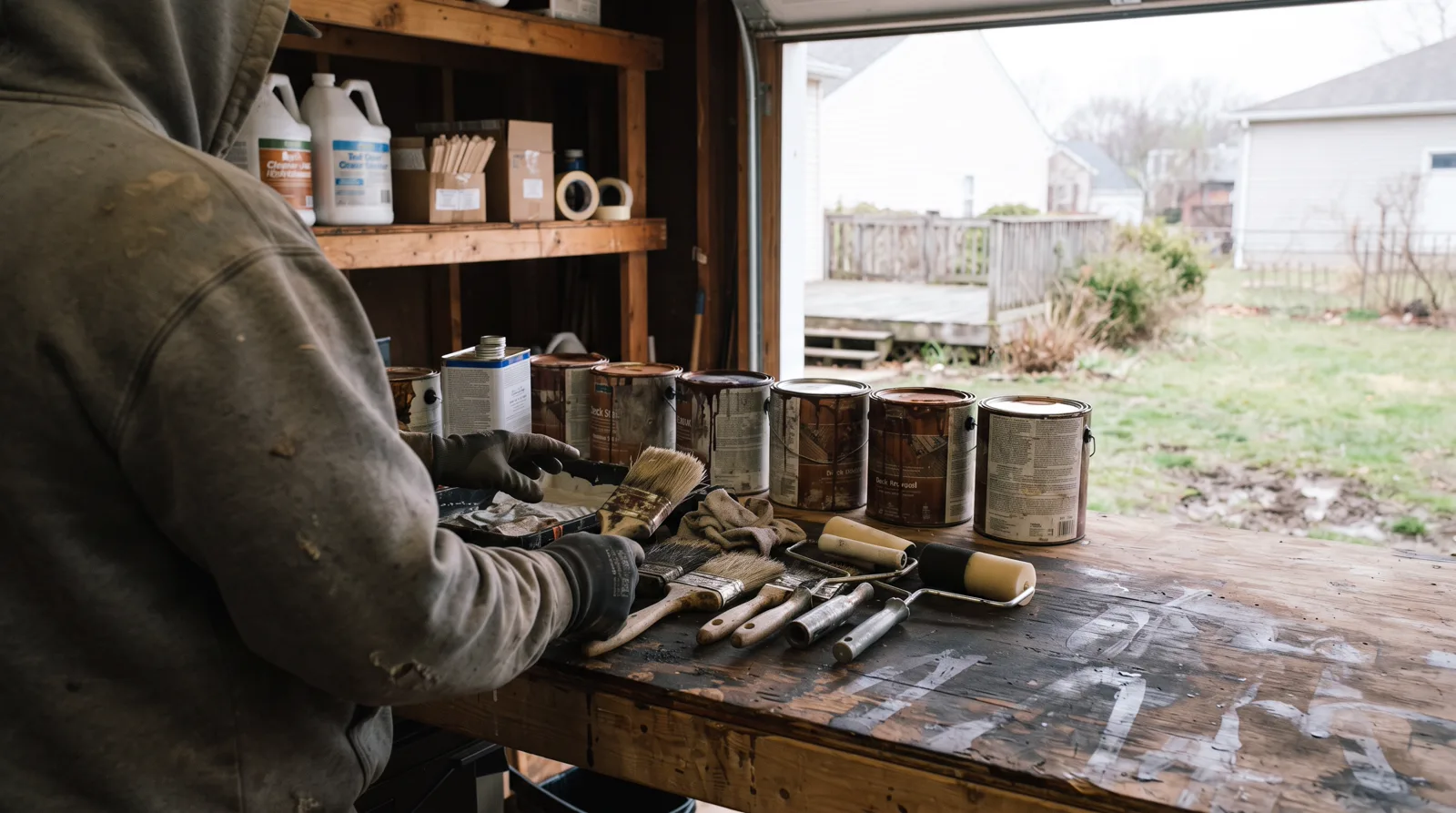
Deck Staining That Survives Alberta Winters.
Premium wood protection and restoration for decks built to face chinooks, hail, and deep frost.
Full Deck Protection Services
From new builds to weathered wood, we prep, repair, and seal every surface.
New Deck Staining
First-time stain and seal for new pressure-treated or cedar builds. We wait for the wood to dry (usually 4 to 8 weeks after construction), clean tannin bleed, and apply two coats of penetrating or semi-transparent stain rated for Alberta UV and moisture.
Deck Restaining
Strip or sand failing stain, repair splinters and loose boards, power wash to bare wood, and recoat with fresh stain. Includes cleaning between deck boards and railings. Pricing depends on current condition and square footage.
Deck Cleaning & Prep
Power washing, brightening, and sanding to prep the surface for stain. Local pros remove mold, algae, tannin stains, and gray oxidation. Can be booked standalone if you plan to stain yourself, or bundled with full restaining service.
Cedar Deck Treatment
Specialized staining for Western Red Cedar or other soft woods. We use breathable, oil-based stains that let the wood expand and contract through Alberta freeze-thaw without trapping moisture. Includes UV inhibitors and mildew blockers.
Pressure-Treated Sealing
Clear or lightly tinted sealer for PT lumber that you want to weather naturally. Protects against water, UV, and fungal growth without hiding the wood grain. Reapply every 1 to 2 years in high-traffic zones.
Deck Repair & Stain
Fix loose boards, replace rotted joists, refasten railings, and stain the entire structure. Common in older decks (10+ years) where the bones are good but the surface is failing. We match existing wood species and stain color when possible.
Why Alberta Decks Need Different Care
❄️ Freeze-Thaw Punishment
Spruce Grove sees 100+ freeze-thaw cycles per winter. Water soaks into unstained wood, freezes, expands, and cracks the fibers. A quality penetrating stain blocks water entry and lets the wood breathe, so ice can't shatter the grain.
🌬️ Chinook Wind Damage
Chinook winds dry out exposed wood in hours, causing rapid shrinkage and splitting. Oil-based or hybrid stains keep the wood conditioned through sudden temperature and humidity swings that latex coatings cannot handle.
☀️ High UV on the Prairies
Parkland County sits at 53° north with intense summer sun and long daylight. UV degrades lignin (the glue in wood), turning decks gray in one season. We use stains with titanium dioxide or iron oxide pigments that reflect UV and preserve color.
🏔️ Snow Load & Ice Scraping
Heavy snow, roof runoff, and shoveling abrade deck surfaces. We recommend semi-transparent stains over solid-color (which peel) because they penetrate the wood instead of forming a film. When the surface wears, you restain without stripping.
What it costs here
Everything You Need to Know About Deck Staining in Alberta
Climate factors, timing, product selection, and maintenance for long-lasting results.
Why Deck Staining Matters in Spruce Grove's Climate
Spruce Grove sits in a climate zone that subjects wood decks to relentless punishment year-round. Winter temperatures routinely drop to minus 30 Celsius or colder, while summer days can push past 30 degrees. This temperature swing of 60 degrees or more forces wood to expand and contract continuously. When snow melts or spring rain falls, water penetrates the wood grain. Then overnight frost turns that moisture into ice crystals that expand and crack the wood fibers from the inside. Chinook winds in winter can raise temperatures by 20 degrees in a few hours, accelerating freeze-thaw cycles and forcing even treated lumber to move and stress. Without a protective stain layer, this cycle repeats hundreds of times each year, breaking down the wood structure faster than almost any other weathering factor.
Unstained or poorly maintained deck wood in this region shows visible damage within a single season. The lignin that binds wood fibers together breaks down under intense UV radiation during long summer days, turning the surface gray and brittle. Water that soaks into unprotected grain during spring melt or summer storms creates ideal conditions for mold, mildew, and wood-eating fungi. Once moisture gets past the surface, the freeze-thaw cycle does the rest. Boards start to splinter, crack along the grain, and cup or warp as moisture content fluctuates. Deck fasteners work loose as wood shrinks and swells around them. What looked like a solid structure in May can show serious wear by September if left bare through a full Alberta weather cycle.
A properly applied deck stain creates multiple protective layers that address these specific threats. Pigments in the stain absorb and reflect UV radiation before it reaches the wood lignin, preventing the graying and fiber breakdown that weakens boards. Water repellents in quality stain formulations cause rain and snowmelt to bead up and run off rather than soaking in. This keeps moisture content stable, which minimizes expansion and contraction stress. Fungicides and mildewcides in exterior stain products actively prevent biological growth that would otherwise rot the wood. The stain film also fills small surface checks and gaps, creating a smoother surface that sheds water more effectively and resists dirt accumulation. These layers work together to extend deck lifespan from perhaps five years unstained to 15 or 20 years with regular maintenance.
The cost difference between preventive staining and neglect becomes clear when you price deck replacement versus maintenance. A typical 12 foot by 16 foot deck in Spruce Grove costs $3,500 to $6,500 to rebuild with pressure-treated lumber, not counting rail replacement or structural repairs. That same deck costs $600 to $1,200 to clean, prep, and restain every three to four years. Over a 15 year period, three restaining cycles cost $1,800 to $3,600 total and preserve the original structure. Skipping maintenance leads to partial board replacement within five to seven years at $800 to $1,500, then full replacement by year ten. The financial case for regular staining is straightforward, and that ignores the safety liability of splintered or rotted deck boards that could injure family members or guests.
How to Know Your Deck Needs Staining
The simplest field test for stain failure requires nothing but a glass of water and 30 seconds. Pour a small amount of water onto your deck surface in several spots and watch what happens. If the water beads up and sits on the surface for more than a few seconds, the stain's water repellent is still working. If water soaks into the wood immediately and darkens the grain, the protective layer is gone and moisture is penetrating freely. This test works on any wood species and any stain type. Run it in spring after snow melt and again in late summer after the deck has been through UV exposure and rain cycles. Once water stops beading, you have perhaps one season before visible damage starts. Waiting beyond that point means you will spend more on surface prep to remove embedded dirt and repair fiber damage before you can restain.
Visual inspection reveals other warning signs that staining is overdue or failing. Bare wood turns gray within weeks of stain breakdown, starting in high-traffic areas and full-sun zones where wear and UV exposure are most intense. You may see the original wood color in protected areas under furniture or planters while exposed boards have gone silver-gray. Splintering and raised grain texture indicate that wood fibers are breaking down from moisture cycling and UV damage. Check for mold or mildew growth in shaded corners or between deck boards, appearing as black, green, or white patches. These organisms only colonize wood once the fungicide in the stain layer is depleted. Boards that feel rough or fuzzy to bare hands or feet have lost the smooth protective film that stain provides. Any combination of these signs means the deck is unprotected and damage is accumulating daily.
Restaining frequency depends on stain type, wood species, exposure, and local weather intensity. In Spruce Grove's climate, transparent stains on horizontal surfaces typically need reapplication every two to three years because UV protection is minimal and the thin film wears quickly. Semi-transparent stains last three to four years on decks with moderate shade and careful application. Solid color stains can protect for four to five years if applied thick enough and maintained properly. South-facing decks in full sun need more frequent attention than north-facing or partially shaded structures. High-traffic zones near doorways and stairs wear faster than perimeter areas. Most contractors recommend a close inspection every spring and a water bead test to determine whether you can stretch another season or need to restain that year. Waiting until boards are gray and splintered means you have already lost wood integrity that no amount of stain will restore.
The Complete Deck Staining Process
Inspection and Surface Assessment
Professional deck staining starts with a structural and surface inspection to identify repairs needed before any cleaning or coating happens. The contractor checks deck boards for rot, splitting, or warping that requires replacement. Fasteners get tested for tightness and rust. Railing stability gets verified and loose posts or balusters noted. Ledger board attachment to the house gets inspected because this connection point often traps moisture and fails first. Any board that feels spongy underfoot or shows soft spots when probed with a screwdriver gets marked for replacement. Trying to stain over failing wood wastes time and money because the underlying structure will continue deteriorating and force early removal of the new stain layer.
Surface assessment determines what level of cleaning and prep the wood needs to accept stain properly. Old stain type must be identified because incompatible products cause adhesion failure. Film-forming solid stains often require stripping or heavy sanding to remove, while penetrating oils just need cleaning. The contractor looks for mill glaze on newer decks, a shiny surface layer that prevents stain penetration and must be abraded away. Water damage, mold staining, and tannin bleed from knots get noted because these require specific treatment before staining. This inspection stage typically takes 30 to 90 minutes depending on deck size and condition. It determines the material list, prep method, repair budget, and realistic timeline for the entire job.
Surface Preparation and Cleaning
Preparation accounts for 60 to 70 percent of the total labour in a deck staining project and determines how well the stain adheres and performs. Loose boards get refastened or replaced. Protruding nails or screws get set below the surface. Old failing stain gets stripped using chemical removers or sanding depending on type and thickness. The deck then gets deep cleaned with a pressure washer or stiff brush and deck cleaning solution to remove dirt, mold, mildew, algae, and degraded wood fibers. Pressure washing requires careful technique because too much pressure or the wrong nozzle angle gouges soft wood grain and damages the surface you are trying to protect. Most contractors use 1,200 to 1,800 PSI with a fan tip held at least 12 inches from the surface and moving steadily to avoid streaking.
After washing, the deck must dry completely before stain application. In Spruce Grove's dry summer air, this typically takes 48 to 72 hours depending on humidity and sun exposure. Moisture meters verify that wood moisture content is below 15 percent before staining begins. Applying stain to damp wood traps moisture inside, prevents proper penetration, and causes the stain to peel or flake within months. Some contractors lightly sand the deck after cleaning to smooth raised grain and open the wood pores for better stain absorption. This step is especially important on older decks where weathering has hardened the surface. Horizontal surfaces, railings, and stair treads all get the same level of prep. Skipping or rushing this phase is the most common cause of premature stain failure and customer complaints.
Stain Application and Technique
Stain application begins with cutting in edges, railings, and hard-to-reach areas using a high-quality brush before moving to larger surfaces with a roller or sprayer. Brushing works stain into the wood grain and ensures good penetration, especially on vertical surfaces like railing pickets and posts. Rollers with a thick nap cover horizontal deck boards quickly while maintaining even application. Sprayers are fastest for large open decks but require back-brushing to work the stain into the grain and avoid puddling. Most contractors apply stain following the wood grain in long, even strokes, maintaining a wet edge to prevent lap marks where new stain overlaps dried areas. Two thin coats outperform one thick coat because they penetrate better, dry more evenly, and resist peeling.
Weather conditions during application directly affect results and drying time. Ideal conditions in Spruce Grove are temperatures between 10 and 27 degrees Celsius with low humidity and no rain forecast for 24 to 48 hours. Early morning or late afternoon application avoids direct sun, which can cause stain to dry too fast and prevent penetration. Wind accelerates drying and can blow dust onto wet stain, so calm days are best. Contractors watch for overnight dew or frost in spring and fall that can ruin a fresh stain job. Application usually takes four to eight hours for a typical residential deck, plus drying time between coats. Rushing the process by applying too thick, skipping the second coat, or working in poor weather conditions leads to uneven color, poor adhesion, and early failure.
Drying, Curing, and Initial Protection
Drying and curing are two distinct phases that both matter for long-term performance. Surface drying happens in two to six hours depending on stain type, temperature, and humidity, after which the deck is dry to the touch. Curing takes much longer as solvents evaporate completely and the stain film hardens or the oils fully penetrate and polymerize. Water-based stains typically cure in 24 to 48 hours, while oil-based products need 48 to 72 hours or longer in cool weather. During the curing period, foot traffic should be minimized and furniture should stay off the deck. Placing heavy objects on uncured stain can leave permanent impressions or adhesion marks. Rain during the curing window can wash away stain that has not fully bonded, causing streaks, spots, and uneven coverage that require touch-up or complete recoating.
Once cured, the deck needs a brief break-in period before resuming normal use. Most contractors recommend waiting at least 72 hours before replacing furniture and a full week before setting planters or heavy items directly on the surface. Grill mats, planter bases, and furniture pads help protect the new stain from heat, moisture trapping, and abrasion during the first season. Regular sweeping removes dirt and debris that act as abrasives and wear the stain film prematurely. Rinsing the deck with a garden hose every few weeks during the growing season prevents buildup of pollen, leaves, and organic matter that hold moisture and encourage mold growth. These simple maintenance habits can extend the life of a quality stain job by a full year or more, delaying the next restaining cycle and protecting your investment.
What Deck Staining Actually Involves
Deck stains fall into three broad categories based on opacity and the amount of wood grain they allow to show through. Transparent stains offer minimal color change and maximum grain visibility, relying on UV inhibitors and water repellents to protect the wood while keeping the natural appearance. These products penetrate deeply but offer the least UV protection, so they fade and wear fastest in full sun. Semi-transparent stains add noticeable color while still letting wood grain and texture show clearly. They provide moderate UV protection and last longer than transparent products, making them the most popular choice for residential decks in this region. Solid color stains create an opaque finish similar to paint, hiding wood grain and imperfections completely. They offer maximum UV protection and longest lifespan but look less natural and require more prep when it is time to restain because they build a thicker surface film.
Oil-based and water-based stain formulations each have distinct performance characteristics that matter in Alberta's climate. Oil-based stains penetrate deeper into wood grain, provide richer color, and typically last longer in freeze-thaw conditions because they move with the wood rather than forming a rigid surface film. They take longer to dry, have stronger odor during application, and require mineral spirits for cleanup. Water-based stains dry faster, have lower VOC emissions, clean up with soap and water, and resist mold growth better than oil formulas. They tend to raise wood grain slightly, which may require light sanding before application. In Spruce Grove's dry climate, both types perform well if applied correctly. The choice often comes down to personal preference for appearance, drying time requirements, and environmental concerns. Many contractors stock both types and recommend based on wood species, deck age, and exposure.
- Transparent stains show full grain, fade in two to three years, need frequent recoating
- Semi-transparent stains balance color and grain visibility, last three to four years
- Solid stains hide grain completely, provide maximum UV protection, last four to five years
- Oil-based products penetrate deep, resist freeze-thaw stress, dry slower
- Water-based products dry fast, clean up easily, raise grain slightly
Sealers, Preservatives, and Combination Products
Deck sealers are clear protective coatings that repel water and provide UV inhibitors without changing wood color significantly. They work well on naturally rot-resistant species like cedar or redwood where you want to preserve the original appearance. Most sealers need reapplication every one to two years because the thin film wears quickly under foot traffic and weather exposure. Wood preservatives contain fungicides and insecticides that prevent rot and insect damage but offer no UV protection or water repellency on their own. Pressure-treated lumber sold in Spruce Grove comes pre-treated with preservatives, but the treatment does not protect against surface weathering or UV breakdown. Combination stain and sealer products deliver color, water repellency, UV protection, and fungicides in a single application. These are the most common choice for residential deck staining because they simplify the process and provide comprehensive protection in one or two coats.
Labour, Materials, and Cost Factors
Labour costs for deck staining depend primarily on surface area, condition, and access rather than stain type. A contractor typically charges $2.50 to $4.50 per square foot for a complete clean, prep, and two-coat stain application on a deck in good condition. Higher rates apply when extensive stripping, sanding, or repair is needed. A standard 12 by 16 foot deck totals 192 square feet, so expect labour costs between $480 and $865 before materials. Stain material adds $100 to $250 depending on product quality and coverage rate. Premium stains cost more per gallon but often cover more area and last longer, reducing total cost per year of protection. Railing adds complexity and time because of all the vertical surfaces and detail work. Stairs, built-in planters, and multi-level designs increase labour hours proportionally. Most residential deck staining projects in Spruce Grove range from $600 to $1,500 total including labour and materials for decks between 150 and 300 square feet.
What Deck Staining Really Costs in Spruce Grove and the Tri-Region
A typical deck staining project in Spruce Grove, Stony Plain, or Parkland County runs between $1.50 and $4.50 per square foot, meaning a standard 300 square foot deck costs anywhere from $450 to $1,350 in most cases. That range widens considerably when you factor in deck condition, the amount of prep work required, and whether you choose a budget water-based stain or a premium oil-based product with multiple coats. A large second-story deck in rough shape, needing extensive sanding, repairs to loose boards, and two coats of high-end semi-transparent oil stain, can easily push past $2,000. The number that matters most is total project cost, not just the stain itself, because prep and labor typically account for 60 to 75 percent of the final invoice.
Several factors drive those costs in the Tri-Region specifically. Deck size is the obvious one, but condition matters more than homeowners expect. A deck that has been neglected for five or six Alberta winters, with grey weathered wood, mildew stains, and flaking old finish, requires power washing, sometimes oxalic acid brightening, sanding of rough grain, and possibly board replacement before any stain goes on. That prep work can double the labor hours compared to a well-maintained deck getting a maintenance coat. Stain quality is another big variable. A basic water-based semi-transparent stain costs $25 to $40 per gallon and covers 150 to 250 square feet, while a premium oil-based penetrating stain runs $50 to $80 per gallon with similar coverage. Higher-end products contain more pigment and better UV blockers, which matters in Alberta where summer sun is intense and winter reflection off snow adds UV exposure year-round.
Labor rates in Spruce Grove and Stony Plain typically fall between $45 and $75 per hour for an experienced painting contractor, and most deck staining projects require one to three days of work depending on size and complexity. A crew of two can often complete a straightforward 300 square foot deck in a single long day if the wood is in good shape, but that same deck takes two full days if it needs heavy sanding, repairs, and two stain coats with proper dry time between. Travel time within the Tri-Region is usually negligible and does not add cost, but jobs in rural Parkland County or Acheson sometimes carry a small trip charge if the site is more than 20 kilometers from the contractor's base. The best value comes from hiring during shoulder seasons in late May or early September, when contractors have more availability and sometimes offer better rates than the peak July and August window when everyone wants exterior work done at once.
Comparing Stain Types and Application Methods for Alberta Decks
Oil-based and water-based stains represent the fundamental choice every homeowner faces, and each has clear strengths for Tri-Region conditions. Oil-based stains penetrate deeper into wood fibers, providing better protection against moisture infiltration during spring thaw and fall freeze cycles. They tend to last three to five years in Alberta's harsh climate, compared to two to four years for most water-based products. The tradeoff is longer dry times (24 to 48 hours between coats, and you need decent weather), stronger odor during application, and more involved cleanup requiring mineral spirits. Water-based stains dry faster, often in four to six hours, emit less odor, clean up with soap and water, and work better in cooler temperatures, which matters in May or September when overnight lows dip toward freezing. However, they sit more on the surface and can peel or flake if the wood was not perfectly prepped, whereas oil stains fade gradually without peeling.
The transparency level you choose affects both appearance and durability. Clear sealers show the natural wood grain fully but offer minimal UV protection, meaning they need reapplication every one to two years and the wood still greys over time. Semi-transparent stains add some color while letting the grain show through, provide moderate UV blocking, and typically last three to four years in the Tri-Region with proper maintenance. Solid stains look almost like paint, completely hide the wood grain, offer maximum UV and moisture protection, and can last five to seven years, but they require more surface prep because any peeling or flaking becomes very visible. Most contractors in Spruce Grove recommend semi-transparent oil stain for pressure-treated pine or cedar decks, balancing durability with the natural wood look that homeowners prefer. Solid stains make more sense for older decks with uneven weathering or mixed wood repairs where uniform color hides imperfections.
Application Methods That Work in Alberta Weather
Brushing, rolling, and spraying each have a place in deck staining, and experienced contractors often combine methods for best results. Brushing works the stain deepest into the wood grain and is the best choice for rough-sawn cedar, weathered boards with raised grain, or any deck that has not been stained in several years. It is slower, labor-intensive, and adds cost, but it delivers the most durable bond between stain and wood. Rolling is faster and works well on smooth horizontal deck boards once they have been prepped, though it does not penetrate as deeply as brushing and can leave a slightly textured finish if you use too thick a nap roller. Most contractors roll the main field of the deck and brush railings, post caps, and any vertical surfaces where drips and runs are harder to control.
Spraying is the fastest application method and works beautifully for large deck areas, but it requires windy conditions to be minimal (under 10 km/h) and adds overspray concerns if your deck is close to siding, windows, or vehicles. In the Tri-Region, where spring and early summer winds often gust to 20 or 30 km/h by afternoon, spraying is usually limited to early morning applications before the wind picks up. Many pros spray the stain on and immediately back-brush it with a pad or brush to work the product into the grain, combining the speed of spraying with the penetration of brushing. This hybrid method is common on larger decks where pure brushing would take too long and pure spraying would not achieve adequate penetration. The key is matching the method to the deck condition, the stain type, and the weather window available, which is why experienced contractors assess all three before starting rather than defaulting to one technique for every job.
Mistakes That Cost Homeowners Money and How to Avoid Them
The most expensive mistake is staining over a deck that was not properly cleaned and prepped. Wood that looks clean to the eye often has a thin layer of mildew, pollen residue, or degraded old finish that prevents new stain from bonding. When stain is applied over contamination, it can peel or flake within months, forcing a complete do-over that costs as much as the original job. Proper prep means power washing at low to medium pressure (1,500 to 2,000 psi) with a deck cleaning solution, letting the wood dry for at least 48 hours, then sanding any rough spots or raised grain with 60 to 80 grit sandpaper. Skipping the cleaning or rushing the dry time is a classic DIY error, but it also happens with low-bid contractors who cut corners to keep labor hours down. A deck that is still damp when stained will trap moisture under the finish, leading to premature failure, and in Alberta's climate where spring humidity is high and overnight temperatures stay cool into June, giving wood enough dry time is critical.
Applying stain in the wrong weather is another common trap. Staining in direct sun on a hot July afternoon causes the product to dry too fast, preventing proper penetration and leaving lap marks where wet stain overlaps dry. Staining when rain is forecast within 24 hours risks washing away the finish before it cures, and in the Tri-Region where afternoon thunderstorms pop up quickly in summer, that means checking the hourly forecast, not just the daily summary. Temperature also matters. Most stains specify application above 10°C and below 30°C, and while those limits are printed on the can, contractors working in May or late September sometimes push the low end, applying stain when overnight lows dip to 5 or 6 degrees. That slows curing and can cause the finish to remain tacky or sticky for days, attracting dust and pollen. The safe approach is to stain on a mild, overcast day with no rain in the 24 hour forecast, ideally in late spring or early fall when temperatures are stable and humidity is moderate.
Choosing the wrong stain for your deck type is a mistake that shows up a year or two later. Pressure-treated lumber, which most Tri-Region decks are built from, contains moisture and chemical preservatives when new, and it needs to weather for at least six months before staining or the finish will not penetrate and bond properly. Cedar and redwood can be stained sooner but require a different stain formulation because they contain natural oils that repel water-based products. Using a solid stain on a new deck hides the beautiful wood grain you paid for, while using a clear sealer on an older weathered deck provides almost no UV protection and requires reapplication every year. Matching the stain type to the wood species, the deck age, and your maintenance tolerance is part of the contractor's job, and a good one will explain the options and recommend the best fit rather than defaulting to whatever product they have in the truck.
How to Hire a Deck Staining Contractor in the Tri-Region
Start by verifying that any contractor you consider holds liability insurance in Alberta and carries general liability insurance of at least $2 million. Deck staining involves working at heights on second-story decks, handling power washers and sanders, and applying chemical products, all of which create injury and property damage risks. If a worker falls off your deck or a power washer damages your siding, you want the protection of proper insurance, and in Alberta, hiring an uninsured contractor can make you liable for workplace injuries under WCB rules. Ask to see the WCB clearance letter and the certificate of insurance, and do not accept excuses like 'my coverage is renewing' or 'I'm waiting for the paperwork.' Legitimate contractors have these documents ready and expect to be asked.
Get at least two or three written quotes that break down the cost by prep work, materials, labor, and any extras like railing or stair staining. A detailed quote shows the contractor actually assessed your deck rather than throwing out a number over the phone, and it gives you a basis for comparison. Beware of quotes that are 30 or 40 percent lower than others unless there is a clear explanation, such as the contractor using a budget stain or skipping prep steps. The lowest bid often comes from someone who underestimated the work, plans to cut corners, or will not be around to fix problems six months later. The best value usually sits in the middle of the range, from a contractor who has been operating in Spruce Grove or Stony Plain for several years, has verifiable references from local jobs, and explains their process clearly without pressuring you to commit on the spot.
Ask specific questions about the products they plan to use and the application process. What brand and type of stain? How many coats? What prep work is included? How long will the job take, and what is the weather contingency if rain delays the schedule? A knowledgeable contractor will answer these questions in detail and may even recommend waiting a few weeks if your deck is not ready for staining yet. Red flags include vague answers, pressure to sign immediately, requests for large deposits up front (more than 25 percent), or reluctance to provide references. Check online reviews on Google, but also ask for two or three recent customers in the Tri-Region you can contact directly, and actually call them. Most homeowners are happy to share their experience, and a five-minute conversation can reveal whether the contractor showed up on time, cleaned up properly, and stood behind their work if any issues came up after the job.
How Tri-Region Services Helps
Tri-Region Services takes the guesswork out of finding a qualified deck staining contractor in Spruce Grove, Stony Plain, Parkland County, and Acheson. When you submit a request through our directory, we connect you with one pre-vetted, fully insured local professional who serves your area and has a proven track record of quality work. Every contractor in our network has stated they carry liability insurance, so you do not have to chase down certificates or wonder whether you are protected. You receive a free written quote with no obligation, allowing you to see exactly what the project will cost and what is included before making any commitment. Our goal is to match you with the right pro for your specific deck staining needs, saving you the time and risk of sorting through online ads or unverified listings while ensuring you work with someone who knows Alberta conditions and stands behind their results.
Why Homeowners Choose Us
Local crews, real insurance, and no surprises.
Liability insurance
Every crew member works for a crew that each crew tells us they carry $5 million liability so your property and people are protected.
Local References You Can Call
We provide phone numbers for recent Spruce Grove and Stony Plain clients who agree to share their experience.
Quality Stain Brands (Sikkens, Olympic, TWP)
We stock pro-grade stains rated for Canadian climates, not big-box bargain lines that fail in two years.
Written Warranty on Workmanship
If the stain peels or fails due to our prep or application, we return and fix it at no charge within the warranty window.
Free On-Site Quote & Color Samples
We measure your deck, assess wood condition, test a patch if needed, and show you real color samples before you commit.
Full Cleanup & Tarp Protection
We tarp gardens, siding, and concrete, and we power wash overspray before we leave.
This page is not tied to a contractor's brand. Leads route straight to your one local partner. Verified reviews can appear here once that partner has them (never fabricated).
Serving the whole Tri-Region
8 Questions Tri-Region Homeowners Ask
How often should I stain my deck in Alberta?+
What is the best time of year to stain a deck in Spruce Grove?+
How long does deck stain last in Alberta weather?+
Do I need to strip old stain before restaining?+
What is the difference between stain and sealer?+
Can you stain a deck in cold weather?+
How much does deck staining cost in the Tri-Region?+
How do I maintain my deck between staining?+
Get your free quote
Tell us what you need and a local pro will get right back to you.
- ✓ Sent straight to a local business
- ✓ You choose who you hire
- ✓ Free, with no obligation