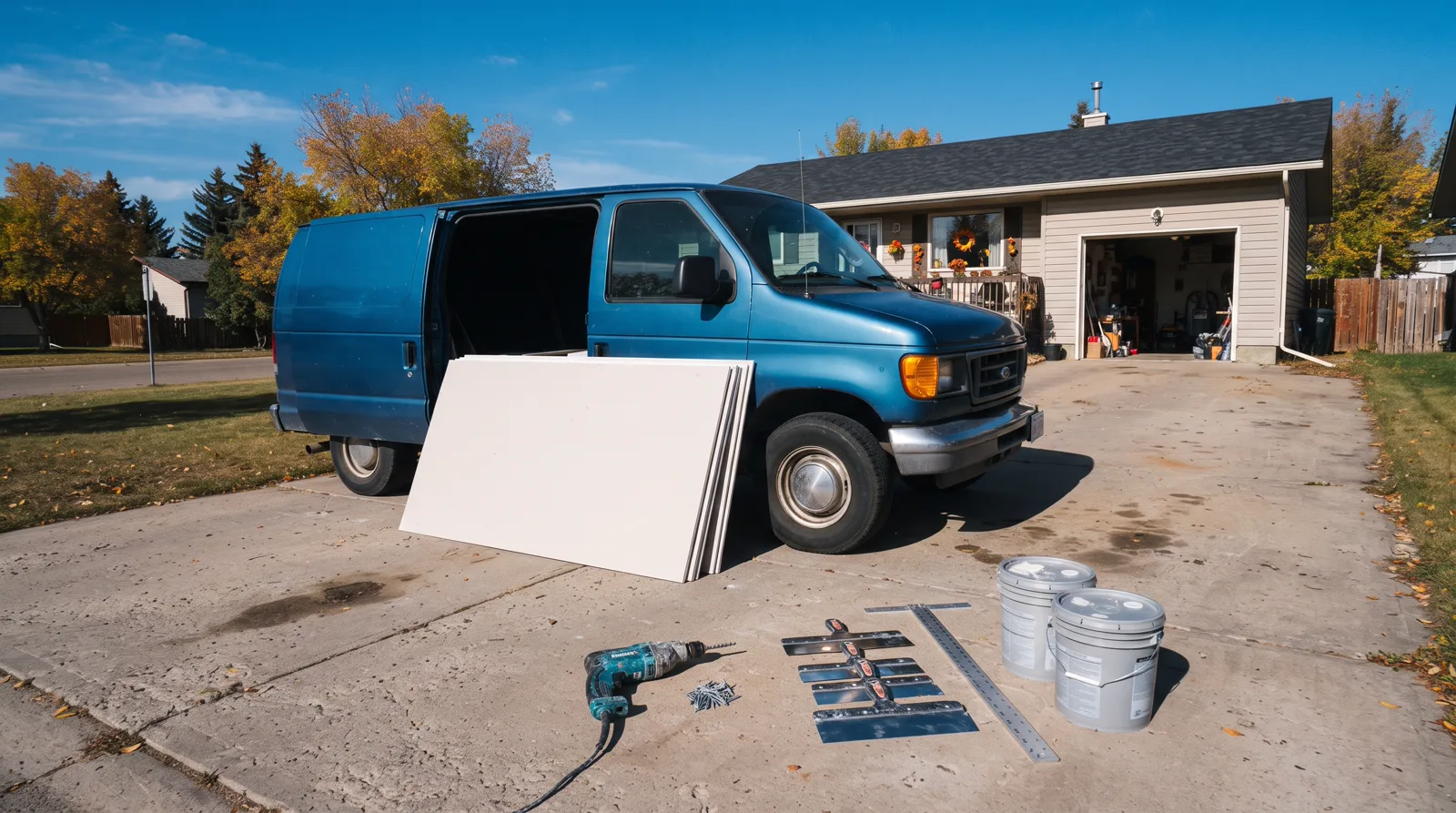
Drywall Contractor Spruce Grove: Repair, Install, Finish Right
Cracks from settling, water damage, basement build-outs or texture matching. Connect with verified local drywall pros who know Alberta foundations and finishing standards.
Drywall Services Across Spruce Grove
From nail pops to full basement sheets, matched to pros who do that specific work.
Drywall Repair
Holes, cracks, nail pops, corner bead damage. Includes compound, sanding, primer. Texture matching for older homes with stipple or knockdown finishes common in Spruce Grove builds from the 1980s and 1990s.
New Drywall Installation
Hanging, taping, mudding for additions, basement developments, garage conversions. Fire-rated Type X board for furnace rooms and attached garages per Alberta Building Code. Includes corner bead, screw spacing to code.
Water Damage Drywall Replacement
Cut-out, mold remediation prep, vapour barrier check, new sheet install. Common after roof leaks, plumbing failures or spring melt infiltration in Parkland County basements. Moisture meter verification before closing up.
Taping, Mudding & Finishing
Level 4 smooth finish for paint, Level 5 glass-smooth for high-sheen or critical light. Three-coat process with sanding between. Prepares surface for cabinet painting or feature walls.
Basement Drywall & T-Bar Ceiling
Full basement finishing from studs to paint-ready walls. Includes insulation backing, electrical box cut-outs, bulkhead framing. Permit coordination for Spruce Grove and Parkland County development builds.
Ceiling Drywall Repair & Texture
Popcorn removal, crack repair, water stain cut-out, stipple or knockdown texture application. Vaulted and cathedral ceiling work with scaffolding. Matching original texture on 1970s and 1980s Spruce Grove homes.
Why Spruce Grove Drywall Work Is Different
🌡️ Freeze-Thaw Foundation Movement
Spruce Grove soil expands and contracts through deep frost cycles, typically reaching 1.8m to 2.4m frost depth. Foundation settling shows up as ceiling cracks, corner splits and tape separation, especially in homes built on clay. Pros assess whether the crack is structural or cosmetic before patching.
💨 Chinook Wind & Humidity Swings
Rapid temperature shifts from chinook winds cause indoor humidity to drop, then spike when the furnace cycles. Drywall compound shrinks, nail pops appear and seams telegraph through paint. Experienced finishers apply compound in thinner coats and allow proper cure time between layers to prevent cracking.
📋 Parkland County & Spruce Grove Permits
Basement developments and additions over 10 square metres require building permits. Fire-rated drywall on furnace room walls, gas meter rooms and garage separation walls is mandatory. Pros coordinate inspections and ensure screw spacing, corner bead and vapour barrier placement meet Alberta Building Code Section 9.29.
🛡️ WCB & Liability for Overhead Work
Drywall installation involves ladders, scaffolding and stilts. Alberta liability insurance and liability insurance is stated at signup to protect homeowners from falls, tool damage or injury claims. Basement ceiling work and vaulted installs carry higher risk and require active coverage.
What it costs here
Everything You Need to Know About Drywall Work in Spruce Grove
From foundation cracks to finishing standards, a homeowner's reference for Alberta drywall repair and installation.
What Drywall Installation and Repair Actually Involves in Spruce Grove Homes
Drywall work in Spruce Grove and Parkland County falls into three main categories: new installation for additions or unfinished basements, patch and repair for damage or renovations, and refinishing to update texture or fix poor previous work. New installation means measuring, cutting, hanging sheets of gypsum board (typically half-inch for walls, five-eighths for ceilings or fire-rated assemblies), fastening them to studs or joists, then taping and mudding every seam and fastener until the surface is smooth. Repair work might involve cutting out damaged sections, installing backing, fitting new pieces, then blending the patch into the surrounding finish so it disappears. Refinishing often means stripping old texture, skim-coating the entire surface, then applying a new texture or leaving it smooth for paint.
Alberta building code drives material choices more than homeowners realize. Basement drywall below grade in Spruce Grove typically uses mold-resistant or moisture-resistant board because clay soil holds water and spring snowmelt can push moisture through foundation walls even when there is no active leak. Attached garage walls shared with living space require Type X fire-rated drywall, usually two layers on the garage side, to meet the one-hour fire separation standard. Ceilings under bathrooms often get water-resistant board as a precaution. A qualified contractor knows these requirements and selects the right product for each room, avoiding callbacks when an inspector flags the wrong board type during a permit inspection.
Finish levels matter more than most people expect. Level 0 means no taping or finishing at all, used only in temporary construction or areas that will be fully concealed. Level 1 is tape embedded in joint compound with no further treatment, acceptable only behind tile or in plenums. Level 2 adds a thin coat over tape and fasteners, common in garages or mechanical rooms. Level 3 includes two coats of compound, ready for heavy texture. Level 4 is smooth enough for flat paint or light texture, requiring three coats and careful sanding. Level 5, the highest standard, involves a skim coat over the entire surface to hide all imperfections under critical lighting or gloss paint. Most Spruce Grove living spaces are finished to Level 4, but poorly lit basements or rental units sometimes get Level 3 with heavy texture to hide flaws, and high-end homes with large windows or accent lighting may require Level 5 in focal areas.
How Alberta's Climate and Soil Conditions Create Drywall Problems
Spruce Grove sits on heavy clay soil that expands when wet and shrinks when dry, causing foundations to shift slightly every year. Winter frost penetrates up to eight feet deep in an average year, and spring melt saturates the clay, pushing it against basement walls. Even a well-built foundation on proper footings will settle or heave a few millimeters over a decade, and that movement telegraphs through framing into drywall as cracks along seams, especially at corners where walls meet ceilings. Older homes built before modern footing depths became standard often show diagonal cracks running from door corners or stair-step cracks in basement walls where the foundation has shifted unevenly. These cracks are not always structural, but they reopen after patching if the underlying movement continues, so experienced contractors assess whether the foundation has stabilized before committing to a repair method.
Chinook winds hit Parkland County several times each winter, swinging temperatures from minus twenty to plus five Celsius in a single day. Roof trusses expand and contract with these swings, and in homes where attic ventilation is inadequate or insulation is uneven, the movement concentrates stress at ceiling drywall seams. Nail pops appear when fasteners back out slightly as framing lumber dries and shrinks, most common in the first two years after construction but sometimes recurring in older homes during extreme temperature cycles. Truss uplift, a phenomenon where the bottom chords of roof trusses lift away from interior partition walls in winter, can crack the drywall where walls meet ceilings in the center of the house, then close up again in summer, creating a seasonal crack that many homeowners mistake for foundation trouble.
Basement moisture is a constant challenge in Spruce Grove because spring runoff and summer storms saturate the soil around foundations, and clay holds that water against the concrete for weeks. Even homes with intact weeping tile and sump pumps can experience elevated humidity in basements, especially in finished spaces with poor ventilation. Water vapor migrates through concrete, condenses on cool surfaces, and if the drywall was installed directly against foundation walls without a moisture barrier or air gap, mold grows on the paper facing. Insurance companies in Alberta have tightened basement finishing requirements over the past decade, and some now require vapor barriers, insulated framing systems, or spray foam insulation before they will cover finished basement spaces, so a contractor working in an older home may recommend removing drywall installed years ago and redoing the assembly to meet current standards before moisture damage spreads.
Warning Signs You Need Professional Drywall Work
Visible Damage That Compromises the Wall System
Holes larger than a fist, cracks wider than an eighth of an inch, or water stains that have spread beyond a small spot all indicate damage that requires more than spackle and paint. Drywall is brittle, and once the gypsum core is crushed or the paper facing is torn away, the panel has lost its structural contribution to the wall assembly. Small nail holes or hairline cracks are cosmetic, but a hole from a doorknob impact, a crack that runs the full height of a wall, or brown staining from a roof leak means the panel is compromised and patch repairs will fail unless the damaged section is cut out and replaced with new material fastened to solid backing.
Water damage is especially deceptive because the visible stain is often smaller than the area where gypsum has absorbed moisture and lost strength. A ceiling stain the size of a dinner plate might hide two square feet of saturated drywall that will sag or crumble once the roof leak is fixed and the material dries out. Experienced contractors probe around stains with a moisture meter or by pressing the surface to locate soft spots, then cut out everything that has been wetted, because leaving compromised material behind leads to mold growth even after the surface dries. In Spruce Grove homes with attic condensation problems, ceiling drywall near exterior walls sometimes shows repeated small stains from frost melt, and those panels may need replacement even when the staining looks minor, because freeze-thaw cycles degrade the gypsum and paper bond.
Post-Renovation Gaps and Code Compliance Needs
Opening a wall to run new plumbing, add electrical outlets, or remove a load-bearing wall leaves gaps and seams that need professional finishing to blend into the surrounding surface. Homeowners who tackle their own electrical or plumbing upgrades often cut access holes cleanly but struggle with the finishing, because matching existing texture and blending joint compound into old paint requires skill and the right tools. A badly finished patch stands out under angled light, shows through paint as a halo or ridge, and broadcasts amateur work to anyone viewing the home. Contractors working behind electricians or plumbers also verify that penetrations are sealed for fire stopping and that any damaged vapor barriers are repaired, both of which are code requirements that affect inspections and insurance.
Garage conversions, basement developments, and additions trigger permit requirements in Spruce Grove and Stony Plain, and inspectors check for fire-rated drywall on walls separating garages from living spaces, proper fastener spacing, and correct installation around HVAC penetrations. If previous work was done without permits or finished to a lower standard, bringing the space up to code during a renovation often means tearing out old drywall and installing new assemblies that meet current requirements. A contractor bidding on a post-renovation drywall job will verify what the permit requires and whether the framing and insulation behind the drywall are correct, because hanging board over deficient framing just hides problems that will surface during the final inspection.
Recurring Cracks and Tape Failures
Cracks that reappear in the same location after patching, or tape that bubbles and peels along seams, signal either ongoing structural movement or poor initial installation. If foundation settling has stabilized and the crack still reopens, the joint was likely finished with the wrong compound, inadequate mesh or paper tape, or insufficient coats to build strength. Modern drywall finishing uses setting-type compound for first coats over seams and corners because it hardens chemically and resists cracking better than air-dry premixed mud, but many older homes and budget renovations used only premixed compound, which remains slightly flexible and fails when movement stresses the joint. A contractor assessing recurring cracks will check whether the framing is still moving, look for missing blocking or inadequate fastening, and determine whether the joint needs to be recut and refinished with proper materials or whether the wall needs structural reinforcement first.
Tape failures are common in Spruce Grove basements where humidity levels swing seasonally, because paper tape can delaminate if the joint compound beneath it did not bond fully to the drywall face. Mesh tape is more forgiving but requires thicker compound coverage and can show through thin finishes if not embedded properly. Corners are especially prone to failure because impact damage from moving furniture or play can crack the compound and let the tape pull away, and outside corners protected only by paper-faced metal bead will dent and tear if struck. Contractors replacing failed tape often upgrade to plastic or metal corner bead that resists impact better, and they address the underlying cause, whether it is high humidity, structural movement, or simply poor workmanship in the original installation.
The Drywall Project Process from Assessment to Final Inspection
A qualified drywall contractor begins with a walkthrough to measure the space, assess existing conditions, and identify any complications like moisture issues, insufficient framing, or code requirements that will affect the scope. For new basement developments or additions in Spruce Grove, the contractor verifies that electrical and plumbing rough-ins are complete and inspected, that insulation meets code for the zone, and that vapor barriers are correctly installed, because drywall goes up last and covers deficiencies that should be corrected before boarding begins. For repair work, the assessment includes probing around damage to determine how much material needs replacement, checking for mold or water damage that requires remediation before drywall work starts, and confirming that the underlying cause of the damage has been fixed so the repair will hold.
Material selection follows the assessment, with the contractor specifying board type, thickness, and finish level based on the room use and code requirements. Standard half-inch board works for most interior walls, but ceilings, fire-rated assemblies, and high-moisture areas require thicker or specialized panels. The contractor also selects joint compound type, with setting compounds for structural seams and topping compounds for final smoothness, plus texture materials if the finish will be sprayed or hand-applied. In Spruce Grove, where basements often sit at sixty percent humidity or higher in spring, contractors working below grade commonly specify mold-resistant board and may recommend a dehumidifier run during finishing to keep compound from drying too slowly, which can cause soft joints and cracking.
Installation begins with protecting floors, furniture, and HVAC systems from dust, then cutting and hanging sheets in a sequence that minimizes seams and aligns joints away from high-traffic sight lines. Ceilings go up first, supported temporarily until fasteners are driven, then walls are hung with edges butted tight to the ceiling panels. Corners and seams are staggered where possible to avoid long continuous joints that telegraph movement cracks, and fastener spacing follows code requirements, typically eight inches on center for ceilings and twelve inches for walls, with screws driven just below the surface without breaking the paper face. Any gaps wider than a quarter inch are filled with compound or strips of drywall before taping begins, because tape bridges only tight seams and will bubble or crack over wide voids.
Finishing unfolds over several days as each coat of joint compound dries. The first coat embeds tape into all seams, inside and outside corners, and covers fastener heads with a thin layer. Setting-type compound is common for this stage because it hardens quickly and resists cracking, but it must be mixed carefully to avoid lumps and applied before it sets, which gives the installer a limited working window. The second coat widens seams and smooths ridges left by the first pass, feathering edges outward so the buildup does not create a hump. The third coat, often a topping compound that sands easily, brings seams flush with the surrounding surface and hides fasteners completely. Sanding between coats removes ridges and tool marks, but excessive sanding weakens joints, so experienced finishers apply compound accurately and sand only enough to smooth the surface. Texture, if specified, is applied after sanding and before priming, either sprayed for consistent coverage or hand-applied for decorative effects.
Cleanup involves removing dust from every surface, vacuuming HVAC registers to prevent dust from circulating when the system runs, and disposing of scrap drywall responsibly. Final inspection confirms that seams are invisible under angled light, fasteners are covered and smooth, corners are straight and uniform, and any texture matches the existing finish in adjacent rooms. If the work required a permit, the contractor coordinates a municipal inspection before closing out the project, addressing any deficiencies the inspector notes. Homeowners should expect a thin layer of fine dust on surfaces even after thorough cleanup, because drywall finishing generates dust that settles for days after sanding stops, and a second wipe-down before painting is standard practice.
What Drywall Services Cost in Spruce Grove and Parkland County
A basic drywall installation for a 12-foot by 14-foot bedroom in Spruce Grove typically runs $800 to $1,400, including materials, hanging, taping, and a level 4 finish ready for paint. Repair jobs are harder to quote sight-unseen: patching three small nail pops might cost $150 to $250, while fixing water damage across a living room ceiling can reach $1,200 to $2,800 once you account for cutting out compromised board, reframing if joists are affected, insulation replacement, and multi-coat finishing. Whole-home drywall for new construction in Parkland County, covering roughly 2,400 square feet of wall and ceiling area, generally lands between $8,500 and $14,000 depending on ceiling height, the number of corners and angles, and whether you want knockdown texture or smooth level 5 walls.
Alberta's freeze-thaw cycle and dry winter air create specific cost drivers that contractors in milder climates do not face. Older homes in Stony Plain and Acheson often show stress cracks at door headers and along exterior wall seams because the studs expand and contract with indoor humidity swings and outdoor temperature extremes. Repairing these properly means floating the joints wider than the visible crack, sometimes adding mesh tape or setting strips, and feathering compound 18 to 24 inches out so the repair does not telegraph through paint. That additional prep and finishing time adds $40 to $80 per linear crack compared to a simple cosmetic patch. Basements below grade also see higher material specs: contractors will spec mold-resistant purple board or DensArmor Plus for walls that might see occasional condensation, which costs about 20 percent more per sheet than standard white board but avoids callback headaches.
Labor is the largest line item in any drywall quote, and hourly shop rates in the Tri-Region area currently sit between $65 and $95 per worker. A two-person crew can typically hang, tape, and finish a 500-square-foot basement in two full days, so you are looking at 32 hours of labor before materials. Finishing level makes a dramatic difference: a level 3 finish suitable for textured walls requires three coats and light sanding, while a level 5 finish for high-gloss paint or strong raking light demands skim-coating the entire surface and can double the labor hours on the finishing phase alone. Travel time also plays a role. Contractors based in Spruce Grove will quote Acheson jobs slightly higher to cover the extra fuel and windshield time, usually $50 to $100 depending on project size. Material costs are fairly stable, with a standard half-inch by four-foot by eight-foot sheet running $14 to $18 at local suppliers, but drywall mud, corner bead, screws, and primer can add another 25 percent to the material subtotal if the estimate does not break those out clearly.
Comparing Drywall Types and Finishing Methods
Standard half-inch white board is the workhorse for most interior walls and ceilings in residential work, but Alberta building code and insurance realities push many projects toward specialty products. Fire-rated Type X drywall, with a denser gypsum core and fiberglass reinforcement, is mandatory for the wall between an attached garage and living space, and it costs about $22 to $28 per sheet compared to $14 to $18 for regular board. Moisture-resistant green board or purple board is the right call for laundry rooms, bathrooms without exhaust fans, and any below-grade wall that has shown water staining in the past. Soundproof drywall, often called QuietRock or similar trade names, uses a viscoelastic polymer layer to dampen vibration and can cut noise transmission by 15 to 20 decibels, which makes a real difference between bedrooms or along a shared wall with a home theater. Expect to pay $50 to $70 per sheet for true soundproof board, and know that installation technique matters just as much: sound flanks around electrical boxes and gaps at the floor if those are not sealed with acoustic caulk.
Finishing level is where many homeowners make expensive mistakes by not specifying what they actually need. Level 1 is bare taped joints with no finishing compound, used only for temporary construction or plenum areas you will never see. Level 2 adds a thin coat of mud over the tape but still shows tool marks, and it is acceptable behind tile or in unfinished storage areas. Level 3 is the minimum for most painted walls, covering fasteners and joints with enough compound to hide them under flat or eggshell paint, and it is what you get when a quote just says taping and mudding without further detail. Level 4 is the standard for walls that will take satin or semi-gloss paint, requiring an additional skim pass and finer sanding to eliminate any ridges or dimples that would show under sheen. Level 5 is a full skim coat over the entire surface, not just the joints, and it is the only finish that holds up under high-gloss paint or critical lighting conditions like a feature wall with track lights grazing the surface. Upgrading from level 3 to level 5 can add $0.40 to $0.70 per square foot in labor, which sounds small until you apply it to 2,000 square feet of wall area.
Texture and Primer Choices
Knockdown texture, orange peel, and smooth finishes all change the labor equation and the final look. Knockdown texture is popular in Parkland County new builds because it hides minor imperfections and adds visual interest without the maintenance issues of popcorn ceilings, and it typically adds $0.30 to $0.50 per square foot over a smooth level 4 finish. Orange peel is a lighter texture often used on ceilings in lower-end spec homes, and it can be sprayed quickly, saving labor time but locking you into that look long-term because removing texture later is a dusty, costly job. Smooth ceilings and walls are making a comeback in higher-end renovations, especially in open-concept spaces where clean lines and modern lighting are priorities, but they demand level 5 finishing and show every flaw, so contractor skill becomes critical.
Primer is the last step before paint and the first place contractors cut corners when a bid is tight. Drywall-specific primer like Zinsser Gardz or Sherwin-Williams ProBlock seals the porous paper face and the slick mud surface at the same rate, which prevents flashing where the paint sheen looks different over taped joints versus the field of the board. Skipping proper primer or using cheap flat white paint as a substitute is a false economy: you will see the joints ghost through the topcoat under any light with sheen, and fixing it means another primer coat and repaint. Quality primer costs $28 to $40 per gallon and covers about 300 square feet, so budget $0.10 to $0.15 per square foot for this step and confirm it is in the quote as a separate line, not rolled into an assumption.
Mistakes Homeowners Make and Contractor Red Flags to Avoid
Accepting a quote that lists drywall as a single lump sum with no breakdown is the most common mistake. A legitimate estimate will separate hanging, taping, finishing level, primer, and material costs so you can see exactly what you are paying for and compare bids intelligently. When three quotes come in at $3,200, $4,100, and $5,800 for the same basement and none of them specify finishing level or primer, you have no way to know whether the low bid is a bargain or a setup for change orders. The contractor who quotes $3,200 might be planning level 3 with one coat of flat paint as primer, while the $5,800 quote includes level 5, proper stain-blocking primer, and a cleanup process that leaves your furnace filter intact. Always ask for the breakdown in writing, and if a contractor resists or says he does not itemize, that is your signal to move on.
Hiring based on speed promises without checking references is another trap. A contractor who says he can hang, tape, and finish your entire main floor in three days is either running a large crew at premium cost, planning to skip dry time between mud coats, or overselling what is realistic. Drywall mud needs 12 to 24 hours to dry between coats depending on temperature and humidity, and trying to sand or apply the next layer over damp compound creates weak joints that will crack within months. Spruce Grove's winter humidity can drop below 20 percent indoors, which actually speeds drying but also increases the risk of mud cracking as it cures if the room is not kept at stable temperature. A contractor who understands the science will build proper cure time into the schedule and explain why rushing is a bad idea. If the pitch focuses on how fast they are instead of how good the result will be, you are talking to the wrong person.
Falling for the we will just patch it and paint it today offer on water-damaged drywall is a costly long-term mistake. Water stains on a ceiling or wall mean the drywall paper has absorbed moisture, and even if the surface looks dry now, the gypsum core may be compromised or mold may be starting behind the vapor barrier. A proper repair means cutting out the affected section, checking the insulation and framing for mold or rot, confirming the leak source is actually fixed, and then installing new material. Painting over a stain with a quick patch might look fine for a month, but the stain will bleed through, the board may sag as the gypsum loses integrity, and you will pay twice when you have to rip it out and start over. Insist on a moisture meter reading and a scope of the cavity behind the board before any water damage repair begins, and walk away from anyone who dismisses that step as overkill.
How to Hire the Right Drywall Contractor in Spruce Grove
Start by confirming active Workers Compensation Board coverage and liability insurance before you discuss scope or price. Every contractor performing drywall work in Alberta is legally required to carry WCB coverage for their workers, and if they do not, you as the homeowner can be held liable for workplace injuries that happen on your property. Ask for the WCB account number and verify it directly on the WCB website, which takes two minutes and eliminates the risk of accepting an expired certificate. Liability insurance protects you if the contractor damages your furnace while moving sheets, breaks a window, or causes water damage by leaving a door open during a rainstorm. A minimum of two million dollars in general liability is standard in the trades, and any contractor who hesitates or says insurance is too expensive is telling you they are not running a legitimate business.
Get at least three written quotes that specify the same finishing level and material type so you are comparing equivalent work. If one contractor quotes half-inch regular board and level 3 finish while another quotes five-eighths moisture-resistant and level 4, the prices will be different for good reason and the lower number is not necessarily the better deal. Ask each contractor to walk the space with you and point out anything that will add cost, such as tall ceilings, curved soffits, or textured knockdown that needs to match existing areas. A contractor who spots potential issues up front and discusses them honestly is far more valuable than one who lowballs the estimate to win the job and then hits you with surprise charges once the work is underway. Pay attention to how they handle questions: a good drywall professional will explain why they recommend purple board for your basement bathroom or why level 5 is worth the extra cost for your feature wall, and they will not get defensive when you ask for clarification.
Check recent references and ask specific questions about cleanup, timeline accuracy, and how the contractor handled any problems. Drywall work creates a fine dust that gets into everything, so ask past clients whether the contractor sealed off the work area, covered HVAC vents, and left the space broom-clean or required the homeowner to do a second pass. Find out whether the project finished on the promised date or dragged on with long gaps between mud coats. Ask if any cracks or nail pops appeared in the first year and whether the contractor came back to fix them without argument. A contractor who stands behind their work will offer at least a one-year callback guarantee on defects that arise from workmanship, not just material failure, and that should be stated clearly in the contract.
How Tri-Region Services Helps
Tri-Region Services routes your request to one local drywall professional who has confirmed liability coverage before joining the network. You get a single written quote with clear scope and pricing, not a list of names to research yourself. The contractor contacts you directly to assess the work and provide a detailed estimate, and if the project does not move forward, there is no fee for the quote. Tri-Region handles the vetting and matching process so you can focus on comparing the proposed solution instead of verifying credentials from scratch.
How Tri-Region Verifies Drywall Pros
Contractors tell us about credentials, coverage and workmanship terms before any dispatch.
Liability Coverage Stated at Signup
Pros tell us they carry liability insurance when they join. Ask to see their certificate before work begins.
Written Workmanship Terms
Warranty on taping, mudding and finishing comes from the pro doing the work, confirmed in writing up front.
Texture Matching & Finishing Skills
Pros are matched based on the finish type, popcorn removal, knockdown or smooth glass work, not sent blind.
Code Compliance for Basement Builds
Fire-rated board, screw spacing, vapour barrier and electrical cut-out standards checked against Alberta Building Code requirements.
Transparent Quote Breakdown
Material, labour, scaffolding or disposal itemized before work starts, no surprise additions after drywall is hung.
Post-Job Verification
Homeowner confirms the work is complete and meets the quoted scope before the job is closed in our system.
This page is not tied to a contractor's brand. Leads route straight to your one local partner. Verified reviews can appear here once that partner has them (never fabricated).
Serving the whole Tri-Region
7 Common Drywall Questions in Spruce Grove
Do drywall contractors in Stony Plain and Spruce Grove serve the whole Tri-Region?+
How do I know if a ceiling crack is structural or just cosmetic?+
What's the difference between Level 4 and Level 5 drywall finishing?+
Can drywall pros handle the painting connection for cabinet painting in Spruce Grove?+
Do I need a permit for drywall repair or just new installation?+
How long does drywall mudding and taping take to dry between coats?+
What should I do if I find mold behind drywall after a water leak?+
Get your free quote
Tell us what you need and a local pro will get right back to you.
- ✓ Sent straight to a local business
- ✓ You choose who you hire
- ✓ Free, with no obligation