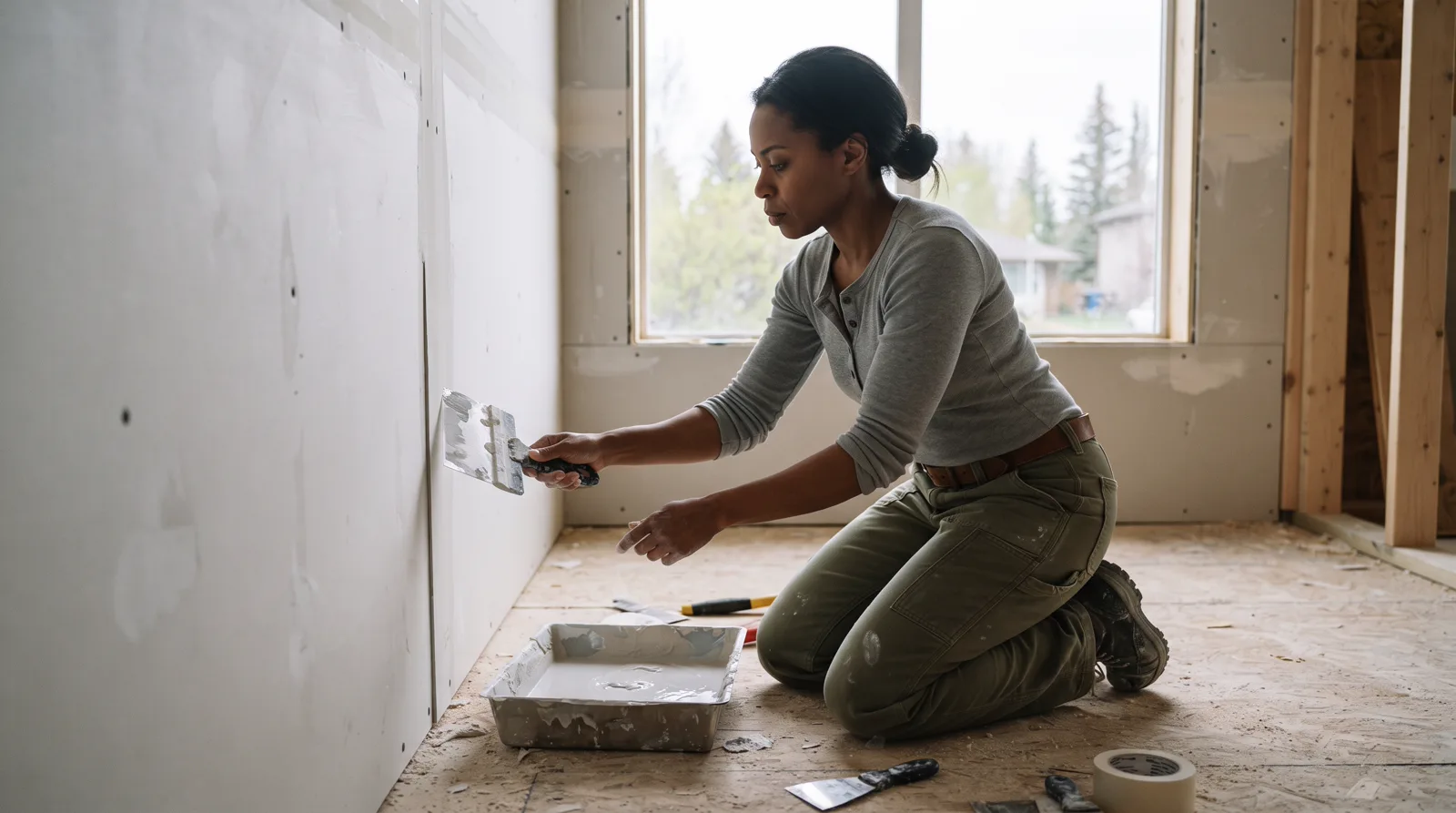
Drywall Contractor Stony Plain Vetted Pros, Quality Verified
Connect with pre-screened drywall specialists serving Stony Plain and the Tri-Region. Liability stated at signup.
Drywall Services in Stony Plain
From new construction to basement renovations and crack repair, the pros in our network handle the full range of drywall work.
Drywall Installation
New drywall for additions, basements and full home builds. Includes board hanging, taping, mudding and sanding to Level 4 or Level 5 finish. Pricing depends on square footage, ceiling height and finish level required before paint.
Drywall Repair
Patch holes, cracks and water damage. Common in Stony Plain homes due to foundation settlement on clay soils and freeze-thaw movement. Small repairs start around $150, larger wall sections or multiple rooms run higher.
Texture Matching
Match existing knockdown, orange peel or popcorn ceiling texture after repairs. Critical for blending patches invisibly in older homes. Popcorn ceiling work may require asbestos testing if the home was built before 1990.
Taping and Mudding
Professional joint treatment and finishing for new or repaired drywall. Multiple coats with drying time between each. Level 4 finish is standard before paint, Level 5 adds a skim coat for critical lighting or dark paint.
Ceiling Drywall Repair
Fix sagging, cracks or water stains on ceilings. Common after roof leaks, upstairs plumbing failures or ice dam damage in Alberta winters. May require attic access to check insulation and vapor barrier condition.
Basement Drywall Finishing
Complete drywall installation for basement renovations. Includes moisture-resistant drywall in areas prone to dampness, insulation coordination and finish work. Stony Plain basements often need vapor barrier and mold-resistant board due to groundwater levels.
Drywall Work in Stony Plain's Climate
🌡️ Freeze-Thaw Foundation Movement
Stony Plain sits on clay soils that expand and contract with moisture and temperature swings. Homes commonly develop hairline cracks in drywall, especially above door frames and in corners. Contractors in our network assess whether cracks indicate cosmetic settling or structural concerns requiring engineering review.
💧 Basement Moisture and Vapor Barriers
High groundwater tables in parts of Stony Plain and Parkland County make basements prone to humidity and occasional seepage. Proper drywall installation requires continuous poly vapor barrier, mold-resistant drywall in risk zones and adequate ventilation to prevent hidden moisture damage behind finished walls.
🌬️ Chinook Wind and Humidity Swings
Rapid temperature changes during chinook events cause indoor humidity to fluctuate, stressing drywall joints and fasteners. Properly taped and mudded seams with quality primer reduce the risk of cracks reappearing. Contractors factor in extra drying time during high-humidity periods in spring and fall.
❄️ Ice Dam and Roof Leak Ceiling Damage
Heavy snow winters and ice dams on older Stony Plain roofs lead to ceiling water stains and drywall deterioration. Repairs require confirming the roof issue is fixed before patching, testing insulation for moisture saturation and applying stain-blocking primer to prevent bleed-through on the new finish.
What it costs here
Everything You Need to Know About Hiring a Drywall Contractor in Stony Plain
From moisture management in Alberta basements to navigating permits and finish levels, here is what matters when choosing drywall services in the Tri-Region.
What Drywall Contractors Actually Do in Stony Plain
A drywall contractor handles everything from hanging new sheets during construction or renovation to repairing damage from water leaks, foundation settlement, or everyday wear. In Stony Plain and the surrounding Parkland County area, these professionals work on both new builds and older homes, many of which were constructed during the town's growth periods in the 1980s and 2000s. The work involves measuring, cutting, and securing gypsum board to wall and ceiling framing, then finishing the seams and fastener holes so the surface is smooth and ready for paint or texture.
Finishing is where skill separates acceptable work from professional results. A qualified drywall contractor applies joint compound in multiple coats, sanding between layers to create invisible seams. They match existing textures when doing repairs, which matters significantly in Stony Plain homes where orange peel, knockdown, and popcorn ceiling finishes are common in properties built before 2010. Texture matching requires experience with specific tools and techniques, and a poor match stands out immediately once paint goes on.
Beyond basic installation and repair, drywall work in Alberta must account for the province's building code requirements. Fire-rated drywall is mandatory between attached garages and living spaces, a critical safety feature in the many attached-garage homes throughout Stony Plain's residential areas. Moisture-resistant drywall is standard in bathrooms and laundry rooms, and any work touching these areas requires proper material selection. Contractors also handle mold remediation when water damage has compromised drywall, cutting out affected sections and treating framing before installing new material.
How Alberta's Climate Damages Drywall Year After Year
Foundation Movement From Freeze-Thaw Cycles
Stony Plain sits in Alberta's parkland region where winter frost can penetrate up to eight feet deep, well below typical foundation depth. When spring arrives, the ground thaws unevenly, causing foundations to shift slightly. Even a few millimeters of movement transfers stress to the rigid drywall attached to the framing above. This shows up as cracks along corners where walls meet ceilings, vertical cracks near door frames, and separation at inside corners where two walls join.
Homes built on the clay-heavy soils common in western Parkland County experience more pronounced movement. Clay expands when wet and shrinks when dry, creating a seasonal cycle of foundation shift. Older homes in Stony Plain's core areas, particularly those built before modern foundation engineering standards, show cumulative damage from decades of this movement. Cracks reappear in the same locations even after repair unless the underlying cause is addressed, which often requires both foundation work and drywall repair to achieve a lasting fix.
Chinook Wind Temperature Swings
Chinook winds can raise temperatures by 20 degrees Celsius in a matter of hours, a phenomenon Stony Plain residents experience multiple times each winter. These rapid temperature changes cause building materials to expand and contract at different rates. Wood framing moves more than drywall, creating stress at fastener points. Nail pops, those small circular bumps that appear on walls and ceilings, result directly from this differential movement as fasteners work loose from the framing.
The temperature swings also affect indoor humidity levels. Warm chinook air holds more moisture, then heating systems dry it out, creating cycles of expansion and contraction in the paper facing and gypsum core of drywall. Over years, this contributes to seam separation and corner cracking. Homes with poor vapor barriers or inadequate ventilation show accelerated damage, particularly in upstairs rooms and cathedral ceilings where temperature differentials are most extreme.
Water Intrusion and Ice Dam Damage
Ice dams form on Stony Plain roofs when heat escaping through inadequate attic insulation melts snow, which then refreezes at the eaves. The ice blocks proper drainage, forcing meltwater under shingles and into attic spaces. This water runs down wall cavities and appears as ceiling stains, bubbling paint, or soft spots in drywall, sometimes weeks after the actual intrusion. The brown or yellow staining indicates not just surface damage but saturated drywall that must be replaced, as the gypsum core loses structural integrity once soaked.
Plumbing failures also cause significant drywall damage in this climate. Frozen pipes are common in older Stony Plain homes where plumbing runs through exterior walls or unheated crawl spaces. When pipes burst, water floods wall and ceiling cavities before anyone notices. The resulting damage extends far beyond the visible stain, as moisture wicks through drywall and insulation. Professional assessment with moisture meters is necessary to determine the full extent of damage, because cutting out only the visibly stained section often leaves hidden moisture that causes mold growth within weeks.
How to Know When You Need Professional Drywall Work
Hairline cracks at inside corners or above doorways are normal settlement in homes less than five years old, especially in new developments west of Highway 779 where construction has been active. These often stabilize and require only cosmetic filling and paint. However, cracks wider than a credit card edge, cracks that reappear after repair, or cracks that run diagonally across walls signal ongoing structural movement that needs investigation before drywall repair. Attempting to patch active cracks without addressing the cause wastes money and leads to worse damage.
Water stains require immediate professional assessment, not just because of the visible damage but because of what you cannot see. A ceiling stain from a roof leak may indicate saturated insulation, compromised vapor barriers, and developing mold in hidden cavities. Soft or spongy drywall when pressed indicates the material has absorbed moisture and lost integrity. This cannot be dried and saved; it must be cut out and replaced. The same applies to drywall that shows bubbling, peeling paint, or a musty smell, all indicators of moisture problems that will worsen rapidly in Alberta's temperature extremes.
Extensive damage from renovations, room additions, or removing load-bearing walls requires professional work because building code compliance comes into play. Any work that involves structural changes, electrical boxes, or fire-rated assemblies must meet current Alberta building code standards. This includes proper blocking for drywall edges, correct fastener spacing, and fire-rated materials where required. A contractor doing permitted work will have these requirements inspected, whereas DIY repairs or unlicensed work can create liability issues when selling the home or filing insurance claims after damage.
What Actually Happens During a Drywall Project
Assessment and Material Selection
The first step involves examining the damage or measuring the installation area. For repairs, this includes using moisture meters to check for hidden water damage, inspecting framing for mold or rot, and determining whether existing texture can be matched. The contractor identifies which drywall type is needed: standard half-inch for most walls, five-eighths-inch for ceilings or fire-rated applications, moisture-resistant for bathrooms, or mold-resistant for areas with history of water problems. They also assess access challenges, such as whether furniture needs moving or if scaffolding is required for high ceilings common in Stony Plain's newer two-story homes.
Material quantities are calculated with waste factor included, typically 15 percent over the measured area to account for cuts, errors, and future repairs. Joint compound, tape, corner bead, and fasteners are selected based on the specific application. For matching existing texture, the contractor may need specialty tools or products not readily available at standard building supply stores. All of this happens before any work begins, preventing mid-project delays or incorrect material choices that compromise results.
Preparation and Protection
Professional contractors protect flooring, furniture, and HVAC systems before starting demolition or installation. Drywall dust is fine and pervasive, settling into furnace filters, ductwork, and every horizontal surface in connected rooms. Plastic sheeting seals doorways and floor vents, and dust barriers are erected to contain the work area. For repairs involving water damage, affected drywall is cut back to the nearest studs or joists, often extending well beyond visible damage to ensure all compromised material is removed.
Existing texture or popcorn ceiling material may require removal before repairs can blend properly. This is particularly dusty and time-consuming, especially in older Stony Plain homes where multiple layers of paint cover the original texture. The contractor ensures framing is solid, adding blocking where needed to support drywall edges or where original construction left gaps. Any electrical boxes, light fixtures, or mechanical penetrations are checked for proper positioning before new drywall goes up, as moving them after the fact means cutting fresh holes and patching.
Installation, Finishing, and Final Details
Drywall sheets are lifted into place, positioned to minimize seams and avoid placing joints where cracks commonly occur, such as above doorways. Screws are driven flush with the surface but not overdriven, which breaks the paper facing and reduces holding strength. Inside corners use tape embedded in joint compound, while outside corners get metal or vinyl corner bead for impact resistance. The initial coat of joint compound covers fasteners and seams, then subsequent coats are feathered wider to create imperceptible transitions.
Sanding between coats is necessary but creates the most dust, even with vacuum sanders. This is why proper containment matters; drywall dust takes weeks to fully settle and clean from a home if not contained initially. Texture application comes after final sanding, and matching existing texture is part skill and part trial-and-error testing on scrap pieces. The contractor adjusts spray patterns, compound consistency, and application technique until the new texture blends with surrounding surfaces.
The completed work should show no visible seams, fasteners, or transitions between new and existing surfaces. However, drywall is not paint-ready immediately after finishing. Joint compound must dry completely, which in Alberta's dry climate can take 24 to 48 hours depending on thickness and ambient humidity. Primer is essential before paint, particularly over new joint compound, which absorbs paint unevenly without sealing. The contractor should advise on drying time and painting prep, as rushing to paint causes flashing, a visible difference in sheen where compound meets existing drywall, ruining the invisible repair that proper technique achieves.
What Drywall Services Cost in Stony Plain and Parkland County
A basic drywall patch job in Stony Plain typically runs $150 to $400, depending on the size and number of holes. Patching three to five small nail holes or picture-hanger damage falls on the low end, while repairing a fist-sized hole or water-damaged section that needs backing and blending pushes toward the upper range. Ceiling patches cost slightly more because of access difficulty and the need for scaffolding or stilts in rooms with vaulted ceilings common in Parkland County acreages.
Hanging and finishing drywall in a new basement bedroom or garage conversion costs $2 to $4 per square foot for material and labor combined. A 12-foot by 14-foot bedroom with 8-foot ceilings works out to roughly $1,100 to $2,200, assuming standard half-inch board and a Level 4 finish ready for paint. Adding a closet, bulkheads around ductwork, or a tray ceiling feature increases the price because of the extra cuts, corners and detail work. Moisture-resistant board for a basement bathroom adds $0.50 to $1 per square foot over standard drywall.
Full home drywall replacement after a major flood, fire or renovation typically costs $8,000 to $18,000 for a 1,200 to 1,500 square foot bungalow, including tearout of the old material, new hanging, taping, mudding and sanding to a Level 4 finish. The price climbs if you need fire-rated board between the garage and living space to meet current Alberta Building Code, or if the insurance adjuster requires mold remediation and vapor barrier replacement before new board goes up. Textured ceiling removal and re-boarding adds another $2 to $3 per square foot because scraping popcorn texture is slow, messy work that generates enormous dust.
Several factors push drywall costs higher in the Tri-Region area. Winter work between November and March often carries a 10% to 20% premium because contractors need to heat the space adequately for mud to dry, and dust control is harder when you cannot open windows. Acreage properties outside Spruce Grove or Stony Plain town limits may see a travel surcharge of $50 to $150 if the contractor is based in Edmonton. Jobs that require matching an unusual texture, blending into existing plaster, or working around intricate trim and wainscoting take more time and skill, raising the per-square-foot rate. Alberta's Occupational Health and Safety requirements mean any job over a certain height needs proper scaffolding, not just ladders, which adds rental cost and setup time to the quote.
Comparing Drywall Types, Finishing Levels and Repair Methods
Standard half-inch gypsum board is the baseline for most interior walls and ceilings in Stony Plain homes. It is inexpensive, easy to cut and adequate for non-demanding areas like bedrooms, living rooms and hallways. Five-eighths-inch board is required by Alberta Building Code on any wall or ceiling separating a garage from living space because the thicker core provides a one-hour fire rating. Many contractors also recommend five-eighths-inch board on ceilings with 24-inch truss spacing to prevent sagging over time, especially in areas with heavy snow load like Parkland County where roofs can carry significant weight during a hard winter.
Moisture-resistant drywall, often called green board or purple board depending on the brand, has a treated core and face paper that resist mold growth in damp environments. It is the right choice for basement bathrooms, laundry rooms and any space prone to humidity, but it is not waterproof and should not be used in a shower surround. For true wet areas, cement board or tile backer is the correct substrate. Impact-resistant drywall has a denser core reinforced with fiberglass strands, making it much harder to dent or puncture. It costs roughly double the price of standard board but makes sense in high-traffic areas like mudrooms, garage entries and kids' playrooms where door handles, hockey sticks and furniture regularly bang into walls.
Finishing level determines how smooth and paint-ready the surface will be. Level 1 is just tape embedded in mud with no finishing passes, used only behind tile or in attics where appearance does not matter. Level 2 adds a thin skim coat over the tape, suitable for surfaces that will be textured or covered with heavy wallcovering. Level 3 includes two coats of mud, sanded smooth, and is the minimum acceptable finish for most painted walls. Level 4 is the standard for nearly all residential work, with three coats of joint compound, careful sanding and a surface ready for flat or eggshell paint under normal lighting. Level 5 adds a final skim coat of mud over the entire wall, creating a glass-smooth surface that will not show imperfections under harsh side lighting or with high-gloss paint. Most Stony Plain homes use Level 4 for walls and ceilings unless the homeowner specifically wants a show-quality finish in a feature area.
Deciding whether to patch or replace depends on the extent and type of damage. A few isolated holes or cracks are almost always cheaper to patch, especially if the rest of the wall is sound and the texture is easy to match. Water damage that has soaked through and delaminated the gypsum core, or mold growth that has spread behind the board, usually requires cutting out and replacing the affected section because patching over compromised material just hides the problem. If you are repairing more than 30% of a wall's surface area, replacing the entire sheet often costs less than the labor to patch, blend and sand multiple repairs to an invisible finish. Settlement cracks that reappear every year, common in newer Spruce Grove subdivisions built on clay soil, often indicate a structural issue that needs addressing before any drywall repair will hold long term.
Mistakes and Contractor Traps to Avoid
Hiring based on the lowest quote is the most common mistake Parkland County homeowners make. Drywall finishing is a skilled trade, and a cheap quote usually means the contractor is cutting corners on prep work, using fewer coats of mud, skipping proper sanding or rushing the job to move on to the next project. The result is visible seams, rough texture, fastener pops showing through the paint within months, and a finish that looks acceptable from ten feet away but terrible up close or under the wrong lighting. An experienced finisher charges more per square foot because they take the time to feather edges properly, sand between coats and deliver a surface that will look good for years.
Failing to verify WCB coverage and liability insurance before signing a contract is a costly mistake if something goes wrong. If a worker is injured on your property and the contractor does not carry active Workers Compensation Board coverage, you as the homeowner can be held liable for medical costs and lost wages. Similarly, if the contractor damages your furnace, plumbing or electrical while working and has no liability insurance, you have no recourse except small claims court. Alberta law does not require contractors to carry insurance, so the responsibility to verify falls on you. Any contractor who hesitates or makes excuses when asked for proof of coverage is a red flag.
Allowing work to proceed without a written contract and scope of work invites disputes over what was agreed to, what is included in the price, and what counts as an extra. A proper contract specifies the area to be drywalled, the board type and thickness, the finishing level, who supplies materials, the payment schedule, the estimated timeline and the cleanup expectations. It should also state whether the contractor is responsible for moving furniture, protecting floors, disposing of old drywall and repairing any incidental damage to trim or fixtures. Verbal agreements and handshake deals leave both parties exposed if memories differ or complications arise mid-job.
Skipping a moisture test after water damage, especially in basements, is a mistake that leads to mold growth and a failed repair within months. Drywall and framing need to dry to below 15% moisture content before new board goes up, and that can take days or weeks depending on the severity of the flood, the ventilation and whether a dehumidifier is running. A contractor who is eager to close up the wall the day after a sump pump failure is either inexperienced or dishonest. Proper remediation includes cutting out wet insulation, treating framing with a mold inhibitor, running fans and dehumidifiers, testing moisture levels with a meter and only then installing new vapor barrier and drywall.
Ignoring the root cause of damage and just fixing the symptom guarantees you will be paying for the same repair again. Ceiling cracks that follow the truss line are often caused by truss uplift, a seasonal movement common in Alberta homes where temperature differences between the attic and living space cause the roof trusses to bow slightly. Patching the crack without installing floating corner clips or truss clips means the crack will reappear every winter. Water stains on a ceiling drywall panel are a symptom, not the problem. The problem is a roof leak, a plumbing leak or condensation from an improperly vented bathroom fan, and until that is fixed, any drywall repair is temporary. A good contractor identifies and addresses the underlying issue before touching the drywall.
How to Hire the Right Drywall Contractor in Stony Plain
Start by confirming the contractor holds active WCB coverage and liability insurance, and ask for proof in the form of a current certificate or clearance letter. Check that the coverage amounts are adequate for the scope of work. A small patch job might be fine with $1,000,000 in liability, but a whole-home re-drywall after a fire should involve a contractor carrying $2,000,000 or more. Do not accept excuses or promises to provide documentation later. A legitimate contractor expects this question and has the paperwork ready to share.
Ask for references from recent jobs in the Tri-Region area, ideally projects similar in scope to yours. A contractor who specializes in new home construction may not have the repair and blending skills needed to patch a 1980s bungalow and match the existing orange peel texture. Call at least two references and ask specific questions about the quality of the finish, whether the contractor showed up on time, how they handled unexpected complications, whether the job site was kept clean and if the final invoice matched the estimate. Drive past a completed project if possible and look at the finished work yourself.
Get at least three written quotes and compare them carefully, line by line. The lowest bid is not always the best value, and the highest bid is not automatically the highest quality. Look for clear descriptions of the work, specific material callouts (board type, thickness, finish level), a realistic timeline and a payment schedule tied to milestones, not just a deposit and final payment. Be wary of quotes that seem vague, that lump everything into one line item, or that require a large deposit up front before any work begins. Alberta law caps deposits at a reasonable percentage of the total contract value, and any contractor asking for half or more of the money before starting is a serious red flag.
Clarify expectations around site protection, cleanup and disposal before signing anything. Drywall work generates an enormous amount of dust, and cutting or sanding inside a home without proper containment will coat every surface within 50 feet. A professional contractor seals off the work area with plastic sheeting, uses dust extraction on sanders, lays down floor protection and vacuums daily. Disposal of old drywall torn out during a renovation is another cost that should be spelled out in the contract. Some contractors include dump fees and hauling in their price, others charge it as an extra, and a few expect the homeowner to deal with debris removal. Know which applies to your quote.
How Tri-Region Services Helps
Tri-Region Services routes your request to one vetted local drywall contractor who has confirmed liability coverage and a track record of quality finishing work in Stony Plain, Spruce Grove and Parkland County. You get a free written quote with a clear scope, specific materials and a timeline, and the pro you are matched with confirms their availability and pricing directly with you before any work is scheduled. The process cuts out the guesswork and the hours spent calling contractors who never return messages or show up to quote jobs they have no intention of taking.
How We Screen Drywall Contractors
Every contractor in the Tri-Region network is verified before we make the match. You get credentials up front, not after the fact.
liability insurance and Liability Confirmed
liability insurance and commercial liability status checked and documented before any contractor is dispatched to your property.
Written Quotes Required
Every matched contractor provides a written estimate detailing scope, materials, finish level and timeline before work begins.
References and Work History Verified
Past project quality, communication standards and completion reliability reviewed as part of network admission and ongoing monitoring.
Workmanship Guarantee Confirmed in Writing
The contractor you are matched with confirms their workmanship warranty terms in the written quote, giving you recourse if issues arise.
Local Stony Plain and Tri-Region Contractors
Pros in the network are based in or regularly serve Stony Plain, Spruce Grove and Parkland County, reducing travel costs and ensuring familiarity with local building practices.
No Referral Fee Charged to Homeowners
Matching service is free to you. The contractor you hire pays a network fee only if you choose to proceed with their quote.
This page is not tied to a contractor's brand. Leads route straight to your one local partner. Verified reviews can appear here once that partner has them (never fabricated).
Serving the whole Tri-Region
8 Common Questions About Drywall Contractors in Stony Plain
How do I find a good drywall contractor in Spruce Grove or Stony Plain?+
What should drywall repair cost in Alberta?+
Do I need a permit for drywall work in Stony Plain?+
What finish level do I need before painting?+
Why do cracks keep reappearing in my drywall?+
Can I drywall a basement myself or should I hire a contractor?+
How long does drywall take to dry before I can paint?+
What is the difference between regular drywall and moisture-resistant drywall?+
Get your free quote
Tell us what you need and a local pro will get right back to you.
- ✓ Sent straight to a local business
- ✓ You choose who you hire
- ✓ Free, with no obligation