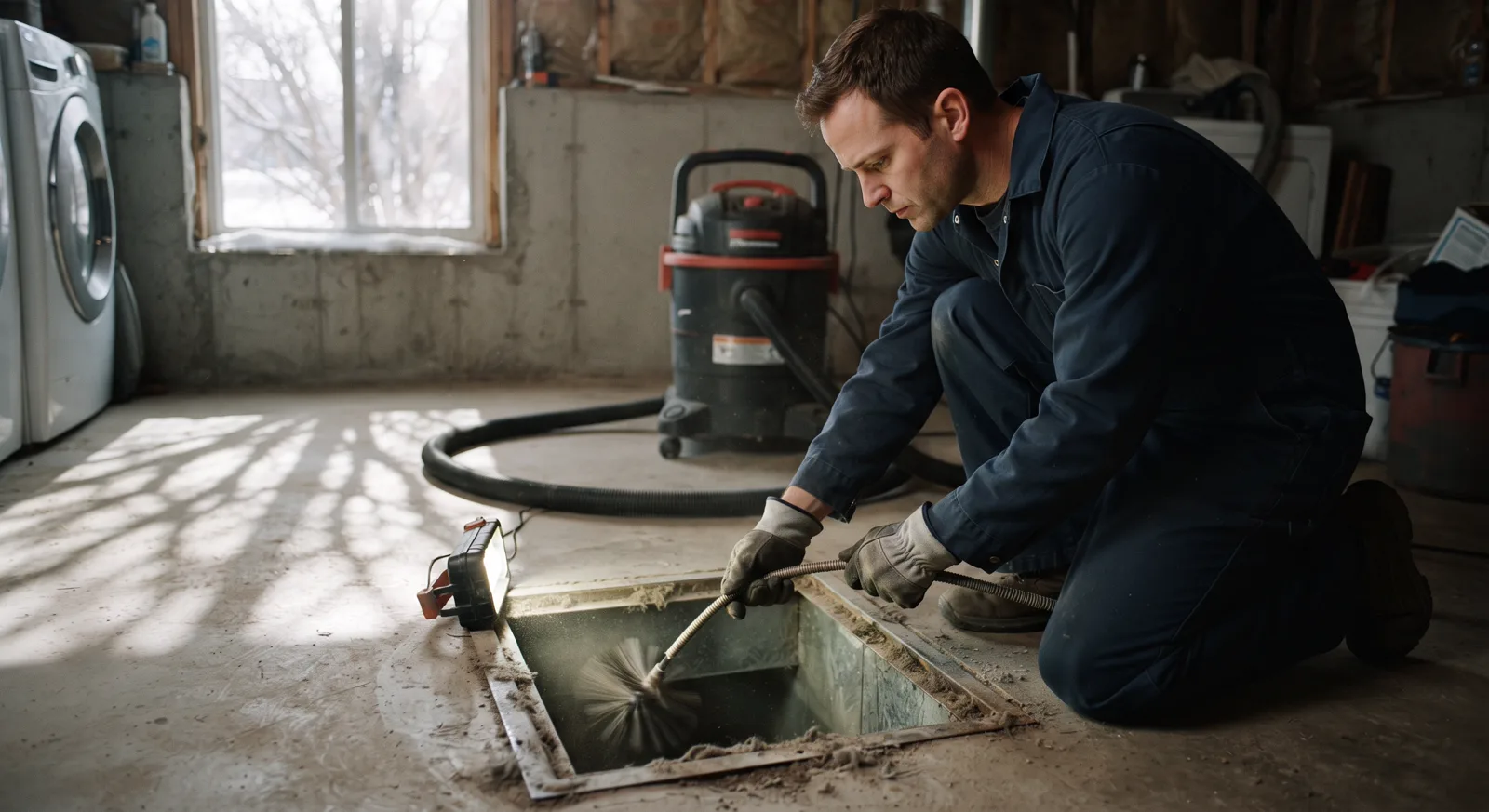
Duct Cleaning Spruce Grove: Cleaner Air, Healthier Home
Local pros remove years of dust, pet dander, construction debris and allergens from your forced-air system so your family breathes easier and your furnace runs efficiently.
Complete Duct Cleaning Services
From inspection to sanitization, local pros handle every part of your ductwork system
Video Duct Inspection
Camera inspection of main trunk lines and branch ducts to identify blockages, disconnected sections, mold growth or rodent intrusion. You receive photos and a written report before any cleaning work begins. Essential for older Spruce Grove homes with original 1980s ductwork that may have settled or separated.
Forced-Air Duct Cleaning
Negative-pressure truck-mounted vacuum system cleans all supply and return ducts, registers, grilles and main plenum. We agitate debris with compressed air whips and rotating brushes, then extract through sealed access points. Includes furnace blower compartment cleaning and filter replacement. Standard service for homes up to 2,500 square feet.
Dryer Vent Cleaning
Remove lint buildup from dryer exhaust vent to exterior termination, reducing fire risk and improving dryer efficiency. Critical in Parkland County acreages where vent runs exceed 20 feet and accumulate lint faster. We inspect the exterior hood for ice blockage common during January cold snaps and verify proper airflow after cleaning.
Duct Sanitization & Deodorization
EPA-registered antimicrobial fogger treatment applied after mechanical cleaning to inhibit mold and bacteria growth. Particularly useful after basement flooding, pet accidents in ducts, or when musty odours persist. We use products safe for occupied homes and compatible with Alberta's dry climate to avoid moisture issues.
HRV/ERV System Cleaning
Clean heat recovery ventilator or energy recovery ventilator core, filters, ductwork and fresh air intakes. Newer Spruce Grove homes built to 2019 code often have HRVs that accumulate dust on cores and reduce efficiency. Service includes core washing, drain line clearing and filter replacement to maintain proper ventilation in tight modern envelopes.
Ductwork Repair & Sealing
Seal leaking joints, repair disconnected sections and insulate exposed ductwork in unconditioned spaces like crawlspaces or attics. Chinook winds create pressure fluctuations that loosen duct tape over time. We use mastic sealant and metal-backed tape rated for Alberta temperature swings, then insulate with R-8 wrap to prevent condensation during freeze-thaw cycles.
Alberta Climate Realities We Address
💨 Chinook Dust & Pressure Changes
Chinook winds push fine dust through poorly sealed duct joints and stir settled debris inside trunk lines. We identify leaking seams during inspection and seal them with flexible mastic that withstands the 30°C temperature swings common when chinooks arrive. Homes near Highway 16A see heavier dust loads from agricultural fields and gravel roads.
🏗️ Construction Boom Debris
New subdivisions in Spruce Grove and Stony Plain see drywall dust, sawdust and insulation fibres enter ductwork during construction despite builder precautions. Post-construction cleaning removes this fine particulate that standard filters cannot capture. We recommend this service within the first year of occupancy, before warranty expires.
🌲 Acreage & Rural Challenges
Parkland County and Acheson area acreages deal with grain dust, straw chaff, rodent nesting in exterior vent hoods and longer duct runs that accumulate more debris. We inspect exterior terminations for bird nests and ice dams, clean extended dryer vents common in shop-attached homes, and address the musty smells that develop in basement ducts after spring melt flooding.
🐾 Pet Dander Accumulation
Dog and cat hair clumps in return air grilles and coats blower wheels, reducing airflow and spreading allergens. Tri-region homes with pets benefit from cleaning every two to three years rather than the standard five. Local pros remove hair from blower assemblies and recommend upgrading to MERV 11 filters if your furnace fan can handle the static pressure.
What it costs here
Everything You Need to Know About Duct Cleaning in Spruce Grove
How it works, what to expect, and when to schedule service in Alberta's climate
How Professional Duct Cleaning Actually Works in Alberta Homes
Professional duct cleaning in Spruce Grove and surrounding areas involves physically removing accumulated dust, debris, pet dander, construction residue, and biological contaminants from your entire HVAC system using specialized equipment. The process goes far beyond vacuuming a few visible vents. Certified technicians access your ductwork through strategic openings, creating negative pressure throughout the system while agitating and extracting materials that have settled over months or years. In Alberta homes, this work becomes more complex due to our sealed construction practices designed for extreme cold, which unfortunately trap contaminants more effectively than homes in milder climates.
The equipment required for legitimate duct cleaning includes truck-mounted or portable high-powered vacuum systems capable of moving thousands of cubic feet of air per minute, creating the suction needed to pull debris from branch lines back to collection points. Technicians use rotating brushes, compressed air tools called air whips or skipper balls, and sometimes HEPA filtered negative air machines to dislodge material adhered to duct surfaces. The best companies in Parkland County protect your furnace and air conditioning components during the process, covering or removing filters and sealing off sensitive equipment. This prevents debris knocked loose during cleaning from damaging your blower motor, heat exchanger, or evaporator coil, which are expensive components that homeowners understandably want to protect.
What separates thorough cleaning from cosmetic work is access and methodology. Reputable technicians create access points in your trunk lines and major branches, allowing them to physically reach deep into the system rather than just vacuuming what they can see through existing registers. These access holes, typically cut in basement ceilings or utility spaces, are sealed afterward with metal patches and mastic. In Acheson and Stony Plain homes with complex ductwork layouts, this might mean creating four to eight access points to ensure the entire system receives attention. Some older homes have ductwork buried in walls or floor cavities that cannot be fully accessed without destructive renovation, and honest technicians will explain these limitations rather than promise impossible results.
Alberta Climate Conditions That Fill Your Ducts Faster Than You Think
The prolonged heating season in Spruce Grove and Parkland County, typically running from September through May, means your furnace operates more hours annually than systems in most Canadian regions. Every hour of operation draws air through return vents, filtering it through your system and pushing it back through supply ducts. Over a seven or eight month heating season, thousands of cubic meters of air cycle through your home, carrying microscopic particles that gradually accumulate. Construction dust from renovations, skin cells, fabric fibers, cooking particles, and outdoor pollutants enter the airstream. The extended heating cycle common to Alberta climate simply provides more opportunity for material to settle in low-velocity areas of your ductwork, particularly in horizontal runs and elbow joints where airflow naturally slows.
Spring in our region brings unique challenges that accelerate duct contamination. Chinook winds carry enormous volumes of dust and agricultural particles across the prairies, and these fine materials infiltrate homes through door traffic, window seals, and fresh air intakes on modern high-efficiency furnaces. After a long winter of closed-home living, spring also brings the decision to open windows, which introduces pollen, poplar fluff, and outdoor debris directly into living spaces where HVAC returns pull it into the system. Homes near agricultural operations in Parkland County or near industrial facilities in Acheson experience higher particulate loads than urban properties, sometimes requiring more frequent attention. Pet owners notice the problem compounds during spring shedding season when fur and dander loads increase dramatically throughout the home.
Alberta's extreme temperature swings create condensation issues that affect ductwork cleanliness in ways homeowners rarely consider. When warm, humid air from cooking, showering, or even breathing meets cold duct surfaces in unconditioned spaces like crawlspaces or unheated garages, moisture condenses on metal surfaces. This dampness allows dust to stick and compact rather than remaining loose and dry. In poorly insulated duct runs, this moisture can support mold growth, particularly in homes with humidifiers set too high during winter months. The freeze-thaw cycles we experience, sometimes within a single day during chinook events, exacerbate these moisture dynamics. Proper duct cleaning addresses not just the dry dust accumulation but also the compacted, moisture-affected material that forms in vulnerable sections of your system.
Real Warning Signs You Need Duct Cleaning in Your Spruce Grove Area Home
Visible dust accumulation around supply registers provides the most obvious indicator that your ducts need attention. Walk through your home and examine the ceiling or floor vents closely. If you see dark streaks radiating outward from the vent openings, or if dust covers the visible portions of the register within days of cleaning, your ductwork is distributing accumulated debris throughout your living space. Remove a floor register and shine a flashlight into the duct opening. If you see layered dust, pet hair, or debris on the visible duct surfaces, the portions you cannot see likely contain similar or worse accumulation. In Stony Plain homes built in the 1980s or 1990s that have never had duct cleaning, the accumulation can be several millimeters thick in horizontal runs.
Unexplained increases in dust accumulation on furniture, electronics, and surfaces throughout your home often point directly to dirty ductwork. If you find yourself dusting more frequently than in previous years, or if family members with allergies or asthma notice worsening symptoms indoors, your HVAC system may be recirculating contaminated air rather than filtering it effectively. This becomes particularly noticeable after furnace startup in fall when the first few heating cycles stir up summer's settled dust. Many Parkland County homeowners report a musty or stale smell when the furnace first runs each season, which indicates biological growth or significant organic debris in the ductwork. Persistent odors that seem to come from vents, especially when the system runs, should never be ignored as they may indicate mold, pest infiltration, or decomposing material somewhere in the system.
Changes in system performance and airflow often signal obstructed or heavily contaminated ductwork. If certain rooms have become noticeably warmer or cooler than others, or if airflow from specific vents seems weaker than it once was, debris accumulation may be restricting passages. Some Acheson homeowners notice their furnace runs longer cycles to achieve set temperatures, which increases energy costs and wear on equipment. Technicians sometimes find return air vents completely blocked by items stored against walls, or discover that previous renovations closed off portions of the duct system, creating dead zones where debris accumulates undisturbed. After construction or renovation projects, especially drywall work that creates fine dust, duct cleaning becomes essential rather than optional. Construction debris can overwhelm even new furnace filters and coat ductwork throughout the home.
- Black streaks or visible dust around supply vents and registers that return within days of cleaning
- Musty, stale, or unpleasant odors when the furnace or air conditioning system operates
- Family members experiencing increased allergy symptoms, respiratory irritation, or unexplained coughing at home
- Visible mold growth around vent openings or on accessible duct surfaces in utility spaces
- Excessive dust accumulation on surfaces throughout the home despite regular cleaning efforts
- Reduced airflow from vents or uneven heating and cooling between rooms
- Recent completion of renovation work, especially projects involving drywall, insulation, or demolition
- Evidence of rodent or insect activity in ductwork, including droppings, nests, or unexplained noises
The Complete Duct Cleaning Process From Arrival to Final Inspection
Initial Assessment and System Documentation
Professional duct cleaning begins with a thorough walkthrough of your Spruce Grove or Parkland County home to identify all supply and return vents, locate the furnace and air handler, and assess the ductwork layout. Technicians document the type of ductwork present, whether metal, flex duct, or a combination, and note any visible concerns like disconnected sections, damaged insulation, or obvious contamination. This assessment includes checking for asbestos-wrapped ductwork in older homes, which requires specialized abatement procedures before cleaning can proceed. The technician explains what they found, what areas are accessible for cleaning, and whether any portions of the system cannot be reached without additional renovation work. Honest companies discuss limitations upfront rather than discovering them mid-job.
During the assessment, technicians verify your furnace filter location and condition, check for proper clearances around equipment, and confirm that your system is appropriate for cleaning. Homes with certain types of ductboard or severely damaged flex duct may not be good candidates for aggressive cleaning methods. The company should provide a written scope of work detailing which components will be cleaned, which access points will be created, what equipment will be used, and the estimated duration. In Alberta, reputable companies carry liability insurance, and they should willingly provide proof before starting work. This protects you if a technician is injured on your property or if equipment damages your home during the cleaning process.
Preparation and Equipment Setup
Technicians protect your home by laying floor coverings along pathways from the equipment access point to the work truck, preventing dirt transfer and equipment damage to flooring. They identify where the main vacuum collection unit will connect to your system, typically at the furnace plenum or a trunk line near the furnace. For truck-mounted systems, a large diameter hose runs from the truck outside to this connection point. Portable units are positioned near the furnace in your mechanical room or basement. The furnace is turned off and the filter removed to prevent debris from clogging it during the cleaning process. Some companies seal off the furnace cabinet entirely to prevent contamination of sensitive components like the blower motor, gas valve, or circuit boards.
Creating proper access points distinguishes thorough cleaning from superficial work. Technicians cut strategic openings in main trunk lines to insert brushes and air tools that cannot fit through standard register openings. These cuts are measured and marked, then made using hole saws or tin snips, creating round or rectangular access panels. In a typical Stony Plain bungalow, this might mean three to six access points in basement ceiling ductwork to reach all major branches. Each opening location is chosen to maximize reach into the system while minimizing the number of cuts required. After cleaning, these openings are sealed with metal patches and mastic or specialized tape, restoring the system to airtight condition. Unprofessional companies that clean only through existing registers cannot physically reach debris in most ductwork.
The Actual Cleaning Process
With the vacuum system creating powerful negative pressure throughout the ductwork, technicians work systematically through each section of your system. They seal off individual branches or sections, then insert rotating brushes, air whips, or compressed air tools through access points and register openings. These tools physically dislodge material adhered to duct walls, breaking up compacted layers and forcing debris into the airstream where vacuum suction carries it to the collection unit. The technician works from the furthest points of the system back toward the collection point, ensuring loosened material is pulled in the correct direction. In homes with multiple levels, this means starting upstairs and working down to the basement, following the natural airflow path.
Special attention goes to return air ducts, which typically accumulate more debris than supply lines because they handle the full volume of air being drawn back to the furnace before filtration. Main return trunks in Acheson homes often contain startling amounts of dust, pet hair, and debris that has bypassed or overwhelmed filters over the years. Technicians clean the blower compartment, return plenum, and accessible portions of the heat exchanger or evaporator coil, areas where debris accumulation directly impacts system efficiency. Any disconnected duct sections discovered during cleaning are reconnected and sealed. Damaged or deteriorated flex duct sections should be flagged for repair or replacement, as torn ductwork allows conditioned air to escape into unconditioned spaces, wasting energy and reducing comfort.
Sanitization, Sealing, and Final System Check
After mechanical cleaning removes bulk debris, some companies offer optional sanitization using EPA-registered antimicrobial treatments fogged through the ductwork. This addresses biological contaminants like mold spores, bacteria, and allergens that mechanical cleaning alone cannot eliminate. In Spruce Grove homes where moisture issues or pet odors are concerns, this additional treatment provides benefits beyond debris removal. However, sanitization should never substitute for thorough mechanical cleaning, and reputable companies never use products that leave toxic residues or require occupants to leave the home for extended periods. The products used should be specifically designed for HVAC systems and safe for continuous exposure in living spaces.
All access panels are sealed using industry-approved methods that restore the ductwork to airtight condition. Metal patches are screwed into place and sealed with mastic compound that remains flexible through temperature changes, or with foil-backed tape rated for HVAC applications. Register covers are reinstalled, and the furnace filter is replaced with a new filter appropriate for your system. Technicians verify that all supply and return vents are open and unobstructed before restarting the system. A final inspection confirms proper airflow from all vents, listens for unusual noises that might indicate loose debris or damaged components, and ensures the furnace operates normally after the cleaning process. Professional companies document the work with before and after photos, particularly of access points and heavily contaminated areas, giving you visual confirmation of the improvement achieved.
What Duct Cleaning Really Costs in Spruce Grove, Stony Plain and Parkland County
Residential duct cleaning in the Tri-Region typically runs between $300 and $650 for most single-family homes, with larger properties or those requiring specialized work reaching $800 to $1,200. The wide range reflects significant differences in system size, access difficulty, contamination level and the scope of work actually performed. A standard 1,200 square foot bungalow with a straightforward trunk and branch layout and good access points usually sits at the lower end, while a two-story 2,500 square foot home with multiple returns, finished basement ducts behind drywall and restricted furnace room access pushes costs higher. Understanding what drives these numbers helps you evaluate quotes intelligently rather than simply choosing the lowest bidder, which often means choosing the least thorough job.
System accessibility plays a huge role in pricing that many homeowners overlook. Homes built in the 1970s and 1980s around Spruce Grove often have large, accessible trunk lines in unfinished basements with plenty of working room, making them faster and cheaper to clean properly. Newer builds in subdivisions west of Highway 779 or south of Highway 16A frequently route ductwork through cramped spaces, behind finished walls or above ceilings with minimal access panels. Every additional register that requires cutting a new access panel, every trunk line buried behind framing and every return air plenum wedged into a tight mechanical room adds labor time. Legitimate contractors price this reality honestly. Companies quoting rock-bottom prices for complex layouts either plan to skip inaccessible sections entirely or will surprise you with change orders once work begins.
Contamination severity directly impacts cost and time requirements. A system that has received regular filter changes and runs in a relatively clean environment might need only standard cleaning, while a home that went years without proper filtration, experienced a renovation without duct protection, houses pets that shed heavily or shows visible mold growth requires more intensive work. Heavily contaminated systems may need sanitizing treatments, additional passes with cleaning equipment and extended vacuuming time. Some situations, particularly those involving confirmed mold colonization rather than simple surface dust, may require remediation work beyond standard duct cleaning, with costs reaching $1,500 to $3,000 depending on extent. Honest contractors assess contamination level before quoting final prices, either through photos you provide or a brief on-site inspection, rather than offering one-size-fits-all pricing that inevitably leads to disputes or incomplete work.
What Actually Drives the Price Higher
Several specific factors consistently push duct cleaning costs into the higher end of the range in our region. Homes with more than one furnace or air handler, common in larger Parkland County acreages or executive homes in Westerra or Heritage Lakes, essentially double the base cost because you are cleaning two complete systems with separate trunk lines, branch runs and return networks. Older metal ductwork with sharp seams, internal fasteners or deteriorating liner material takes longer to clean thoroughly without causing damage compared to smooth modern spiral duct or flex duct. Homes that have never had ductwork cleaned since construction, particularly those built before 2000, often contain startling amounts of construction debris, including drywall dust, wood shavings, insulation fragments and fastener off-cuts that require extra vacuuming and sometimes hand removal at access points.
Geographic factors specific to Alberta also influence pricing in ways homeowners rarely consider until they receive quotes. Our extreme temperature swings from minus 35 Celsius winter nights to plus 30 summer days create condensation issues in poorly insulated ductwork, leading to dust caking that requires more aggressive cleaning. Homes heated primarily with forced air rather than in-floor heating or baseboard systems run ductwork harder and longer each year, accumulating contamination faster. Properties in more rural parts of Parkland County, particularly those near active agricultural land or gravel roads, face higher dust infiltration that shows up in ductwork. Acreages with older furnaces lacking high-efficiency filters or homes that opened windows wide during the 2023 wildfire smoke events often need more thorough cleaning than typical suburban properties with modern HVAC systems and sealed building envelopes.
Additional services that genuinely improve results add cost but deliver measurable value when properly applied. Dryer vent cleaning, typically $120 to $180 as an add-on service, matters enormously in Alberta where long winters mean more dryer use and lint accumulation becomes a serious fire hazard compounded by our dry indoor air. Furnace and coil cleaning, usually $150 to $250 beyond basic duct work, improves efficiency and prevents recontamination of freshly cleaned ducts when the blower kicks on. Camera inspection of inaccessible duct sections, around $100 to $200, provides documentation of actual conditions and cleaning results rather than hoping the technician reached every area. These extras make sense for many situations, but should be explained and priced separately rather than buried in an inflated base quote that lacks transparency about what you are actually receiving.
Comparing Duct Cleaning Methods and Equipment Quality
The method and equipment used for duct cleaning vary dramatically between contractors operating in the Tri-Region, and these differences produce vastly different results even when the final invoice looks similar. The industry standard recognized by NADCA, the National Air Duct Cleaners Association, involves negative pressure methodology where a large truck-mounted or portable vacuum unit creates suction at the furnace while technicians agitate dust and debris loose from duct surfaces using rotating brushes, compressed air whips or contact tools inserted through access holes. This approach requires properly sizing the vacuum to your duct system, creating enough airflow to capture dislodged contaminants before they resettle and physically agitating every section of ductwork rather than simply vacuuming at registers. The process typically takes three to five hours for an average home when performed correctly, and you should see and hear technicians working throughout your duct system, not just running a vacuum at the furnace for thirty minutes.
Truck-mounted systems generate significantly more suction power than portable units, typically 15,000 to 20,000 cubic feet per minute compared to 3,000 to 6,000 CFM for portable equipment. This power advantage matters enormously in larger homes, systems with long duct runs or situations involving heavy contamination because stronger vacuum capture means less chance of debris escaping into living spaces or resettling in ducts once equipment shuts down. However, truck-mounted units require parking the service vehicle close to your home with hoses running to the furnace, which can be problematic in winter when crews need to work quickly in minus 20 Celsius temperatures or on properties with difficult access. Portable units offer more flexibility and can produce acceptable results in smaller, less contaminated systems when paired with thorough mechanical agitation. The key question is not which type of vacuum the contractor uses, but whether they combine adequate suction with proper mechanical cleaning of every duct section rather than relying on vacuum alone.
Mechanical agitation methods separate competent contractors from those simply going through motions to collect a fee. Rotating brush systems, either pneumatic or electric, physically scrub duct surfaces to break loose caked-on dust, biological material and film that vacuuming alone cannot remove. Compressed air agitation tools, sometimes called air whips or skipper balls, use pulses of air to knock debris from duct walls toward the vacuum collection point. Contact cleaning tools allow technicians to manually scrub visible contamination at access points and around register boots where buildup concentrates. A thorough job combines multiple agitation methods matched to duct material and contamination type. Flexible ductwork, common in Alberta homes for branch runs to individual registers, requires gentler handling than rigid metal trunk lines to avoid tearing the inner liner or compressing the material. Legitimate contractors explain which tools they will use and why, rather than treating the process as a mysterious black box that homeowners cannot evaluate.
- Negative pressure NADCA methodology vs. simple register vacuuming without proper containment
- Truck-mounted high CFM systems vs. portable units and when each makes sense
- Rotating brushes, air whips and contact tools vs. vacuum-only approaches
- Proper containment at furnace and access points to prevent cross-contamination during cleaning
- Video documentation before and after work to verify results in inaccessible sections
Sanitizers, Sealants and Add-On Treatments Worth Considering
Chemical treatments applied after mechanical cleaning generate significant debate in the duct cleaning industry, with legitimate applications existing alongside pure upselling of unnecessary services. EPA-registered antimicrobial treatments applied as a fine mist after thorough cleaning can help control biological growth in systems prone to moisture issues, particularly homes with humidity problems, past water damage or ductwork running through unconditioned spaces like Alberta crawlspaces and attics where temperature swings create condensation. These treatments typically cost $75 to $150 beyond base cleaning prices. However, they provide zero value if applied over uncleaned contamination or in systems with no biological growth issues, and no chemical treatment compensates for poor mechanical cleaning. Honest contractors test for biological contamination before recommending treatment rather than pushing it as a standard add-on for every customer.
Duct sealant coatings, sometimes marketed as encapsulation, involve spraying or brushing a polymer coating on interior duct surfaces to seal porous materials and create a smooth, cleanable surface. This process has legitimate applications for older fiberglass duct board or metal ductwork with deteriorating internal liner material, situations where proper cleaning would cause more damage than benefit. Costs range from $800 to $2,000 depending on system size. The critical question is whether your ductwork actually needs encapsulation or whether the contractor is pushing an expensive service to inflate the invoice. Most modern metal and flex duct systems require no coating whatsoever. Be extremely skeptical of any contractor who leads with sealant application rather than cleaning, or who claims coating eliminates the need for future cleaning. Duct systems still accumulate contamination regardless of coatings, and encapsulating over existing contamination simply locks in the problem rather than solving it.
Critical Mistakes and Contractor Traps to Avoid in the Tri-Region
The single biggest mistake homeowners make when hiring duct cleaning services in Spruce Grove, Stony Plain and Parkland County is choosing based solely on advertised price, particularly those incredibly low offers around $99 to $149 that appear in community mailboxes, online ads and door hangers several times each year. These prices represent bait pricing designed to get technicians into your home where they either perform minimal work that barely qualifies as cleaning, or they discover supposed urgent problems requiring expensive upgrades before they can proceed. Common upsells include claims that your ducts contain dangerous mold requiring immediate $800 remediation, that your system needs $400 in sanitizing treatments or that ductwork damage prevents cleaning unless you approve $600 in repairs right now. Legitimate duct cleaning cannot be performed properly at these ultra-low prices given labor costs, equipment expenses, insurance and business overhead. Contractors advertising these rates either cut corners so severely that the service provides no value, or they plan to profit through high-pressure upselling once inside your home.
Another widespread trap involves contractors who lack proper insurance coverage, licensing or WCB registration, issues that become your problem when something goes wrong during service. Duct cleaning involves accessing tight spaces, working around HVAC components and electrical systems and occasionally making small access cuts in ductwork, all activities that carry real liability risk. An uninsured contractor who damages your furnace, breaks a gas line fitting or injures himself in your mechanical room leaves you personally liable for costs that can easily reach tens of thousands of dollars. Alberta requires contractors to carry general liability insurance, typically $2,000,000 minimum coverage, and businesses with employees must maintain liability insurance. Never hire any contractor who cannot immediately provide current insurance certificates and WCB clearance letters, regardless of price savings. The money you save upfront disappears instantly if you face liability claims or property damage from uninsured work.
Failing to establish clear scope of work in writing before service begins causes endless disputes and disappointment. Too many homeowners in our region assume duct cleaning includes every component of their HVAC system when contractors often define the service much more narrowly. Does the quoted price include cleaning the furnace blower assembly and evaporator coil, or just the ductwork? Will the technician clean both supply and return air ducts, or only supply runs? Does the service include dryer vent cleaning or is that a separate charge? How many registers and returns does the base price cover before extra fees apply? Will the contractor provide before and after photos or video documentation of work performed in inaccessible areas? Get detailed answers to these questions in writing before work starts. Verbal promises from salespeople or phone representatives mean nothing when the technician shows up and delivers less than you expected, and proving what was actually promised after the fact becomes nearly impossible without written documentation.
Red Flags That Signal Unprofessional or Dishonest Contractors
Several warning signs should immediately raise concerns when evaluating duct cleaning contractors operating around Spruce Grove, Stony Plain and Parkland County. High-pressure sales tactics, particularly claims that your indoor air is dangerously contaminated or that failure to clean immediately will cause health problems, signal a company more focused on generating revenue than providing honest service. Legitimate contractors assess your situation, provide information and quote pricing without creating artificial urgency or fear. Similarly, be extremely wary of any contractor who refuses to provide references from recent local customers, cannot produce physical business addresses beyond post office boxes or shows up in unmarked vehicles with no company branding. Established, reputable companies operate transparently with verifiable business locations, branded equipment and willingness to connect you with satisfied customers.
Payment demands represent another critical red flag. Never pay full price upfront before work begins, and be cautious about contractors who insist on cash-only transactions or cannot process credit cards. While reasonable deposits of 10 to 20 percent are standard for scheduling, particularly during busy seasons, no legitimate contractor requires full payment before demonstrating completion of agreed work. Similarly, be suspicious of companies that dramatically change pricing after technicians arrive, claiming they discovered conditions requiring much more expensive service than originally quoted. While genuine surprises occasionally occur, the pattern of low-ball quotes followed by on-site price escalations indicates bait and switch operations. Professional contractors assess conditions accurately during quoting, perform pre-service inspections when needed and adjust pricing transparently before beginning work rather than holding your home hostage mid-service with surprise charges.
How to Hire the Right Duct Cleaning Professional
Hiring a competent, honest duct cleaning contractor in the Tri-Region requires more diligence than most homeowners expect, but following a systematic evaluation process dramatically improves your odds of receiving quality service at fair prices. Start by verifying business fundamentals that separate legitimate operations from fly-by-night outfits. Confirm the company maintains a physical business location in Alberta, not just a mail drop or answering service. Check their status with Alberta Corporate Registry to verify they are properly registered. Request and verify current general liability insurance certificates showing minimum $2,000,000 coverage and WCB clearance letters if they employ workers. These documents should be recent, within the current calendar year, and you can verify WCB status directly at wcb.ab.ca. Any contractor who balks at providing this documentation or claims insurance is unnecessary for duct cleaning work should be eliminated immediately regardless of their pricing or sales pitch.
Next, evaluate their technical knowledge and approach during initial conversations. Ask specific questions about methodology and equipment. What type of vacuum system do they use and what CFM rating does it provide? How do they mechanically agitate ductwork, and will they clean both supply and return air systems? How do they handle access to ductwork hidden behind finished walls or ceilings? Do they provide video or photo documentation of work performed in inaccessible areas? Knowledgeable contractors answer these questions clearly and specifically, often providing more detail than you asked for because they take pride in their methodology. Vague responses, unwillingness to explain processes or pressure to simply trust their expertise without transparency suggests a company that may not perform thorough work or wants to avoid accountability for specific promises.
Request and check recent references from customers in similar situations to your own. A company cleaning mainly commercial properties may lack experience with residential system nuances, while a contractor who primarily serves new construction homes may struggle with older systems common in established Spruce Grove and Stony Plain neighborhoods. Speak directly with at least two or three recent customers, asking specific questions about whether the contractor showed up on time, completed work in the timeframe promised, cleaned up properly afterward and whether they noticed air quality improvements following service. Search online reviews, but recognize that extremely positive or negative reviews can be manipulated. Look for patterns across multiple review platforms and pay particular attention to how companies respond to criticism. Professional businesses address complaints constructively and work toward resolution, while disreputable outfits often respond defensively or ignore feedback entirely.
Get detailed written quotes from at least two contractors, ensuring each quote specifies exactly what work is included, what equipment will be used, estimated timeframe for completion, total cost with itemized breakdown of any optional services and payment terms. Compare quotes carefully, recognizing that legitimate bids for the same scope of work should fall within a relatively narrow range. The lowest quote often indicates cut corners or bait pricing, while the highest quote may include unnecessary add-ons or simply reflect inefficiency. The middle range typically represents fair value when contractors are quoting the same scope of work honestly. Schedule service for a time when you can be present to observe at least portions of the work, and do not hesitate to ask questions during the process. Technicians working for reputable companies expect customer interest and welcome questions rather than treating your home as a black box where you should simply trust them and stay out of the way.
How Tri-Region Services Helps
Tri-Region Services eliminates the guesswork and risk from hiring duct cleaning professionals in Spruce Grove, Stony Plain, Parkland County and Acheson. When you contact us, we connect you directly with one carefully vetted, fully insured local contractor from our pre-qualified network who specializes in residential duct cleaning and maintains proven track records in our specific communities. Every professional in our network has stated they carry general liability insurance, maintains proper business registration and has demonstrated consistent quality through documented customer satisfaction.
You receive a free, no-obligation written quote that clearly details scope of work, methodology, equipment to be used and transparent pricing without hidden fees or surprise charges. Our streamlined process saves you hours of research, phone calls and verification while ensuring you work with a legitimate professional who understands Alberta climate challenges, local building practices and the specific duct cleaning needs of Tri-Region homes. Contact us today to connect with a trusted local expert who will treat your home with the care and professionalism it deserves.
Why Homeowners Choose Us
Licensed, insured and transparent about what duct cleaning can and cannot do
Alberta HVAC Licensing
Technicians in our network hold valid gas tickets and HVAC certifications required to work on forced-air systems in Alberta.
Before & After Video Proof
You receive camera footage showing duct interiors before cleaning and after extraction, so you see exactly what was removed.
No Upsell Pressure
We never claim duct cleaning cures allergies or cuts energy bills in half because honest data does not support those promises.
Insurance on file
liability insurance protect you if equipment damages drywall or a technician is injured on site.
Containment & Site Protection
We use drop cloths, seal off work areas and vacuum register boots to prevent dust release into living spaces during cleaning.
Written Scope & Pricing
Quote includes number of vents, linear feet of ductwork, add-on services and total cost before work begins, with no hidden fees.
This page is not tied to a contractor's brand. Leads route straight to your one local partner. Verified reviews can appear here once that partner has them (never fabricated).
Serving the whole Tri-Region
7 Questions Homeowners Ask
How often should I get my ducts cleaned in Spruce Grove?+
Will duct cleaning reduce my heating bill?+
Do I need duct cleaning if I change my furnace filter regularly?+
What is the difference between truck-mounted and portable duct cleaning equipment?+
Can duct cleaning damage my ductwork or furnace?+
Should I get my ducts sanitized after cleaning?+
How do I prepare my home for duct cleaning?+
Is duct cleaning required to maintain my furnace warranty?+
Get your free quote
Tell us what you need and a local pro will get right back to you.
- ✓ Sent straight to a local business
- ✓ You choose who you hire
- ✓ Free, with no obligation