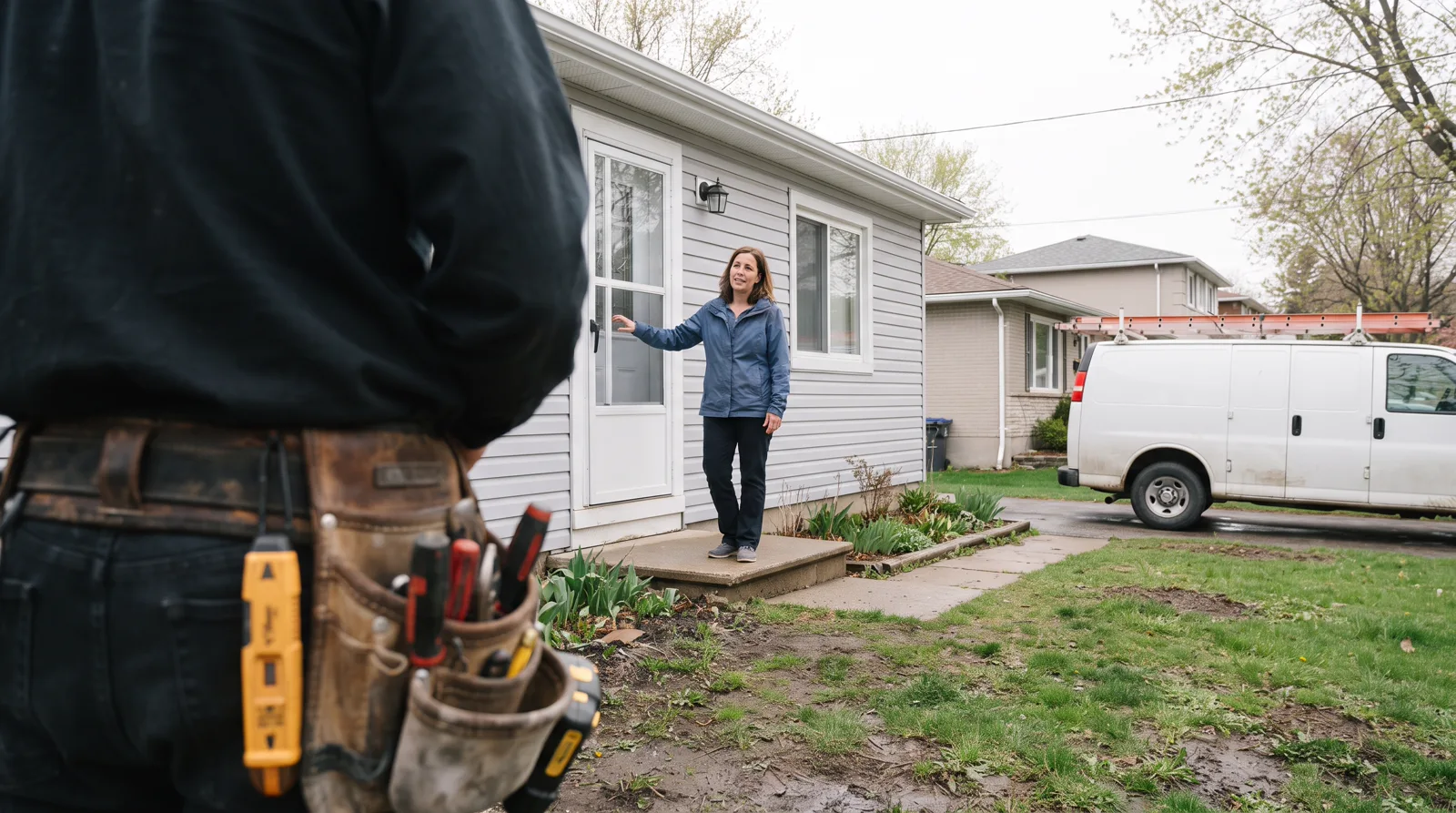
Electrical Panel Upgrade Spruce Grove: More Capacity, Safer Home.
Replace outdated 60A or 100A panels with 200A service. Certified electricians handle permits, inspections and code compliance so you can add that heat pump, garage heater or EV charger without worry.
Panel Upgrade Services Across the Tri-Region
From 60A Federal panels to 200A smart-ready installations, local pros handle the full scope: capacity assessment, utility coordination, permit submission, panel swap, final inspection and label documentation.
100A to 200A Panel Upgrade
Complete service upgrade including new 200A main breaker panel, weather head, meter base (if required), grounding upgrades and breaker relocation. Includes permit, two inspections and utility coordination. Most common upgrade for homes adding central air, EV chargers or basement suites.
60A to 100A Legacy Panel Replacement
Older Spruce Grove homes with 60A Federal or Challenger panels need full service entrance upgrades. Local pros replace the service drop cable, meter base, panel and all outdated breakers to meet current Alberta Safety Codes Act standards. Required for insurance renewals on many pre-1980 homes.
Sub-Panel Installation
Add a 100A or 60A sub-panel in your garage, shop or basement to support new circuits without overcrowding your main panel. Includes feeder cable run, panel mount, breaker installation and labeling. Popular for detached garages with heaters or workshops with 240V tools.
Panel Capacity Assessment & Load Calculation
Certified load calculation to determine if your existing panel can support planned additions like heat pumps, hot tubs or vehicle chargers. Written report meets Alberta Building Code requirements for permit applications. Credit applied if you proceed with upgrade work within 60 days.
Emergency Panel Replacement (Burnt or Damaged)
Priority response for panels with burnt bus bars, melted breakers or fire damage. Includes temporary power setup, expedited permit request, full panel and service entrance replacement, and safety inspection. Emergency requests prioritized for Spruce Grove, Stony Plain and Parkland County.
EV-Ready Panel Upgrades
Upgrade to 200A service with dedicated 50A or 60A breaker space for Level 2 vehicle charging. Includes conduit stub and labeling for future charger installation. We coordinate with EPCOR or ATCO for any meter or transformer upgrades required for higher draw.
Why Spruce Grove and Parkland County Panel Upgrades Are Different
❄️ Freeze-Thaw Service Entrance Stress
Spruce Grove's winter freeze and chinook thaw cycles shift service masts and meter bases, loosening connections over time. We inspect and re-secure all exterior components during upgrades, replace rusted weather heads and verify grounding electrode conductors are intact after decades of soil movement.
🏘️ Older Neighbourhood Panel Types
Many Spruce Grove homes built in the 1970s and 1980s have Federal Pioneer, Challenger or Zinsco panels flagged by insurers. We know which models require full replacement versus breaker swaps, and we keep documentation photos for your insurance broker showing compliant modern equipment.
📋 Parkland County and City of Spruce Grove Permit Differences
City of Spruce Grove uses in-house electrical inspectors with 3 to 5 day turnaround. Parkland County contracts Alberta Safety Codes Officers with 5 to 7 day scheduling windows. We submit permits to the correct authority, coordinate both rough-in and final inspections, and provide you the signed-off permit card for your records.
🔌 EPCOR and ATCO Service Coordination
Spruce Grove is EPCOR territory; Stony Plain, Acheson and rural Parkland County are ATCO. Each utility has different disconnect procedures, meter base ownership rules and reconnection timelines. Local pros handle the utility liaison so your power is off for the shortest possible window, typically 2 to 4 hours on upgrade day.
What it costs here
Everything Spruce Grove Homeowners Need to Know About Panel Upgrades
Capacity planning, permit rules, inspection requirements, insurance implications and what to expect on upgrade day.
How an Electrical Panel Upgrade Actually Works in Spruce Grove Homes
An electrical panel upgrade replaces your existing breaker box with a modern unit that can handle higher amperage and more circuits. Most older homes in Spruce Grove, Stony Plain and Parkland County were built with 100 amp panels containing 12 to 20 circuit breakers. Today's homes typically need 200 amp service to support electric vehicle chargers, heat pumps, modern kitchen appliances, home offices and updated HVAC systems. The upgrade involves installing a completely new panel enclosure, replacing the main service cable from the meter base (if undersized), updating grounding and bonding systems to current Alberta Electrical Code standards, and redistributing your home's circuits into the new panel with proper labeling and organization.
The physical work starts outside your home at the weather head and meter base. A licensed electrical contractor coordinates with FortisAlberta (the distribution utility serving this region) to disconnect power at the meter. The electrician then installs new service entrance cable rated for the higher amperage, typically 2/0 or 3/0 aluminum conductor. Inside, the old panel is completely removed after photographing the existing circuit layout. The new panel mounts in the same general location (moving it significantly requires additional permit considerations and wiring extensions). All existing branch circuits get reconnected to appropriately sized breakers in the new panel, and any outdated wiring methods like ungrounded two-wire circuits or aluminum branch wiring get flagged for remediation.
The entire process requires an electrical permit from your local authority (Spruce Grove, Stony Plain, or Parkland County), and the work must pass inspection before FortisAlberta reconnects permanent power. Licensed Master Electricians in Alberta carry liability insurance and workers' compensation coverage, which matters because this work involves direct connection to utility infrastructure. Most residential panel upgrades in this area take one to two full days when no complications arise. However, discovering knob and tube wiring, asbestos insulation around old cables, or structural issues where the panel mounts can extend timelines. The final step involves the electrical inspector verifying proper bonding, correct breaker sizing, adequate clearances and code-compliant installation before issuing approval and notifying the utility to restore full service.
Why Alberta Climate and Building Practices Make Panel Upgrades Essential Here
Spruce Grove and surrounding areas experience temperature extremes that older electrical systems were never designed to handle. Winter temperatures regularly hit minus 30 Celsius or colder, driving homeowners to add basement heating, heated garages, block heater circuits and supplementary electric heat. Many homes built in the 1970s and 1980s came with minimal electric heating provisions because natural gas was cheap and abundant. Today, those same homes need substantially more electrical capacity as owners add heated driveways, snow melt systems for walkways, or backup electric heating when gas furnaces fail during polar vortex events. The cumulative electrical load from cold-weather survival equipment alone can push a 100 amp panel beyond safe operating limits.
Alberta's boom and bust construction cycles also created specific electrical challenges in Parkland County developments. Homes built during rapid expansion periods sometimes received minimal electrical infrastructure to control costs. Panels were sized for immediate needs rather than future growth, and builders often skipped circuits for future additions or garages. The Acheson industrial area's growth has brought more tradespeople and equipment operators into nearby residential areas, and these homeowners frequently need upgraded panels to support welding equipment, vehicle lifts, or home workshops. Additionally, the prevalence of acreage properties means many homes sit on larger lots with detached shops, barns or secondary structures that demand substantial electrical feeds from the main service.
Insurance requirements have tightened significantly across Alberta following major hail events and the 2016 Fort McMurray wildfire. Insurance companies now scrutinize electrical systems during underwriting, and homes with Federal Pacific, Zinsco, or other recalled panel brands may face coverage restrictions or higher premiums. Panels with rust, scorching, or modified breakers (doubled up circuits, wrong amp ratings) trigger red flags during home inspections. Many homeowners discover their panel needs upgrading when refinancing or selling, because mortgage lenders require electrical systems to meet current safety standards. This is especially common in Stony Plain's older neighborhoods where homes from the 1960s still have original electrical infrastructure that no longer meets insurer expectations or buyer demands.
The Real Warning Signs That Your Spruce Grove Home Needs a Panel Upgrade
Frequent breaker trips indicate your panel lacks capacity for your household's electrical demand. If you cannot run the microwave and toaster simultaneously without tripping a breaker, or your vacuum cleaner consistently trips the circuit, your panel is undersized or improperly configured. However, nuisance tripping can also signal worn breakers, loose connections, or actual ground faults, so professional diagnosis matters. More concerning is when breakers trip and feel hot to the touch, or when you smell burning plastic near the panel. These conditions indicate dangerous overheating that can ignite surrounding materials. Any scorching, melting or discoloration on breakers or the panel interior demands immediate professional attention and usually means replacement rather than repair is necessary.
Physical signs at the panel itself tell you when replacement is overdue. Rust or corrosion inside the panel box indicates moisture intrusion, which compromises safety and often results from inadequate sealing or condensation caused by temperature differentials (common in unheated Alberta garages or cold rooms). Panels that buzz, hum or crackle indicate loose connections or failing breakers. You should never hear your electrical panel. If the main breaker or bus bars show pitting, discoloration or signs of arcing, the panel has experienced dangerous electrical events and needs replacement immediately. Many Spruce Grove homes have panels mounted in unfinished basements where homeowners notice these warning signs during laundry or storage tasks, but panels hidden behind finished walls in newer homes may deteriorate unnoticed until failure occurs.
Your renovation or appliance plans may force an upgrade even when the existing panel functions adequately. Adding a hot tub (typically 40 to 60 amps), level 2 EV charger (40 to 50 amps), heat pump system (30 to 60 amps), or kitchen renovation with induction cooktop and double ovens can exceed available capacity. When calculating loads, electricians must account for the panel's main breaker rating and the total amperage of all branch circuits. Alberta code requires specific calculations showing adequate capacity with safety margins. If your current panel cannot accommodate new circuits without exceeding safe capacity, or if every breaker space is occupied and you need additional circuits, upgrading becomes the only code-compliant solution. Home inspections often reveal double-tapped breakers (two wires under one breaker terminal), which is a code violation indicating insufficient circuit spaces and need for a larger panel.
- Dimming or flickering lights when major appliances start (furnace, air conditioner, well pump)
- Burning smell near the panel or warm breakers even without high loads
- Visible rust, corrosion, or moisture inside the panel enclosure
- Breakers that will not reset or require multiple attempts to stay on
- Any breakers with tape or modifications, especially Federal Pacific Stab-Lok panels
- Panel brand with known safety recalls: Federal Pacific, Zinsco, Challenger, or ITE Pushmatic
- Insufficient breaker spaces for planned renovations, EV charger, or heat pump installation
- Panel installed before 1990 that has never been inspected or upgraded
- Aluminum wiring throughout home requiring specialized breakers and panel compatibility
The Complete Panel Upgrade Process From Permit to Final Inspection
Initial Assessment and Permit Application
The process begins with a licensed electrician visiting your home to assess the existing service, panel location, grounding system and overall electrical infrastructure. They measure voltage, check service cable size, inspect the meter base condition, and document your current panel's make, model and capacity. The electrician calculates your home's actual load requirements based on square footage, heating systems, major appliances and any planned additions. This load calculation determines whether you need 100, 125, 150 or 200 amp service. For most modern Spruce Grove homes with attached garages and standard amenities, 200 amp service is the practical choice even if calculations show 150 amps would suffice, because the cost difference is minimal and future capacity matters.
After determining the appropriate service size, the electrician prepares permit documents including the load calculation, panel specifications, site plan and scope of work. Spruce Grove, Stony Plain and Parkland County each have their own permit processes with different fees (typically $150 to $350 for residential panel upgrades) and submission requirements. The permit application goes to the local Safety Codes Officer who reviews it for code compliance. Approval usually takes three to ten business days depending on the jurisdiction and time of year. During this waiting period, the electrician orders the new panel, breakers and necessary materials. Quality contractors include permit costs in their quotes and handle all paperwork, so homeowners never interact with the permitting authority directly unless issues arise.
Coordination With FortisAlberta and Service Disconnection
Before any work begins, your electrician contacts FortisAlberta to schedule a service disconnect. The utility needs at least three business days' notice, though during summer construction season this can extend to two weeks in busy areas like Acheson or newer Spruce Grove developments. FortisAlberta dispatches a technician who pulls the meter and installs a temporary lock, completely de-energizing your home. This scheduled outage typically occurs early on the installation day. Homeowners should plan for eight to twelve hours without power, which means emptying the refrigerator of perishables, charging devices, and making arrangements if anyone works from home or has medical equipment requiring electricity. In winter, this also means your furnace will not operate, though homes retain heat for many hours when outside temperatures are moderate.
Some situations require more extensive utility work. If your existing service entrance is undersized (common in homes built before 1975), FortisAlberta may need to upgrade the connection from the transformer to your meter base. This involves replacing the overhead service drop or underground service lateral, work that FortisAlberta performs at their cost but on their schedule. These utility-side upgrades can delay your panel installation by weeks during peak periods. Electricians experienced in Parkland County work know to inspect the utility connection early and flag potential issues so homeowners understand realistic timelines. Once utility work is complete and your electrician has finished the panel installation, FortisAlberta returns for reconnection only after the inspection is approved.
Panel Installation Day and Circuit Migration
Installation day starts with the electrician staging materials and setting up work lighting (battery powered, since mains power is disconnected). They remove the old panel's cover and photograph every circuit connection, documenting what each breaker controls. This mapping is critical because many older homes have poor labeling or circuits that were modified over the years. The electrician disconnects all branch circuits from the old panel, carefully marking each wire, then removes the panel from the wall. Wall repairs may be needed if the new panel footprint differs from the old one, or if the wall was damaged during removal. The mounting surface must be solid and code-compliant: panels cannot mount to drywall alone and require backing to studs or concrete.
The new panel gets mounted with proper clearances: 36 inches of working space in front, adequate headroom, and positioning that meets code requirements for damp locations if in a garage or unfinished basement. The electrician bonds the panel to the grounding electrode system, which in Alberta typically means connection to the metal water service pipe, ground rods, or a Ufer (concrete-encased) ground if present. They install the main breaker, connect the service entrance cables, and begin installing branch circuit breakers. Each circuit gets tested for proper polarity and grounding before final connection. Neutral and ground bars get properly separated per code (in sub-panels) or bonded (in main service panels). AFCI and GFCI breakers get installed per current code requirements for bedrooms, kitchens, bathrooms and other specified locations.
Circuit organization in the new panel follows both code requirements and practical logic. Heavy loads (electric range, dryer, furnace) get dedicated circuits with appropriately sized breakers. Kitchen counter circuits receive GFCI protection. Bedrooms require AFCI breakers. The electrician creates a detailed circuit directory with actual room and device descriptions rather than vague labels like 'spare' or 'basement'. Any circuits found with unsafe conditions (undersized wire for the breaker rating, damaged insulation, improper splices) get flagged for correction either immediately or on a deficiency list. Quality electricians photograph the completed interior before installing the panel cover, providing homeowners with documentation of professional work and proper organization.
Inspection Approval and Service Reconnection
With installation complete, the electrician contacts the local inspection authority to schedule the final inspection. Spruce Grove, Stony Plain and Parkland County each employ Safety Codes Officers who inspect electrical work for code compliance. The inspector verifies proper panel mounting, correct breaker sizing, adequate wire support and protection, proper bonding and grounding, correct circuit identification, and appropriate use of AFCI and GFCI protection. They check clearances, verify no double-tapped breakers exist, and confirm the main service disconnect functions properly. Inspectors also look beyond the panel itself, checking the meter base condition, service entrance cable security, and weather head installation if exterior work occurred.
Most professionally installed panels pass inspection on the first visit, but deficiencies can occur. Common issues include missing anti-oxidant compound on aluminum connections, inadequate wire support within the panel, improper neutral and ground separation, or missing required labels. When deficiencies are noted, the electrician corrects them and requests a re-inspection. Only after approval does the inspector notify FortisAlberta that service can be reconnected. The utility typically reconnects within one to three business days of approval notification. Some contractors maintain priority relationships with FortisAlberta and can expedite reconnection, particularly important during cold weather when extended outages create frozen pipe risks.
After reconnection, the electrician returns for final verification. They test voltage at the panel to ensure proper utility connection (240 volts split-phase), verify all circuits energize correctly, and walk through the home with the homeowner to confirm every device and appliance functions properly. They provide the homeowner with copies of the permit, approved inspection documents, circuit directory, and warranty information for the panel and components. Professional contractors include this final verification in their scope of work rather than considering the job complete when the inspector approves. This final step catches any issues while the electrician is still mobilized on site, avoiding return visits for minor problems like mislabeled circuits or reversed polarity that only become apparent when homeowners resume normal electrical usage patterns.
What an Electrical Panel Upgrade Actually Costs in Spruce Grove, Stony Plain and Parkland County
A straightforward 100 amp to 200 amp panel upgrade in Spruce Grove typically runs between $2,200 and $4,800, including the permit, new breaker panel, service disconnect, materials and labour. That price assumes your existing meter base and service entrance cables are in acceptable condition and your utility connection point stays in the same location. If your main service line from the pole or underground transformer needs replacement, or if EPCOR requires a new meter base, add another $1,800 to $5,500 depending on distance and whether trenching or overhead work is involved. Parkland County acreages sometimes face higher costs because the service run from the transformer can be significantly longer, especially on properties where the main panel sits far from the road.
Upgrading to a 400 amp service for a large shop, heated garage or whole home backup generator setup costs between $5,200 and $9,800 in the Tri-Region. This jump reflects the heavier gauge aluminum service entrance cable, larger disconnect, more robust grounding system and the engineering stamp some inspectors request for services above 200 amps. Properties in older subdivisions near downtown Stony Plain or the mature areas of Spruce Grove often need additional work to bring the grounding electrode system up to current Alberta code, which can add $600 to $1,400 for new ground rods, bonding to the water service and ufer ground connections to foundation rebar if the original builder skipped that step decades ago.
The single biggest cost driver is the condition and location of your existing service. If your main panel sits in a finished basement with drywall covering the path to the meter, expect drywall removal and patching to add $400 to $900 to the total. Homes built before 1975 in Parkland County sometimes have service masts that no longer meet current wind loading standards for Alberta, and replacing a weatherhead and mast adds $800 to $1,600. Aluminum branch circuit wiring from the 1970s does not necessarily require replacement during a panel upgrade, but many electricians and insurance companies strongly recommend at least upgrading all connections with anti-oxidant paste and proper torque, which adds labour time. If your insurance company flags aluminum wiring as a condition of coverage, a full copper rewire can reach $8,000 to $18,000 for a typical bungalow, a separate project from the panel itself but often done at the same time to avoid multiple permit pulls and inspection fees.
Breaking Down the Line Items You Will See on Quotes
Most electricians in Spruce Grove itemize quotes to show the permit and inspection fee, which runs $180 to $320 depending on your municipality and whether your project includes only the panel or also subpanels and garage feeds. The panel enclosure itself ranges from $250 for a basic 200 amp outdoor rated box to $650 for a combination meter-main unit with built-in disconnect. Breakers are not cheap: a quality 20 amp AFCI breaker costs $75 to $95, and a 40 amp breaker for a range or EV charger runs $45 to $70. A fully populated 40 circuit panel with modern arc fault and ground fault protection can carry $1,200 to $2,200 in breaker costs alone, which surprises homeowners who remember when breakers were $8 each.
Labour is typically billed as a day rate or project rate rather than strict hourly, because experienced crews know exactly how long a standard swap takes. Expect six to ten hours of on-site work for a basic upgrade, translating to $1,200 to $2,400 in labour at prevailing journeyman rates. If the electrician needs to coordinate a temporary power disconnect with EPCOR, that service call costs $150 to $240 and must be scheduled days in advance. Remote Parkland County properties sometimes incur travel charges of $80 to $150 if you are more than 30 kilometres outside Spruce Grove, though most local contractors include reasonable travel in their base pricing. Any structural modifications like cutting and patching stucco, siding or brick to access the service entrance add materials and time, and some contractors subcontract that work to a separate trade, adding markup and coordination delays.
Comparing Panel Types, Amperage Options and Upgrade Approaches for Alberta Homes
The standard choice for Spruce Grove homes is a 200 amp main breaker panel with 40 circuit spaces, which provides enough capacity for modern heating, air conditioning, EV charging and typical appliances without future bottlenecks. This configuration handles a heat pump, electric range, two sub-panels (one for a garage, one for a basement suite) and leaves room for adding solar inverter circuits or a battery backup system down the road. Some contractors still quote 100 amp services for smaller bungalows or cabins, but that decision often backfires when you want to add air conditioning or a Level 2 EV charger two years later and discover you need a second expensive upgrade. The incremental cost to go from 100 amp to 200 amp at the time of the original install is only $400 to $700, while doing it as a separate project later costs the full $2,500 to $4,200 all over again.
Main lug panels versus main breaker panels is a common decision point that confuses homeowners. A main breaker panel includes a large shutoff breaker inside the enclosure, giving you a convenient way to kill power to the entire panel without going outside to the meter disconnect. A main lug panel relies on an external disconnect, either at the meter base or on the exterior wall, and tends to cost $120 to $180 less. Most electricians in Stony Plain prefer main breaker panels for indoor installations because it simplifies maintenance and troubleshooting, but if your utility requires a combination meter-main unit on the exterior, you will end up with a main lug panel indoors since the exterior disconnect serves the same function. Neither choice affects safety or code compliance, it is purely about convenience and how your specific service entrance is configured.
Sub-panel strategy matters during an upgrade, especially on acreages or properties with detached garages and shops. Running a 100 amp sub-panel feed to a heated shop 40 metres from your house costs $1,800 to $3,200 depending on whether you trench underground or run overhead on a catenary cable. Many Parkland County homeowners choose to oversize these feeder runs during the main panel upgrade, installing 1/0 or 2/0 aluminum even if the current load only justifies a 60 amp sub-panel, because digging a second trench or adding a second overhead run later is far more expensive than pulling heavier wire the first time. If your property has an older 60 amp fused sub-panel in the garage, upgrading that to a modern breaker sub-panel at the same time as your main house panel saves the cost of a second permit and inspection, typically adding $800 to $1,400 to the total project rather than $1,600 to $2,400 if done separately six months later.
Common Mistakes and Contractor Traps That Cost Spruce Grove Homeowners Thousands
The biggest mistake is hiring an unlicensed handyman or a journeyman electrician who is not a registered Alberta contractor to pull the permit under their own ticket. Alberta requires the person pulling the electrical permit to carry liability insurance and be the actual contractor supervising the work, not just a ticket holder doing side jobs. When something goes wrong, your insurance company will ask for proof that a licensed electrical contractor performed the work, and a permit pulled by someone who is not operating a legal contracting business leaves you personally liable. Worse, if the work fails inspection and the ticket holder ghosts you, there is no business entity to hold accountable and no way to compel them to return and fix deficiencies. Legitimate electrical contractors in Spruce Grove carry $2,000,000 in liability coverage and have a municipal business license, which you can verify before signing any agreement.
Another expensive trap is accepting a quote that does not include the permit, inspection or utility coordination. Some contractors lowball the visible line items and then surprise you with $450 in add-on fees once the project starts. Parkland County and Spruce Grove both require electrical permits for panel upgrades, and the contractor is responsible for booking the inspection and ensuring the work passes. If your quote says 'permit by owner' or 'inspection fees extra,' that contractor is either inexperienced or trying to dodge responsibility. Similarly, coordinating the temporary power disconnect with EPCOR is part of the job, not an optional service you handle yourself. A complete quote includes every cost from start to final inspection sign-off, with a clear breakdown so you can compare apples to apples across multiple bids.
Failing to address underlying issues before closing the walls is the third common regret. If your home has aluminum wiring, knob and tube remnants in the attic, ungrounded circuits or backstabbed receptacles, the panel upgrade is the perfect opportunity to fix those problems while the electrician is already on site and the permit is open. Many Stony Plain homeowners upgrade the panel, pass inspection, then discover six months later that their insurance company still will not provide full coverage because of the aluminum wiring feeding the bedrooms. Spending an extra $1,200 to $2,400 during the panel project to address those circuits costs far less than opening a new permit and paying another service call later. A good contractor walks the house during the quote and identifies these issues upfront, giving you the choice to bundle the work or accept the limitations of a panel-only upgrade.
- Never accept a quote without a specific list of what is included and what is extra, especially permit and inspection fees.
- Verify the contractor holds a valid Alberta electrical license, liability insurance and municipal business license before any deposit.
- Ask whether the quote includes coordination with EPCOR for temporary disconnect and reconnection.
- Request confirmation that the contractor will handle all failed inspection corrections at no additional cost.
- Clarify who is responsible for drywall patching, exterior siding repair or any structural modifications the upgrade requires.
How to Hire the Right Electrical Contractor in Spruce Grove, Stony Plain and Parkland County
Start by collecting at least three written quotes from licensed electrical contractors, not verbal estimates or text message approximations. A professional quote includes the scope of work described in detail, the amperage rating of the new service, the make and model of the panel (or at minimum the specifications like 'CSA approved 200A 40 circuit outdoor rated'), the permit and inspection process, a timeline with start and completion dates, payment terms and a clear statement of what warranties apply to labour and materials. Verbal quotes leave too much room for misunderstanding, and many Parkland County disputes arise because the homeowner expected one scope and the contractor delivered another, with no written record to settle the disagreement. Expect quotes to take three to seven business days, since the contractor often needs to visit your property, measure the service entrance and verify utility connection details before pricing accurately.
Check references with recent clients who had similar upgrades, ideally within the past year in the Tri-Region. Ask those homeowners whether the contractor showed up on the scheduled days, cleaned up thoroughly, passed inspection on the first attempt and handled any surprises without inflating the price. Electrical panel upgrades occasionally uncover hidden issues like corroded service entrance cables or a rotted meter mast, and a good contractor explains the problem, provides options and adjusts the quote transparently rather than holding the project hostage. Also verify that the contractor books the permit in their own name and provides you with the permit number before work begins, so you can independently confirm with your municipality that everything is legitimate and you will receive the final inspection certificate once the work passes.
Price should be a factor but not the only factor. The lowest quote in Spruce Grove is often missing something, whether it is proper AFCI/GFCI protection on required circuits, quality breakers from a reputable manufacturer like Eaton or Siemens, or adequate time allocated for a clean installation with proper wire management. The highest quote is not automatically the best either, sometimes it just reflects overhead or markup strategy rather than superior quality. Look for a quote in the middle of the range that includes everything, from a contractor who communicates clearly and shows genuine interest in understanding your specific property and future electrical plans. A contractor who asks about your five year intentions for the home, potential EV purchases, solar interest or future renovations is thinking beyond the immediate transaction and setting you up for long term success rather than just collecting a quick cheque.
How Tri-Region Services Helps
We route your electrical panel upgrade request to one carefully vetted, fully insured local electrician who serves Spruce Grove, Stony Plain, Parkland County and Acheson. You receive a free written quote that breaks down the full scope, including permits, materials, labour and any site-specific requirements your property presents. This is not a bidding war or a lead sold to five contractors who will chase you with phone calls. You get one qualified professional, a transparent price and the confidence that the contractor has been pre-asked about proper licensing, insurance and a track record of quality work in the Tri-Region. If the quote works for your budget and timeline, you move forward. If not, there is no pressure and no obligation. We simply connect you with the right resource and let the work speak for itself.
Why Homeowners Trust Us With High-Voltage Work
Electrical panel upgrades involve utility disconnects, live 240V service wires and municipal inspections. Contractors state their credentials and insurance when they sign up, and we show that on their listing, so you know who is protecting your family and your investment.
Alberta Master Electrician Certification
Every panel upgrade is supervised by a Red Seal journeyman or master electrician registered with the Alberta Safety Codes Authority.
Every Permit Pulled and Closed
You receive copies of the submitted permit, rough-in inspection report and final signed permit card for your property file and insurance broker.
Insurance on file
Liability insurance covers utility service work, and every tech is WCB-enrolled, so you have zero liability if an injury occurs on site.
Load Calculation Documentation
Before any upgrade we provide a written load analysis showing existing draw, planned additions and the recommended panel size that meets code with room to grow.
Permanent Panel Labeling and Circuit Directory
Every breaker is labeled in plain language, and you receive a laminated circuit directory that stays inside the panel door for future service calls or inspections.
5-Year Workmanship Warranty
If a connection fails, a breaker malfunctions or any install defect appears within five years, we return and correct it at no charge, parts and labour included.
This page is not tied to a contractor's brand. Leads route straight to your one local partner. Verified reviews can appear here once that partner has them (never fabricated).
Serving the whole Tri-Region
8 Questions Spruce Grove Homeowners Ask About Panel Upgrades
Do I need a permit to upgrade my electrical panel in Spruce Grove or Parkland County?+
How long does a typical 100A to 200A panel upgrade take in Spruce Grove?+
Will my homeowner insurance cover an electrical panel upgrade?+
Can I add an EV charger to my existing 100A panel, or do I need to upgrade to 200A?+
What is the difference between the main panel and a sub-panel, and when do I need each?+
How do I know if my panel is full and cannot handle more circuits?+
Why do some Spruce Grove homes still have 60A or 100A panels, and should I upgrade?+
What happens if the electrical inspector fails my panel upgrade?+
Get your free quote
Tell us what you need and a local pro will get right back to you.
- ✓ Sent straight to a local business
- ✓ You choose who you hire
- ✓ Free, with no obligation