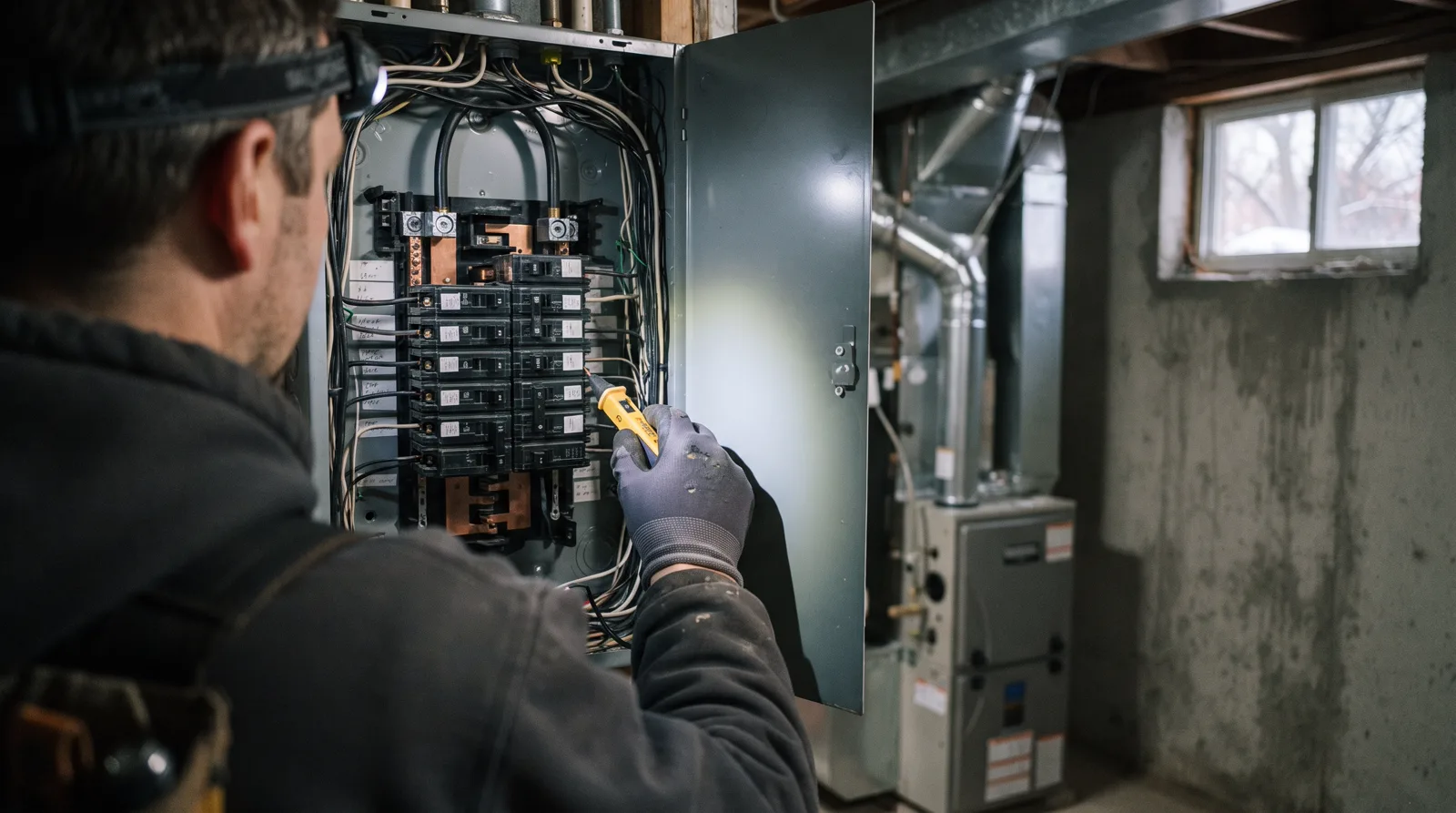
Emergency Electrician When You Need Power Restored Fast.
Licensed electricians take urgent electrical calls across Spruce Grove, Stony Plain, Parkland County and Acheson. Safe, insured service when every minute counts.
Emergency Electrical Services We Dispatch
From panel failures to storm damage, local pros handle urgent electrical hazards across the Tri-Region.
Complete Power Outage & Panel Failure
When your entire home goes dark, local pros diagnose main panel issues, tripped breakers, meter base failures, or utility connection problems. Includes emergency panel changeouts if your breaker box has failed, arc faults, or fire damage. We coordinate with Fortis Alberta when the problem is at the pole or transformer.
Burning Smell or Smoke from Outlets
Burning plastic, scorched drywall, or smoke from outlets or switches means wiring is overheating. We isolate the circuit, identify the failure point (loose connection, backstabbed wire, overloaded circuit), replace damaged boxes and wiring, and restore power safely. This is not something to wait on.
Sparking Outlets, Switches or Fixtures
Visible arcing, popping sounds, or blue flashes indicate dangerous faults. The electrician shuts down the affected circuit, replaces faulty devices, checks for aluminum wiring issues common in older Spruce Grove homes, and verifies grounding. Arc faults can ignite wall cavities, so same-day service is critical.
Storm, Hail & Chinook Wind Damage
Hail and wind storms damage service masts, rip weatherheads loose, or knock branches into overhead lines. Local pros repair or replace damaged mast assemblies, reattach service drops (coordinating with Fortis), and inspect for hidden damage inside panels. Common after June hail events and January chinook windstorms.
Tripped Breakers That Won't Reset
When a breaker trips repeatedly or refuses to stay on, there is a short circuit, ground fault, or the breaker itself has failed. We test the circuit under load, use thermal imaging to find hot spots, replace the breaker if needed, and confirm the fault is cleared before restoring power.
Electrical Shock or Tingling from Appliances
If you feel a shock or tingle touching a fridge, stove, washer, or metal sink, you have a grounding fault or energized chassis. We test bonding, replace faulty receptacles, verify ground rod connections, and inspect for bootleg grounds. This is a life safety issue requiring immediate attention.
Why Alberta Electrical Emergencies Are Different
❄️ Freeze-Thaw Cycles Stress Service Masts
Spruce Grove winters swing from minus 30°C to sudden chinook thaws. These cycles cause service masts to shift, weatherhead seals to crack, and meter base connections to loosen, creating intermittent power loss or arcing at the point of attachment. We inspect and re-secure mast hardware as part of every emergency call.
🌨️ Snow Load and Ice on Overhead Lines
Heavy wet snow and ice accumulation on overhead service drops can pull the weatherhead loose or snap the mast entirely. We see this every January and March when wet snow sits on lines for days. Emergency repairs include temporary mast bracing and permanent upgrades to heavier gauge conduit.
⛈️ June Hail Storms Damage Service Hardware
Parkland County and Acheson see intense hailstorms that dent weatherheads, crack meter bases, and knock service drops loose. Local pros respond within hours after major hail events, prioritizing homes with exposed sparking or hanging wires. Insurance claims require photos and detailed estimates before any work begins.
🏚️ Older Homes with Aluminum Wiring and Undersized Panels
Many Spruce Grove and Stony Plain homes built in the 1960s and 1970s have aluminum branch wiring and 100-amp panels. Aluminum connections oxidize and overheat, causing midnight breaker trips and outlet failures. Emergency calls often reveal the need for panel upgrades and copper pigtails at every connection point.
What it costs here
What to Expect When You Call an Emergency Electrician in Spruce Grove
How response works, what gets fixed immediately, and what requires a follow-up permit.
What Emergency Electrical Service Actually Involves in Spruce Grove
Emergency electrical service means a licensed electrician responds to your property within one to three hours, diagnoses the immediate electrical hazard or failure, and either resolves the problem or makes the system safe until permanent repairs can happen. This is not routine maintenance or planned upgrades. You call for emergency service when something in your electrical system has failed catastrophically, poses an imminent fire risk, or has left you without power in conditions where safety or property damage is at stake. The electrician arrives with diagnostic tools, replacement parts for common failures, and the authority to open panels, test circuits, and restore power where it is safe to do so.
In Spruce Grove, Stony Plain, Parkland County and Acheson, emergency electrical calls typically involve power outages confined to part of your home while the neighbourhood still has electricity, sparking or smoking outlets, breakers that trip repeatedly and will not reset, burning smells from outlets or panels, exposed wiring damaged by rodents or renovation mishaps, and total loss of power after a storm when the utility company confirms the grid is live. The electrician performs live voltage testing, thermal imaging to detect hot spots behind walls, continuity checks on circuits, and inspection of your main panel, sub-panels, meter base, and any visibly damaged components. If the problem is a failed breaker, damaged receptacle, or severed cable, repairs happen immediately. If the main service panel is compromised or the utility connection has failed, the electrician coordinates with the power company or schedules follow-up work and ensures the home is safe in the interim.
Emergency service pricing in the Spruce Grove area generally includes a call-out fee of $150 to $300, which covers the first hour and travel, plus hourly labour at $120 to $180 and parts at cost. A simple fix like replacing a failed GFCI outlet or resetting a tripped main breaker might total $200 to $400. More involved repairs, such as replacing a burnt breaker, rewiring a damaged circuit, or temporary panel work, can run $500 to $1,500 depending on materials and time. If the electrician determines the issue requires utility involvement, a permit, or extensive replacement, they provide a written quote for follow-up work and make the system safe, often by isolating and tagging damaged circuits. The emergency visit itself ensures you are not left in a dangerous situation, even if full repairs take another day.
Alberta Climate and Local Conditions That Drive Emergency Electrical Calls
Spruce Grove and surrounding areas experience temperature swings from minus 35 Celsius in January to plus 30 Celsius in July, and these extremes stress electrical systems in ways that warmer regions never encounter. Freeze-thaw cycles cause ground movement that can shift service masts, pull meter bases away from walls, and crack conduit where the service entrance enters your home. When the ground heaves in spring or after a chinook wind melts snow rapidly, rigid metal conduit can snap, and weatherhead connections can loosen, allowing moisture into the service entrance. This leads to arcing, corrosion, and intermittent power loss. Older homes built in the 1970s and 1980s often have aluminum wiring or undersized 100-amp services, and cold weather increases resistance in these materials, causing connections to heat up and fail under normal loads.
Heavy spring snow loads and summer hailstorms damage overhead service drops and weatherheads. A severe hailstorm can crack the weatherhead cap, letting water into the service entrance conduit. When that water freezes, it expands and damages internal connections, leading to power loss weeks or months later during a cold snap when you are running space heaters and the system is under load. Wind events during chinooks can blow tree branches into power lines, causing surges that trip breakers or damage sensitive electronics and appliances. Parkland County properties on acreages often have longer service runs and more exposure to wildlife: rodents chew through wiring in detached garages, and birds nest in meter bases, creating short circuits. These rural factors make emergency calls more common and sometimes more complex than in densely serviced urban areas.
The local utility infrastructure also plays a role. Spruce Grove and Stony Plain are served by EPCOR and FortisAlberta depending on your exact location, and during major outages both utilities can take hours to restore grid power to rural routes and newer subdivisions. Many homeowners assume a whole-house outage is always a utility issue, but if your neighbours have power and you do not, the fault is on your side of the meter, meaning it is your responsibility and requires an emergency electrician, not a utility crew. Alberta's electrical code requires GFCI and AFCI protection in most living spaces in homes built or renovated after 2015, and these sensitive breakers can trip from moisture, dust, or minor ground faults that older systems tolerated. When a new AFCI breaker trips repeatedly in cold weather, it often indicates a real problem with old wiring insulation that has become brittle, a situation that demands immediate professional assessment to prevent fire.
Clear Warning Signs You Need an Emergency Electrician Right Now
If you see visible sparks, smoke, or flames coming from any outlet, switch, light fixture, or panel, shut off the main breaker if you can reach it safely and call an emergency electrician immediately. Do not attempt to unplug devices or touch the affected component. Sparks indicate arcing, which generates intense heat and can ignite surrounding materials within minutes. A burning smell, especially a sharp plastic or fishy odour near outlets or the panel, means insulation is melting or connections are overheating. Even if you do not see smoke, the smell alone is enough reason to cut power and get professional help. These situations escalate quickly and are the leading cause of electrical fires in Canadian homes.
Repeated breaker trips are another urgent signal, particularly if the breaker will not stay reset or trips immediately when you flip it back on. This indicates a short circuit or ground fault on that circuit, meaning current is flowing where it should not, often through damaged insulation, pinched wires, or failed devices. If the main breaker trips and you lose all power, do not keep resetting it. A main breaker trip usually points to a serious overload, a fault in the main panel itself, or a problem with the service entrance. Continuing to reset a tripping breaker can overheat the panel, damage the breaker, and create a fire risk. Call an emergency electrician to diagnose the fault, identify the affected circuit, and make repairs before restoring power.
Partial power loss where some rooms or outlets work and others do not, especially if it happens suddenly without any storm or blown breaker, can indicate a lost neutral connection. This is a dangerous condition. In a lost neutral scenario, voltages become unbalanced and some circuits can see 240 volts instead of 120 volts, which will destroy electronics, damage appliances, and create a serious shock and fire hazard. You might notice lights flickering, some very dim and others very bright, or outlets that test at unusual voltages. If you experience this, turn off and unplug sensitive electronics and appliances, shut off the main breaker if safe to do so, and call an emergency electrician. Lost neutral conditions often originate at the meter base or service entrance and require immediate attention to prevent extensive equipment damage and fire.
Other urgent warning signs include a hot electrical panel, where the cover is warm or hot to the touch; buzzing, humming, or sizzling sounds from outlets, switches, or the panel; lights that dim significantly when appliances start; and any situation where you cannot safely turn power off or isolate a problem. If a vehicle has struck your meter base, a tree limb has damaged your service drop, or you have exposed wiring from a renovation or rodent damage, treat this as an emergency. In rural Parkland County and Acheson, if your well pump stops working and you have no other source of water, or if your heating system will not run due to an electrical fault in January, these are life-safety situations that justify an emergency call.
Step-by-Step Process: What Happens During an Emergency Electrical Call
The process begins with your phone call. When you contact an emergency electrician in Spruce Grove, be prepared to describe the symptoms clearly: what happened, when it started, what you see, hear, or smell, and whether you still have partial or total power. The dispatcher will ask if the situation involves visible fire, smoke, or sparks, and will advise you to leave the building and call 911 if there is active fire. They will also confirm whether the problem is isolated to your property or affects your whole street, because if the entire neighbourhood is dark, the issue is utility side and they cannot help until grid power is restored. Once the electrician is dispatched, you typically receive an estimated arrival time of one to three hours, depending on current call volume, weather, and your location. If you are in Acheson or a rural part of Parkland County, arrival may take longer than in central Spruce Grove.
While waiting, make your home safe. If you smell burning or see smoke, shut off the main breaker if you can do so without touching anything that feels hot or looks damaged. If you are unsure, leave the breaker alone and evacuate the area. Unplug appliances and electronics from affected outlets if safe. Move flammable materials away from the panel and any smoking or sparking components. If it is winter and you are losing heat, dress warmly and close off unused rooms to conserve warmth. If you have a backup heat source like a fireplace or wood stove, use it safely, ensuring carbon monoxide detectors are working. Do not run a portable generator indoors or in an attached garage, and if you use one outside, ensure it is properly grounded and connected via a transfer switch if powering home circuits. Never backfeed power into your panel by plugging a generator into an outlet, as this creates a lethal hazard for utility workers.
When the electrician arrives, they will ask you to describe what happened and show them the affected areas. They will inspect your main panel first, checking for signs of overheating, damage, corrosion, and proper breaker function. Using a multimeter and voltage tester, they measure voltage at the panel and throughout the home to identify where power is lost or abnormal. Thermal imaging cameras reveal hot spots that indicate loose connections, overloaded circuits, or failing breakers. If the problem is in the service entrance or meter base, they may need to coordinate with the utility to disconnect power safely before working. In many cases, the electrician will open the panel, inspect bus bars and breaker connections, test individual circuits, and trace the fault to a specific breaker, cable run, or device. This diagnostic phase usually takes 30 to 60 minutes.
Once the fault is identified, the electrician explains the problem, the immediate repair options, and any follow-up work that may be needed. If a breaker has failed, they replace it on the spot if they have the correct type in their truck. If a receptacle is burnt, they replace it. If wiring is damaged, they may isolate and disconnect that circuit temporarily, then provide a quote for rewiring. If the main panel is damaged or a major component has failed and replacement parts are not on hand, they make the system safe by isolating the damaged section, tagging it, and scheduling a return visit with materials and possibly a permit. Once repairs are complete, they test the system under load, verify proper voltage and function, confirm that breakers hold and do not trip, and ensure all affected areas have safe, stable power. They provide a detailed invoice showing labour, parts, diagnostics, and any recommendations for further work, and often leave written notes on tagged circuits or panels explaining what was done and what remains.
What Emergency Electrical Service Actually Costs in Spruce Grove, Stony Plain and Parkland County
Emergency electrical pricing in the Tri-Region reflects the realities of after-hours work, rural distances, and Alberta's extreme weather demands. A standard emergency call-out typically starts with a base trip charge ranging from $150 to $350, covering the electrician's immediate response, vehicle deployment, and diagnostic time. This fee applies whether you call at 2 a.m. on a Sunday or during a statutory holiday when most contractors charge premium rates. The trip charge gets you a licensed technician at your door, usually within 60 to 90 minutes in Spruce Grove or Stony Plain, though Parkland County acreages and Acheson industrial sites may see slightly longer response windows depending on road conditions and dispatcher workload.
Hourly emergency rates in the Tri-Region sit between $175 and $295 per hour, substantially higher than standard daytime service at $95 to $140 per hour. After-hours premiums kick in after 5 p.m. on weekdays, all day Saturday, and around the clock on Sundays and holidays. A sparking outlet repair that takes 45 minutes might cost $200 to $400 total including the trip fee, while a complete panel replacement performed at 3 a.m. because of a fire hazard can reach $2,800 to $4,500 when you factor emergency labour, materials, and the permit filed the next business day. Weather adds another variable: chinook winds that drop power lines or January cold snaps that freeze underground conduit can drive demand so high that some contractors implement surge pricing, adding 15 to 30 percent to their standard emergency rates.
Material costs remain relatively consistent whether the work happens at noon or midnight, but availability changes dramatically. A burned-out breaker replaced during business hours costs $35 to $90 for the part, but the same component sourced from an emergency supplier or pulled from a contractor's reserve stock at 11 p.m. might carry a 20 to 40 percent markup. Panel replacements require specific Square D, Siemens, or Eaton components that meet current Alberta Safety Codes Council standards, and emergency vendors stock only the most common configurations. If your 1970s Federal Pioneer panel fails on a holiday weekend, expect to pay $800 to $1,400 just for a modern 200-amp replacement panel, plus $1,200 to $2,400 in labour to swap everything over and restore power safely. Acreage properties in Parkland County face additional costs when emergency repairs require temporary generator hookups or coordination with Fortis Alberta to isolate specific circuits before work can proceed.
What Drives Emergency Pricing Higher in the Tri-Region
Distance and deployment logistics play a bigger role here than in dense urban centres. A contractor based in Spruce Grove responding to a Tomahawk acreage emergency travels 35 to 45 minutes each way, burning fuel and clock time before a single wire gets touched. Winter roads compound this: black ice on Highway 16A, drifting snow on Range Road 15, or unplowed private lanes mean electricians need 4x4 vehicles, recovery gear, and extra travel time factored into every quote. Contractors serving Acheson industrial clients keep dedicated emergency trucks stocked with commercial-grade components and specialty tools, but that overhead gets baked into call-out fees that start closer to $275 than $150.
Permit and inspection realities also influence emergency costs, though not always immediately. Any work involving panel changes, new circuits, or service upgrades requires a permit filed with Parkland County, the City of Spruce Grove, or Stony Plain depending on jurisdiction. During an overnight emergency, the electrician completes the critical safety work first and files paperwork when municipal offices open, but that administrative burden still gets invoiced. Inspection fees range from $85 to $140 depending on scope, and if the electrical inspector flags deficiencies during a follow-up visit, you pay for the electrician's return trip and corrections. Insurance claims add another layer: many Tri-Region homeowners discover their Alberta insurance policies cover emergency electrical repairs only if the work is performed by a certified, insured contractor who can provide detailed invoicing and code-compliant documentation, which rules out the cheapest cash operators.
Comparing Emergency Response Methods and Service Models Available Locally
The Tri-Region electrical market offers three distinct emergency service models, each with tradeoffs homeowners need to understand before crisis strikes. Large multi-crew companies operating out of Edmonton or Leduc provide 24/7 dispatch and fast response times because they run multiple trucks and rotating on-call schedules. These outfits charge premium rates, often $250 to $295 per hour for emergency work, but they almost always have someone available even during major storm events when power failures spike across the region. Their technicians carry extensive inventory and standardized diagnostic tools, so repairs get completed in one visit more consistently. The downside: you rarely get the same electrician twice, quality varies by individual crew, and their pricing structures include overhead for call centres, branded vehicles, and advertising spend that smaller operators avoid.
Independent licensed electricians and two- to four-person shops represent the middle option, common throughout Spruce Grove, Stony Plain, and rural Parkland County. These contractors typically offer emergency service by appointment or through personal cell numbers given to established clients, rather than true 24/7 dispatch. Rates fall between $175 and $240 per hour for after-hours work, and trip charges hover around $150 to $225. Response time depends entirely on the contractor's current workload and proximity when you call: an electrician finishing a panel upgrade in Spruce Grove can reach a Stony Plain emergency in 20 minutes, but the same contractor working a new build in Wabamun might need 90 minutes. Quality and expertise tend to be higher because the business owner or a senior journeyman handles emergency calls personally, and these contractors have deep roots in the community with reputations to protect. The tradeoff is availability: if they are already on another emergency or out of cell range on an acreage, you wait or call someone else.
At the budget end sit unlicensed handymen or semi-retired electricians who work cash-only and offer emergency help through word-of-mouth networks. Rates might drop to $100 to $150 per hour with minimal trip charges, which sounds appealing at midnight when your furnace is down because of a tripped breaker. The risks outweigh the savings: these operators cannot pull permits, their work voids insurance coverage if anything goes wrong, and they lack the diagnostic equipment to troubleshoot complex problems like intermittent AFCI breaker trips or aluminum wiring failures common in older Tri-Region homes. Alberta Safety Codes Act requires all electrical work to be performed by certified journeymen or apprentices under supervision, protects you if the contractor gets injured on your property. Unlicensed workers offer none of these protections, and attempting to file an insurance claim after they botch a repair leaves you liable for both the original damage and their faulty work.
- Large companies: fast response, high rates, variable technician quality, extensive parts inventory
- Local independent contractors: mid-range pricing, strong expertise, limited availability, personal accountability
- Unlicensed operators: cheapest upfront, no permits or insurance, high long-term risk, illegal under Alberta code
Critical Mistakes and Contractor Traps to Avoid During Electrical Emergencies
The single most dangerous mistake Tri-Region homeowners make during electrical emergencies is attempting DIY diagnosis or temporary fixes to avoid call-out fees. Resetting a tripped breaker once is reasonable; resetting it three or four times while it keeps tripping signals a serious fault that requires professional diagnosis. Overloaded circuits, deteriorating wire insulation, or failing GFCI outlets can all cause nuisance tripping, but so can arc faults that slowly char wood framing inside your walls. An emergency electrician uses thermal imaging cameras to spot hot spots, clamp meters to measure current draw, and specialized testers to isolate ground faults that DIY multimeters cannot detect. Homeowners who delay calling a professional to save $200 on a trip charge sometimes face $8,000 to $15,000 in fire damage when an undetected fault ignites insulation or wooden studs behind drywall. Alberta's freeze-thaw cycles and extreme temperature swings stress electrical connections more than moderate climates, making older homes in Spruce Grove and Stony Plain particularly vulnerable to connection failures that only trained eyes catch before they escalate.
Another trap involves contractors who lowball emergency quotes over the phone without seeing the problem, then inflate the bill once they arrive and you feel pressured to proceed. A legitimate electrician explains that diagnosing electrical faults requires on-site testing and visual inspection, so any quote before arrival covers only the trip charge and first hour of labour. Beware of contractors who quote a flat $300 to fix any problem sight unseen, then discover extensive hidden damage requiring $1,800 in additional work once they open your panel. Reputable Tri-Region electricians provide a firm trip charge, explain their hourly emergency rate clearly, and walk you through diagnostic findings before proceeding with repairs. They itemize parts separately, explain code requirements that drive scope, and offer options when multiple solutions exist. Contractors who pressure immediate decisions, refuse to provide written estimates, or insist on cash payment before completing work are red flags, especially during high-stress emergencies when homeowners feel vulnerable and desperate for power restoration.
Panel replacement bait-and-switch scams exploit emergency situations ruthlessly. An electrician arrives for a sparking outlet, glances at your 30-year-old panel, and declares the entire box unsafe and requiring immediate $3,500 replacement to meet code. While older panels do sometimes need replacement, especially aluminum-wired Federal Pioneer or Zinsco boxes common in 1970s Tri-Region homes, a burning outlet does not automatically mean your whole panel is condemned. Legitimate electricians test panel components, measure voltage stability, inspect breaker connections, and document specific code violations before recommending full replacement. If the problem stems from a single faulty breaker or overloaded circuit, repairs cost $200 to $600, not thousands. Alberta Safety Codes require permits for panel replacements, and inspectors verify the work met code requirements, which discourages fly-by-night operators. If an emergency electrician pushes panel replacement but refuses to explain exactly which code sections apply or hesitates when you mention getting a second opinion, you are likely facing a scam. Real electrical emergencies demand immediate action, but panel replacements rarely do unless you see smoke, smell burning plastic, or find melted wire insulation inside the box.
How to Hire the Right Emergency Electrician in Spruce Grove and Surrounding Areas
Vetting an emergency electrician at 2 a.m. while your house sits dark and cold feels impossible, which is why smart Tri-Region homeowners identify reliable contractors before disaster strikes. Start by confirming the electrician holds an active Alberta journeyman or master electrician certification through Skilled Trades and Apprenticeship. You can verify credentials by asking for their certification number and checking it against provincial records, though few homeowners actually do this during emergencies. Easier is confirming WCB coverage and liability insurance: ask the contractor to text or email proof of current policies before they drive to your property. liability insurance protects you if the electrician gets injured working in your crawlspace or attic, while liability insurance covers damage if they accidentally cause a fire or wreck your panel. Contractors without both are either cutting corners to lowball competitors or running illegal operations that leave you exposed to catastrophic financial risk if anything goes wrong.
Emergency response guarantees matter more than hourly rates when you need power restored at midnight in a January cold snap. Ask potential contractors what their typical response time is for your specific location, whether they service Parkland County acreages or stick to Spruce Grove city limits, and how they prioritize calls during major outage events. A contractor who promises 60-minute response times everywhere in the Tri-Region is either lying or overcommitted, especially during storm events when power lines drop and calls flood in simultaneously. Honest electricians explain that Spruce Grove and Stony Plain calls typically get 60 to 90-minute response, while Acheson industrial sites and rural Parkland properties might wait two to three hours depending on weather and distance. They also clarify their emergency availability: some offer true 24/7 service year-round, others provide emergency help only to established clients or during weekday evenings, and a few shut down completely on Christmas and New Year despite advertising emergency service. Pin this down before you hand over a deposit or agree to wait for their arrival.
Transparent pricing separates professional emergency electricians from opportunists who exploit panic. Before the contractor drives to your property, get written confirmation of the trip charge, hourly emergency rate, and billing increments. Some contractors bill in 15-minute increments, others round to the nearest half hour, and a few charge full hourly rates regardless of actual time spent. Ask whether the trip charge covers the first hour or applies separately, what happens if parts need ordering and work extends to a second visit, and how permit fees get handled. Reputable Tri-Region electricians email this information or text it clearly, provide written quotes before starting work over $500, and itemize parts with model numbers and prices on final invoices. They explain which code sections drive specific recommendations and offer options when multiple solutions exist, like repairing a panel versus replacing it. Contractors who evade pricing questions, insist everything is negotiable once they assess the problem, or push for immediate cash deposits before diagnosing anything should be avoided regardless of how desperate you feel for a quick fix.
How Tri-Region Services Helps
When an electrical emergency strikes your Spruce Grove, Stony Plain, Parkland County, or Acheson property, you need a licensed professional fast, but vetting contractors at midnight while your power is out and your sump pump is offline is nearly impossible. Tri-Region Services eliminates that stress by connecting you directly to one carefully vetted, fully insured local electrician who specializes in emergency response throughout the greater Tri-Region area. They have told us about their Alberta journeyman certification and their liability insurance, and checked references from homeowners and businesses they have served during actual emergencies.
You get a free written quote with transparent trip charges, hourly rates, and material costs explained clearly before any work begins. No phone tag with multiple contractors, no wondering if the voice on the other end is legitimate, and no pressure to commit before you understand exactly what the problem is and what it will cost to fix properly. Our vetted professional responds to your specific location, diagnoses the issue using proper equipment and training, and completes code-compliant repairs that protect your home, your family, and your insurance coverage. Reach out now, describe your electrical emergency, and we will route you to the right local expert who can restore your power safely and legally.
Why Trust Matters in an Electrical Emergency
Credentials, insurance, and safety protocols that protect you and your home.
Alberta Master Electrician on Every Call
Every technician carries an active Alberta journeyman or master electrician ticket, which we show on request.
Insurance on file
You receive certificates of insurance before work begins, meeting mortgage and home insurance requirements.
Electrical Permit Pulled for Code Work
Panel changes, service upgrades, and permanent wiring repairs require permits, which we arrange through Parkland County or Spruce Grove.
Safety Inspection Canada (ESA) Approval
Permitted work is inspected by Safety Codes Officers to confirm compliance with the Canadian Electrical Code.
Photo Documentation for Insurance Claims
We photograph damage, failed components, and completed repairs so you have evidence for your insurer.
Fire Extinguisher and Arc Flash PPE On Every Truck
The electricians we dispatch carry ABC extinguishers, flame-resistant clothing, and arc-rated face shields for high-risk panel work.
This page is not tied to a contractor's brand. Leads route straight to your one local partner. Verified reviews can appear here once that partner has them (never fabricated).
Serving the whole Tri-Region
8 questions about emergency electrical service
How fast can an emergency electrician get to Spruce Grove or Stony Plain?+
What counts as an electrical emergency versus something that can wait until morning?+
Will my home insurance cover emergency electrical repairs after a storm?+
Do emergency electricians charge extra for nights, weekends, or holidays?+
Can an emergency electrician replace my entire panel at 2 a.m. or do I need to wait?+
What should I do while I wait for the emergency electrician to arrive?+
Why do breakers keep tripping after a chinook or deep freeze?+
Will Fortis Alberta come out if my power is out or is that the electrician's job?+
Get your free quote
Tell us what you need and a local pro will get right back to you.
- ✓ Sent straight to a local business
- ✓ You choose who you hire
- ✓ Free, with no obligation