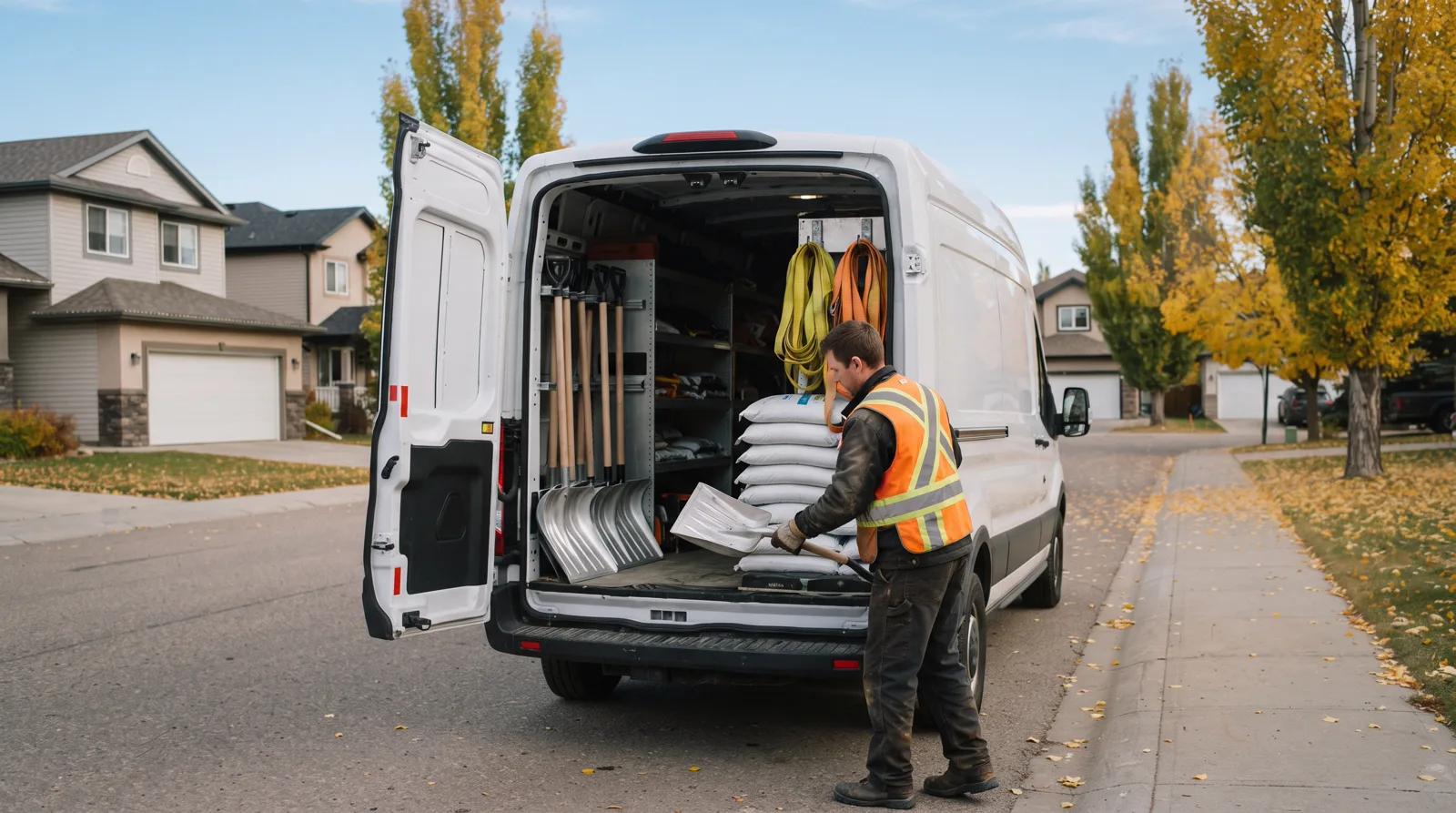
Emergency Snow Removal When You Need It Now.
Urgent dispatch to vetted snow clearing pros across the Tri-Region. Storm-time response and priority access clearing when waiting until morning is not an option.
Emergency Snow Clearing Services
Urgent situations where waiting for regular service creates safety risk, access problems or property damage.
Storm-Time Active Clearing
Clearing during active snowfall when you need access before the storm ends. Pros dispatched with equipment ready for heavy, wet accumulation and low visibility conditions. Common for medical appointments, shift work and critical travel.
Post-Dump Urgent Access
Priority callout after major snowfall when your driveway, parking pad or building access is completely blocked. Urgent situations are dispatched first. Equipment matched to snow depth and site size.
Emergency Roof Snow Load Removal
Urgent roof clearing when heavy snow load creates structural risk, ice dam flooding or immediate safety concern. Pros carry liability coverage and understand Alberta building code snow load limits. Pricing depends on roof pitch, height and access.
After-Hours Callout
Late evening, overnight or early morning dispatch when snow creates urgent access or safety issue outside regular business hours. Premium rate covers immediate response and equipment mobilization. Typical for medical emergencies, work shifts and travel deadlines.
Critical Access Clearing
Priority clearing for medical access, emergency vehicle entry or safety-critical situations. Dispatch confirms arrival window before pro leaves. Includes walkways, ramps and turnaround zones when needed for ambulance, fire or urgent care.
Ice Dam Emergency Response
Urgent clearing when ice dams cause active interior leaking or immediate roof damage risk. Pros understand safe removal methods that will not damage shingles or eaves. Often combined with temporary drainage channels and gutter clearing to stop water entry.
Why Emergency Snow Removal Looks Different Here
🌡️ Chinook Freeze-Thaw Chaos
Warm chinook winds melt surface snow into slush, then overnight cold snaps turn it into concrete-hard ice layers. Emergency calls spike after these cycles when driveways become impassable skating rinks and roof edges build massive ice dams.
💧 Heavy Wet Alberta Snow
Late-season storms drop wet, dense snow that weighs far more than eastern powder. A 30 cm dump can exceed roof load safety margins on older buildings, and standard residential snowblowers often cannot throw it. Emergency roof clearing prevents collapse risk.
🏔️ Deep Frost and Compacted Layers
Ground frost reaches 2.4 meters deep in the Tri-Region, and repeated traffic compacts snow into icy ruts that trap vehicles. Emergency clearing often requires heavy equipment or commercial plows, not just a truck with a blade, to restore safe access.
🛣️ Rural and Acreage Storm Access
Long private driveways, unlit roads and poor cell service make storm-time clearing urgent for acreage properties. Pros matched to these callouts carry tow straps, understand rural lot layouts and bring backup communication in case of equipment trouble mid-job.
What it costs here
Emergency Snow Removal in Spruce Grove: When to Call, What to Expect and How to Prepare
Everything you need to know about urgent snow clearing services in the Tri-Region, from storm-time response to after-hours callout rates.
What Emergency Snow Removal Actually Means in Spruce Grove
Emergency snow removal is not the same thing as regular seasonal clearing or a scheduled maintenance visit. It is a priority dispatch service triggered when snow accumulation creates an immediate safety hazard, blocks critical access, threatens structural damage, or puts you in violation of municipal bylaws or insurance requirements. In Spruce Grove, Stony Plain, and Parkland County, emergency calls typically happen during or immediately after major snowfall events, often between November and March when lake effect snow off Wabamun Lake combines with Arctic air masses to drop 15 to 30 centimeters in a single storm. The service is designed to restore safe access and mitigate damage within hours, not days.
What separates emergency response from routine service is the timeline and the stakes. A regular snow removal contract might have a 24 to 48 hour response window after accumulation reaches a certain threshold. Emergency dispatch means a qualified operator is mobilized within one to three hours of your call, depending on current demand and road conditions. The pros Tri-Region connects you with confirm arrival time before dispatch, and they bring commercial grade equipment capable of moving heavy, compacted, or ice-crusted snow that a homeowner snowblower cannot handle. This includes skid steers with pusher boxes, truck-mounted plows, and walk-behind units for tight zones like walkways and stairs.
The scope of emergency work is also different. It is not a full property detail. The goal is to clear the minimum necessary to restore safe access and eliminate immediate hazards. That typically means your driveway from the street to the garage, a path to your front door, fire hydrant clearance if one sits on your property line, and any obstructed emergency exits. If your roof is sagging under wet snow or ice dams are forming along the eaves, emergency response may include roof clearing or edge work to prevent interior water damage. Additional clearing beyond the critical zones can be quoted on-site, but the priority is safety and code compliance first.
Why Spruce Grove Homeowners Face Sudden Snow Crises
Spruce Grove sits in a unique weather corridor where lake effect snow, chinook winds, and prairie cold fronts collide. Wabamun Lake, just 20 kilometers west, generates localized snow squalls when Arctic air moves across open water in early winter before full freeze-up. These squalls can dump 10 to 20 centimeters in three to four hours, often while Environment Canada's forecast shows only light flurries for Edmonton. Homeowners in the western parts of Spruce Grove and rural Parkland County see this pattern repeatedly from late October through December. The snow is wet, heavy, and compacts quickly under its own weight, making it far harder to move than dry powder.
Chinook cycles add another layer of chaos. A warm Pacific wind can push daytime temperatures to plus 5 or plus 8 Celsius in January, melting the top layer of snow into slush. Overnight lows then drop back to minus 15 or minus 20, turning that slush into a cement-like crust. When the next snowfall arrives on top of the frozen base, you end up with a two-layer problem: hard ice below, fresh snow above, and no way to clear it without heavy equipment. Trying to shovel or snowblow through that crust damages residential machines and often injures homeowners who underestimate the physical load. This freeze-thaw-refreeze cycle is the single biggest driver of emergency calls in the Tri-Region area.
Municipal bylaws and insurance policies create hard deadlines that turn a snow problem into a legal or financial crisis. The City of Spruce Grove requires homeowners to clear sidewalks within 48 hours of snowfall ending. Failure to comply results in fines starting at $250, and the city may contract removal at your expense. Insurance policies often include clauses requiring you to maintain safe access to all exits and to prevent damage from foreseeable causes, including snow load and ice damming. If your roof collapses or a water leak occurs because you failed to clear heavy snow, your insurer may deny the claim. Fire code requires unobstructed access to all exit doors and a clear path to the street for emergency vehicles. A blocked driveway or impassable front walk can delay paramedics or firefighters, with consequences that go far beyond a fine.
Warning Signs You Need Emergency Response
Blocked Emergency Exits and Fire Access
If snow has drifted or been plowed across your front door, back door, or basement walkout to the point where you cannot open the door more than a few inches, you have a life safety issue. Alberta building code requires every dwelling to have at least two unobstructed exits, and fire code prohibits any condition that would prevent occupants from leaving during an emergency. Drifts higher than 60 centimeters against a door frame can jam the door, and wet snow freezes into a solid berm overnight. This is especially common on north-facing doors and along fence lines where wind funnels snow into deep piles.
Fire hydrants buried under snow are another red flag. If a hydrant sits on your property line or within your front yard setback, you are responsible for keeping it visible and accessible. Fire crews need to locate and connect to hydrants within seconds during a structure fire, and a buried hydrant can add critical minutes to response time. The standard is a one-meter clear radius around the hydrant and a cleared path from the hydrant to the street. If your driveway or front yard is impassable to emergency vehicles, that also triggers the need for immediate clearing. Fire trucks, ambulances, and police vehicles cannot navigate driveways blocked by snow berms, and rural fire departments in Parkland County have been delayed by impassable private lanes during active calls.
Roof Load and Ice Damming
Residential roofs in Alberta are engineered to handle snow loads up to a certain weight per square meter, typically in the range of 150 to 250 kilograms depending on the roof pitch and truss design. Wet snow weighs approximately 150 to 200 kilograms per cubic meter, compared to 50 to 80 kilograms for dry powder. A 30 centimeter accumulation of wet snow on a 200 square meter roof can add 9,000 to 12,000 kilograms of dead load. If you hear cracking sounds from the attic, notice sagging ceiling drywall, or see your ridge beam bowing, the roof is overloaded and you need emergency clearing before structural failure occurs.
Ice dams form when heat escaping through your roof melts the bottom layer of snow. The meltwater runs down to the cold eaves, refreezes, and builds up into a ridge of ice that blocks further drainage. As more snow melts, water backs up under the shingles and leaks into your walls and ceilings. The first signs are icicles longer than 30 centimeters hanging from the eaves, water stains on exterior walls below the roofline, or dripping sounds inside exterior walls during the day. Once an ice dam is established, you cannot safely remove it yourself without damaging shingles or risking a fall. Emergency snow removal includes edge clearing and controlled ice dam mitigation to stop active leaks.
Bylaw Violations and Postal Delivery
The 48 hour sidewalk clearing rule in Spruce Grove is enforced year-round, and bylaw officers patrol after every major snowfall. If your sidewalk remains blocked two days after the snow stops, you will receive a notice and a fine. Repeat violations can escalate to $500 or higher, and the city may hire a contractor to clear your walk and bill you for the cost plus administrative fees. Rural properties in Parkland County are not subject to sidewalk bylaws, but shared private roads and access easements often have covenants requiring each homeowner to maintain passable conditions. If you are part of a road maintenance agreement and you fail to clear your section, your neighbors can compel clearing at your expense.
Canada Post will suspend delivery to any address where the letter carrier cannot safely access the mailbox. If your driveway or front walk is covered in hard-packed snow or ice, or if snow has buried your mailbox, delivery stops until you restore access. You will not receive a warning. Mail simply accumulates at the depot, and you are responsible for picking it up in person. For anyone waiting on time-sensitive documents, government cheques, or medical prescriptions, a mail suspension is more than an inconvenience. Emergency clearing restores postal access and gets your mail moving again within 24 hours.
How the Emergency Dispatch and Clearing Process Works
When you contact Tri-Region Services for emergency snow removal, the first step is a brief assessment call. You describe the situation, the type of property, the areas that need clearing, and any immediate hazards such as blocked exits, roof concerns, or bylaw deadlines. The dispatcher asks for your address, confirms access details like gate codes or locked side yards, and establishes whether the job requires a skid steer, a plow truck, or walk-behind equipment. Liability coverage for the operator stated at signup. You receive an estimated arrival window, typically one to three hours depending on current demand and the operator's location.
Once the operator arrives, they conduct a quick on-site assessment before starting work. They confirm the scope you discussed on the phone, identify any obstacles like parked vehicles, propane tanks, or low-hanging wires, and verify safe staging areas for snow piles. If your driveway has a steep grade, a tight turn radius, or decorative pavers that could be damaged by heavy equipment, the operator will adjust the approach or recommend hand clearing for sensitive zones. This assessment takes five to ten minutes and ensures the work is done safely without damaging your property or underground utilities. If the operator identifies additional hazards like a sagging roof or a gas meter buried in snow, they will point it out and offer to address it as an add-on to the emergency scope.
The clearing itself is prioritized by safety and code requirements. The driveway comes first, starting at the street and working back to the garage. Snow is pushed to the sides or to a designated pile area, usually the front yard corner or a back lot zone where it will not block sightlines or drainage. Fire exits are cleared next, with a focus on creating a three-foot-wide path from each door to the main cleared area. Walkways, stairs, and any buried hydrants or utility access points are addressed last. If roof clearing is part of the scope, the operator uses a roof rake or a lift to remove snow from the lower three feet of the roofline where ice dams form, working carefully to avoid shingle damage. The entire job typically takes 45 minutes to two hours for a standard residential property, longer if roof work or ice mitigation is involved.
After the work is complete, the operator does a final walkthrough with you to confirm all critical areas are cleared and safe. Any damaged sod, displaced gravel, or minor surface scratches are noted, though these are rare with experienced operators. You receive a written summary of what was done, any additional issues identified, and a recommendation for follow-up work if needed. Payment is collected on-site or invoiced depending on the service agreement, with typical emergency rates ranging from $300 to $800 for a single-family home, higher if roof access or ice dam work is required. Workmanship expectations are set by the pro doing the work, confirmed in writing before the job starts, so you know exactly what is covered if any issue arises after the snow clears.
What Emergency Snow Removal Costs in the Tri-Region and What Drives the Price
Emergency snow removal in Spruce Grove, Stony Plain and Parkland County typically runs $350 to $800 for a standard residential driveway and approach during a major snowfall event, with larger acreages or commercial lots ranging from $600 to $2,500 or more depending on size and access. The 'emergency' premium reflects after-hours dispatch, equipment mobilization on short notice, and the reality that contractors are juggling multiple urgent calls during the same storm. A routine seasonal plow visit might cost $80 to $150, but when you need a loader at 6 a.m. on a Sunday after 40 cm fell overnight, expect to pay three to five times that base rate for immediate response.
Several factors push the price up or down. Property size is the obvious one: a 50-foot urban driveway takes 20 minutes with a skid steer, while a half-acre rural approach with turnarounds and outbuildings can take two hours and require a loader or grader. Snow depth and density matter enormously. Wet, heavy snow that fell during a chinook-influenced system packs harder and takes longer to move than light, fluffy powder. If the snow has been driven over and compacted into ice layers, or if freezing rain fell first and created a bonded crust, equipment works slower and fuel consumption doubles. Timing also matters: calling at 11 p.m. when the storm is still raging costs more than waiting until 7 a.m. when the snow has stopped, because night work means reduced visibility, higher risk and premium labor rates.
Access and obstacles add cost. A straight, flat driveway with no parked vehicles, no decorative boulders and good turnaround space is the baseline. Add tight turns, steep grades, overhead wires, buried invisible dog fences, decorative landscaping near the edge, or a need to pile snow in a specific corner to avoid blocking a walkout basement window, and the job takes longer. Disposal requirements can be significant: if your lot has no room to pile snow and the contractor must haul it off-site, that introduces trucking time and a dump fee, easily adding $200 to $600 to the invoice. Alberta's frost depth also plays a role. By mid-winter the ground is frozen a meter down, so blades scrape hard surfaces and operators must adjust technique to avoid damaging asphalt or interlocking pavers, slowing the process and requiring more skill.
Comparing Your Options: Loader, Skid Steer, Truck Plow and Manual Crew
A wheeled loader is the heavy hitter for deep snow, long driveways and acreages. Loaders have tall bucket capacity, powerful hydraulics and the weight to push through windrows left by municipal plows at the end of your approach. They excel when snow depth exceeds 30 cm or when you need to stack snow high along property lines. The trade-off is cost: loader mobilization and hourly rates run higher because the equipment is larger, burns more fuel and often must be trailered to the site. Loaders also need room to maneuver. If your driveway has narrow gates, low-hanging eaves or tight corners, a loader may not fit or may risk property damage. For rural properties in Parkland County with long approaches, loaders are often the only practical choice during major storms.
Skid steers are the versatile middle option. Compact, maneuverable and capable of handling 15 to 40 cm of snow efficiently, a skid steer fits most residential driveways in Spruce Grove and Stony Plain and can navigate tighter spaces than a loader. Skid steers can swap attachments quickly, so the same machine that plows your driveway can also carry a snowblower attachment to throw snow further if piling space is limited, or a pusher box to clear wide areas like shop yards. The cost sits between a truck plow and a loader, typically $300 to $600 for emergency residential work. Skid steers struggle in extremely deep or wet snow where bucket capacity becomes a bottleneck, and they are slower on long, straight runs compared to a loader.
Truck-mounted plows are common for lighter accumulations and municipal street clearing, but they have limits in emergency residential scenarios. A plow truck works well up to about 25 cm of fresh snow on a relatively flat, straight driveway with room to back up and angle the blade. Once snow depth exceeds 30 cm or becomes compacted, truck plows lack the bucket capacity and pushing power to move heavy volumes efficiently. They also cannot lift and stack snow, so if your property has limited piling space or the snow needs to be thrown over an existing bank, a truck plow will leave windrows that block access. For urgent, deep-snow events in the Tri-Region, truck plows are rarely the right tool unless combined with a second piece of equipment.
When a Manual Crew Makes Sense
Hand shoveling or snow blower crews come into play for properties where machinery cannot access tight areas, or where precision matters more than speed. Examples include narrow walkways between houses, decks with railings, areas around propane tanks or air conditioning units, and heritage properties where mechanical equipment might damage decorative stone or heritage brick. A two-person crew with snow blowers and shovels can clear these areas safely, though labor cost runs $80 to $150 per hour and the work is slow. For emergency main driveway clearing, manual methods are rarely cost-effective compared to machinery, but they are often the finishing step after a loader or skid steer handles the bulk volume.
Mistakes and Contractor Traps to Avoid
The biggest mistake is hiring the first truck that shows up without confirming liability coverage . Snow removal equipment is heavy, operates near homes, vehicles and buried utilities, and mistakes happen. A loader bucket can crack a foundation wall, a plow blade can rip out an irrigation system, and snow piled against a gas meter can create a safety hazard. If the contractor is uninsured and causes $8,000 in damage to your garage door or underground sprinkler line, you are left holding the bill. Alberta law requires commercial operators to carry liability insurance for employees, and most homeowner policies expect the contractor to carry their own liability insurance. Asking to see proof before work starts is not rude, it is standard practice and protects both parties.
Another common trap is paying upfront for 'priority service' without a written agreement defining response time. During major storms, some operators collect deposits from multiple properties, then prioritize whoever pays the highest emergency premium or whoever is easiest to access. You can end up waiting eight hours despite paying $200 extra for 'immediate' service, with no recourse because nothing was in writing. A legitimate emergency snow removal service will give you a realistic arrival window, confirm it before dispatch, and honor that window. If someone demands full payment before starting and cannot provide a written quote or estimated arrival time, that is a red flag. Pay a reasonable deposit if requested, typically 25 to 50 percent, and hold the balance until the work is complete and you have inspected the results.
Avoid contractors who refuse to discuss where snow will be piled or who ignore your property boundaries. Snow must go somewhere, and if the operator piles it against your fence, over your septic field, blocking your walkout basement window or onto your neighbor's driveway, you inherit a problem that lasts until spring melt. A professional operator walks the site first or asks specific questions over the phone: Where are your property lines? Are there any underground utilities marked? Do you have a preferred pile location? Is there anything fragile within three meters of the driveway edge? Operators who skip this conversation and just start pushing snow wherever is convenient often create drainage problems, damage landscaping or bury important access points like electrical panels or basement egress windows.
How to Hire the Right Emergency Snow Removal Pro
Start by confirming the contractor operates legally and safely. Ask for proof of liability insurance (typically $2 million minimum for commercial snow removal work) and WCB clearance if they have employees. Both documents should be current, and a legitimate operator will email or text you a copy without hesitation. If they hesitate or say insurance is 'in process' or 'not required for small jobs,' move on. You also want to confirm they have the right equipment for your property. Ask what machine they plan to use, how long the job will take, and whether they have experience with properties similar to yours. An operator who shows up with a half-ton truck and a 7-foot plow for a 200-meter rural driveway buried under 50 cm of snow is not equipped for the job, regardless of how cheap the quote.
Get a written quote before work begins, even if it is a rough estimate sent by text message. The quote should specify the scope (driveway only, or driveway plus turnaround and walkway), the equipment being used, the estimated cost or hourly rate, and the expected arrival window. If the operator charges by the hour, ask for an estimated range of hours so you are not surprised by a bill that runs double what you expected. If they charge a flat rate, confirm what happens if conditions are worse than anticipated: does the price go up, and if so, will they inform you before proceeding? A professional operator will explain their pricing clearly and adjust expectations if they arrive and find the snow deeper, heavier or more compacted than described. Avoid anyone who gives vague answers like 'we will figure it out when we get there' or who pressures you to commit without seeing the property or understanding the scope.
Ask how they handle property protection. Will they mark obstacles like sprinkler heads, invisible fence wires, decorative landscape lighting or gas meter pedestals before plowing? Do they use blade shoes or skid plates to avoid scraping asphalt or pavers down to bare surface? What is their policy if they cause damage: do they have a process for claims, or do they expect you to go through their insurance? A contractor who takes these questions seriously and has clear answers is far less likely to leave you with a damaged driveway and a dispute over who pays for repairs. If they dismiss the questions or say 'we have never had a problem,' that is not reassurance, it is a warning that they have never been held accountable.
How Tri-Region Services Helps
Tri-Region Services routes your request to one local, vetted snow removal professional who has confirmed liability coverage before joining the network. You get a single written quote with clear scope, timing and cost, not a list of random names to call yourself during a storm. The pro we match you with has the equipment appropriate for your property type, whether that is a skid steer for a residential driveway in Spruce Grove or a loader for a rural acreage approach in Parkland County. No guessing, no comparing five different prices while your driveway stays buried, and no wondering if the operator is insured or experienced. One verified pro, one quote, and the clarity to make a decision quickly when snow is still falling.
How We Verify Emergency Response Readiness
Every pro in the emergency dispatch pool meets equipment, insurance and availability standards before they receive urgent callouts.
liability insurance Confirmed
liability insurance verified current before any pro enters the emergency rotation, protecting you from liability if someone is injured clearing your property.
Liability Coverage Documented
Minimum liability insurance confirmed and policy expiry tracked, with automatic removal from dispatch if coverage lapses.
Equipment Readiness Verified
Pros confirm they have working equipment, fuel and backup plans before storm season, so dispatch knows who can actually respond when called.
Direct Pro Communication
You receive the pro's direct contact info at dispatch, no middleman relay, so arrival updates and site questions go straight to the person doing the work.
Realistic Arrival Windows
Pros commit to an arrival window they can actually meet, accounting for current weather, travel distance and equipment mobilization time.
Priority Routing for True Emergencies
Medical access, safety hazards and structural risk situations flagged for fastest response, ahead of convenience callouts, when demand exceeds capacity during major storms.
This page is not tied to a contractor's brand. Leads route straight to your one local partner. Verified reviews can appear here once that partner has them (never fabricated).
Serving the whole Tri-Region
7 Emergency Snow Removal Questions
How fast can someone actually get to me during a storm?+
What actually counts as an emergency for snow removal?+
Do I pay more for emergency rates, and how much?+
Can you actually clear snow during active heavy snowfall?+
What if I need my roof cleared right now because of ice dam leaking?+
Do the pros actually work overnight and on holidays?+
What equipment will the pro bring, and what if it is not enough?+
When should I call for emergency service versus just waiting for regular snow removal?+
Get your free quote
Tell us what you need and a local pro will get right back to you.
- ✓ Sent straight to a local business
- ✓ You choose who you hire
- ✓ Free, with no obligation