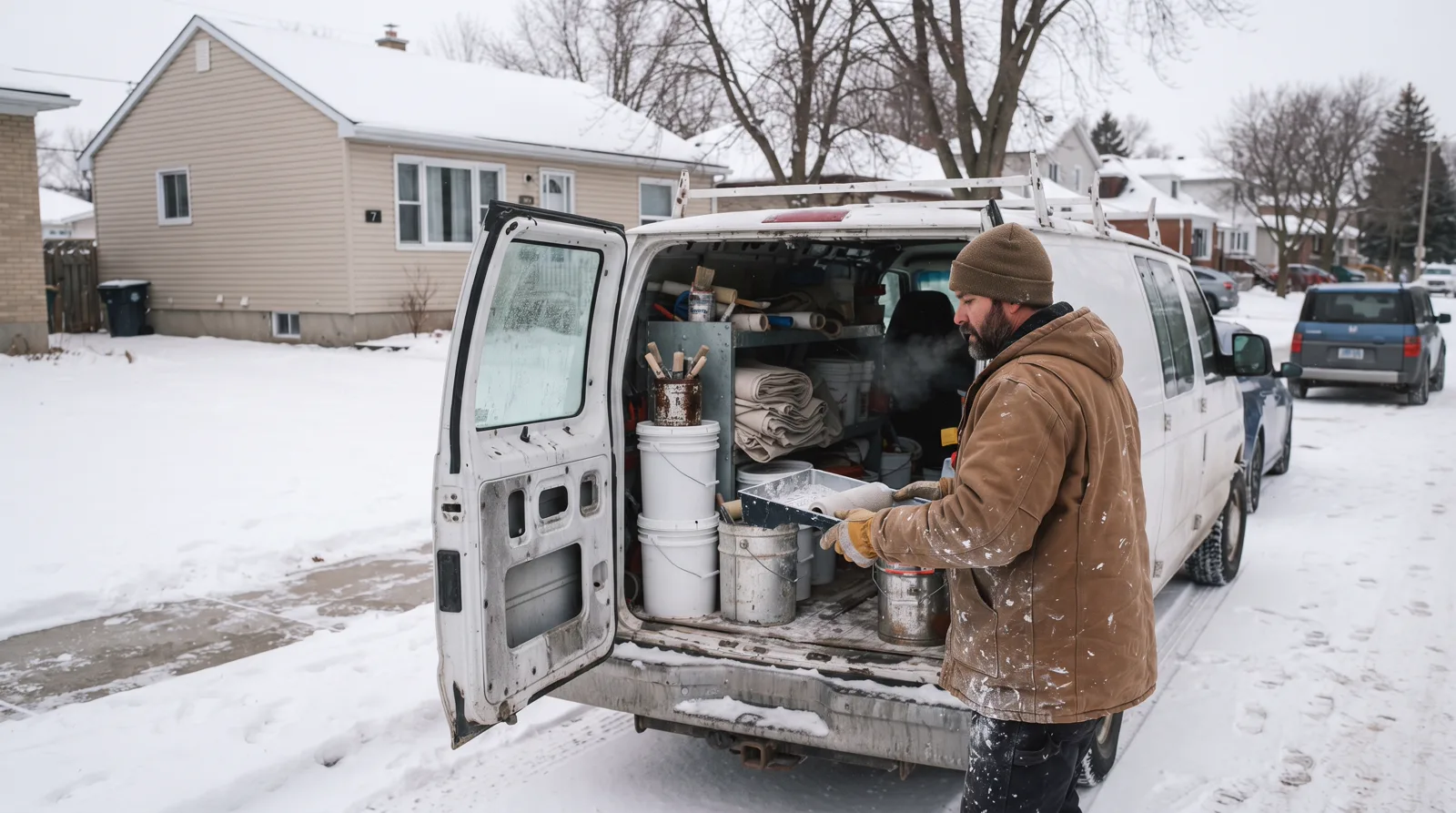
Exterior Painting Built for Alberta Weather.
Fresh curb appeal that survives hail, chinooks, and deep frost. Local crews who prep right the first time.
Full-Exterior Services
From siding refresh to hail repair, local pros handle every surface your home shows the street.
Full House Exterior Painting
Complete siding, trim, soffit, fascia, and door refresh. Includes pressure wash, scraping, priming, two finish coats. Typical bungalow runs $4,500 to $7,000, two-story $8,000 to $12,000 depending on square footage and siding condition.
Siding Painting & Staining
Vinyl, wood, fiber cement, or engineered siding. We match existing color or update the palette. Wood siding gets solid stain or paint with UV and moisture blockers rated for Alberta freeze-thaw cycles.
Trim, Fascia & Soffit
Standalone trim refresh without repainting the whole house. Common when siding is newer but trim is weathered. Includes scraping, caulking gaps, priming bare wood, two finish coats. Fascia and soffit get extra attention where ice dams form.
Deck & Fence Staining
Pressure-treated or cedar decks and fences stained with penetrating or solid-color products. Includes power wash, repair of loose boards, and two coats of stain with UV and water repellent. Typical deck runs $600 to $1,400, privacy fence $1,200 to $2,800.
Hail Damage Repair & Repaint
After a hail event, we assess dents in wood or fiber cement siding, fill and fair damaged areas, prime, and repaint to match. Work directly with insurance adjusters. Minor damage on one wall runs $800 to $1,500, full-house hail repair $3,000 to $5,000.
Garage Doors & Outbuildings
Standalone garage door refresh, shed exterior, or detached garage. Steel doors get rust treatment and oil-based topcoat. Wood structures get the same prep as house siding. Single garage door $400 to $700, double-car detached garage $1,200 to $1,800.
Why Alberta Exterior Painting is Different
❄️ Freeze-Thaw Cycle Prep
Alberta sees 40+ freeze-thaw cycles per winter. Paint that works in Vancouver fails here. We use elastomeric primers and flexible finish coats that expand and contract without cracking. Every seam and joint gets caulked with cold-weather rated sealant.
🌪️ Hail Damage Frequency
Spruce Grove and Stony Plain sit in a hail corridor. Most homes see at least one hail event per decade. We assess dents in wood and fiber cement siding, repair substrate damage before painting, and document for insurance. Vinyl siding typically gets replaced, not painted.
🌬️ Chinook Wind & UV Exposure
South and west-facing walls take the hardest UV and wind hits. Paint fades faster on these elevations. We recommend fade-resistant pigments and an extra topcoat on high-exposure walls. Chinook winds dry out wood rapidly in winter, so moisture barriers and back-priming prevent cupping.
🏔️ Snow Load & Ice Dam Areas
Fascia and soffit near roof edges see repeated freeze and melt cycles from snow sliding and ice dams. These areas need extra caulking, thicker primer, and mildew-resistant topcoats. We inspect for rot before painting and flag problems early so you are not painting over soft wood.
What it costs here
Everything About Exterior Painting in Alberta
Prep steps, product choices, timing, and how to avoid the mistakes that cost you a re-do in two years.
What Exterior Painting Actually Involves in Spruce Grove
Exterior painting is a complete system of surface preparation, material application, and protective sealing designed to shield your home from Alberta's extreme weather while improving its appearance. The work starts weeks before any paint touches your siding. A proper exterior paint job in Spruce Grove means scraping and sanding all loose or failing paint, repairing damaged wood or fiber cement, caulking every seam and joint, priming bare surfaces, and applying two finish coats of high-quality acrylic latex designed for freeze-thaw cycles. Painters who skip the prep are the reason you see blistered paint and peeling corners two years later. The preparation phase typically takes 40 to 60 percent of the total project time.
Material selection matters more in Spruce Grove than in milder climates because your paint must survive winter lows around negative 30 Celsius and summer highs above 30, sometimes within the same week during chinook events. Acrylic latex paints with high flexibility ratings handle thermal expansion better than cheap contractor-grade coatings. Primers must bond to whatever substrate you have, whether cedar siding, stucco, vinyl, fiber cement, or the original 1980s T1-11 plywood many homes still carry. Stain-blocking primers are essential on any wood showing tannin bleed, resin streaks, or previous water damage. Every gallon of paint has a minimum application temperature listed on the label, usually 10 Celsius, and that means nothing if overnight temps drop below 5. Paint cures through a chemical process that stops when it is too cold, leaving a soft film that will fail within months.
The realistic painting window in Spruce Grove runs from late May through mid-September, with July and August offering the most reliable weather. Spring jobs risk late frost, and fall jobs gamble on warm spells lasting long enough for proper cure times. A typical single-story bungalow takes three to five days in good weather. Two-story homes with complex trim, multiple colors, or significant repair work can stretch to two weeks. Rain delays are common, and no reputable painter works during active precipitation or when humidity exceeds 85 percent. The job is done when all coats are applied, all masking and drop sheets are removed, all tools and materials are gone, and you have walked the entire exterior with the crew lead to confirm every detail matches the scope.
Why Alberta's Climate Makes Exterior Paint a Critical Investment
Alberta's freeze-thaw cycle is the single biggest enemy of exterior paint and the wood or fiber cement underneath it. Spruce Grove experiences an average of 60 to 80 freeze-thaw events per year, concentrated in spring and fall. Water enters any crack, joint, or failing paint seam during the day when temperatures climb above zero. When night falls and temperatures drop, that water freezes and expands with enough force to split wood fibers, pop caulking, and lift paint away from the substrate. Once the paint seal breaks, each subsequent cycle drives more moisture deeper into the wall assembly. Left unchecked, this leads to wood rot in fascia boards, window sills, and corner trim. Rot repairs on a single window can cost $300 to $800 before any paint touches the surface.
Chinook winds create temperature swings that accelerate paint degradation in ways homeowners rarely connect to the weather. A chinook event can raise temperatures by 20 degrees in a few hours, causing rapid expansion of siding and trim. When the chinook ends, temperatures crash, and everything contracts. This flexing stresses the paint film. Low-quality paint becomes brittle in cold and cracks under this movement. High-quality acrylic latex remains flexible and moves with the substrate, which is why premium paint costs $70 to $90 per gallon instead of $35. The difference shows up three winters later when your neighbor's budget paint is peeling and yours is intact. UV exposure is also higher in Alberta due to elevation and clear skies. Unprotected wood fades, and cheap paint chalks, leaving a powdery residue on your hand when you touch the siding.
Hail is another reality in Parkland County and the Spruce Grove area, with several significant storms most summers. Hail impacts chip paint, dent aluminum siding, crack vinyl, and bruise wood. Even small chips become entry points for moisture. Insurance covers siding replacement after major hail events, but minor damage below your deductible becomes your problem. A fresh coat of paint over hail-chipped siding looks fine from the curb but does nothing to seal the damage. Proper hail repair means filling chips with exterior-grade wood filler or elastomeric caulk, sanding smooth, priming, and painting. Snow load and ice damming add stress to fascia, soffits, and trim. Ice dams form when heat escapes through the roof, melts snow, and the runoff refreezes at the eaves. The ice works its way under shingles and behind fascia boards, soaking the wood. Painted fascia with intact caulking sheds water. Failing paint lets it soak in.
Warning Signs Your Spruce Grove Home Needs Exterior Painting
Chalking is the most common early warning sign and appears as a powdery, dusty coating on the paint surface. Run your hand across the siding, and if colored dust transfers to your skin, the paint is breaking down. Chalking happens when UV radiation degrades the binder in the paint, leaving loose pigment on the surface. It is a normal part of paint aging, but heavy chalking means the protective layer is nearly gone. Most exterior paints are designed to chalk lightly over 8 to 12 years, creating a self-cleaning effect where rain washes away dirt. When chalking becomes heavy enough to leave marks on your hand, you have maybe one or two seasons before the substrate starts taking damage. South and west-facing walls chalk faster due to higher sun exposure.
Cracking and peeling are signs that moisture has already compromised the paint bond. Cracking usually appears first in high-stress areas like window and door trim, corner boards, and horizontal surfaces where water sits. The cracks start small, often mistaken for dirt lines, then widen into alligator-pattern networks. Peeling follows cracking and indicates the paint has lost adhesion to the substrate. Peeling often starts at the bottom edges of siding boards where splash-back from rain or sprinklers keeps the surface damp. Once paint peels, bare wood or primer is exposed. Bare wood absorbs moisture immediately, swells, then shrinks when it dries, which makes the peeling spread faster. Ignoring peeling for even one winter can turn a $4,000 paint job into a $7,000 job with wood replacement.
Blistering and bubbling happen when moisture or solvent vapor gets trapped under the paint film. Blisters look like small bubbles on the surface, and when you press them, they either feel spongy or pop to reveal bare wood. Moisture blisters form when water vapor from inside the wall, or from rain penetration, pushes through the paint. Solvent blisters form when paint is applied in direct sun or over a hot surface, causing solvents to vaporize faster than they can escape through the wet film. Both types indicate a failure in the paint system. Widespread blistering means either the substrate was not properly dried before painting, or there is an ongoing moisture problem like a leaking gutter, failed caulking, or inadequate vapor barrier inside the wall. Fading and color loss are cosmetic issues that also signal weakening protection. If your home's color has shifted noticeably, especially on south-facing walls, the pigment is degraded and the binder is not far behind.
The Complete Exterior Painting Process: What to Expect
Inspection, Estimate, and Scope Agreement
The process begins with a detailed inspection where the painter walks the entire exterior, noting all areas needing repair, the current paint condition, surface type, number of colors, and access challenges. A written estimate should break down labor, materials, prep work, and repairs separately. Vague estimates with one lump sum are red flags. Expect to discuss paint brand and product line, number of coats, what surfaces are included (siding, trim, doors, fascia, soffits, railings), and what is excluded. Painters may exclude items like rusted metal railings, rotted wood replacement beyond a certain dollar threshold, or lead paint remediation if your home was built before 1980. Scope creep happens when homeowners assume everything is included and painters assume the basics. Get it in writing.
Timing and weather windows are negotiated during this phase. Painters book summer schedules in April and May, so waiting until July often means waiting until August or September. Discuss what happens if it rains mid-job, if hidden rot is discovered, or if the color looks different on the house than on the sample chip. Most painters require a deposit, typically 25 to 50 percent, with the balance due on completion. Permit requirements are rare for simple repainting in Spruce Grove, but if you are changing colors dramatically or painting a historic home in a specific neighborhood, confirm with your painter whether a development permit is needed. Liability insurance are mandatory for any crew working above ground level. Ask for proof before work starts.
Preparation: Cleaning, Scraping, Repairs, and Priming
Preparation starts with pressure washing to remove dirt, mildew, chalking paint, and loose debris. Pressure washing must be done carefully to avoid driving water behind siding or damaging soft wood. The surface needs at least 24 to 48 hours to dry completely before any scraping or priming begins. Wet wood will not accept paint. Scraping comes next, removing all loose, peeling, or failing paint down to a solid edge. Orbital sanders smooth the scraped edges so the transition from old paint to bare wood is not visible through the new coats. Sanding also roughs up any slick, glossy old paint so the new primer can bond.
Repairs are identified during scraping. Rotted wood must be cut out and replaced with new material, primed on all six sides before installation. Cracks in stucco or fiber cement are filled with appropriate patching compound. Nail holes, dents, and joints are caulked with exterior-grade acrylic or polyurethane caulk. Caulking is not optional. Every seam between trim and siding, every window and door frame, every corner joint, and every gap needs a clean bead of caulk. Gaps let water in, and water is what kills paint and wood. Primer goes on all bare wood, patches, and repairs. Stain-blocking primer is used where tannin, resin, or rust bleed-through is a risk. Some painters tint the primer to match the finish color for better coverage.
Paint Application: First Coat, Second Coat, and Quality Checks
The first finish coat goes on after all prep is complete, all repairs are dry, and weather conditions are within spec. Painters apply the first coat by brush, roller, or airless sprayer depending on the surface type and texture. Spraying is fastest but requires extensive masking of windows, doors, walks, landscaping, and vehicles. Brushing and rolling take longer but give better control on detailed trim. The first coat seals the surface and provides most of the color. It must dry fully before the second coat, which typically means overnight at minimum. If overnight temperatures drop below 5 Celsius or humidity spikes, drying can take 48 hours.
The second coat delivers the final color, thickness, and durability. Two-coat systems are standard in Alberta because one coat rarely provides enough film thickness to handle freeze-thaw cycles. Some premium paints claim one-coat coverage, but that is a marketing term based on color hiding, not on protective film build. The second coat also reveals any missed spots, thin areas, or application flaws from the first coat. Quality painters do a final walk-through while the second coat is wet, checking for runs, sags, missed edges, and overspray. After the final coat cures, all masking comes off, tools are cleaned, drop sheets are removed, and the site is left cleaner than it was found. A professional crew hauls away all paint cans, scrapers, and debris. Your only job is a final inspection.
What Exterior Painting Costs in Spruce Grove and the Tri-Region
Exterior painting costs in Spruce Grove, Stony Plain, and Parkland County typically range from $3,500 to $12,000 for a complete house, depending on size, condition, and prep work required. A small bungalow under 1,200 square feet might run $3,500 to $5,500, while a two-storey home between 1,800 and 2,500 square feet usually falls in the $7,000 to $10,000 range. Larger homes or those with extensive trim, multiple colours, or serious prep needs can push past $12,000. These are rough ballpark figures for quality work using premium exterior paint rated for Alberta winters, not bottom-tier pricing that skips proper prep or uses budget coatings that fail within three years.
The single biggest cost driver is surface preparation, not the paint itself. A house with peeling latex over old oil paint, bare wood exposure from failed stain, or alkyd that has cracked and chalked will require scraping, sanding, priming, and possibly spot caulking of every seam and corner. That prep work can account for 50 to 70 percent of the total labour hours on an older home. Newer builds in good shape with clean, intact factory primer need far less work and cost less accordingly. Height and access add cost too. Two-storey gables, dormers, and high peaks require scaffolding or extension ladders, which slow the crew and increase safety time. A bungalow with 8-foot walls and easy access costs less per square foot than a split-level with 16-foot peaks and narrow side yards.
Alberta climate realities also shape pricing. Exterior painting here happens in a short window, roughly May through September, and even then only when overnight lows stay above 10°C and daytime highs do not bake the surface too hot for proper adhesion. That compressed season means painters book up fast and cannot squeeze in extra jobs by working late fall or early spring the way contractors in milder provinces can. Material costs reflect Alberta's harsh freeze-thaw cycles. Premium 100 percent acrylic latex rated for extreme temperature swings costs more than standard exterior paint, but it flexes with the wood and resists cracking when January temperatures drop to minus 30°C and summer sun heats siding to plus 40°C. Cheap paint may save $200 on materials and fail completely in three winters, forcing a full repaint and costing far more in the long run.
Comparing Paint Types, Application Methods, and Material Choices for Alberta Homes
One hundred percent acrylic latex is the standard for exterior painting in Alberta and for good reason. It expands and contracts with temperature swings, breathes to let moisture escape from inside the wall cavity, and adheres well to properly prepped wood, vinyl, aluminum, and fibre cement siding. Oil-based alkyd paints were once the default for trim and doors because they dry hard and resist scuffing, but modern acrylic formulations now match or exceed alkyd durability while offering far better flexibility in freeze-thaw cycles. Alkyd also requires mineral spirits for cleanup, takes longer to cure, and releases more volatile organic compounds, which matters if you are painting near windows that need to stay open in summer. Most professional crews in Spruce Grove and Stony Plain now use acrylic for everything except specialty cases like metal railings or historic restorations where oil is specified.
Application method matters as much as paint choice. Airless spraying is fast and delivers an even, smooth finish on large flat surfaces like vinyl or metal siding, but it requires careful masking of windows, doors, trim, landscaping, and neighbouring structures. Overspray drifts in wind, so spraying is harder to control on breezy Parkland County acreage properties or in tight Spruce Grove subdivisions where houses sit close together. Brush and roller application is slower but gives the painter complete control, works better for cutting in around trim and fixtures, and produces no overspray mess. Many experienced crews combine methods by spraying large siding runs and back-brushing or back-rolling immediately to work the paint into the surface texture and ensure full adhesion. On older wood siding with deep grain or weathered texture, back-brushing after spraying is not optional, it is necessary for a lasting bond.
Trim and accent colour choices also affect cost and durability. Painting all trim, fascia, soffits, and window frames a contrasting colour requires careful taping, cutting in, and often a separate primer if switching from dark to light or covering a bold existing colour. White or off-white trim is easiest to maintain and touch up, but darker greys, blacks, or earth tones are increasingly popular in newer Spruce Grove neighbourhoods and acreage builds. Dark colours absorb more heat and can cause paint to blister or peel faster on south and west-facing trim, especially on fibre cement or engineered wood that expands more than solid lumber. A quality exterior paint with UV inhibitors and high solids content will hold up better, but expect to repaint dark trim every six to eight years compared to ten or more for lighter neutrals. If your home has vinyl or aluminum siding that you plan to paint rather than replace, make sure the contractor uses a bonding primer designed specifically for those slick, non-porous surfaces, as standard latex primer will peel off in sheets within two seasons.
Common Mistakes and Contractor Red Flags to Avoid
The most expensive mistake homeowners make is painting over failing surfaces without proper prep. If the old paint is peeling, cracking, or chalking, new paint will only stick to the failing layer beneath it and peel off just as fast. Scraping, sanding, and priming bare wood are not optional steps that can be skipped to save a few hundred dollars. They are the foundation of a long-lasting paint job. Another frequent error is painting when conditions are marginal. Latex paint needs at least four hours of dry weather and temperatures above 10°C to cure properly. Painting in late September when overnight frost is possible, or on a humid morning when dew has not fully dried, leads to poor adhesion, streaking, and early failure. Alberta weather is unpredictable, so experienced painters watch forecasts closely and delay the job rather than rush and ruin it.
DIY exterior painting can work on small, single-storey homes with minimal prep needs, but it often goes wrong on larger or older houses. Homeowners underestimate the time required for scraping, sanding, priming, and caulking, then rush through those steps to get to the painting part. They also tend to buy mid-grade paint instead of premium, thinking it will be good enough, and then face premature fading or peeling. Ladder safety is another serious concern. Falls from extension ladders cause injuries every summer in Parkland County and Spruce Grove, especially when homeowners overreach or set ladders on soft ground or uneven gravel. If your home is two storeys, has high gables, or requires scaffolding access, hiring a professional crew with proper fall protection and liability insurance is not just about quality, it is about safety and avoiding a trip to the Westview Health Centre or worse.
Contractor red flags include anyone who offers a quote without inspecting the house in person, suggests skipping primer to save money, or lowballs the competition by thousands of dollars with no clear explanation. A painter who says your peeling 20-year-old paint just needs a wash and one coat is either inexperienced or dishonest. Legitimate contractors will walk the property, point out problem areas, explain what prep is needed, and provide a written quote that breaks down labour, materials, and timeline. Be wary of anyone who demands full payment up front, cannot provide proof of WCB coverage and liability insurance, or operates without a business name or phone number that shows up in online searches. Cash-only deals and no receipts are warning signs of unlicensed work that leaves you with no recourse if the job is done poorly or someone is injured on your property. Alberta law requires contractors to carry liability insurance and, if they have employees. Always ask to see current certificates before signing any contract.
How to Find and Hire the Right Exterior Painter in Spruce Grove and the Tri-Region
Start by asking neighbours, friends, or coworkers in Spruce Grove, Stony Plain, or Parkland County for recommendations. Word of mouth from people who have seen the finished work and dealt with the contractor through the full process is more reliable than online reviews, which can be faked or gamed. Drive around newer subdivisions in Spruce Grove like The Grove or Westerra and look for homes with fresh, clean paint jobs. If you see a crew working, stop and ask for a business card. Painters who take pride in their work are usually happy to show you a completed project and discuss their process. Local paint suppliers like smaller independent shops in Stony Plain often know which contractors buy quality materials and which ones chase the cheapest price, so asking the counter staff for referrals can surface reliable names.
When you contact a painter, ask specific questions about prep work, paint brand and grade, application method, number of coats, and warranty or callback policy. A professional will explain exactly what prep is included, whether they scrape and sand by hand or use power tools, how they handle priming bare wood or previously stained surfaces, and what product line they recommend for Alberta winters. If they suggest a specific paint, ask why. The answer should reference durability, flexibility in freeze-thaw cycles, UV resistance, and how it performs on your siding type, not just that it is cheap or on sale. Find out who will actually be on site doing the work. Some larger companies send subcontractors or day labourers with minimal training, while others use the same experienced crew on every job. Ask how long the project will take and what happens if weather delays the schedule. A realistic timeline for a full two-storey house is usually one to two weeks depending on prep needs and crew size.
Get at least three written quotes and compare them carefully. The lowest bid is not always the best value if it skips necessary prep, uses builder-grade paint, or applies only one coat. The highest quote is not automatically better quality either. Look for detailed breakdowns that list prep steps, primer and paint products by name, number of coats, and what surfaces are included. Make sure the quote specifies who provides the paint. Some contractors mark up materials significantly, while others let you buy the paint directly and charge only for labour. Either approach can work, but you need to know which model you are paying for. Before signing a contract, verify the contractor holds valid WCB coverage if they have employees and at least two million dollars in general liability insurance. Ask for the policy numbers and call the insurers to confirm coverage is active. This protects you if a painter falls off a ladder on your property or accidentally sprays your neighbour's car.
How Tri-Region Services Helps
Tri-Region Services routes you to one vetted, insured local exterior painting contractor who serves Spruce Grove, Stony Plain, Parkland County, and Acheson. Every pro in the network has been asked about liability insurance, and a track record of quality work in the Tri-Region. You will receive one free, no-obligation written quote that breaks down prep, materials, labour, and timeline in plain language. No high-pressure sales, no runaround, just a straightforward connection to a trusted local painter who knows Alberta climate, building practices, and what it takes to deliver a finish that lasts.
How We Screen Exterior Painters
Every contractor here meets baseline safety, insurance, and workmanship standards for Tri-Region projects.
Licensed
Valid business license and liability insurance account so you are not liable if someone falls off a ladder.
Alberta Climate Training
Understands freeze-thaw prep, cold-weather products, and hail damage repair protocols.
Surface Prep Standards
Pressure wash, scrape loose paint, prime bare wood, caulk every seam before the first finish coat.
Quality Paint Products
Sherwin-Williams, Benjamin Moore, or PPG lines rated for Canadian exterior use, not builder-grade discount paint.
Written Warranty
Minimum two-year labor warranty and paint manufacturer's product warranty in writing before the job starts.
Free Color Consultation
Help choosing colors that work with your roof, brick, and neighborhood context before you commit.
This page is not tied to a contractor's brand. Leads route straight to your one local partner. Verified reviews can appear here once that partner has them (never fabricated).
Serving the whole Tri-Region
7 Exterior Painting Questions
When is the best time to paint exterior in Alberta?+
How long does exterior paint last in Alberta weather?+
Do I need a permit to paint my house exterior in Spruce Grove or Stony Plain?+
How do you prep siding damaged by hail?+
What paint brands work best in Alberta winters?+
How much does it cost to paint a house exterior in Spruce Grove?+
Can you paint exterior in cold weather?+
How do I choose exterior paint colors that last?+
Get your free quote
Tell us what you need and a local pro will get right back to you.
- ✓ Sent straight to a local business
- ✓ You choose who you hire
- ✓ Free, with no obligation