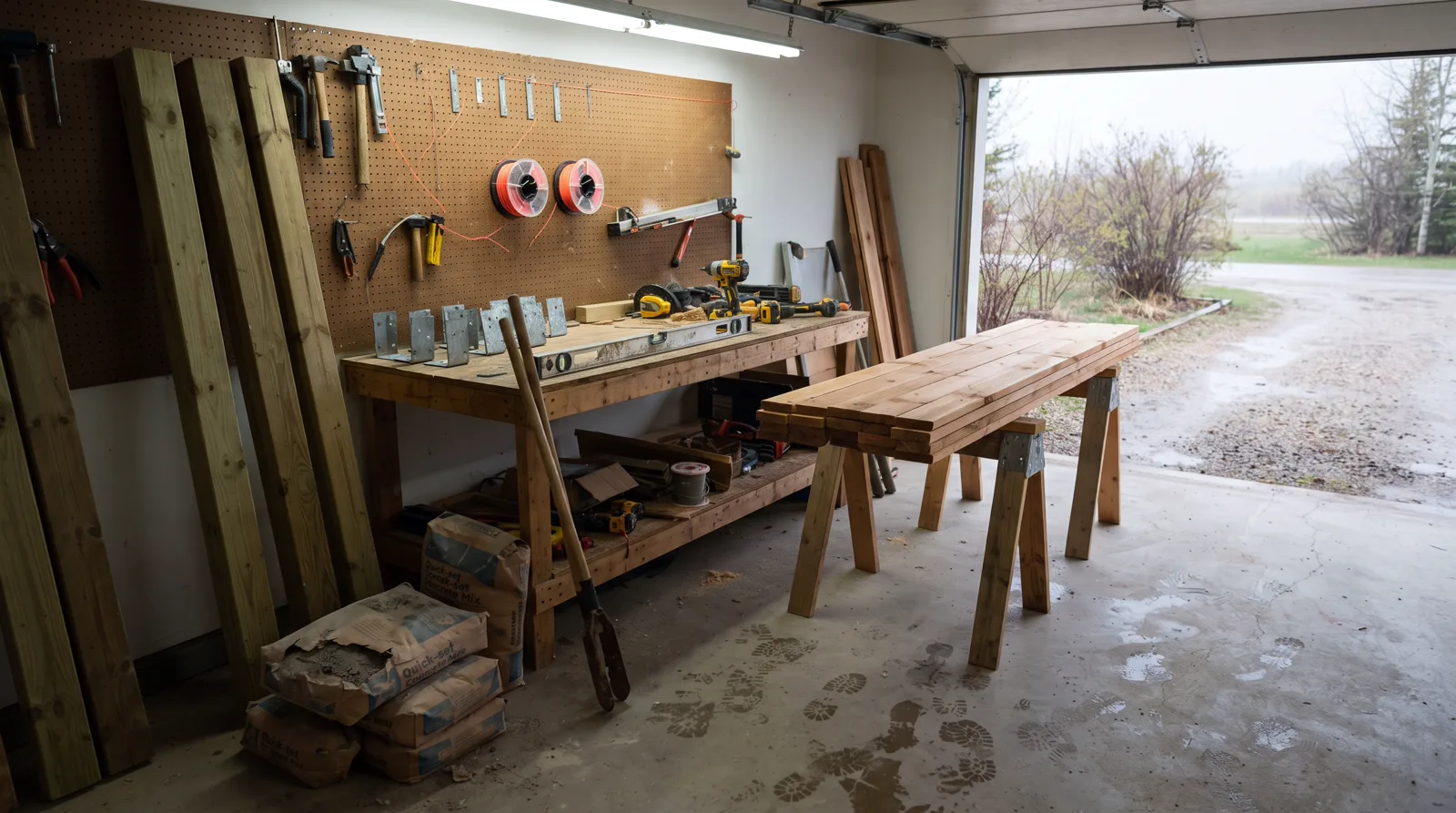
Fence Repair That Stands Up to Alberta Winters.
From leaning posts and broken panels to full section replacement, local pros fix fences damaged by freeze-thaw, wind, hail and time.
Fence Repair Services
Local pros repair wood, vinyl and chain link fences damaged by weather, impact, rot or age.
Fence Post Replacement
Replace rotted, heaved or broken posts. We dig below frost line (4 feet minimum in Alberta), set new posts in concrete rated for freeze-thaw cycles, and brace until cured. Includes disposal of old post and concrete.
Panel Repair & Replacement
Fix or replace fence panels damaged by wind, hail, falling branches or rot. Match existing style and stain. Local pros source lumber locally and can often repair quickly when material is in stock.
Gate Repair & Hardware
Fix sagging gates, replace broken hinges, install new latches and springs. We re-square gates, upgrade hardware to heavy-duty models that handle Alberta temperature swings, and adjust for smooth operation year-round.
Leaning Fence Correction
Straighten fences pushed by frost heave, soil settlement or wind. Local pros excavate heaved posts, reset them plumb with proper bracing, and add concrete collars if needed. Includes checking adjacent posts for stability.
Full Fence Replacement
When repair costs approach replacement cost, local pros remove the old fence, haul debris, and install a new fence built for Alberta climate. Includes permit application if required by your municipality.
Storm Damage Emergency Repair
Same-day or next-day service for fences damaged by severe weather. Local pros secure dangerous sections, document damage for insurance claims with photos and measurements, and provide written repair estimates.
Why Fence Repair is Different in Alberta
❄️ Freeze-Thaw and Post Heaving
Alberta soil freezes deep and expands, pushing posts up over winter. We reset posts below the 4-foot frost line and use concrete designed for freeze-thaw cycles. Posts set too shallow will heave again within two years.
💨 Chinook Wind Damage
Sudden warm winds can gust to 100 km/h and snap fence panels or rip posts from frozen ground. We brace repairs with extra fasteners and recommend reinforced posts on exposed properties west of Highway 16A.
📋 Permits and Property Lines
Spruce Grove requires a permit for fences over 2 meters or on corner lots. Stony Plain has setback rules for fences near roadways. We know the bylaws and can handle permit applications if your repair triggers one.
🛡️ Insurance Claims and Documentation
Most home insurance covers sudden fence damage from wind, hail or falling trees. We provide detailed photo documentation, damage descriptions and repair estimates formatted for Alberta insurers. Keep your claim moving.
What it costs here
Everything You Need to Know About Fence Repair in Spruce Grove
A detailed guide to diagnosing damage, choosing repair vs. replacement, and understanding Alberta-specific challenges.
Why Alberta Fences Fail: The Climate Reality in Spruce Grove and Parkland County
Fences in Spruce Grove and Stony Plain face punishment that homeowners in milder climates never see. The freeze-thaw cycle here runs from October through April, sometimes May. Daytime temperatures climb above zero, melting snow and ice around fence posts. At night, everything refreezes and expands. That expansion pushes against post concrete, cracks wood fibres, and forces fasteners loose. After five or six seasons of this, even a well-built fence starts to lean, sag, or split. The damage accumulates silently until a chinook wind or heavy snow load finishes the job.
Chinook winds are the other major destroyer. When a chinook roars through Parkland County, gusts can hit 80 to 100 kilometres per hour. Solid panel fences act like sails. If the posts are already weakened by frost heave or rot, the wind will snap them at ground level or tear entire sections off the rails. You will see this most often on the west and southwest sides of properties, where prevailing winds hit hardest. Chain link fences handle wind better because air flows through, but wooden privacy fences and vinyl panels take the full force.
Hail is less frequent but devastating when it arrives. A severe hailstorm can shred vinyl fence panels, dent metal posts, crack composite caps, and splinter wooden pickets. The June 2020 hailstorm that hit north of Edmonton left thousands of fences across Spruce Grove and Acheson needing repair or full replacement. Insurance claims spiked, and contractors were booked for months. Hail damage is often obvious right away, but sometimes the cracks do not leak or split until the next freeze-thaw cycle opens them up.
Reading the Warning Signs: When Repair Becomes Replacement
The decision between repairing a few boards and replacing an entire fence comes down to how much of the structure is compromised. If you have one or two broken pickets and the posts are still plumb and solid, repair is straightforward. Pull the damaged boards, cut new ones to length, and fasten them in place. Cost is usually $150 to $400 depending on material and access. But if you are replacing boards every season, or if multiple posts are leaning, you are spending money on a fence that will fail completely within a year or two.
Leaning posts are the clearest sign that the foundation has failed. In Spruce Grove, most fence posts are set in concrete to a depth of at least 1.2 metres, which is below the frost line. If a post leans more than a few degrees, the concrete collar has cracked, the post has rotted below grade, or frost heave has pushed it out of alignment. You cannot fix this by pushing the post back and adding a brace. The post needs to come out, the hole needs to be cleaned or re-dug, and a new post needs to go in with fresh concrete. If more than a third of your posts are in this condition, replacing the entire fence is more cost effective than patching section by section.
Rot is harder to spot until it is advanced. Wooden fence posts rot from the inside out, starting at ground level where moisture sits longest. The outside may look fine while the core is soft and crumbly. To test a post, push hard near the base. If it flexes or feels spongy, it is rotted. Dig down a few inches with a screwdriver. If the wood is dark, stringy, or punky, the post is done. Cedar posts last longer than spruce or pine, but even treated cedar will rot after 15 to 20 years in Alberta soil. Vinyl and metal posts do not rot, but they can crack, bend, or pull loose from their footings.
The Fence Repair and Replacement Process in Spruce Grove: What Actually Happens
A professional fence repair starts with an on-site assessment. The contractor walks the fence line, checks every post for plumb and rot, inspects rails and pickets, and notes which sections are salvageable and which need replacement. They measure the property line to confirm the fence is on your side of the boundary, not encroaching on your neighbour or the municipal right of way. In Parkland County and Spruce Grove, fences must be set back at least 1.2 metres from the road allowance on corner lots. If your fence is too close, the town can order it moved, and insurance may not cover damage.
Permits and Approvals
Spruce Grove requires a development permit for new fences over 2.0 metres tall, and for any fence in a front yard. Repairs and like-for-like replacements in the back or side yard usually do not need a permit, but if you are changing the height, style, or location, you need approval. The permit costs around $75 to $150 and takes one to two weeks to process. Parkland County has similar rules but enforces them more strictly in areas zoned for country residential or agricultural use. If your property backs onto a park, creek, or utility corridor, you may need additional clearance from the municipality or the utility company.
Homeowner association rules add another layer. Many neighbourhoods in Stony Plain and Spruce Grove have covenants that specify fence height, colour, and material. Vinyl fences may be restricted to white or tan. Chain link may be banned entirely. Wood fences may need to match the style of the original development. Check your HOA documents before ordering materials. If you install a fence that violates the covenant, the HOA can force you to tear it down and fine you for the infraction.
Demolition and Removal
If the fence is being fully replaced, the old fence comes down first. Crews pull pickets and rails, cut posts at ground level or dig them out with a jack, and haul the debris away. Wooden fences can usually go to a landfill or recycling depot. Vinyl and metal fences must be separated and taken to a facility that accepts them. Concrete footings are either broken up and removed or left in place and worked around. Removing concrete adds cost, typically $50 to $100 per post, but it is necessary if the new fence is going in the exact same spot and the old footings are cracked or misaligned.
Site preparation includes clearing vegetation, grading the ground if needed, and marking utility lines. In Alberta, you must call Alberta One-Call at least two business days before digging. They will flag the locations of buried gas, power, water, sewer, and telecom lines. Hitting a gas line or fibre optic cable can cause thousands of dollars in damage, service outages, and fines. Most contractors handle the One-Call request, but it is your responsibility as the property owner to ensure it happens.
Post Installation and Alignment
New posts go in first. The crew digs holes to the correct depth, usually 1.2 to 1.5 metres, which puts the base below the frost line and prevents heaving. They set the posts in the holes, check for plumb with a level, and brace them temporarily. Then they pour concrete around each post and let it cure for 24 to 48 hours. In cold weather, the concrete may need longer to set, or the crew may use a fast-setting mix. Once the posts are solid, the braces come off and the crew installs the rails, brackets, and panels.
Alignment matters. A fence that snakes or dips looks bad and fails faster. Contractors use string lines and laser levels to keep the top rail straight. They adjust post height to follow the slope of the yard, either by stepping the fence in level sections or by raking the panels to follow the grade. Stepping looks cleaner on steep slopes and is easier to build, but raking uses less material and covers the ground more completely.
Materials, Methods and What Actually Lasts in Alberta Conditions
Wood is still the most common fence material in Spruce Grove, but not all wood performs the same. Pressure-treated spruce or pine posts and rails are the budget option, costing $20 to $35 per linear foot installed. They last 10 to 15 years if maintained. Cedar is more expensive, $30 to $50 per linear foot, but resists rot better and can last 20 years or more. Cedar also weathers to a silver-grey colour that many homeowners like. If you want wood to stay brown, you need to stain or seal it every two to three years. Skip that maintenance and the wood will crack, warp, and splinter.
Vinyl fences cost $35 to $60 per linear foot and promise low maintenance. They do not rot, and they do not need painting. But vinyl gets brittle in extreme cold. When the temperature drops to -30 or -40 degrees, a hard impact can crack a panel. Chinook winds can also bend or pop vinyl panels out of the rails if they are not properly locked in. Quality matters with vinyl. Cheap big-box vinyl fences fade to yellow and crack within five years. Commercial-grade vinyl with UV inhibitors and thicker walls lasts 20 to 30 years. Ask for the product warranty and check the wall thickness. Anything under 0.100 inches is too thin for Alberta.
Chain Link and Metal Options
Chain link fences are the workhorse for back lanes, industrial yards, and budget-conscious homeowners. Galvanized chain link costs $15 to $25 per linear foot and lasts 30 years or more with no maintenance. Vinyl-coated chain link costs a bit more but looks nicer and resists rust in areas where salt spray from winter roads settles on the fence. Metal posts are set in concrete just like wood posts, but they do not rot. The mesh can sag over time if the tension wire is not installed or if the posts shift, but that is repairable.
Ornamental metal fences, usually aluminum or steel, cost $50 to $100 per linear foot. They look elegant, resist rust if powder-coated, and handle wind well because air flows between the pickets. Steel is stronger but heavier and more expensive. Aluminum is lighter, easier to install, and does not rust, but it can dent if hit hard. Both materials last 30 to 50 years. Ornamental metal is common in front yards where appearance matters and privacy is less important.
Repair Versus Replace: The Cost Threshold
Repairing individual components is cost effective when the damage is isolated. Replacing a broken picket costs $5 to $15 per board plus labour. Replacing a post costs $100 to $200 including concrete and labour. Replacing a gate costs $200 to $600 depending on size and hardware. If your total repair bill is less than half the cost of a new fence, repair makes sense. If the repair bill is more than half, or if you are facing major repairs again within two years, replacement is the better investment.
A full fence replacement in Spruce Grove costs $3,000 to $8,000 for a typical residential lot, depending on material, height, and length. Chain link is cheapest, wood is mid-range, vinyl and ornamental metal are top end. The cost includes demolition, disposal, post installation, panels or pickets, gates, and cleanup. Add $500 to $1,000 if you need to remove old concrete footings or if access is difficult. Most contractors give free estimates and will walk you through the options. Get at least three quotes and check references before signing.
What Fence Repair Really Costs in Spruce Grove and the Tri-Region
Fence repair costs in Spruce Grove, Stony Plain, and Parkland County typically range from $200 for a simple board swap to $3,500 or more for replacing multiple damaged sections or an entire fence line. A common scenario is replacing three to five rotted fence posts and the attached rails and pickets, which usually runs $800 to $1,800 depending on the fence height, material, and whether the old concrete footings can be reused or need to be broken out and reset. Small patch jobs like reattaching a few loose boards or tightening sagging gates cost $150 to $400, while replacing a single leaning post with a new concrete footing averages $250 to $500. If an entire 50 foot section needs rebuilding after wind or frost heave damage, expect $2,000 to $3,500 for materials, labor, and proper frost footings below the four foot frost line.
Several factors drive the final price in this region. Material choice is the biggest variable: pressure treated pine is the budget option at roughly $20 to $35 per linear foot installed, cedar runs $30 to $50, vinyl costs $35 to $60, and composite or steel can reach $50 to $80 per foot for full replacement. Labor rates in the Tri-Region sit around $60 to $90 per hour for skilled fence installers, and a typical post and panel repair job takes four to eight hours depending on access, soil conditions, and whether old concrete needs to be removed. Accessibility matters too. If your fence backs onto a ravine, shared alley, or tight side yard with no equipment access, expect a 20 to 40 percent labor premium because everything has to be carried and mixed by hand. Seasonal timing also plays a role: contractors are busiest May through September and may charge a small premium or have longer waits, while shoulder season work in April or October can sometimes be negotiated at a lower rate if weather permits.
Alberta's climate adds unique cost drivers that don't exist in milder regions. Frost heave is the most common culprit behind leaning posts and buckled fence lines, especially in the heavy clay soils around Spruce Grove and Stony Plain. Properly repairing frost damaged posts means digging below the four foot frost line and pouring a concrete collar or using a sono tube footing, which adds $50 to $100 per post compared to a shallow reset that will just heave again next spring. Chinook winds and sudden freeze thaw cycles crack and warp wood faster than steady cold, so repairs often include replacing not just the obviously broken boards but also the ones with hidden stress cracks that will fail within a year. Hail damage is another Alberta reality: a severe storm can shred the tops of fence pickets and require replacing the top third of panels even if the posts and rails are sound. Finally, snow load matters for horizontal board fences and privacy screens, which can bow or collapse under heavy wet spring snow if the framing wasn't built to code. Fixing snow damage often means adding mid-rails or upgrading to thicker posts, which increases material and labor costs but prevents repeat failures.
Comparing Your Fence Repair Options: Patch, Section Replacement, or Full Rebuild
Deciding whether to patch, replace a few sections, or rebuild the entire fence depends on the extent of damage, the age of the fence, and how long you plan to stay in the home. Patching works well for isolated issues like a single broken post, a handful of split pickets, or a sagging gate. It's the most economical short term fix at $150 to $600, but it only makes sense if the rest of the fence is structurally sound and you're not just chasing the next failure point. If more than 30 percent of your fence has rotted posts, leaning sections, or widespread board damage, patching becomes a waste of money because you'll be calling the contractor back every season. Section replacement is the middle ground: you remove and rebuild the damaged 20 to 50 foot stretch while leaving the rest intact. This costs $1,200 to $3,000 depending on length and material, and it's the right call when the damage is localized to one side of the yard or a section that takes the brunt of wind or sun. A full rebuild runs $4,000 to $12,000 for a typical residential yard perimeter, and it makes sense if the fence is over 20 years old, most posts are compromised, or you want to upgrade materials and style while fixing the structural problems.
Material choice changes the repair strategy and long term value. Pressure treated pine is the default for most repairs because it matches existing wood fences, costs less, and is easy to work with, but it will still rot at ground level in 12 to 18 years even with proper footings, especially in the Tri-Region's wet spring soil. Cedar lasts longer, typically 20 to 25 years before significant decay, and it weathers to a silver gray that many homeowners prefer, but it's harder to match if you're only replacing a few boards in an older fence because new cedar is redder and stands out for a year or two. Vinyl fencing eliminates rot and insect issues entirely and can last 30 years or more, but it becomes brittle in extreme cold and can crack during Chinook temperature swings or under impact from blown debris or snow sliding off a roof. Repairing vinyl usually means replacing entire panels rather than individual pickets, which can be tricky if your fence is older and the exact color or profile has been discontinued. Composite and metal options like aluminum or powder coated steel are virtually maintenance free and handle Alberta weather well, but they're expensive to install and difficult to match if you're only repairing part of the fence, so they're usually chosen as part of a full rebuild rather than a patch.
When Partial Replacement Fails and You Need a Full Rebuild
You'll know it's time for a full rebuild rather than more patches when you start seeing cascading failures: you fix one post and the next one leans within a month, or you replace boards on the sunny side only to find the shaded sections rotting from trapped moisture. Fences that are 20 years old or more often reach a tipping point where the cost of piecemeal repairs over two or three years exceeds the cost of a full replacement done right the first time. Another sign is when the fence no longer meets your needs. Maybe you originally installed a four foot high board on board for privacy, but your new neighbors have a deck that overlooks your yard and you want to go up to six feet, or you want to switch from solid panels to a horizontal slat design that handles wind better. In those cases, trying to retrofit or patch the old structure is more expensive and less satisfying than a clean slate rebuild that gives you exactly what you want and starts the longevity clock over.
Alberta building codes and property line rules also sometimes force a rebuild. If your old fence was built right on the property line as a shared structure with your neighbor and it's now failing, you may not be able to legally repair it without written agreement from the neighbor or a survey confirming the line. Many homeowners discover during a repair attempt that their fence is actually six inches onto the neighbor's side or that the original posts were set without permits, and fixing it properly means pulling everything out and starting over on the correct line with a permit from Spruce Grove or Parkland County. Wind load requirements have also been tightened in recent updates to the Alberta Building Code, so if you're rebuilding, you may be required to use deeper footings, stronger posts, or additional bracing that wasn't needed when the fence was first installed. A full rebuild gives you the chance to meet current code, avoid future enforcement issues, and pass any requirements if you sell the home.
Common Mistakes and Contractor Red Flags That Cost You More Later
One of the biggest DIY mistakes is reusing old concrete footings or resetting posts at the same shallow depth that caused the original failure. Frost heave happens because water in the soil freezes, expands, and physically lifts anything that isn't anchored below the frost line. In the Tri-Region, that line sits at roughly 48 inches, but many older fences and quick patch jobs only go down 24 to 30 inches, which means the problem will repeat itself the next winter. Trying to save a few hours by pouring a shallow footing or just tamping gravel around the post might hold for one season, but it guarantees you'll be out there again next spring digging out a leaning post. Another common error is using the wrong fasteners: regular screws or nails rust out quickly in Alberta's wet freeze thaw cycle, and fence panels start sagging or boards pop loose. Galvanized or coated exterior grade fasteners cost a few dollars more per box but last the life of the fence. Finally, homeowners often ignore drainage: if water pools along the fence line because of poor grading or a downspout that dumps right at the posts, even pressure treated wood will rot in half the expected time.
- No liability insurance: If a worker is injured on your property and the contractor has no liability insurance account, you can be held personally liable for medical costs and lost wages. Always ask for proof of WCB coverage and verify the account number online before work starts.
- Cash only, no contract, no receipt: This is a tax dodge that leaves you with zero recourse if the work is defective, the posts lean after the first winter, or the contractor disappears halfway through. Legitimate companies provide written quotes, contracts, and receipts, and they're comfortable with electronic payment or checks.
- No building permit when required: Most municipalities in the Tri-Region require a permit for fences over six feet tall, fences on corner lots with sightline rules, or any fence that affects drainage or a utility easement. A contractor who says permits are a waste of time is either ignorant of local bylaws or trying to cut corners. If you skip the permit and get caught, you may have to tear the fence down and rebuild it to code at your own expense.
- Vague timeline, no clear scope: A professional provides a detailed scope that lists exactly what will be removed, what materials will be used, how deep the footings will be, and what the cleanup and warranty terms are. If the quote just says 'fix fence' with a price and a handshake, you have no leverage when the contractor uses thinner posts, sets footings at 30 inches, or leaves a mess of broken concrete in your yard.
- Pressure to decide today or lose the price: High pressure tactics are a classic red flag. Reputable contractors are busy but not desperate, and they don't manufacture urgency with 'today only' pricing. Take the time to get two or three quotes, check references, and verify credentials before signing anything.
Quality Shortcuts That Fail in Alberta Weather
Some contractors cut quality in ways that aren't obvious until the first hard winter. One common shortcut is using undersize posts: code calls for four inch by four inch posts for most residential fences, but some installers use three and a half inch by three and a half inch posts because they're cheaper and lighter to handle. The difference seems minor, but in high wind or snow load conditions, the smaller posts flex and twist, causing panels to sag and fasteners to pull loose. Another shortcut is skipping the gravel base at the bottom of the post hole. Proper practice is to put four to six inches of three quarter inch crushed gravel in the hole before setting the post and pouring concrete, which allows water to drain away from the wood and reduces rot. Without that gravel layer, water sits at the base of the post, the wood stays wet, and decay starts within a few years even on pressure treated lumber.
Inadequate concrete volume is another issue: some contractors pour just enough concrete to fill the hole around the post, but best practice is to create a collar that extends slightly above grade and slopes away from the post to shed water. Skimping on concrete might save them $10 per post, but it costs you years of fence life. Similarly, not allowing proper cure time before loading the fence with panels or tensioning the rails can cause posts to shift or lean because the concrete hasn't reached full strength. In cold weather, concrete needs 48 to 72 hours to cure properly, and rushing the install to finish in one day often results in alignment problems that show up a week later. Finally, watch for contractors who don't properly space and brace posts during the concrete pour: even a small lean or twist at install time gets magnified over the length of the fence and creates wavy fence lines and gaps between panels.
How to Hire the Right Fence Contractor in Spruce Grove and the Tri-Region
Start by getting at least three written quotes from local contractors who specialize in fencing, not general handymen. A detailed quote should specify the exact materials including lumber grade and dimensions, fastener type, footing depth and concrete volume, the number of posts and panels, and a clear timeline with start and completion dates. It should also state who pulls the permits if required, who handles locates for buried utilities through Alberta One Call, and what the cleanup and warranty terms are. If a quote is vague or verbal only, move on. Ask each contractor for proof of WCB coverage and general liability insurance with at least two million dollars in coverage, and verify the WCB account is active by checking online or calling the WCB directly. Also ask for references from jobs completed in the last year, and actually call them. Most satisfied customers are happy to spend two minutes telling you whether the contractor showed up on time, finished as promised, and left the site clean.
Ask specific questions that reveal experience and honesty. How deep will the footings be, and why? A good contractor will explain the four foot frost line requirement without you having to prompt them. What happens if you hit rock or an old buried concrete pad while digging post holes? The answer should involve options like relocating the post slightly, using a rock breaker, or adjusting the design, not just 'we'll figure it out.' How do you handle drainage and grading around the posts? If they look puzzled, that's a warning sign. What's your process if we get a heavy rain or early snow during the install? Professional contractors have contingency plans and don't just walk away from an open dig or half finished fence. Also ask about warranty: most reputable companies warranty their work for at least one year against defects in workmanship, and some offer longer coverage on materials. If they say 'no warranty' or 'all sales final,' that tells you they don't stand behind their work.
Timeline and payment terms matter too. A typical fence repair or section replacement takes one to three days depending on size and complexity, and full residential perimeter rebuilds usually take three to seven days assuming good weather and no surprises underground. Be wary of contractors who promise to finish a complex job in a single day unless they're bringing a large crew, because rushed work leads to mistakes. Payment terms should be structured with a deposit of 20 to 40 percent to cover materials, a progress payment when the posts are set and panels are up, and a final payment upon completion and your approval of the work. Never pay the full amount up front, and never pay cash without a receipt. If a contractor demands full payment before starting or finishing, or resists giving a receipt, walk away. Finally, get everything in writing: a signed contract protects both you and the contractor by clearly defining the scope, materials, timeline, payment terms, and what happens if something goes wrong or needs to change.
How Tri-Region Services Helps
Tri-Region Services takes the guesswork and hassle out of finding a trustworthy fence repair contractor in Spruce Grove, Stony Plain, Parkland County, and Acheson. When you contact us with your fence repair or replacement need, we match you with one vetted, fully insured local professional who has proven experience working in Alberta conditions and has been asked about liability insurance, liability insurance, and quality workmanship. You'll receive a free written quote that breaks down materials, labor, timeline, and warranty, and there's no obligation to proceed. We don't operate a call center or pass your information to a dozen companies hoping one will call you back. Instead, we route you directly to a qualified pro who can assess your specific situation, explain your options, and provide honest advice on whether you need a simple patch, a section replacement, or a full rebuild. It's straightforward, local, and designed to save you time while ensuring you're working with someone you can trust.
Every Contractor is Licensed, Insured and Proven
We connect you with fence repair professionals who meet Alberta standards and carry the coverage that protects your property.
Licensed and Bonded
All contractors hold valid Alberta business licenses and post bonds where required by municipal bylaws.
liability insurance
Every crew tells us they carry liability insurance, so you are never liable if someone is injured on your property.
Permit Knowledge
Contractors know Spruce Grove, Stony Plain and Parkland County fence bylaws and handle permit applications when required.
Insurance Claim Documentation
Detailed photo documentation and written estimates formatted to support your home insurance claim.
2-Year Workmanship Warranty
All repairs are backed by a minimum 2-year warranty on labour and installation, separate from material warranties.
Emergency Service Available
Storm damage and dangerous fence sections are flagged urgent and routed first.
This page is not tied to a contractor's brand. Leads route straight to your one local partner. Verified reviews can appear here once that partner has them (never fabricated).
Serving the whole Tri-Region
7 Common Fence Repair Questions
How much does it cost to fix a leaning fence in Spruce Grove?+
Do I need a permit to repair my fence in Spruce Grove?+
Why do my fence posts keep heaving out of the ground every winter?+
Can my fence be repaired or does it need full replacement?+
How long does a typical fence repair take?+
Will my home insurance cover storm damage to my fence?+
What is the best way to prevent fence damage in Alberta winters?+
Get your free quote
Tell us what you need and a local pro will get right back to you.
- ✓ Sent straight to a local business
- ✓ You choose who you hire
- ✓ Free, with no obligation