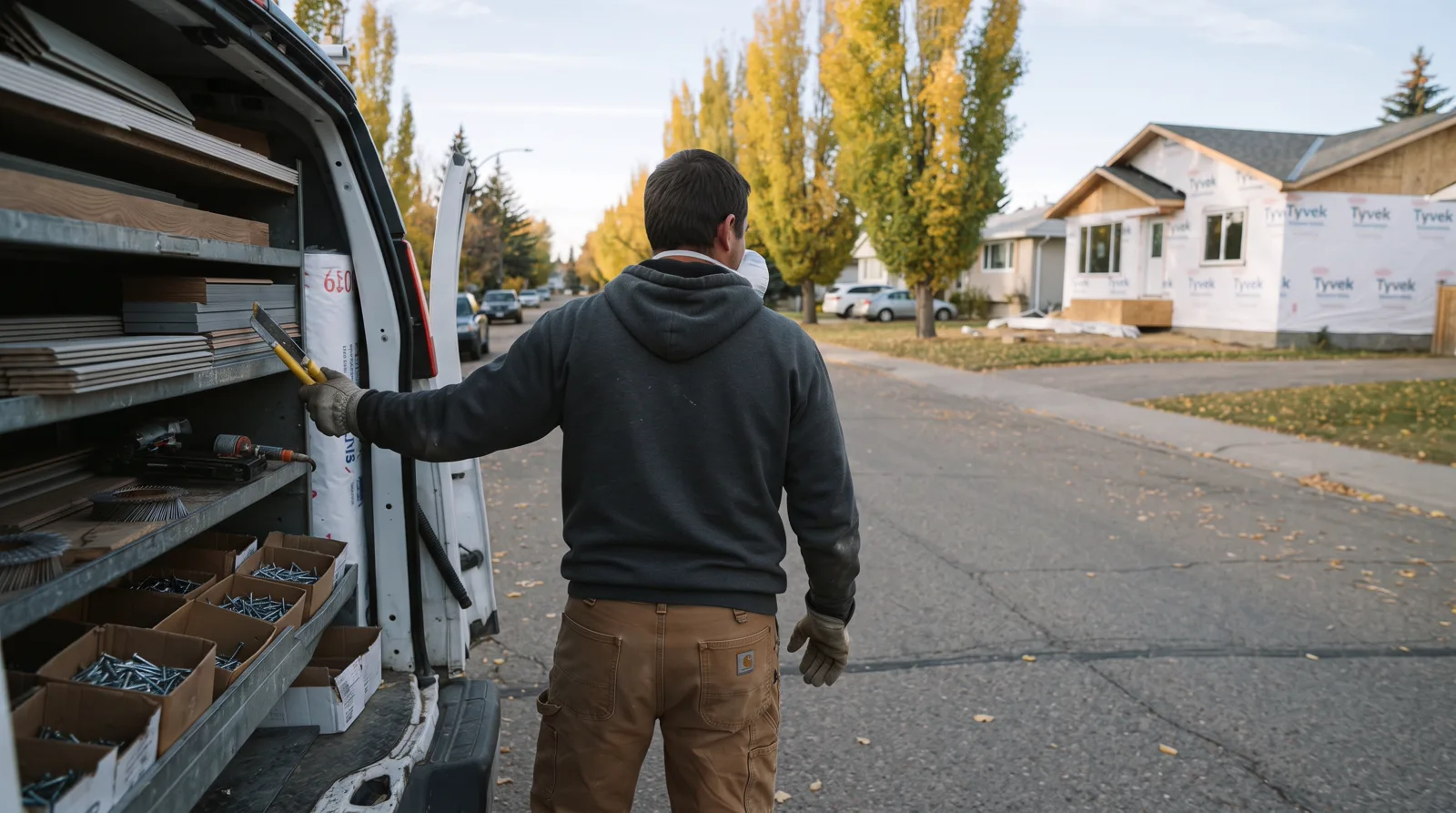
Premium Fiber Cement Siding for Alberta Weather.
James Hardie and fiber cement panels engineered for hail, chinook wind, and freeze-thaw cycles. Installed by certified contractors serving the Tri-Region.
Complete Fiber Cement Installation
From material selection to final inspection, installed to Alberta building code and manufacturer specs.
Full James Hardie Installation
Complete teardown, housewrap, insulation upgrade, and fiber cement panel install. Includes all trim, corners, and caulking. Licensed crews handle building permits and final inspection. Warranty registered with manufacturer.
Fiber Cement Panel Replacement
Replace damaged or cracked panels from hail, impact, or improper install. Color matched to existing siding. Common after Alberta hailstorms when insurance covers the claim.
Color & Design Consultation
Walk through James Hardie color options, panel profiles, and trim styles. Review samples on site in natural light. Coordinate with roof, stone, and landscaping for curb appeal.
Trim, Soffit & Fascia
Fiber cement trim boards, corner posts, and soffit panels. More durable than wood or vinyl. Painted or primed finish. Integrated with rainwater management and attic venting.
Insulation & Vapor Barrier Upgrade
Add rigid foam, spray foam, or batt insulation behind new siding. Upgrade housewrap to high-performance vapor barrier. Reduces heating costs in Parkland County winters. Required for some insurance rebates.
Warranty Registration & Maintenance Plan
Register your James Hardie warranty (up to 50 years non-prorated). Receive maintenance checklist and annual inspection reminders. Identify caulking, paint touch-up, and fastener needs before they escalate.
Why Fiber Cement Works in Alberta
🧊 Freeze-Thaw Cycle Performance
Fiber cement does not absorb water like wood or crack like vinyl in temperature swings. Alberta winters cycle from minus 30°C to chinook thaws above freezing. Properly installed fiber cement handles the expansion and contraction without warping or splitting.
⛈️ Hail Damage Resistance
James Hardie products carry a Class 4 impact rating, the highest available. Parkland County sees frequent hailstorms between May and September. Fiber cement resists denting and cracking, which can lower home insurance premiums in high-risk zones.
💨 Chinook Wind & Snow Load
Fiber cement panels are fastened through the sheathing into studs, not just nailed to OSB. Chinook winds in Spruce Grove and Stony Plain can exceed 90 km/h. Proper fastening prevents panel lift. Snow load from roof valleys and ice dams will not deform rigid fiber cement.
🔥 Non-Combustible Fire Rating
Fiber cement is made from sand, cement, and cellulose fibers. It will not ignite or contribute fuel to a structure fire. Required by some insurance carriers in wildfire interface zones. Also resists ember intrusion during grass fires common in rural Parkland County.
What it costs here
Everything You Need to Know About Fiber Cement Siding in Alberta
From product selection and installation to permits, warranties, and long-term maintenance.
What Fiber Cement Siding Actually Is and Why It Dominates Alberta Exteriors
Fiber cement siding is a composite building material made from Portland cement, sand, cellulose fiber and water. The mixture is formed into planks, panels or shingles, then cured under high pressure and heat to create boards that are dimensionally stable, fire resistant and extremely durable. James Hardie is the best known brand, but LP SmartSide Cedarmill (a treated engineered wood) and Allura are also installed across Spruce Grove, Stony Plain and Parkland County. The material weighs more than vinyl but far less than brick or stone, which makes it manageable for retrofit projects on older homes without foundation concerns. Fiber cement accepts and holds paint exceptionally well, and factory primed or pre finished planks are available in dozens of colors that resist fading under Alberta's intense summer sun.
Alberta contractors have adopted fiber cement at a higher rate than the national average because the climate here is punishing. Hail storms large enough to total car windshields are routine from May through September, and fiber cement is rated to survive hail impacts that shred vinyl and dent aluminum. Winter temperature swings of 30 degrees Celsius in a single day, thanks to chinook winds, cause expansion and contraction that crack rigid materials and warp wood. Fiber cement moves with temperature changes without splitting, and it does not rot, swell or attract insects the way natural wood does. These performance characteristics make it the preferred choice for new builds in Acheson, Spruce Grove subdivisions and acreage properties in Parkland County where exposure to weather is extreme and service calls are expensive.
Installation availability is strong across the Tri Region. Most siding contractors working in Spruce Grove, Stony Plain and Edmonton carry fiber cement as a core product line, and material supply is reliable through distributors in Acheson and west Edmonton. That local supply chain keeps lead times short and replacement stock accessible if a plank is damaged during construction or years later. Warranties on fiber cement products typically run 30 to 50 years when installed correctly, and the material itself often outlasts the fasteners and trim if the home is maintained. For homeowners planning to stay in the house long term or positioning the property for resale, fiber cement delivers a measurable return in curb appeal, energy efficiency and insurance premiums compared to vinyl or aging wood siding.
Alberta Climate Realities That Make Fiber Cement the Smart Choice
Alberta sits in the hail belt that runs from central Montana through Calgary and into central Saskatchewan, and Spruce Grove, Stony Plain and Parkland County see damaging hail storms multiple times per season. A single storm in July can drop golf ball sized hail that punches through asphalt shingles, dents metal and shatters vinyl siding. Fiber cement is tested to withstand hail impacts that would destroy other cladding, and insurance companies in Alberta recognize this. Some insurers offer modest premium reductions for homes clad in impact resistant materials, and after a major hail event, homes with fiber cement typically require only roof and gutter repairs while vinyl sided neighbors are filing total siding claims. That difference can mean thousands of dollars in out of pocket costs and weeks of contractor delays when every crew in the region is booked solid.
Freeze thaw cycling is another relentless stress. Parkland County and areas around Stony Plain experience 40 to 60 freeze thaw events per winter, where daytime temperatures climb above zero and overnight lows drop back below freezing. This cycle drives moisture into tiny cracks and gaps, then expands it into ice that widens those openings. Wood siding rots at the seams, vinyl cracks along the nail line, and metal panels develop stress fractures. Fiber cement does not absorb meaningful amounts of water (less than 5 percent by weight even when submerged), so freeze thaw damage is negligible. The product is also dimensionally stable across the temperature range Alberta sees, from minus 40 Celsius in January to plus 30 Celsius in July, without warping or pulling away from fasteners the way wood and composite products do.
Chinook winds add another variable. A chinook can raise temperatures 20 degrees in an hour, and the sudden warming creates dramatic expansion in building materials that were locked in contraction hours earlier. Rigid sidings crack, and flexible sidings like vinyl ripple and buckle. Fiber cement's thermal expansion rate is low and consistent, so it moves gradually and stays flat against the wall. Snow load and ice damming are also considerations in Spruce Grove and Stony Plain, where rooflines can carry 200 to 400 pounds per square foot of snow after a heavy winter. Ice dams force meltwater sideways under shingles and down behind siding, and any gap or failed seal becomes a leak. Fiber cement installed with proper flashing and a drainage plane sheds water and vapor reliably, and the material itself will not degrade even if it stays wet for weeks during spring melt.
Warning Signs Your Home Needs Siding Replacement or Upgrade
Visual Damage and Material Failure
Walk the perimeter of your home in good light and look for cracked, split or missing planks. Fiber cement that has been struck by hail or impacted by debris may show surface chips or spiderweb cracks, though the damage is usually cosmetic unless the crack runs through the full thickness of the board. Vinyl siding will show punctures, tears or warping, especially on south and west facing walls that take the most sun. Wood siding that is rotting will feel soft when you press on it with a screwdriver, and paint that is peeling or blistering indicates moisture is trapped behind the cladding. Any of these conditions mean the siding is no longer protecting the wall assembly, and water intrusion will accelerate structural damage to sheathing and framing.
Check the trim, corners and seams where different materials meet. Gaps wider than a pencil line, caulking that has cracked and pulled away, or rust stains below metal flashing are signs that the weatherproofing has failed. In Spruce Grove and Stony Plain, ice and wind driven rain will find every opening, and once water gets behind the siding it has nowhere to go until it soaks into the wall or runs down to the foundation. Staining on the interior drywall, especially near windows and exterior corners, is often the first signal that exterior cladding has failed. If you see interior damage, the exterior problem has usually been present for months or years, and the scope of repair will include sheathing and possibly insulation replacement in addition to new siding.
Performance Problems and Energy Loss
Drafts along exterior walls, cold spots near windows, or rooms that are hard to heat in winter indicate that the building envelope is compromised. Siding is part of that envelope, and when it fails the air barrier and insulation behind it are exposed to wind and moisture. You may notice higher heating bills, ice buildup on the inside of windows, or condensation on walls during cold snaps. These are not cosmetic issues. They mean your home is losing heat, and continued exposure will damage the interior finishes and create conditions for mold growth inside the wall cavity. Fiber cement installed over a proper drainage plane and sealed correctly at all penetrations will restore the envelope and cut heating costs measurably.
Insurance and resale considerations also matter. If your current siding is wood or vinyl and it is more than 20 years old, some insurers will flag it during underwriting or renewal. Damaged siding can trigger a coverage exclusion for water damage claims, and that exclusion stays in place until the siding is replaced. When you sell, buyers and their inspectors will note siding condition, and homes with failing cladding either sell for less or the buyer demands a credit at closing to cover replacement. Upgrading to fiber cement before listing can add $8,000 to $15,000 to the sale price on a typical Spruce Grove bungalow, and the home will photograph better and move faster in a competitive market.
The Fiber Cement Installation Process From Contract to Completion
Initial Assessment, Planning and Permits
A professional siding contractor will start with a site visit to measure the home, assess the existing wall assembly, and identify any structural issues that need to be addressed before siding goes on. This includes checking for rot in the sheathing, sagging walls, missing or damaged insulation, and water intrusion points around windows and doors. The contractor will also note the style of siding you want (lap, board and batten, shingle), the finish (smooth, textured, wood grain), and any custom trim or accent details. Once the scope is clear, you will receive a written estimate that breaks out material, labor, permits, disposal and any extra work like sheathing repair or window flashing upgrades. Prices for a full fiber cement reside on a 1,200 square foot bungalow in Spruce Grove typically run $18,000 to $28,000 depending on product choice and site conditions.
Permits are required in Spruce Grove, Stony Plain and Parkland County for any project that involves structural changes or alterations to the building envelope. A straightforward siding replacement over existing sheathing usually qualifies for a simple building permit that costs $150 to $300 and takes a few days to issue. If the project includes window replacement, adding insulation, or changing the wall assembly, the permit process will be more detailed and may require stamped drawings from an engineer. Your contractor will handle the permit application and inspections, and the cost is typically included in the contract. Do not skip the permit. Unpermitted work can void your insurance, complicate future sales, and result in fines or a stop work order from the municipality.
Removal, Prep and Installation
Once permits are in hand and materials are delivered, the crew will begin by removing the old siding, trim and any damaged sheathing. Vinyl and aluminum come off quickly, but old wood siding may be nailed or screwed through multiple layers, and removal can take a full day or more on a larger home. The crew will protect windows, doors and landscaping with tarps and plywood, and debris will go into a bin for disposal. After the walls are stripped, the sheathing is inspected and any soft or rotted sections are cut out and replaced with new plywood or OSB. A weather resistant barrier (house wrap or building paper) is installed over the sheathing, taped at all seams, and flashed carefully around windows, doors and penetrations to create a continuous drainage plane.
Fiber cement installation begins at the bottom of the wall and works upward. Each plank is blind nailed or face nailed (depending on the product and manufacturer spec) through the sheathing and into the studs, with fasteners placed at precise intervals to prevent warping and ensure the warranty remains valid. Planks are cut with a fiber cement shear or a circular saw with a carbide blade, and all cut edges are sealed with paint or caulk to prevent moisture infiltration. Corners are finished with corner trim or mitered joints, and window and door casings are installed over the siding to shed water away from openings. The crew will maintain a consistent reveal (the exposed face of each plank), check level and plumb frequently, and stage the work so that no section of wall is left exposed overnight if rain is forecast.
Finishing, Cleanup and Timeline
Once all siding is installed, the crew will caulk joints, touch up any cut edges or fastener heads with paint, and install the final trim pieces at the roofline, foundation and corners. If you ordered factory finished siding, the job is essentially complete at this point. If the siding is primed only, you will need to apply two coats of 100 percent acrylic exterior paint within 180 days of installation to maintain the warranty. Most homeowners hire a painting contractor for this step, and the cost for a full exterior paint on a typical Spruce Grove home runs $3,500 to $6,500 depending on color, prep and detailing. The contractor will also clean up the site, haul away debris, and walk you through the finished work to confirm everything meets your expectations.
Timeline depends on the size of the home, weather and crew availability. A straightforward reside on a single story bungalow can be completed in three to five days if conditions are good. Two story homes or projects that include sheathing repair, insulation upgrades or custom trim will take longer, often seven to ten days. Weather is the wild card. Rain, high wind or temperatures below 5 degrees Celsius will stop work, and in Spruce Grove and Stony Plain it is common to lose a day or two per week to weather delays between October and April. Summer is the preferred installation season, but skilled crews work year round and will schedule around forecasts to keep the project moving. Once the work is complete and the final inspection is passed, you will receive a warranty certificate from the manufacturer and a contract closeout package from the installer that documents the work for your records and any future buyers.
What Fiber Cement Siding Really Costs in Spruce Grove and the Tri-Region
For a typical single-story home in Spruce Grove or Stony Plain (roughly 1,500 to 2,000 square feet of wall area), expect to invest between $18,000 and $32,000 for a complete fiber cement siding installation, including removal of old siding, proper underlayment, trim, and finishing. Larger two-story homes or homes with complex architectural details, dormers, or multiple gables can easily push that range to $35,000 to $50,000 or more. These are realistic 2026 numbers for quality work done to code by insured contractors in the Parkland County area. Material alone typically accounts for $4 to $9 per square foot installed, but labor, prep, and extras drive the final number significantly higher.
Several factors unique to Alberta directly affect your total cost. If your existing siding is older asbestos shingle or heavily deteriorated hardboard, removal and disposal require certified abatement or extra labor, adding $2,000 to $5,000 to the job. Homes built before modern insulation standards often benefit from adding rigid foam insulation or housewrap upgrades during the siding project, which improves energy efficiency but adds $1.50 to $3 per square foot in material and labor. Many contractors in the Tri-Region also recommend or require impact-resistant underlayment and upgraded fastening schedules to meet local wind and hail exposure ratings, especially if your insurer has flagged storm damage claims in your area. That upgrade typically adds $800 to $2,000 but can reduce your insurance premium and prevent future headaches.
Winter installation is possible with fiber cement but comes at a premium. Manufacturers like James Hardie specify minimum temperatures for installation (typically above 40°F or 4°C), and working in freezing conditions requires heated enclosures, slower cutting and fastening, and careful moisture management to prevent freeze damage to wet-cut edges. Expect winter quotes to run 10 to 20 percent higher than spring or summer pricing, and timelines to stretch longer. Most experienced installers in Spruce Grove prefer to schedule fiber cement work between April and October to avoid these complications and deliver a better result. If you do need winter work, confirm your contractor has done cold-weather fiber cement installs before and ask specifically how they will meet manufacturer temperature and moisture requirements, because a botched winter install can void your product warranty entirely.
Comparing Fiber Cement Styles, Finishes, and Brands Available Locally
James Hardie is the dominant fiber cement brand in Alberta and for good reason. Their products are engineered specifically for freeze-thaw cycles, and their HardieZone system designates our area as HZ5 (the harshest climate rating), meaning the siding sold here has enhanced moisture and temperature resistance compared to product sold in milder regions. Hardie offers lap siding in a variety of widths (the most popular being 8.25 inch exposure), vertical panels, shingle and shake profiles, and architectural trim boards. Their ColorPlus factory finish comes with a 15-year warranty and is baked on in a controlled environment, delivering better durability and fade resistance than field-applied paint. Expect ColorPlus to add $1.50 to $2.50 per square foot over primed product, but you skip the cost and hassle of painting after install, and the finish holds up better to Alberta sun and hail.
Alternatives to Hardie include Allura, CertainTeed, and Nichiha, all of which are available through suppliers in Edmonton and occasionally stocked by contractors serving Spruce Grove and Stony Plain. Allura is a Canadian-made product with good performance in cold climates and often comes in at a slightly lower price point than Hardie, making it an attractive option for budget-conscious projects that still want fiber cement durability. CertainTeed and Nichiha offer unique textures and styles, including deeper woodgrain embossing and wider panel options. Performance-wise, all major fiber cement brands will outlast vinyl and resist fire, insects, and rot, but installation requirements and warranty terms vary. Some brands require certified installers to maintain warranty coverage, and not every contractor in the Tri-Region is trained on every product line, so confirm your contractor's experience with the specific brand you choose before signing a contract.
Choosing between lap siding, panel, and shingle styles depends on your home's architecture and your aesthetic goals. Horizontal lap siding is the most common and versatile choice, working well on ranch-style bungalows, two-story colonials, and modern builds alike. It is also the easiest profile for most contractors to install correctly, which reduces the risk of workmanship issues. Vertical panel siding creates a contemporary or barn-inspired look and works beautifully on accent walls, gable ends, or full exteriors on modern farmhouse designs popular in Parkland County. Shingle and shake profiles mimic cedar and add cottage or heritage character, but they require more cuts, more fasteners, and more labor, so expect installation costs to run 15 to 25 percent higher than standard lap siding. All three styles perform equally well in Alberta weather when installed properly, so let your home's design and your personal taste guide the decision rather than worrying about durability differences.
Mistakes, Shortcuts, and Contractor Red Flags You Must Avoid
The single biggest mistake homeowners make with fiber cement is hiring a contractor who treats it like vinyl siding. Fiber cement is heavy, rigid, and unforgiving. It requires specific fasteners (corrosion-resistant roofing nails or approved screws), precise spacing (nails must hit studs, not just sheathing), and careful attention to clearances and flashing. Improper nailing (overdriven nails that crush the board, underdriven nails that leave gaps, or nails placed too close to edges) will cause cracking, buckling, and moisture infiltration within a year or two. Face nailing through the board (rather than blind nailing through the overlap on lap siding) leaves exposed fastener heads that collect moisture and rust over time. Any contractor who dismisses these details or claims fiber cement installs just like vinyl is either inexperienced or cutting corners, and you should walk away immediately.
Another common shortcut is skipping or cheating on the water-resistive barrier and flashing system behind the siding. Alberta building code requires a proper drainage plane (typically housewrap or building paper) and flashing at all penetrations, windows, doors, and transitions. Fiber cement is not waterproof; it absorbs moisture and relies on proper drainage and ventilation to dry out. If a contractor installs fiber cement directly over old siding without proper underlayment, or fails to install kickout flashing at roof-to-wall junctions, you will end up with hidden water damage, mold, and rot in your wall cavities. Insist on seeing the underlayment and flashing go in before any siding is fastened, and do not accept excuses about the old siding being good enough to leave in place as a backer. Proper prep and moisture management are not optional, and any contractor who tries to skip these steps is setting you up for expensive failures down the road.
Lowball quotes are another major red flag in the fiber cement world. If one quote comes in 30 to 40 percent below others, the contractor is either underestimating the scope, planning to use substandard materials, or intending to cut corners on labor and code compliance. Fiber cement is expensive to buy and time-consuming to install correctly, so there is a floor below which no legitimate contractor can go and still make a reasonable profit. A suspiciously low quote often means the contractor will not pull permits (exposing you to fines and resale problems), will not carry proper liability insurance for workers (leaving you liable if someone is injured on your property), or will disappear halfway through the job when they realize they underbid. Always verify WCB clearance, liability insurance, and references before you hand over a deposit, and be willing to pay a fair price for quality work rather than chasing the cheapest number on paper.
How to Find and Hire the Right Fiber Cement Contractor in the Tri-Region
Start by confirming the contractor is properly licensed, insured, and registered with WCB if they have employees. In Alberta, any contractor doing siding work over $5,000 should carry liability insurance of at least $2 million, and if they have workers on site, they must have liability insurance to protect you from injury claims. Ask to see proof of both before you sign anything, and call the WCB clearance line to verify the account is in good standing. A legitimate contractor will provide this documentation without hesitation. If a contractor hems and haws or offers excuses, move on. You are not just paying for siding; you are paying for accountability and protection, and working with an uninsured or unregistered contractor can leave you holding the bag if something goes wrong.
Ask specific questions about their experience with fiber cement and the brand you are considering. How many fiber cement jobs have they completed in the last two years? Can they provide local references you can drive by and see? Are they familiar with James Hardie's Best Practices manual or the installation requirements for the product you chose? Do they pull permits for siding work, and are they comfortable with a building inspector reviewing their work? A confident, experienced contractor will welcome these questions and provide clear, detailed answers. If the contractor is vague, dismissive, or tries to steer you away from permits or inspections, that is a warning sign. Fiber cement installation is not a place for on-the-job learning, and you want someone who has proven they can handle the product correctly under Alberta conditions.
Get at least three written quotes and compare them carefully, line by line. A good quote will break out material costs, labor, removal and disposal, trim and accessories, permits, and any extras like insulation or repairs. It should specify the brand and profile of siding, the type of underlayment and flashing, the fastener schedule, and the warranty coverage. Beware of vague quotes that just list a total number without detail, because those leave room for the contractor to substitute cheaper materials or skip steps once the job is underway. A detailed, transparent quote signals a contractor who knows what the job involves and is willing to stand behind their pricing. Once you have selected a contractor, get everything in writing: scope, materials, timeline, payment schedule, and warranty. Do not pay the full amount up front (a deposit of 10 to 30 percent is standard), and hold back a portion (typically 10 percent) until the work is complete and inspected to your satisfaction.
How Tri-Region Services Helps
Tri-Region Services takes the guesswork and risk out of finding a fiber cement siding contractor in Spruce Grove, Stony Plain, and Parkland County. Local pros maintain a network of local professionals who specialize in fiber cement installation and have proven track records of quality work and code compliance. When you contact us, we match you with one trusted contractor who will visit your property, assess the scope, and provide a detailed written quote at no cost and with no obligation. You avoid the hassle of calling dozens of contractors, checking references, and worrying about whether someone is legitimate. Our contractors are pre-asked about liability insurance, liability insurance, and customer satisfaction, so you can move forward with confidence knowing you are working with a pro who will do the job right the first time.
What to Expect from a Quality Contractor
The standards that matter for a 30-year investment in your home.
Licensed & Insured in Alberta
Verify contractor liability insurance before work begins.
James Hardie Certified Installer
Certification confirms training on fastening patterns, flashing details, and warranty requirements.
Local References in the Tri-Region
Ask for completed projects in Spruce Grove, Stony Plain, or Parkland County you can drive by.
Written Contract & Scope
Contract must list materials by brand and grade, payment schedule, and completion timeline.
Building Permit Coordination
Contractor pulls permits from Spruce Grove or Parkland County and arranges final inspection.
Manufacturer Warranty Registration
Installer registers your James Hardie warranty within 90 days of completion for full coverage.
This page is not tied to a contractor's brand. Leads route straight to your one local partner. Verified reviews can appear here once that partner has them (never fabricated).
Serving the whole Tri-Region
8 Questions About Fiber Cement Siding
What is fiber cement siding and how is it different from vinyl?+
Is James Hardie the only fiber cement brand available?+
How long does fiber cement siding last in Alberta weather?+
Do I need a building permit to install fiber cement siding in Spruce Grove?+
How much maintenance does fiber cement siding require?+
Will fiber cement siding reduce my home insurance premiums?+
Can fiber cement siding be installed in winter?+
How does the cost of fiber cement compare to vinyl or wood siding?+
Get your free quote
Tell us what you need and a local pro will get right back to you.
- ✓ Sent straight to a local business
- ✓ You choose who you hire
- ✓ Free, with no obligation