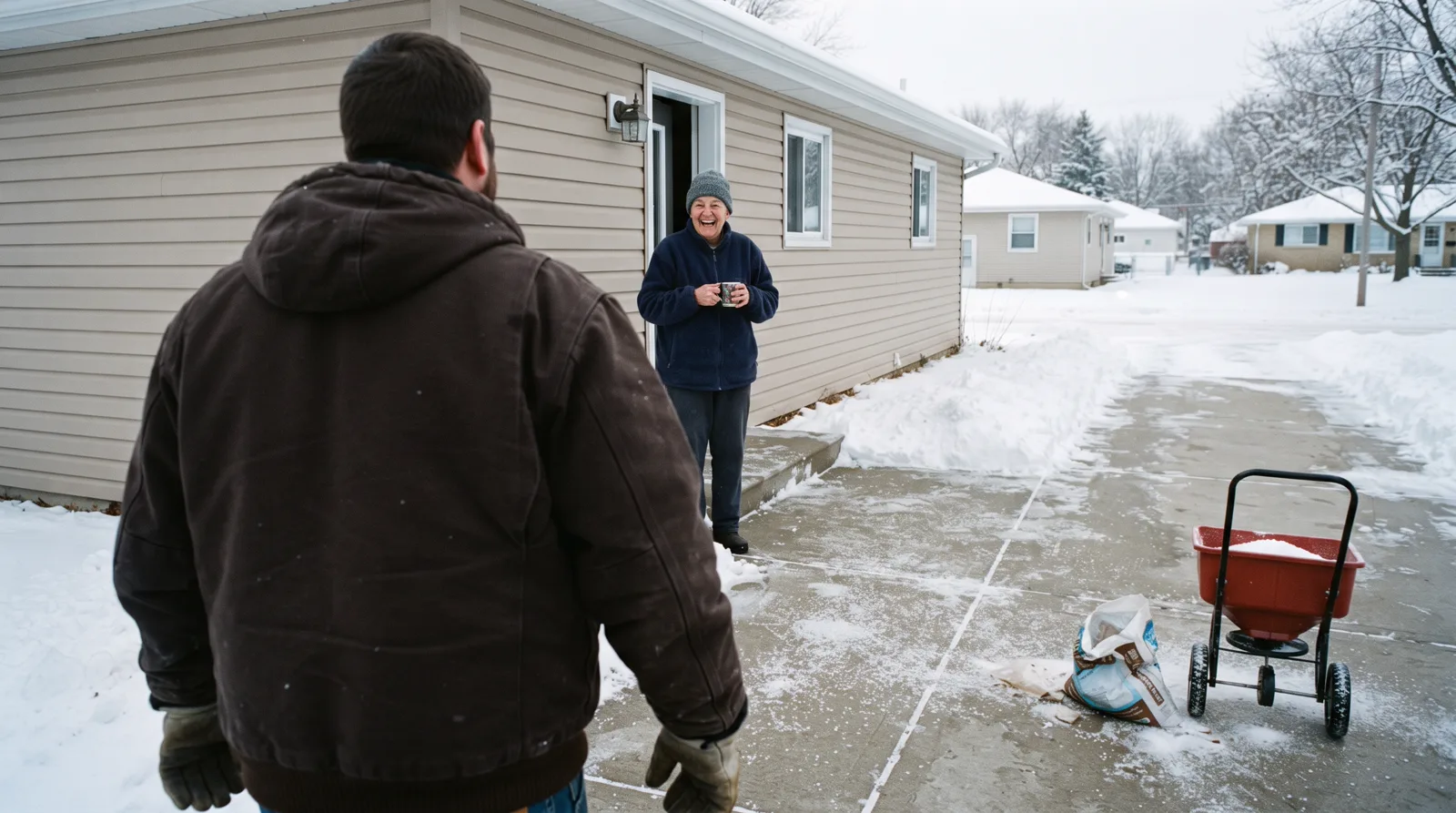
Ice Control & Salting That Keeps Driveways, Walks and Lots Safe All Winter.
Prevent slip hazards and liability with timely salting and de-icing. We connect you with verified ice control pros who respond fast, use the right materials for Alberta winters, and confirm coverage before dispatch.
Salting, De-Icing and Anti-Icing Options
From single-application residential salting to seasonal commercial contracts, matched to your property and budget.
Residential Driveway Salting
Per-application service for typical residential driveways and parking pads. Rock salt or calcium chloride depending on forecast low. Covers driveway surface and apron to sidewalk.
Walkway & Step De-Icing
Focused treatment for front walks, back patios, steps and high-traffic pedestrian zones. Uses finer granules or liquid de-icer to reduce tracking indoors. Often bundled with driveway service.
Pre-Treatment Anti-Icing
Applied before freezing rain or overnight lows to prevent ice bond. Liquid brine or treated salt. Cuts post-storm labor and reduces slip window. Scheduled based on Environment Canada alerts.
Commercial Lot Ice Control
Per-visit or seasonal contract for retail lots, office parks, industrial yards and multi-unit residential. Includes walkways, loading zones and accessible parking. WCB and liability status stated at signup.
Eco-Friendly De-Icing
Magnesium chloride, calcium magnesium acetate or beet juice blends for properties near storm drains, landscaping or pets. Lower environmental impact, effective to around -15°C, higher material cost.
Emergency Ice Response
Same-day or next-morning service when black ice, freezing rain or surprise Chinook melt-refreeze creates urgent slip hazard. Priority dispatch, typically within 1 to 4 hours of request.
Ice Control That Understands Alberta Winter
🌡️ Chinook Freeze-Thaw Cycles
Spruce Grove and Stony Plain see rapid melt during Chinook winds, then hard refreeze overnight. Pros time applications to catch the refreeze window and use blends that stay active through temperature swings.
🛣️ Parkland County Rural Driveways
Long gravel or paved approaches common in Parkland County acreages mean higher material volumes and equipment access planning. Pros confirm driveway length and surface type before quoting.
⚖️ Commercial liability
Alberta slip-and-fall case law puts duty of care on property owners and occupiers. Commercial ice control pros we dispatch carry stated liability limits, documented before the first application.
💧 Storm Drain and Runoff Rules
Excessive salt enters storm systems and impacts Sturgeon River tributaries. Responsible pros use measured application rates, consider eco blends near drains, and follow municipal best practices for chloride management.
What it costs here
Everything You Need to Know About Ice Control in Spruce Grove
Materials, timing, environmental impact, liability and what works in Alberta's unpredictable winter.
What Ice Control and Salting Actually Involves
Ice control is not just someone tossing rock salt on your driveway after a snowfall. It is a timed application of de-icing or anti-icing materials chosen for current and forecast temperatures, surface type, foot traffic volume and liability exposure. Anti-icing happens before precipitation, laying down liquid brine or pre-wetted salt to prevent bond formation between pavement and ice. De-icing happens after ice has formed, using granular salt, calcium chloride, sand or blended products to break the bond and restore traction. Both strategies have a place in Alberta's freeze-thaw climate, and the pro handling your property picks the method and material based on what the thermometer and radar show that day.
Granular rock salt, sodium chloride, stops working effectively below about -10°C. When a cold snap pushes overnight lows to -20°C or colder, calcium chloride or magnesium chloride products take over because they remain active to -30°C and lower. Liquid brine applications before a storm can cut salt use by half and reduce the labour needed to clear ice after the fact, but they require spray equipment and accurate weather timing. Sand adds traction without melting ice, useful on extremely cold days when no chemical will melt, but it leaves residue that clogs storm drains and needs spring sweeping. The material choice is not one-size-fits-all, it shifts day to day with the weather and the consequences of a slip.
Timing separates effective ice control from wasted product. Applying salt during active snowfall means plows bury it or traffic grinds it into slush that refreezes as black ice. Applying it too early, before moisture arrives, lets wind scatter the granules or lets the next chinook melt wash it into the lawn. The most effective window is just as precipitation begins, or immediately after mechanical snow clearing when the pavement is still above -10°C and residual warmth helps the chemical activate. For high-traffic commercial properties, walkways and loading docks, that window can be two in the morning or four in the afternoon, whenever the forecast threat arrives. Timing demands monitoring, not guessing.
Why Spruce Grove and Parkland County Winter Conditions Demand Active Ice Management
Alberta's freeze-thaw cycle is the reason ice control is not optional for any property owner who expects visitors, tenants, deliveries or customers between November and March. A chinook wind can push daytime highs to +5°C, melting snow and ice into water that runs across driveways, steps and parking lots. Overnight the temperature drops back to -15°C and every wet surface becomes a sheet of glare ice with no visible snow cover to warn someone it is slippery. Black ice injuries happen in seconds, and the property owner carries the liability whether the victim is a tenant, a postal carrier, a delivery driver or a neighbour cutting through the yard.
Parkland County and Spruce Grove see repeated melt-refreeze events every winter, sometimes twice in the same week. Roof melt and eavestroughs drip onto walkways during the warm afternoon, freeze solid by evening, then get covered by two centimetres of fresh snow that hides the ice underneath. That hidden layer is where ankles break and skulls hit concrete. Winter 2025 saw six separate chinook events between January and March, each one creating ice conditions that persisted until the next warm spell or until someone applied salt and scraped the surface clean. Waiting for the sun to do the work means waiting days or weeks, and during that wait your exposure to a slip-and-fall claim is live every hour.
Occupiers' Liability Act in Alberta makes property owners and occupiers responsible for taking reasonable care to ensure visitors are safe from hazards. Reasonable care in winter includes timely snow and ice removal or treatment. If someone slips on your unsalted walkway and fractures a wrist, your liability insurer will ask what steps you took and when. An invoice from a verified ice control service showing treatment within twelve hours of the freezing rain event is evidence of reasonable care. No invoice, no log, no witness to salt application equals no defense, and settlements or judgments for slip-and-fall injuries routinely reach $15,000 to $80,000 once lost wages, medical costs and pain damages add up. For commercial properties, the risk is even higher because traffic volume increases the statistical chance of an incident.
How to Know You Need Professional Ice Control
Visible Ice Accumulation and Surface Conditions
If you see smooth, glossy patches on pavement after a chinook or freezing rain, you have ice that needs treatment before the next person walks or drives over it. Melt patterns from roof drip lines create narrow rivers of ice along building foundations and across sidewalks. Shaded areas on the north side of structures stay frozen all day while sunny exposures melt and refreeze each night, creating uneven traction across a single driveway. Any surface where you can see your reflection in the pavement, or where boot prints do not leave a mark, is glare ice and a liability.
High-traffic zones show ice buildup faster than low-use areas because foot traffic and vehicle tires compress snow into dense pack that melts and refreezes into a laminated ice sheet. Building entrances, mail kiosks, garbage enclosures and parking stall approaches all develop thick ice layers over the course of a season. Once ice thickness exceeds two centimetres, chipping it mechanically without damaging the pavement underneath becomes difficult, and salt application alone takes hours to break the bond. Catching ice early, when it is still a thin glaze, means less material and faster results.
Slope, Drainage and Repeat Problem Zones
Any sloped driveway, wheelchair ramp or walkway becomes a sliding hazard the moment water refreezes on the incline. Even a two-degree grade is enough to make someone lose footing on glare ice. Properties with poor drainage see standing water collect in low spots during melt periods, then freeze into deep puddles of solid ice that persist until spring unless treated. If the same corner of your parking lot or the same section of walkway freezes every storm, that is a drainage or sun-exposure issue that will not fix itself. Repeat problem zones need either grading correction or scheduled ice control every time temperature drops after a melt.
Eavestroughs that drain onto walkways or driveways instead of into proper downspouts and extensions create guaranteed ice buildup. The water exits the trough, hits pavement and spreads into a fan-shaped ice patch that grows with every melt cycle. Fixing the drainage is the permanent solution, but until that work happens, the area needs salting after every thaw. If you are shoveling or salting the same three square metres every week, the problem is the building envelope or site grading, not bad luck.
Liability Exposure and Incident History
One slip-and-fall incident, even if no claim was filed, is a red flag that conditions on your property are creating risk. A near-miss where someone caught themselves on a railing or a car door is the same warning. Tenants or employees mentioning slippery conditions, or choosing to enter through a different door because the main entrance is too icy, tell you the hazard is visible and known. Once you are aware of the ice problem, failing to treat it moves you from negligence to wilful disregard, and that distinction matters in court.
Commercial property owners face additional pressure because WCB claims from employees injured on icy surfaces drive up premium rates, and repeat claims trigger safety audits. A workforce that includes older employees, workers carrying tools or materials, or delivery drivers moving between truck and building multiple times per day has higher slip risk than a single-family home. If your business involves customer visits, even occasional ones, ice control becomes part of your duty of care the same way clearing fire exits and maintaining handrails is non-negotiable.
The Ice Control Process from Site Assessment to Ongoing Monitoring
A proper ice control program begins with a site assessment before the first snow. The pro walks the property identifying high-traffic routes, drainage low spots, shaded areas that stay frozen all day, roof drip zones and any slopes steeper than five degrees. They note surface types, concrete versus asphalt versus interlocking pavers, because material choice changes with substrate. They measure approximate square metres of walkway, driveway and parking area to calculate product volumes. They confirm access points for equipment and material storage if pre-storm staging is part of the plan. This assessment produces a written scope and a seasonal estimate or a per-application rate, confirmed before any work begins.
Material selection happens event by event based on current temperature and forecast. For overnight lows above -8°C, standard rock salt applied at 30 to 50 grams per square metre provides effective melting and eight to twelve hours of residual action. When lows drop to -15°C or below, calcium chloride or a blended product goes down, often pre-wetted with liquid to speed activation. Liquid brine anti-icing happens twelve to twenty-four hours before freezing rain or wet snow, creating a barrier that prevents ice bond. Sand mixed with a small percentage of salt adds immediate traction on extremely cold days when no chemical will melt ice, giving pedestrians grip until temperatures moderate. The pro applies the right product at the right rate for the conditions that day, not a generic blanket application every storm.
Application timing follows the weather, not the calendar. The most effective salting happens immediately after plowing or shoveling, while pavement still holds residual warmth from midday sun or building heat and before foot traffic compresses any remaining snow into ice. For anti-icing, application happens before precipitation starts, ideally when pavement is dry and forecast confidence is high. Post-storm checks confirm complete melt and verify no refreeze has occurred as temperatures drop again after dark. High-traffic commercial sites often see multiple applications in a single event, once after initial clearing and again late evening before overnight refreeze. Residential properties with lower traffic may need only one application timed to the coldest part of the forecast.
Seasonal contracts provide scheduled service triggered by weather thresholds, typically any event producing ice accumulation or forecast lows below -5°C following daytime melt. The property goes on a route list and receives automatic application without the owner needing to call each time. Per-event service requires the property owner to request treatment after each storm, giving more control over cost but also more risk if they misjudge conditions or delay the call. Both models include application records showing date, time, material type, quantity used and weather conditions, documentation that becomes critical if a liability claim arises months later. Those records prove reasonable care was taken, and they give the insurer a factual basis to defend or settle a claim.
What Ice Control Really Costs in the Tri-Region
A single ice control application for a typical residential driveway and front walk in Spruce Grove runs $60 to $120, depending on surface area and material choice. Seasonal contracts covering November through March with guaranteed response after every freezing rain or chinook melt event typically cost $400 to $900 for residential properties, or $1,200 to $3,500 for commercial parking lots and walkways. Per-application pricing gives you control but leaves you scrambling during surprise freeze events. Seasonal contracts lock in coverage and priority response, which matters when a chinook melts everything Monday and it refreezes solid by Tuesday morning.
What drives the price is surface area, application frequency, material type, and response-time guarantee. A 400 square foot driveway costs less to treat than a 2,000 square foot commercial lot. Rock salt is cheapest per pound but requires heavier application rates in deep cold. Calcium chloride and magnesium chloride blends cost more upfront but work faster at lower temperatures and need less material per application, so the per-event cost often evens out. Liquid pre-treatment applied before a freeze event costs more per visit than granular application after ice forms, but it prevents bonding and cuts the amount of granular product you need later. Response-time guarantees add cost because the contractor has to keep crews and equipment on standby during freeze warnings.
Alberta's temperature swings add a cost factor you do not see in milder climates. A chinook can push temperatures from minus 15°C to plus 8°C in six hours, melting snow and ice into water that refreezes into a skating rink the moment the wind shifts. Contractors here build more frequent site visits into seasonal pricing because freeze-thaw cycles happen two or three times per week during chinook season, not once per storm like in steady-cold climates. Properties with north-facing driveways, shaded walkways, or poor drainage cost more to keep safe because ice persists longer and requires repeat applications. If your driveway slopes toward the house or drains onto a walkway, expect higher seasonal pricing because those areas need extra attention and heavier application rates to stay passable.
Comparing Your Ice Control Methods and Materials
Rock salt, sold as sodium chloride, is the cheapest and most common ice melt product. It works well down to about minus 9°C, costs $8 to $15 per 20 kilogram bag, and melts ice by lowering the freezing point of water. Below minus 9°C it stops working, so it is useless during January and February cold snaps when overnight lows hit minus 20°C or colder. Rock salt also damages concrete over time by accelerating freeze-thaw damage in the pore structure, kills grass and shrubs along driveways, and leaves a gritty white residue that gets tracked indoors. For mild winter days and properties with older concrete or mature landscaping you are willing to replace, rock salt does the job at the lowest cost per application.
Calcium chloride works down to minus 32°C, acts faster than rock salt, and generates heat as it dissolves, which helps it cut through thick ice. It costs $18 to $30 per 20 kilogram bag, roughly double the price of rock salt, but you use less material per application because it works more efficiently. Calcium chloride is hygroscopic, meaning it pulls moisture from the air, so it keeps working longer and prevents re-freezing better than rock salt. The downside is it can damage concrete if over-applied, leaves a slippery residue when wet, and irritates pet paws more than other products. Magnesium chloride sits between rock salt and calcium chloride in cost and performance, working down to about minus 15°C, causing less concrete and plant damage, and being gentler on pet paws. It costs $20 to $28 per bag and is the best middle-ground choice for properties with new concrete, pets, or landscaping you want to protect.
Liquid pre-treatment with brine or treated salt water applied before a freeze event prevents ice from bonding to pavement, making mechanical removal faster and cutting the amount of granular product needed afterward. Contractors spray liquid onto dry pavement hours before freezing rain or a chinook melt-refreeze cycle, creating a barrier layer. This method costs $80 to $150 per application for residential driveways because it requires specialized spray equipment and precise timing, but it delivers the safest surfaces with the least environmental impact and the lowest total chemical use over a season. Sand provides traction without melting ice, costs $5 to $10 per bag, works at any temperature, and does not damage concrete or plants. The downside is it does not melt anything, turns into mud when temperatures rise, clogs storm drains, and requires sweeping and cleanup once ice melts. Sand works best as a supplement to chemical melting on steep slopes or high-traffic walkways where you need immediate traction while waiting for ice melt products to work.
Mistakes Property Owners Make and Contractor Traps to Avoid
The biggest mistake is choosing the lowest quote without checking for liability insurance. Ice control work happens in freezing conditions on slippery surfaces, and injuries happen. If a contractor slips on your property, or a pedestrian falls because an application was missed or done incorrectly, you need proof the contractor carried coverage at the time of the incident. A lowball quote from an uninsured operator saves you $200 upfront and costs you $50,000 when someone gets hurt and sues. Before you sign anything, ask for a current WCB clearance letter and a certificate of liability insurance naming ice control as a covered activity. Legitimate contractors provide both documents without hesitation because they know you are protecting yourself and them.
Over-application wastes money, damages your property, and harms the environment. More salt does not mean safer surfaces. Excessive salt accelerates concrete spalling, kills boulevard trees and foundation plantings, contaminates groundwater, and leaves crusty residue that ruins carpets and floors. The recommended application rate for rock salt is about 50 to 80 grams per square meter for light ice and 100 to 150 grams per square meter for thick ice. Calcium chloride needs roughly half that amount. A contractor dumping a full bag onto a single driveway is either untrained or padding material costs they bill back to you. A good contractor calibrates their spreader, applies only what the conditions require, and adjusts rates based on temperature and ice thickness. If you see white crust an inch thick after every visit, you are being over-treated and overcharged.
Hiring without a written contract or defined scope is the fastest way to end up in a dispute. A proper ice control contract specifies exactly which surfaces get treated, what materials will be used, how quickly the contractor responds after a freeze event, and whether the price covers materials or bills them separately. It should state the trigger conditions: does the contractor decide when to apply based on their judgment, or do you call them out each time? Does the seasonal price cover unlimited visits, or is there a cap? Who is responsible for clearing snow before ice treatment? Verbal agreements fall apart the first time a walkway gets missed or you get billed for an application you did not request. Get everything in writing, including start and end dates, payment terms, and cancellation conditions. If a contractor resists putting the agreement on paper, that tells you how disputes will be handled later.
How to Hire the Right Ice Control Pro
Start by asking for proof of WCB registration and commercial liability insurance that specifically covers ice control and snow removal activities. Anyone doing this work for hire in Alberta must carry WCB coverage, and a legitimate contractor will provide a clearance letter showing their account is in good standing with no outstanding claims or premiums owing. Liability insurance should be at least $2,000,000, and the certificate should list your property address as an additional insured or certificate holder for the contract term. If a contractor says their coverage is coming, or they will send it later, or they are too small to need it, walk away. No coverage means you assume all the risk if someone gets hurt or property gets damaged.
Ask what materials they use, at what temperatures each product stops working, and how they calibrate application rates. A knowledgeable contractor will explain why they choose calcium chloride for deep cold, magnesium chloride for properties with pets and new concrete, or pre-treatment brine for high-priority commercial entries. They should know the effective temperature range of every product they carry and adjust their approach based on the forecast. If the answer is vague or they only offer rock salt regardless of conditions, they are not managing ice control strategically. Ask how they decide when to apply: do they monitor Environment Canada forecasts and apply before freeze events, or do they wait until ice forms and react? Proactive contractors who pre-treat save you from liability gaps and produce safer surfaces with less total chemical use.
Get at least three written quotes that break down per-application pricing versus seasonal contract pricing, list the materials included, specify response time commitments, and define exactly which surfaces are covered. Compare the scope, not just the dollar figure. A $700 seasonal contract that covers your driveway, front walk, and side entrance with guaranteed four-hour response and unlimited applications is a better value than a $500 contract that only covers the driveway with next-day response and a six-visit cap. Ask for references from properties similar to yours and check how the contractor handled the chinook-freeze cycles in January and February, when most ice control plans either prove out or fall apart. A contractor who went silent during the coldest weeks or billed surprise overage charges is not someone you want covering your property next winter.
How Tri-Region Services Helps
Tri-Region Services routes your request to one local ice control pro who has confirmed liability coverage, and a track record of reliable winter service in Spruce Grove, Stony Plain, Parkland County, or Acheson. You get a free written quote that breaks down pricing, materials, response times, and coverage scope with no obligation and no runaround. One call, one qualified contractor, one clear proposal, so you can make a decision based on facts instead of guessing which name in a search result actually shows up when it refreezes overnight.
What We Verify Before Every Dispatch
You get a pro who's covered, competent and accountable, not a random name from a search page.
Liability Insurance Confirmed
Certificate of insurance reviewed and expiry date stated at signup.
liability insurance for Commercial Jobs
liability insurance account status confirmed for any commercial or multi-unit work where provincial law requires it.
Material Safety Data Sheets Available
MSDS or product spec provided on request for any de-icing chemical applied, meeting Workplace Hazardous Materials Information System requirements.
Application Rates Meet Standards
Pros follow Smart About Salt or equivalent guidelines to prevent over-application, property damage and environmental harm.
Response Window Confirmed Up Front
Estimated arrival time or service window locked in before dispatch, so you know when to expect treatment.
Environmental Compliance Checked
Pros aware of municipal storm drain proximity, sensitive landscaping and eco-blend options where chloride load is a concern.
This page is not tied to a contractor's brand. Leads route straight to your one local partner. Verified reviews can appear here once that partner has them (never fabricated).
Serving the whole Tri-Region
8 Ice Control Questions Spruce Grove Property Owners Ask
What's the difference between rock salt and calcium chloride?+
How often do I need salting during a Chinook week?+
Will salt damage my concrete driveway or sidewalk?+
When should I pre-treat instead of waiting to see if ice forms?+
At what temperature does salt stop working?+
Do I need liability insurance for ice control on my commercial property?+
How much does seasonal ice control cost for the whole winter?+
Can I use sand instead of salt?+
Get your free quote
Tell us what you need and a local pro will get right back to you.
- ✓ Sent straight to a local business
- ✓ You choose who you hire
- ✓ Free, with no obligation