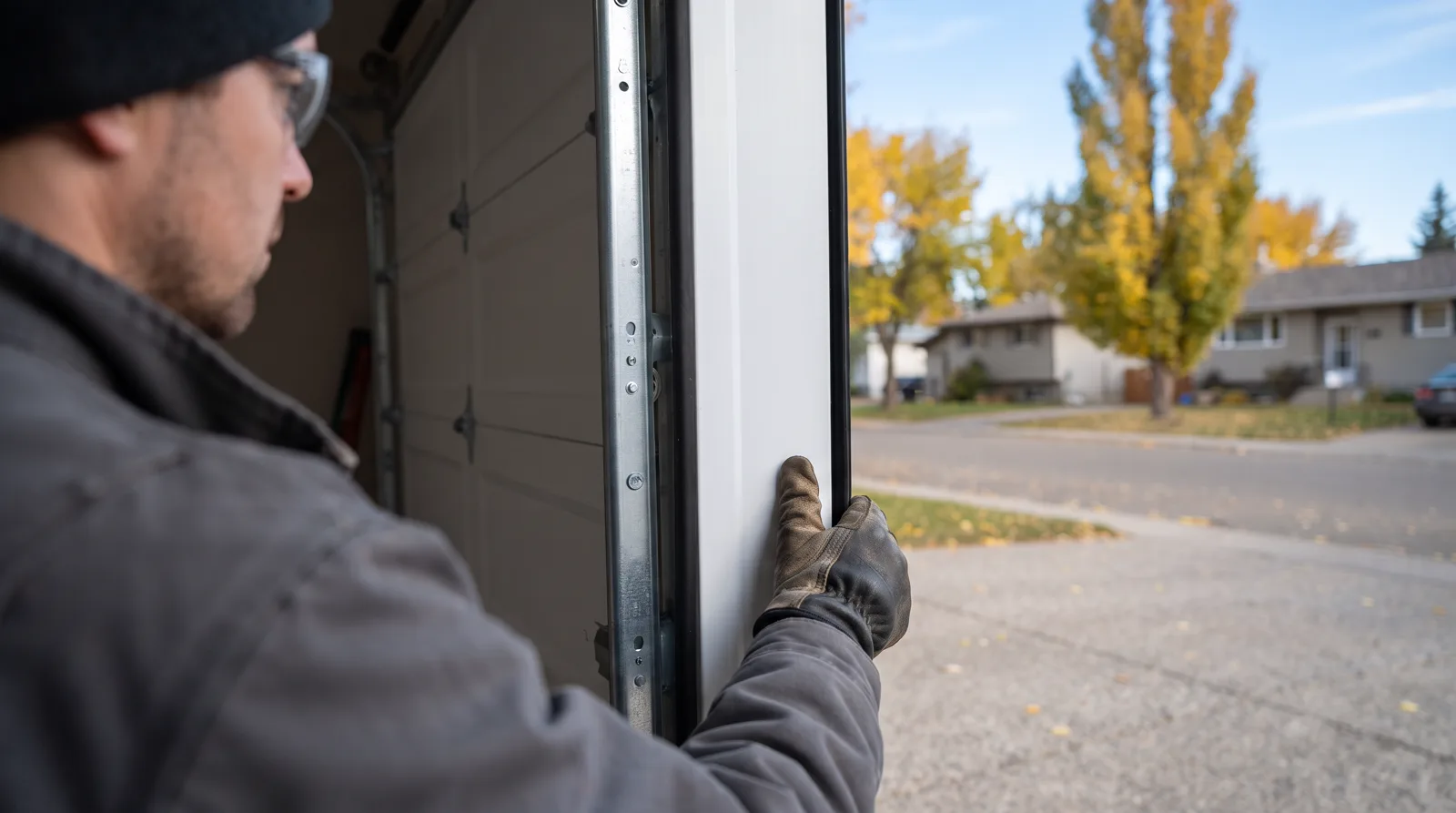
Insulated Garage Doors Built for Alberta Winters.
Stop losing heat through your garage. Polyurethane and polystyrene insulated doors from R-8 to R-18, plus retrofit upgrades for existing doors.
Insulated Garage Door Services
New installs, upgrades, and weather sealing for energy efficiency
Polyurethane Insulated Doors (R-16 to R-18)
Highest R-value option with foam injected between steel layers. Best for attached garages and year-round workshops. Blocks heat loss, reduces noise, and stays rigid in temperature swings.
Polystyrene Insulated Doors (R-8 to R-12)
Budget-friendly insulation with foam board panels. Good thermal barrier for detached garages or moderate climates. Lighter weight than polyurethane, easier on older openers.
Insulation Retrofit for Existing Doors
Add insulation panels and weather stripping to your current door. Works on steel and some wood doors. Cost-effective upgrade when the door structure is sound but lacks thermal protection.
Weather Seal and Bottom Rubber Replacement
Replace cracked or frozen seals around the perimeter and threshold. Critical for Alberta freeze-thaw cycles. Stops drafts, snow intrusion, and pest entry. Usually done with insulation upgrades.
Insulated Carriage House Doors
Custom insulated doors with traditional carriage house look. Steel or composite construction with R-12+ insulation. Built for curb appeal without sacrificing energy performance.
Opener Upgrade for Heavier Insulated Doors
Insulated doors weigh 50 to 100 pounds more than single-layer steel. Upgrade to a 3/4 HP or 1 HP belt-drive opener with proper lifting force. Includes safety sensor calibration.
Why Insulation Matters in Spruce Grove and Stony Plain
❄️ Alberta Winter Temperature Swings
We see minus 30°C cold snaps followed by plus 10°C chinook winds within 48 hours. Insulated doors with proper seals resist warping, ice buildup on tracks, and condensation that rots wood frames. Polyurethane stays stable through those swings.
💰 Attached Garages Bleed Heat Into Your Home
Most Tri-Region homes have attached garages with a shared wall to the house. An uninsulated garage door can pull 15 to 20 percent of your furnace's heat through that wall. R-16 insulation pays for itself in 4 to 6 winters on natural gas savings.
🏔️ Freeze-Thaw Cycles Destroy Cheap Seals
Standard vinyl weather stripping cracks and loses flexibility after one Alberta winter. We use EPDM rubber bottom seals and reinforced side/top seals rated to minus 40°C. They stay pliable and maintain the air barrier year after year.
🔨 Parkland County Workshop and Hobby Space Needs
Acreage owners in Parkland County often heat their garages for woodworking, vehicle repair, or winter storage. Insulated doors cut propane or electric baseboard costs by 30 to 50 percent and make the space usable at 15°C instead of struggling to hold 5°C.
What it costs here
How to Choose Insulated Garage Doors for Alberta
R-values, insulation types, seal materials, and what actually lowers your heating bill
What Makes an Insulated Garage Door Different
An insulated garage door is built with either polyurethane foam or polystyrene panels sandwiched between two layers of steel or aluminum. The insulation layer can range from one inch to two inches thick, with R-values typically between R-8 and R-18. R-value measures thermal resistance: the higher the number, the better the door resists heat transfer. In Spruce Grove, where January temperatures regularly drop to minus 20 Celsius or colder, that resistance directly translates to warmer garage space and lower heating bills if your furnace or in-floor heat extends into the garage.
Polyurethane foam is injected into the door panels and expands to fill every gap, bonding to both steel skins. This creates a rigid, dense core with no air pockets. Polystyrene insulation comes as pre-cut panels that slide into the door sections, leaving small air gaps at the edges. Polyurethane offers higher R-value per inch and adds structural strength to the door, making it more resistant to denting from hail or hockey pucks. Polystyrene costs less and still provides meaningful insulation, usually landing in the R-8 to R-12 range. Both types outperform uninsulated single-layer steel doors, which offer virtually no thermal barrier.
The upgrade process involves removing your existing door, including the track hardware, springs, and opener brackets if they are worn or incompatible with the new door weight. Insulated doors weigh significantly more than uninsulated models because of the foam or polystyrene core and the double-layer steel construction. A standard 16-foot-wide uninsulated door might weigh 80 pounds, while the same size insulated door can weigh 150 to 200 pounds. This added weight requires heavier-duty torsion springs and may need a more powerful garage door opener. Many older openers rated for lightweight doors will struggle or fail prematurely if paired with a heavy insulated door, so expect the installer to assess your opener and recommend an upgrade if necessary.
Why Spruce Grove Winters Demand Insulated Garage Doors
Freeze-Thaw Cycles and Chinook Winds
Spruce Grove sits in a climate zone where freeze-thaw cycles happen dozens of times each winter. A chinook wind can push daytime temperatures above freezing in January, melting snow and ice on your driveway and garage floor. When temperatures plunge again overnight, that moisture freezes into a slick, dangerous surface. An uninsulated garage door offers no buffer against these swings. The metal face of the door conducts cold directly into the garage, chilling the air near the door and causing condensation on tools, vehicles, and anything else stored inside. That condensation freezes when the temperature drops, creating ice buildup on your garage floor, door tracks, and weatherstripping.
Insulated doors slow the rate of temperature change inside the garage. The foam or polystyrene core acts as a thermal buffer, so the interior surface of the door stays closer to the garage air temperature rather than mirroring the outdoor cold. This reduces condensation because the door surface does not become a cold magnet for moisture in the air. Less condensation means less ice, fewer slips, and less rust on your vehicles and metal storage shelves. If you park a vehicle in the garage during a chinook warm spell and then the temperature crashes, an insulated door helps prevent the sudden chill that causes frost to form on your windshield and door handles overnight.
Attached Garages and Whole-Home Heating Costs
Most homes in Spruce Grove, Stony Plain, and Parkland County have attached garages sharing at least one wall with the main living space. That shared wall is typically insulated to code, but the garage door itself is often the largest uninsulated surface in the entire garage envelope. Cold air pouring through an uninsulated door chills the garage, and that cold migrates through the shared wall into your mudroom, laundry room, or main floor hallway. Your furnace compensates by running longer cycles to maintain the setpoint temperature in those rooms, burning more natural gas and driving up your winter utility bills.
Heating a garage is common in this region, especially if you use the space as a workshop, store temperature-sensitive items like paint or canned goods, or simply want a comfortable place to work on vehicles in January. An uninsulated door turns that goal into an expensive battle. Heat escapes through the thin steel almost as fast as your furnace or electric heater can produce it. An insulated door with an R-value of 16 or higher cuts that heat loss dramatically, allowing a small electric heater or extended HVAC duct to maintain a workable temperature without running continuously. The energy savings often pay for the door upgrade within five to seven years, and the comfort improvement is immediate.
Snow Load, Hail, and Wind Pressure
Alberta winters deliver heavy wet snow, spring hail storms, and gusty winds that can exceed 80 kilometers per hour during blizzards or chinook events. An uninsulated single-layer steel door flexes and rattles under wind pressure because it has no internal structure beyond the thin steel skin and lightweight frame. Hail impacts dent the exterior, and over time, repeated freeze-thaw cycles can cause the paint to crack and the steel to corrode. Insulated doors resist these forces better because the foam core adds rigidity and mass. A polyurethane-insulated door absorbs impact energy and distributes wind load across a stiffer panel, reducing flexing and noise.
Snow load is less of a concern for vertical garage doors than for roofs, but drifting snow can pile against the bottom of the door during a long storm. If your weatherstripping is old or your door is poorly sealed, wind-driven snow can infiltrate the gap at the bottom and sides, creating drifts inside the garage. Insulated doors typically come with high-quality weatherstripping as part of the package, including a thick vinyl or rubber bottom seal that compresses against the floor and flexible seals along the sides and top. This upgrade alone can eliminate snow infiltration, keeping your garage floor dry and your stored items safe from moisture damage.
Signs Your Garage Door Needs an Insulated Upgrade
Frost or ice forming on the inside surface of your garage door during cold snaps is a clear signal that the door is not providing a thermal barrier. When the exterior metal face drops to minus 20 or colder and the garage air holds any moisture, that moisture condenses on the cold surface and freezes. You will see white frost patterns or solid sheets of ice, especially near the bottom panels. This ice can drip when the garage warms up, soaking cardboard boxes, wood shelves, or anything stored near the door. If you see frost on the door interior more than a few times each winter, an insulated door will solve the problem by keeping the interior surface above the dew point.
Rooms adjacent to the garage feeling noticeably colder than the rest of the house is another strong indicator. Walk into your mudroom or main floor hallway during a cold morning. If that space feels five degrees cooler than your living room despite the thermostat being set the same, cold is leaking from the garage through the shared wall or door. The garage itself is acting as a thermal drain because the uninsulated garage door allows frigid air to dominate the space. Installing an insulated door raises the average garage temperature by several degrees, reducing the temperature gradient across the shared wall and making those adjacent rooms more comfortable.
High heating bills that spike in December and January often trace back to heat loss through the garage. If your natural gas or electricity consumption jumps disproportionately compared to your neighbors or compared to previous winters, and you have ruled out furnace problems or air leaks around windows, the garage door is a likely culprit. Utility companies in Alberta charge more per gigajoule during peak winter months, so even a modest increase in consumption translates to a noticeable bill increase. Tracking your usage through your utility account and comparing month-over-month data can reveal whether the garage is a heat sink. An insulated door upgrade typically reduces garage-related heat loss by 60 to 80 percent, which can lower your overall heating bill by 10 to 15 percent if your garage is attached and heated.
- Condensation or water pooling on the garage floor near the door after temperature swings
- Frozen door locks or handles that require a heat gun or warm water to operate
- Excessive noise when the door operates, indicating thin panels flexing under wind or movement
- Visible dents or warping on the door exterior from hail or impact
- Difficulty maintaining a comfortable temperature in a workshop or heated garage despite running a heater
The Insulated Garage Door Installation Process
Initial Assessment and Measurement
A professional installer will measure the rough opening width and height to confirm the door size and check the available headroom above the opening and backroom depth into the garage. Insulated doors with polyurethane cores are often thicker than uninsulated doors, and the track hardware may require more clearance. Standard headroom is 12 inches, but low-headroom or zero-headroom track systems exist if your garage has a finished ceiling or storage platform close to the door. The installer will also inspect the condition of the existing door frame, jambs, and header to ensure they are square and solid enough to support the new door weight.
The opener is evaluated next. Most modern insulated doors weigh 150 to 200 pounds for a standard double-car 16-foot width. If your current opener is rated for only 100 pounds or is more than 10 years old, the installer will recommend a new opener with a higher weight capacity and a soft-start, soft-stop feature to reduce wear on the door and springs. Belt-drive openers are quieter than chain-drive models and work well with insulated doors because the smoother operation reduces vibration. The installer will also check whether the existing torsion spring system can handle the added weight or if new springs are needed. Undersized springs will fail prematurely, leaving you with a door that will not open.
Removal of the Old Door and Hardware
The installer disconnects the garage door opener and releases the tension on the torsion springs using winding bars. Torsion springs are under extreme tension and can cause serious injury if handled improperly, so this step is not a DIY project. Once the springs are safe, the door is raised and the panels are unbolted from the track hinges and roller brackets. Each panel is removed individually and carried out of the garage for disposal or recycling. The old track sections, mounting brackets, and spring assembly are removed next, leaving the rough opening clear.
If the door frame or jambs are damaged, rotted, or out of square, the installer will repair or replace them before proceeding. This might involve shimming the frame level, replacing warped wood with treated lumber, or adding blocking to anchor the new track brackets securely. Skipping this step can cause the new door to bind, wear unevenly, or fail to seal properly at the sides and top. A well-prepared frame ensures the door operates smoothly and lasts for 20 years or more without issues.
Installation of the Insulated Door and Components
The new track sections are mounted to the jambs and ceiling using heavy-duty brackets and lag bolts. The track must be level and parallel on both sides, with the correct spacing to match the door panel width. The installer uses a level and measuring tape to verify alignment before tightening the bolts. Once the track is secure, the bottom door panel is set in place on the floor, and the roller brackets are attached to each end. The bottom seal is checked to ensure it compresses evenly against the floor along the entire width.
Each subsequent panel is lifted into position and connected to the panel below using hinges and roller assemblies. The rollers slide into the track, and the hinges allow the door to articulate as it moves up and down. Insulated panels are heavier and require two people to handle safely. The installer works methodically, checking alignment after each panel is added. Once all panels are in place, the top brackets are bolted to the frame, and the torsion spring shaft is installed above the door. New torsion springs are wound to the correct tension to balance the door weight, allowing it to stay in place when lifted halfway and to open and close smoothly without excessive force.
The garage door opener is mounted to the ceiling track and connected to the top door panel using a rigid or flexible arm. The installer adjusts the opener force settings and travel limits so the door opens and closes completely without slamming or reversing prematurely. Safety sensors are installed at the bottom of the door opening on each side, and the installer tests them by placing an object in the path to confirm the door reverses on contact. Weatherstripping is applied to the sides and top of the door, and the bottom seal is adjusted if needed. The final step is a full cycle test, running the door through 10 or more open and close cycles to verify smooth, quiet, reliable operation. Any binding, noise, or uneven movement is corrected before the job is considered complete.
What Insulated Garage Doors Cost in Spruce Grove and What Drives the Price
A professionally installed insulated garage door in Spruce Grove, Stony Plain or Parkland County typically runs between $1,800 and $4,500 for a standard two-car garage, with single doors ranging from $1,200 to $2,800. That spread reflects real differences in construction quality, insulation performance and installation complexity, not just branding. The low end gets you a basic steel door with polystyrene insulation (R-value around 6 to 9), standard hardware and straightforward installation. The upper range buys polyurethane-filled construction (R-16 to R-18.4), heavier gauge steel, better weatherseals, quieter operation and often includes a decade-long warranty that actually covers the insulation and panels in Alberta winters.
The biggest cost driver is the insulation itself. Polyurethane foam is injected between steel skins under pressure, bonding the layers into a single rigid panel that resists denting, holds its R-value over time and dampens noise far better than polystyrene sheets sandwiched between skins. That manufacturing process costs more, and the material is denser and more expensive per board foot, but the thermal performance gap is measurable. A polyurethane door rated R-16 will genuinely keep your garage 10 to 15 degrees warmer on a Parkland County January morning compared to an R-9 polystyrene door of the same size. If you heat your garage or work in it during winter, that difference pays back in utility savings within three to five years, and you feel it every time you step inside.
Door size and construction complexity add to the cost in predictable ways. A single 9x7 door costs less than a double 16x7 simply because there is less material and labor, but custom sizes, non-standard heights (8-foot or taller), or architectural panel styles (carriage house, flush modern) all push the price up. Installation labor in the Tri-Region runs about $300 to $600 for a standard replacement on an existing track system, but that doubles if the framing needs shimming, the header is undersized, or you are upgrading from a non-insulated door and need beefier springs and a stronger opener to handle the added weight. Disposal fees for the old door add another $75 to $150, and a City of Spruce Grove or Parkland County development permit (required if you are changing the door size or style on a street-facing garage) costs around $150 to $250 depending on the municipality.
Alberta-specific factors also influence pricing. Doors sold here must withstand freeze-thaw cycles, hail impact and wind load, so reputable suppliers use heavier steel skins (24 or 25 gauge minimum) and galvanized or coated hardware that resists rust from road salt and moisture. Cheaper doors built for milder climates use thinner steel and plastic rollers that crack in deep cold, leading to service calls and early replacement. Quality weatherseals rated for temperatures down to negative 40 cost more than generic rubber, but they stay flexible and maintain contact with the floor even when the concrete slab heaves from frost. These are not upsells pushed by salespeople. They are the difference between a door that works reliably for 15 years and one that needs repair every other winter.
Comparing Insulation Types, Construction Methods and Performance Options
Polystyrene and polyurethane are the two insulation materials you will encounter, and understanding the difference matters more than R-value numbers on a spec sheet. Polystyrene insulation is rigid foam board, similar to what you might see in coolers or packing material, cut to fit between the inner and outer steel skins of the door. It is lightweight, inexpensive and provides decent thermal resistance (R-6 to R-10 depending on thickness), but the panels are not bonded to the steel, so over time they can shift, sag or compress, especially in sections that flex repeatedly during opening and closing. Polystyrene doors are louder, dent more easily and lose a bit of thermal performance as the insulation settles away from the skins. They are a solid choice if you rarely use the garage in winter and budget is the primary concern.
Polyurethane insulation is chemically foamed in place between the steel skins, expanding to fill every cavity and bonding permanently to the metal. The result is a rigid, monolithic panel that resists denting, deadens sound and maintains its rated R-value (typically R-12 to R-18.4) for the life of the door. The foam adds structural rigidity, so these doors handle wind load and impact better, and they operate more quietly because the foam dampens vibration. In Spruce Grove winters, where your garage door might cycle from negative 25 at night to plus 5 during a chinook, polyurethane holds up better because it does not contract and expand independently from the steel. The cost difference is $400 to $800 more than a comparable polystyrene door, but if you heat your garage, park temperature-sensitive equipment inside or use the space as a workshop, the performance gap is worth it.
Beyond insulation, the door construction itself varies in ways that affect durability and long-term cost. Single-layer doors (steel skin on the outside, no insulation or backing) are essentially obsolete for Alberta climates. Double-layer doors have an outer steel skin, insulation and an inner vinyl or steel backing. Triple-layer doors add a steel inner skin bonded to the insulation, creating the strongest and quietest option. Most quality insulated doors sold in the Tri-Region are triple-layer polyurethane, and that is the standard you should expect from any contractor quoting residential work. Panel design also matters for thermal performance. Raised panel and recessed panel styles (the most common) create small air pockets that add marginal insulation value, while flush modern designs eliminate those pockets but often use thicker core insulation to compensate.
Spring systems and opener compatibility are often overlooked during product comparison, but they directly affect safety, lifespan and operating cost. Insulated doors weigh significantly more than non-insulated equivalents (a double polyurethane door can weigh 180 to 220 pounds compared to 90 to 110 for a single-layer steel door), so you need extension or torsion springs rated for the actual weight and at least 10,000 cycle life. Torsion springs mounted on a shaft above the door are quieter, last longer and balance the door more evenly than extension springs, and they are the standard for any quality installation. Your garage door opener also needs adequate horsepower. A half-horsepower opener that worked fine on a lightweight door will strain and burn out prematurely on a heavy insulated door. Most contractors will recommend a three-quarter horsepower belt-drive opener for insulated doors, which runs quieter and handles the load without stress.
Mistakes Homeowners Make and Contractor Traps to Avoid
The most common mistake homeowners make is choosing a door based solely on R-value and price, ignoring construction quality and installation variables. A door advertised as R-16 means nothing if it is installed with gaps around the frame, missing weatherstripping or an improperly balanced spring system that causes uneven wear. Thermal performance depends on the complete assembly: door, seals, framing and installation. Buying a premium door and pairing it with a bargain installation is like buying winter tires and mounting them with one lug nut missing. You will not get the performance you paid for, and you will spend more fixing problems than you saved upfront. Always evaluate the contractor and the installation scope alongside the door itself.
Another frequent error is skipping the permit when replacing a garage door with a different size, style or material. Spruce Grove, Stony Plain and Parkland County all require development permits if the new door changes the appearance or dimensions of the original, especially on a front-facing garage. Some contractors will suggest skipping the permit to save time and the $150 to $250 fee, but that decision can come back to hurt you. If you sell the home and the buyer's inspector notices the unpermitted work, you may be required to obtain a retroactive permit, prove the installation meets code or even remove and reinstall the door to pass inspection. Permits exist to ensure the framing, header and fastening meet Alberta building code for snow load and wind resistance. Skipping that step to save a couple hundred dollars is not worth the risk.
On the contractor side, the biggest red flag is a quote that does not itemize the door model, R-value, insulation type, spring system, weatherseals and labor separately. Vague quotes that lump everything into one number make it impossible to know what you are actually buying or compare bids from other contractors. A professional estimate should specify the door manufacturer and model, insulation material (polystyrene or polyurethane), R-value, gauge of steel, spring type and cycle rating, opener horsepower if included, and line-item costs for removal, disposal, installation and permit. If a contractor resists providing that detail, they are either hiding low-quality components or planning to substitute cheaper materials after you sign.
Watch out for contractors who push financing deals or discounts that expire today. Pressure tactics are common in the garage door industry, and they usually signal a business model built on volume and upselling rather than quality and service. Reputable contractors will provide a written quote, give you time to review and compare, and answer detailed questions about materials and installation without rushing you. Be especially cautious of companies that subcontract the installation to crews they do not directly employ. You want the company quoting the job to be the same people doing the work, so accountability is clear and warranty claims go to someone who knows the installation history.
Finally, avoid contractors who suggest reusing old hardware, tracks or springs to save money. If you are upgrading to an insulated door, the weight and balance requirements are different, and mixing old components with new ones creates weak points that fail prematurely. Springs, rollers, hinges and cables all wear out over time, and if they were sized for a lighter non-insulated door, they are undersized for the replacement. A proper installation includes new hardware matched to the door weight, and any contractor suggesting otherwise is either inexperienced or cutting corners to win the bid. Spend the extra $200 to $300 for a complete hardware replacement, and you will get a system that works safely and reliably for a decade or more.
How to Hire the Right Contractor for Your Insulated Garage Door
Start by verifying that any contractor you consider holds liability insurance specific to garage door installation. This is not optional in Alberta. Garage doors are heavy, spring-loaded and dangerous to install, and injuries happen even to experienced installers. If someone is hurt on your property and the contractor does not carry you can be held liable for medical costs and lost wages. Ask for the WCB account number and call WorkSafe Alberta to confirm coverage is current. Similarly, request proof of liability insurance (minimum $2 million) and verify it with the insurer. A legitimate contractor will provide this documentation without hesitation because they know it protects both parties.
Ask specific questions about the door itself and the installation process. What is the insulation type, and what R-value is it actually rated for? Is it a double-layer or triple-layer door? What gauge is the steel? What is the cycle rating on the springs, and are they torsion or extension? Will you replace all hardware, or reuse any existing components? Is the removal and disposal of the old door included? Will you pull a permit if required, or is that my responsibility? A knowledgeable contractor will answer these questions clearly and specifically, and their answers should match what appears on the written quote. If they hesitate, deflect or give vague answers, keep looking.
Check references and ask to see examples of recent work in the Tri-Region. A contractor who has installed dozens of insulated doors in Spruce Grove, Stony Plain and Parkland County will have a portfolio of jobs and a list of past clients willing to share their experience. Contact at least two or three references and ask how the installation went, whether the door performs as promised, if there were any issues with the permit or final inspection and whether they would hire the contractor again. Drive by a couple of completed jobs if possible to see the quality of finish work, alignment and trim. This takes an extra hour of your time but eliminates most of the risk of hiring someone who talks well but delivers poorly.
Get at least three written quotes and compare them line by line, not just on total price. The lowest bid is almost never the best value because it either reflects lower-quality materials, incomplete scope or shortcuts that cost you more in repairs and energy waste over time. The highest bid is not automatically the best either. Look for the quote that specifies quality components, includes all necessary work (removal, disposal, hardware, weatherseals, permit), provides a clear warranty on both materials and labor, and comes from a contractor with verified credentials and solid references. That middle-ground bid is usually where you find the best combination of quality, service and fair pricing.
How Tri-Region Services Helps
Tri-Region Services routes you directly to one vetted, insured local contractor who specializes in insulated garage door installation in Spruce Grove, Stony Plain and Parkland County. Contractors state that they carry liability insurance when they sign up, and we show that on their listing, so you skip the research and vetting process. You get one free written quote that itemizes the door specs, materials, labor and warranty with no sales pressure and no obligation. If you choose to move forward, the contractor handles the permit, completes the installation to Alberta building code and backs the work with a clear warranty. It is a faster, safer way to get the quality installation your home deserves.
Why These Installers Are in the Directory
Every contractor meets screening standards for licensing, insurance, and local reputation
Licensed and WCB Covered
Alberta business license, liability insurance, and WCB clearance stated at signup.
Manufacturer Warranty Honored
Installers are authorized dealers for major brands with 10 to 20 year insulation warranties.
Free R-Value Assessment
Most provide a no-cost evaluation of your current door's thermal performance and recommend the right insulation level.
Local Stock for Alberta Climate
Doors and parts are stocked locally, rated for Canadian winters, not cross-border special orders with 8-week lead times.
Spring and Cable Balancing Included
Heavier insulated doors need proper torsion spring tension and cable adjustment to avoid premature opener wear.
Building Code and Energy Audit Compatible
Installations meet Alberta Building Code thermal requirements and qualify for home energy audit credits where applicable.
This page is not tied to a contractor's brand. Leads route straight to your one local partner. Verified reviews can appear here once that partner has them (never fabricated).
Serving the whole Tri-Region
7 Questions About Insulated Garage Doors
What R-value do I actually need for Spruce Grove winters?+
Polyurethane versus polystyrene insulation: which is better?+
Will an insulated door actually lower my heating bill?+
Can I add insulation to my existing garage door?+
Do insulated garage doors reduce noise from the street?+
How long does garage door insulation last?+
Do I need a building permit to install an insulated garage door?+
Can insulated doors cause condensation problems inside the garage?+
Get your free quote
Tell us what you need and a local pro will get right back to you.
- ✓ Sent straight to a local business
- ✓ You choose who you hire
- ✓ Free, with no obligation