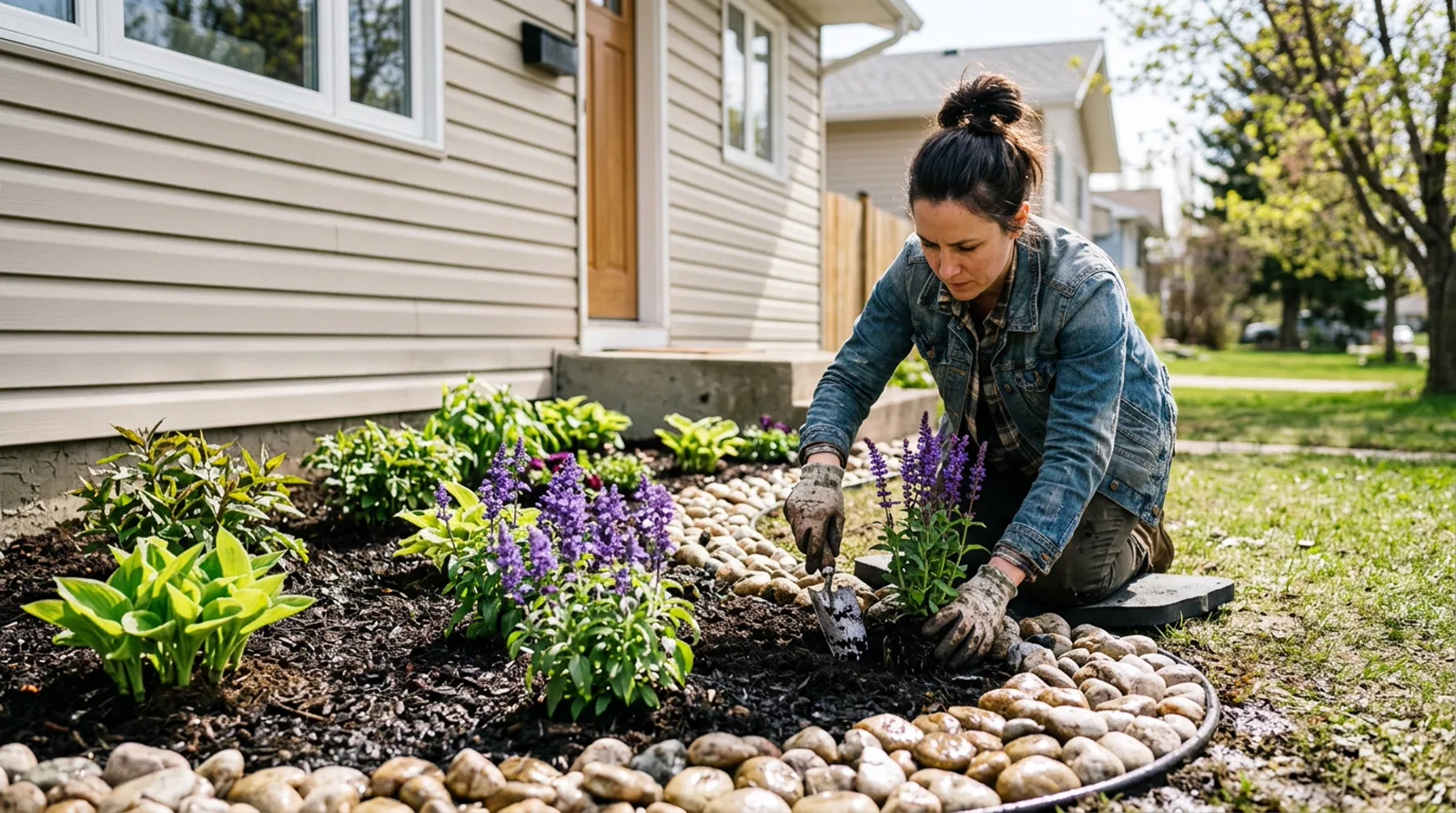
Landscaping Services in Stony Plain Built for Alberta Yards.
Professional yard design, lawn care, and seasonal maintenance matched to your property. Every pro states they carry liability coverage before dispatch.
Full-Spectrum Landscaping for Stony Plain Properties
From weekly mowing to complete yard transformations, matched to your timeline and budget.
Lawn Maintenance & Care
Mowing, edging, trimming, fertilization programs, aeration, overseeding. Weekly or biweekly schedules for residential properties. Commercial contracts available for multi-acre sites, strata complexes, and industrial parks in Parkland County.
Tree & Shrub Pruning
Structural pruning for health and shape, deadwood removal, crown thinning to reduce wind load. ISA-certified arborists confirmed in the network for trees over 4 metres or near power lines. Pruning timed for dormant season or post-bloom depending on species.
Hardscape Installation
Patios, walkways, retaining walls, fire pits. Excavation to below frost line (minimum 1.2 metres in Stony Plain), compacted gravel base, polymeric sand or mortar joints. Permits coordinated when required for retaining walls over 1 metre or grade changes affecting drainage.
Garden Bed Design & Planting
Native and zone 3b hardy perennials, shrub selection for Alberta winters, seasonal colour rotation. Soil amendment for heavy clay, raised beds where drainage is poor, mulch application to retain moisture through dry July and August stretches.
Irrigation Systems
In-ground sprinkler design and installation, drip lines for garden beds, rain sensors, smart controllers. Mandatory fall blowout scheduled before first hard freeze to prevent line damage. Spring startup and mid-season adjustments included in maintenance packages.
Seasonal Cleanup
Spring debris removal, bed prep, mulch refresh. Fall leaf removal, perennial cutback, winterization of irrigation and water features. Typical Stony Plain yard spring cleanup runs $280 to $450, fall cleanup $320 to $600 depending on tree cover and bed count.
Landscaping Practices for Stony Plain Yards
❄️ Freeze-Thaw & Frost Depth
Frost penetrates 1.2 to 1.5 metres in typical winters. Footings for retaining walls, pergola posts, and patio edges must sit below that line or heaving will crack the structure within two seasons. Pros in the network follow Alberta Building Code excavation minimums for permanent installations.
🌾 Heavy Clay Soils
Most Stony Plain properties sit on dense clay that drains poorly and compacts hard when dry. Successful garden beds require 15 to 20 cm of compost or triple mix tilled in, and lawns benefit from annual core aeration in spring or fall to reduce thatch and improve root penetration.
🌬️ Chinook Wind Exposure
Warm chinook winds in winter desiccate evergreens and can topple shallow-rooted trees. Anti-desiccant spray applied in November protects cedar and spruce, and staking new trees for the first two years prevents wind-rock damage to root balls before establishment.
☀️ Short Growing Season
Last spring frost averages mid-May, first fall frost late August to early September. That 12 to 14 week window dictates plant selection, so annuals rated for cool-season performance and perennials hardy to zone 3b are non-negotiable for reliable colour and survival.
What it costs here
Everything You Need to Know About Landscaping in Stony Plain
From soil prep to plant selection to seasonal timing, the details that separate a thriving yard from a struggling one.
What Professional Landscaping Actually Involves in Alberta's Climate
Professional landscaping in Stony Plain and Parkland County goes far beyond mowing grass and planting a few shrubs. The service encompasses site analysis, grading and drainage design, hardscape installation like patios and retaining walls, plant selection for Alberta's short growing season and zone 3b hardiness rating, irrigation system design and installation, and often soil amendment to address the heavy clay base common throughout the region. A qualified landscaper assesses your property's sun exposure, existing drainage patterns, soil composition, and microclimates created by your home's orientation and nearby windbreaks before recommending a design that will survive and thrive here.
Alberta's climate creates unique demands that separate competent local landscaping from work that fails within two seasons. Chinook winds can desiccate evergreens in January, freeze-thaw cycles heave paving stones and crack improperly installed concrete, clay soil expands and contracts with moisture changes causing foundation pressure and drainage nightmares, and our short window between last frost in late May and first frost in early September limits plant establishment time. Landscaping pros working in this region account for frost penetration depths of 1.8 to 2.4 meters when setting posts and footings, select plants proven to handle temperature swings from minus 40 in February to plus 30 in July, and design grading that directs spring melt away from structures while preventing summer washouts during heavy thunderstorms.
The work divides into hardscaping and softscaping, each with distinct timelines and requirements. Hardscaping includes grading, excavation, retaining wall construction, patio and walkway installation, edging, and any structural elements like pergolas or outdoor kitchens. This work typically happens first and often requires equipment access, compacted aggregate base layers to resist frost heave, and in some cases permits from Parkland County or the Town of Stony Plain for retaining walls over a certain height or significant grade changes. Softscaping follows once the bones are in place and covers topsoil placement, lawn seeding or sod installation, tree and shrub planting, perennial bed creation, mulching, and irrigation setup. Both phases need to respect Alberta's construction season, which generally runs from late April through October, with some hardscape work possible into November if the ground hasn't frozen.
Why Stony Plain and Parkland County Properties Face Distinct Landscaping Challenges
The clay-heavy soil throughout Stony Plain, Spruce Grove, and Parkland County creates drainage and compaction problems that plague poorly designed landscapes. This glacial till base drains slowly, becomes rock-hard when dry, turns to sticky mud when saturated, and expands significantly when wet, putting pressure on foundations, cracking concrete slabs, and drowning plant roots that need oxygen. Many properties in newer subdivisions sit on land that was recently graded and stripped of topsoil during construction, leaving a compacted clay base with minimal organic matter. Without proper amendment and grading, water pools against foundations after spring snowmelt or summer downpours, lawns develop soggy dead zones where grass rots out, and tree roots struggle to penetrate the hardpan layer, leading to shallow root systems that topple in windstorms.
Temperature extremes and weather events specific to central Alberta demand landscaping choices that account for real local conditions. Chinook winds roaring off the Rockies in winter can drop humidity to 10 percent and raise temperatures 15 degrees in hours, desiccating evergreens and damaging plants that haven't hardened off properly in fall. Late spring frosts in mid-May can kill off tender annuals and damage fruit tree blossoms, while early September frosts end the growing season abruptly. Hailstorms shred delicate perennials and strip bark off young trees. Snow loads on arbors and pergolas need to handle wet, heavy snow that can weigh 10 to 20 kilograms per square meter. These aren't occasional events but predictable patterns that competent landscaping plans account for through plant selection, structural design, and siting decisions.
Wildlife pressure and exposure shape what survives here. Deer browse through Parkland County acreages and even town lots backing onto green spaces, decimating hostas, daylilies, and fruit trees unless plants are protected or unpalatable species chosen instead. Exposed west-facing beds bake in summer sun and dry out faster, while north-facing areas stay cooler and wetter, creating microclimates within a single yard. Properties on former agricultural land may inherit soil compaction from heavy equipment, nutrient depletion from cropping, or pH imbalances that need testing and correction before plants thrive. Wind exposure on open sites requires windbreaks or hardier plant choices, and properties with mature trees face competition for water and nutrients in their root zones that limits what grows successfully underneath.
Clear Signs Your Stony Plain Property Needs Professional Landscaping
Drainage problems show up as pooling water against your foundation after rain or snowmelt, soggy patches in the lawn that never dry out, erosion channels cutting through beds or lawn areas, or basement seepage that appears during spring runoff. These aren't cosmetic issues but structural threats that damage foundations, create ice hazards in winter, and rot out plantings. If you see water standing in the same spots repeatedly, soil washing away to expose tree roots or create ruts, or damp basement walls during wet periods, your property's grading and drainage need professional correction. Clay soil throughout this region exacerbates these problems because it sheds water rather than absorbing it, so even modest rainfall can create runoff and pooling if the land isn't properly contoured.
Plant failures and dead zones indicate mismatched species, poor soil conditions, or installation errors that waste money and leave your yard looking patchy. Evergreens browning on the windward side suffer chinook desiccation and need windbreaks or replacement with hardier species. Perennials that thrive for one season then die out over winter weren't hardy to zone 3b or didn't establish strong enough roots before freeze-up. Bare spots spreading through your lawn signal compaction, thatch buildup, poor drainage, or soil pH problems that reseeding won't fix without addressing the underlying cause. Trees planted too deep, left with burlap and wire baskets in place, or sited in compacted clay decline slowly over several years, dropping leaves early, showing dieback in the crown, and eventually failing despite looking healthy at installation.
Hardscape damage like cracked concrete patios, heaved paving stones, retaining walls leaning or cracking, and frost-damaged edging all point to installation that didn't account for Alberta's freeze-thaw cycles and frost penetration depth. Interlocking pavers need a properly compacted granular base, sand bedding layer, and edge restraint to resist heaving. Concrete requires control joints, adequate thickness for the use, and proper subgrade prep to prevent cracking. Retaining walls need drainage behind them, frost footings below grade, and deadman anchors or geogrids if they're holding back significant soil mass. When these elements fail, patching doesn't solve the problem because the underlying installation was inadequate. Professional landscaping addresses the root cause rather than applying temporary fixes that fail again within a season or two.
The Landscaping Process from Site Assessment to Final Planting
The process begins with a site visit where the landscaper evaluates your property's existing conditions, drainage patterns, sun and shade areas, soil type, and any problem zones you've identified. Expect them to ask about your goals, budget range, and how you use or want to use your outdoor space, whether that's entertaining, gardening, low maintenance curb appeal, or creating play areas. They'll note existing features worth preserving like mature trees, assess grading and drainage flow, and identify constraints like utility locations, property lines, easements, or poor soil areas. Some pros bring soil testing kits to check pH and texture on site, while others take samples for lab analysis if your soil history is unknown or problems are evident. This assessment phase produces a scope of work and rough cost estimate before any design happens.
Design and planning follow once you've agreed to move forward. The landscaper creates a scaled plan showing proposed grading changes, hardscape locations and materials, planting beds with species lists, lawn areas, irrigation zones if you're adding a system, and any structures like retaining walls, patios, or walkways. For complex projects involving significant grade changes, retaining walls over 1.2 meters, or drainage work near property lines, they may recommend or require engineered drawings and permits from Parkland County or your municipality. Material selections happen here, with choices between natural stone or concrete pavers, plant palettes suited to your site's conditions and your maintenance preferences, mulch types, edging materials, and soil amendments needed to improve your clay base. Costs typically range from $8,000 to $35,000 for a full front yard renovation with sod, plantings, and a stone walkway, or from $15,000 to $60,000 for a backyard transformation including a patio, retaining walls, planting beds, and irrigation.
Installation begins with demolition and rough grading if you're replacing an existing landscape or correcting drainage issues. Crews strip out old sod, remove unwanted plantings, excavate for hardscape areas, and regrade to establish proper slope away from your foundation and toward drainage swales or street. Hardscape installation follows, including any retaining wall construction, patio or walkway base prep and paving, edging installation, and structural elements. This phase often requires equipment access, creates disruption and noise, and leaves your yard torn up for days or weeks depending on project scope. Once hardscaping is complete and compacted, topsoil placement happens, with quality loam brought in to amend or replace your existing clay, spread to depths of 10 to 20 centimeters for lawn areas and deeper for planting beds. Irrigation lines go in before final grading if you're adding a system, then sod installation or seeding, followed by tree, shrub, and perennial planting, mulching, and final cleanup.
Timing matters significantly in Alberta's short season. Hardscape work can start in late April or early May once the ground thaws and dries enough for equipment, and often continues into October or even November since freeze-up doesn't stop paving and wall construction the way it stops planting. Sod installation works best in May or late August through September when temperatures are moderate and moisture is adequate for root establishment before winter. Tree and shrub planting ideally happens in spring from late April through early June, giving roots the full growing season to establish, though fall planting in late August through September works if the plant has time to root in before freeze-up. Perennials can go in anytime during the growing season but establish best when planted in spring or early summer. Seeded lawns need at least six weeks of growing weather after germination to establish enough root mass to survive winter, which limits seeding to May or early June in this region. The pro managing your project schedules phases to hit these windows and avoid situations like fall sod installation that fails over winter or spring seeding that gets washed out by June thunderstorms.
What Landscaping Really Costs in Stony Plain and Parkland County
Basic yard cleanup and seasonal maintenance runs $200 to $800 for a typical Spruce Grove lot, depending on debris volume, shrub trimming needs, and whether you need spring dethatching or fall aeration. A complete yard redesign with new sod, planting beds, decorative rock, and border edging starts around $4,000 for a small front yard and can climb past $20,000 for a full acreage transformation with grading, multiple plantings, irrigation, and hardscaping. The single biggest cost driver is soil work: fixing drainage, building up grade away from foundations, or importing quality topsoil to replace builder clay. On Parkland County acreage lots, grading alone can run $3,000 to $10,000 before a single plant goes in the ground.
Sodding costs $1.50 to $2.50 per square foot installed, so a 2,000 square foot front yard runs $3,000 to $5,000 including prep, delivery, and installation. Hydroseeding drops that to $0.40 to $0.80 per square foot but adds two to three weeks before you can walk on it, and results depend heavily on watering discipline and bird pressure. Planting beds with shrubs, perennials, and decorative rock cost $15 to $40 per square foot, driven by plant maturity, rock type (river rock is cheaper than Rundle or armour stone), and edging choice. Concrete curbing runs $8 to $12 per linear foot, steel or aluminum edging $4 to $7, and black plastic edging under $2 but fails within three years under frost heave and mower strikes.
Retaining walls, patios, and walkways push costs higher. A small flagstone patio (120 square feet) runs $1,800 to $4,000 depending on stone choice and base prep. Pressure-treated timber retaining walls cost $25 to $50 per square foot of face, while engineered block systems (Versa-Lok, Allan Block) run $50 to $90 per square foot but handle frost heave and drainage far better in Alberta freeze-thaw cycles. Interlocking pavers for driveways or large patios cost $12 to $25 per square foot installed, including excavation, class 2 base, bedding sand, and polymeric jointing sand. Any project requiring a skid steer or excavator adds $600 to $1,500 in machine time, which is why grading, drainage work, and large rock placements move the needle so quickly.
Comparing Your Options: Methods, Materials and Design Approaches
Sod versus seed is the first decision most homeowners face. Sod delivers instant green, withstands light traffic within two weeks, and establishes before weeds can colonize bare soil. Seed costs a quarter as much but needs daily watering for three weeks, takes six to eight weeks to fill in, and often loses patches to birds, washouts, or uneven germination. Hydroseeding splits the difference: faster establishment than dry seed, better erosion control on slopes, and lower cost than sod, but it still requires vigilant watering and won't handle foot traffic for a month. In Spruce Grove and Stony Plain, where spring can swing from frost to 25 degrees in a week, sod removes the gamble and lets you use the yard by the May long weekend.
For planting beds, the choice between perennials, shrubs, and annuals shapes both upfront cost and ongoing effort. Perennials like daylilies, hostas, and coneflowers cost $8 to $20 per plant, come back every year, and fill in over two to three seasons to choke out weeds. Shrubs (potentilla, spirea, mugo pine) run $25 to $80 each depending on container size, provide structure and year-round interest, and need almost no care once established in proper soil. Annuals deliver bright color all summer for $3 to $6 per plant but die at first frost and require replanting every spring. A low-maintenance bed uses shrubs for bones, perennials for color, and decorative rock mulch to suppress weeds. High-maintenance designs lean on annuals and need replanting, deadheading, and weekly watering all season.
Hardscape material choice defines durability and winter performance. Flagstone (sandstone, limestone) handles freeze-thaw well, provides natural texture, and costs $300 to $600 per skid depending on thickness and color. Concrete pavers are cheaper ($2 to $5 each), uniform, and easy to replace if one cracks, but lower-end pavers can spall and flake after a few Alberta winters if the base wasn't compacted properly. Interlocking pavers lock together to resist heave and allow water to drain between joints, which matters in clay soils that hold moisture and expand during freeze cycles. For retaining walls, timber is fast and cheap but rots at grade within eight to twelve years. Engineered blocks cost double upfront but last decades, drain through built-in channels, and handle three-foot walls without engineering stamps or geogrid reinforcement required by some timber designs.
Common Landscaping Mistakes and Contractor Traps to Avoid
The most expensive mistake is grading toward the house instead of away from it. Builder lots in newer Spruce Grove subdivisions often have minimal grade and settle over the first two years, creating low spots against foundations that funnel melt and rain into basements. Any landscaping work near the house must maintain or improve a six-inch drop over the first ten feet away from the foundation. Contractors who skip this step or add decorative rock directly against the foundation without checking grade leave you with a spring flooding risk that costs $5,000 to $15,000 to fix later. Insist on a grade check with a four-foot level before any soil, sod, or rock goes down within three meters of the house.
Skipping proper base prep under sod, pavers, or patios guarantees failure within two seasons. Sod laid directly on clay or builder fill without adding four to six inches of quality topsoil will thin out, yellow, and die in patches because roots can't penetrate compacted subsoil. Pavers and flagstone need four to six inches of compacted class 2 gravel base to resist frost heave and settling. Contractors trying to win bids on price will cut base depth to two inches or skip compaction passes, delivering a patio that sinks, tilts, and separates within one freeze-thaw cycle. Ask explicitly what base material is included, how deep it will be, and whether a plate compactor or jumping jack will be used. If the answer is vague or missing, the price is low for a reason.
Another common trap is undersized plant selection that requires replacement in three years or oversized plants that overwhelm the space. A two-gallon potentilla looks tiny at planting but spreads to four feet across within three seasons. Planting three of them on two-foot centers creates an overgrown tangle that smothers perennials and requires ripping out and replanting. Conversely, buying one-gallon perennials to save money leaves beds looking sparse for two full summers and gives weeds room to establish. Experienced designers plant to mature size, space accordingly, and use mulch or temporary annuals to fill gaps while plants establish. Contractors who jam plants in tight for instant fullness are selling you a short-term look that fails long-term.
Beware the contractor who asks for a large deposit before work starts or wants final payment before the job is complete. Legitimate landscaping pros ask for a small deposit (10 to 25 percent) to cover material orders, bill progress as phases finish, and expect final payment only after walkthrough and approval. A contractor demanding 50 percent or more upfront is either undercapitalized, juggling cash between jobs, or planning to disappear mid-project. Similarly, avoid contractors who can't or won't provide proof of WCB coverage and liability insurance. If a worker is injured on your property and the contractor has no WCB, you can be held liable. If a skid steer damages your gas line, fence, or neighbor's driveway and there's no liability policy, you're paying for repairs out of pocket.
How to Hire the Right Landscaping Pro for Your Yard
Start by getting at least three written quotes for the same scope. A detailed quote lists materials by type and quantity (12 yards of topsoil, 600 square feet of Kentucky bluegrass sod, 4 yards of river rock, 40 linear feet of concrete curbing), labor breakdown by phase, equipment charges, and timeline from start to final cleanup. Vague quotes with one lump sum or per-square-foot pricing hide what's actually included and make it impossible to compare apples to apples. If one quote is 30 percent lower than the others, ask what's different: thinner base, cheaper rock, smaller plants, or skipped steps. The lowest bid is rarely the best value when the work has to be redone in two years.
Check references and recent project photos, ideally from jobs in Parkland County or Spruce Grove with similar soil and climate conditions. Ask past clients whether the contractor showed up on schedule, cleaned up daily, handled problems without drama, and left the site in better shape than promised. Drive by a finished project if possible and look for clean edges, level surfaces, healthy plantings, and no settling or erosion after one winter. Contractors who specialize in acreage work understand drainage, grading for rural lots, and managing larger equipment access. Contractors who mostly do small city yards may struggle with the scale, soil import logistics, and septic field or well clearances common on county properties.
Verify that the contractor carries active WCB coverage and liability insurance before signing anything or allowing work to start. WCB protects you from liability if a crew member is injured on your property. Liability insurance (typically $2 million minimum) covers damage to your home, utilities, or neighboring properties caused by equipment, excavation, or accidents. Asking for proof is standard and professional contractors provide it without hesitation. If a contractor balks, claims it's not needed for small jobs, or promises to get it later, walk away. Working without coverage is illegal in Alberta for any contractor with employees, and hiring an uninsured contractor transfers all risk to you as the property owner.
How Tri-Region Services Helps
Tri-Region Services routes your landscaping request to one vetted local pro with confirmed liability coverage . You describe the work, upload photos if helpful, and receive one written quote directly from a Spruce Grove, Stony Plain, or Parkland County contractor who has capacity and experience in the type of project you need. No bidding war, no juggling multiple estimates, and no guessing about insurance or reliability. The pro contacts you to confirm scope, timing, and pricing before any commitment. If the quote works, you hire them directly. If not, there's no cost and no obligation. It's the faster, simpler way to connect with a qualified landscaping contractor in the Tri-Region without the research, phone tag, and uncertainty of searching on your own.
How Tri-Region Confirms Every Landscaper Before Dispatch
No guesswork, no blind referrals. Every pro meets minimum standards before your request routes to them.
Liability insurance on file
Liability coverage stated at signup. You receive written proof on request.
Written Quotes Before Work Starts
Scope, cost, timeline documented upfront. No verbal-only estimates, no surprise line items after completion.
Trade Credentials Checked
ISA certification for arborists working on large or hazardous trees, pesticide applicator licenses for chemical lawn treatments, landscape construction tickets where applicable.
Permits Coordinated When Required
Retaining walls over one metre, significant grade changes, and structures near property lines trigger Town of Stony Plain or Parkland County permit requirements. The matched pro handles submission and inspection scheduling.
References Available
Completed project photos and homeowner references from recent Tri-Region jobs provided before you commit.
Workmanship Warranty Confirmed
The pro doing the work provides written warranty terms for installations like sod, hardscaping, and irrigation systems. Typical warranties run one year for plant material, two to five years for hardscape integrity.
This page is not tied to a contractor's brand. Leads route straight to your one local partner. Verified reviews can appear here once that partner has them (never fabricated).
Serving the whole Tri-Region
7 Common Questions About Landscaping in Stony Plain
What does commercial lawn maintenance in Parkland County typically include?+
When is the best time for tree and shrub pruning in Stony Plain?+
How much does tree removal cost in Spruce Grove and Stony Plain?+
What is the difference between lawn care and lawn maintenance?+
Do I need a permit for a patio or retaining wall in Stony Plain?+
How do I prepare my irrigation system for winter in Stony Plain?+
What plants survive best in Stony Plain's zone 3b climate?+
Get your free quote
Tell us what you need and a local pro will get right back to you.
- ✓ Sent straight to a local business
- ✓ You choose who you hire
- ✓ Free, with no obligation