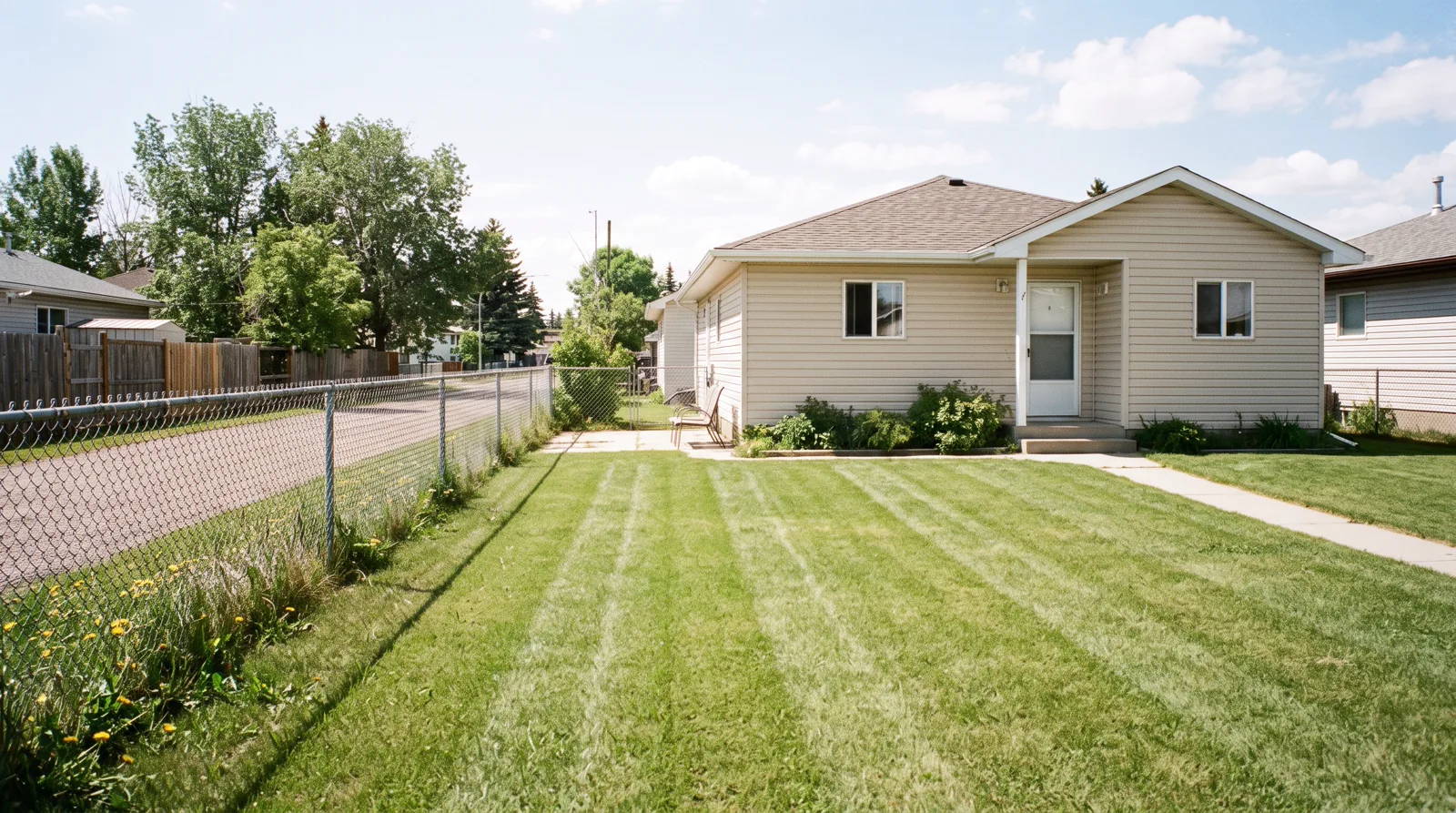
Lawn Mowing Spruce Grove Weekly Cuts, Spring Cleanup, Fall Prep.
Reliable mowing and maintenance for Alberta lawns. insured crews, flexible scheduling from April through October.
Lawn Care Built for Alberta's Short Season
From spring thaw to first snow, we keep your lawn healthy, tidy and ready for the next freeze.
Weekly or Bi-Weekly Mowing
Regular cuts timed to Alberta's growing season. We adjust height for chinook wind stress, bag or mulch clippings based on your preference, and edge walkways and beds. Most residential lots take 20 to 40 minutes per visit.
Spring Cleanup & First Cut
Remove winter debris, matted leaves, and dead grass after snowmelt. First cut is often a scalp and bag to clear thatch and let sunlight reach the soil. We haul away all material and prep beds for mulch or planting.
Fall Cleanup & Winter Prep
Final mow at 2 inches to prevent snow mold, leaf removal, gutter clearing if accessible, and bed tidying. We schedule this for late October or early November before the first lasting snow, so your lawn enters winter clean and your spring workload is lighter.
Edging & String Trimming
Every visit includes edging along driveways, sidewalks and patios, plus string trimming around posts, trees and fences. Clean lines make a lawn look professional, and edging prevents grass from creeping into flower beds or cracking concrete joints.
Grass Cycling vs. Bagging
Mulching returns nitrogen to the soil and reduces watering needs. Bagging is better after heavy rain, dandelion seed set, or if clumps would smother the lawn. We assess conditions each visit and switch methods as needed, hauling clippings to the compost depot when we bag.
Aeration & Overseeding Add-On
Core aeration in spring or fall breaks up clay soil and relieves compaction. Overseeding fills thin spots and crowds out weeds. Best done in late August or early September in Alberta, when soil is warm but fall rain helps germination.
Why Alberta Lawns Need Local Know-How
🌬️ Chinook Wind Drying
Warm winter chinooks and dry spring winds pull moisture from turf faster than rainfall replaces it. We cut high in April and May to shade roots, and we skip mowing if the grass is crispy, because scalping dry turf invites weeds and bare patches.
❄️ Short Growing Season
Frost can hit in late September, and lawns go dormant by mid-October. We time the final mow for 2 inches, low enough to prevent snow mold but tall enough to protect crowns. Spring mowing starts in mid-April once the soil firms up and grass greens.
🪨 Clay Soil Compaction
Parkland County and Spruce Grove sit on heavy clay that compacts under foot traffic and spring runoff. Mower wheels can rut wet turf in April, so we wait for the ground to drain. Aeration in late summer is the single best fix for hard, puddling lawns.
💧 Municipal Watering Rules
Spruce Grove and Stony Plain restrict lawn watering to assigned days in July and August. We adjust mowing height to 3 inches during dry spells to conserve moisture, and we recommend leaving clippings on the lawn to act as mulch and slow evaporation.
What it costs here
Everything You Need to Know About Lawn Mowing in Spruce Grove
From spring thaw timing to chinook wind recovery, here's how to keep Alberta turf healthy all season.
How Lawn Mowing and Maintenance Actually Works in Spruce Grove
Lawn mowing in Spruce Grove is not just pushing a mower across grass once a week. Professional lawn maintenance involves cutting height calibration, clipping management, edge trimming along walkways and driveways, and monitoring for thatch buildup or pest damage during every visit. Most residential properties in Spruce Grove, Stony Plain and Parkland County sit on clay-heavy soil that compacts easily, so mowing patterns rotate each week to prevent rut formation and soil compression that chokes root growth. A legitimate service will alternate between diagonal, horizontal and vertical cutting directions to keep the turf healthy and the lawn surface level.
The mowing season here runs roughly mid-April through late October, depending on when the ground thaws and when the first hard freeze arrives. During May and June, when cool-season grasses like Kentucky bluegrass and fescue blends grow fastest, most lawns need cutting every five to seven days. By mid-July, growth slows under heat stress, and bi-weekly mowing becomes standard unless the property has an irrigation system. A professional service adjusts the schedule based on actual growth rate, not a rigid calendar, because cutting too frequently during drought stress scalps the lawn and invites weeds, while waiting too long forces you to remove more than one third of the blade height in a single pass, which shocks the grass and turns it brown.
Equipment matters more than most homeowners realize. Consumer-grade push mowers with dull blades tear grass instead of cutting it cleanly, leaving ragged edges that turn white and invite fungal infection. Professional crews use commercial walk-behind or zero-turn mowers with sharp, high-lift blades that create a clean cut and generate enough suction to stand the grass upright before cutting. Blades get sharpened or replaced every 20 to 25 hours of mowing time, which for a busy crew means twice a week during peak season. String trimmers handle edges along fences, garden beds and sidewalks, and blowers clear clippings from driveways and walkways so the property looks finished, not just mowed.
Alberta Climate Realities That Drive Lawn Care Needs
Spruce Grove sits in a climate zone where lawns endure seven months of freeze and thaw cycles, chinook wind events that can swing temperatures 20 degrees in an afternoon, and late spring frosts that kill new growth even in mid-May. The soil here is predominantly heavy clay with poor drainage, so spring melt and summer thunderstorms create standing water that suffocates grass roots if the lawn is not graded properly or if thatch has built up over the winter. Most established neighborhoods in Spruce Grove, from Grove Park to Westview Village, have mature trees that drop leaves, seed pods and twigs throughout the growing season, adding debris management to the mowing workload.
Hail is a recurring threat from May through September. A single severe hailstorm can shred grass blades, compact soil, and strip bark from trees, leaving properties looking battered. After a hail event, lawns need lighter, more frequent mowing to remove damaged tissue without stressing the plants further, and debris cleanup becomes urgent because broken branches and leaf litter block sunlight and trap moisture, creating perfect conditions for snow mold and rust fungi. Chinook winds dry out the soil rapidly in winter and early spring, so lawns that were saturated in November can be bone dry by March, stressing roots before growth even resumes.
Snow mold, dollar spot, and rust fungi thrive in Alberta's cool, damp springs and falls. These diseases spread fastest in lawns that are cut too short, left with heavy clipping piles, or mowed when wet. Professional services know to delay mowing after heavy rain because wet soil compacts under mower weight, and wet clippings clump instead of dispersing, smothering the grass underneath and creating anaerobic pockets where disease takes hold. The freeze-thaw cycle also heaves soil, pushing rocks and roots to the surface, so crews walk the property before mowing to remove obstacles that would damage blades or create safety hazards.
Warning Signs You Need Professional Lawn Mowing Service
The most obvious signal is when your lawn goes two weeks or more between cuts during the growing season. Grass that grows past six inches becomes difficult to cut in a single pass without leaving clumps of wet clippings that smother the turf underneath. If you are bagging clippings because they are too long to mulch, or if you see wheel ruts from your mower because the grass was too tall and wet to cut cleanly, you are already behind. Letting the lawn grow too long also encourages weed seed heads to mature and spread, so a missed mowing in June can mean a dandelion explosion in July.
Uneven cutting height is another red flag. If your lawn has scalped patches near turns or slopes and shaggy areas in the middle, your mower deck is not level, your wheels are set to different heights, or the operator is rushing and overlapping inconsistently. Scalped areas expose soil to direct sunlight, killing grass crowns and inviting crabgrass and spurge to colonize the bare spots. Professional crews use mowers with adjustable decks that stay level across uneven terrain, and they overlap each pass by about 20 percent to ensure no strips are missed.
You should also consider professional help if you notice thatch buildup, which appears as a spongy, brown layer between the green grass and the soil surface. Thatch thicker than half an inch prevents water and nutrients from reaching roots, and it harbors insects and disease. Mowing alone will not fix thatch, but a professional service will identify it during routine visits and recommend dethatching or aeration before the problem kills sections of the lawn. If you see mushrooms, bare patches spreading from the edges, or grass that feels spongy underfoot, thatch or compaction is likely the cause, and you need more than just mowing.
Time, Equipment and Physical Demand
Many homeowners underestimate the time cost of doing it themselves. A typical Spruce Grove residential lot, anywhere from 5,000 to 8,000 square feet of turfed area, takes 45 to 75 minutes to mow, trim, edge and blow clean if you are working at a steady pace with functional equipment. That assumes your mower starts on the first pull, the string trimmer does not run out of line, and you do not need to stop to pick up sticks or move sprinklers. If you are mowing after work on a weekday, you are racing against mosquitoes, fatigue and fading light, and the quality suffers.
Push mowers are physically demanding, especially on sloped yards or properties with thick, wet grass. Repetitive strain injuries to shoulders, wrists and lower back are common among people who mow their own lawns weekly for years. If you are over 50, have joint issues, or simply value your weekends, paying someone else to handle the mowing is not laziness, it is a reasonable trade of money for time and health. Professional crews also carry commercial liability insurance, so if someone gets hurt or property gets damaged, you are not personally liable the way you would be if you hired a neighborhood teenager with no insurance.
The Professional Lawn Mowing Process Step by Step
A professional mowing visit starts with a property walk to check for new obstacles like toys, garden hoses, or branches that fell since the last visit. Crews also look for signs of disease, pest damage, or irrigation problems so they can flag issues for the homeowner before they become expensive repairs. This pre-mow inspection takes two to three minutes but prevents blade damage, missed hazards, and missed opportunities to catch problems early. If the lawn is wet or the soil is saturated from recent rain, a good crew will reschedule rather than mow, because wet mowing causes compaction, clumping and disease spread.
Mowing itself follows a pattern that changes weekly to avoid creating ruts and wear lines. On the first visit of the season, the crew might mow in horizontal stripes parallel to the street. The next week, they switch to vertical stripes perpendicular to the street. The third week, they cut diagonally. This rotation prevents the grass from leaning in one direction and keeps the soil surface level. Cutting height is set based on grass type and season: three inches in spring and fall when cool-season grasses are actively growing, and three and a half to four inches in summer to shade roots and conserve moisture during heat stress. The mower deck is kept level, blades are sharp, and the engine runs at full throttle to generate enough blade speed for a clean cut.
After mowing, the crew trims edges along sidewalks, driveways, fences and garden beds with a string trimmer, then blows clippings off hard surfaces back onto the lawn where they decompose and return nitrogen to the soil. Grass clippings left on the lawn act as free fertilizer, contributing roughly 25 percent of the lawn's annual nitrogen needs if you mow frequently enough that clippings are short and disperse evenly. Bagging clippings removes that nutrient source and fills landfills with organic matter that should be cycling back into the soil, so professional services mulch whenever possible and only bag when clippings are too heavy to mulch or when the homeowner specifically requests it.
- Pre-mow inspection for obstacles, hazards and turf health issues
- Mowing pattern rotation to prevent soil compaction and wear lines
- Cutting height adjusted seasonally: three inches cool season, four inches heat stress
- Sharp blades and full-throttle operation for clean cuts that heal fast
- Edge trimming along all hard surfaces and landscape borders
- Blowing clippings off driveways and walkways back onto turf
- Mulching clippings to return nutrients unless lawn is overgrown or wet
What Lawn Mowing Costs in Spruce Grove and the Tri-Region
A standard residential lawn mowing visit in Spruce Grove, Stony Plain, or Parkland County typically runs $35 to $65 per visit for an average suburban lot of 4,000 to 7,000 square feet. Larger acreage properties common in rural Parkland County or along the Highway 16A corridor can cost $80 to $150 per visit, depending on total mowing area and obstacles like trees, flower beds, or slopes. Most homeowners on weekly service during the May through September growing season spend $600 to $1,100 per year on mowing alone, not including spring cleanup, aeration, or fall leaf removal.
The biggest cost driver is lot size and complexity. A flat, open lawn with few obstacles mows quickly and costs less per visit. Properties with mature trees, extensive garden beds, tight corners around sheds or play structures, steep slopes, or irregular shapes take more time and careful maneuvering, which pushes prices higher. Operators often quote by the visit rather than by the hour, so they build efficiency assumptions into the price. A crew that can mow, edge, and blow a simple lot in 20 minutes charges less than one spending 45 minutes navigating a complex yard.
Frequency directly affects your annual spend. Weekly service during peak growth in June and July keeps grass height manageable and lawns looking sharp, but it costs more over the season than bi-weekly cuts. Many Tri-Region homeowners switch to bi-weekly mowing in late July and August when growth slows under heat stress, then return to weekly cuts in September if fall rains trigger a second flush of growth. Chinook winds in winter can melt snow and expose grass, but true mowing season here runs roughly May 1 to late September, giving you 20 to 22 weeks of cutting.
Additional services layer onto the base mowing price. Edging along driveways, sidewalks, and flower beds adds $10 to $20 per visit if not included. Trimming around fence lines, deck posts, and tight spots costs extra labor. Grass clipping disposal or bagging, rather than mulching back into the lawn, can add $15 to $30 per visit because the contractor hauls away volume and pays dump fees. Spring dethatching, aeration, overseeding, and fertilizer applications are separate line items, often bundled into packages that run $200 to $500 per season depending on lawn size and soil condition.
Comparing Your Lawn Care Options: Methods and Service Models
Homeowner DIY mowing with a consumer-grade push or self-propelled rotary mower is the lowest cash outlay but the highest time cost. A decent gas or battery mower suited to Alberta's tough mixed grasses costs $350 to $800, a string trimmer adds $150 to $300, and a blower runs $100 to $250. You also need fuel or battery charging infrastructure, blade sharpening every season, oil changes, air filter replacements, and winter storage. Over five years of ownership, maintenance and depreciation bring the true per-season cost to $150 to $250, not counting your labor. For someone who enjoys the exercise and takes pride in the work, DIY makes sense. For anyone juggling work, family, and weekend plans, the three to four hours per week spent mowing, trimming, and blowing becomes a burden.
Professional rotary mowing is the standard service model in the Tri-Region. Crews arrive with commercial-grade zero-turn or walk-behind mowers, commercial string trimmers, and backpack blowers. They cut at the correct height for your grass type, mulch clippings to return nitrogen to the soil, edge borders crisply, and blow debris off hard surfaces. The result is a clean, uniform finish in a fraction of the time a homeowner takes. Most services run on weekly or bi-weekly schedules, visiting the same day each cycle unless weather delays the route. You pay per visit or monthly, and the contractor handles all equipment, fuel, maintenance, and blade sharpening.
Reel mowing, where a cylinder of blades cuts grass with a scissor action rather than a high-speed chop, delivers the finest cut quality and is preferred for premium fine fescue or bentgrass lawns. Reel mowers are rare in residential Tri-Region service because they require frequent blade adjustment, work best on flat terrain, and struggle with taller or wet grass. Most local lawns are Kentucky bluegrass, perennial ryegrass, or mixed blends that handle rotary mowing well. Reel mowing is more common on golf courses or estate properties where appearance standards justify the extra cost and expertise.
Robotic mowers are emerging as a hands-off option for tech-focused homeowners. A quality robotic mower costs $1,200 to $3,500 installed, including perimeter wire burial and charging station setup. The robot mows on a programmed schedule, mulching tiny clippings continuously so the lawn always looks trim. Limitations include difficulty with complex layouts, slopes over 20 degrees, and Alberta's spring thaw, which can leave ground soft and rutted under wheel traffic. Robotic mowers also require manual trimming along edges and obstacles, so they reduce but do not eliminate lawn care labor. They work best on simple, open lots with defined borders.
Common Mistakes and Contractor Red Flags to Avoid
Cutting grass too short, a mistake called scalping, is the most common mowing error in the Tri-Region. Homeowners and inexperienced contractors sometimes drop the mower deck to two inches or lower, thinking a shorter cut means less frequent mowing. In reality, scalping stresses the grass, exposes soil to weed seeds, and reduces the lawn's ability to photosynthesize and recover from heat or drought. Kentucky bluegrass and perennial ryegrass lawns perform best when maintained at three to three and a half inches during the growing season. Taller grass shades the soil, keeps roots cooler during July heat, and crowds out dandelions and crabgrass. If a contractor shows up and scalps your lawn on the first visit, that is a red flag they do not understand local turf management.
Mowing wet grass creates clumping, uneven cuts, soil compaction, and increased disease risk. After a heavy rain or early morning dew, responsible contractors delay the route until grass blades dry, typically by mid-morning or early afternoon. Fly-by-night operators push through wet conditions to stay on schedule, leaving clumps of wet clippings that smother the lawn and turn brown, ruts from mower wheels in soft soil, and ragged cuts because wet grass bends under the blade instead of shearing cleanly. If you see your lawn mowed while soaking wet, especially in May or June when spring rains are frequent, you are dealing with someone prioritizing speed over quality.
Dull mower blades tear grass instead of cutting it, leaving ragged brown tips visible a day after mowing. Sharp blades slice cleanly, and the lawn stays green and healthy. Commercial operators should sharpen blades at least once per week during peak season, or after every eight to ten hours of mowing. If your lawn looks brown or shredded after a cut, check the blade tips up close. Torn, frayed ends indicate dull blades. A quality contractor sharpens or swaps blades as part of routine maintenance and never lets equipment degrade to the point where it damages your turf.
Hiring an uninsured contractor exposes you to serious liability. If a mower throws a rock through your window, hits a passing car, or injures someone on your property, you could be held responsible if the contractor has no liability coverage. Alberta law does not require lawn care operators to carry liability insurance unless they have employees, but any legitimate business should carry commercial general liability insurance of at least two million dollars. Always ask for proof of insurance before signing a service agreement. A contractor who hesitates, offers excuses, or says insurance is too expensive is not worth the risk. If someone gets hurt or property gets damaged, your homeowner's policy may deny the claim because you hired an uninsured commercial operator, leaving you personally liable.
Bait-and-switch pricing is another red flag. A contractor quotes $40 per visit, starts service, then hits you with surprise charges for edging, blowing, or clipping removal that were implied to be included. Legitimate operators provide clear written quotes that itemize what is included in the base price and what costs extra. If a quote seems vague or the contractor is reluctant to put terms in writing, walk away. Reputable services in Spruce Grove and Stony Plain provide detailed service agreements, outline visit frequency, list included tasks, specify cancellation terms, and guarantee their work. Anything less is a setup for disputes and disappointment.
How to Hire the Right Lawn Care Professional
Start by asking neighbors, friends, or local community Facebook groups for referrals. Personal recommendations from people whose lawns you admire carry more weight than online ads or door-knocking solicitations. Look for contractors who have been operating in the Tri-Region for at least three years, have a physical business address or local phone number, and show up in Google search results with reviews. Fly-by-night operators work out of a truck, disappear mid-season, and leave no recourse if quality drops or equipment damages your property. Established local businesses have reputations to protect and customer bases to maintain.
When you contact a potential contractor, ask specific questions about their process. How often do they sharpen blades? What height do they cut at, and do they adjust for season or grass type? Do they mulch clippings or bag them? What happens if weather delays a scheduled visit? How do they handle billing, and is there a contract or can you cancel anytime? A professional operator answers these questions clearly and confidently. Someone who fumbles, gives vague answers, or tries to rush you into signing is either inexperienced or hiding something.
Request proof of liability insurance and, if they have employees, WCB coverage. A legitimate contractor provides a certificate of insurance within a day or two, listing you as the certificate holder if you ask. If they balk, make excuses, or say they will get it later, assume they are uninsured and move on. The risk is not worth saving ten dollars per visit. Also verify they use commercial-grade equipment, not homeowner-grade mowers and trimmers that break down frequently and deliver inconsistent results. Ask what brand and type of mower they run. Operators using commercial Toro, Exmark, Scag, or Honda equipment are serious about quality and durability.
Get written quotes from at least two or three contractors before deciding. Compare not just the price per visit but what is included, visit frequency, and contract terms. The cheapest quote is rarely the best value if it comes with hidden fees, poor quality, or unreliable service. Look for a balance of fair pricing, clear terms, solid references, proper insurance, and professionalism. A contractor who shows up on time for the estimate, communicates clearly, and provides a detailed written quote is likely to deliver that same reliability throughout the season.
Once you hire someone, monitor quality closely for the first few visits. Check mowing height, edge crispness, clipping distribution, and how well they avoid flower beds and fragile plantings. If you see problems, speak up immediately. Good contractors appreciate feedback and make adjustments. Poor ones get defensive or ignore your concerns. If quality does not improve after you raise an issue, terminate the service and hire someone else. You are not locked into a bad contractor, and switching early in the season is easier than suffering through months of subpar work.
How Tri-Region Services Helps
Tri-Region Services eliminates the guesswork and risk of hiring a lawn care contractor by connecting you directly with one pre-vetted, fully insured local professional. Contractors tell us about liability insurance, check references, confirm commercial-grade equipment, and ensure the operator has a track record of quality work and fair pricing in Spruce Grove, Stony Plain, and Parkland County. You get a free written quote tailored to your property with no obligation, clear terms, and transparent pricing. No bait-and-switch, no unlicensed crews, no disappearing mid-season. Just reliable, professional lawn mowing from a contractor we stand behind, so you can enjoy a great-looking lawn without the hassle of vetting strangers or gambling on quality.
Why Homeowners Trust Our Lawn Crews
Contractors tell us about for insurance, reliability and equipment quality, so you never wonder if the job will get done right.
Liability coverage
Every crew tells us they carry at least $2 million liability insurance, so you are protected if someone is hurt on your property or a mower throws a rock through a window.
Predictable Scheduling
Mowing happens on the same day each week or every two weeks, and you get a text the morning of service so you can move sprinklers or toys off the lawn.
Sharp Blades, Tuned Equipment
Dull blades tear grass and leave brown tips that invite disease, so the crews we refer sharpen or swap blades every 8 to 10 hours of mowing and tune engines before spring.
Clipping Haul-Away When Needed
If we bag, we haul clippings to the compost depot the same day, no piles left on your driveway for you to deal with later.
No Surprise Fees
You get a flat per-visit rate at signup, and we only charge extra if you request aeration, dethatching or debris haul beyond normal mowing, and we quote that before we start.
Rain-Day Communication
If rain makes the lawn too soft to mow without rutting, we text you and reschedule for the next dry day, so you never pay for a skipped visit or damage to your turf.
This page is not tied to a contractor's brand. Leads route straight to your one local partner. Verified reviews can appear here once that partner has them (never fabricated).
Serving the whole Tri-Region
8 Questions Homeowners Ask About Lawn Mowing
How often should I mow my lawn in Spruce Grove?+
What is the best mowing height for Alberta lawns?+
Should I bag grass clippings or leave them on the lawn?+
When should I stop mowing in the fall?+
How do I deal with dandelions and weeds in my lawn?+
What does spring cleanup include, and when should it happen?+
How much does weekly lawn mowing cost in Spruce Grove?+
Can chinook winds damage my lawn, and what should I do?+
Get your free quote
Tell us what you need and a local pro will get right back to you.
- ✓ Sent straight to a local business
- ✓ You choose who you hire
- ✓ Free, with no obligation