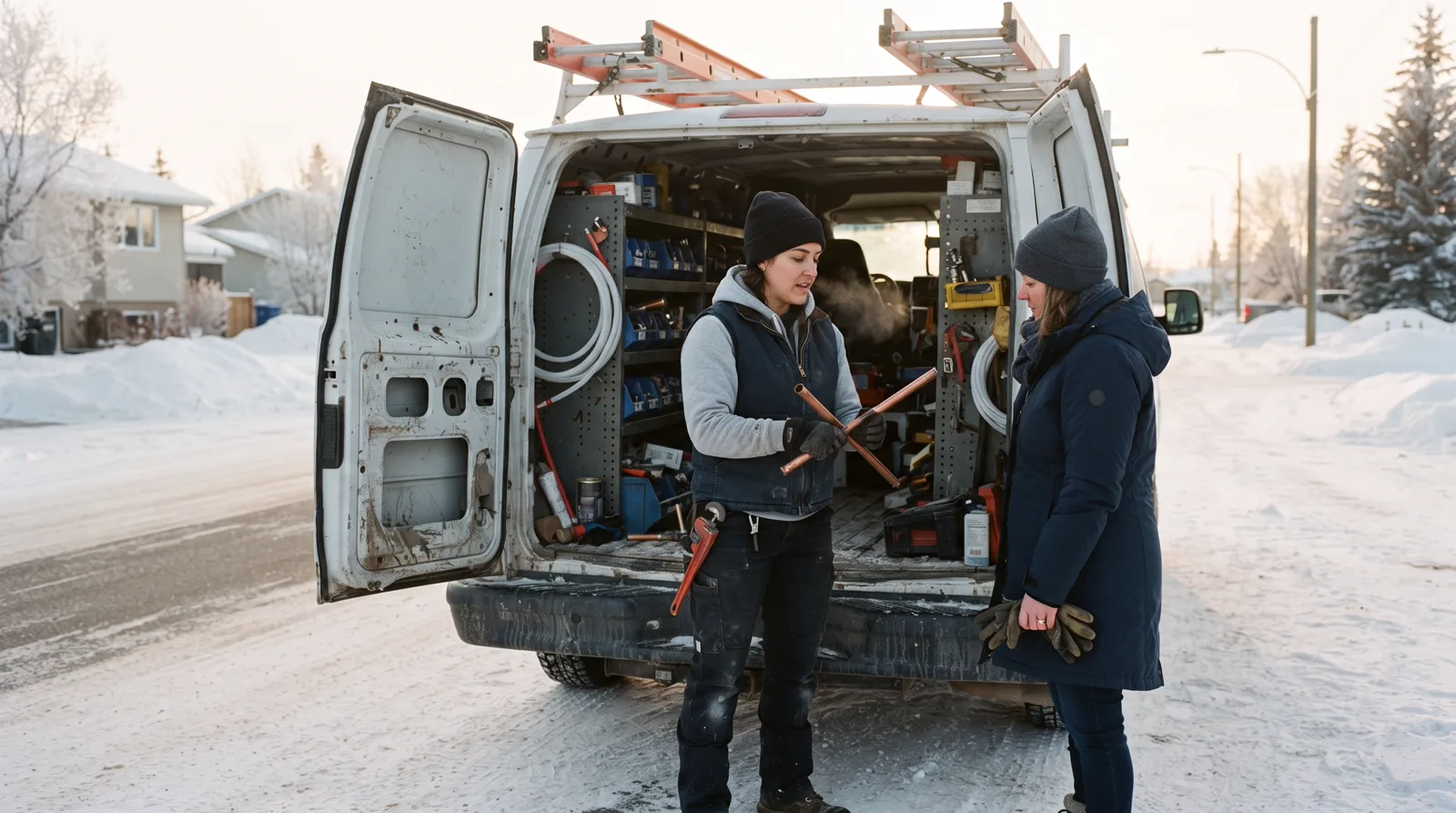
Pipe Repair Spruce Grove: Stop Leaks Before They Flood Your Home.
Licensed plumbers fix and replace copper, PEX, galvanized, and ABS pipes across the Tri-Region, winter or summer, basement to street.
Complete Pipe Repair and Replacement
From pinhole leaks to full-line swaps, local pros diagnose, quote, and fix it right the first time.
Frozen Pipe Thaw and Repair
Thaw lines frozen in rim joists, crawlspaces, or exterior walls using heat tape and warm air. If the pipe split during freeze, local pros replace the damaged section with PEX or copper and insulate vulnerable runs to prevent repeat failures.
Leak Detection and Patching
Pinpoint slow leaks behind drywall or under slabs using acoustic sensors and thermal imaging. Temporary epoxy or clamp patches for emergencies, permanent soldered or compression repairs for long-term reliability. Moisture readings confirm dryness after repair.
Copper to PEX Re-Pipe
Replace corroded copper supply lines with modern PEX throughout basements, crawlspaces, or whole homes. PEX resists freeze damage better in Alberta's deep cold, installs faster, and costs less than new copper. Includes pressure testing and building permit coordination.
Main Water Line Replacement
Excavate and replace the underground service line from street curb stop to your foundation. We coordinate locates, pull municipal permits, trench through frost depth (up to 2.1 metres in Parkland County), lay new PEX or copper, backfill, compact, and restore landscaping or asphalt cuts.
Galvanized Pipe Replacement
Swap out rusted galvanized steel supply pipes common in pre-1980 Spruce Grove homes. Low pressure, brown water, and pinhole leaks signal failure. We cut out old sections, thread or solder modern materials, and flush lines to clear sediment before final testing.
Video Pipe Inspection
Snake a waterproof camera through drain or sewer lines to identify cracks, root intrusion, bellies, or offset joints. Recording provided on USB. Commonly used before buying older acreages or diagnosing recurring backups. Helps target repairs instead of guessing under concrete.
Why Pipe Work Here Is Different
🌡️ Frost Depth and Freeze-Thaw Cycles
Spruce Grove and Stony Plain sit in a zone where frost penetrates 1.8 to 2.1 metres below grade. Shallow or poorly insulated pipes freeze during January cold snaps, and rapid chinook thaws can crack already stressed copper. We insulate rim joists, wrap vulnerable runs, and recommend heat trace cable for problem walls.
🏡 Older Subdivisions with Galvanized Stock
Many homes in Grove Park, Westgrove, and parts of Stony Plain were plumbed with galvanized steel in the 1970s and early 1980s. These lines rust from the inside, causing low flow and eventual pinhole leaks. We often recommend whole-home re-pipe over patching when three or more leaks have occurred.
🚜 Acreage Wells and Private Systems
Parkland County acreages rely on private wells and pressure tanks. Polyethylene wellhead lines can crack under frost heave, and older galvanized drop pipes corrode in high-mineral water. Local pros repair above-grade plumbing, coordinate with well drillers for below-grade work, and ensure pressure switches and tanks match new pipe capacity.
📋 Municipal Permit Rules and Inspections
Spruce Grove, Stony Plain, and Parkland County each require plumbing permits for main line replacements, material changes, and any work on building drains. The plumber pulls permits, schedules inspections, and provides homeowners with signed-off paperwork for insurance and resale records. No shortcuts.
What it costs here
Everything You Need to Know About Pipe Repair in Spruce Grove
Materials, methods, permits, and timing: the decisions that shape cost, longevity, and peace of mind.
How Pipe Repair and Replacement Actually Works in Spruce Grove Homes
Pipe repair and replacement in Spruce Grove involves far more than simply patching a leak or swapping out a section of tubing. Professional plumbers begin with diagnostic work to identify not just the visible problem but the underlying cause, whether that's corrosion from our mineral-heavy Alberta water, freeze damage from our winter extremes, or mechanical stress from ground settling. The assessment phase uses cameras, pressure testing, and thermal imaging to map the extent of damage throughout your system, because a single leak often signals problems in adjacent sections that haven't failed yet. This diagnostic work determines whether a targeted repair will solve the issue or whether replacement of entire runs makes more economic and practical sense for your home.
Repair techniques vary dramatically based on pipe material, location, and damage type. Copper pipes with pinhole leaks can sometimes be soldered or fitted with compression sleeves if the surrounding metal remains sound. PEX and ABS plastic pipes typically require cut-and-couple repairs using mechanical fittings or fusion techniques. Cast iron stacks, common in older Spruce Grove homes built before 1980, often need sectional replacement using no-hub couplings when corrosion creates holes or when root intrusion damages underground sections. Galvanized steel pipe, which corrodes from the inside out in our water conditions, almost always requires full replacement rather than repair because internal buildup restricts flow even when the exterior looks intact. The repair method must account for accessibility too, since pipes buried in concrete slabs, hidden behind finished walls, or located in crawl spaces with limited clearance all require different approaches and tools.
Replacement projects involve selecting appropriate modern materials that suit Alberta conditions and meet current code. Most Spruce Grove plumbers now install PEX for supply lines because it resists freeze damage better than rigid pipe, expands slightly when ice forms, and installs quickly with fewer joints that could leak. Drain lines typically use ABS plastic for its durability in our temperature swings and resistance to the chemical cleaners homeowners sometimes use. Copper remains the choice for certain applications where heat resistance matters or where building inspectors require it, though it costs considerably more than PEX and demands skilled soldering. The replacement process includes pressure testing the new sections, inspecting all joints, and often upgrading shut-off valves and connections while the walls are open. Smart plumbers photograph the work before closing walls, giving you documentation for future renovations or emergency repairs when someone needs to know exactly where pipes run.
Why Alberta Climate Creates Unique Pipe Damage Patterns
Freeze-thaw cycling hits Spruce Grove harder than most Canadian regions because of chinook winds that create wild temperature swings within hours. A January morning might start at minus 28 degrees, warm to plus 5 by afternoon, then crash back to minus 15 overnight. This cycling causes pipes to expand and contract repeatedly, working solder joints loose, cracking aged plastic, and creating hairline fractures in copper that don't leak immediately but fail months later. Exterior hose bibs and pipes in unheated garages take the worst beating, but even interior pipes in exterior walls suffer when insulation settles or when bathroom exhaust fans vent moist air into wall cavities where it condenses and freezes around pipes. The Alberta Building Code requires R-20 insulation in walls and pipes four inches from exterior surfaces, but homes built before these requirements took effect in the late 1990s often have inadequate protection.
Ground movement from deep frost penetration damages underground water and sewer lines in ways homeowners don't expect. Parkland County frost can reach 2.4 metres deep in severe winters, well below where many older service lines were buried when frost depth requirements were less stringent. As soil freezes, it expands and shifts, putting mechanical stress on rigid pipes and crushing clay tile sewers that were common before plastic became standard. Spring thaw brings its own problems when saturated soil settles unevenly, bending pipes and separating joints. This explains why many Spruce Grove homes experience recurring drain problems or water main breaks in March and April even though the pipes survived winter intact. Modern installations place water lines 2.5 to 3 metres deep with proper bedding, but upgrading existing shallow lines requires excavation that costs $3,500 to $9,000 depending on distance and landscaping restoration.
Water quality in the Spruce Grove and Stony Plain service area accelerates certain types of pipe degradation that wouldn't happen as quickly elsewhere. Our groundwater contains dissolved minerals, particularly calcium and magnesium, that deposit inside pipes over decades and corrode certain metals. Copper pipe with pH imbalance can develop pinhole leaks after 15 to 25 years, typically starting in hot water lines where chemical reactions accelerate. Galvanized steel pipe, common in homes built before 1970, corrodes from the inside as zinc coating deteriorates and iron oxidizes, eventually restricting flow to a trickle even though the exterior looks fine. Chlorine added during water treatment at municipal plants also contributes to plastic pipe degradation over very long timeframes. Well water in Parkland County acreages often contains hydrogen sulfide or iron bacteria that corrodes pipes faster than city water, and requires specialized treatment systems to prevent recurring damage.
Snow load and ice dams create secondary pipe problems that catch homeowners off guard. Heavy snow on roofs can crush older galvanized vent stacks that extend through the roofline, crimping them enough to affect drain venting and create slow drainage or gurgling sounds. Ice dams that form when heat escapes through poorly insulated attics can back water under shingles and into walls where it freezes around pipes, then melts and floods when temperatures rise. Downspouts that discharge too close to foundations can saturate soil around basement walls and underground pipes, contributing to corrosion and eventually causing pinhole leaks in copper or joint separation in ABS. Proper grading, adequate attic insulation rated R-50 or better, and downspout extensions that move water at least 1.8 metres from foundations all reduce these risks, but many older Spruce Grove properties lack these protections.
Real Warning Signs You Need Pipe Repair or Replacement Now
Visible water damage appears first as subtle discoloration before becoming obvious stains or bulging drywall. Check ceiling corners in rooms below bathrooms, along exterior walls, and around plumbing chases where pipes run vertically between floors. Yellowish-brown staining suggests slow leaks that have been happening for weeks, while darker stains with soft, sagging drywall indicate active leaks that need immediate attention. Peeling paint or bubbling wallpaper near baseboards often means supply line leaks inside walls, particularly if the area feels damp or cold compared to surrounding surfaces. Water stains that grow, shrink, or change appearance over days prove pipes are leaking intermittently rather than from a one-time overflow event. Parkland County homes on private wells sometimes see these patterns worsen after pressure tank cycles or when irrigation systems run, pointing to specific sections that fail under pressure. Never assume water damage is old and inactive without having a plumber verify the source, because slow leaks cause far more structural damage than obvious gushers.
Pressure drops and flow problems often signal internal pipe degradation before any leak becomes visible. If multiple fixtures show weak flow simultaneously, the issue likely sits in your main supply line or trunk lines rather than individual fixture valves. Turn off all water-using appliances and check if your water meter continues spinning, which confirms a leak exists somewhere between the meter and your fixtures. In Spruce Grove homes built before 1975, brown or rusty water appearing first thing in the morning usually means galvanized pipes have corroded through their zinc coating and are now actively rusting, a problem that only gets worse and eventually requires full replacement. Hot water losing pressure faster than cold water points to mineral buildup or corrosion in your water heater's outlet pipe or in hot water trunk lines. Pressure that fluctuates when neighbours use water or when dishwashers and washing machines run suggests undersized supply lines, which technically aren't damaged but function so poorly they need replacement to meet modern fixture demand.
Unusual sounds from your plumbing system tell experienced stories about what's failing inside walls and under floors. Banging or hammering when you shut off faucets quickly, called water hammer, indicates loose pipes that have separated from their mounting brackets or worn-out air chambers that once cushioned pressure surges. Gurgling drains suggest venting problems from crushed or disconnected vent stacks, or from blockages that prevent air from entering the system as water drains away. Hissing sounds point to high-pressure leaks where water escapes through small openings, often at failing solder joints or around compression fittings that have loosened. Running water sounds when no fixtures are in use almost always mean toilet flappers or fill valves need replacement, but they can also indicate slab leaks under concrete floors where pressurized water leaks into soil. Acheson industrial properties and acreages with long pipe runs sometimes develop vibration noises from water velocity issues that require pressure-reducing valves or pipe resizing to eliminate.
Moisture indicators and mould growth provide concrete evidence that pipes have been leaking long enough to create health hazards and structural risks. Black or green mould appearing on walls near plumbing, musty odours that intensify near bathrooms or kitchens, and consistently high humidity readings above 60 percent all suggest hidden leaks feeding mould growth. Efflorescence, which appears as white chalky deposits on basement concrete walls, indicates water wicking through foundation walls from outside or leaking from interior pipes embedded in or against concrete. Floors that feel soft or spongy near toilets, tubs, or under sinks mean subfloor wood has absorbed so much water it's beginning to rot, which represents both a plumbing failure and a structural repair that will cost $1,800 to $6,500 depending on extent. Stony Plain homes with crawl spaces should be checked annually for standing water, pipe condensation, or damp insulation, because these areas hide leaks until damage becomes severe. Insurance adjusters look specifically for moisture damage documentation when evaluating claims, so photographing these warning signs provides evidence that damage resulted from sudden pipe failure rather than long-term neglect.
What Your Water Meter Reveals About Hidden Leaks
Your water meter functions as a diagnostic tool that detects leaks you cannot see or hear from inside your home. Turn off every fixture, appliance, and outdoor tap, then watch the meter for 30 minutes without using any water. Any movement of the meter dial or digital readout, even slight rotation, confirms water is flowing somewhere in your system, which means a leak exists between the meter and your fixtures or a toilet valve is leaking internally. Record the meter reading before bed without using water overnight, then check it first thing in the morning before anyone uses taps or flushes toilets. Differences of more than a few litres indicate leaks that waste water constantly and signal pipes need professional inspection.
Seasonal meter patterns help identify which pipe sections are failing. Leaks that worsen in winter when pipes freeze and thaw point to temperature-related damage, while leaks that increase in summer when irrigation systems run suggest problems in outdoor lines or hose connections. Spruce Grove homeowners who notice their water bills climbing steadily over several months without increased usage should suspect slow leaks from corroding pipes rather than sudden breaks. Comparing your current water consumption to bills from the same months in previous years reveals trends that point to deteriorating pipe conditions before catastrophic failures occur.
The Step-by-Step Pipe Repair and Replacement Process
Initial assessment and diagnosis start the moment a qualified plumber arrives at your Spruce Grove home to evaluate the pipe problem. The plumber will ask detailed questions about when you first noticed issues, whether problems occur constantly or intermittently, and what areas of your home show symptoms. They'll inspect visible pipes in basements, crawl spaces, and utility rooms for corrosion, mineral deposits, or obvious damage. For hidden leaks, plumbers use moisture meters that detect water inside walls without cutting openings, thermal cameras that show temperature differences where water flows behind surfaces, and acoustic leak detectors that amplify the sound of water escaping under pressure. Camera inspections of drain lines use flexible fiber-optic cables pushed through cleanouts to view pipe interiors, identifying cracks, root intrusion, or collapsed sections that cause recurring blockages. This diagnostic phase typically takes one to three hours depending on your home's size and problem complexity, and costs $180 to $350 as a service call fee that most companies credit toward repair costs if you proceed with their quote.
Once diagnosis pinpoints the problem location and cause, the plumber provides a detailed written estimate covering repair or replacement options with explanations of each approach. For accessible pipes with localized damage, repairs might involve cutting out damaged sections and installing new pipe using couplings, soldering copper joints, or fusing PEX connections. Wall and ceiling access requires cutting precise openings that the plumber marks with painter's tape before making cuts, keeping damage minimal while exposing enough pipe to work safely. Spruce Grove permits are required for replacement work that involves more than five metres of pipe or work that affects drain venting systems, with permit fees typically $125 to $200 depending on scope. Plumbers registered with Alberta Municipal Affairs pull permits directly, schedule mandatory inspections, and ensure work meets current Alberta Building Code rather than just matching old installations that may no longer be compliant. The estimate should itemize materials, labour hours at $95 to $145 per hour, permit costs, and any wall or ceiling repair, though final drywall finishing and painting usually fall to homeowners or contractors rather than plumbers.
Active repair and installation work proceeds with proper preparation to protect your home and ensure quality results. Plumbers shut off water at the main valve or at isolation valves serving the affected area, then drain lines completely by opening low fixtures and using air pressure or vacuum pumps to remove standing water. For supply line repairs, they cut away damaged sections using tubing cutters or reciprocating saws, then clean pipe ends and install new sections with appropriate fittings for the material type. Copper requires soldering with proper flux and lead-free solder, done carefully with heat shields to prevent fire risk in wall cavities. PEX installs faster using crimp rings, expansion fittings, or push-to-connect couplings that require no heat or special skills. Drain line repairs must slope correctly at one-quarter inch per foot minimum toward main drains, and all joints need proper cleaning and primer before applying solvent cement to ABS pipe. For extensive replacements, plumbers often upgrade pipe sizes from older undersized standards to current requirements, which means your new three-quarter inch supply lines replace old half-inch pipes that restricted flow.
Testing, inspection, and finish work close out the repair or replacement project properly. Supply line repairs undergo pressure testing at 80 to 100 PSI for 15 minutes minimum to verify all joints hold without leaking, with the plumber checking every connection while pressurized. Drain lines get water tested by running significant flow through all fixtures that drain to the repaired section, watching for leaks at joints and confirming proper venting prevents slow drainage or gurgling. Municipal inspectors in Spruce Grove and Stony Plain examine work before walls close when permits were required, checking pipe support, joint quality, venting adequacy, and code compliance for materials and methods. After inspection approval, plumbers install insulation around pipes in exterior walls or unheated spaces, using foam pipe insulation or spray foam as appropriate. They replace any access panels, patch drywall openings with backing boards and mesh tape, and apply joint compound in two or three coats, though they typically leave final sanding and painting to homeowners since matching existing textures and colours requires decorating skills beyond plumbing scope. The plumber should photograph completed work before closing walls, provide warranty documentation covering parts and labour for one to five years depending on company policy, and explain maintenance steps that prevent future problems in your specific home and pipe materials.
What Pipe Repair and Replacement Actually Costs in Spruce Grove, Stony Plain and Parkland County
Emergency pipe repair during a February cold snap will cost significantly more than a scheduled replacement in July, and that price difference reflects real costs: overtime labour, weekend or after-hours availability, and the urgency of protecting your home from active water damage. A straightforward copper pipe pinhole leak repair in an accessible basement typically runs $300 to $750, covering the patch, solder work, and basic testing. That same repair inside a finished wall requiring drywall removal, repair completion, and wall restoration can easily reach $1,200 to $2,200 depending on how much material needs to come out and how many layers your wall has. Always ask for a detailed breakdown separating plumbing work from restoration work so you understand where your money goes and can make informed decisions about finishing trades.
Full pipe replacement costs vary dramatically based on the material you choose, the linear footage being replaced, and how accessible the existing runs are in your home. Replacing 40 feet of galvanized supply lines with PEX in an unfinished basement typically costs $1,800 to $3,500, including all fittings, manifolds, pressure testing, and basic cleanup. The same project through finished ceilings and walls can double that range to $3,800 to $7,000 because of the carpentry, drywall, painting and floor patching required to access pipe runs. Cast iron drain line replacement is more labour-intensive: expect $150 to $280 per linear foot installed, which means a 20 foot main drain stack replacement often lands between $3,000 and $5,600 depending on how many floors the stack passes through and whether concrete needs to be cut.
Location absolutely drives cost in the Tri-Region. A plumber in Acheson might charge slightly less per hour than one based in central Spruce Grove, but travel time to rural Parkland County properties can add $75 to $180 in trip fees depending on how far west or north the service address sits. Properties on acreages with well systems sometimes need specialized knowledge that commands premium rates, particularly if the pressure tank, well line, or pitless adapter is part of the repair scope. Winter repairs cost more across the board: frozen ground makes outdoor repairs harder, extreme cold slows curing times for certain sealants and cements, and demand for emergency service spikes during deep cold snaps when pipes freeze throughout the region. If your project can wait until shoulder season in April, May, September or October, you will generally see better availability and sometimes modest price flexibility because plumbers are not triaging frozen pipe emergencies.
Hidden Costs That Catch Homeowners Off Guard
Permit fees in Spruce Grove and Stony Plain currently sit around $75 to $150 for most residential plumbing work involving pipe replacement, and your contractor should pull that permit in their name, not yours. If they suggest skipping the permit to save money, that is a serious red flag: unpermitted work can void your insurance, create liability headaches, and complicate future home sales when disclosure questions arise. Inspection fees are usually included in the permit cost, but if your job requires multiple inspections due to complexity or failed initial inspections, some municipalities charge re-inspection fees of $50 to $100. Always confirm permit responsibility and costs in writing before work begins.
Water damage restoration is the cost wildcard in pipe repair projects. A small leak caught early might need nothing more than a few hours of fan drying. A slow leak that saturated insulation, soaked subfloor, or promoted mold growth behind walls can add $1,500 to $8,000 in remediation costs depending on the affected area and whether mold abatement specialists need to be brought in. Insurance may cover some or all of this restoration cost depending on your policy and the cause of the leak, but you will likely pay your deductible and face potential premium increases. If your plumber discovers secondary damage during the repair, get a separate estimate for restoration work so you can coordinate with your insurance adjuster before proceeding with non-emergency remediation.
Upgrading related systems during pipe replacement often makes financial sense but increases upfront costs. If you are replacing old galvanized supply lines, spending an extra $400 to $900 to install a whole-home sediment filter or water softener loop at the same time saves you from opening walls twice. Replacing old gate valves with modern quarter-turn ball valves adds $45 to $85 per valve but dramatically improves shutoff reliability when you need it most. These upgrades are not hidden costs if your contractor discusses them transparently during the estimate phase, but they do change the total investment, so ask for line-item pricing that separates must-do repairs from value-add improvements you can prioritize based on your budget.
Comparing Pipe Repair Methods and Replacement Materials for Alberta Homes
Pipe repair approaches fall into three categories: patch and seal methods for small leaks, sectional replacement for localized damage, and whole-system replacement when multiple failure points exist or the remaining pipe life is minimal. Epoxy pipe lining can sometimes rehabilitate corroded cast iron drain lines without full replacement, but this method works best on straight runs with moderate corrosion and costs $90 to $180 per linear foot. The epoxy creates a new interior surface, but it does not address structural weakness in badly corroded iron, and it cannot navigate tight bends or complex fittings effectively. Traditional cut-and-replace remains the gold standard for reliability: you remove the damaged section and install new pipe with proper fittings, supports, and code-compliant connections that will last decades if installed correctly.
For supply line replacement, PEX has become the dominant choice in new Alberta construction and retrofit projects because it handles freeze-thaw cycles better than rigid pipe, installs faster with fewer fittings, and costs significantly less than copper. A typical whole-home PEX repipe runs $3,200 to $6,500 for an average 1,400 square foot bungalow, compared to $5,500 to $9,500 for the same scope in copper. PEX comes in three grades: PEX-A offers the best flexibility and freeze resistance, PEX-B is slightly stiffer but more affordable, and PEX-C is the budget option with the least flexibility. For Spruce Grove and area homes, PEX-A is worth the modest premium because our winter temperature swings and freeze risk justify the added durability. Copper still has its place for short exposed runs where aesthetics matter or in homes where owners prefer traditional materials, but the cost and labour difference is substantial.
Drain line material choice depends on what you are replacing and where it runs. PVC is the standard for drain, waste, and vent lines in Alberta residential work: it is lightweight, affordable at $8 to $18 per ten-foot length depending on diameter, and handles our temperature swings well when properly supported. ABS is still code-compliant and slightly easier to work with because it uses solvent cement without primer, but PVC has better temperature tolerance and is the preferred choice for many professionals. Cast iron is rarely installed new in residential work due to cost and weight, but it offers superior sound dampening, which is why some luxury builds still use it for vertical stacks inside living spaces. If you are replacing a section of cast iron, your plumber will likely transition to PVC using approved no-hub couplings, and that hybrid system will perform reliably for decades as long as the transition fittings are installed correctly and well supported.
- PEX-A supply lines: best freeze resistance, highest flexibility, ideal for Alberta climate, moderate premium over PEX-B
- Copper supply lines: traditional choice, excellent longevity, higher material and labour cost, less forgiving in freeze events
- PVC drain lines: industry standard, good chemical resistance, widely available, requires proper support spacing every four to six feet
- ABS drain lines: faster installation, slightly more impact resistant when cold, code-compliant alternative to PVC in most applications
- Epoxy lining: limited application for drain rehabilitation, not suitable for badly corroded or structurally compromised pipe
Why Material Choice Matters More in Rural Parkland County
Acreage and rural properties face different pipe challenges than in-town Spruce Grove homes, and material selection needs to account for those realities. Well water often has higher mineral content or lower pH than municipal water, which accelerates corrosion in copper and galvanized pipe. PEX is largely immune to water chemistry issues, making it the better choice for rural supply lines. If you have acidic well water, even copper can develop pinhole leaks within 10 to 15 years, while PEX will run 40-plus years without chemistry-related degradation. Pressure fluctuations from well pumps are also harder on rigid pipe connections, and PEX's flexibility absorbs those pressure spikes better than soldered copper joints.
Burial depth for outdoor pipe runs must account for Alberta frost depth, which ranges from 1.8 to 2.1 meters depending on where in Parkland County your property sits and how exposed the site is to wind. Any supply line running to a shop, barn, or secondary building must be below frost depth or be a seasonal line that is drained and blown out each fall. Many acreages have older outdoor runs that were buried too shallow or lack proper insulation, and those lines are ticking time bombs during extreme cold. If you are replacing an outdoor run, insist on proper depth and consider adding heat trace cable with a ground fault protected circuit for extra insurance on critical lines.
Costly Mistakes and Contractor Red Flags to Avoid in Pipe Repair Projects
Hiring an uninsured or inadequately insured plumber is the single biggest risk homeowners take, and it happens more often than it should because the cheapest quote often comes from someone cutting corners on insurance. Every legitimate plumber in Alberta should carry liability insurance if they have employees and comprehensive liability insurance with at least two million dollars in coverage. If a worker is injured on your property and the contractor has no WCB, you can be held liable for medical costs and lost wages. If a repair fails and causes water damage and the plumber has no liability coverage, you are paying for the remediation out of pocket. Always ask to see current insurance certificates before signing a contract, and verify the certificate is valid by calling the insurance provider directly. A real professional will hand over proof of coverage without hesitation.
Skipping proper diagnosis is another expensive mistake that leads to repeat repairs and wasted money. A visible leak at a shutoff valve might seem straightforward, but an experienced plumber will investigate why that valve failed: is the water pressure too high, is there water hammer from a missing arrestor, is corrosion widespread in the system, or did a freeze event compromise multiple connections? Fixing only the obvious leak without addressing the underlying cause means you will face another failure soon, often in a less accessible location. A thorough diagnostic visit should include visual inspection of accessible pipe, pressure testing if appropriate, water quality discussion if you have a well, and honest assessment of remaining system life. That diagnostic visit might cost $150 to $250, but it prevents thousands in misguided repairs.
Allowing work to proceed without a written, detailed estimate is a recipe for bill shock and disputes. A proper estimate lists materials by type and quantity, breaks out labour by task or hourly rate, identifies permit costs separately, notes any access or restoration work, and provides a total with a reasonable contingency range for unexpected complications. Verbal quotes or vague estimates like 'around three grand' leave too much room for interpretation and disputes. If your plumber discovers additional damage once walls are open, they should stop, document the new scope, and get your approval on a revised estimate before proceeding. Any contractor who pressures you to approve extra work verbally without documentation is setting up a payment fight at the end of the job.
The Permit and Inspection Trap
Some contractors will suggest skipping the permit process to save time and money, framing it as a victimless shortcut that avoids bureaucratic hassle. This advice is terrible for multiple reasons and you should walk away from anyone who suggests it. Unpermitted plumbing work violates municipal bylaws in Spruce Grove, Stony Plain, and Parkland County, and those violations can surface during a home sale when the buyer's inspector asks about renovation permits or when you file an insurance claim and the adjuster questions whether work was done to code. Inspectors do not exist to hassle you: they verify that life safety systems like venting, backflow prevention, and structural penetrations are done correctly so your family is not at risk from sewer gas, carbon monoxide, or structural compromise.
The permit and inspection process also creates a paper trail that protects you if the work is defective. If a repair fails and you have a permit with a passed inspection, you have documented proof that the work met code at the time of installation, which strengthens your position in any dispute with the contractor or insurance company. If the work was unpermitted and it fails, you have no leverage and no recourse. The inspection fee is a small price to pay for that protection and for the peace of mind that comes from knowing a neutral third party verified the work meets minimum safety and performance standards.
Material Substitution Without Disclosure
Not all PEX is created equal, and not all fittings meet the same standards, but those differences are invisible once the pipe is behind your walls. Some contractors will quote PEX-A or name-brand expansion fittings, then install cheaper PEX-B with crimp fittings to pad their margin. The performance difference matters: expansion fittings have a larger inside diameter with less flow restriction, and PEX-A handles freeze events better than PEX-B. If you are paying for premium materials, verify what is being delivered before it goes into your walls. Ask for packaging or receipts, and do not accept vague answers like 'it's all the same stuff.' A contractor with integrity will show you exactly what they are installing and explain any substitutions before making them.
The same material game happens with drain fittings and supports. Code requires proper hanger spacing and approved coupling methods, but shortcuts like excessive use of flexible couplings, inadequate support, or mixing incompatible materials can create long-term problems. Your municipal inspector should catch these issues if a permit was pulled, which is yet another reason the permit process protects you. If you are replacing a significant amount of pipe, consider visiting the job site during rough-in to see the work in progress. You do not need to be a plumbing expert to spot sloppy workmanship: look for clean cuts, properly aligned pipe, adequate support strapping, and a tidy work area. Those visible signs correlate strongly with quality in the details you cannot see.
How to Hire the Right Pipe Repair Pro in the Tri-Region
Start your contractor search by verifying provincial licensing and local business registration. Every plumber doing work in Alberta should hold a valid journeyman or master plumber certification issued by Alberta Apprenticeship and Industry Training, and you can verify that credential by asking for their certification number and checking it against provincial records. Spruce Grove and Stony Plain also require business licenses for contractors operating in those municipalities, and those licenses confirm the business is registered, insured, and authorized to pull permits. A legitimate professional will provide this documentation immediately when asked. If someone hesitates, makes excuses, or suggests certification does not matter for small jobs, you are talking to someone who cuts corners in ways you cannot see yet.
Ask for at least three local references from jobs completed in the past 18 months, ideally projects similar in scope to yours. A reputable plumber will offer those references readily and may even invite you to view a recently completed project if the homeowner agreed to serve as a reference site. When you call references, ask specific questions: did the job start and finish on schedule, did the quoted price hold or were there surprise charges, how did the contractor handle unexpected complications, was the work site left clean, and did the final result meet expectations? Also ask whether permit and inspection processes were handled properly and whether any follow-up service was needed. One mediocre reference is not necessarily disqualifying, but a pattern of communication problems, cost overruns, or quality concerns should send you to a different contractor.
Get at least three written estimates for any pipe repair or replacement project over $1,000, and make sure you are comparing apples to apples. The lowest bid is not always the best value if it is based on inferior materials, skipped permits, or unrealistic labour hours. Pay attention to how contractors communicate during the estimating process: do they show up on time, ask thoughtful questions about your water quality and system history, explain options clearly, and provide written estimates within the promised timeframe? The estimating phase is your best preview of how the actual project will go. A contractor who is disorganized, vague, or hard to reach before you have signed a contract will be worse once they have your deposit.
- Verify journeyman or master plumber certification through Alberta Apprenticeship and Industry Training before signing any contract
- Confirm liability insurance and liability insurance with current certificates, not just verbal assurances
- Ask for references from recent projects in Spruce Grove, Stony Plain, or Parkland County and actually call them
- Compare written estimates that detail materials, labour, permits, and restoration separately so you understand pricing differences
- Trust your instincts during initial contact: communication quality and professionalism predict project experience
Questions to Ask Before You Hire
Before signing a contract, ask these specific questions and evaluate the quality of the answers. Who will actually do the work: the owner, a journeyman employee, or an apprentice under supervision? All three can produce good results, but you deserve to know who is handling your project. How long has the company been operating in the Tri-Region, and can they provide proof of completed projects locally? A long track record in the area suggests stability and accountability. What is the payment schedule, and what protection do you have if the work is defective or incomplete? Never pay the full amount upfront: a typical schedule is one third at contract signing, one third at rough-in completion, and the final third after inspection approval and project completion.
Also ask how the contractor handles change orders and unexpected complications. A good answer explains a clear process: stop work, document the issue with photos, provide a written change order estimate, get your approval, then proceed. Ask about warranty: what is covered, for how long, and what is your remedy if a warranted repair fails? Most reputable plumbers offer at least a one year warranty on workmanship, and materials often carry manufacturer warranties of 25 years or more. Get warranty terms in writing as part of your contract. Finally, ask what happens if the municipal inspector fails part of the work. The contractor should correct any deficiencies at no additional cost to you, because meeting code is their responsibility, not yours.
How Tri-Region Services Helps
Tri-Region Services eliminates the guesswork and risk from hiring a pipe repair professional in Spruce Grove, Stony Plain, Parkland County and Acheson. When you contact us, we route your project details to one carefully vetted, fully insured local plumber who has demonstrated consistent quality, proper licensing, and reliable communication in our area. You receive a free written quote with transparent pricing, material specifications, and a realistic timeline. No bidding war, no sorting through dozens of online reviews trying to separate real feedback from fake posts, and no wondering whether your contractor is properly insured or cutting corners on permits.
At signup a contractor states provincial certification, liability insurance, and local business licensing before any contractor joins our network. We also track performance over time, so plumbers who generate complaints, miss timelines, or deliver substandard work are removed. This ongoing accountability means you get matched with professionals who protect their reputation by doing the job right the first time. Whether you are dealing with a frozen pipe emergency at two in the morning or planning a whole-home repipe for next spring, Tri-Region Services connects you with a qualified local expert who understands Alberta building code, our climate challenges, and the expectations of homeowners in our community.
Why Homeowners Trust Us with Their Pipes
Licensing, insurance, and transparent pricing are table stakes. Here's what else sets serious plumbers apart.
Alberta Journeyman and Apprentice Tickets
Every technician carries a valid Alberta plumbing ticket and government-issued photo ID on every call.
Insurance on file
Liability insurance and an liability insurance account protect your property and the crew if something unexpected happens during excavation or soldering.
Photo Documentation Before and After
We photograph damaged sections, test readings, and completed joints so you have proof for insurance claims or future buyers.
Itemized Quotes with Material Breakdowns
Every estimate lists labour hours, pipe footage, fittings, permit fees, and equipment charges so you see exactly what you're paying for.
Direct Plumber Cell Numbers, Not Call Centers
You text or call the same journeyman who quoted your job, so follow-up questions get answered in minutes, not routed through dispatch.
Old Pipe and Fitting Recycling
We haul out cut copper, brass, and steel to certified scrap yards instead of dumping in your bin, keeping metal out of landfills.
This page is not tied to a contractor's brand. Leads route straight to your one local partner. Verified reviews can appear here once that partner has them (never fabricated).
Serving the whole Tri-Region
7 Questions Spruce Grove Homeowners Ask About Pipe Repair
How do I know if I need repair or full replacement?+
Can you fix a frozen pipe without breaking the wall?+
Do I need a permit to replace a section of copper pipe in my basement?+
Why is PEX becoming more popular than copper in Alberta?+
How long does a main water line replacement take, and will I have water during the work?+
What causes green stains on copper pipes, and is it dangerous?+
Can tree roots damage water supply lines, or just sewer drains?+
Will my homeowner insurance cover the cost of pipe repair after a freeze?+
Get your free quote
Tell us what you need and a local pro will get right back to you.
- ✓ Sent straight to a local business
- ✓ You choose who you hire
- ✓ Free, with no obligation