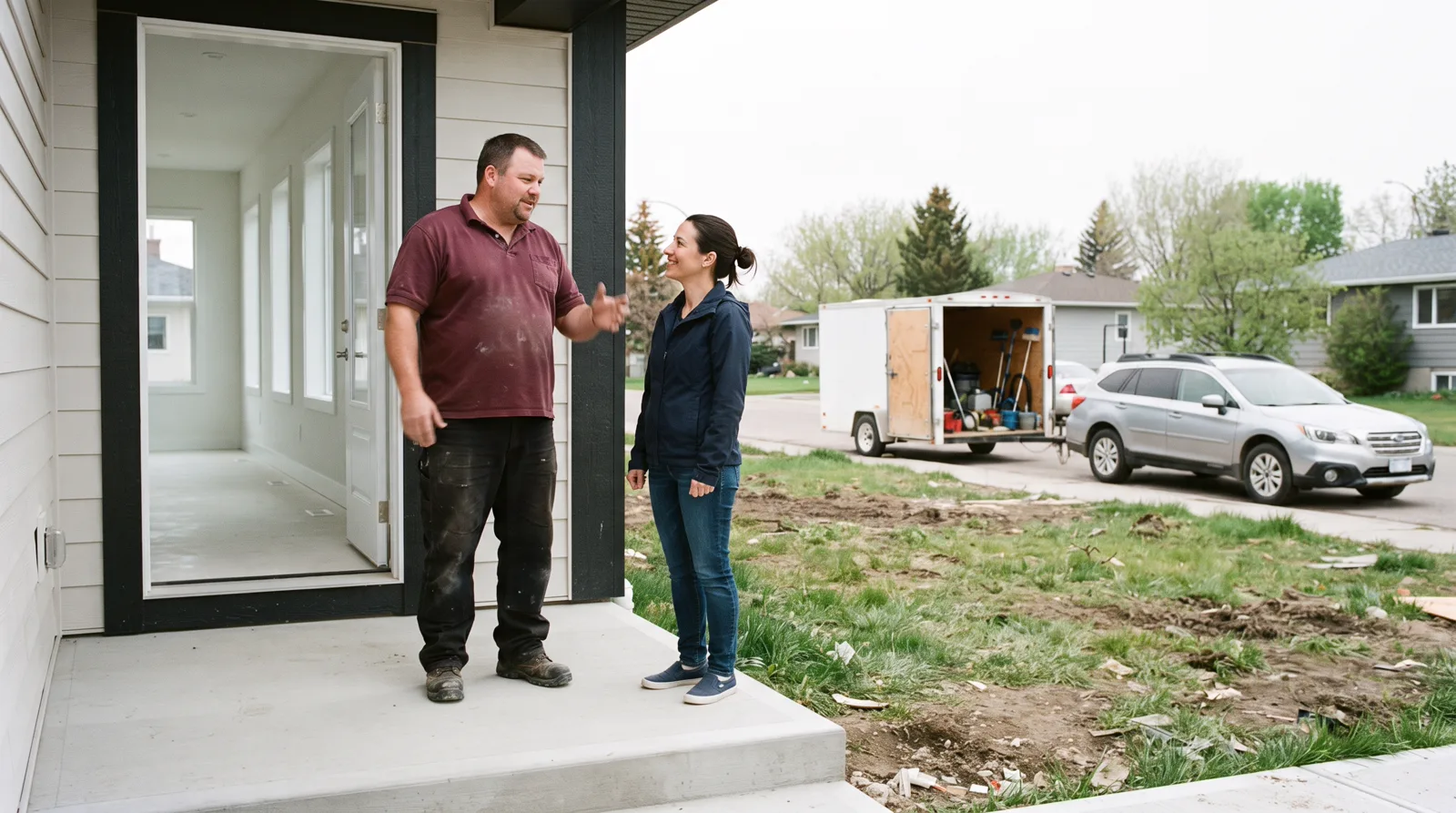
Post-Construction Cleaning Site-Ready in Days, Not Weeks.
Construction leaves behind drywall dust, adhesive residue, and debris that standard cleaning cannot touch. We match you with vetted pros who specialize in making renovated spaces move-in ready.
Complete Construction Cleanup
From rough clean after drywall to final detail before occupancy, matched to your project scope and timeline.
Rough Clean After Framing & Drywall
Remove bulk debris, sweep drywall dust, vacuum surfaces, and prepare for paint or finish trades. Essential before flooring or cabinetry installation. Includes disposal of bagged construction waste and protection of finished areas.
Fine Clean Pre-Occupancy
Detail cleaning of all surfaces, fixtures, windows, and floors after final trades complete. Removes paint overspray, caulk residue, sticker adhesive, and fine dust from every surface. Makes the space ready for furniture and move-in.
Window, Frame & Sill Detailing
Remove construction film, stickers, paint drips, and caulk from glass, frames, and sills. Clean tracks, polish glass inside and out, and detail window wells. Critical for final occupancy inspection and curb appeal.
HVAC System & Duct Cleaning
Drywall dust circulates through furnace and ducts during construction, coating registers and filters. Includes register removal and cleaning, filter replacement, and optional duct vacuuming to prevent long-term air quality issues.
Floor Protection Removal & Restoration
Remove construction film, cardboard, and tape without damaging hardwood, tile, or vinyl. Clean adhesive residue, buff scuffs, and restore factory finish. Includes inspection for damage that occurred during trades.
Construction Debris Haul & Disposal
Bag, load, and dispose of remaining construction waste, packaging, and materials at licensed facilities. Compliant with Town of Spruce Grove and Parkland County waste regulations. Includes sorting recyclables where accepted.
Alberta Construction Realities
❄️ Drywall Dust in Dry Winter Air
Alberta's low winter humidity means drywall dust stays airborne longer and coats every surface, including inside cold air returns and furnace cabinets. Post-construction cleaning here requires HEPA vacuums and multiple wipe-downs, not just sweeping.
🥾 Mud and Debris Tracking During Freeze-Thaw
Spring and fall construction in the Tri-Region means contractors track mud, gravel, and ice melt through the site. Entryways, stairs, and subfloors need scrubbing and solvent cleaning that summer-only cleaners often miss.
🏗️ Parkland County & Spruce Grove Disposal Rules
Construction waste must go to licensed facilities, not residential bins. Cleaners working in Spruce Grove, Stony Plain, and Parkland County need disposal accounts and sorting knowledge to avoid fines and delays at your final inspection.
📋 Final Occupancy Inspection Standards
Alberta building inspectors check for debris, dust in mechanical rooms, and unfinished surfaces before issuing occupancy permits. A proper fine clean ensures your renovation passes inspection the first time, avoiding re-inspection fees and possession delays.
What it costs here
Everything You Need to Know About Post-Construction Cleaning
From timing your cleanup to understanding what each stage removes, this guide walks you through the process and helps you avoid the most common mistakes.
What Post-Construction Cleaning Actually Involves
Post-construction cleaning is not an extension of regular housekeeping. It is a specialized service designed to remove the layers of construction debris that settle into every surface, crevice, and air duct during renovation or building work. In Spruce Grove and Parkland County, the scope typically includes removing drywall dust that infiltrates HVAC systems, extracting insulation particles from corners and baseboards, and dissolving construction adhesives with industrial-grade solvents. The work targets materials that standard household tools cannot handle: sawdust compacted into grout lines, metal shavings embedded in subflooring, concrete dust coating light fixtures, caulking residue smeared across glass and tile, and paint overspray clinging to hardware and trim.
The Alberta climate adds layers of complexity. Chinook winds create static electricity that binds fine dust particles to walls and ceilings with surprising tenacity. A simple damp cloth will not release drywall compound that has been electrostatically welded to a painted surface. Winter renovations, common here because freeze-thaw cycles and deep frost make outdoor concrete work impractical from November through March, generate particularly stubborn debris. Heated indoor air causes construction dust to become airborne and then settle into HVAC ducts, where it recirculates for months if not extracted. Basement underpinning projects, driven by foundation movement in our freeze-thaw soil, create concrete dust that is not only pervasive but also contains crystalline silica, a respiratory hazard when disturbed improperly.
Attempting this work without the correct equipment and knowledge carries real risks. Construction waste in Alberta must be sorted and disposed of according to municipal and provincial regulations. Drywall, treated lumber, insulation, and paint-contaminated materials each have different disposal pathways. Using a household vacuum on fine silica dust can damage the motor and release particles back into the air at dangerous concentrations. Solvent misuse on certain surfaces can strip finishes or create fume hazards in enclosed spaces. The professionals Tri-Region connects you with arrive with HEPA-rated filtration, appropriate personal protective equipment, and knowledge of Alberta's waste disposal rules, confirmed before any dispatch.
Why Alberta's Climate and Building Patterns Drive Demand
Deep frost in Parkland County and Spruce Grove penetrates up to 1.8 meters below grade, well beyond the national average. This drives a high volume of foundation work, basement underpinning, and crawl space encapsulation projects. Every cubic meter of concrete poured, every footer formed, and every foundation wall repaired generates fine dust that migrates upward through floor joists and wall cavities. Winter interior renovation spikes because outdoor work halts when temperatures drop below the threshold for curing concrete or applying exterior coatings. Homeowners schedule kitchen remodels, bathroom gut jobs, and basement finishing between November and March, creating concentrated demand for post-construction cleaning during months when dust control is hardest.
Hail is another driver. Spruce Grove and Stony Plain sit in a hail corridor that produces damaging storms most summers. A single severe event can trigger thousands of insurance claims for roof, siding, and window replacement. The repair wave that follows generates construction debris on a neighborhood scale: shingle granules tracked indoors, aluminum siding shards in landscaping, broken glass particles in carpets, and attic insulation disturbed during roof decking replacement. Homeowners often underestimate the cleanup burden until they see drywall dust coating their belongings after a ceiling repair, or gritty residue appearing daily on kitchen counters weeks after the crew has left.
Chinook winds, unique to Alberta's foothills and eastern slopes, create rapid temperature swings and low humidity conditions that cause materials to behave unpredictably. Drywall mud dries faster than expected, creating more airborne dust during sanding. Static electricity accumulates on synthetic surfaces, pulling fine particles out of the air and holding them in place. A standard damp mop will push dust around rather than lifting it. The pros we verify and dispatch understand these conditions and adjust their approach: anti-static treatments on certain surfaces, humidity control during the cleaning process, and multiple-pass methods to address recontamination from air currents. These are not intuitive steps for a homeowner tackling the job alone.
How to Know You Need Professional Post-Construction Cleaning
The most common warning sign is dust reappearing within hours of cleaning. You vacuum the floor, wipe down the counters, and by evening a fine film has returned. This indicates airborne contamination, usually from debris lodged in HVAC ducts, ceiling cavities, or wall voids. Every time the furnace cycles, it redistributes particles throughout the home. In Spruce Grove's dry winter air, this problem intensifies because low humidity keeps dust suspended longer. A furnace filter that clogs within days of replacement, rather than the typical month or two, confirms the diagnosis. If you are replacing filters weekly and still seeing dust, the source is upstream in the ductwork and requires extraction, not filtration.
Gritty texture underfoot or on horizontal surfaces is another clear signal. Construction dust is not uniform. Drywall compound, concrete, and sawdust each have distinct particle sizes and compositions. When you run your hand across a countertop or window sill and feel a sandpaper texture, abrasive particles are embedded in a film of residue that standard cleaners cannot dissolve. This often appears on glass as a hazy film that resists common household cleaners, or on tile as a coating that dulls the finish. Paint overspray, common during cabinet or trim work, creates sticky spots that attract and hold dirt. Caulking residue smeared during installation leaves translucent streaks that become visible only when light hits at the right angle.
Odor persistence is a third indicator. The smell of fresh sawdust or drywall compound should dissipate within days of project completion if ventilation is adequate. If it lingers for weeks, sawdust or drywall particles are still present in quantities large enough to release volatile compounds. Solvent or adhesive smells that do not fade suggest residue in areas with poor airflow, such as behind baseboards or inside cabinets. Alberta building code requires certain renovation work to pass final inspection before occupancy or resale. If your permit is still open because the inspector noted cleanliness issues, professional post-construction cleaning is not optional. Inspectors in Parkland County and Spruce Grove routinely flag excessive debris, particularly in mechanical rooms where dust near furnaces or electrical panels poses a fire risk.
The Step-by-Step Post-Construction Cleaning Process
The process begins with initial debris removal, sometimes called a rough clean. This stage targets large materials: scrap lumber, drywall offcuts, packaging, empty caulking tubes, and discarded fasteners. In Alberta, construction waste must be sorted at this stage because mixed loads cost more to dispose of and certain materials, such as treated lumber or asbestos-containing drywall from older homes, require special handling. The professional doing the work will also identify and remove hazards: exposed nails, sharp metal edges, and broken glass. This step alone can fill several heavy-duty disposal bags or require a bin, depending on the project scale. Skipping it or doing it carelessly leaves hazards that complicate every subsequent step.
Detail cleaning follows, moving room by room in a systematic sequence. The process typically starts at the highest point, ceiling and upper walls, and works downward. Drywall dust on ceiling fixtures and crown molding is wiped or vacuumed using HEPA-rated equipment to prevent redistribution. Walls are wiped with damp microfiber cloths, not feather dusters, which only move dust around. Baseboards, window sills, and door frames receive individual attention because construction debris collects in the corners and seams where these elements meet the wall. Floors are vacuumed multiple times, with a final damp mop using a cleaner formulated to dissolve the specific residues present. Tile grout lines often require a separate pass with a detail brush and pH-appropriate cleaner to remove embedded dust without damaging the grout itself.
HVAC system attention is non-negotiable in Alberta homes, where forced-air heating runs six to eight months of the year. The furnace filter is replaced as a baseline step, but that alone does not address dust already in the ductwork. Return air vents are removed, and the visible duct interior is vacuumed. Supply vents are similarly cleaned. If the renovation involved significant drywall work or insulation disturbance, a full duct cleaning may be necessary, though that often requires separate scheduling with a specialist. The furnace blower and heat exchanger are inspected and wiped down if accessible. Neglecting this step means every heating cycle redistributes construction dust for months, undoing all the surface cleaning work.
Windows, glass doors, and fixtures receive focused treatment because construction residue bonds to these surfaces in ways that water alone will not release. Paint overspray requires a solvent appropriate to the paint type. Caulking smears need a plastic scraper and often a citrus-based cleaner to dissolve the silicone without scratching the glass. Hard water stains, common in Parkland County where groundwater has high mineral content, may have been worsened by construction crews using tap water to clean tools. These require an acidic cleaner, such as diluted vinegar or a commercial lime remover. Faucets, cabinet hardware, and light fixtures are wiped down and polished. The final inspection walk-through identifies any missed spots: dust in light fixture crevices, residue on switch plates, or grit in sliding door tracks. Touch-up work addresses these before the client handoff. Waste disposal is confirmed to meet Town of Spruce Grove or Parkland County requirements, with documentation if the project required a permit that mandates proof of proper disposal.
What Post-Construction Cleaning Really Costs in the Tri-Region
A basic rough clean for a small renovation, say a single bathroom or bedroom reframe in Spruce Grove, typically runs $300 to $700. That covers hauling the obvious debris, sweeping construction dust from floors and wiping down surfaces contractors left grimy. A whole-home renovation or new build demands a multi-stage approach: rough clean first to clear the job site debris, then a detail pass once trades finish, and finally a final sparkle clean before handover. For a 1,500 square foot home, expect $1,200 to $2,800 total across all three stages, and for a 2,500 square foot home with a finished basement, the range climbs to $2,000 to $4,500. Larger commercial spaces or multi-level custom builds in Parkland County can push $5,000 to $12,000 depending on scope and finishes.
Price drivers are square footage, the volume and type of debris left behind, and the level of fine dust coating every surface. Drywall dust is the worst offender: it settles on window tracks, inside electrical boxes, on top of door casings, and throughout HVAC ductwork. If your contractor did not seal return vents during mudding and sanding, the furnace will distribute that powder through the whole house, doubling the cleaning time and cost. High ceilings, vaulted spaces, and two-story foyers add ladder work and safety rigging, which most crews bill as an hourly premium. Window count matters, too. A wall of picture windows facing west needs interior and exterior scrubbing to remove sticker residue, paint overspray, and mortar splash, and each pane adds $8 to $20 to the invoice.
Alberta-specific factors tighten the budget further. Spring mud season means your cleaning crew will track clay and melt water into a freshly finished space unless they bootie up and lay runner mats, and some pros charge extra for site protection during thaw. Winter access in Stony Plain can delay the final clean if your lane is not plowed or your new driveway is not yet poured, forcing a reschedule that bumps the timeline. Disposal fees at the Parkland County transfer station run about $110 per tonne for mixed construction waste, and if your contractor left behind offcuts, drywall scraps, or packaging, your cleaner will either include that haul in the quote or bill it separately. Always confirm who is responsible for debris removal and where the dump run cost lands, because that $200 surprise at the end sours an otherwise smooth handover.
Comparing Your Post-Construction Cleaning Options
DIY post-construction cleaning is possible for small projects, such as a single room addition or a kitchen cabinet refresh, but it demands time, the right tools, and a high tolerance for dust. You will need a shop vacuum with a HEPA filter to capture fine particulate without recirculating it, microfiber cloths and mops that trap rather than spread dust, and a good extension ladder if you have vaulted ceilings or tall windows. Budget half a day for a modest renovation and two full days for a whole-home project, and expect sore knees and stiff shoulders afterward. The savings are real, perhaps $800 to $1,500 on a typical job, but the trade-off is your weekend and the risk of missing hidden dust that resurfaces once the furnace kicks on.
Professional cleaning services break into tiers. A rough clean, sometimes called a builder clean or phase-one clean, removes bulk debris, sweeps and vacuums floors, and wipes down surfaces contractors will touch again. It costs $0.08 to $0.15 per square foot and happens mid-project once framing, electrical, and plumbing rough-in are done but before drywall goes up. The detail clean comes after trades finish but before final inspection: all surfaces scrubbed, windows cleaned inside, fixtures wiped, and floors mopped. Expect $0.15 to $0.30 per square foot at this stage. The final or sparkle clean is the handover prep: baseboards detailed, light fixtures polished, appliances gleaming, and every window streak-free. This pass runs $0.20 to $0.40 per square foot and is what makes a new build or renovation feel move-in ready rather than construction-weary.
Equipment and methods vary by company. Some use rotary scrubbers and high-suction extractors for tile grout haze and mortar residue, while others rely on hand scrubbing with specialized solvents. For hardwood floors, a professional will dry-mop with microfiber to lift dust without scratching the finish, then damp-mop with a pH-neutral cleaner once all other work is done. Window cleaning for new construction often involves razor scraping to remove paint, stucco, or caulk, a task that takes skill to avoid scratching glass. If your renovation included spray foam insulation, expect extra hours scrubbing the overspray residue off studs and subfloors before the cleaner even starts the detail pass. Ask what equipment the crew brings and whether they have experience with your specific finishes, because the wrong chemical on quartz counters or luxury vinyl plank can void the manufacturer warranty.
Mistakes and Contractor Traps to Avoid
The biggest mistake homeowners make is scheduling the final clean too early. If trades are still touching up paint, installing trim, or adjusting cabinet hardware, the cleaning crew will leave and your space will be dusty again within hours. Lock in a firm completion date with your general contractor, then book the final clean for the day after that date, with a backup slot two days later in case the schedule slips. Skipping the HVAC filter change is another costly oversight. Construction dust clogs a furnace filter in days, forcing the blower to work harder and coating your ductwork with fine particulate. Budget $40 to $80 for a filter swap and a basic duct inspection before you run the furnace in heating season, or you will circulate that dust through every room you just paid to clean.
Watch for scope creep in the quote. Some cleaning companies lowball the estimate by excluding windows, light fixtures, or inside cabinets, then upsell those items as extras once on site. A complete post-construction clean should include all of the following: debris haul to curb or dumpster, HEPA vacuuming of all floors and horizontal surfaces, window interiors cleaned and streak-free, fixtures and hardware wiped, baseboards and door casings detailed, and one pass mopping of hard floors. If the quote does not list these tasks explicitly, ask which are included and which cost extra. Beware of hourly pricing without a cap. Post-construction cleaning often takes longer than expected because hidden dust keeps appearing, and an open-ended hourly contract can balloon from $600 to $1,400 if the crew finds grout haze on every tile or drywall powder in every closet.
Verify that the cleaning crew carries commercial general liability insurance covering accidental damage during the clean. A well-meaning worker can crack a new glass shower door with a scrub pole, scratch engineered hardwood with grit on a boot sole, or knock a pendant light while ladder-cleaning a vaulted ceiling. The pro you hire should confirm coverage in writing before starting, and if they dodge the question or offer a vague answer, walk away. Hazardous material disposal is another trap. If your renovation disturbed vermiculite insulation, lead paint, or asbestos-containing drywall compound, standard cleaning crews cannot legally handle that waste. You need an abatement company with Alberta Environment and Parks certification, and mixing contaminated debris with regular construction waste can trigger fines and jobsite shutdown. Confirm with your contractor what materials were disturbed and whether any require special handling before the cleaning crew arrives.
How to Hire the Right Post-Construction Cleaning Pro
Start by requesting itemized written quotes from at least three local companies serving Spruce Grove, Stony Plain, and Parkland County. Each quote should break down square footage, the number of cleaning stages included, specific tasks covered, equipment and supplies provided, and the total price with no hidden fees. Ask whether the quote includes debris removal and dump fees, or whether you need to arrange a bin and haul separately. Confirm the timeline: how many hours or days will the crew need on site, and can they work around your contractor's final punch list schedule. A professional outfit will visit the site for a walk-through before quoting, because accurate pricing demands seeing the actual dust load, window count, and finish types in person.
Prepare a short list of questions for each candidate. How long have they been cleaning post-construction sites in the Tri-Region? What cleaning products and methods do they use on specific finishes like quartz, luxury vinyl, or acrylic tubs? Do they carry commercial liability insurance, and can they provide a certificate naming you as an additional insured for the duration of the job? What happens if the contractor is not quite finished when the cleaning crew arrives: will they reschedule at no charge, or does a second trip cost extra? How do they handle discovered damage, such as a cracked tile or a scratched window that may have happened during construction? A reputable pro will answer these questions clearly and without defensiveness, and will offer references from recent renovation clients in your area.
Check that the crew uses HEPA-rated vacuums, not shop vacs with standard filters that blow fine dust back into the air. Ask about their process for window cleaning: do they hand-scrape paint and stickers with a razor, or do they rely on chemical removers that can streak? Verify that they will change your furnace filter or at minimum remind you to do so before running the HVAC system. A good post-construction cleaner treats your newly finished space with care, laying down floor protection when moving ladders, using non-abrasive pads on delicate surfaces, and leaving the home truly move-in ready rather than just surface clean. If the quote seems too cheap, question what corners they are cutting, because thorough post-construction cleaning is labor-intensive and a rock-bottom price often means rushed work or surprise extras later.
How Tri-Region Services Helps
Tri-Region Services connects you with one carefully vetted, locally insured cleaning professional who specializes in post-construction work in Spruce Grove, Stony Plain, Parkland County, and Acheson. Every pro in the network has confirmed liability coverage stated at signup, and every match comes with a free written quote detailing scope, timeline, and total cost with no surprises. You submit one request through the site or chat assistant, and within hours you will hear from a qualified cleaner ready to walk your project and provide an honest estimate. No phone tag, no bidding war, no wondering whether the crew knows the difference between a rough clean and a final sparkle. Just one vetted pro, one clear quote, and one less thing to manage while your renovation wraps up.
How We Verify Every Pro in the Network
We confirm credentials, experience, and equipment before dispatch. You get a cleaner who understands construction sites, not a house cleaner with a vacuum.
Liability Cover Confirmed
Active commercial liability insurance and Workers Compensation Board coverage stated at signup pro is matched to your project.
Construction Cleanup Experience Validated
The pro we connect you with has completed at least 10 post-construction cleanups in the past year, confirmed through references and project photos.
Equipment and Disposal Methods Checked
HEPA vacuums, microfiber systems, and licensed disposal accounts confirmed before dispatch to ensure your site is cleaned properly, not just swept.
Timeline Commitment Verified Up Front
Start date, crew size, and estimated completion confirmed in writing before work begins, so your occupancy schedule does not slip.
Insurance and Bonding Documentation Provided
Certificates of insurance and WCB clearance letters delivered to you before the crew arrives, meeting lender and inspection requirements.
Local References and Recent Projects Confirmed
The pro has completed projects in Spruce Grove, Stony Plain, or Parkland County within the past six months, verified through homeowner or builder references.
This page is not tied to a contractor's brand. Leads route straight to your one local partner. Verified reviews can appear here once that partner has them (never fabricated).
Serving the whole Tri-Region
8 Questions Homeowners Ask
When should I schedule post-construction cleaning?+
What is the difference between rough clean and fine clean?+
What is included in post-construction cleaning?+
How long does post-construction cleaning take?+
Do I need to be present during post-construction cleaning?+
What about drywall dust in the HVAC system?+
Can the cleaning crew handle construction debris disposal?+
Is the cleaning crew insured if something gets damaged?+
Get your free quote
Tell us what you need and a local pro will get right back to you.
- ✓ Sent straight to a local business
- ✓ You choose who you hire
- ✓ Free, with no obligation