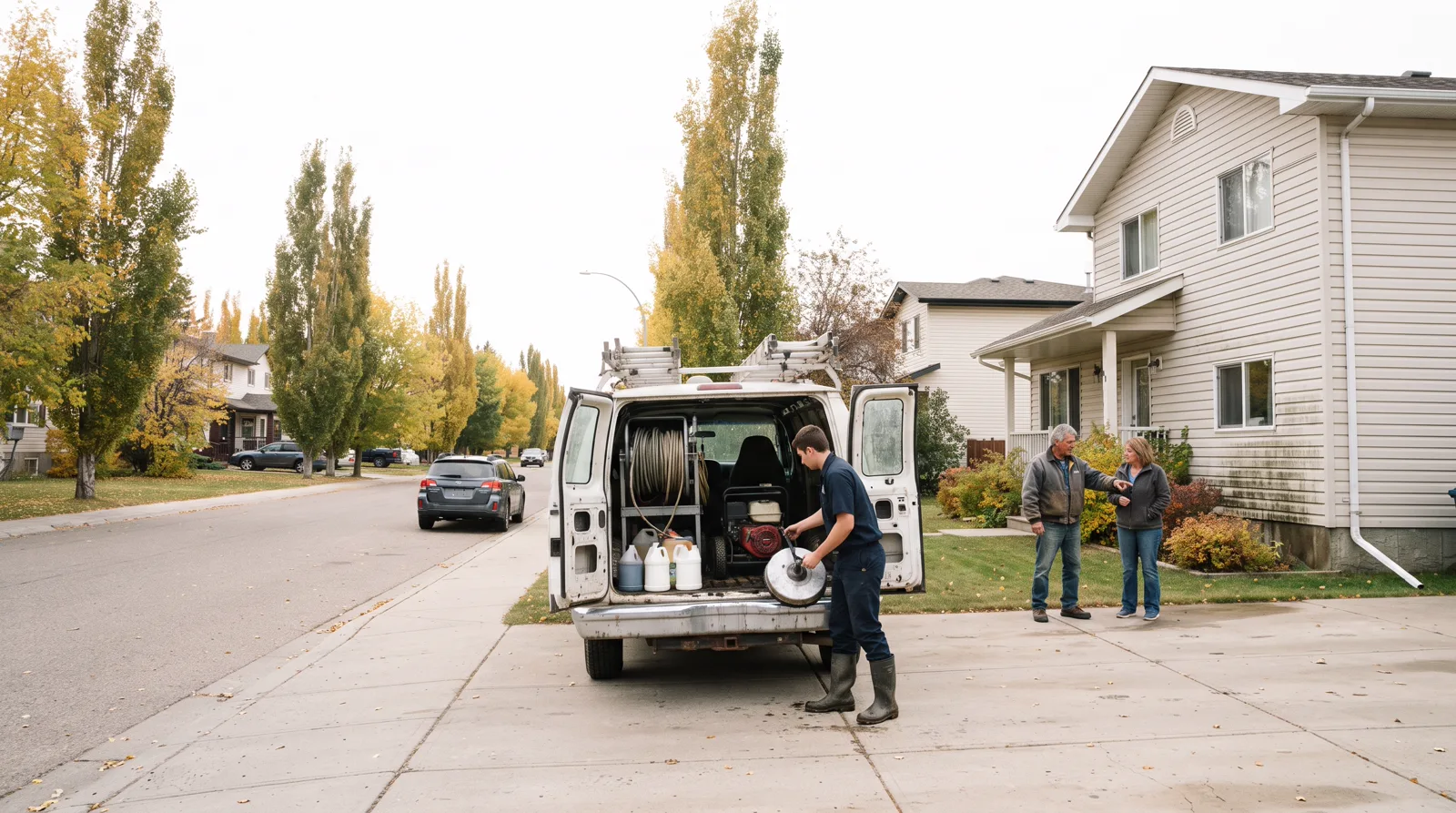
Pressure Washing That Handles Alberta Weather and Grime.
Connect with verified pressure washing pros who know how to clean driveways, siding and decks without damage, even after a winter of road salt and chinook dust.
Pressure Washing Services Across the Tri-Region
From spring cleanup to pre-sale curb appeal, matched to pros with the right equipment and Alberta exterior experience.
Driveway & Sidewalk Cleaning
Remove oil stains, road salt residue, tire marks and winter sand buildup from concrete or asphalt. Hot water units cut through freeze-thaw grime that cold water leaves behind. Surface sealing available after cleaning to extend life and resist future staining.
House Siding & Exterior Walls
Clean vinyl, stucco, hardie board or wood siding without blasting off paint or cracking caulk. Removes chinook dust, wildfire smoke film, algae and bird droppings. Softwash methods used on delicate surfaces, pressure adjusted for material type to prevent water intrusion behind siding.
Deck & Fence Restoration
Strip old stain, remove mold, algae and grey weathering from wood or composite decking. Pros match PSI to wood species to avoid splintering or raising grain. Often paired with sanding and re-staining for full restoration. Timing matters: best done in dry weather with 48 hours of no rain forecast.
Concrete Patio & Walkway Cleaning
Blast away moss, weeds growing in cracks, efflorescence and clay soil stains from stamped or plain concrete. Surface cleaning attachments prevent streaking and ensure even results. Sealing recommended after cleaning to lock out moisture and reduce freeze-thaw spalling over winter.
Roof Softwash (Low Pressure)
Remove moss, lichen and black algae streaks from asphalt shingles without voiding manufacturer warranties. True softwash uses chemical cleaners and low pressure, not high PSI that can dislodge granules or lift shingle edges. Especially important in shaded areas where moisture lingers and organic growth accelerates shingle decay.
Commercial Storefront & Parking Lot Cleaning
High-volume cleaning for retail plazas, gas stations, loading docks and parking structures. Pros coordinate timing to avoid disrupting business hours and manage runoff per municipal stormwater rules. Equipment scaled to job size, from handheld units to truck-mounted hot water rigs for large paved areas.
Why Alberta Exteriors Need Different Cleaning
🧂 Road Salt & Sand Buildup
Winter road treatments leave chloride residue that etches concrete and corrodes metal fixtures if not removed each spring. Parkland County roads and Highway 16A traffic mean driveways collect heavy deposits. Hot water pressure washing neutralizes salt and lifts embedded sand better than cold water alone.
🌬️ Chinook Wind Dust & Pollen
Rapid temperature swings and west winds coat siding and windows with a fine layer of dust and tree pollen, especially in Spruce Grove and Stony Plain where prairie meets parkland. This film traps moisture against siding and accelerates algae growth. Annual exterior washing prevents long-term staining and keeps paint from degrading early.
❄️ Freeze-Thaw Cycle Damage
Alberta's swing from minus 30 to plus 10 in a day opens cracks in concrete and loosens caulk around windows. Pressure washing clears debris from those cracks before water infiltrates and expands during the next freeze. Timing matters: clean and seal before October to give surfaces maximum protection through winter.
🔥 Wildfire Smoke Residue
Summers with heavy smoke from BC or northern Alberta fires leave a sticky, acidic film on roofs and siding. This residue attracts dirt and holds moisture, creating ideal conditions for mold and mildew. Softwash with appropriate cleaners removes smoke staining without the high pressure that could drive contaminants deeper into porous surfaces.
What it costs here
Everything You Need to Know About Pressure Washing in Spruce Grove
From choosing the right PSI to timing your clean around Alberta weather, this guide covers what homeowners and property managers need to protect and restore exterior surfaces.
How Pressure Washing Actually Works in Alberta's Climate
Pressure washing uses a motorized pump to force water through a narrow nozzle at pressures ranging from 1,500 PSI for gentle cleaning up to 4,000 PSI for concrete and heavy buildup. The kinetic energy of the water dislodges dirt, algae, mold, road salt residue, and organic staining without relying on harsh solvents. In Spruce Grove and Parkland County, the technique matters as much as the equipment. Alberta's freeze-thaw cycles create micro-cracks in concrete and siding where contaminants settle deep, and chinook winds deposit fine dust that bonds to surfaces when moisture is present. A skilled operator adjusts pressure, nozzle angle, and distance based on what the surface can handle and what the contamination demands.
Cold water pressure washing handles most exterior jobs around Spruce Grove: driveways caked with winter road salt and calcium chloride, vinyl siding streaked with algae from shaded north faces, composite decks stained by cottonwood sap and pollen. Hot water systems, which heat the stream to 60 to 90 degrees Celsius, excel at cutting grease and oil stains common on shop floors, commercial loading bays, and parking pads where vehicles leak fluids. The heat also kills mold spores more thoroughly than cold water alone, which matters in shaded areas under eaves or alongside fences where moisture lingers after Alberta's heavy spring rains. Detergent injection systems dose biodegradable surfactants into the stream for organic stains like lichen or tannin bleed from cedar, but plain water under correct pressure handles the majority of residential work.
Nozzle selection controls the cleaning pattern and intensity. A zero-degree nozzle concentrates the stream into a single piercing jet used for stripping paint or cutting through ice, rarely appropriate for residential surfaces. Fifteen-degree and twenty-five-degree nozzles produce narrow fan patterns for concrete driveways and sidewalks. Forty-degree nozzles spread the force across a wider area, safe for vinyl siding, stucco, and wood decking. Some operators use rotary turbo nozzles that spin a zero-degree stream in a tight circle, combining the coverage of a wide fan with the cutting power of a focused jet, ideal for oil-stained garage floors or heavily soiled concrete around Acheson industrial properties. The wrong nozzle choice etches concrete, gouges wood grain, or punches holes in vinyl, so the match between surface hardness and nozzle angle determines whether the result is clean or damaged.
Why Spruce Grove Properties Need Regular Pressure Washing
Winter road maintenance across Spruce Grove, Stony Plain, and the Yellowhead Corridor relies on sand, gravel, and chemical deicers including sodium chloride, calcium chloride, and magnesium chloride. Vehicles track these materials onto driveways, walkways, and garage floors where they bond to concrete and asphalt. As snow melts through chinook cycles and spring thaw, the salts dissolve and migrate into porous surfaces, then recrystallize as temperatures drop again. Over successive freeze-thaw events, the expanding salt crystals widen existing cracks and create new surface spalling, the flaking and pitting that shortens pavement life. A single winter season deposits enough chloride residue to begin the deterioration process, and buildup over two or three years without cleaning accelerates it noticeably. Pressure washing in late April or early May, once overnight lows stay above freezing, removes the contamination before warm weather drives it deeper into the substrate.
Organic growth defines Alberta exterior maintenance from May through September. Algae colonizes any surface that stays damp and receives partial shade: north-facing vinyl siding, fence boards under tree canopy, concrete around downspouts and hose bibs. The green or black streaking is cosmetic at first, but algae retain moisture against the surface beneath, which promotes mold in porous materials like wood and stucco and encourages efflorescence in concrete and brick. Lichen, a symbiotic pairing of fungus and algae, grows slower but roots more aggressively, especially on asphalt shingles, composite decking, and any masonry surface with texture. Cottonwood trees shed sap and sticky buds in early summer, and poplar fluff coats every horizontal surface by late June. Left in place, the organic residue traps moisture and fine soil particles, creating a film where mold spores germinate. Pressure washing interrupts the cycle before the growth becomes embedded.
Delaying exterior cleaning beyond one or two seasons shifts the work from maintenance to restoration. Algae staining that could lift with 1,800 PSI and a forty-degree nozzle in year one may require 3,000 PSI, detergent pretreatment, and multiple passes in year three, raising the labor cost from $250 to $600 for a typical two-car driveway. Lichen that embeds in asphalt shingle granules can only be removed with chemical biocides and soft washing techniques, adding expense and extending the timeline. Efflorescence, the white mineral deposit that leaches from concrete and brick, becomes harder to dissolve as it carbonates and bonds with the surface. Wood decking that could be cleaned and resealed in a single spring afternoon may need sanding and board replacement if mold has penetrated the grain. Routine pressure washing every twelve to eighteen months in Spruce Grove and surrounding areas keeps contamination at the surface level, where removal is straightforward and costs stay predictable.
Warning Signs Your Property Needs Pressure Washing
Visible discoloration is the most obvious indicator. Black or green streaks running vertically down vinyl siding, particularly below roof edges and around exterior light fixtures, signal algae growth fed by moisture and shade. Brown or rust-colored staining on concrete driveways and sidewalks, especially near the street or along the apron where vehicles enter, indicates iron oxide from rebar corrosion or tannin bleed from organic debris. White chalky residue on brick, concrete block, or poured foundation walls is efflorescence, mineral salts migrating to the surface as water evaporates. Gray or tan film coating composite or wood decking, most visible when the surface is dry, combines pollen, cottonwood residue, and soil particles blown in by prairie wind. Any of these discolorations that darken or spread over a season indicates the contamination is embedding and will resist simple rinsing.
Texture changes accompany staining in many cases. Concrete or asphalt that feels gritty underfoot, even after rain, has accumulated a layer of sand, road salt, and organic debris that compacts into the surface pores. Vinyl siding that appears dull or chalky instead of glossy has oxidized or collected a film that scatters light. Wood or composite decking that feels slippery when wet, especially in shaded sections or near planters, has grown a biofilm of algae and mold that increases slip risk and accelerates material degradation. Brick or stone that flakes or crumbles at the mortar joints may have freeze-thaw damage worsened by trapped moisture, a sign that cleaning and repointing are overdue. These tactile clues often appear before the visual staining becomes severe, so catching them early allows cleaning before deeper damage sets in.
Seasonal timing in Alberta offers natural checkpoints. Inspect driveways, walkways, and foundation perimeters in late April after snowmelt exposes the winter's accumulation of salt, sand, and debris. Check north-facing siding, fences, and deck boards in early June as spring moisture and warming temperatures trigger algae growth. Examine high-traffic concrete areas like patios, steps, and garage aprons in late August after summer dust, pollen, and foot traffic have layered over the surface. Any visible buildup at these intervals means the property is due for cleaning. Properties in heavily treed areas or low-lying spots with poor drainage may need inspection and cleaning twice per year, while sunny lots with good airflow and minimal shade may stretch cleaning intervals to eighteen or twenty-four months without issue.
The Pressure Washing Process From Start to Finish
The work begins with a walkthrough to identify surface types, note existing damage like cracks or loose siding, and flag areas requiring special care such as electrical outlets, exterior light fixtures, and freshly caulked joints. The operator tests water pressure at an outdoor hose bib to confirm adequate flow, typically fifteen to twenty liters per minute for residential pressure washers. Any outdoor furniture, planters, or decorative items near the cleaning zone are moved or covered with plastic sheeting. Nearby plants, especially perennials and shrubs within two meters of concrete or siding being washed, are pre-wetted with plain water and may be covered if detergent will be used, since runoff with high pH can burn foliage. Windows and doors are checked to ensure they are closed and latched, as pressure washing can force water past weather stripping if the seal is worn.
Surface preparation varies by material. Concrete driveways and sidewalks are swept to remove loose gravel and organic debris that would otherwise scatter under pressure and potentially chip adjacent surfaces or windows. Vinyl siding is rinsed from top to bottom with plain water to flush surface dust and prevent streaking when detergent is applied. Wood or composite decking is inspected for loose fasteners, splintered boards, or raised nails that could catch the spray wand or worsen under pressure. Any necessary repairs are completed before washing begins, since water intrusion through damaged areas accelerates rot in wood substrates and swelling in composite materials. The operator selects the appropriate nozzle based on surface hardness, starting with the widest safe angle and increasing pressure only if the initial pass does not remove the contamination.
The cleaning sequence moves systematically to avoid recontaminating finished areas. Driveways are washed from the garage door toward the street, pushing debris and runoff away from the foundation. Siding is cleaned from bottom to top when applying detergent to prevent streaking, then rinsed from top to bottom so gravity assists removal. Decks are washed following the board direction, with the wand held at a consistent angle and distance to avoid striping or gouging the grain. The operator maintains a steady walking pace, overlapping each pass by roughly half the spray width to ensure even coverage and prevent lines or missed spots. Heavily soiled areas may receive a detergent application, a dwell time of five to ten minutes, and then a second pass with plain water under pressure. Once the surface is clean, a final rinse flushes residual detergent and suspended dirt, and the area is inspected under natural light to catch any missed sections before equipment is packed.
What Pressure Washing Costs in Spruce Grove and What Drives the Price
A typical driveway pressure wash in Spruce Grove runs between $150 and $400, depending on size and condition. Single-car driveways with light dust and tire marks sit at the lower end, while double or triple-car pads with oil stains, winter salt buildup, or moss growth push toward the higher range. House siding averages $300 to $800 for a full exterior clean, scaling with square footage, the number of stories, and how much algae or mold has taken hold. Decks range from $200 to $500, influenced by size, wood condition, and whether the surface needs prep for staining afterward. Bundling services, such as driveway plus siding, often brings the per-item cost down, with full exterior packages landing between $600 and $1,500 for an average property.
Square footage is the foundation of any quote, but condition matters just as much. A north-facing driveway that stays shaded most of the day collects more algae and lichen than a sunny south-facing pad, requiring stronger detergent, longer dwell time, and sometimes a second pass. Oil stains from vehicles parked over winter, or hydraulic fluid from equipment, demand hot water treatment and degreaser, adding time and consumable cost. Siding that has not been cleaned in five or more years may need soft washing with mold killer before any pressure is applied, turning a quick rinse into a multi-step process. Heavily weathered cedar or pressure-treated decks require gentler pressure and careful technique to avoid raising grain or splintering boards, which slows the work and raises the price.
Accessibility and site-specific factors shift the estimate. A driveway with flower beds along the edges, delicate landscaping, or decorative stone borders requires masking, careful wand control, and slower work to avoid damage. Two-story siding or steep-pitched rooflines need extension wands or ladders, adding setup time and risk. Properties outside central Spruce Grove, such as acreages near Highway 16A or rural Parkland County addresses, may carry a travel surcharge if the pro is based in Stony Plain or Edmonton. Seasonal demand also plays a role: spring and early summer see peak pricing as homeowners rush to clean winter grime before hosting outdoor gatherings, while late fall quotes sometimes drop as contractors fill gaps before winter shutdown.
Comparing Pressure Washing Methods and Equipment
Cold water pressure washing is the standard for most driveways, sidewalks, and concrete surfaces around Spruce Grove. Consumer-grade units deliver 2,000 to 3,000 PSI, enough to lift dirt, algae, and light stains from concrete, asphalt, and pavers. Professional rigs push 3,500 to 4,000 PSI with higher gallons per minute, cutting cleaning time and improving results on stubborn staining. Cold water works well for surface-level grime but struggles with oil, grease, and embedded organic matter that Alberta driveways collect over a long winter. Hot water systems heat the spray to 150 to 200 degrees Fahrenheit, turning pressure washing into a combination of thermal and mechanical cleaning. The heat breaks down oil and grease on contact, making hot water the only practical choice for driveways with vehicle fluid stains, tire rubber buildup, or years of neglected maintenance.
Soft washing uses low pressure, typically 500 PSI or less, combined with specialized detergents to clean siding, stucco, and painted surfaces without damage. Vinyl siding, fiber cement, and wood cladding all risk surface erosion, paint strip, or water intrusion behind the material if hit with full pressure. Soft washing relies on chemical dwell time rather than mechanical force: a mold and algae killer is applied, left to work for ten to fifteen minutes, then rinsed at low pressure. This method is safer for siding and more effective on biological staining, which thrives in the freeze-thaw and humidity swings common to the Parkland County climate. Decks also benefit from soft washing when the wood is older or weathered, as high pressure raises grain, splinters railings, and strips stain or sealer in uneven patterns. A contractor using only one pressure setting for every surface is either damaging your property or delivering subpar results.
Detergent choice and environmental responsibility separate thoughtful contractors from reckless ones. Sodium hypochlorite (bleach-based cleaners) kills mold and algae quickly but can harm grass, shrubs, and garden beds if runoff is not controlled. Biodegradable surfactants and enzyme cleaners work more slowly but pose less risk to landscaping and are required when washing near storm drains that flow into Wabamun Lake or the North Saskatchewan River. Alberta municipalities enforce stormwater bylaws, and washing contractors are expected to contain or divert runoff when using harsh chemicals. Asking what detergent a pro uses and how they manage runoff tells you whether they understand local environmental rules and care about protecting your property beyond the immediate cleaning result.
Common Mistakes and Contractor Traps to Avoid
The most frequent damage comes from using too much pressure on the wrong surface. Concrete can handle 3,000 to 4,000 PSI without issue, but asphalt driveways, especially older or cracked sections, erode under sustained high pressure. Holding the wand too close or lingering in one spot carves grooves into asphalt, loosens aggregate, and accelerates deterioration. Vinyl siding splits or dents if struck with a zero-degree nozzle or washed from too close a distance, and water forced behind the material leads to interior mold and insulation damage. Wood decks are especially vulnerable: high pressure raises the grain, creating a rough surface that splinters bare feet and rejects stain when you try to refinish. Professionals adjust nozzle angle, distance, and pressure based on the material, while inexperienced operators or DIY renters run one setting for everything and leave a trail of damage.
Skipping pre-treatment is another hallmark of low-quality work. Oil stains, rust, algae, and mold do not lift under pressure alone. A contractor who shows up, sprays water, and leaves without applying detergent or degreaser is delivering cosmetic cleaning at best. Oil requires hot water and a surfactant that breaks the bond between petroleum and concrete. Algae and mold need a biocide with dwell time, not just a hard rinse. Rust stains from lawn furniture or metal planters require oxalic acid treatment, which pressure alone will not touch. Asking what chemicals a contractor plans to use and why, and whether they allow dwell time before rinsing, reveals whether they understand the science of cleaning or just own a pressure washer.
Contractor red flags worth watching for include vague quotes, no insurance verification, and high-pressure sales tactics. A written estimate should list the surfaces being cleaned, the method (hot or cold water, soft wash or pressure), any detergents or treatments included, and the total price with no surprise fees. Verbal quotes leave room for dispute when the final bill arrives higher than discussed. A legitimate contractor carries commercial general liability insurance if they employ helpers, and they will provide proof when asked. Cash-only operators who refuse to provide a business name, invoice, or receipt are operating in the grey market, often because they lack insurance or proper business licensing. If something goes wrong, such as broken siding or a cracked window, you have no recourse and your home insurance may refuse the claim because you hired an unlicensed worker.
How to Hire the Right Pressure Washing Pro in Spruce Grove
Start by requesting a written quote that specifies exactly what surfaces will be cleaned, the method and equipment the contractor will use, and whether the price includes detergents, pre-treatment, and post-rinse protective application. Avoid estimates that lump everything into one vague line item or quote by the hour without defining scope. Ask whether the quote covers setup and cleanup, including rinsing landscaping, wiping down windows that took overspray, and disposing of any debris loosened during washing. A professional operator will walk your property, measure or visually assess the square footage, note problem areas like heavy staining or delicate surfaces, and explain their approach before providing a number. Quotes delivered over the phone or online without seeing the property are guesses, not estimates, and usually lead to scope creep and surprise charges.
Verify insurance and ask specific questions about equipment and technique. Confirm that the contractor carries commercial general liability coverage, and if they have employees or subcontractors, that liability insurance registration is in place. Ask what PSI and GPM their machine delivers, whether they use hot or cold water, and what detergents they apply for different surfaces. A contractor who cannot answer these questions or becomes defensive when asked is either inexperienced or hiding poor practices. Request references from recent jobs in Spruce Grove, Stony Plain, or Parkland County, ideally from properties similar to yours, and follow up with at least two. Ask past clients whether the work was completed on schedule, whether any damage occurred, and whether the results lasted or faded quickly due to incomplete cleaning.
Understand what is and is not included in the scope, and get clarity on warranty or callback policies. Some contractors include gutter exterior cleaning, window washing, or deck brightening as part of a full exterior package, while others charge separately for each add-on. If you plan to stain or seal your deck after washing, confirm that the contractor will clean to bare wood and allow proper dry time, typically 48 hours in Alberta's variable spring weather. Ask whether the pro will return if streaking, missed spots, or staining reappear within a reasonable window, and whether that callback is included in the original price or billed separately. Reputable contractors stand behind their work and will address defects without argument, while fly-by-night operators disappear after collecting payment.
How Tri-Region Services Helps
Tri-Region Services connects you with one verified local pressure washing contractor who serves Spruce Grove, Stony Plain, Parkland County, and Acheson. The pro we route your request to has confirmed insurance coverage, documented equipment specifications, and a track record of completed residential projects in the area. You receive a free written quote with transparent pricing, a defined scope, and a clear timeline, allowing you to compare the proposal against your needs without obligation. Our role is to eliminate the guesswork and risk of hiring blind by ensuring that the contractor who contacts you meets baseline standards for licensing, insurance, and local experience before your information ever changes hands.
How We Verify Every Pro Before Dispatch
Tri-Region confirms credentials, equipment standards and insurance status before connecting you. No guesswork, no surprises.
Liability Coverage Stated at Signup Active
Current WorkSafeBC coverage and commercial liability stated at signup pro receives your lead, protecting you from on-site injury claims.
Equipment Standards Checked
Pros confirm they carry hot water capability, surface cleaning attachments and adjustable pressure controls, not just a basic consumer-grade unit.
Environmental Compliance Verified
Runoff management and chemical use reviewed to meet Town of Spruce Grove and Parkland County stormwater bylaws before dispatch.
Response Time Tracked
First contact time logged for every match. Pros who consistently exceed 60 minutes without explanation are flagged for network review.
Written Quote Required Before Work Starts
No verbal estimates. Every pro provides itemized pricing, scope and timeline in writing before you commit, eliminating surprise charges.
Before & After Documentation Standard
Photos of work area captured at start and completion, giving you proof of what was done and a reference if warranty questions arise later.
This page is not tied to a contractor's brand. Leads route straight to your one local partner. Verified reviews can appear here once that partner has them (never fabricated).
Serving the whole Tri-Region
8 Pressure Washing Questions Homeowners Ask
When is the best time to pressure wash in Alberta?+
Can you pressure wash when it is cold outside?+
Will pressure washing damage my siding or roof?+
How often should I pressure wash my driveway in Spruce Grove?+
Do I need to seal my deck after pressure washing?+
Is softwash better than pressure wash for roofs?+
How long does a typical pressure washing job take?+
Do I need a permit to pressure wash my property in Spruce Grove?+
Get your free quote
Tell us what you need and a local pro will get right back to you.
- ✓ Sent straight to a local business
- ✓ You choose who you hire
- ✓ Free, with no obligation