Rodent Control Spruce Grove Verified Pros, Urgent Requests Prioritized
Mice or rats in your walls, attic or crawlspace? We connect you with a licensed pest control specialist who confirms arrival time, liability cover and work warranty before dispatch.
Complete Rodent Control Services
From emergency trapping to long-term exclusion, the pros we connect you with handle every stage of rodent removal and prevention.
Mice Removal & Exclusion
Snap trap placement in active zones, entry point identification and sealing with steel mesh or foam rated for Alberta freeze-thaw cycles. Follow-up checks confirm clearance before final invoice.
Rat Control & Trapping
Larger traps and bait stations positioned along travel paths identified by fresh droppings and gnaw marks. Exterior burrow sealing and perimeter exclusion to cut off outdoor colonies feeding the infestation.
Entry Point Sealing
Comprehensive crawl of foundation, soffits, vents, utility penetrations and roof junctions. Gaps as small as a dime get sealed with galvanized steel mesh, expanding foam or metal flashing that survives chinook wind shifts and deep frost heave.
Attic & Crawlspace Cleanup
Removal of contaminated insulation, droppings and nesting material. HEPA vacuum and disinfectant treatment reduce hantavirus and allergen risk. Insulation replacement quoted separately if thermal performance is compromised.
Preventive Monitoring Program
Quarterly inspections for acreage homes, grain bins or properties backing onto fields. Early detection with non-toxic monitoring stations placed along likely routes. Service reports track activity trends and flag new vulnerabilities before a full infestation takes hold.
Emergency Urgent Requests Prioritized
Rapid response for active infestations threatening food storage, electrical wiring or occupied living spaces. The specialist we dispatch confirms arrival within four hours, brings full trap inventory and starts containment immediately.
Rodent Challenges Unique to Parkland County
❄️ Deep Frost & Foundation Gaps
Alberta frost can reach 2.4 meters deep, shifting foundations and opening seasonal cracks that mice exploit when outdoor temps drop. The pros we connect you with seal these gaps with materials rated for freeze-thaw movement, not generic caulk that fails by February.
🏡 Acreage Properties & Outbuildings
Homes on larger lots in Parkland County often include detached garages, sheds and barns that create multiple entry vectors. Specialists familiar with rural layouts inspect all structures in a single visit, mapping rodent highways between buildings and prioritizing the points with heaviest traffic.
🌾 Grain Storage & Agricultural Edges
Properties near working farms or grain elevators see higher rodent pressure, especially during harvest season when field populations migrate toward stored feed. Pros matched through our network understand this cycle and time exclusion work to intercept fall migrations before indoor nesting begins.
🌬️ Chinook Wind & Structural Shifts
Rapid temperature swings during chinook events can warp wood framing and loosen soffits, creating new gaps mid-winter. Technicians verified by our system use flexible sealants and oversized mesh that accommodate minor movement without breaking the exclusion barrier.
What it costs here
Everything You Need to Know About Rodent Control in Spruce Grove
From identifying the species to choosing humane removal methods and sealing your home against re-entry, this guide covers the full process with Alberta-specific detail.
Why Spruce Grove's Climate Creates Year-Round Rodent Pressure
Spruce Grove's freeze-thaw cycles create ideal conditions for rodent intrusion. When overnight temperatures drop to -20°C or colder from November through March, mice and rats seek shelter in wall cavities, attics, and crawl spaces where heat escapes from living areas. Chinook winds that raise daytime temperatures 15 to 20 degrees in a matter of hours cause building materials to expand and contract, opening gaps in soffits, foundation seals, and roof transitions. These temperature swings happen dozens of times each winter, and every cycle creates new potential entry points that didn't exist when the home was built.
The agricultural land surrounding Spruce Grove, Stony Plain, and Parkland County supports large field rodent populations during warmer months. As crops are harvested in September and October, deer mice, house mice, and Norway rats migrate toward structures with reliable food and warmth. Homes near acreages, grain storage, or undeveloped lots face higher pressure, but even urban neighborhoods see steady intrusion when temperatures drop. A single mouse can squeeze through a gap the width of a ballpoint pen, and rats need only a quarter-sized opening, so structural gaps that seem trivial in summer become highways in winter.
Once rodents establish a nest inside insulation or wall voids, populations grow fast. A female house mouse can produce five to ten litters per year, with four to eight pups each time, and those pups reach breeding age in six weeks. That means a problem that starts with one pregnant female in October can become a colony of 30 or more by February. Attic insulation contaminated with droppings and urine loses R-value, electrical wiring chewed to bare copper creates fire risk, and the smell of rodent activity becomes noticeable in living spaces. At that point, trapping alone won't solve the problem without sealing the entry points they're using.
Alberta building code requires homes to have adequate ventilation, and soffit vents, gable vents, and roof turbines are common rodent entry routes when screens corrode or go missing. The pros Tri-Region dispatches check these areas first during inspections because they're frequently overlooked during home maintenance. Plastic vent covers become brittle in extreme cold and crack, and galvanized mesh rusts out after 15 to 20 years of exposure. Rodents don't chew through intact metal, but they will exploit any gap or weakened section, so older homes need careful examination of every vent and transition point.
How to Recognize a Rodent Problem Before It Gets Out of Hand
Droppings are the most obvious sign. Mouse droppings look like dark grains of rice, three to six millimeters long, and you'll find them along baseboards, in cupboards under sinks, or in pantry corners where they run along walls. Rat droppings are larger, up to 20 millimeters, and often appear near food sources or water lines. Fresh droppings are moist and dark; old droppings dry out and turn gray. If you're finding droppings daily, the population is active and established. A few scattered droppings might indicate recent intrusion, but consistent accumulation means they've nested somewhere in the structure.
Scratching or scurrying sounds in walls or ceilings, especially at night, indicate activity in voids or attic spaces. Mice are nocturnal and most active between midnight and 4 a.m., so you'll hear them during quiet hours. The sound is distinct from settling noises or wind vibration; it's rhythmic, starts and stops, and often follows the same path along joists or ducts. If you hear gnawing or chewing, that's rodents working on wood, drywall, or wiring. Homeowners often dismiss these sounds as "just the house settling," but settling doesn't happen on a nightly schedule. If it repeats, investigate.
Grease marks along baseboards or wall edges show travel routes. Rodents have oily fur, and repeated contact leaves dark smudges along paths they use regularly. You'll see these marks most clearly on lighter-colored walls near corners or along pipes. Gnaw marks on food packaging, baseboards, door frames, or electrical cables are another confirmation. Mice and rats must gnaw constantly to keep their incisors worn down, so they chew materials that have no food value. If you find shredded paper, fabric, or insulation in corners or behind appliances, that's nesting material.
A persistent musky or ammonia-like odor, especially in confined spaces like closets or under sinks, signals urine accumulation. Rodents urinate frequently and don't confine waste to a single area, so established colonies create noticeable smells. If you notice the smell worsening over days or weeks, the population is growing. Pets acting unusually interested in walls, vents, or appliances often detect rodents before humans do. Dogs and cats can hear and smell activity that's not obvious to you, so if your pet is fixated on a specific spot, that's worth inspecting.
How the Rodent Control Process Works from Inspection to Trapping
The first step is a thorough inspection of the property, inside and out. The pest control specialist Tri-Region connects you with examines attics, crawl spaces, basements, garages, and every exterior wall transition. They're looking for droppings, gnaw marks, grease trails, nesting material, and active entry points. Inspection typically takes 45 minutes to 90 minutes for an average single-family home, longer for larger properties or acreages. The specialist identifies the rodent species (mice behave differently than rats), estimates population size based on dropping density and damage patterns, and maps the routes they're using. This information determines the trapping strategy and the scope of exclusion work needed.
Trapping is the primary control method for most residential rodent problems in Alberta. Snap traps are fast-acting, humane, and allow the specialist to remove carcasses before decomposition creates odor problems. Traps are placed along confirmed travel routes, near entry points, and in areas with fresh droppings. Bait is chosen based on the species: peanut butter, sunflower seeds, or nesting material for mice; meat-based baits or pet food for rats. The specialist checks and resets traps every 24 to 48 hours during active control, removing captured rodents and replacing bait until no new captures occur for three consecutive checks.
Poison baits (rodenticides) are used selectively and only when trapping isn't practical, such as in large commercial spaces, grain storage areas, or severe infestations where trap quantities would be impractical. The pros in Tri-Region's network follow strict protocols for bait placement to minimize risk to pets, children, and non-target wildlife. Bait stations are locked, tamper-resistant boxes placed in areas inaccessible to anyone but the rodents. The major drawback of poison is that rodents often die inside wall voids or insulation, creating decomposition odors that can last two to four weeks. For that reason, most residential jobs rely on trapping unless the infestation is extensive or the homeowner can't accommodate frequent trap checks.
While trapping is underway, the specialist identifies every entry point. In Spruce Grove homes, the most common entries are gaps where utility lines penetrate foundations, deteriorated weatherstripping around garage doors, missing or damaged soffit vent screens, gaps in roof-to-wall transitions, and foundation cracks near weeping tile outlets. The specialist marks each point and explains what needs sealing. Some homeowners choose to do minor sealing work themselves; others prefer the specialist to handle all exclusion as part of the service. Either way, entry sealing must happen before trapping ends, or new rodents will replace the ones removed.
Entry Point Sealing and Long-Term Exclusion
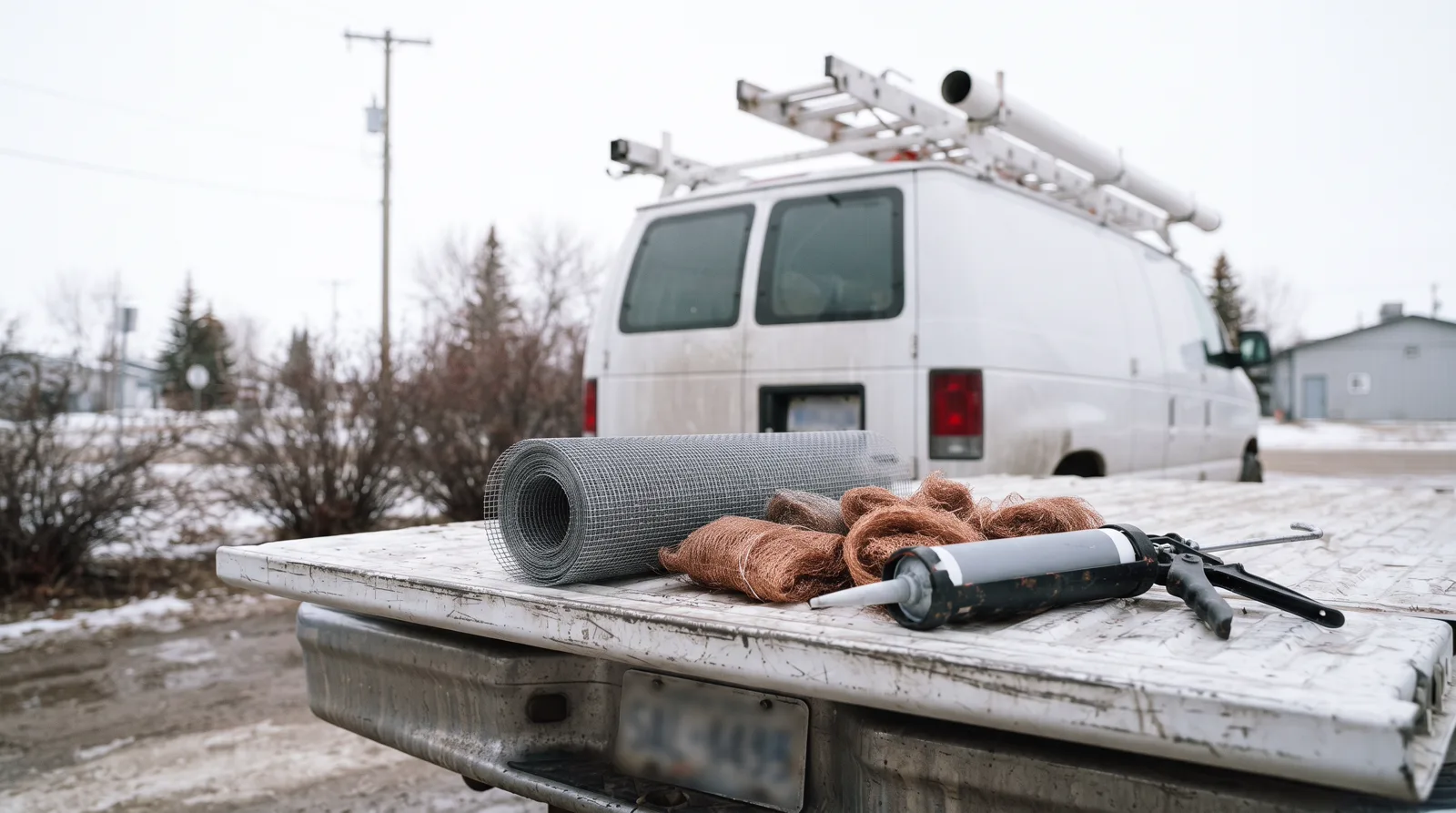
Effective exclusion uses materials rodents can't chew through. Copper mesh, galvanized hardware cloth (6 millimeter openings or smaller), sheet metal, and mortar are standard. Spray foam alone is not sufficient; rodents chew through cured foam easily. The correct approach is to pack copper mesh into the gap, then seal over it with foam or caulking for weatherproofing. Foundation cracks are filled with hydraulic cement or polyurethane crack filler rated for freeze-thaw cycles. Gaps around pipes and cables are sealed with escutcheon plates or metal flashing, not just caulk. The pros Tri-Region works with carry these materials and know which product suits each gap type and location.
Soffit and gable vent screens corrode or go missing over time, and replacement is straightforward but often overlooked. The specialist replaces damaged screens with galvanized or stainless steel mesh that won't rust out. Plastic vent covers in attics or crawl spaces that have cracked from cold exposure are replaced with metal versions. Garage door weatherstripping that has dried out or separated from the door bottom is a very common entry point; replacing it with a proper rubber seal eliminates a major gap. Dryer vents with missing flaps or corroded louvers are upgraded to models with spring-loaded closures that stay shut when the dryer isn't running.
Timing matters for exterior sealing work. Caulking and foam don't cure properly when temperatures are below 5°C, so exclusion work on exterior walls and foundations is best done in late spring, summer, or early fall. Interior sealing (attic penetrations, basement rim joists, gaps around plumbing under sinks) can happen year-round. If rodent activity is discovered in January and outdoor sealing isn't feasible until April, the specialist focuses on trapping and interior exclusion first, then completes the exterior work when temperatures allow proper curing.
Homeowners should verify that every entry point identified during inspection has been addressed before the job is considered complete. The specialist provides a written list of sealed locations and photos of completed work if requested. Some gaps, like foundation cracks or deteriorated mortar, may require follow-up by a separate foundation or masonry contractor if the damage is extensive. Tri-Region confirms that the pest control specialist has sealed everything within their scope, but structural repairs beyond rodent exclusion are the homeowner's responsibility. Once sealing is done and trapping shows no new activity for a week, the infestation is resolved.
What rodent control really costs in Spruce Grove and the Tri-Region
A basic inspection and initial treatment for a typical single-family home in Spruce Grove runs $250 to $600, depending on the severity of the problem and whether you need traps, bait stations or both. That gets you a walkaround to identify entry points, placement of control devices in key areas like the furnace room, garage and attic access, and a follow-up check within two weeks. If the pro finds active nesting in your walls or attic insulation, expect the inspection alone to take longer and cost closer to the upper end of that range, especially in older homes with crawl spaces or unfinished basements common in Parkland County.
Exclusion work, which means sealing every crack, gap and hole mice or rats could use, adds $400 to $2,500 to the bill depending on how many entry points exist and where they are located. Ground-level gaps around a poured foundation or gaps where utility lines enter are straightforward and cheaper to seal. Sealing soffit vents, roof-edge gaps or second-storey wall penetrations requires ladders, scaffolding or a lift, which drives labor costs up fast. Homes built before 1990 in Stony Plain often have soffit and fascia gaps from wood shrinkage during Alberta's freeze-thaw cycles, and sealing those properly takes time and the right materials to survive our chinook wind and temperature swings.
Ongoing monitoring contracts run $40 to $90 per month and include monthly or quarterly site visits to check traps, replace bait, inspect exclusion points and adjust the plan if new entry signs appear. These contracts make sense for rural properties near grain storage, acreages with outbuildings or older commercial buildings in Acheson where rodent pressure is constant. The total first-year cost for a moderate infestation, including initial treatment, full exclusion and three months of monitoring, typically lands between $1,200 and $3,500. Severe infestations in large homes, properties with attached shops or buildings with dirt-floor crawl spaces can push costs to $5,000 or more when you factor in insulation removal, sanitation and structural repairs to damaged vapor barrier or wiring.
Comparing control methods, materials and service models
Snap traps are the fastest way to confirm you have rodents and remove them from active areas. They work best along baseboards, behind appliances, in furnace rooms and along the walls in unfinished basements where droppings or gnaw marks show up. Pros set multiple traps in high-traffic zones and check them every few days until no new catches occur for a week. Snap traps give you a body count, which helps gauge whether the problem is two mice or twenty, and they avoid the risk of rodents dying inside walls where bait stations can lead to smell issues. The downside is that traps require more labor for checking and resetting, so costs run higher if the infestation is large or spread across multiple floors or outbuildings.
Bait stations use rodenticide blocks or pellets in tamper-resistant containers placed in attics, crawl spaces, garages and exterior perimeters. Rodents consume the bait over several days and typically die within a week. Bait works well for heavy infestations or properties where traps alone cannot cover enough ground, but the risk is rodents dying in wall cavities, under insulation or in ductwork, creating odor problems that last two to four weeks in Alberta's dry winter air. Responsible pros place bait only in locations where they can retrieve dead rodents or in exterior stations where deaths occur outside the building envelope. If a contractor suggests interior bait without explaining the die-off risk or offering a wall-check service, that is a red flag.
Live traps appeal to homeowners who want a no-kill option, but they require daily checking, immediate relocation of captured animals and ongoing exclusion work to prevent re-entry. Alberta regulations prohibit relocating live wildlife more than one kilometer from the capture site without a permit, which means releasing mice or rats nearby often results in them returning to your property within days. Live trapping works as part of a humane approach if you combine it with rigorous exclusion, but it is slower and more labor-intensive than lethal methods. For most residential infestations in the Tri-Region, a combination of snap traps for interior control, exterior bait stations for perimeter defense and permanent exclusion delivers the fastest, most reliable result.
Exclusion materials that hold up in Alberta weather
Steel wool alone rusts out in one winter when exposed to snow melt and freeze-thaw moisture, so pros use it only as a temporary gap-filler or combine it with metal mesh and weatherproof sealant. Copper mesh resists corrosion better and works well for sealing around pipe penetrations, dryer vents and foundation cracks where you need a material that blocks gnawing but still allows some flexing as the building settles. Sheet metal flashing, aluminum mesh or quarter-inch galvanized hardware cloth are the go-to materials for soffit repairs, crawl space vents and larger gaps where rodents could tear through foam or caulk. Any exclusion work on your roofline or exterior walls needs to survive chinook wind gusts, ice damming and UV exposure, so the cheapest foam-only solution will fail within a year.
Common mistakes and contractor traps that cost you money
The biggest mistake homeowners make is hiring a pest company that focuses only on bait or traps without sealing entry points. You can kill every mouse in your house today, but if gaps around your service lines, foundation cracks or soffit vents remain open, new rodents move in within weeks. A proper rodent job always includes exclusion work, either done by the pest pro or coordinated with a handyman or carpenter who can handle structural sealing. If the estimate does not mention exclusion or the contractor says sealing is optional, you are being set up for recurring service calls that generate monthly revenue but never solve the root problem.
Another trap is interior poison placement without a clear plan for retrieving dead rodents. Some contractors place bait blocks in attics or wall cavities and leave, knowing the homeowner will call back when the smell starts. That callback turns into a wall-opening service, insulation removal or odor remediation upsell that could have been avoided with exterior-only bait placement or snap traps in accessible areas. Ask up front where bait will be placed, what happens if rodents die in walls and whether the contractor includes odor investigation in the base price or charges extra. Any hesitation or vague answer means you should expect surprise charges later.
Skipping follow-up inspections after the initial treatment is a third common failure point. Rodent control is not a one-visit fix. Traps need checking, bait stations need refilling, exclusion points need verification and new entry signs need to be caught early before a second colony establishes. A contractor who does the initial setup and never returns is either underpricing the job and cutting corners, or assuming you will call when the problem resurfaces and pay for a second round. Reputable service includes at least two follow-up visits in the first month, with a clear schedule and no extra trip charges for those checks.
How to hire the right rodent control pro in the Tri-Region
Start by verifying the contractor holds valid commercial general liability coverage and active Workers Compensation Board status. Rodent work involves attic access, ladder work and exposure to droppings that can carry hantavirus or salmonella, so you want a pro whose insurance covers both property damage and occupational health risks. Ask for proof of coverage before any site visit, and confirm the policy is current, not expired or lapsed. Any resistance to sharing that documentation is an immediate disqualifier, because it means the contractor is either uninsured or operating under a cancelled policy.
Request a written estimate that breaks out inspection, treatment, exclusion and follow-up costs as separate line items, not a single lump sum. That transparency lets you compare quotes accurately and understand what you are paying for at each stage. The estimate should list the materials being used for exclusion, the type and number of traps or bait stations, the schedule for follow-up visits and any warranty or guarantee terms. If the quote is verbal, vague or changes when you ask for details in writing, walk away. Reputable contractors put everything on paper because they know their pricing is fair and their process is defensible.
Ask how the pro documents entry points and tracks progress. Good contractors take photos of every gap, crack or hole they find, mark exclusion points with tags or labels and provide a written report after each visit showing what was done, what was found and what still needs attention. That documentation protects you if the problem recurs and gives you a clear record for insurance claims, property sales or future maintenance. If the contractor cannot or will not document their work, you have no way to verify the job was done right, and you lose your leverage if results do not match promises.
How Tri-Region Services helps
Tri-Region Services routes your inquiry to one pre-screened local rodent control professional who serves Spruce Grove, Stony Plain, Parkland County and Acheson. Liability coverage and liability insurance standing are stated at signup, and the pro you are matched with provides a free written quote with no obligation. You get one vetted contact, a clear price breakdown and a local business that knows Alberta building practices, climate challenges and permit requirements. No contractor list to research, no callback mills and no surprise fees.
How We Screen Every Rodent Control Specialist
Before a pro appears in our referral queue, they clear six verification gates. You get their credentials summary before accepting the match.
Pest Management License Verified
Alberta Environmental Protection and Enhancement Act requires licensing for commercial pest control. We confirm current status with the issuing authority before any dispatch.
Liability Insurance Confirmed
Certificate of insurance and liability insurance account verified within 30 days of your request. You see coverage limits in the match summary.
Humane Methods Screened
Pros in our network commit to snap traps or live capture over rodenticides in occupied homes. Poison use is disclosed up front if outdoor bait stations are recommended for perimeter control.
Work Warranty in Writing
Exclusion work typically carries 90 days to one year warranty against re-entry through sealed points. The specialist provides warranty terms in writing before starting, and the document goes to you and our file.
Urgent Requests Prioritized
For urgent requests, we only match you with pros who confirm arrival within four hours. Non-emergency appointments book within 48 hours, with the technician texting an ETA 30 minutes out.
Local References Validated
Every specialist submits three contactable references from Parkland County or Edmonton metro before joining the network. We call them, and a pattern of poor communication or incomplete work disqualifies the applicant.
This page is not tied to a contractor's brand. Leads route straight to your one local partner. Verified reviews can appear here once that partner has them (never fabricated).
Serving the whole Tri-Region
7 Rodent Control Questions Spruce Grove Homeowners Ask
How fast can someone get to my property?+
Do they use poison or humane traps?+
How do they find all the entry points?+
What about cleanup and sanitization after removal?+
What does rodent control typically cost in Spruce Grove?+
How do I prevent rodents from coming back?+
Is there a guarantee or warranty on the work?+
Are the treatments safe around kids and pets?+
Get your free quote
Tell us what you need and a local pro will get right back to you.
- ✓ Sent straight to a local business
- ✓ You choose who you hire
- ✓ Free, with no obligation