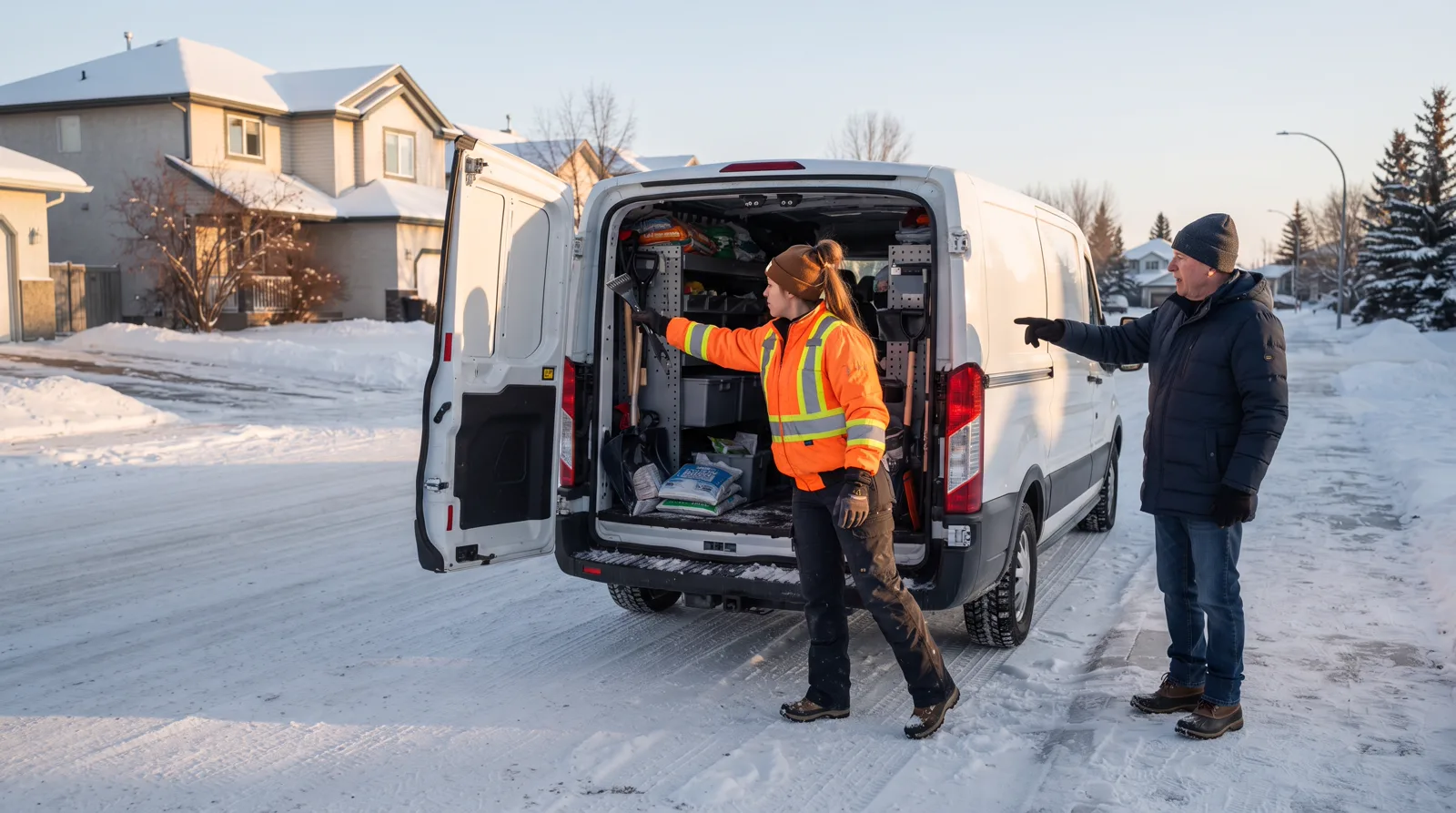
Seasonal Snow Removal Contracts Fixed Price, Guaranteed Service.
Lock in your winter snow removal at a flat rate. No per-visit surprises, defined service levels, and verified pros ready before the first flake falls.
Seasonal Contract Options
Fixed-price packages for every property type in the Tri-Region
Residential Driveway Season Pass
Unlimited visits all winter when snow hits your trigger depth. Includes driveway clearing, turnaround, and apron. Front walkway to door often included. Price varies by driveway length and surface type.
Commercial Lot Seasonal Service
Priority clearing before business hours, defined service level for lot size and traffic volume. Covers plowing, stacking, and lane access. Liability and WCB stated at signup. Pricing depends on square footage and visit frequency.
Sidewalk & Pathway Season Add-On
Pair with driveway or standalone. Cleared to pavement within your contract window, sand or ice melt applied. Critical for rental properties and strata compliance in Spruce Grove and Stony Plain.
Condo & Strata Complex Contracts
Multi-building seasonal coverage with stacking plans, visitor lot priority, and walkway clearing. Service level agreement includes depth triggers, timing windows, and penalty clauses. Equipment capacity stated at signup.
Priority Response Upgrade
Guaranteed arrival within a defined window after trigger depth is hit, even during heavy storm cycles. Backup contractor on standby if primary is tied up. Popular for medical access needs and commercial operations.
Rural Driveway Long-Run Contracts
Parkland County and acreage driveways longer than 100 meters. Pricing per visit or seasonal flat rate. Contractor confirms equipment can handle your run length and turnaround space before signing.
Why Seasonal Contracts Work Here
🌬️ Chinook Melt-Refreeze Cycles
Alberta's chinook winds melt snow mid-winter, then refreeze into sheets overnight. Seasonal contracts typically define whether melt refreeze counts as a separate visit or falls under storm coverage. Verify this in writing before you sign.
❄️ Deep Frost and Persistent Snow Pack
Spruce Grove and Stony Plain see sustained cold snaps below -20°C, and snow that falls in November often stays until March. Contractors doing seasonal work here need equipment that can handle frozen compacted drifts, not just fresh powder.
🚜 Parkland County Acreage Access
Long rural driveways and limited turnaround space mean equipment size matters. Seasonal contracts in the county should specify whether the contractor has a backup smaller unit if a full-size plow truck can't navigate your property layout.
🏛️ Spruce Grove Commercial Parking Bylaws
Commercial lots must be cleared within a set window after snowfall to avoid bylaw fines. Seasonal contracts should state exact timing commitments and whether night shifts or pre-opening service is included, especially for retail and office plazas.
What it costs here
Seasonal Snow Removal Contracts Explained
How to pick the right contract structure, what triggers a visit, and how pricing works in Spruce Grove and Stony Plain
What a Seasonal Snow Removal Contract Actually Covers in Spruce Grove
A seasonal contract locks in unlimited snow clearing service from October through April for one fixed monthly fee. Instead of paying per visit or scrambling to find someone after a storm, the service pro assigned to your property shows up automatically once accumulation hits the trigger depth written into your agreement. Most contracts in Spruce Grove set triggers at 5 cm for commercial lots and 8 cm for residential driveways, though you can negotiate lower thresholds if liability or access demands it. The monthly rate stays the same whether we get two light dustings or twelve major dumps, which matters in a region where chinook winds can melt everything one week and a Colorado low can bury you the next.
Standard contracts cover plowing or blowing the primary surface: your parking lot, driveway, or main access lane. Walkways, sidewalks, and building entrances usually fall under the same agreement if they connect directly to the plowed area, but isolated paths or rear exits often cost extra. Ice management is part of most seasonal plans in Alberta because freeze and thaw cycles turn every cleared surface into a skating rink within hours. The pro applies sand, salt, or calcium chloride blends depending on temperature and surface type. Roof clearing, snow hauling, and windrow removal at the street edge are separate line items unless explicitly written in, so confirm what your monthly rate includes before you sign.
Liability and insurance matter more than most property owners realize. Commercial contracts in Alberta typically require the service provider to carry at least two million in general liability coverage if they employ anyone. Tri-Region verifies both before matching you with a pro, and the contract should name your property as an additional insured. Residential agreements are less formal, but you still want written proof that the person plowing your driveway is insured in case they clip your gas meter or crack your walkway. The contract also sets response windows: most commercial plans promise service within four hours of the trigger depth, while residential plans allow six to twelve hours depending on storm severity and route logistics.
Why Alberta's Winter Weather Pattern Makes Fixed Pricing Worth the Bet
Spruce Grove and Parkland County sit in a volatile snow belt where Pacific systems collide with Arctic air and chinook winds erase weeks of accumulation in 48 hours. Winter 2024 delivered nine separate events over 10 cm between November and March, while winter 2023 saw only four. Predicting what any given season will cost on a per-event basis is pure guesswork, and service rates spike during heavy years when every contractor is booked solid. A seasonal contract transfers that risk to the provider: they collect the same monthly fee whether they visit six times or sixteen. For property owners, that means budget certainty and no surprise invoices after a string of storms.
Insurance carriers and commercial lease terms often require guaranteed snow clearing with documented response times, especially for medical offices, daycares, retail plazas, and multi-unit housing. Liability from slip and fall incidents on icy walkways or uncleared parking stalls runs into tens of thousands once legal costs and settlements add up. Proving you had a contract in place with defined trigger depths and response windows is the first line of defense if someone gets hurt on your property. On-call service arrangements leave gaps: the contractor might be tied up on another site when your lot needs clearing, and a twelve-hour delay in the middle of a storm can mean the difference between a clean surface and a compacted ice sheet that lasts until March.
Seasonal contracts also lock in October rates before the first snow flies. Contractors who sell contracts in September and early October are pricing based on forecasted averages and need to fill their route capacity. Wait until December after two big storms and the same contractor will either quote per-event rates that reflect the chaos or decline new clients entirely because their schedule is full. For budgeting purposes, spreading six months of snow service across equal monthly payments smooths cash flow, which matters for strata councils, property managers, and small business owners working with tight margins.
How to Know You Need a Seasonal Contract Instead of Calling After Every Storm
Property Type and Access Requirements
Commercial properties with public access almost always justify a seasonal contract. Retail plazas, medical clinics, office buildings, and daycare centers face immediate liability if walkways and parking stalls are not cleared before business hours. The same applies to multi-unit residential buildings where shared driveways and visitor parking fall under the landlord or strata corporation. If your property generates foot traffic from customers, tenants, or delivery drivers, the cost of a contract is a rounding error compared to the risk of an injury claim or lost business from an inaccessible lot.
Single-family homes with long driveways, steep grades, or limited turning space also benefit from guaranteed service. A 40-meter rural driveway buried under 15 cm of wet snow is not something you clear with a shovel, and if you cannot get your vehicle out to reach work or school, waiting six hours for an on-call contractor to fit you into their route creates real problems. Seasonal contracts prioritize route clients: you are on the map, and the plow truck rolls through automatically once the trigger depth hits. On-call clients get served after contracted stops, which can mean waits stretching into the next day during heavy storms.
Budget Predictability and Cost Control
If you are managing a fixed operating budget and cannot absorb surprise invoices, a seasonal contract removes the uncertainty. Per-event billing in Spruce Grove typically runs $80 to $150 for a residential driveway and $200 to $600 for a small commercial lot, depending on surface area and access difficulty. Multiply that by ten or fifteen events in a heavy winter and you are looking at annual costs between $1,200 and $9,000. Seasonal contracts for the same properties range from $450 to $2,800 for the six-month period, structured as equal monthly payments. The breakeven point sits around eight to ten service events, so any winter that delivers more than that saves you money, and any winter with fewer events costs more. Most property owners in Alberta prefer the peace of mind.
Liability Exposure and Documentation Needs
If your insurance policy or lease agreement requires documented snow clearing protocols, a seasonal contract provides the paper trail. The agreement specifies trigger depths, response times, ice management procedures, and liability coverage, all of which an adjuster or plaintiff's lawyer will demand if someone claims injury on your property. On-call arrangements leave you proving you called for service and that the contractor responded within a reasonable window, which is much harder to document after the fact. Contracts also enforce accountability: if the pro misses a clearing cycle or shows up twelve hours late, you have written terms to point at and grounds to demand a credit or switch providers mid-season.
How Seasonal Snow Removal Contracts Work from Start to Finish
The process begins with a site assessment in late September or early October, well before the first snow. The service provider visits your property to measure the area, identify obstacles like gas meters and landscaping features, confirm surface type, and discuss your specific needs. This is when you lock in the trigger depth, response window, and any add-ons like walkway clearing or extra ice control. The quote breaks out the monthly rate, the total seasonal cost, and what happens if you need services outside the standard scope. Most contracts run from October 15 through April 15, covering the core winter period, though some extend into early May if late-season storms are common.
Billing typically starts November 1 regardless of when the first snow falls, and you pay the same amount every month through March or April depending on the contract length. Some providers front-load the payments into four months instead of six to match the heaviest clearing period, while others spread the cost evenly. Payment terms are net 15 or net 30 for commercial accounts and often auto-debit for residential clients. The contract also defines how service gets triggered: some pros monitor weather forecasts and dispatch crews preemptively, while others measure accumulation on-site and clear once the threshold is met. Either way, you should not need to call unless something unusual happens, like a windrow left by a city plow blocking your entrance.
Mid-season adjustments are possible but usually require renegotiation. If you add a new walkway or expand your parking area, the monthly rate adjusts to reflect the increased clearing load. If a chinook melts everything and no service is needed for three weeks, the rate does not drop: the contract price is based on seasonal averages, not actual visits. At the end of the season, the provider does a final clearing and site check, confirms no damage occurred, and closes out the account. If you are satisfied with the service, most pros offer early renewal discounts for the following year, locking in rates before they adjust for inflation or fuel cost increases. Contracts also spell out cancellation terms: some allow a pro-rated refund if you sell the property mid-season, while others require full payment once the season starts.
What Seasonal Snow Removal Contracts Cost in the Tri-Region
A residential seasonal snow removal contract in Spruce Grove, Stony Plain or Parkland County typically runs $400 to $900 for the winter season, depending on driveway size, trigger depth and how many visits you need. A standard single driveway with a two-inch trigger (meaning the contractor shows up whenever accumulation hits two inches) and unlimited visits averages $500 to $700. Larger properties with circle drives, long approaches or commercial frontage can push $1,200 to $2,500 per season. Multi-unit complexes, strata parking lots and commercial properties work on a different scale: expect $1,500 to $8,000 or more depending on pavement square footage, the number of stalls, sidewalk linear footage and whether you need 24-hour standby service.
The single biggest cost driver is visit frequency and trigger depth. A three-inch trigger costs less than a two-inch trigger because the contractor makes fewer trips, but it also means your driveway sits under snow longer. Properties that demand a one-inch trigger or zero-tolerance clearance (common for medical clinics, daycares and senior facilities) pay a premium because the contractor may visit twice in a single storm. Lot size is the second variable: a 20-foot single driveway takes five minutes to clear, while a 60-foot double with a turnaround and walkways can take 20 minutes. Contractors price per hour or per season based on estimated time, so every extra square foot of pavement adds cost.
Other factors that move the price include equipment type, de-icing services and access constraints. A property that requires hand shoveling around landscaping, tight gate clearances or delicate interlocking pavers costs more than an open asphalt pad a plow truck can clear in one pass. If you want calcium chloride or liquid brine anti-icing (more effective in extreme cold than rock salt), add $100 to $300 to the seasonal rate. Roof snow clearing, ice dam steam removal and windrow clearing at the end of your driveway after the city grader passes are typically billed separately at $80 to $150 per visit, but some contractors bundle them into premium-tier packages. Always confirm what is and is not included in the base contract price before you sign.
Comparing Seasonal Contract Options and Service Levels
Seasonal contracts come in three common structures: unlimited visits with a set trigger depth, a capped number of visits, or a hybrid model with a base number of visits plus per-event overages. Unlimited-visit contracts with a two or three-inch trigger offer the best value for most homeowners because you pay one flat rate and never worry about surprise bills, no matter how many storms hit. Capped contracts (for example, up to 12 visits per season) cost less up front but leave you exposed if Spruce Grove sees 18 snowfall events. The 2021 to 2022 winter brought 22 plowable events in the Tri-Region, so capped plans can backfire in heavy years. Hybrid models split the difference: you get eight to ten included visits, then pay $40 to $60 per additional trip. This works well if your budget is tight and you are willing to gamble on a lighter winter.
Equipment choice affects both cost and results. Plow trucks are the fastest and cheapest option for large open driveways and parking lots, but they leave a thin packed layer and can gouge soft surfaces or catch on exposed irrigation heads. Skid steers with pusher boxes are gentler and more maneuverable, ideal for tight residential circles and decorative paver driveways, but they cost more per hour. Walk-behind snowblowers work well for narrow walkways, townhouse entries and properties with parked cars that block plow access, though they are slower and labor-intensive. Some contractors use a combination: plow the main pad, then finish edges and walks with a blower. Ask which equipment will be used on your property and whether the operator has experience with your surface type, especially if you have stamped concrete, exposed aggregate or interlocking stone that can be damaged by aggressive plowing.
De-icing and anti-icing services add another layer of decision. Rock salt (sodium chloride) is the cheapest option at $30 to $50 per application, but it stops working below minus 9 Celsius and can kill grass and shrubs along driveway edges. Calcium chloride works down to minus 25 Celsius, costs $50 to $80 per application and is less corrosive to concrete, but it tracks indoors and can stain carpets. Liquid brine pre-treatment prevents bonding and is popular for commercial lots that need zero-tolerance clearance, though it adds $100 to $200 to seasonal contracts. Sand provides traction without melting ice, costs $20 to $40 per application and is the safest choice for properties with pets or septic fields, but it creates a mess in spring and offers no melting action. Many contractors offer tiered packages: basic (plowing only), standard (plowing plus rock salt) and premium (plowing, calcium chloride and walkway clearing). Choose based on your surface sensitivity, environmental concerns and how much foot traffic your property sees.
Add-On Services Worth Considering
Roof snow clearing becomes critical after heavy snowfall or during chinook-freeze cycles that create ice dams. Spruce Grove and Stony Plain see sudden temperature swings where daytime melt refreezes at night, creating thick ice ridges that force meltwater under shingles and into attics. Contractors charge $150 to $400 per roof clearing depending on pitch, height and access, and some seasonal contracts include one or two clearings as part of a premium package. If your home has a low-pitch roof, poor attic ventilation or a history of ice dams, budget for this service separately or confirm it is included.
Windrow clearing is another common add-on. City graders push heavy compacted snow across driveway aprons, and while your contractor clears your driveway itself, the three-foot berm the city leaves can be impassable without a second visit. Some contracts include windrow clearing as part of the base service, others charge $30 to $60 per occurrence, and a few exclude it entirely. Clarify this before signing, especially if you live on a bus route or collector road where graders pass frequently and pile deep.
Common Mistakes and Contractor Traps to Avoid
The biggest mistake property owners make is signing a seasonal contract with no written trigger depth, service schedule or scope definition. A handshake deal or a vague text message leaves you with no recourse when the contractor does not show up after a six-inch dump or bills you for services you thought were included. Insist on a written contract that specifies trigger depth in inches, response time after a snowfall (for example, within 12 hours of the storm ending), what surfaces are cleared (driveway, walkways, front steps), whether de-icing is included, and how windrow clearing is handled. The contract should also state the seasonal price, payment schedule (common structures are full payment up front, half up front and half in January, or monthly installments) and cancellation terms. Without this detail in writing, you have no proof of what was agreed and no leverage if the contractor ghosts you mid-winter.
Fly-by-night operators with no liability insurance or liability insurance are a serious risk in the snow removal trade. If an uninsured contractor damages your property (cracks your driveway, breaks a window with thrown snow, or tears up your lawn) you have no mechanism to recover costs. Worse, if the operator is injured on your property and has no liability insurance, you can be held personally liable under Alberta law. Always verify that the contractor carries commercial general liability insurance of at least $2 million and, if they have employees. Ask for proof: a certificate of insurance from their broker and a WCB clearance letter. Legitimate contractors provide this without hesitation. Anyone who balks, offers excuses or promises to send it later is operating uninsured and should be avoided.
Payment scams and upfront deposit traps catch property owners every winter. Some operators demand full seasonal payment in October, then disappear or provide spotty service because they have already been paid and face no financial consequence for poor performance. Others lowball the quote to win the contract, then tack on surprise fees for services you assumed were included: walkway clearing, windrow removal, extra visits during heavy storms. A fair payment structure is either half up front and half at mid-season, or monthly installments. Never pay 100 percent before the first snowfall. Be equally wary of contractors who quote suspiciously low rates (for example, $250 for unlimited seasonal service on a large driveway). They are either inexperienced, uninsured, or planning to cut corners by skipping visits or doing incomplete work. A seasonal contract priced 40 percent below the local average is a red flag, not a bargain.
How to Hire the Right Snow Removal Contractor
Start by verifying insurance and business registration before you even discuss pricing. A legitimate contractor operating in Spruce Grove, Stony Plain or Parkland County should be registered with the province (you can search the business name at Alberta Corporate Registry online), carry at least $2 million in commercial general liability coverage, and hold liability insurance if they employ anyone other than the owner. Ask for a certificate of insurance that names you as an additional insured for the contract period, and request a WCB clearance letter dated within the past 90 days. If the contractor works solo with no employees, WCB is optional but liability insurance is not. Do not accept verbal assurances: get documents. This step alone eliminates most of the unreliable operators, fly-by-nights and uninsured handshake deals that leave you exposed.
Ask for at least three local references, ideally properties similar to yours in size and surface type, and actually call them. Do not settle for a list of names with no contact information, and do not trust online reviews alone because they can be faked or cherry-picked. When you call a reference, ask how many winters they have used the contractor, whether they show up on time after storms, how they handle damage if it occurs, and whether any surprise fees or service gaps appeared. Also ask what was not covered that the reference wished had been included, because that reveals the contractor's standard scope limits. If the contractor cannot or will not provide references, walk away. Established operators have a client list they are proud to share.
Clarify exactly what is included and what is extra before signing. Go through the contract line by line and confirm: What is the trigger depth? Are walkways, steps and sidewalks included or just the driveway? Is de-icing included, and if so, what material? How is windrow clearing handled? What is the response time after a storm? Is there a maximum number of visits, or is it unlimited? What happens if the contractor damages property: is there a claim process? Who is responsible for clearing snow the city piles at the end of your driveway? Are roof clearing, ice dam removal or extra storm visits billed separately, and at what rate? If any of these answers are vague or missing, do not sign until you get clarity in writing. Verbal promises mean nothing when a dispute arises in January.
How Tri-Region Services Helps
Tri-Region Services connects you with one verified local snow removal contractor who has confirmed liability insurance (if they employ workers) and a clean reference record in the Spruce Grove, Stony Plain and Parkland County area. You fill out a single request with your property details, trigger preferences and service needs, and you receive one written quote with a clear seasonal price and scope. No high-pressure sales, no endless back-and-forth with multiple operators, and no guessing about insurance or reliability. Every contractor in the network is stated at signup, so you are not left sifting through uninsured handshake deals or tracking down certificates yourself. Request your free quote through Tri-Region Services and get matched with a qualified pro who can start service as soon as you are ready to sign.
What We Verify Before Signing
Every contractor matched through Tri-Region is checked for coverage, capacity, and contract clarity before the season starts
Equipment Inventory Check
Plow truck, backup blower, and sand spreader confirmed operational before October 1st, so no scrambling when the first storm hits.
WCB & Liability Current
Pros tell us they carry liability insurance when they join. Ask to see their certificate before work begins.
Service Level Agreement in Writing
Depth trigger, response window, and visit inclusions spelled out in plain language so there's no confusion mid-season.
Weather Trigger Thresholds Defined
Contract states exact snow depth or event type that triggers a visit, whether that's 3cm, 5cm, or any accumulation.
Backup Contractor On Standby
If your primary contractor is overwhelmed during a heavy storm cycle, a verified backup is dispatched so you're not left buried.
Mid-Season Performance Reviews
We check in halfway through winter to confirm service levels are being met and address any gaps before March.
This page is not tied to a contractor's brand. Leads route straight to your one local partner. Verified reviews can appear here once that partner has them (never fabricated).
Serving the whole Tri-Region
7 Questions About Seasonal Contracts
What snow depth triggers a visit under a seasonal contract?+
How many visits are included in a typical season?+
Can I cancel mid-season if I move or sell the property?+
What happens if the contractor misses a storm?+
Is salt or sand included in the seasonal price, or is it extra?+
When do I pay for a seasonal contract: upfront or in installments?+
Does the contract cover chinook melt and refreeze events?+
What is the difference between residential and commercial seasonal contracts?+
Get your free quote
Tell us what you need and a local pro will get right back to you.
- ✓ Sent straight to a local business
- ✓ You choose who you hire
- ✓ Free, with no obligation