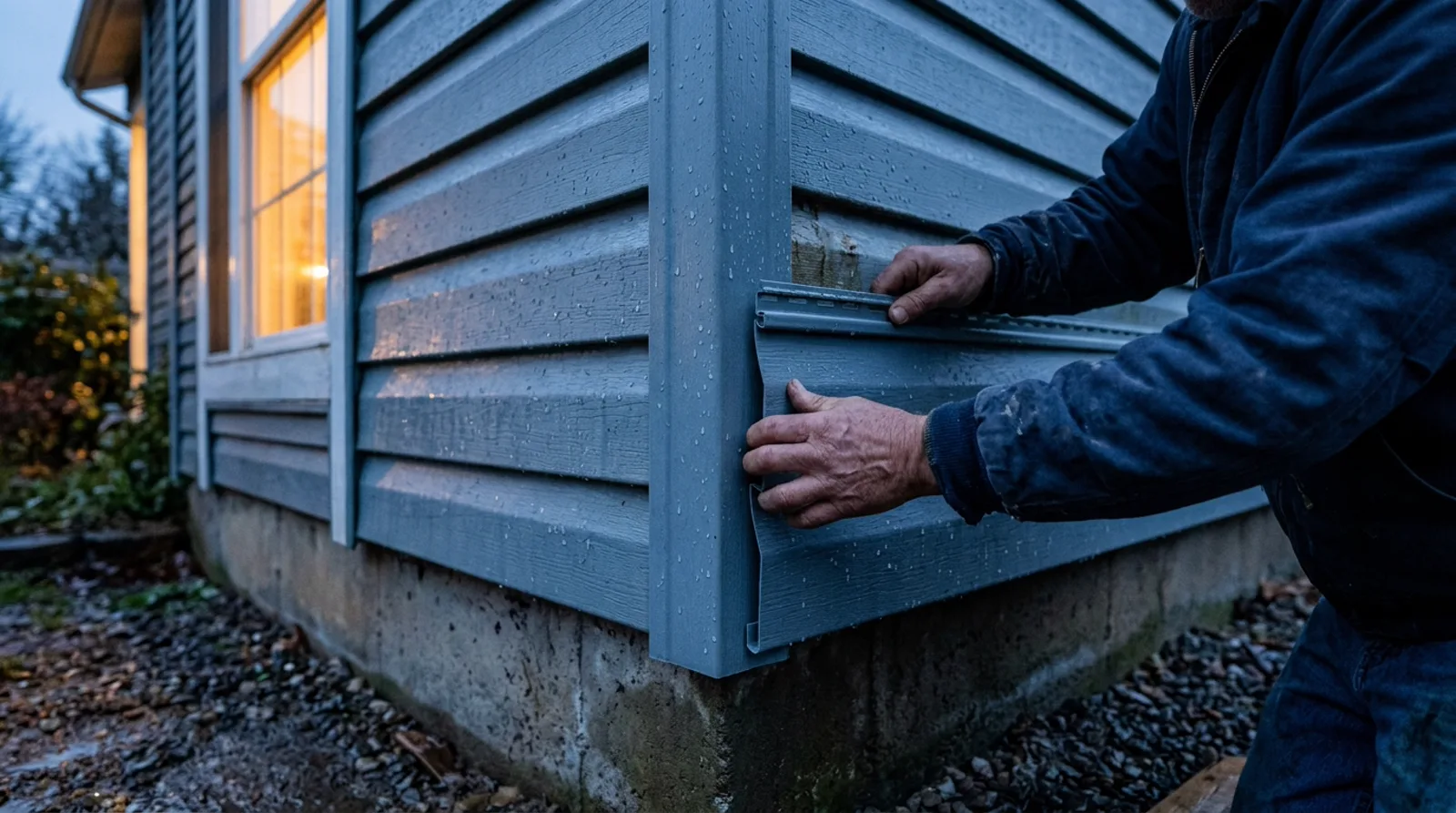
Siding Repair Spruce Grove Fix It Before It Spreads.
One cracked panel today becomes water in your walls tomorrow. We patch, replace, and match your existing siding so the repair disappears.
Siding Repair Services in the Tri-Region
From single cracked panels to multi-section hail damage, local pros repair it right the first time.
Hail Damage Siding Repair
Alberta hail seasons hit hard. We document every dent and crack for your insurance adjuster, then replace damaged sections with exact material and color matches. Includes pre-repair photos, material sourcing, and post-repair inspection report.
Cracked or Warped Panel Replacement
Freeze-thaw cycles crack vinyl and warp wood siding. Local pros remove the damaged section, check the sheathing and vapor barrier underneath, then install a replacement panel that blends invisibly. Common on south and west-facing walls exposed to chinook temperature swings.
Missing Siding Section Replacement
Wind, impact, or failed fasteners leave gaps that let moisture into your wall cavity. We source matching siding (even discontinued profiles), repair any underlying damage, and reinstall with proper flashing and caulking to prevent future water intrusion.
Water Damage Siding Repair
If water got behind the siding, the repair goes deeper. Local pros remove damaged siding and sheathing, treat any mold, install new vapor barrier and OSB if needed, then close it up with matched siding. Includes moisture meter testing to confirm the wall cavity is dry.
Siding Patch and Paint Match
For wood, fiber cement, or painted steel siding, we patch holes or cracks, sand flush, prime with exterior-grade primer, and custom-match your existing paint. UV-resistant topcoat ensures the repair does not fade faster than the surrounding siding.
Full Panel or Course Replacement
When damage spans multiple panels or an entire horizontal course, piecemeal repair looks obvious. Local pros replace the full run from corner to corner or seam to seam, using the same gauge, profile, and finish. Common after severe hail or when woodpeckers drill repeated holes.
Why Alberta Siding Takes a Beating (And What We Do About It)
⛈️ Hail Season Insurance Claims
Spruce Grove and Parkland County see damaging hail May through September. We photograph every crack and dent with a measuring tape in frame, write a detailed scope for your adjuster, and store the damaged pieces as evidence. Most insurers cover the repair if you file within 12 months of the storm date.
🌡️ Freeze-Thaw Cracking
Alberta winters swing from minus 30°C to plus 10°C chinook thaws and back again. Water seeps into micro-cracks, freezes, expands, and splits the siding wide open. We see this most on vinyl and fiber cement installed before 2015, when expansion gaps were often skipped.
🛠️ Matching Discontinued Siding Profiles
If your house was sided in the 1990s or early 2000s, the exact profile may no longer be manufactured. We keep relationships with salvage yards, search manufacturer archives, and can often find new-old-stock or a visually identical substitute. When no match exists, local pros replace the full wall section so the transition is intentional, not accidental.
📋 Spruce Grove Building Permits for Siding Repair
Repairing under 10% of your home's siding typically does not require a permit in Spruce Grove or Stony Plain. Replacing an entire wall or more than 50 square meters does. Local pros handle the permit application, submit drawings, and schedule the inspection so you stay compliant without the paperwork headache.
What it costs here
Everything You Need to Know About Siding Repair in Spruce Grove
From spotting hidden damage to choosing repair versus replacement, this guide walks you through the decision in plain language.
What Siding Repair Actually Means in Alberta
Siding repair is the targeted replacement or restoration of damaged exterior cladding sections without tearing off and replacing the entire wall system. In Spruce Grove, Stony Plain, and Parkland County, this typically means addressing vinyl, fiber cement, wood, or engineered wood panels that have cracked, warped, punctured, or pulled loose from the building envelope. The work involves removing the compromised pieces, inspecting the sheathing and moisture barrier underneath, making any necessary structural corrections, and installing matching replacement material that blends seamlessly with the existing facade. Unlike full siding replacement, repair work preserves the majority of your original installation and costs a fraction of the price, usually ranging from $400 to $3,500 depending on the extent of damage, material type, and accessibility.
Alberta's climate makes siding repair fundamentally different from the same service in milder regions. Our freeze-thaw cycles, which can run from October through April, cause expansion and contraction that fatigues fasteners and cracks brittle materials. Chinook winds generate sudden temperature swings of 20 degrees Celsius or more in a single afternoon, putting immense stress on siding joints and trim details. Summer hailstorms in this region regularly produce ice pellets large enough to crack vinyl, dent aluminum, and split wood siding in minutes. A repair contractor working in Spruce Grove needs to understand how these forces interact with different siding products, how to identify hidden damage behind the visible surface, and how to secure replacement panels so they survive the next weather event.
The goal of professional siding repair is not just cosmetic. Damaged siding exposes your sheathing, insulation, and framing to moisture infiltration, which leads to mold growth, wood rot, and structural degradation over time. In Alberta's climate, a single missing panel or cracked corner trim can allow wind-driven snow to penetrate the wall cavity during winter storms. Once moisture gets behind your siding, it freezes, expands, and makes the problem exponentially worse. A competent repair addresses the visible damage, verifies the integrity of the underlayment and building paper, seals all penetrations, and restores the weather-tight envelope that protects your home from the elements.
Repair work also involves matching materials, which is often more challenging than homeowners expect. Vinyl siding fades over time due to UV exposure, so a panel installed five years ago will not match new stock from the same manufacturer in the same color code. Fiber cement products change formulations, wood siding grain and species vary, and discontinued product lines force contractors to source salvage material or custom mill replacements. A skilled siding repair contractor maintains relationships with suppliers, keeps records of product lines and profiles, and knows how to blend new material into existing walls so the repair is invisible from the street. This expertise is what separates a professional repair from a DIY patch that stands out like a sore thumb.
Why Spruce Grove and Parkland County Homes Need Siding Repair
Hail is the single largest driver of siding damage in this region. Spruce Grove, Stony Plain, Acheson, and the rural areas of Parkland County sit directly in the path of severe summer thunderstorms that roll off the foothills and intensify over the prairie. These storms produce hailstones ranging from pea-sized pellets to golf ball-sized projectiles that strike siding at terminal velocity. Vinyl siding cracks on impact, fiber cement chips and spalls, wood splits along the grain, and aluminum dents permanently. A single ten-minute hailstorm can damage dozens of panels on the south and west exposures of your home, requiring selective replacement of every affected piece. Insurance claims for hail damage are routine in this area, and most policies cover siding repair under comprehensive coverage, subject to your deductible.
Chinook winds create a different kind of stress. When warm Pacific air floods over the Rockies and collides with the cold continental air mass sitting over central Alberta, temperatures can spike from minus 15 Celsius to plus 10 Celsius in a matter of hours. This rapid temperature change causes siding materials to expand and contract at different rates than the underlying sheathing and framing. Vinyl becomes brittle in the cold and then softens in the warmth, causing fasteners to pull through or panels to buckle. Wood siding absorbs moisture during the thaw and then contracts violently when the temperature drops again, leading to splitting and cupping. Fiber cement, while more stable, still experiences micro-cracking at joints and transitions. Homes on exposed rural lots west of Spruce Grove, where chinook winds hit with full force, show accelerated wear patterns that urban homes in sheltered locations do not experience.
Freeze-thaw cycling attacks siding joints, seams, and penetrations. Water from rain, snow melt, or ice dams seeps into gaps around windows, doors, vents, and utility penetrations. When the temperature drops below zero, that water freezes and expands with enough force to crack siding, pop fasteners, and delaminate composite materials. Over the course of a typical Alberta winter, this cycle repeats dozens of times, progressively widening cracks and separating panels from the wall. The damage is often invisible until spring, when homeowners notice water stains on interior walls, peeling paint, or sections of siding that have pulled away from the sheathing. By that point, moisture has usually penetrated the building envelope, and repair work must address both the siding and the underlying structure.
Pest activity contributes to localized damage, particularly in rural Parkland County and acreage properties around Acheson. Woodpeckers drill holes in wood and fiber cement siding while hunting for insects or establishing nesting cavities. Squirrels and raccoons chew through softened or rotted panels to access attics and wall voids. Carpenter ants and wood-boring beetles infest damp or damaged wood siding, hollowing out sections from the inside. While pest damage is typically limited to a few panels or trim boards, it often signals a moisture problem that needs correction during the repair process. Simply replacing the chewed or drilled siding without addressing the underlying issue guarantees the problem will return.
Warning Signs Your Siding Needs Professional Attention
Visible cracks, holes, or missing sections are the most obvious indicators. Walk the perimeter of your home and look for panels that have split vertically or horizontally, corner trim that has separated from the wall, or areas where siding has blown off entirely. Pay special attention to the south and west exposures, which take the brunt of UV radiation and storm impacts in this region. Check around windows, doors, and utility penetrations, where movement and thermal stress concentrate. If you see daylight through a crack, or if you can slide a piece of paper behind a panel, the weather seal is compromised and moisture is getting in. Even small cracks allow wind-driven rain and snow to penetrate, so early repair prevents expensive secondary damage to sheathing and framing.
Warping, buckling, or rippling indicates that panels have lost their structural integrity or have pulled away from the fasteners. This often happens when vinyl siding is installed too tightly in hot weather and then contracts in the cold, or when moisture gets behind the siding and causes the sheathing to swell. Stand back from the wall and look along the plane of the siding in raking light, early morning or late afternoon. Warped panels create shadow lines and reflect light unevenly. If you see waves, bulges, or sections that do not lie flat, the siding has failed and needs replacement. Ignoring warped siding allows water to pool behind the bulges, accelerating rot and mold growth in the wall cavity.
Fading, discoloration, or chalky residue signals UV degradation, which makes vinyl brittle and prone to cracking. Alberta's high-altitude sun is intense, and south-facing walls can fade noticeably within five to seven years. Run your hand along the siding surface. If it leaves a chalky powder on your fingers, the vinyl is breaking down and losing its impact resistance. Faded siding is not just a cosmetic issue in this climate. Brittle vinyl cracks easily under hail impact or when temperatures drop below minus 20 Celsius, so replacing degraded sections before they fail outright is a smart preventive measure. Discoloration around fasteners or seams can also indicate water intrusion and hidden rot behind the siding.
Interior signs often appear before exterior damage is obvious. Water stains on ceilings or walls near exterior corners, peeling paint or wallpaper, musty odors, or visible mold growth all suggest that moisture is penetrating the building envelope. Check your attic insulation for water stains or ice buildup during winter. If you see frost or ice on the underside of the roof sheathing near the wall line, it means warm, moist air is leaking through gaps in the siding and condensing in the cold attic space. These symptoms require immediate investigation, because the longer moisture sits in your walls, the more expensive the repair becomes. A professional siding contractor will remove suspect panels, inspect the sheathing and framing, address any rot or mold, and then install new siding with proper flashing and sealing to prevent recurrence.
The Siding Repair Process: What to Expect from Start to Finish
The first step is a detailed inspection and damage assessment. A qualified contractor will examine the affected areas, document the extent of the damage with photos, measure the square footage that needs replacement, and identify the siding profile, color, and manufacturer. They will also remove a sample panel if necessary to verify the product line and check for discontinued items. The inspector will look behind the siding at corners and penetrations to assess the condition of the building paper, sheathing, and framing. If moisture damage is present, they will trace it back to the source and determine whether structural repairs are required before new siding can be installed. This inspection typically takes one to two hours and results in a written estimate that breaks down labor, materials, and any additional work needed to restore the wall system.
Material sourcing and matching comes next. If your siding is a current product, the contractor orders replacement panels, trim, and fasteners from the manufacturer or a local supplier. Delivery times vary from a few days to several weeks depending on product availability and whether custom colors or profiles are involved. If your siding has been discontinued, the contractor will search for salvage material, contact specialty suppliers who stock obsolete products, or propose an alternative that blends acceptably with the existing installation. In some cases, particularly with wood siding, custom milling is required to match the profile and dimensions. This phase can add time to the project, but it is essential for a repair that looks professional and maintains your home's curb appeal.
Preparation and removal of damaged siding happens once materials are on site. The crew sets up ladders or scaffolding, lays tarps to protect landscaping, and removes the compromised panels along with any trim, J-channel, or flashing that interferes with access. Vinyl and fiber cement siding typically unlock from the course below with a zip tool or pry bar, while wood siding may need to be cut or split away if it is nailed through the face. The crew inspects the exposed sheathing for rot, mold, or insect damage and makes any necessary repairs, which might include replacing sections of plywood or OSB, adding new building paper, or treating mold with an approved cleaner. If structural framing is damaged, that work happens now, before any new siding is installed.
Installation of replacement siding follows the same techniques and details as the original installation, with extra attention to fastener placement, overlap, and clearance. Vinyl siding must float in the mounting slots to allow for thermal expansion, with fasteners centered in the slots and driven just snug, not tight. Fiber cement requires corrosion-resistant fasteners driven to a specific depth and spacing per the manufacturer's instructions. Wood siding needs proper clearance above grade, sealed end cuts, and face nails or blind nails depending on the profile. The contractor matches the existing coursing, aligns the seams and joints, and blends the new material into the old so the repair is invisible from a normal viewing distance. All penetrations, corners, and transitions receive new flashing and caulking to ensure a weather-tight seal.
Final inspection, cleanup, and warranty documentation close out the job. The contractor walks the repair with you, points out the work that was done, and verifies that you are satisfied with the match and the quality. The crew removes all debris, sweeps or blows off the work area, and hauls away the old siding and packaging. You receive an invoice with a detailed description of the work, copies of material receipts, and any manufacturer warranties on the replacement products. Most reputable contractors also provide a labor warranty, typically one to five years, covering defects in workmanship such as leaks, panel separation, or fastener failure. Keep this documentation with your home maintenance records, because it adds value if you sell the property and provides recourse if problems develop down the road.
What Siding Repair Actually Costs in Spruce Grove and Parkland County
A simple patch on vinyl siding typically runs $400 to $900 in the Tri-Region, covering the service call, matching material, removal of damaged panels, and installation. If the damage is isolated to one or two panels on an accessible wall, most crews can finish in a few hours. The challenge is usually matching the original color and profile, especially if your siding has been up for more than a decade and has weathered or faded. Contractors keep common profiles in stock, but discontinued lines or custom colors may require ordering, which adds lead time and sometimes a premium for small quantities.
Larger repairs escalate quickly. Replacing an entire wall section, say 200 to 400 square feet after hail damage or a vehicle impact, typically costs $2,000 to $5,500 depending on material type, height, and whether the sheathing or insulation underneath needs work. Wood siding repair is almost always more expensive than vinyl because it involves carpentry, priming, painting, and often custom milling to match historical profiles. Fiber cement repair sits in the middle: the material is durable but heavy, so labor costs are higher than vinyl, and cutting fiber cement safely requires proper dust control and respirators, which adds time.
What drives the price is rarely the siding itself. Access is a major factor: a second-story repair on a walkout with steep terrain or tight landscaping can double the quote because the crew needs scaffolding or a lift rental. Rot or moisture damage behind the siding turns a cosmetic job into a structural repair, requiring replacement of OSB sheathing, vapor barrier, and possibly insulation. If the original installer skipped proper flashing around windows or didn't overlap the house wrap correctly, you may be fixing their mistakes along with the visible damage. Alberta's freeze-thaw cycles are brutal on improper installations, so hidden problems are common in homes built or sided during the mid-2000s construction boom when quality control was inconsistent.
Why Matching Existing Siding Can Be the Biggest Cost Driver
Siding manufacturers change profiles, textures, and color formulations every few years, which means a panel installed in 2012 may not have an exact match available today. Vinyl fades unevenly depending on sun exposure, so even if you find the same product line, a fresh panel on a south-facing wall will stand out like a bandaid. Contractors deal with this by either replacing a full wall to blend the transition or by installing the new panels in a less visible area and moving older, faded panels to the repair zone. Both approaches add labor hours.
Wood siding matching is worse. If you have original cedar shakes or horizontal lap siding milled in a specific width and bevel, you may need a custom run from a mill, which starts around $800 to $1,500 just for the material on a small repair. Some contractors keep salvage yards in their network or will pull material from an inconspicuous area like a garage side wall to patch a front elevation, but that only works if the salvaged piece is in good shape and the profile matches. Fiber cement is more standardized, but older James Hardie profiles have been updated, and the new versions sometimes have slightly different reveal lines or edge details that a sharp eye will catch.
Comparing Your Siding Repair Material and Method Options
Vinyl repair is straightforward if the damage is from impact or cracking: remove the damaged panel by unlocking the top edge, slide it out, and snap a replacement into place. The material is cheap, typically $2 to $5 per square foot for mid-grade profiles, and installation is fast. The weakness is durability in our climate. Vinyl becomes brittle below minus fifteen Celsius, so winter impacts from ice, ladders, or blown debris often crack it instead of denting it. If your siding is showing multiple stress cracks along the same wall, it may be a sign of poor installation where panels were nailed too tight and can't expand and contract with temperature swings. Repairing individual cracks without addressing the underlying tension will lead to more failures within a year or two.
Wood siding repair ranges from simple board replacement to full restoration depending on the extent of rot and the type of wood. Cedar holds up well against moisture if it is properly finished, but if the paint or stain has failed and water has been wicking into the grain for years, the repair may involve treating surrounding boards with borate, replacing sections of trim, and re-caulking every joint. Painting wood siding in Alberta is not optional: raw or poorly maintained wood will split, warp, and rot from our wet springs and freeze-thaw cycles. A proper repair includes back-priming any new boards before installation and applying two finish coats, which adds several days to the timeline and $600 to $1,800 in labor and materials depending on the scope.
Fiber cement repair is less common because the product is relatively new in the residential market and holds up well, but when it does fail, it is usually from improper installation or impact. Fiber cement does not rot, but it can crack if it was installed without the required expansion gaps or if the fasteners were over-driven and crushed the edge. Replacing a damaged fiber cement plank involves cutting out the old piece with a grinder or oscillating saw, which creates a lot of silica dust and requires containment and respiratory protection. The material itself runs $3 to $7 per square foot, and labor is higher than vinyl because each plank is heavy and needs to be face-nailed or blind-nailed depending on the profile. The upside is longevity: a properly installed fiber cement repair should outlast the surrounding material.
Patch vs. Full Panel Replacement: When Each Makes Sense
Patching is only viable on wood siding where you can cut out a rotted section, sister in blocking behind the sheathing, and scarf in a new piece. It saves material cost but increases labor because the carpenter has to match the profile, blend the repair, and feather the paint transition. Vinyl and fiber cement do not patch well: the interlocking design means you replace full panels or planks. If you have a single damaged vinyl panel on an otherwise sound wall, replacement is quick and cheap. If you have five or six scattered failures across multiple elevations, you are better off budgeting for full-wall replacement because the cumulative service calls, material matching hassles, and color mismatch will cost more in frustration and curb appeal than doing it once correctly.
Insurance claims sometimes force the patch vs. replace decision. If hail damaged thirty panels across your home, the adjuster will total the repair cost and compare it to full replacement. In many cases, especially on older siding, they will authorize replacement because the cost to match discontinued material and the likelihood of future claims makes partial repair uneconomical. Homeowners often push back wanting to keep original character, but if your siding is fifteen years old and showing widespread fatigue, the insurance payout may be your one chance to upgrade to a more durable product without paying out of pocket.
Common Mistakes and Contractor Traps That Cost You Money
The biggest mistake homeowners make is treating siding repair as a cosmetic issue and ignoring what caused the damage. If wind ripped off panels, check whether the nailing was inadequate or whether roof edge flashing is directing water behind the siding and rotting the sheathing. If you have recurring cracks in the same area, it is often a structural issue: settling foundation, missing studs, or improper fastening that allows the wall to flex. A contractor who just slaps on new panels without investigating the root cause is setting you up for another failure, and the second time it happens, your insurance may deny the claim as a maintenance issue.
Another trap is the uninsured handyman who quotes half the price of a licensed contractor. Siding work does not require a ticket in Alberta, so anyone with a truck and a saw can hang a sign, but if they fall off your house or their work fails and causes water damage, you own the liability. liability insurance is not optional if the contractor has employees, and general liability insurance should be a minimum two million dollar policy naming your property. Ask for certificates, call the insurer to verify they are current, and make sure the coverage includes completed operations. A cheap quote that skips insurance is not a deal, it is a financial time bomb, especially if the repair involves any height or structural changes.
- Skipping the building permit when replacing more than ten percent of a wall: Parkland County and Spruce Grove both require permits for major siding work, and if you sell within a few years, an unpermitted job will surface during the buyer's inspection and kill your deal or force a price reduction.
- Accepting a verbal quote without a written scope: siding repairs can uncover hidden damage, and without a clear change order process in writing, you will end up in a dispute over whether the rotted sheathing was included in the original price or is an extra.
- Paying the full amount up front: Alberta law allows contractors to request a deposit, typically thirty percent, with the balance due on completion. Anyone asking for full payment before they start is either cash-strapped or planning to disappear.
- Ignoring the warranty on materials and labor: vinyl siding often comes with a fifty-year material warranty, but it is prorated and does not cover labor. A good contractor offers a separate workmanship warranty, usually two to five years, that covers installation defects. Get it in writing and keep it with your home records.
Why Lowest Price Usually Means Lowest Quality in Siding Repair
Siding installation and repair have visible quality markers that show up within the first year: wavy panel lines from inconsistent nailing, gaps at the J-channel where trim meets siding, color mismatch from poor material sourcing, and callbacks for panels popping loose in the wind. Experienced contractors price the job to include time for proper prep, sheathing inspection, flashing upgrades, and careful matching. A lowball quote usually means the crew is skipping one or more of those steps. They might reuse old fasteners, skip the house wrap repair, or nail the panels too tight, and you will not know until the next hailstorm or windstorm when the repair fails catastrophically.
Material substitution is another red flag. You specify a premium vinyl with a lifetime fade warranty, and the contractor installs builder-grade stock because it looks the same on day one. Two years later, the repaired section is noticeably lighter or darker, and by then, the contractor has moved on or gone out of business. Always verify the material delivery matches the quote specification, check the product labels before installation starts, and take photos of the labels and packaging. If you are doing an insurance repair, the adjuster's estimate will list specific profiles and grades, and any deviation needs to be approved in writing or it will not be covered if there is a dispute.
How to Hire the Right Siding Repair Contractor in the Tri-Region
Start by confirming the contractor has liability insurance if they have any employees, even part-time or family members. Call WCB directly at the number on their certificate and verify the account is in good standing, because a lapsed policy means you are liable if someone gets hurt on your property. General liability insurance is equally important: ask for a certificate of insurance naming your property address and showing at least two million dollars in coverage for property damage and completed operations. If the contractor hesitates or says insurance is too expensive, walk away. Legitimate contractors carry insurance because it protects both parties, and the cost is built into every proper quote.
Check references, but do it intelligently. Ask for three jobs completed in the last eighteen months, ideally in similar climate and material conditions. Drive by the addresses if they are local and look at the work from the curb: are the panel lines straight, does the color match across the repair, are the corners and trim details clean. Call the references and ask specific questions: did the crew show up on time, did they clean up daily, were there any surprise costs, and how did the contractor handle any issues that came up. A contractor who has been in business for five or ten years will have a trail of work you can verify. A brand-new company or someone working under a new name after a string of complaints is a gamble you do not need to take.
Get three written quotes and compare them line by line, not just the bottom number. The lowest quote may exclude sheathing repair, flashing, or permits, while the highest may include upgrades you do not need. Look for a detailed scope that lists material by brand and profile, specifies the labor warranty period, includes a start date and estimated completion timeline, and outlines the payment schedule. If the quote is vague or uses terms like 'as needed' or 'additional costs may apply,' ask for clarification in writing before you sign. A professional contractor will walk the job, measure the damage, check behind a panel or two if possible, and give you a realistic assessment of what the repair will involve. If someone quotes you over the phone without seeing the damage, they are guessing, and you will pay for their mistakes.
Red Flags That Should End the Conversation Immediately
If a contractor pressures you to sign the same day they quote, especially by claiming material prices are going up tomorrow or they have a cancellation and can start immediately, it is a sales tactic, not a legitimate urgency. Siding material prices are stable, and availability in the Tri-Region is good except for custom or discontinued profiles. A trustworthy contractor will give you time to review the quote, check references, and compare options. Similarly, if they offer a discount for paying cash or ask you to make the check out to a personal name instead of a business, it is a tax dodge, and it means they are also dodging insurance, permits, and warranties. You will have no recourse if the job goes sideways.
Another warning sign is a contractor who dismisses your questions or tells you not to worry about details like permits or warranties because they have been doing this for years and never had a problem. Experience matters, but so does accountability, and a contractor who resents oversight is not someone you want on a ladder against your house. If they cannot explain why they are choosing a specific material or method, or if their answer is just 'that's how we always do it,' find someone who can articulate the reasoning. Siding repair has options and trade-offs, and a good contractor will educate you, not patronize you.
How Tri-Region Services Helps
We connect you with one vetted, licensed, and insured siding repair contractor in Spruce Grove, Stony Plain, Parkland County, or Acheson who will visit your property, assess the damage, and provide a free written quote with no obligation. Every contractor in our network tells us they carry liability insurance and general liability coverage, has a verified track record of completed projects in the Tri-Region, and offers a workmanship warranty on their repairs. We do not send you a list of names to research yourself. We match your specific repair needs to the right professional and get you a firm quote in writing so you can make an informed decision without the runaround.
Why Homeowners Trust Our Siding Repairs
You are letting someone cut into your home's weather barrier. Here is how we earn that trust.
Insurance Photo Documentation
We photograph damage with a ruler in frame, timestamp the images, and provide a written scope your adjuster can quote directly from your claim file.
Material Matching Expertise
We bring siding samples to your house in daylight and compare under the same light conditions as your existing siding, so the repair blends invisibly.
Liability insurance
Every crew member is and each crew tells us they carry two million dollars in liability insurance, so you are never on the hook if someone gets hurt or something goes wrong.
Permit Handling (When Required)
If your repair crosses the permit threshold, we file the application, submit drawings, and schedule the inspection, keeping your property compliant without you touching the paperwork.
Pre-Repair Sheathing Inspection
Before we close up the wall, we check the OSB, vapor barrier, and insulation behind the damaged siding, so hidden rot or mold does not come back to haunt you six months later.
Written Warranty on Repair Work
Labor and materials are warrantied for two years minimum, and we provide a written certificate with the scope, materials used, and contact information for future reference.
This page is not tied to a contractor's brand. Leads route straight to your one local partner. Verified reviews can appear here once that partner has them (never fabricated).
Serving the whole Tri-Region
8 Siding Repair Questions Spruce Grove Homeowners Ask
How much does siding repair cost in Spruce Grove?+
Will insurance cover hail damage to my siding?+
Can you match my existing siding color and style?+
How long does a siding repair take?+
Do I need a permit for siding repair in Spruce Grove?+
What is the difference between siding repair and siding replacement?+
How do I know if my siding damage is from hail?+
Can damaged siding cause other problems in my house?+
Get your free quote
Tell us what you need and a local pro will get right back to you.
- ✓ Sent straight to a local business
- ✓ You choose who you hire
- ✓ Free, with no obligation