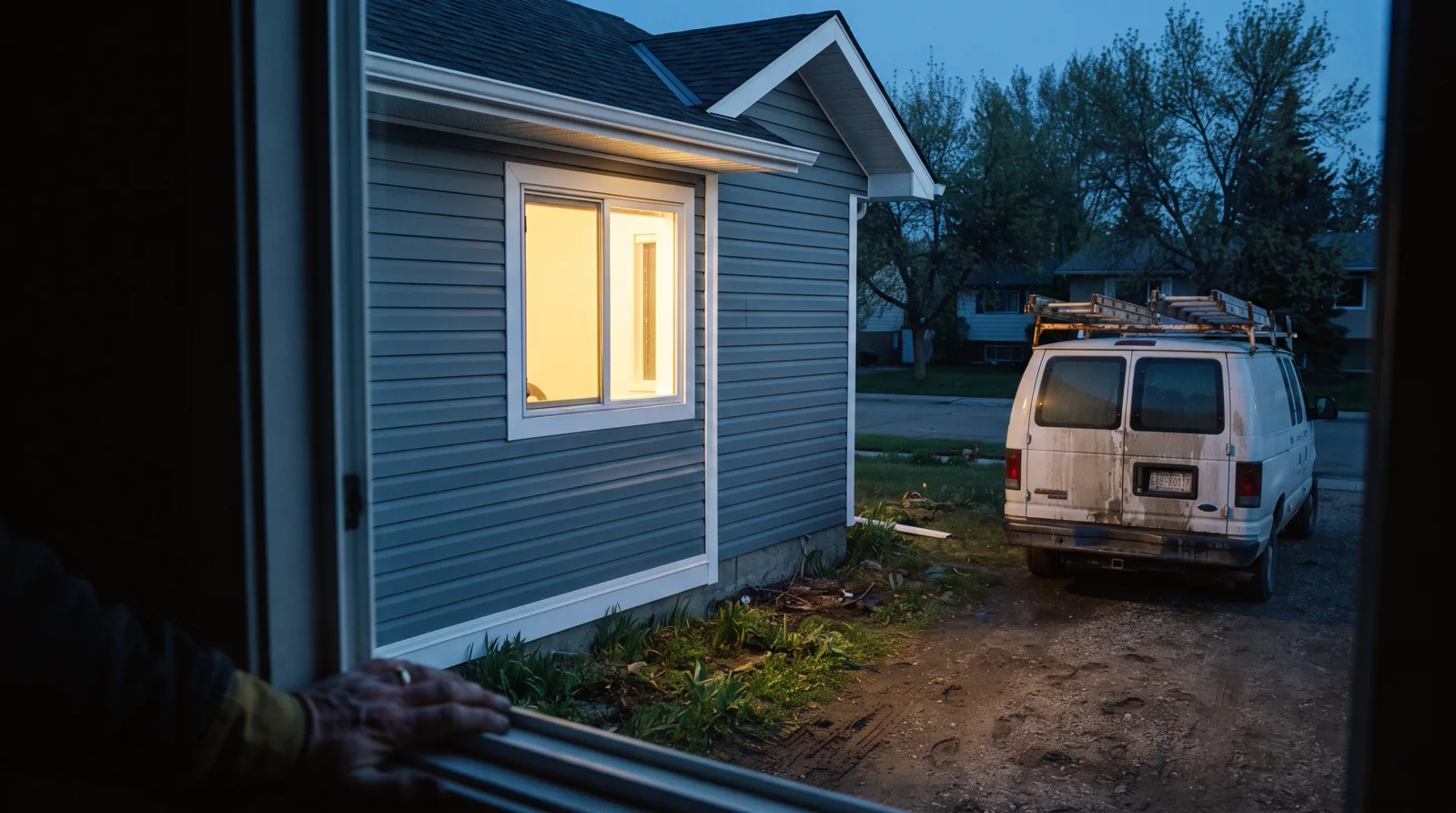
Complete Siding Replacement in Spruce Grove: Tear Off Old, Install New.
We strip your home down to sheathing, inspect for rot or damage, and install new siding built to handle Alberta hail, chinook wind, and freeze-thaw cycles.
Full-Service Siding Replacement
From tear-off to final trim, local pros handle every step so your home is weathertight and looks sharp.
Complete Tear-Off & Disposal
Local pros remove all existing siding, flashing, and trim, load it into bins, and haul it away. Includes disposal fees and job site cleanup. Price depends on home size and layers of old siding.
Sheathing Inspection & Repair
Once old siding is off, we inspect OSB or plywood sheathing for rot, water damage, or woodpecker holes. Local pros replace damaged sections and add house wrap or vapor barrier if missing or torn.
New Siding Installation
Local pros install your choice of vinyl, engineered wood, fibre cement, or metal siding. All materials rated for Alberta wind (130+ km/h) and Class 3 or 4 hail impact. Includes corner posts, J-channel, and trim.
Window & Door Trim Replacement
New vinyl or aluminum trim around all windows and doors, caulked and flashed properly to stop wind-driven rain. Critical step often skipped by cheaper crews, but it prevents interior leaks.
Soffit, Fascia & Eavestrough Coordination
If your soffits or fascia are rotted or dated, local pros replace them at the same time so everything matches. We coordinate with eavestrough installers or do the full job ourselves if you prefer.
Insulation Upgrade (Optional)
While walls are open, we can add rigid foam insulation board or spray foam to boost your R-value. Cuts heating bills in winter and keeps the AC from working overtime in summer. Especially valuable on older homes with minimal wall insulation.
Why Alberta Siding Replacement Is Different
🌨️ Freeze-Thaw & Expansion Gaps
Alberta sees 30°C swings from winter to summer, and vinyl siding expands and contracts. We leave proper expansion gaps at butt joints and trim so panels don't buckle in summer heat or crack in deep frost. Many out-of-province crews nail too tight and the siding warps within a year.
🧊 Deep Frost & Sheathing Moisture
When old siding comes off in January or February, exposed sheathing can frost over. We tarp and heat if needed, and we never install new siding over frozen or wet sheathing. Trapping moisture under new siding leads to mold and rot by spring.
⛈️ Hail Impact & Insurance Claims
Spruce Grove and Stony Plain get severe hail every few years. If you're replacing due to hail damage, we document everything for your insurance adjuster, provide material certifications, and match the new siding style to undamaged sections if you're only doing one elevation. We also suggest Class 4 impact-rated siding so the next storm doesn't crack your investment.
📋 Parkland County & City of Spruce Grove Permits
Full siding replacement usually requires a building permit, especially if you're changing materials or adding insulation. The installer pulls permits in Spruce Grove, Stony Plain, and Parkland County, and schedules the required inspections so your project stays compliant and your insurance stays valid.
What it costs here
Everything You Need to Know About Siding Replacement in Spruce Grove
Material choices, permit realities, timing, and what to watch for when old siding comes off.
What Complete Siding Replacement Actually Involves
Complete siding replacement means removing every piece of existing siding down to the sheathing, inspecting and repairing the substrate, and installing a fully new exterior envelope. This is not a cosmetic facelift. It is a structural upgrade that addresses hidden damage, improves insulation and weather resistance, and resets the service life of your home's primary weather barrier. In Spruce Grove and Parkland County, where temperatures swing from minus 35°C in January to plus 30°C in July and hail storms arrive with little warning, your siding takes a beating that few other climates impose. A complete replacement accounts for all of that stress and builds in the resilience your home needs for the next 25 to 40 years.
The work begins with a careful tear-off. Contractors strip the old siding, trim, and sometimes the housewrap or building paper underneath. This exposes the wall sheathing, which is typically plywood or OSB on homes built in the past 40 years. Once exposed, the sheathing is inspected for rot, water stains, pest damage, or structural defects. In older homes around Stony Plain and Acheson, it is common to find localized rot near windows, j-channels, or lower courses where snow melt and ice damming have driven moisture behind the old siding for years. Any damaged sheathing is cut out and replaced. Any gaps, voids, or thermal bridges are addressed. This is the only opportunity you will have to fix these hidden problems without tearing into your home again.
After sheathing repairs, the crew installs a new weather-resistant barrier. This is typically a modern housewrap rated for Alberta wind and temperature extremes, with all seams taped and penetrations flashed properly. Window and door openings get metal or rubberized flashing to direct water away from vulnerable joints. Then the new siding goes on, whether vinyl, fiber cement, engineered wood, or metal. Each material has its own fastening schedule, expansion gaps, and finishing details, all of which must meet the Alberta Building Code and the manufacturer's installation specs. Shortcuts here, such as overdriven nails, insufficient overlap, or missing j-trim, lead to premature failure. A proper crew will follow every step in sequence, even when the weather is pushing them to hurry.
Why Spruce Grove and Parkland County Homes Face Accelerated Siding Deterioration
Alberta's climate is uniquely harsh on exterior building materials. The freeze-thaw cycle here is relentless. From October through April, daytime temperatures can climb above zero while nights drop back below freezing. This daily expansion and contraction fatigues siding materials, opens seams, cracks caulking, and allows water to infiltrate. Once water gets behind the siding and freezes, it expands with enough force to bow panels, crack fiber cement, or delaminate engineered wood. Vinyl becomes brittle in extreme cold and can shatter on impact. Wood-based products absorb moisture during thaw periods and then contract again when temperatures drop, leading to checking, splitting, and rot over time.
Hail is another major factor. Spruce Grove, Stony Plain, and the surrounding Parkland County region sit in a hail corridor that sees multiple severe storms each summer. Hail the size of golf balls or larger can dent metal siding, crack vinyl, chip fiber cement, and fracture the protective coating on engineered wood. Even smaller hail, repeated over several seasons, creates thousands of micro-impacts that compromise the surface integrity and allow UV and moisture to accelerate aging. Insurance claims for hail damage are common in this area, but many homeowners do not realize that even if their roof is replaced, the siding often suffers comparable damage that goes unaddressed until it begins to fail visibly.
Chinook winds add another layer of stress. These warm, dry winds can arrive in the middle of winter and raise temperatures by 20°C or more in a matter of hours. The rapid temperature change causes materials to expand suddenly, which can pop nails, warp panels, or open gaps in trim. The low humidity that accompanies chinooks also dries out wood-based siding and caulking, making them more prone to cracking. Over the course of a decade, these wind events contribute to cumulative fatigue that is difficult to see but easy to measure in the form of drafts, moisture intrusion, and rising heating bills.
The Real Warning Signs Your Siding Is Failing
Visible Damage and Surface Deterioration
Cracks, warping, and buckling are the most obvious signs. Vinyl siding that has buckled or pulled away from the wall indicates that it was installed too tightly, without room for thermal expansion, or that the substrate has shifted. Fiber cement that shows hairline cracks, especially near fasteners or along the bottom edge, has likely been compromised by freeze-thaw cycling or impact. Engineered wood siding that is swelling, delaminating, or showing soft spots has absorbed water and is actively rotting. These are not cosmetic issues. They are structural failures that will only worsen.
Fading, chalking, and color loss suggest UV degradation. While some fading is normal over 15 to 20 years, severe chalking or color stripping means the protective layer is gone and the substrate is now exposed to moisture and temperature extremes. Paint that is peeling or blistering on wood siding indicates moisture is escaping from inside the wall, which points to a vapor barrier or insulation problem behind the siding. Mold, mildew, or algae growth on north-facing walls or shaded areas shows that moisture is staying on the surface too long, which usually means the siding is no longer shedding water effectively.
Performance Problems You Can Feel Inside
Drafts near baseboards, around windows, or along exterior walls are a clear sign that the building envelope has been breached. Siding is part of that envelope. If it has gaps, cracks, or failed seams, cold air in winter and hot air in summer will move through the wall cavity and into your living space. Higher heating bills, uneven room temperatures, or cold spots on interior walls all point to insulation and air sealing problems that often originate with failed siding.
Ice dams forming on your roof edge or icicles hanging from soffits suggest heat is escaping through the walls and melting snow from below. This is not a roofing problem alone. It is a whole-building envelope problem, and siding that no longer provides a continuous thermal and air barrier is often a major contributor. Water stains on interior ceilings near exterior walls, especially after heavy rain or rapid snow melt, mean water is getting past the siding and into the wall cavity. This is an urgent issue that requires immediate investigation and typically a full siding replacement to address properly.
Age and Material-Specific Failure Patterns
Vinyl siding installed in the 1990s and early 2000s is now reaching the end of its expected 20 to 30 year service life, especially in harsh climates like ours. Older vinyl formulations were less UV stable and more prone to cracking in cold weather. If your siding is over 20 years old and showing any of the signs above, replacement is a better investment than patchwork repairs. Fiber cement siding from the same era may still be structurally sound, but the caulking, trim, and fasteners are likely failing, which allows water intrusion even if the panels themselves look fine.
Wood siding, whether cedar shakes, board and batten, or lap siding, requires regular maintenance to survive in Alberta. If it has not been re-stained or sealed every five to seven years, it is almost certainly rotting from the inside out, even if the surface looks acceptable. Engineered wood products like hardboard or LP SmartSide that were installed before modern moisture-resistant formulations became standard are highly susceptible to water damage and often need replacement well before their advertised lifespan. Metal siding, while durable, can suffer from corrosion at fastener points, panel seams, or anywhere the finish coat has been scratched or dented by hail.
The Complete Replacement Process From Start to Finish
Inspection, Estimate, and Permit
A qualified contractor will begin with a detailed inspection of your existing siding, trim, sheathing visibility (where possible), and overall wall condition. They will note damage, measure the home, and discuss material options, insulation upgrades, and any structural concerns. A proper estimate will include material costs, labor, waste removal, permits, and a realistic timeline. Expect to pay anywhere from $8,000 to $25,000 or more for a typical single-family home in Spruce Grove, depending on size, material choice, and the extent of sheathing repairs required.
Building permits are required in Spruce Grove, Stony Plain, and Parkland County for full siding replacement. The contractor should pull the permit, not the homeowner. The permit ensures that the work will be inspected and that it meets the current Alberta Building Code for weather resistance, fire rating, and structural attachment. Skipping the permit to save money is a false economy. It puts you at risk during resale, it voids most manufacturer warranties, and it leaves you with no recourse if the work is done improperly.
Tear-Off, Sheathing Repair, and Weather Barrier Installation
The crew will set up scaffolding or ladders, protect landscaping and windows, and begin removing the old siding. This is dusty, noisy work that generates significant waste. All old siding, trim, nails, and housewrap go into a disposal bin. Once the walls are bare, the sheathing inspection begins. Any rot, damage, or code violations are flagged and repaired before moving forward. This is the most critical phase. If damaged sheathing is covered over, the new siding will fail prematurely and you will have paid twice for the same job.
After repairs, the crew installs a new weather-resistant barrier, tapes all seams, flashes all penetrations, and ensures a continuous drainage plane. This barrier is what keeps wind-driven rain and snow melt from reaching the sheathing. It must be installed in overlapping courses from bottom to top, with all seams lapped correctly and all fastener holes sealed. Window and door openings get metal or rubberized flashing that extends past the rough opening and integrates with the barrier. This step is invisible once the siding goes on, but it is the foundation of a durable, weather-tight wall.
New Siding Installation, Trim, and Final Inspection
Siding installation begins at the bottom and works upward. Each course overlaps the one below, and fasteners are driven to the manufacturer's exact specifications. Overdriven nails will buckle the siding. Underdriven nails will allow wind uplift. Panels must be free to expand and contract, which means leaving the proper gap at all joints and trim pieces. Corners, windows, doors, and roof lines all get trim that matches the siding material and provides a finished, weathertight appearance. Caulking is applied only where the manufacturer specifies, typically at trim joints and penetrations, never along the bottom edge of horizontal siding where it would trap water.
Once installation is complete, the site is cleaned, all waste is removed, and the work is inspected. If a permit was pulled, the municipal inspector will verify that the installation meets code. The contractor should provide you with all warranty documentation, care and maintenance instructions, and any leftover materials for future repairs. A quality siding replacement, done right, will give you decades of reliable performance, lower energy costs, and a home that can stand up to everything Alberta weather throws at it.
What Complete Siding Replacement Costs in the Tri-Region
A full siding replacement on an average bungalow in Spruce Grove, Stony Plain, or Parkland County typically runs $12,000 to $22,000, while a two-storey home can easily reach $18,000 to $35,000 or more. These ranges reflect tearoff of old material, proper prep work, new housewrap and flashing, mid-grade vinyl or fiber cement siding, and all trim and soffit work. The wide spread exists because every house is different. A simple 1,200 square foot rectangle with minimal corners and standard eaves will land at the low end, while a home with bay windows, multiple gables, stone or brick accents, and complex rooflines pushes costs higher due to labor hours and custom metalwork.
Material choice drives the biggest portion of your budget. Entry-level vinyl siding installed runs roughly $6 to $9 per square foot of wall area, premium insulated vinyl hits $9 to $12, fiber cement ranges $10 to $14, and engineered wood or steel panels can climb to $12 to $18 per square foot. Those prices include removal, prep, installation, and basic trim, but not scaffolding on tall homes, structural repairs discovered during tearoff, or upgrades like stone veneer wainscoting. To calculate wall area, measure the perimeter of your house, multiply by height, and subtract window and door openings. A 1,500 square foot bungalow might have 1,800 to 2,200 square feet of wall depending on how cut up the floor plan is.
Labour accounts for 40 to 60 percent of the total bill in this region, and Alberta's climate adds specific costs that warmer provinces skip. Contractors here install a full weather barrier system, not just housewrap, because freeze-thaw cycling will find every gap. Proper flashing around windows, doors, and roof intersections takes time but prevents ice damming moisture intrusion that rots sheathing in one winter. Two-storey homes or walkouts require scaffolding or lifts, adding $1,500 to $4,000 depending on access and duration. If your old siding is aluminum or contains asbestos-backed shingles common in 1960s and 1970s builds, disposal fees jump because landfills charge more for those materials.
Seasonal timing affects both price and availability. Contractors book solid from May through September, and quotes during peak season often run 10 to 15 percent higher than shoulder months. Siding can be installed in cold weather with proper precautions, but vinyl becomes brittle below minus 10 Celsius and fiber cement requires frost-free conditions for caulking to cure. Many Tri-Region homeowners schedule jobs for late April, early May, or September and October to get better rates and avoid the summer rush. Expect a deposit of 10 to 25 percent to lock your spot, with the balance due on completion after your final walkthrough and satisfaction.
Comparing Your Material and Method Options
Vinyl siding remains the most popular choice in Spruce Grove and Stony Plain because it delivers good looks, reasonable durability, and the lowest installed cost. Standard vinyl profiles rated for Canadian climate handle freeze-thaw cycles without cracking and carry 25 to 40 year fade and performance warranties. Insulated vinyl, which bonds foam backing to the panel, adds R-value of 2 to 3, reduces noise, and resists denting from hail or hockey pucks. The tradeoff is cost, insulated versions run $2 to $4 more per square foot installed, and the energy savings rarely pay back unless you are replacing uninsulated old aluminum or wood. Vinyl requires almost no maintenance but can fade over 15 to 20 years, and darker colors show sun degradation faster than light neutrals.
Fiber cement siding offers superior durability and a premium look that mimics real wood grain or smooth stucco. Brands like James Hardie and Allura are engineered for harsh climates and resist moisture, insects, fire, and impact far better than vinyl. Fiber cement holds paint longer, typically 15 to 25 years before needing a refresh compared to vinyl's permanent color that cannot be changed. The installed cost runs $3 to $6 per square foot higher than vinyl, and the material is heavy, requiring experienced installers and sometimes structural reinforcement on older homes. Fiber cement also demands periodic caulking and paint touch-ups, so it is not maintenance-free, but homeowners who want lasting curb appeal and resale value often choose it despite the upfront premium.
Engineered wood siding and steel or aluminum panels serve niche preferences. Engineered wood products like LP SmartSide combine wood strands with resins and coatings to resist rot and termites while delivering authentic wood texture. They install similarly to fiber cement, cost about the same, and require painting every 10 to 15 years. Steel siding, often seen in acreage builds and modern designs, is nearly indestructible and fireproof but dents on impact, costs as much as fiber cement, and shows scratches. Aluminum is lightweight and rust-resistant but also dents easily and has fallen out of favor since the 1980s. Most Tri-Region contractors stock and recommend vinyl or fiber cement because those two materials cover 90 percent of residential demand and supply chains are reliable.
Installation Methods and Warranty Realities
Proper installation matters more than brand name. Even premium siding fails if nailed too tight, installed without expansion gaps, or applied over rotted sheathing. Quality contractors follow manufacturer specs exactly because that is what keeps the warranty valid. Most siding warranties cover material defects but exclude labor, wind damage, and improper installation, so a lifetime warranty sounds great until you read the fine print and realize it prorates to near zero value after 10 years. A few manufacturers offer labor coverage if installed by certified contractors, which adds peace of mind but rarely changes the real-world outcome because good installers do not produce callbacks.
Ventilated rain screen systems, where the siding is spaced slightly off the wall with vertical strapping, improve moisture management and extend siding life by allowing airflow behind the cladding. This method is standard in coastal British Columbia but still uncommon in Alberta except on high-end custom homes. It adds $1 to $2 per square foot in material and labor but solves condensation issues in tight, well-insulated new builds. Most retrofit replacements in the Tri-Region use direct application over housewrap because the existing sheathing and framing are dimensioned for it, and the drier prairie climate does not demand the same moisture control as a rainforest.
Mistakes and Contractor Traps That Cost Homeowners
Skipping permits is the most common shortcut, and it will haunt you at resale or insurance claim time. Parkland County, Spruce Grove, and Stony Plain all require building permits for full siding replacement because inspectors verify sheathing integrity, fire separation on attached garages, and proper flashing. The permit costs $150 to $400 depending on project value and jurisdiction, and the inspection catches problems before they are buried. Contractors who offer to skip permits to save money are also skipping liability. If a windstorm rips off improperly fastened siding or a house fire spreads due to missing fire-rated material at the garage wall, your insurance can deny the claim because the work was unpermitted. Always insist on a permit, and verify it yourself online or by calling the municipal office.
Choosing the lowest bid without checking credentials is another expensive trap. Siding installation does not require a journeyman ticket in Alberta, so the field attracts unskilled fly-by-night crews who undercut licensed contractors by 20 to 30 percent, then disappear after the deposit clears or after the job is botched. A legitimate contractor carries liability insurance for every worker on site, minimum $2 million liability insurance, and provides both on request without hesitation. If someone says they are a sole proprietor and do not need WCB, that is only true if they work entirely alone with no helpers. The moment a second person shows up, WCB is mandatory. Hiring an uninsured contractor exposes you to injury lawsuits if someone falls off your scaffolding, and those judgments can exceed your home's value.
Paying too much upfront gives bad contractors leverage to walk away or drag the job out for months. A reasonable deposit is 10 to 25 percent to cover material orders, with progress payments tied to completion milestones like tearoff done, housewrap and flashing complete, siding installed, and final trim and cleanup finished. Never pay the final 10 to 20 percent until you have walked the entire house, checked that all trim is caulked, vents are sealed, and no gaps or loose panels exist. Contractors who demand 50 percent or more upfront are either cash-strapped and using your money to finish someone else's job, or they plan to vanish. This is common enough in the Tri-Region that the Better Business Bureau logs dozens of complaints every year, almost all involving large upfront payments and no signed contract.
Failing to address moisture barriers and flashing during the quote stage leads to callbacks and water damage within the first year. Old siding often hides rotted OSB sheathing, missing housewrap, or improperly flashed windows that leaked for years. A thorough contractor will note these as provisional items in the quote, explaining that the real cost depends on what the tearoff reveals, and will photograph and document any rot or structural issues before proceeding. Cheap quotes assume perfect conditions underneath and hit you with change orders once the old siding is off and you have no choice but to pay. Insist that the written quote includes allowances for sheathing replacement at a per-sheet rate and window reflashing at an hourly rate, so you know the worst-case number before signing.
How to Hire the Right Siding Contractor
Start by asking for proof of WCB and liability insurance, and verify both directly with the issuing agencies. WCB clearance letters are public record in Alberta and can be confirmed online or by phone in minutes. Liability insurance certificates should name you as an additional insured for the project duration, which costs the contractor nothing but proves the policy is active. Walk away from anyone who hesitates, offers excuses, or provides documents that look altered. This single step eliminates most problem contractors because the fly-by-night operators do not carry proper coverage and will not risk you checking.
Ask for a minimum of three references from jobs completed in the last two years, and actually call them. Do not settle for names and numbers written on a scrap of paper. A good contractor will provide addresses so you can drive by and see the finished work. Ask those references how the job went, whether the crew cleaned up daily, if the final price matched the quote, and whether any callbacks were needed. Pay attention to how the contractor responds when something went wrong, because problems happen on every build. A pro who owns mistakes and fixes them quickly is worth more than one who ghosts you after collecting the check. If the contractor is new to the area or cannot provide local references, that is a red flag in a region where word of mouth drives most business.
Get everything in writing: scope of work, materials by brand and grade, start and completion dates, payment schedule, and warranty terms. Verbal promises mean nothing when a dispute arises. The contract should specify exactly what gets removed, what surface prep is included, whether window and door trim is replaced or wrapped, and who handles permit applications and inspections. It should also state how changes and unforeseen conditions are handled, ideally requiring written change orders with costs agreed before the work proceeds. Avoid contracts with vague language like 'repair as needed' or 'industry standard materials' because those phrases let the contractor substitute cheaper products or charge surprise fees later.
Plan for a realistic timeline and build in weather contingency. A typical bungalow siding replacement takes five to eight working days with a three to four person crew, while a two-storey home can stretch to two weeks depending on complexity. Spring and fall weather in Alberta is unpredictable, and rain or high wind can halt progress for safety. A contractor who promises to finish your two-storey house in three days is either running multiple jobs simultaneously and will leave yours half-done for weeks, or cutting corners you will pay for later. Expect some noise, dust, and disruption, and arrange to be home or have a trusted representative available for questions during tearoff, because that is when hidden issues surface and decisions need to be made quickly.
How Tri-Region Services Helps
Tri-Region Services connects you with one pre-vetted, fully insured local siding contractor who serves Spruce Grove, Stony Plain, Parkland County, and Acheson. They have told us about their liability insurance, liability insurance, references, and work quality, so you skip the vetting process and get straight to a free written quote. The contractor will visit your property, assess the existing siding and underlying structure, and provide a detailed estimate with material options, timeline, and payment terms. There is no obligation, no pressure, and no runaround. You get one solid option from a pro we trust, and you decide whether the fit and price work for your project.
Why Homeowners Trust Our Siding Replacement Service
We connect you with licensed, insured contractors who do the job right the first time.
Insurance on file
Every siding crew we connect you with carries so you're not liable if someone falls off scaffolding.
Permits Pulled & Inspections Passed
Local pros handle building permits in Spruce Grove, Stony Plain, and Parkland County, and we book inspections so the work is code-compliant and insurable.
Manufacturer-Certified Installers
Many siding warranties require certified installation. Our contractors hold certifications from major brands like James Hardie, Royal, and Gentek.
Material & Labor Warranty
Manufacturer warranties cover materials (often 25 to 50 years), and contractor labor warranties cover installation defects for 5 to 10 years. We give you both in writing.
Clear Written Quotes
Every quote breaks out tear-off, disposal, sheathing repair, siding, trim, and optional upgrades. No surprise charges, no vague line items.
Photo Documentation
We photograph sheathing condition after tear-off, any rot or damage found, and the finished install. Critical for insurance claims and your own peace of mind.
This page is not tied to a contractor's brand. Leads route straight to your one local partner. Verified reviews can appear here once that partner has them (never fabricated).
Serving the whole Tri-Region
8 Questions About Siding Replacement in Spruce Grove
Can I replace siding in winter in Alberta?+
How long does a full siding replacement take?+
Do I need a building permit for siding replacement in Spruce Grove?+
What siding material is best for Alberta hail and wind?+
How much does it cost to replace siding on a 1,500 sq ft house?+
Will new siding improve my home's energy efficiency?+
What happens if they find rot or mold under my old siding?+
Can I get insurance to pay for siding replacement?+
Get your free quote
Tell us what you need and a local pro will get right back to you.
- ✓ Sent straight to a local business
- ✓ You choose who you hire
- ✓ Free, with no obligation