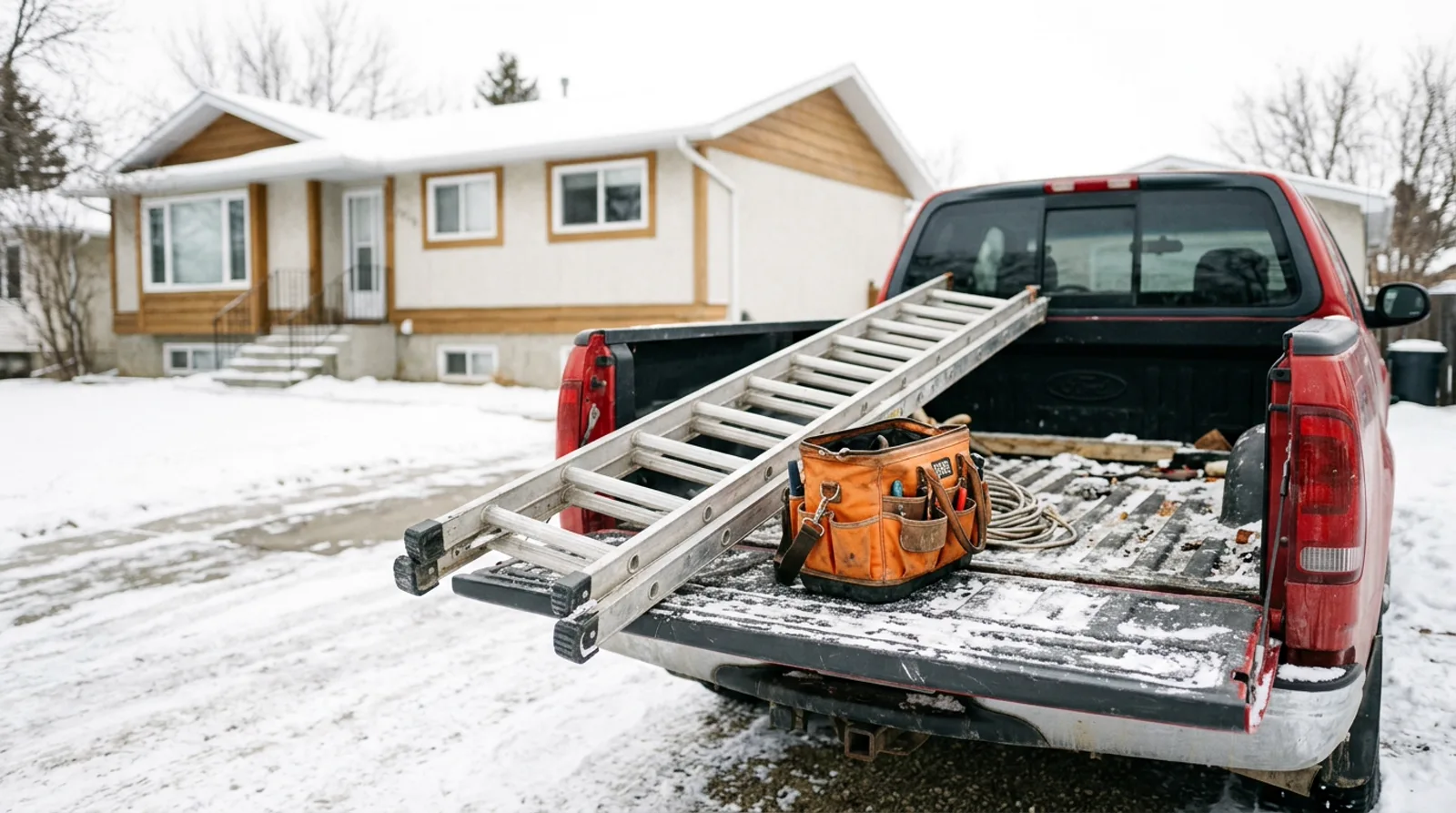
Smoke Detector Installation Code Compliant & Interconnected.
Hardwired smoke and carbon monoxide detectors installed to 2019 Alberta Building Code, with interconnection so every alarm sounds when one triggers.
Complete Detector Installation & Replacement
New construction, retrofit hardwiring, and code upgrades for existing homes across the Tri-Region.
Hardwired Smoke Detector Installation
Install new 120V hardwired photoelectric smoke detectors with battery backup, wired into your home's electrical system. Includes drilling through drywall, running cable through attic or basement, connecting to breaker panel, and testing interconnection. Every bedroom, hallway outside sleeping areas, and every level including basement.
Carbon Monoxide Detector Installation
Hardwired CO detectors required within five metres of every bedroom if you have gas furnace, hot water tank, fireplace, or attached garage. Local pros install combination smoke and CO units or dedicated CO detectors, wire to panel, interconnect with existing smoke alarms, and verify proper placement per Alberta code.
Older Home Retrofit & Code Upgrade
Upgrade battery-only detectors or outdated ionization units to current hardwired interconnected photoelectric systems. We run new 14/3 cable through finished spaces using minimal patching, add circuits if your panel has capacity, interconnect all units, and bring your home to 2019 code for resale or safety permit compliance.
New Construction Rough-In & Finishing
Coordinate with your builder or renovation team to rough in detector boxes and cabling during framing, then return to install and test detectors after drywall and painting. Includes code-compliant spacing, interconnection wiring, and ESA inspection coordination if part of larger electrical permit.
Detector Replacement (Existing Wiring)
Replace chirping, expired, or failed detectors using your existing hardwired connections. We verify wiring integrity, check interconnection function, install new photoelectric units with 10-year sensors, test battery backup, and confirm all detectors communicate properly across floors.
System Testing & Troubleshooting
Diagnose interconnection failures, phantom alarms, or chirping issues. We test voltage, check interconnect traveler wires, verify neutral connections, replace defective units, and ensure every detector on the circuit sounds when any single unit is triggered. Includes written compliance notes for real estate transactions.
Spruce Grove Climate & Detector Realities
❄️ Cold Attic Access in January
Routing cable through unheated attics when it is minus 28 outside requires planning and speed. We schedule attic work during warmer windows and use insulated access techniques to minimize heat loss and frozen finger delays, especially in older Spruce Grove bungalows with shallow truss access.
🏡 Parkland County Acreage Detector Placement
Rural properties with wood stoves, detached heated garages, or shop furnaces need careful CO detector placement and sometimes additional hardwired units beyond minimum code. We assess combustion appliance locations and recommend practical coverage that reflects how you actually use outbuildings and secondary heat sources.
🛠️ Stony Plain Resale Compliance Reality
Real estate lawyers and home inspectors in Stony Plain flag outdated ionization detectors and missing bedroom-level coverage before possession. We provide same-week service to upgrade systems during your condition window, with written confirmation that detectors meet 2019 Alberta Building Code for your lawyer's file.
🏘️ Newer Subdivision Panel Capacity
Many Spruce Grove homes built after 2015 have 200-amp panels with room for detector circuits, but older Westgate or Grove Park homes may need creative circuit sharing or subpanel work. We assess your panel before quoting and explain options if you are already at breaker capacity during a full upgrade.
What it costs here
Everything About Hardwired Smoke Detectors in Alberta
Code requirements, detector types, interconnection rules, placement logic, and resale realities for Tri-Region homeowners.
How Hardwired Smoke Detector Installation Actually Works in Spruce Grove Homes
Hardwired smoke detector installation means connecting detection devices directly to your home's 120-volt electrical system, with battery backup units for power outages. In Spruce Grove and throughout Parkland County, this work requires a licensed electrician because you're working inside live electrical panels and running cable through wall cavities, attics, and between floors. The process involves much more than screwing a unit to the ceiling. Your electrician opens your electrical panel to install a dedicated circuit breaker (typically 15 amp), runs 14/2 or 14/3 NMD90 cable through your home's structure to each detector location, mounts electrical boxes at code-specified heights and locations, and interconnects all devices so they trigger simultaneously when one detects smoke or carbon monoxide.
The interconnection element is critical and often misunderstood by homeowners shopping for this service. Alberta Building Code requires that all smoke alarms in a dwelling unit be interconnected, meaning when one alarm sounds, every alarm in the home activates. This gives occupants in remote bedrooms or basement areas immediate warning of danger detected anywhere in the house. Modern installations use three-wire cable (14/3) where the red conductor carries the interconnect signal between devices. Older homes being retrofitted may require extensive fishing of cables through finished walls, which takes skill to minimize drywall damage. In new construction or major renovations, the electrician installs these circuits before drywall goes up, making the job significantly faster and cleaner.
Carbon monoxide detector integration adds another layer to the installation process. While smoke detectors respond to particulate matter from combustion, CO detectors measure invisible, odorless carbon monoxide gas that results from incomplete combustion in furnaces, water heaters, fireplaces, and attached garages. Alberta code requires CO alarms in homes with fuel-burning appliances or attached garages, which includes virtually every Spruce Grove property. Many electricians now install combination smoke and CO detectors to simplify the system and reduce the number of devices on your ceilings. These dual-sensor units cost more per device (typically $60 to $140 per unit depending on features) but they streamline installation labour and future battery replacement routines for homeowners.
Why Alberta Climate and Building Practices Make Professional Installation Essential
Spruce Grove's temperature extremes create unique challenges for smoke detector reliability that battery-only units struggle to handle. When January temperatures drop to minus 30 Celsius or colder, attics in older homes can see temperatures approaching minus 20 even with insulation. Extreme cold degrades alkaline batteries rapidly, reducing their effective lifespan by 40 to 60 percent compared to room temperature performance. Homeowners who rely solely on battery-powered detectors often experience nuisance low-battery chirping during cold snaps, and worse, may have non-functional devices during the heating season when fire risk peaks. Hardwired detectors with battery backup solve this problem because they draw primary power from household electrical circuits, using batteries only during power failures when the home's heating system also shuts down and interior temperatures remain stable longer.
The freeze-thaw cycles common in Parkland County from chinook winds and spring conditions affect building structures in ways that impact detector placement and wiring routes. As homes expand and contract with temperature swings, improperly secured junction boxes can shift, cables can experience stress at connection points, and poorly installed devices may separate from mounting plates. A qualified Spruce Grove electrician accounts for these movements by using appropriate cable stapling intervals (within 300mm of boxes and every 1.5 meters along runs per code), securing boxes firmly to structural members rather than just drywall, and leaving appropriate service loops at connection points. These details seem minor but they prevent intermittent connection problems that plague amateur installations after a few seasonal cycles.
Snow load on roofs and ice damming along eaves create moisture infiltration risks that can damage electrical components in attics and upper-floor locations. Spruce Grove sees significant snow accumulation most winters, and spring melts combined with inadequate attic ventilation can introduce moisture into spaces where detector cables run. Professional electricians route cables away from potential moisture paths, ensure cables entering attic spaces have proper protection, and verify that detector locations avoid areas prone to condensation. They also recognize that attics in this climate need proper vapour barrier integrity, and they take care not to compromise these barriers when fishing cables, because moisture in wall cavities leads to mold growth and deteriorated wire insulation over time. Insurance adjusters reviewing fire claims absolutely examine whether electrical work was done to code, and amateur installations void coverage in many policies.
Clear Warning Signs That Your Smoke Detection System Needs Professional Attention
Frequent false alarms, especially during cooking or showering, signal that your detectors are either positioned incorrectly or have reached the end of their service life. Smoke detectors contain radioactive americium-241 (in ionization types) or infrared sensors (in photoelectric types) that degrade over time, becoming hypersensitive to normal household particulates. Most manufacturers specify a 10-year replacement interval, and after that point, false alarm rates increase significantly. If your Spruce Grove home has detectors installed before 2015, replacement is overdue. The incorrect placement issue is equally common, particularly in renovated homes where previous owners or handymen installed battery units without understanding code requirements. Detectors placed too close to kitchens (within 6 meters without a door), bathrooms (within 3 meters), or forced-air registers experience nuisance alarms that train occupants to ignore or disable devices, creating obvious danger.
Chirping that persists after battery replacement indicates either a failing detector unit or, more seriously, a wiring problem in hardwired systems. In properly functioning hardwired detectors, the backup battery should last 12 to 18 months under normal conditions. If you're replacing batteries every few months, the unit isn't receiving consistent AC power, which points to a loose connection at the device, a problem in the interconnect wiring, or a tripped breaker that wasn't fully reset. Some homeowners in older Stony Plain and Spruce Grove neighbourhoods discover that their "hardwired" detectors aren't actually connected to power at all, with previous owners having installed hardwire-style units but only relying on battery power. A licensed electrician can trace the circuit, verify connections at the panel, and test that each device receives proper voltage (should read between 110 and 125 volts AC). Intermittent power delivery is particularly dangerous because homeowners assume the system is monitored when it's actually running on depleting batteries.
Visible absence of detectors in required locations is surprisingly common in Spruce Grove homes built before Alberta adopted current code requirements or in homes where renovations created new bedrooms without corresponding detector upgrades. Current code requires smoke alarms outside each sleeping area (in hallways serving bedrooms), inside each bedroom, and on every storey of the home including basements. Carbon monoxide detectors must be installed outside sleeping areas in homes with fuel-burning appliances or attached garages. Many older homes have only one or two detectors total, usually in hallways, leaving bedrooms and basements unprotected. If you count fewer than four detectors in a typical two-storey three-bedroom Spruce Grove home, you're not meeting code. When selling a home, this deficiency will appear on the Real Property Report inspection, and buyers will require correction before possession. More importantly, insurance companies can deny claims for fires that originate in areas that lacked required detection, particularly if injuries or fatalities occur.
Testing Failures That Require Immediate Professional Service
Monthly testing (pushing the test button for 3 to 5 seconds) should produce a loud alarm from the device you're testing and from every interconnected detector throughout your home within two seconds. If any detector fails to sound, or if the interconnection doesn't trigger all devices, you have a wiring fault that needs immediate attention. This interconnection failure is extremely dangerous because occupants in remote areas of the home won't receive early warning of fires detected elsewhere. In Spruce Grove's larger two-storey homes, a basement fire detected by a lower-level alarm needs to wake sleeping occupants upstairs, and interconnection makes this possible. Testing also reveals weak alarm volumes, which indicate speaker failures in aging units.
The test button only verifies the horn and basic circuit functionality, but it doesn't confirm that sensors are actually detecting smoke or carbon monoxide. Professional electricians use canned smoke aerosol or carbon monoxide test gas to verify sensor response, checking that devices alarm within the required 4-minute window for smoke and 15-minute window for CO at specific concentrations. Many homeowners discover during these functional tests that their 8 or 10-year-old detectors have completely failed sensors even though the test button still triggers the horn. This is why replacement at 10-year intervals is mandatory regardless of apparent function. Every detector manufactured after 2015 has a manufacture date printed on the back, and electricians check these dates during service calls to identify units needing replacement based on age alone.
The Complete Professional Installation Process From First Call to Final Testing
Your smoke detector installation project begins with a phone consultation or on-site assessment where a licensed Spruce Grove electrician walks through your home identifying required detector locations based on your specific floor plan, sleeping areas, fuel-burning appliances, and attached garage configuration. This assessment typically takes 20 to 30 minutes and results in a detailed quote covering the number of devices needed, cable runs required, panel work, and total labour. For a typical three-bedroom two-storey home in Spruce Grove, expect quotes ranging from $800 to $1,600 depending on whether you're adding devices to an existing system (simpler) or installing a completely new interconnected system requiring new circuit breaker and extensive cable fishing through finished walls (more complex). The electrician notes your panel's available capacity, confirms you have space for an additional breaker if needed, and identifies the most practical cable routes that minimize drywall repairs.
Installation day starts with the electrician shutting off power to work areas and removing any existing detectors that will be replaced. They install a new 15-amp breaker in your panel (or verify an existing smoke detector circuit meets current code), then begin running 14/2 or 14/3 cable from the panel to the first detector location. In homes with accessible attics and basements, cable runs go relatively quickly, typically 45 minutes to 90 minutes per device including drilling through top plates and fishing into wall cavities. In homes with finished ceilings throughout or complex layouts, each device location might take 2 to 3 hours as the electrician carefully fishes cable horizontally through walls, using specialized tools to minimize drywall damage. They drill precise holes for old-work electrical boxes (typically round pancake boxes rated for ceiling mounting), secure cables with appropriate staples and clamps, and leave 8 to 10 inches of cable extending from each box for connections.
Once all cable runs are complete, the electrician mounts the electrical boxes firmly to ceiling joists or blocking (never just to drywall, which won't support the weight and vibration of alarms), strips and connects wires to each detector following the manufacturer's specifications, and installs the mounting plates. Most modern interconnected detectors use quick-connect harnesses with colour-coded wires: black for hot (120V), white for neutral, red for interconnect signal, and green or bare copper for ground. The electrician verifies each connection is tight, tucks wires neatly into boxes, and secures detector bases to mounting plates. They then install backup batteries in each unit (even though hardwired, code requires battery backup), restore power at the panel, and test each device individually to verify it receives power (most have a green or red LED that illuminates when powered).
- Individual device testing using the test button to confirm horn function and proper power connection at each location
- Interconnection testing where the electrician triggers one detector and verifies every device in the system alarms simultaneously within 2 seconds
- Voltage testing at multiple devices to confirm each receives between 110 and 125 volts AC from the circuit
- Functional sensor testing using smoke aerosol or CO test gas to verify sensors respond to actual target gases, not just electrical signals
- Documentation recording installation date, device model numbers, and manufacture dates for your maintenance records
Final Steps and Homeowner Handoff
After successful testing, the electrician patches any drywall holes created during cable fishing, though cosmetic finishing (mudding, sanding, painting) is typically your responsibility unless you've arranged for the electrician to provide finished repairs at additional cost. They update your electrical panel directory to clearly label the new smoke detector circuit, and they review the system operation with you, demonstrating how to test devices monthly, when batteries need replacement (typically annually), and the importance of the 10-year replacement schedule. Many Spruce Grove electricians photograph the panel label and detector locations, emailing you a record for insurance purposes, because some insurance companies offer premium discounts for verified hardwired interconnected systems installed by licensed professionals.
You'll receive documentation that may be required for building permits (installations in new bedroom spaces created by renovations require permits in Parkland County), real estate transactions, or insurance verification. This documentation should include the electrician's license number, a description of work performed, confirmation that installation meets Alberta Building Code and Alberta Fire Code requirements, and verification that all devices are CSA or ULC certified for Canadian use. Keep this documentation with your home's permanent records because future buyers, insurance adjusters, or permit inspectors may request proof of compliant installation. The electrician should also provide warranty information on the devices installed and confirm their own labour warranty, typically 12 months for workmanship on standard installations.
What Smoke Detector Installation Really Costs in Spruce Grove, Stony Plain and Parkland County
A complete hardwired smoke and carbon monoxide detector installation for a typical two-storey home in the Tri-Region runs between $850 and $2,200 in 2025, depending on how many devices you need, the complexity of running new wire, and whether your electrical panel requires any upgrade work. That range reflects what licensed electricians actually quote for full code-compliant systems, not the cost of battery units you pick up at a hardware store. If you already have some hardwired detectors and only need to replace aging units or add a few to meet updated requirements, you might see quotes closer to $400 to $900 for straightforward swap-outs where the wiring and junction boxes already exist. Rural properties in Parkland County with older wiring, longer circuit runs or difficult attic access often land at the higher end because labour hours climb quickly.
The price difference comes down to three main drivers: the number of detectors required by code for your specific floor plan, whether existing wiring can be reused or new circuits must be installed, and the type of devices you choose. Alberta's 2019 building code requires interconnected smoke alarms on every storey and outside every sleeping area, plus carbon monoxide detectors outside sleeping areas and near attached garages or fuel-burning appliances. A modest bungalow might need five or six devices total, while a two-storey with a basement and bonus room might need eight to ten. Each additional device adds roughly $80 to $150 in material and labour when installed as part of a complete system. If your home was built before interconnected detectors became mandatory, running new 14-3 cable through finished walls and ceilings becomes the biggest labour expense, sometimes doubling installation time compared to new construction work.
Material choices also shift the final number. Basic ionization smoke alarms with combination CO sensors start around $35 per unit for contractor-grade models, while photoelectric or dual-sensor alarms with ten-year sealed lithium backup batteries run $55 to $85 each. Smart interconnected detectors that send alerts to your phone and integrate with home automation systems cost $120 to $180 per device. Most electricians in Spruce Grove and Stony Plainstock mid-range Kidde or First Alert commercial-grade units that balance reliability and cost, but if you want premium brands or smart features, expect material costs to rise by $200 to $600 for a whole-house system. Labour rates in the Tri-Region currently sit between $90 and $130 per hour for licensed residential electricians, and a typical installation takes three to six hours depending on whether walls need opening or attic crawling is required.
Hidden Costs and Add-Ons That Change the Quote
Several factors can push your quote above the baseline range, and reputable electricians will identify these during the site visit. If your electrical panel is already at capacity, adding a new circuit for interconnected detectors may require a sub-panel installation, adding $600 to $1,400 to the project. Homes built in the 1970s or 1980s often have panels with no spare breaker slots, and code requires a dedicated circuit or at least proper load balancing for life-safety devices. Asbestos-wrapped wiring in older Spruce Grove bungalows sometimes gets discovered when electricians open walls, and any work near that material requires a certified abatement contractor, which can add $800 to $2,500 depending on scope. Most electricians will stop work immediately if they encounter vermiculite insulation or wrapped pipe, and rightly so.
Ceiling height and construction type also matter more than homeowners expect. Vaulted ceilings or great rooms with exposed beams in Parkland County acreages require ladder work and sometimes scissor lifts, adding $150 to $400 in equipment and time. If your home has spray foam insulation in the attic, running new wire becomes significantly harder because you cannot simply push cable through loose fill; electricians may need to fish wire through tight spaces or use surface-mounted conduit in finished areas, adding hours to the job. Some quotes include drywall patching and paint touch-up as part of the service, while others assume you will handle finishing work yourself, so clarify that before you sign. Expect to add $200 to $500 if you want the electrician to patch, tape, sand and prime any access holes, though most leave that to drywall specialists.
Comparing Your Installation Options: Full Hardwired, Retrofit Wireless and Hybrid Systems
Homeowners in the Tri-Region face three main approaches to meeting current code: a complete hardwired interconnected system with battery backup, a retrofit wireless interconnected system that uses existing power but adds radio frequency links, or a hybrid approach that combines hardwired detectors in new areas with wireless bridges to existing units. Each method has real trade-offs in cost, reliability and long-term maintenance. True hardwired systems with 14-3 cable connecting every detector remain the gold standard for new construction and major renovations because they are the most reliable and require the least ongoing attention. When one detector senses smoke or carbon monoxide, it triggers every other unit in the house simultaneously through the physical wire connection, and even if the wireless spectrum gets crowded or a battery dies, the system still functions. Installation costs more upfront because of the wiring labour, but you gain a system that can last 20 years with only periodic detector replacements.
Retrofit wireless systems use AC-powered detectors with built-in radio transceivers that communicate without running new wire between units. You still need electrical power at each location, but if you already have hardwired detectors or accessible outlets, you avoid the cost and disruption of fishing cable through finished walls. These systems work well in older Stony Plain homes where opening walls would damage plaster or heritage finishes, and installation usually takes half the time of a full hardwired job, bringing costs down to $600 to $1,200 for a typical home. The trade-off is that you are depending on radio frequency communication, which can occasionally fail if units are too far apart, if metal ductwork creates interference, or if batteries in one unit die and break the chain. Most modern systems have strong signals and low failure rates, but you cannot fully eliminate the wireless variable the way you can with direct wire connections.
Hybrid systems make sense when you are adding square footage or finishing a basement and want to tie new detectors into an existing hardwired network without rewiring the entire house. You install hardwired units in the new spaces, then add a wireless bridge module that connects the new wired group to the old wired group via radio signal. This approach costs $700 to $1,500 depending on how many new detectors you add, and it meets code because all devices still sound together when any one triggers. The complexity comes during troubleshooting: if an alarm sounds at 2 a.m. and you need to identify the source, you are dealing with two separate wired clusters linked by a wireless bridge, which can make pinpointing the triggering device harder than in a pure hardwired system. Electricians in Parkland County use this method often for acreage homes with additions built over decades, where rewiring the original structure would mean opening walls in multiple finished rooms.
- Full hardwired: highest upfront cost, lowest maintenance, most reliable, ideal for renovations where walls are already open
- Retrofit wireless: moderate cost, faster installation, small ongoing battery concern, good for heritage homes or minimal-disruption jobs
- Hybrid systems: medium cost, balances new and old, adds complexity for troubleshooting but avoids full rewire in mixed-age homes
Photoelectric vs. Ionization: Which Sensor Technology Works Better in Alberta Homes
The sensor type inside your smoke detector affects how quickly it responds to different kinds of fires, and this matters more in Alberta homes than many electricians acknowledge. Ionization detectors use a small radioactive source to detect fast-flaming fires like paper or grease blazes; they are slightly faster at catching those events but more prone to nuisance alarms from cooking smoke or shower steam, which is why so many Spruce Grove homeowners disable them after too many false trips. Photoelectric detectors use a light beam and sensor to detect smoldering fires like upholstery or electrical shorts; they are slower on open flames but far less sensitive to everyday household activities, which means they stay in service instead of getting disconnected in frustration. Current fire safety research favours photoelectric sensors for residential use because most fatal home fires start as slow smolders that produce heavy smoke long before flames appear, giving occupants more escape time if the detector actually stays enabled and working.
Dual-sensor detectors combine both technologies in one unit and cost only $10 to $20 more than single-sensor models, making them the practical choice for most installations in Stony Plain and Parkland County. You get faster response across a wider range of fire types without the nuisance alarm problem that plagues ionization-only units near kitchens. Some electricians still install ionization models because they cost less and meet code, but if you are paying for a full system replacement, spending an extra $80 to $150 for dual-sensor units across the whole house makes sense for both safety and livability. Carbon monoxide detectors are separate devices with electrochemical sensors, though many manufacturers now build combination smoke and CO units that simplify installation and reduce the number of devices on your ceilings. Combination units work well near furnace rooms, attached garages and sleeping areas where both hazards exist, while standalone smoke detectors go in hallways and upper floors.
Mistakes and Contractor Traps That Cost Homeowners Money and Safety
The biggest mistake homeowners make is hiring an unlicensed handyman or general contractor to install smoke detectors instead of a certified electrician, usually to save $200 or $300 on labour. Smoke and CO detector installation is restricted electrical work in Alberta, meaning only someone holding a valid journeyman or master electrician ticket can legally perform it, and your insurance policy may deny a fire claim if an inspector determines the system was installed by someone without credentials. Beyond the legal and insurance risk, unlicensed installers often miss code requirements like proper interconnection wiring, correct placement relative to ceiling fans or HVAC vents, or the need for specific devices near fuel-burning appliances. An improperly placed detector might not trigger in time during an actual emergency, or it might false-alarm so often that residents disable it, which defeats the entire purpose. Spending a few hundred dollars more to hire a licensed professional in Spruce Grove means the work gets inspected if required, your insurance stays valid, and the system actually functions as designed.
Another common trap is accepting a quote that does not include code compliance verification or a written layout plan. Some electricians will install exactly what you ask for without confirming that your request actually meets the 2019 Alberta Building Code, leaving you with a system that fails inspection during a future sale or renovation permit. A proper quote should identify how many detectors you need, where they must be located by code, what type of interconnection is required, and whether your panel has capacity for the additional load. If a contractor shows up and starts drilling holes without walking through the home and sketching a plan, you are likely getting a below-standard installation. Reputable electricians in Stony Plain will spend 20 to 30 minutes on the initial visit mapping detector locations, checking attic access, and identifying potential wiring challenges before they quote, because they know that rushing this step leads to mid-job surprises and cost overruns.
Homeowners also underestimate the importance of proper device placement and sometimes insist on locations that look better but function poorly. Code requires smoke detectors within a specific distance of bedroom doors and away from dead air spaces in corners or near vaulted peaks where smoke might not reach. Detectors placed too close to bathroom doors or kitchen entrances will false-alarm constantly, while units tucked into decorative ceiling trays or behind light fixtures might not catch smoke quickly enough. Carbon monoxide detectors need to be near sleeping areas but not directly beside fuel-burning appliances where they might trigger from normal startup emissions. A good electrician will push back if you request placements that look cleaner but compromise safety, and you should listen to that advice even if it means a detector ends up somewhere more visible than you would prefer. The goal is a system that actually saves lives during an emergency, not one that blends perfectly into your decor.
The Permit Question and When Inspections Actually Matter
Smoke detector installation typically does not require a standalone electrical permit in Spruce Grove, Stony Plain or Parkland County when you are replacing existing hardwired units or adding devices to an existing code-compliant system. However, if you are running new circuits, adding a sub-panel, or doing the work as part of a larger renovation that already has an open permit, the electrical inspector will verify that your smoke and CO detectors meet current code during the final inspection. Some homeowners skip permits entirely to avoid inspection fees and timelines, but that becomes a serious problem when you sell the home and the buyer's inspector or the real estate lawyer asks for proof that electrical work was permitted and completed by a licensed professional. You cannot retroactively permit work that was done months or years earlier without significant hassle and potential re-work.
When a permit is pulled for related work, inspectors check that detectors are interconnected correctly, that they are the right type for each location, that spacing and placement follow code, and that your panel can handle the load. They also verify that combination units are used near attached garages and that bedroom-level detectors have the required battery backup even in hardwired systems. If your electrician suggests skipping a permit when one is clearly required, that is a red flag that they may cut other corners as well. Licensed electricians in the Tri-Region know exactly when permits are mandatory and will include that cost and timeline in their quote upfront, while unlicensed operators will avoid the topic entirely because they cannot legally pull permits in the first place.
Warranty and Service Realities You Need to Understand
Most smoke and carbon monoxide detectors carry a five to ten year manufacturer warranty, but that warranty only covers defects in the device itself, not installation labour or damage caused by improper wiring. If a newly installed detector fails after three years, you will get a free replacement unit, but you still pay the electrician's service call and labour to swap it out unless your original installation contract included a labour warranty. Some Spruce Grove electricians offer a one or two year labour warranty on new installations, meaning they will return and fix any wiring issues or replace failed devices at no charge during that window. That warranty has real value, especially in complex installations where interconnection problems might not surface immediately. Always ask what is covered and for how long before you hire, and get the answer in writing as part of your contract.
Battery backup adds another maintenance layer that homeowners often ignore until the low-battery chirp starts at 3 a.m. Hardwired detectors with replaceable 9-volt batteries need fresh batteries every year or two, while units with sealed ten-year lithium batteries need complete replacement at the end of their service life. Some modern interconnected systems will alert you through a smartphone app when a battery is low or a device has reached end of life, which is a significant advantage over older models that only chirp locally. When you are comparing quotes, ask whether the proposed devices have replaceable or sealed batteries, what the expected service life is, and whether the electrician offers a discounted maintenance visit program for future battery swaps or device testing. A system that saves you $150 upfront but requires you to call an electrician every 18 months for battery service might cost more over a decade than a pricier system with sealed batteries and longer replacement intervals.
How to Hire the Right Electrician for Your Smoke Detector Installation
Start by confirming that any electrician you consider holds a valid Alberta journeyman or master electrician certification, not just a business license or trade name registration. You can verify credentials through the Alberta Apprenticeship and Industry Training system, though most reputable electricians will show you their ticket or include their certification number on their quote without being asked. Also confirm they carry liability insurance of at least two million dollars, because smoke detector work involves attic access, ladder work and potential damage to finishes if something goes wrong. If a worker falls through your ceiling or damages your electrical panel and the company has no insurance, you are personally liable for medical costs and repairs. Legitimate contractors in Spruce Grove and Stony Plain expect these questions and will provide proof immediately; anyone who hesitates or changes the subject is hiding a credential gap.
Get at least two written quotes that break down material and labour separately and specify exactly which devices will be installed, how many, and where. A good quote will include device model numbers or at least clear descriptions like 'photoelectric smoke alarm with sealed ten-year battery and wireless interconnect capability' rather than vague terms like 'code-compliant smoke detectors.' The quote should also state whether drywall patching, attic insulation moving, or panel work is included or priced separately. Compare not just the total price but the scope: a $900 quote that includes eight dual-sensor combination units with smart alerts is better value than a $750 quote for six basic ionization alarms with no CO protection and no interconnection. Ask each electrician how they plan to run wire in your specific home, whether they foresee any access challenges, and how long they expect the job to take. Contractors who give detailed answers based on what they saw during the site visit are far more reliable than those who quote over the phone based on square footage alone.
Check references and online reviews, but focus on comments about code compliance, cleanup and whether the electrician explained the system operation after installation. A truly professional installation includes a brief walkthrough where the electrician tests the interconnection by triggering one detector and confirming all others sound, shows you where the circuit breaker is located, and explains how to test devices monthly and when to expect battery or device replacement. If previous customers mention that the electrician left a mess, damaged finishes without repairing them, or disappeared when a device failed under warranty, move on to the next candidate. Parkland County properties and older Spruce Grove homes often present unexpected challenges like knob-and-tube wiring or undersized service panels, so you want an electrician with problem-solving skills and enough experience to adapt when conditions do not match the initial site visit.
- Verify active electrical certification and two million in liability insurance before any work starts
- Demand written quotes with specific device descriptions, clear labour scope, and realistic timelines based on your home's layout
- Check references specifically for code compliance knowledge, cleanup standards and post-installation system testing
- Avoid contractors who quote over the phone without seeing your electrical panel, attic access and wall construction
- Confirm whether permits are required for your project and ensure the electrician will pull them if necessary
How Tri-Region Services Helps
Tri-Region Services routes you to one carefully vetted, fully insured local electrician in Spruce Grove, Stony Plain or Parkland County who will visit your property, assess your specific code requirements, and provide a detailed written quote with no obligation. We do the credential checking, insurance verification and reference calls so you do not have to contact five different contractors and compare confusing proposals. The electrician we connect you with has proven experience with Alberta code requirements, older home wiring challenges, and the full range of interconnected detector systems available in 2025.
You get a free on-site consultation where the electrician maps out detector locations, explains your options for hardwired, wireless or hybrid systems, and gives you a transparent price that includes all labour, materials and any necessary follow-up. There is no pressure, no sales pitch, just honest information from a licensed professional who knows how smoke and carbon monoxide detectors actually perform in Tri-Region homes through chinook cycles, deep winter freezes and the power fluctuations common in rural Parkland County. If the quote works for you, the electrician schedules the installation at your convenience. If not, you have gained expert advice at no cost and no obligation.
Why Homeowners Trust Us With Life Safety
Detector work is straightforward electrically but critical for your family, so credentials and care matter.
Alberta Master Electricians on Every Job
Every detector installation is performed or directly supervised by a provincially certified journeyman or master electrician who knows 2019 Building Code detector requirements.
Written Code Compliance Documentation
You receive a simple one-page summary of what was installed, where, and how it meets current Alberta code, useful for resale or insurance questions.
Insurance on file
Liability coverage and Workers Compensation Board clearance protect you if anything goes wrong during installation or attic access work.
Panel Load Calculation Before Adding Circuits
Your electrician checks your breaker panel capacity and existing circuit loads before adding detector circuits, so you know if an upgrade or subpanel is needed.
Interconnection Testing Before They Leave
Your electrician triggers every detector individually to confirm the entire system sounds together, and shows you the test so you hear it work.
Same Electrician Answers Follow-Up Questions
The tech who installs your detectors gives you their direct number for chirping questions, battery replacement reminders, or future expansion.
This page is not tied to a contractor's brand. Leads route straight to your one local partner. Verified reviews can appear here once that partner has them (never fabricated).
Serving the whole Tri-Region
8 Common Detector Questions
Where does Alberta Building Code require smoke detectors in my Spruce Grove home?+
Can I just replace a chirping smoke detector myself or do I need an electrician?+
What is the difference between photoelectric and ionization smoke detectors and which should I install?+
How much does it cost to upgrade my entire Spruce Grove home to interconnected hardwired detectors?+
Why do my hardwired smoke detectors keep chirping even after I replace the battery?+
Do I need a permit to install or replace hardwired smoke detectors in Stony Plain?+
Can I install smoke detectors in my garage or unheated shed, or will cold damage them?+
How do interconnected smoke detectors work and why are they required by code?+
Get your free quote
Tell us what you need and a local pro will get right back to you.
- ✓ Sent straight to a local business
- ✓ You choose who you hire
- ✓ Free, with no obligation