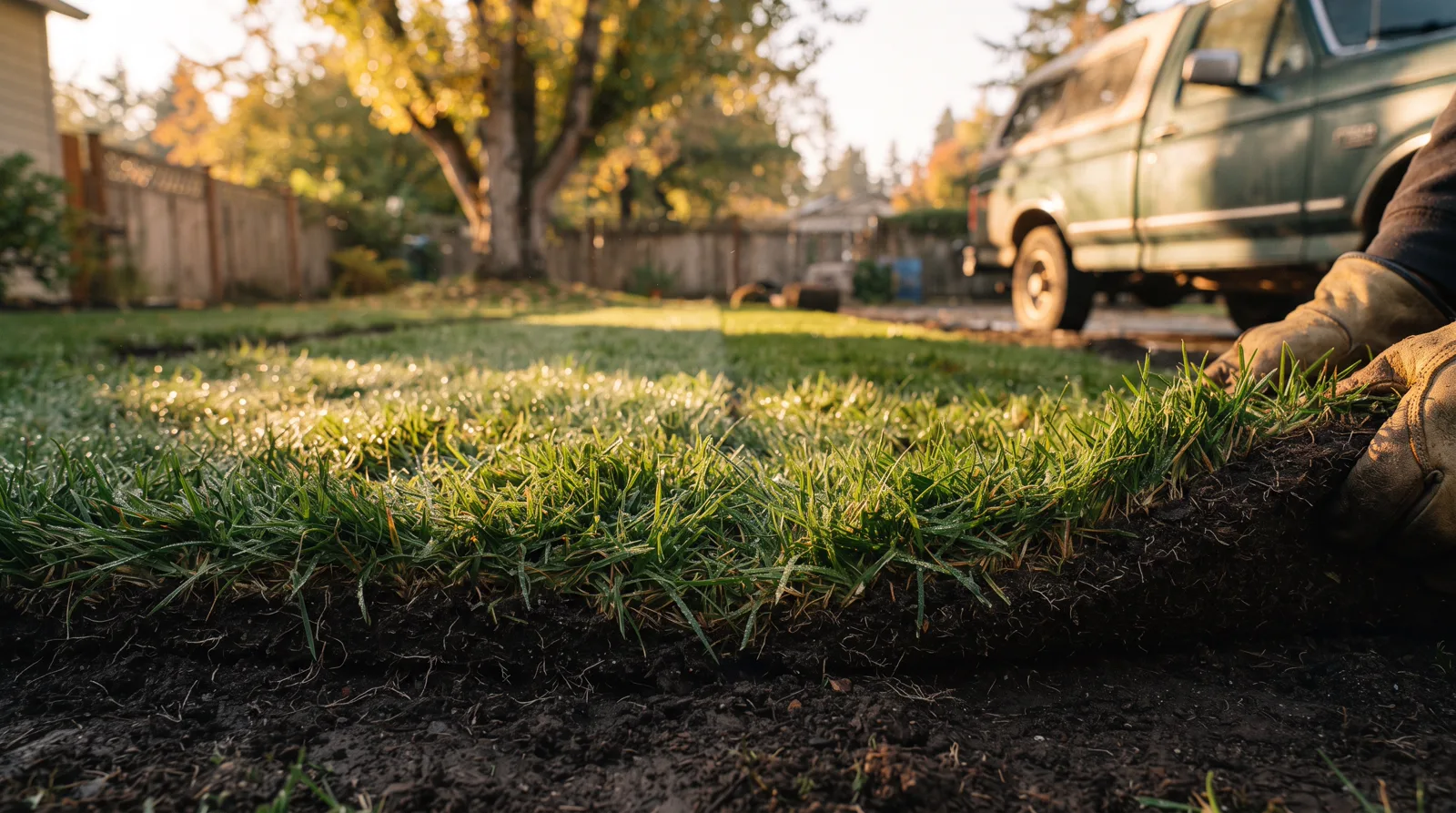
Sod Installation Spruce Grove: New Lawn in 24 Hours.
Skip the months of seeding. Get a mature, usable lawn this week with professional sod installation built for Alberta freeze-thaw cycles and chinook wind.
Complete Sod Services for the Tri-Region
From bare dirt to thick green carpet. Local pros handle prep, grading, installation and care handoff.
Full Lawn Sod Install
Complete turnkey service: old lawn removal if needed, rotovating, grading to drain away from foundation, 4 inches of quality topsoil, sod selection for Alberta sun and shade zones, installation with tight seams, starter fertilizer, and watering instructions. You get a finished, walkable lawn the same day.
Site Grading & Prep
Proper base is everything. We bring in or redistribute soil to achieve 2% slope away from your foundation (Alberta building code for drainage), eliminate low spots that pool meltwater, and create a firm 4 inch topsoil bed. Includes removal of construction debris, rocks and old root mass common in Parkland County new builds.
Soil Testing & Amendment
Tri-Region clay soils often need help. We test pH and nutrient levels, then amend with peat, compost or sand to create the friable, slightly acidic bed that Kentucky bluegrass and fescue mixes thrive in. Skipping this step is the number one cause of sod failure in Spruce Grove.
Sod Repair & Patching
Fix dog damage, dead patches from winter salt, or sections killed by chinook wind desiccation. We source matching turf (or closest available blend), prep the damaged area, and install with feathered edges so the repair blends invisibly within 3 weeks.
Turf Selection Consult
Not all sod survives Alberta winters. We guide you to proven blends: Kentucky bluegrass for high traffic sunny yards, tall fescue for shade under spruce trees, or mixed cultivars that handle Stony Plain's temperature swings. Includes sun mapping and irrigation assessment.
Irrigation Setup & Handoff
New sod needs consistent moisture for 14 days or it dies. We set temporary or permanent irrigation, show you the watering schedule (daily for week one, then tapering), mark the calendar for your first mow, and leave written care instructions. Includes starter fertilizer application.
Why Spruce Grove Sod Installation Is Different
❄️ Freeze-Thaw & Heaving
Parkland County frost goes 6 feet deep. Improper grading lets ice lenses form under sod, causing spring heaving that tears roots and creates washboard lawns. We compact and grade to shed meltwater fast, and we only install sod in spring after frost is out or in fall 6 weeks before freeze so roots anchor before winter.
🌬️ Chinook Wind Desiccation
January chinooks in Spruce Grove can hit 15°C and evaporate soil moisture even when the ground is frozen, killing unestablished sod. Fall installs get 8 weeks of root growth before this risk. Spring installs get daily watering monitoring through May. We also specify deeper rooting bluegrass cultivars that survive dry spells better than cheap contractor grade sod.
🏔️ Clay Soil & Drainage
Tri-Region clay holds water like a bathtub, drowning sod roots and breeding fungus. We break compaction with a rotovator, blend 2 inches of coarse sand or aged compost into the top 4 inches, and laser check grade so spring melt and summer storms drain to swales or storm sewers, not your foundation or lawn surface.
🧱 New Build Subsoil Reality
Acheson and Stony Plain new subdivisions often have compacted clay subgrade with 1 inch of dust topsoil. Sod laid on this dies in 6 weeks. We verify 4 inches of real topsoil, re-grade if the builder left humps and dips, and amend to create actual growing medium. This adds cost but it's the difference between a lawn and a funeral.
What it costs here
Everything You Need to Know About Sod Installation in Spruce Grove
From soil prep to first mow, here's how professional sod installation works in Alberta's climate.
Understanding Sod Installation in Spruce Grove's Unique Climate
Sod installation is the process of laying pre-grown grass rolls or slabs directly onto prepared soil to create an instant lawn. Unlike seeding, which takes weeks to germinate and months to establish, sod gives you a mature, usable lawn within days. In Spruce Grove, Stony Plain, and Parkland County, this service has become the default choice for new lawns because our short growing season, unpredictable spring weather, and intense summer heat make seeding a gamble. Professional sod installation involves site preparation, soil grading, delivery of fresh-cut rolls, precise laying technique, and careful watering schedules calibrated to Alberta's dry air and temperature swings.
Alberta's climate makes sod installation more complex than in milder regions. Our freeze-thaw cycles from October through April can heave poorly graded soil, creating low spots that pond water and kill grass. Chinook winds in winter can desiccate exposed soil and even dormant sod if it is not properly rooted. Hailstorms from May through September can shred new seedlings but leave established sod largely intact. The clay-heavy soils common in Spruce Grove, Acheson, and Parkland County compact easily, restricting root penetration and drainage. Professional installers account for these factors by amending soil, ensuring proper grade for runoff, and timing installation to align with root establishment windows before winter or summer stress periods.
Most residential sod in this region is Kentucky bluegrass blends, chosen for cold hardiness and drought tolerance once established. These blends typically cost between $0.40 and $0.80 per square foot for the sod itself, with installation labor adding another $0.50 to $1.20 per square foot depending on site conditions, grading requirements, and access. A typical front and back yard totaling 3,000 square feet will run between $2,700 and $6,000 installed, including soil prep and cleanup. Smaller jobs under 1,000 square feet often cost proportionally more per foot due to minimum charges for equipment and delivery. The investment pays off in immediate curb appeal, erosion control, and a lawn ready for light use within two to three weeks, compared to the four to six month wait and uncertainty of seeding in our climate.
When Your Spruce Grove Property Needs Sod Installation
New construction is the most common scenario for sod installation in Parkland County. Builders typically rough-grade the yard but leave topsoil thin or compacted by heavy equipment. Bare clay sits exposed through fall and winter, eroding into street drains and creating mud pits by spring thaw. Homeowners moving in during late summer or fall face the choice of seeding into cooling soil with poor germination odds or waiting until the following May. Sod solves this by providing instant ground cover that stabilizes soil, prevents erosion, and makes the property move-in ready. Even late-season sod installation in September or early October can succeed in Alberta if the roots establish before deep frost, which usually arrives in early November in the Spruce Grove area.
Existing lawns fail for predictable reasons in this region. Compacted clay subsoil with a thin topsoil layer starves grass roots, leading to brown patches that expand each summer. Grading errors that create low spots result in spring ponding, drowning grass and leaving muddy dead zones. Dog urine, heavy foot traffic along fence lines, and neglect during droughts kill sections that never recover. Chinook winds and bitter cold can winterkill lawns that were already stressed. Overseeding these problem areas rarely works because the underlying issues remain. Sod installation gives you the opportunity to fix grading, amend soil properly, and lay fresh healthy turf that is not fighting years of compacted subsoil and accumulated thatch.
- Bare yard after new home construction with thin or no topsoil
- Failed lawn with expanding dead patches that do not recover from overseeding
- Erosion problems on slopes or along property edges
- Pooling water and mud in low spots after rain or snowmelt
- Immediate need for a finished lawn for resale, event, or personal use
How Professional Sod Installation Works in Alberta
Site Preparation and Soil Amendment
The first step is clearing the site of debris, old sod, weeds, and rocks. In Spruce Grove and Stony Plain, this often means dealing with construction rubble buried during rough grading or perennial weeds like creeping bellflower and quackgrass that must be killed with glyphosate and removed before sod goes down. The existing soil is tested for pH, which in Alberta clay tends to run neutral to slightly alkaline. If topsoil is thin or absent, a layer of three to six inches of quality screened loam is spread and graded. This topsoil layer is critical because the native clay underneath is nearly impermeable when dry and turns to soup when wet, neither of which supports healthy turf roots.
Grading is adjusted to ensure water drains away from foundations and does not pool anywhere on the lawn. Alberta building code requires a minimum slope of two percent away from structures, but experienced installers often grade closer to three percent to handle heavy spring runoff and summer thunderstorms. Low spots are filled, high ridges knocked down, and the entire surface brought to smooth grade. A soil rake or power rake breaks up clods and levels the finish. The prepared surface should sit about one inch below sidewalks and driveways so the sod, which adds roughly an inch of height, ends up flush with hard surfaces.
Sod Delivery and Installation
Sod is harvested early in the morning at farms near Edmonton or Red Deer and delivered the same day to maintain freshness. Each roll is typically 24 inches wide and can range from six to eight feet long, weighing 35 to 50 pounds depending on soil moisture. The grass should be bright green with a dense root mat and moist soil. Installation begins immediately, starting along the longest straight edge such as a driveway or sidewalk. Rolls are laid in a brick pattern with staggered seams to prevent gaps from aligning and creating weak points. Edges are butted tightly together without overlapping or leaving gaps, and each roll is tamped or rolled with a lawn roller to eliminate air pockets and press roots into contact with the soil.
On slopes, sod is laid horizontally across the incline and often pinned with biodegradable stakes to prevent slippage until roots anchor. Around sprinkler heads, tree rings, and garden edges, pieces are cut with a sharp knife or sod cutter to fit precisely. The entire installation is usually completed in one day for residential properties under 5,000 square feet. Once laid, the sod is watered immediately and heavily to soak through the sod layer and into the topsoil beneath, initiating root contact and preventing the edges from drying and curling in Alberta's low humidity.
Preparing Your Property and Planning the Timeline
Before installation begins, you need an accurate measurement of the area to be sodded. Most contractors will visit the site, measure with a wheel or laser, and provide a quote based on square footage plus site-specific factors like access, grading needs, and soil condition. If your property has heavy clay, poor drainage, or slopes that require regrading, expect additional costs for soil amendment and grading labor. Some properties in Acheson and rural Parkland County have minimal topsoil over clay hardpan, requiring four to six inches of imported loam at an additional cost of $40 to $80 per cubic yard delivered and spread. Addressing these issues during sod installation is far cheaper than dealing with a failed lawn later.
Timing your sod installation in Alberta is critical. The best windows are late April through early June and late August through early October. Spring installation allows the grass to root deeply before summer heat, but you must wait until soil has thawed and dried enough to grade without creating muddy ruts. Summer installation from late June through mid-August is possible but risky, requiring diligent watering multiple times per day during hot spells to prevent the sod from drying out before roots establish. Fall installation works well because cooler temperatures reduce water stress and the grass can root in before dormancy, but you must finish by mid-October at the latest to give roots three to four weeks to anchor before freeze-up.
Site access and logistics matter more than many homeowners expect. Sod delivery trucks are large and need street access close to your property. If the sod must be carried or wheeled more than 50 feet, expect labor charges to increase. Sprinkler systems should be installed before sodding if you plan to have them, as trenching through new sod tears it up and sets back establishment. Fencing installed after sodding risks damaging edges unless care is taken. Coordinate these trades and improvements so sod installation is one of the final steps. Most professional installers will handle grading, topsoil delivery, and sod laying in a single mobilization, which is more efficient and less costly than splitting the work across multiple visits.
What Sod Installation Costs in Spruce Grove and the Tri-Region
Sod installation in Spruce Grove, Stony Plain, and Parkland County typically runs between $1.80 and $3.50 per square foot installed, including materials, labour, ground prep, and cleanup. A standard 2,000 square foot front and back yard project costs $3,600 to $7,000 depending on site conditions, sod variety, and contractor experience. Budget an extra $400 to $1,200 for grading or topsoil if your yard has poor drainage, heavy clay, or low spots that pond after spring melt. Acheson area properties with acreage or commercial frontage may negotiate volume pricing for large installs over 5,000 square feet.
The sod itself accounts for roughly 40 to 50 percent of the total cost. Kentucky bluegrass blends run $0.65 to $0.95 per square foot at the pallet, while hardier fescue mixes cost $0.50 to $0.75. Delivery from local farms near Stony Plain or Edmonton adds $75 to $200 depending on load size and timing. Peak season orders in May and early June sometimes face supply shortages, pushing prices up by 10 to 15 percent. Off-season installs in late August or early September can save money, but you sacrifice some establishment time before the first hard freeze.
Ground preparation drives the rest of the bill. Rototilling, leveling, and compacting soil costs $0.40 to $0.80 per square foot. If you need imported topsoil to raise grade or improve drainage, expect $45 to $65 per cubic yard delivered, and a typical yard needs 3 to 8 yards. Sprinkler repair or adjustment adds $150 to $500 if heads are buried or damaged during grading. Removal of old lawn, rocks, or construction debris runs $0.30 to $0.60 per square foot. Sloped yards in older Spruce Grove subdivisions may need terracing or retaining blocks, adding $800 to $2,500 to the scope.
Labour rates for qualified installers in the Tri-Region range from $50 to $85 per hour, and most crews finish a 2,000 square foot yard in one long day. Contractors with liability insurance and liability insurance charge toward the higher end, but that coverage protects you from injury claims and property damage. Unlicensed crews working for cash may quote 20 to 30 percent less, but you assume all risk if someone gets hurt or the work fails. Always verify WCB clearance and ask for a certificate of insurance naming your property address before any work starts.
Choosing the Right Sod: Varieties and Options for Alberta Lawns
Kentucky bluegrass remains the most popular sod choice in Spruce Grove and Stony Plain because it handles Alberta's freeze-thaw cycles, recovers well from snow mold, and self-repairs through rhizomes. Most local farms sell blends mixing two or three bluegrass cultivars for disease resistance and colour consistency. Bluegrass needs full sun, at least 1 inch of water per week, and tolerates moderate foot traffic once established. It greens up early in spring and stays dense through summer if you mow at 2.5 to 3 inches and fertilize in May and September. The downside is higher water demand during dry spells and vulnerability to chinook wind desiccation in late winter.
Tall fescue blends offer better drought tolerance and deeper roots, making them a smart pick for properties with sandy soil, slopes, or limited irrigation. Fescue handles shade better than bluegrass, survives compacted clay, and needs less fertilizer. The texture is coarser and the colour slightly lighter, but modern turf-type fescue varieties have closed that gap significantly in the past decade. Fescue does not self-repair as aggressively as bluegrass, so bare patches from dog urine or heavy traffic require overseeding. It performs well in Parkland County acreages where water costs matter and naturalized borders are acceptable.
Blended sod combining bluegrass and fescue gives you a middle path with some drought resilience and decent repair ability. Many Tri-Region contractors recommend 60 percent bluegrass and 40 percent fescue for residential front yards that see moderate use and occasional dry weeks. Pure ryegrass sod is rare in Alberta because it lacks winter hardiness, but small amounts are sometimes mixed in for fast germination and erosion control on new slopes. Avoid any sod labelled as southern or warm-season grass; it will not survive a single Alberta winter.
Certified sod costs $0.10 to $0.20 more per square foot but guarantees weed-free, disease-free turf inspected by provincial agriculture authorities. Non-certified sod from hobby farms may carry quackgrass, thistle seed, or fungal pathogens that spread into your existing landscape. Ask your contractor where the sod is grown, when it will be cut, and how long it will sit on the pallet. Freshly cut sod installed within 24 hours roots faster and suffers less transplant shock. Sod that sits in rolled pallets for 48 hours or more in summer heat turns yellow, heats up internally, and may die even after installation.
Common Mistakes and Red Flags When Hiring a Sod Installer
The biggest mistake homeowners make is skipping soil testing and jumping straight to sod. Laying premium bluegrass over compacted clay or acidic fill dirt dooms the project from day one. A proper installer takes soil samples, checks pH, tests drainage, and corrects deficiencies before any sod arrives. If a contractor quotes your job without walking the site, digging a test hole, or asking about irrigation, walk away. Surface-level eyeball estimates miss buried rubble, hardpan layers, and grade problems that triple costs midway through the job.
Watch for contractors who low-ball the quote by promising to reuse your existing topsoil without amendment. Builder-grade fill soil in new Spruce Grove developments is often heavy clay mixed with sand, lacking organic matter and compacting under foot traffic. Quality installers add 2 to 4 inches of screened topsoil or compost blend, bringing the final grade to within 1 inch of sidewalks and driveways. Reusing poor soil saves $300 to $800 upfront but results in thin, patchy turf that needs replacement in two years. Insist on a soil recipe in writing: what goes down under the sod matters more than the sod itself.
Another red flag is contractors who schedule installation without checking the weather or your availability to water. Sod installed on a Friday afternoon in July dies over the weekend if you are away and the system is off. Responsible crews confirm you have a functioning irrigation system or hose setup, walk you through the watering schedule, and avoid installing during heat waves or high wind warnings. If the contractor ghosts you after laying the sod and never follows up, you lose the chance to correct problems during the critical first 10 days when most failures happen.
Beware of crews that show up with old, yellow, or foul-smelling sod and insist it will green up after watering. Dead sod is dead. Fresh sod is bright green, cool to the touch, and has moist soil attached to the roots. Reject any pallet with brown edges, gaps in the root mat, or visible weeds. A legitimate contractor orders sod for same-day or next-day delivery, cuts the order close to the actual square footage, and absorbs the cost of a few extra pieces rather than forcing you to accept short or damaged rolls. If the crew tries to stretch the sod by leaving gaps or cutting corners, stop the job and do not pay until it is corrected.
How to Find and Hire a Qualified Sod Installation Professional
Start by asking for three references from projects completed in the past 12 months within 20 kilometres of your property. Call those homeowners and ask specific questions: did the sod establish evenly, did the contractor return to address problems, was the site left clean, did the final cost match the quote. Drive by one or two of the referenced properties if possible and look at the lawn quality a season or two later. A contractor confident in their work will happily share recent local projects. Anyone who offers only vague references, out-of-area jobs, or no references at all is not worth the risk.
Verify the contractor holds liability insurance in Alberta and at least two million dollars in general liability insurance. Ask for a WCB clearance letter dated within the past 90 days and a certificate of insurance naming your municipal address as the location of operations. This protects you if a crew member is injured on your property or if equipment damages your sprinkler lines, gas meter, or neighbour's fence. Contractors without insurance may be cheaper, but one injury or utility strike leaves you facing a lawsuit or repair bill that dwarfs the savings. Your homeowner's policy will not cover contractor negligence.
Get a written quote that breaks down square footage, sod variety, topsoil depth and type, labour, delivery, and cleanup. Avoid quotes that lump everything into one price or give a per-square-foot rate without explaining what is included. A detailed quote lets you compare apples to apples across three or four contractors and protects you from surprise charges for extras like topsoil, grading, or disposal. The quote should also state a timeline, identify who is responsible for watering after install, and clarify warranty terms. Most reputable installers guarantee the sod will be alive and green at the end of the first week, but not after that unless you pay for a maintenance contract.
Schedule the work for a week when you will be home to monitor progress and handle the intensive watering. Plan to water the new sod three times per day for the first week, twice per day for the second week, then transition to deep weekly soaks. If you cannot commit to that schedule, hire the contractor to install an irrigation system first or arrange for a lawn care service to handle watering. Sod that dries out in the first 10 days will die or develop permanent brown patches no amount of later care can fix. The contractor's job ends when the last roll is laid and compacted; your job as the homeowner is to keep it wet until the roots grab.
How Tri-Region Services Helps
Tri-Region Services connects you with one pre-screened, fully insured sod installation professional in Spruce Grove, Stony Plain, or Parkland County who has been verified for liability insurance, liability insurance, and a track record of quality local projects. You fill out one short request describing your property size, soil conditions, and timeline. We route your inquiry to a qualified contractor who will visit your site, assess the soil, recommend the right sod variety for your sun and usage patterns, and provide a written quote with no obligation. You receive one clear proposal from a trusted local pro, avoiding the hassle of vetting multiple contractors yourself. If the quote fits your budget, you hire directly and the work proceeds on your schedule. There are no referral fees added to your cost, no middleman markups, and no pressure. Our goal is to match you with the right installer the first time so your new lawn thrives for years.
How Tri-Region Pros Are Screened
Every landscaper in this directory meets baseline standards for insurance, safety and local knowledge.
Liability insurance Verified
minimum $2 million liability insurance stated at signup.
Tri-Region Based & Operating
Physical business presence in Spruce Grove, Stony Plain, Parkland County or Acheson city limits.
Alberta Climate Experience Required
Proven track record installing sod that survives freeze-thaw, chinook wind and clay soil conditions.
Written Quotes & Timelines
All pros provide itemized estimates with material specs, install date and payment terms in writing.
Proper Disposal & Permits
Old lawn and soil disposal to approved sites, grading permit pulled if required by municipality.
Care Handoff & Warranty Terms
Written watering and mowing instructions, plus clear warranty terms (typically 7 to 14 days with proper care).
This page is not tied to a contractor's brand. Leads route straight to your one local partner. Verified reviews can appear here once that partner has them (never fabricated).
Serving the whole Tri-Region
7 Questions About Sod Installation in Spruce Grove
When is the best time to install sod in Spruce Grove?+
How much does sod installation cost in Spruce Grove?+
Can I install sod myself or should I hire a pro?+
How long does new sod take to root in Alberta?+
What kind of sod survives best in Spruce Grove winters?+
Do I need a permit to install sod in Spruce Grove?+
How do I care for new sod in the first two weeks?+
Why does sod cost more than seeding a lawn?+
Get your free quote
Tell us what you need and a local pro will get right back to you.
- ✓ Sent straight to a local business
- ✓ You choose who you hire
- ✓ Free, with no obligation