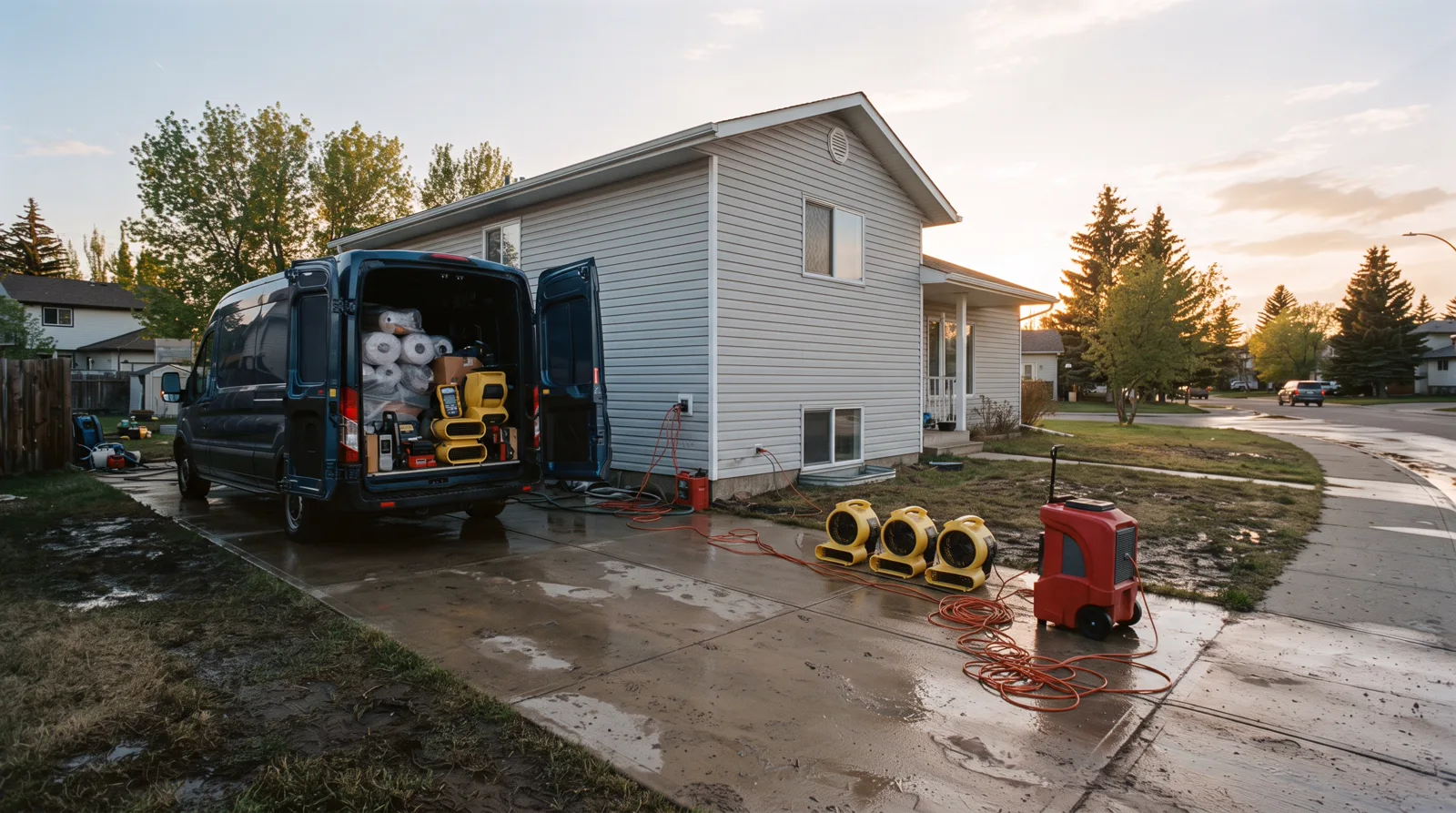
Storm Water Damage Restoration in Spruce Grove and the Tri-Region.
24/7 emergency response for roof leaks, window breaches, and storm flooding. Alberta certified crews extract water, dry structures, and prevent mold before it starts.
Complete Storm Water Damage Services
From emergency extraction to structural drying, mold prevention, and insurance documentation.
Emergency Water Extraction
Industrial truck-mounted extractors remove standing water from basements, crawlspaces, and living areas within hours of your call. Includes moisture mapping with thermal imaging to find hidden saturation in walls and subfloors. Critical first step to stop secondary damage.
Roof Leak Tarping and Repair Coordination
Emergency tarping to stop active leaks from hail-damaged shingles, torn flashing, or wind-lifted panels. Local pros secure the breach, document damage for insurance, and coordinate certified roofers for permanent repair. Protects your home while you wait for contractor schedules.
Structural Drying and Dehumidification
Commercial-grade air movers and dehumidifiers run 24/7 for three to seven days to bring wood framing, drywall, and insulation back to safe moisture levels. Daily moisture readings with hygrometers ensure complete drying before the equipment is pulled. Prevents warping, rot, and mold colonization.
Window and Door Leak Sealing
Storm-driven rain can breach window wells, door thresholds, and improperly sealed frames. We trace the entry point, seal gaps with commercial-grade sealants rated for Alberta freeze-thaw cycles, and test with blower door diagnostics. Stops chronic re-wetting during future storms.
Mold Prevention Treatment
Antimicrobial application to all affected surfaces within 48 hours of water intrusion. HEPA air scrubbers capture airborne spore counts while surfaces dry. Post-treatment air quality testing confirms safe levels. Essential step to avoid costly remediation projects weeks later.
Insurance Documentation and Advocacy
Detailed photo documentation, moisture readings, scope of loss reports, and direct communication with your adjuster. We speak the insurance language, provide itemized estimates in the format they expect, and follow up to ensure timely approval. Most clients see claims approved within 10 to 14 days.
Why Storm Water Damage Hits Hard in Alberta
⛈️ Hail Season and Severe Thunderstorms
May through September brings golf ball hail and 80 km/h wind gusts that lift shingles and crack siding in minutes. One summer storm can cause roof leaks in dozens of homes across Spruce Grove and Stony Plain simultaneously, overwhelming contractor availability for weeks.
❄️ Freeze-Thaw Cycles and Ice Dams
Chinook winds can swing temperatures 20°C in 24 hours, melting snow on roofs that refreezes at eaves, creating ice dams that force meltwater under shingles. Spring melt combined with late-season snowstorms creates unique leak pathways not seen in milder climates.
🏗️ Alberta Building Code and Permit Reality
Structural repairs after storm damage often trigger permit requirements under the Safety Codes Act. Restoration crews must understand when work crosses from emergency mitigation into renovation territory, ensuring you stay compliant while insurance timelines run.
🛡️ Overland Flood vs. Sewer Backup Coverage
Most Alberta homeowner policies now separate storm sewer backup from overland flooding. Knowing which coverage applies to your specific storm event determines what gets paid. We document the water source accurately so your claim routes to the correct coverage bucket.
What it costs here
Everything You Need to Know About Storm Water Damage Restoration
How Alberta storms damage homes, what restoration actually involves, and how to navigate insurance claims without getting stuck in limbo.
Why Alberta Storms Create Unique Water Damage Challenges
Spruce Grove and the surrounding Parkland County region sit in a climate zone where storm water damage plays out differently than in most of Canada. Alberta's extreme weather swings, from intense summer hail to winter chinook winds followed by hard freezes, create conditions where a single storm can compromise multiple parts of your home at once. A severe thunderstorm might dump three inches of rain in an hour while pounding your roof with golf ball sized hail, overwhelming both your drainage systems and your roof's integrity simultaneously. The result is water entering your home from above and below at the same time, soaking insulation, drywall, framing, and anything stored in basements or crawlspaces.
The speed at which storm water enters a building sets it apart from slow leaks or gradual seepage. When a shingle gets torn off during a windstorm or a window seal fails under driving rain, hundreds of litres can pour into wall cavities and attic spaces in minutes. This velocity means materials get saturated faster than they can dry naturally, and mold spores begin colonizing damp surfaces within 24 to 48 hours. In Alberta's variable humidity, especially during summer, those conditions arrive quickly. A storm that hits on a Friday evening can result in active mold growth by Sunday afternoon if the water is not extracted and the space properly dried. Timing is everything, and the window for preventing secondary damage is narrow.
Storm events in this region also tend to affect neighborhoods in clusters, which means restoration companies can be stretched thin immediately after a major weather event. When a hailstorm tears through Spruce Grove or a spring melt combines with heavy rain to flood basements across Stony Plain, dozens of homes need help at once. This demand surge makes it critical to act fast and secure professional help early. Homeowners who wait a day or two often find themselves competing for limited crew availability, and delays of even 48 hours can mean the difference between drying out wet drywall and having to tear it out entirely. Understanding the urgency specific to storm damage helps you prioritize the right response when weather strikes.
What Storm Water Damage Restoration Actually Involves
Storm water damage restoration is not simply mopping up puddles and running a few fans. It is a structured process that begins with emergency stabilization, moves through comprehensive water extraction and drying, and ends with repairs that return your home to pre-loss condition or better. The first priority is always stopping additional water from entering the building. If a storm has torn shingles off your roof, blown out a window, or caused an eave to separate from the fascia, a restoration crew will tarp or board up those openings to prevent rain from continuing to soak the interior. This emergency securing step protects your home from further damage while the team assesses the full scope of what the storm has done.
Once the building is stabilized, the water extraction phase begins. Commercial grade pumps and truck mounted extraction units pull standing water from basements, crawlspaces, and flooded rooms. Even after visible water is gone, building materials like drywall, insulation, subflooring, and framing lumber hold moisture that will not evaporate on its own in a reasonable timeframe. Professional crews use industrial dehumidifiers and high velocity air movers to drive moisture out of these materials. Moisture meters and thermal imaging cameras guide this process, showing hidden pockets of saturation that would otherwise be missed. The drying phase typically runs for three to seven days depending on the volume of water, the materials affected, and the ambient conditions inside and outside the home.
Assessment and documentation happen in parallel with drying. Technicians photograph and measure the affected areas, document moisture readings over time, and identify which materials can be dried in place and which must be removed. A section of drywall that got soaked from a roof leak might dry successfully if caught within 24 hours, but that same drywall will need replacement if it stayed wet for three days and began to delaminate or grow mold. Insulation that absorbed storm water is almost always removed and replaced because it loses its R-value when saturated and rarely dries completely. Hardwood floors, cabinetry, and trim are evaluated on a case by case basis. The goal is to save what can be saved and remove only what is genuinely compromised, balancing cost, safety, and the long term integrity of your home.
Recognizing Storm Damage Before It Gets Worse
Visible Signs Immediately After a Storm Event
The most obvious indicators of storm water intrusion show up right away. Water pooling on floors, dripping from ceiling fixtures, or running down interior walls tells you that your building envelope has been breached. In basements, look for standing water around the perimeter, near sump pump pits, or seeping through cracks in the foundation. After a severe hailstorm, check your attic or upper floor ceilings for wet insulation, dark stains, or sagging drywall, all of which point to roof damage letting water in from above. Windows and doors are also common entry points during wind driven rain. If you see water staining on window sills, around door frames, or tracking along baseboards near exterior walls, the seals or flashing have likely failed under the force of the storm.
Exterior clues matter just as much as what you see inside. Walk around your property and look for missing or damaged shingles, dented or separated eavestroughs, downspouts that have pulled away from the wall, and window screens or trim that have been torn loose. Check the ground near your foundation for areas where water is pooling instead of draining away, especially after heavy rain. If your yard slopes toward the house or if downspouts are dumping water right at the foundation, storm runoff is being funneled directly into your basement. These exterior vulnerabilities might not cause immediate flooding, but they set the stage for water intrusion during the next significant rain event, and fixing them is part of comprehensive storm damage restoration.
Hidden Indicators That Emerge Over Days
Not all storm damage announces itself immediately. Some of the most serious problems develop quietly in the days following a weather event. A musty or earthy smell is one of the earliest signs that hidden moisture is present and mold is beginning to grow. This odor often shows up in basements, closets, or rooms where water entered wall cavities rather than spilling onto visible surfaces. If you notice this smell within a few days of a storm, it is time to investigate further, even if you do not see obvious water damage. Discoloration or texture changes in drywall, such as bubbling paint, soft spots, or yellow or brown staining, also indicate that moisture is trapped behind the surface.
Temperature and humidity changes inside your home can reveal concealed water problems. If a room feels unusually humid, clammy, or cooler than the rest of the house after a storm, moisture is likely trapped in the walls, floor, or ceiling. Condensation forming on windows or mirrors in areas that are normally dry is another clue. Warped baseboards, buckling laminate flooring, or doors that suddenly stick in their frames can all result from elevated moisture levels caused by storm water intrusion. These signs might seem minor on their own, but together they point to a moisture problem that needs professional drying and restoration before structural rot or mold colonies take hold.
When to Call Immediately Versus When to Monitor
Any situation involving standing water, active leaks from the roof or windows, or visible water running into electrical fixtures or outlets requires an immediate call to a storm water damage restoration company. Do not wait until morning or until the rain stops. The faster water is removed and drying begins, the less damage will occur to your home's structure and contents. If a storm hits overnight and you discover water in your basement at 2 a.m., calling an emergency restoration service right then can save thousands of dollars in additional damage compared to waiting until business hours. Time is the enemy in water damage scenarios, and acting within the first few hours makes a measurable difference in outcomes.
If you see minor signs like a small stain on the ceiling, slight dampness around a window frame, or a faint musty smell, you have a bit more time, but not much. Document what you see with photos, check the area again in 12 to 24 hours, and if the problem is not drying out on its own or if it is getting worse, call a professional. Do not assume that running a household fan or opening a window will solve the problem. Building materials hold moisture in ways that require specialized equipment to address, and what looks like a small issue on the surface often indicates more significant saturation hidden inside walls or floors. When in doubt, a professional assessment costs less than the repairs you will face if you wait too long and secondary damage sets in.
The Professional Storm Restoration Process Step by Step
Initial Emergency Contact and Assessment
The restoration process begins the moment you call for help. Reputable storm water damage restoration companies in the Spruce Grove and Parkland County area operate 24 hours a day and can dispatch a crew within one to three hours of your call, depending on how many other homes in the region have been affected by the same storm. During that initial phone call, the dispatcher will ask questions about what happened, what you are seeing, whether there is standing water, and whether any safety hazards like electrical issues or structural instability are present. This information helps the crew prepare the right equipment and prioritize their response if they are managing multiple calls.
When the team arrives, they conduct a walkthrough to assess the scope of the damage and identify immediate hazards. They will locate the source of water intrusion, whether it is a damaged roof, a failed window seal, a foundation crack, or overwhelmed drainage systems. They will also check for electrical hazards, compromised structural elements, and any contents or furnishings that need to be moved or protected. This initial assessment informs the emergency action plan, which focuses on stopping further water intrusion, extracting standing water, and beginning the drying process. The crew will explain what they are going to do, provide a rough timeline, and start documenting the damage with photos and moisture readings for insurance purposes.
Water Removal and Structural Drying Phase
Once the building is secured and the assessment is complete, the water removal phase begins in earnest. Portable pumps, wet vacuums, and truck mounted extraction units are used to remove standing water from basements, flooring, and any other areas where water has pooled. The goal is to get all free standing water out as quickly as possible, usually within the first few hours of arrival. After the visible water is gone, the real work begins, which is removing moisture from building materials that have absorbed it. Technicians place industrial dehumidifiers and air movers throughout the affected areas, creating airflow patterns that drive moisture out of walls, floors, insulation, and framing.
Moisture monitoring is continuous during this phase. Technicians return daily or every other day to check moisture levels in floors, walls, and other materials using moisture meters and infrared cameras. These tools show whether drying is progressing as expected or whether adjustments to equipment placement or ventilation are needed. If moisture readings are not dropping, it may indicate hidden water pockets, inadequate airflow, or materials that are too saturated to dry in place. In those cases, affected materials like drywall, insulation, or baseboards are removed to allow better airflow and to expose structural elements that need drying. This phase typically takes three to seven days, but it can be shorter or longer depending on the severity of the water intrusion and the ambient humidity levels inside and outside the building.
Throughout the drying process, the crew monitors for mold growth and applies antimicrobial treatments to surfaces where water has been present. Even if mold is not visible, spores are present in every environment, and wet conditions trigger rapid colonization. Treating affected areas early prevents mold from becoming a secondary problem that requires separate remediation. The drying phase is not complete until moisture readings in all affected materials return to normal, dry baseline levels. Only then can repairs and reconstruction begin without the risk of trapping moisture inside walls or under flooring, which would lead to rot, mold, and structural failure down the line.
Structural Evaluation and Material Testing
After the space is fully dried, a detailed evaluation determines which materials can remain and which must be replaced. This evaluation considers both the degree of water exposure and the type of material involved. Drywall that stayed wet for more than 48 hours and shows signs of delamination, texture loss, or mold growth will be cut out and replaced. Insulation that absorbed water is almost always removed because it loses its insulating value and rarely dries completely, creating an ongoing risk for mold and rot. Wooden framing members are inspected for swelling, warping, or soft spots that indicate the beginning of decay. If caught early, framing can often be dried and treated, but if rot has set in, the affected sections need to be cut out and replaced with new lumber.
Flooring materials are evaluated on a case by case basis. Hardwood floors may be salvageable if they were dried quickly and show minimal cupping or crowning, but laminate and engineered flooring typically need replacement after significant water exposure because the core materials swell and lose structural integrity. Carpet and underpad that were soaked by storm water are usually removed and discarded due to contamination concerns and the difficulty of thoroughly drying carpet padding. Tile and vinyl flooring may survive if the subfloor beneath them dried properly, but if the subfloor remained wet and began to swell or soften, the flooring must come up so the subfloor can be replaced. The goal is to ensure that every material left in place after restoration is structurally sound, dry, and free of contamination.
Repair and Restoration to Pre-Loss Condition
The final phase is reconstruction and finishing work. Damaged drywall is replaced, taped, and finished to match the existing texture. New insulation is installed in walls and ceilings where the old material was removed. Flooring is reinstalled, whether that means sanding and refinishing hardwood, laying new carpet, or installing replacement laminate or tile. Baseboards, trim, doors, and other finish carpentry elements that were removed or damaged are replaced and painted. If the storm damage originated from a roof leak, the roofing contractor repairs or replaces damaged shingles, flashing, or fascia. If water entered through a window or door, new seals, caulking, or weatherstripping are installed to prevent future leaks.
Throughout the repair phase, the restoration company coordinates with your insurance adjuster to ensure that all work is documented and covered according to your policy. Photos, moisture logs, equipment logs, and invoices create a detailed record of the work performed and the materials replaced. Most homeowner insurance policies in Alberta cover sudden and accidental water damage from storms, but coverage specifics vary, so clear documentation protects both you and the restoration company. When the work is complete, the restoration team will walk you through the repaired areas, explain what was done, and answer any questions about maintenance or prevention going forward. The goal is not just to return your home to the condition it was in before the storm, but to address the vulnerabilities that allowed the damage to occur in the first place.
What Storm Water Damage Restoration Really Costs in Spruce Grove and Parkland County
Storm water damage restoration in the Tri-Region typically runs from $2,500 to $15,000 for most residential claims, though severe flooding or roof leak damage can push costs to $30,000 or more. The wide range reflects the difference between a single room with surface water and a finished basement flooded by foundation seepage during spring melt. Your final bill depends on water volume, how long it sat, what materials got soaked, and whether mold remediation or structural drying is required. Insurance adjusters in Spruce Grove and Stony Plain see average claims around $8,000 to $12,000 when a storm causes roof or window leaks that soak drywall, insulation, and flooring across multiple rooms.
Equipment and labor drive the bulk of restoration costs. Industrial dehumidifiers rent for $80 to $150 per day, and a typical job needs three to six units running for five to ten days. Air movers cost another $40 to $70 each per day, and you will need four to eight depending on square footage. Moisture meters, thermal cameras, and air scrubbers add another $500 to $1,200 to the equipment bill. Labor runs $75 to $125 per hour in the Tri-Region, and a two person crew typically logs 30 to 60 hours for water extraction, demolition of damaged materials, monitoring, and final cleanup. Add disposal fees for soaked drywall, insulation, and carpeting, and equipment alone can hit $3,000 to $5,000 before any reconstruction begins.
Reconstruction and mold remediation escalate costs quickly. If storm water sat for more than 48 hours or soaked into wall cavities, you face drywall replacement at $2 to $4 per square foot installed, insulation at $1.50 to $3 per square foot, and new flooring from $4 to $12 per square foot depending on material. Mold remediation adds $1,500 to $4,000 if growth is confined to one area, but widespread contamination behind walls or in HVAC ducts can push mold costs to $10,000 or more. Structural repairs for sagging ceilings, buckled floors, or compromised framing add another $3,000 to $8,000. Always get a detailed scope in writing before work starts so you know what is covered by insurance and what you will pay out of pocket.
Insurance coverage and deductibles shape your actual out of pocket expense. Most home policies in Alberta cover sudden storm damage like roof leaks or wind driven rain through windows, but they exclude gradual seepage, groundwater, or sewer backup unless you bought specific endorsements. Your deductible typically ranges from $1,000 to $2,500, so smaller claims under $3,000 often are not worth filing. If you do file, the adjuster will send their own estimator, and restoration companies must work within the approved scope. Some contractors in Spruce Grove and Parkland County will negotiate directly with adjusters to add line items for hidden damage discovered during demolition, which can save you from paying extra if the initial estimate was too low.
Comparing Restoration Methods: Repair in Place vs Tear Out, Rapid Dry vs Controlled Dry
The core decision in storm water damage restoration is whether to dry materials in place or tear them out and replace them. Drying in place works when water intrusion is caught within 24 hours, the materials are salvageable, and no contamination is present. Hardwood floors, solid wood trim, and some types of drywall can survive if dried quickly with commercial dehumidifiers and air movers. This approach costs less upfront because you avoid demolition and reconstruction labor, and it preserves original finishes that might be hard to match. However, drying in place takes seven to fourteen days, ties up rooms, and risks hidden mold if moisture meters show elevated readings after equipment is pulled. Many contractors in the Tri-Region will only dry in place if moisture content drops below 15 percent in wood and 1 percent in drywall, verified by pin or pinless meters.
Tear out and replace is the safer choice when water sat for more than 48 hours, when materials are porous or low quality, or when contamination from roof debris or dirty melt water is present. Drywall with paper facing wicks water up from the floor, and even if the surface dries, moisture trapped in the gypsum core feeds mold for weeks. Insulation loses R-value when wet and rarely dries completely, so most pros pull it and install new batts or blown cellulose. Carpet and underpad are nearly impossible to salvage after storm flooding because they trap organic matter and odor. Tear out adds $1.50 to $3 per square foot for demolition and disposal, but it cuts drying time to three to five days and eliminates the risk of returning mold growth. In Spruce Grove and Stony Plain, contractors prefer tear out when insurance is paying because it produces a clean, warrantable result and avoids callback costs.
Rapid drying with high heat and maximum airflow can cut timelines in half but introduces risks. Some restoration outfits use portable heaters or furnace overrides to push indoor temps to 80 or 90 degrees Fahrenheit, then run commercial dehumidifiers and air movers at full blast. This aggressive approach pulls moisture from materials faster, but it can warp hardwood, crack drywall seams, and stress structural lumber that is already compromised. Alberta's dry climate helps because ambient humidity is low, but a chinook wind event or sudden cold snap can stall drying if the contractor is not monitoring conditions daily. Controlled drying at moderate heat and airflow takes longer but reduces material stress, and it is the better choice for older homes with plaster, solid wood paneling, or vintage trim you want to preserve. Always ask the contractor what temperature and humidity targets they use and whether they check readings twice daily with calibrated meters.
Comparing Drywall Repair Options After Storm Leaks
When storm water soaks drywall, you have three repair paths depending on damage extent. Spot patching works if only the bottom two feet are wet and the paper facing is intact. The contractor cuts out the damaged section, dries the studs and insulation, then patches with new drywall and feathers the joint compound to blend with the existing surface. This costs $150 to $400 per patch and is common for small roof leaks that drip onto a single wall. However, patching shows texture mismatches under certain light, and if multiple walls need work, a full room repaint is often required to hide the repairs.
Partial replacement from floor to four feet high is the most common approach after basement window leaks or foundation seepage. The contractor removes the lower section of drywall on all affected walls, dries the cavities, installs new insulation if needed, then hangs new sheets and finishes the seams. This costs $3 to $5 per square foot installed and leaves a horizontal seam at the cut line. Most pros in Parkland County will run the seam along a natural break like a chair rail or baseboard transition so it is less visible. Partial replacement is faster and cheaper than full walls, but you may see slight color or texture differences between old and new sections, especially if the existing drywall has aged or was painted with a discontinued color.
Full wall replacement is required when water wicks above four feet, when mold is present behind the drywall, or when the homeowner wants a seamless finish. The contractor strips walls to the studs, treats any mold on framing with encapsulant, installs vapor barrier if code requires it, then hangs new drywall and finishes all seams. This costs $6 to $9 per square foot for materials and labor, and it adds three to five days to the timeline because each coat of joint compound must dry before sanding. Full replacement is the only way to guarantee no hidden moisture or mold remains, and it is the standard approach when insurance is covering the claim and the homeowner wants the room restored to pre-loss condition.
Contractor Traps and Mistakes That Cost Homeowners Thousands
The biggest mistake homeowners make after storm water damage is hiring the first contractor who shows up with a truck and a dehumidifier. Emergency restoration is a lightly regulated trade in Alberta, and anyone can buy equipment and print business cards. Unlicensed operators often undercut legitimate restoration companies by $2,000 to $5,000, then skip critical steps like thermal imaging, cavity drying, or post-remediation testing. You think you saved money until mold blooms three months later and your insurance denies the secondary claim because the original work was not done to IICRC S500 standard. Always verify the contractor holds commercial liability insurance of at least two million dollars, has IICRC-certified technicians on staff, and provides a written scope with moisture readings, equipment placement, and daily monitoring logs.
Another common trap is letting the contractor control the insurance claim process without your oversight. Some restoration outfits in Spruce Grove and Parkland County act as public adjusters, offering to handle all communication with your insurer in exchange for signing a work authorization before the adjuster visits. This creates a conflict of interest because the contractor wants the largest possible scope approved, while the insurance company wants to minimize payout. You can end up with a disputed claim, delayed payment, or a scope that covers only partial repairs, leaving you to fund the rest. The smarter approach is to file the claim yourself, attend the adjuster's inspection, get the approved estimate in writing, then hire a contractor who will work within that budget and document any additional damage discovered during demolition so you can request a supplement.
Inadequate drying and premature sealing of walls and floors creates hidden mold problems that show up months or years later. Storm water often travels through wall cavities, soaks insulation, and pools on top of vapor barriers where you cannot see it. If the contractor only dries visible surfaces and does not cut inspection holes or use thermal cameras to check behind drywall, moisture remains trapped. When they seal the wall with new drywall or vinyl flooring, that trapped moisture has nowhere to go, and mold grows silently until it breaches through or causes health symptoms. Alberta's cold climate slows mold growth compared to humid regions, but once heating season starts and indoor temps rise, mold colonies explode. Demand that the contractor document moisture readings in wall cavities and subfloors before any reconstruction begins, and do not authorize sealing until readings are below 15 percent in wood and 1 percent in concrete or gypsum.
Scope creep and change orders can double your final bill if you do not lock down the contract upfront. A common tactic is to quote a low price for water extraction and drying, then discover during demolition that the subfloor is damaged, the insulation is soaked, or mold is present, each of which requires an additional fee. Some of these discoveries are legitimate, but others are predictable based on how long water sat and what materials were affected. Before signing, ask the contractor to inspect with a moisture meter and thermal camera, provide a worst case scope that includes likely demolition and mold remediation, and specify in writing that any changes over $500 require your approval and a written change order. This prevents surprise bills and gives you time to check whether the new work is covered by insurance.
How to Hire a Storm Water Damage Restoration Pro in the Tri-Region
Start by verifying the contractor holds an active business license in their municipality and carries commercial general liability insurance with at least two million dollars in coverage. Ask for a certificate of insurance naming you as an additional insured for the duration of the project. This protects you if a worker is injured on your property or if the contractor damages your home further during demolition or drying. Also confirm the company is bonded, which provides recourse if they abandon the job or fail to pay subcontractors. In Spruce Grove, Stony Plain, and Parkland County, reputable restoration companies will provide these documents within 24 hours of your request. If a contractor hesitates or offers excuses, move on to the next name on your list.
Check for IICRC certification in water damage restoration and mold remediation. The Institute of Inspection, Cleaning and Restoration Certification sets the industry standard for training and procedures, and certified technicians follow protocols that most insurance companies recognize. An IICRC Water Damage Restoration Technician (WRT) credential means the person completed classroom and field training on moisture detection, structural drying, and microbial remediation. An Applied Microbial Remediation Technician (AMRT) certification shows they know how to contain, remove, and verify clearance of mold. Ask to see the lead technician's certification cards and verify them on the IICRC website. Companies with multiple certified techs are more reliable than one person operations where the owner holds a cert but sends untrained helpers to your home.
Request three references from storm water damage jobs completed in the past 12 months, and call them. Ask how long the job took, whether the contractor met deadlines, if moisture readings were documented daily, and whether any mold or odor returned after the work was finished. Also ask if the final bill matched the estimate and whether the contractor helped navigate the insurance claim or left the homeowner to fight for coverage. A restoration company with a solid track record will happily provide references because their reputation depends on word of mouth in the tight-knit Tri-Region market. Be cautious of contractors who only offer online reviews or who claim they cannot share references due to privacy concerns, as this often signals a history of disputes or unfinished jobs.
Get a detailed written scope that includes equipment type, placement locations, daily monitoring schedule, demolition extent, and estimated timeline before signing any authorization. The scope should specify which rooms will have dehumidifiers and air movers, where moisture meters will be placed, and what readings must be achieved before equipment is removed. It should list what materials will be torn out, whether mold testing or remediation is included, and what reconstruction is covered versus billed separately. Review the scope with your insurance adjuster if you are filing a claim, and confirm that all line items are approved before work begins. A clear, specific scope protects both you and the contractor by setting expectations and preventing disputes over what was included in the original price.
How Tri-Region Services Helps
Tri-Region Services connects you with one pre-vetted, fully insured storm water damage restoration professional in Spruce Grove, Stony Plain, or Parkland County. Every contractor in our network holds commercial liability coverage, employs IICRC-certified technicians, and has completed multiple storm damage projects in the Tri-Region with verified references. You will receive a free written quote that includes equipment, labor, demolition, and reconstruction costs with no obligation to proceed. We do not charge homeowners for the referral, and you deal directly with the restoration company so there is no middleman markup or delay. If you need emergency water extraction or storm damage repair, submit your request through Tri-Region Services and get a qualified local pro on site within hours.
Why the Tri-Region Directory Recommends These Crews
Every restoration company in this network meets baseline standards for licensing, insurance, and verifiable local work history.
IICRC Certified Water Damage Technicians
All lead technicians hold current Water Damage Restoration Technician certification from the Institute of Inspection, Cleaning and Restoration Certification.
Liability insurance Verified
Workers Compensation Board coverage confirmed active, plus minimum $2 million commercial general liability so you are not exposed if someone gets hurt on your property.
Local Business with Verifiable Project History
Real street addresses in Spruce Grove, Stony Plain, or Parkland County, not dispatch centers routing you to whoever is available three towns over.
Photo Documentation Before and After Every Step
Timestamped photos of initial damage, daily moisture readings, and final dry-out readings become your evidence package for the insurance adjuster.
Thermal Imaging and Moisture Meter Readings
FLIR cameras and pin-type moisture meters document hidden saturation behind walls and under flooring, proving when the structure is actually dry, not just visually dry.
Direct Insurance Adjuster Communication
Restoration companies talk to your adjuster directly, provide estimates in Xactimate format insurers expect, and follow up so claims do not stall in underwriting review.
This page is not tied to a contractor's brand. Leads route straight to your one local partner. Verified reviews can appear here once that partner has them (never fabricated).
Serving the whole Tri-Region
7 Questions Homeowners Ask About Storm Water Damage
How fast do I need to call after a storm causes water damage?+
Does homeowner insurance cover storm water damage in Alberta?+
What is the difference between storm water damage and regular water damage?+
Can I dry out storm water damage myself with fans and a shop vac?+
How long does structural drying take after a storm flood?+
What makes storm water damage restoration cost more or less?+
How do I prevent storm water damage in future Alberta storms?+
Will my insurance rates go up if I file a storm water damage claim?+
Get your free quote
Tell us what you need and a local pro will get right back to you.
- ✓ Sent straight to a local business
- ✓ You choose who you hire
- ✓ Free, with no obligation