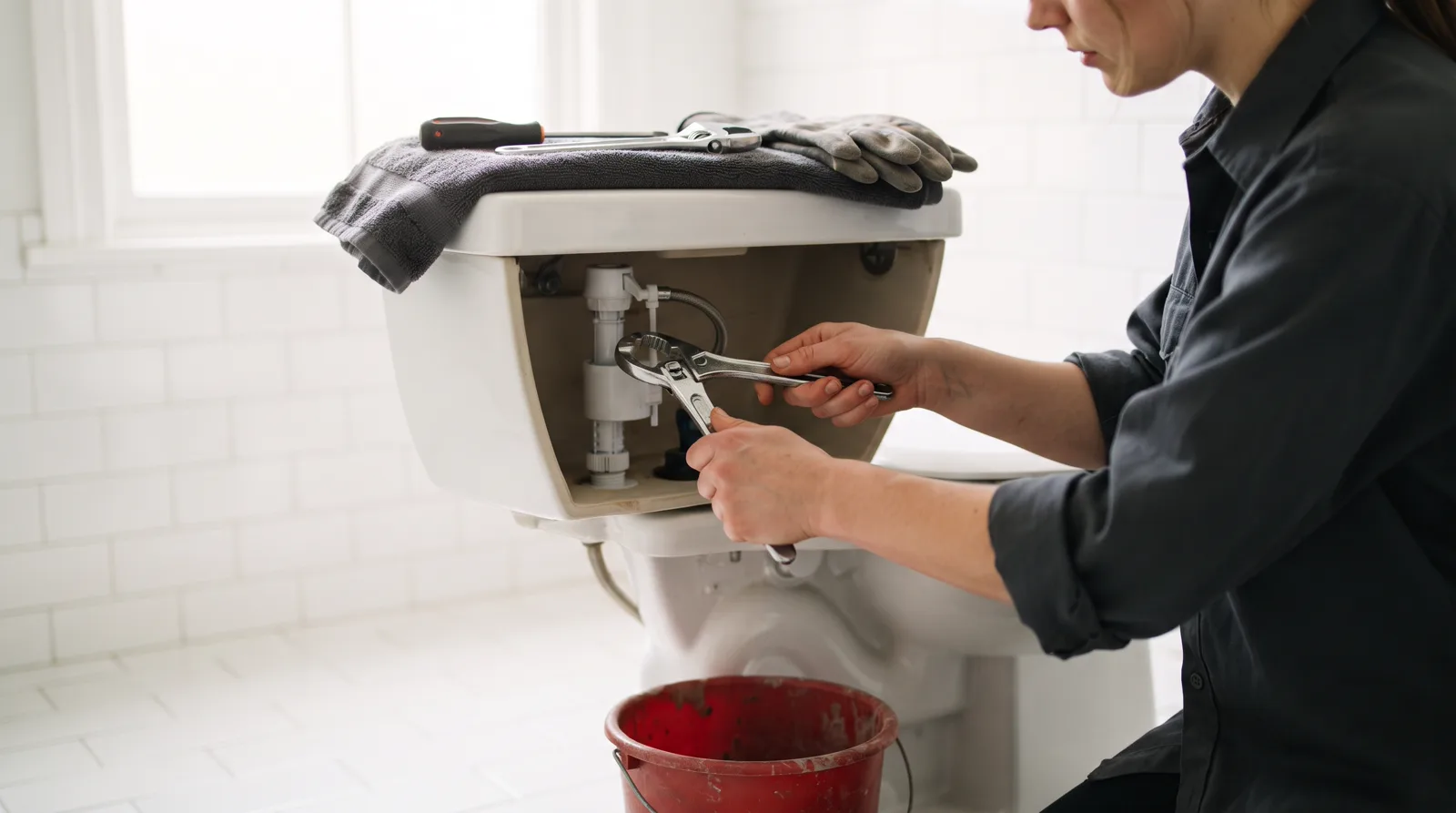
Toilet Repair Spruce Grove: Stop Leaks, Fix Fills, Install Right
Running toilets, weak flushes, base leaks and phantom refills fixed same day. Local pros diagnose wax rings, flappers, fill valves and cracked bowls honestly, then repair or install new units that match Alberta water pressure and deep frost drainage codes.
Toilet Services We Provide
From simple flapper swaps to full bowl replacements, local pros handle every toilet issue in the Tri-Region.
Running Toilet Repair
Replace faulty fill valves, flappers, flush handles or overflow tubes causing constant water flow. We stock Fluidmaster, Korky and Kohler parts on every truck. Includes water meter check to confirm the leak stops and adjustment for Spruce Grove municipal pressure, which runs 60 to 75 psi.
Base Leak and Wax Ring Replacement
Pull the toilet, inspect the flange for frost heave cracks, replace the wax ring or modern foam gasket, reset and caulk. We check subfloor rot common in older Spruce Grove homes with crawl spaces. If the flange is broken or rusted, local pros install a stainless repair ring anchored to solid joists, meeting 2019 Alberta Building Code plumbing standards.
Weak or Incomplete Flush Repair
Diagnose rim jets clogged by hard Parkland County well water, adjust fill tube height, or replace worn cartridge assemblies in dual-flush models. We test actual flush volume with a bucket to confirm 4.8 L or 6 L per code. If the trapway is partially blocked, we auger or recommend replacement if calcium buildup is severe.
New Toilet Installation
Install your supplied unit or source efficient models like TOTO Drake, American Standard Champion, or Kohler Highline that handle Tri-Region hard water and deep trap freezes. We verify rough-in dimension (10, 12 or 14 inch), anchor to code, connect supply line with braided stainless, test seal with dye tablets, and haul away your old toilet to the Acheson transfer station.
Comfort-Height and Accessible Toilet Installation
Install ADA-compliant or chair-height toilets (17 to 19 inches) for aging-in-place renovations. We reinforce floor joists if needed, install grab-bar backing in adjacent walls, and ensure flush lever placement meets accessibility standards. Popular in Stony Plain bungalows built in the 1970s where original toilets are 14 inches high.
Frozen or Burst Toilet Repair
Thaw freeze-damaged tanks or bowls after chinook temperature swings or vacant home incidents. We assess porcelain cracks with dye, replace tank-to-bowl gaskets split by ice expansion, and install new units if the bowl is fractured. Common in acreages near Acheson with older septic systems where basement heat was lost during power outages.
Why Tri-Region Toilets Need Local Know-How
🏔️ Chinook Freeze-Thaw Cycles
Spruce Grove sees 40°C temperature swings in 24 hours during chinook events. Wax rings harden and crack, tank bolts corrode from condensation, and porcelain micro-fractures propagate. We use flexible foam gaskets and corrosion-resistant hardware rated for prairie temperature extremes, extending seal life by 5 to 7 years compared to standard wax.
💎 Hard Water Calcium Buildup
Parkland County well water and Spruce Grove municipal supply average 180 to 250 mg/L hardness. Rim jets clog, fill valves seize, and siphon jets narrow, causing weak flushes. We descale with citric acid during repairs, recommend annual vinegar flushes, and install fill valves with larger orifices to resist mineral deposits.
❄️ Deep Frost and Septic Drainage
Frost penetrates 2.4 meters in rural Acheson and Stony Plain. Septic lines freeze if toilets drip constantly, and basement floor drains back up when frost plugs perimeter drains. We verify your toilet isn't phantom-running, which can send 750 liters per day into a frozen septic field, causing spring overflows and costly tank pump-outs.
🏚️ Older Home Flange and Joist Issues
Homes built in the 1960s and 1970s across the Tri-Region often have cast-iron flanges rusted below floor level or 2x8 joists sagging under 40-pound toilets. We sister joists, install offset flanges or extenders, and pour self-leveling compound to meet current code. This prevents rocking toilets that break wax seals and cause subfloor rot.
What it costs here
Everything You Need to Know About Toilet Repair and Installation in Spruce Grove
From diagnosing phantom flushes to choosing the right bowl for Alberta's climate, this guide walks you through the whole process.
How Toilet Repair and Installation Works in Spruce Grove and Parkland County
Toilet repair in Spruce Grove involves diagnosing mechanical failures, replacing worn components, stopping leaks, and restoring proper flush function without necessarily replacing the entire fixture. Most toilets fail because internal mechanisms wear out, seals deteriorate from mineral buildup in Alberta's hard water, or freeze-thaw cycles crack porcelain and wax rings. A licensed plumber arrives with diagnostic tools, replacement parts inventory, and the expertise to determine whether a repair makes financial sense or whether installation of a new toilet delivers better long-term value. The decision hinges on the age of the fixture, the extent of damage, water efficiency compared to modern standards, and whether repeated repairs have already drained your budget.
Installation involves removing the old toilet, inspecting and sometimes repairing the waste flange and subfloor, setting a new wax or foam ring seal, positioning the new fixture level and secure, connecting the water supply line, and testing for leaks and proper flush operation. In Parkland County homes built on clay soils, foundation settlement can shift the toilet flange out of alignment, requiring shims or flange repair before the new toilet goes in. Spruce Grove homes with older cast iron drain stacks may need flange replacement if corrosion has weakened the connection point. Stony Plain properties on well water systems often require additional sediment filtration to protect new fill valves from premature failure caused by sand and mineral particles.
The complexity increases when building code updates apply to your project. Alberta Building Code requires modern toilets to use no more than 4.8 litres per flush for single-flush models or an average of 4.1 litres for dual-flush units, compared to older toilets that consumed 13 to 20 litres per flush. If you are adding a new bathroom or moving a toilet location, you need a permit from Spruce Grove, Stony Plain, or Parkland County, and the work must meet current plumbing code for vent sizing, drain slope, and fixture spacing. A straightforward replacement in the same location typically does not require a permit, but any change to drain piping, vent connections, or fixture count does. Professional plumbers know these thresholds and handle permit applications when required, saving you from costly rework if an inspector red-tags unpermitted work.
Why Alberta Climate and Local Conditions Drive Toilet Problems
Spruce Grove and Parkland County experience winter temperatures that regularly drop below minus 30 Celsius, and homes here face freeze-thaw cycles that wreak havoc on plumbing fixtures. Toilets positioned on exterior walls or above unheated crawl spaces risk frozen water supply lines, and when ice expands inside the porcelain tank or bowl, hairline cracks form that turn into persistent leaks once the fixture thaws. Older homes in Stony Plain built before modern insulation standards often have bathrooms on exterior walls where cold air infiltration chills the space enough to freeze standing water in the bowl overnight during extreme cold snaps. Even newer homes in Acheson with poor attic insulation can experience frozen vent stacks, which prevents proper flushing because the drain system cannot equalize pressure without air movement through the vent.
Alberta's notoriously hard water accelerates toilet component failure throughout Spruce Grove and surrounding areas. Calcium and magnesium minerals precipitate out of solution and form rock-hard scale deposits inside fill valves, flush valves, and on flapper seals, preventing them from closing completely. A toilet that runs continuously after flushing usually has a flapper that can no longer seal because mineral buildup has roughened the flush valve seat or stiffened the rubber flapper itself. The same hard water clogs the small orifices around the underside of the toilet rim that distribute water during the flush cycle, reducing flush power and leaving waste behind. Parkland County residents on well water face even worse mineral content, often seeing orange or brown staining from iron and manganese that corrodes metal components and shortens the lifespan of fill valves and supply lines.
Foundation movement caused by expansive clay soils in this region creates alignment problems that lead to leaks and damage. Spruce Grove sits on Bentonite clay subsoils that swell when wet and shrink when dry, causing seasonal foundation heaving and settling. This movement can break the wax ring seal between the toilet base and the drain flange, allowing sewer gas and water to seep onto the bathroom floor. You might not notice a small leak immediately, but over months the water damages the subfloor, rots the underlayment, and creates conditions for mold growth. Homes in newer subdivisions around Acheson and Stony Plain continue to settle for years after construction, and even small vertical shifts can misalign the toilet from the flange enough to compromise the seal.
Clear Warning Signs You Need Toilet Repair or Replacement in Spruce Grove
A constantly running toilet wastes shocking amounts of water and signals that internal components have failed. You will hear water running into the bowl long after the flush cycle should have ended, or you will notice the fill valve cycling on and off every few minutes to refill the tank. This usually means the flapper no longer seals against the flush valve, the fill valve has failed and will not shut off completely, or the float is misadjusted or damaged. In Spruce Grove, where water and sewer rates continue climbing, a running toilet can waste 750 to 1,000 litres per day, adding $50 to $100 per month to your utility bill. Beyond the financial cost, continuous water flow through the system accelerates wear on all components and increases the risk of a catastrophic fill valve failure that floods your bathroom while you are away from home.
Leaks around the toilet base indicate a failed wax ring seal or a cracked porcelain base, both of which require immediate attention to prevent subfloor damage. If you see water pooling on the floor after flushing, smell sewer gas in the bathroom, or notice the toilet rocking slightly when you sit down, the seal between the toilet and drain flange has failed. Parkland County homes with basements often discover these leaks only after ceiling stains appear in the room below, by which time water has already soaked through the subfloor and damaged ceiling drywall or insulation. Sometimes the leak comes from a crack in the porcelain itself, often near the mounting bolts or at the horn where the toilet connects to the wax ring. Porcelain cracks cannot be reliably repaired, and the toilet must be replaced before the crack expands and causes a sudden major leak.
Weak or incomplete flushing means the toilet no longer moves waste effectively through your drain system. You might need to hold the handle down for an extended flush, flush multiple times to clear the bowl, or use a plunger routinely after normal use. This problem stems from clogged rim jets, a failing flapper that does not stay open long enough during the flush, insufficient water in the tank due to a misadjusted fill valve, or a partial blockage in the toilet trap or drainline. Stony Plain homes with older low-flow toilets installed in the 1990s often experience chronic flushing problems because early low-flow designs did not move waste efficiently. Modern WaterSense certified toilets use advanced bowl geometry and flush valve engineering to deliver powerful flushes with less water, making replacement a better solution than endless repairs on an outdated fixture.
Condensation and Tank Sweating Issues
Toilets that sweat profusely during summer months signal a temperature differential problem that can damage flooring and walls. Cold water sitting in the toilet tank cools the porcelain below the dew point of your bathroom air, causing moisture to condense on the outside of the tank and drip onto the floor. Spruce Grove summers bring humid air, especially during thunderstorm season, and the combination of cold well water or city water with warm humid air creates ideal conditions for tank sweating. Over time, this constant moisture warps vinyl flooring, stains and delaminates the subfloor, and creates musty odors. Installing a tank insulation liner or upgrading to a toilet with an insulated tank solves the problem permanently, while adding a bathroom exhaust fan or dehumidifier addresses the humidity side of the equation.
The Complete Toilet Repair and Installation Process Step by Step
The process begins with diagnosis to determine whether repair or replacement makes the most sense for your situation and budget. A licensed plumber shuts off the water supply, flushes the toilet to empty the tank, and inspects all components including the fill valve, flapper, flush valve, overflow tube, tank bolts, supply line, shut-off valve, wax ring, and porcelain for cracks or damage. They test the flush mechanism, check for leaks around the base and tank connections, measure water level in the tank and bowl, and assess whether the toilet sits level and secure on the flange. For intermittent problems, they might add dye to the tank water to reveal slow leaks past the flapper. This diagnostic phase typically takes 20 to 30 minutes and results in a clear recommendation: repair with parts replacement, upgrade specific components for better performance, or full replacement because the fixture is too old or damaged to justify further repair investment.
For repair work, the plumber sources quality replacement parts that match your toilet make and model or uses universal components designed for reliable performance. They replace flappers with exact or better-quality equivalents that resist mineral buildup, install fill valves from manufacturers like Fluidmaster or Korky known for durability in hard water conditions, and replace corroded supply lines with braided stainless steel lines that will not burst. Tank bolts get replaced if corrosion has weakened them, and tank-to-bowl gaskets are always replaced when the tank comes off to prevent future leaks. If the shut-off valve under the toilet is original to a home built before 2000, many plumbers recommend replacing it during the repair because these old gate valves and multi-turn valves frequently seize or fail, and replacing one during a service call costs far less than an emergency return visit when it fails later.
Full toilet installation requires more extensive work and careful attention to the connection between the toilet and your drain system. The plumber starts by shutting off water, disconnecting the supply line, removing tank lid and contents to lighten the fixture, unbolting the toilet from the floor, and carefully lifting it away from the flange to avoid damaging the drain pipe. They scrape away the old wax ring completely, inspect the closet flange for cracks or corrosion, and determine whether flange repair or replacement is necessary before the new toilet can be installed. Parkland County homes often need flange extenders if flooring has been added over the years, raising the floor level above the original flange height. The flange must sit level with or slightly above the finished floor, or the wax ring will not seal properly.
Setting and Sealing the New Fixture
Once the flange is confirmed ready, the plumber installs a new wax ring with a polyethylene flange sleeve, which provides better leak resistance than a plain wax ring, or they might use a modern foam gasket that does not require perfect compression to seal. New brass closet bolts go into the flange slots, positioned exactly opposite each other so the toilet sits centered. The new toilet gets carefully lowered straight down onto the flange, with the mounting holes aligned over the bolts. The plumber rocks the toilet gently to compress the wax ring evenly, then checks level in both directions using a torpedo level. If the floor is uneven, plastic shims go under the base to prevent rocking, which would break the wax seal over time. Nuts get tightened gradually in an alternating pattern to avoid cracking the porcelain base, and excess shim material is trimmed flush with the toilet base.
The water supply line connects to the fill valve shank under the tank, using a new supply line long enough to allow a gentle curve without kinking. The plumber opens the shut-off valve slowly, fills the tank while watching for leaks at every connection, and adjusts the fill valve so water stops about one inch below the top of the overflow tube. They flush multiple times to verify proper operation, check again for leaks around the base and supply connections, and adjust the chain length on the flapper if needed so it opens fully during flush but does not get caught under the flapper when it closes. Final caulking around the toilet base seals the fixture to the floor and prevents water from running under the toilet if a spill occurs, though they leave a small gap at the back so any leak from a failed wax ring will be visible rather than hidden under the caulk.
Special Considerations for Spruce Grove and Area Homes
Older homes in Stony Plain and Spruce Grove often have cast iron drain stacks with lead and oakum closet flanges that have corroded beyond reliable use. Replacing these flanges requires cutting the cast iron, installing a no-hub coupling, and connecting a short section of PVC pipe with a modern plastic or brass flange. This repair adds time and cost but provides a solid foundation that will outlast another cheap wax-ring-only repair. Some plumbers encounter floor joists that were notched too deeply during original construction, weakening the subfloor under the toilet. Code requires proper support under all plumbing fixtures, and responsible plumbers sister in reinforcement or add blocking before installing a new toilet on a questionable subfloor.
Homes on acreages around Acheson with septic systems need toilets that work efficiently with lower water volumes to avoid overloading the septic tank and drain field. High-efficiency toilets reduce the daily water load going to the septic system, extending the time between pump-outs and reducing the risk of drain field failure. The plumber confirms your septic system can handle the toilet discharge and may recommend avoiding certain toilet models with powerful pressure-assisted flush systems that can overwhelm older septic tanks with sudden high-volume discharges. Well water systems require consideration of sediment and mineral content, sometimes prompting installation of sediment filters on the supply line to protect the fill valve from premature wear caused by sand and iron particles common in rural Alberta wells.
What Toilet Repair and Installation Actually Costs in Spruce Grove, Stony Plain and Parkland County
Toilet repair costs in the Tri-Region typically range from $180 to $450 for straightforward fixes like replacing a flapper, fill valve, wax ring or flush mechanism. A plumber in Spruce Grove or Stony Plain charges $120 to $180 for the first hour, then $80 to $120 per additional hour. Simple jobs take 45 minutes to 90 minutes once the plumber arrives. Parts are marked up 15 to 40 percent over retail, so a $12 flapper kit might appear as $18 on your invoice, and a quality fill valve assembly that costs $35 at the hardware store may be billed at $50. Emergency after-hours calls, especially weekend evenings or holidays, often carry a $100 to $200 premium on top of standard rates, so a leaking toilet at 9 p.m. on Sunday can easily become a $400 visit even for a minor fix.
Complete toilet replacement in Spruce Grove, Stony Plain, Parkland County or Acheson runs $400 to $900 for a basic builder-grade two-piece model installed on an existing flange in good condition. That price includes removal and disposal of the old toilet, a new wax ring, supply line, bolts and labour for a straightforward swap. Mid-range comfort-height elongated bowl toilets with WaterSense certification and soft-close seats push the total to $650 to $1,200. Premium one-piece or skirted models with dual-flush technology, concealed trapways and brand names like Kohler, Toto or American Standard land in the $900 to $1,800 range installed. If your toilet flange is cracked, corroded or sitting below the finished floor, add $180 to $450 for flange repair or replacement, which involves cutting flooring, possibly breaking tile, and sometimes accessing the subfloor to install an extender ring or new brass flange.
Costs escalate when plumbers encounter problems common in older Tri-Region homes. Rusted or frozen shut-off valves require replacement, adding $120 to $220. Floors softened by long-term leaks need subfloor repair or replacement before a new toilet goes down, which can add $300 to $800 depending on the extent of rot and whether tile or vinyl must be cut and patched. Homes built before 1990 in Stony Plain and older sections of Spruce Grove sometimes have cast-iron closet flanges that crack under Alberta freeze-thaw cycles, requiring more invasive repair and higher labour hours. Tight half-bath layouts or basement installations with low headroom slow the work and raise labour costs. Rural Parkland County properties on wells may reveal sediment-clogged fill valves that fail prematurely, prompting recommendations for whole-house filtration that add to the overall project scope and expense.
Hidden Costs and Budget Surprises
Many homeowners budget only for the visible repair or new toilet and get surprised by necessary ancillary work. If your bathroom shut-off valve is original to a 1985 build, it will likely snap or seize when the plumber tries to close it, requiring valve replacement before any toilet work begins. Older homes in Parkland County and Acheson often have galvanized supply lines that corrode internally, and once disturbed they begin to leak, forcing replacement of the entire run from the main shut-off. Budget an extra $150 to $300 as contingency for valve and supply line issues if your home is more than 20 years old and plumbing has never been updated.
Disposal fees and permit costs also appear on invoices. Spruce Grove and Stony Plain charge residential waste drop-off fees, and plumbers typically pass through $25 to $50 for hauling your old toilet to the landfill or transfer station. If structural work is needed like subfloor replacement or flange repair that involves cutting into joists, some municipalities require a plumbing permit, adding $75 to $150 and a inspection visit. Insurance claims related to toilet leaks sometimes require documentation and photos before repairs proceed, which can delay the job and increase labour if the plumber must return for a second visit after the adjuster approves the scope.
Comparing Toilet Types, Repair Methods and Technology Options for Alberta Homes
Two-piece gravity-flush toilets remain the default choice in the Tri-Region because they are affordable, parts are stocked locally, and any plumber can service them. These models have a separate tank bolted to the bowl and use simple flapper-and-fill-valve mechanics that homeowners can inspect and often repair themselves. Replacement flappers cost $8 to $18, fill valves run $25 to $50, and tank-to-bowl gaskets are $12 to $20. Gravity systems work reliably in Alberta's hard water, though mineral buildup on the flapper seat causes phantom running that wastes water and drives up utility bills. For a household that flushes 15 times daily, a running toilet leaking two gallons per hour wastes roughly 1,400 gallons per month, adding $8 to $15 to your water and sewer bill in Spruce Grove or Stony Plain.
Pressure-assist toilets use compressed air in a sealed tank to force waste through with more power than gravity models, making them popular in basement bathrooms with marginal drain slope or where clogs are frequent. Installation costs run $200 to $400 higher than gravity models because pressure-assist units require specific supply line pressure, the tanks are proprietary and more expensive, and fewer plumbers stock the parts. These toilets flush louder, which annoys some homeowners, and when the pressure vessel fails after 8 to 12 years the replacement cartridge costs $180 to $280 plus labour. They excel in high-use scenarios like busy family bathrooms or Acheson shop facilities, but for typical residential use in Parkland County the added expense and noise rarely justify the marginal performance gain over a quality gravity-flush model with a proper 3-inch or 4-inch flush valve.
Dual-flush and WaterSense-certified toilets deliver measurable water savings without significant cost premium. Dual-flush models offer a partial flush for liquid waste, using 0.8 to 1.1 gallons, and a full flush for solids at 1.6 gallons, compared to older toilets that use 3.5 to 5 gallons per flush. A family of four replacing a 1992-era toilet with a modern WaterSense model saves roughly 10,000 to 15,000 gallons per year, reducing annual water and sewer costs by $60 to $100 in Spruce Grove. Dual-flush mechanisms are slightly more complex, with buttons or dual-handled actuators that can stick or misadjust, and replacement flush valves cost $40 to $70 versus $25 to $40 for single-flush designs. One-piece toilets and skirted models with concealed trapways cost more upfront, from $350 to $800 for the fixture alone, but they simplify cleaning and reduce the crevices where mold and grime accumulate, a real benefit in Alberta's dry winter indoor air that concentrates dust.
Comfort Height, Rough-In and Flange Considerations
Comfort-height toilets sit 17 to 19 inches from floor to seat rim, two to four inches taller than standard models, making them easier for older adults, taller individuals and anyone with knee or hip issues. They cost the same or $30 to $80 more than standard-height equivalents and install identically, so there is little reason not to choose comfort height if replacing a toilet. Check your existing rough-in measurement before ordering a new toilet. The rough-in is the distance from the wall to the center of the floor flange bolts, and 12 inches is standard in Tri-Region construction, but older homes sometimes have 10-inch or 14-inch rough-ins that require specific toilet models or offset flanges that cost $40 to $90 and may reduce flush performance.
Flange condition determines whether a toilet swap is simple or complicated. Plastic flanges installed in 1990s and early 2000s Spruce Grove homes crack around the bolt slots under years of rocking or over-tightening, while brass and cast-iron flanges corrode or crack from freeze-thaw movement in unheated spaces. A broken flange cannot hold the toilet secure or maintain a watertight seal, leading to leaks that rot subfloors and joists. Repair options include flange repair rings that bolt or glue over the existing flange, full flange replacement that may require cutting the closet bend, or extender kits if the flange sits too low after new tile or vinyl installation. Discuss flange condition with your plumber during the quote stage so there are no surprises mid-job.
Common Mistakes and Contractor Traps That Cost Tri-Region Homeowners Money
The biggest mistake homeowners make is delaying toilet repairs until minor issues become major damage. A slow leak from a deteriorated wax ring or hairline crack in a tank might drip just a few drops per hour, but over months that moisture rots subfloors, damages ceiling drywall below, and creates mold growth in wall cavities. By the time the floor feels spongy or a stain appears on the basement ceiling, you are looking at $800 to $2,500 in structural and finishing repairs on top of the $250 toilet fix you postponed. Alberta's dry indoor winter air sometimes masks small leaks because the water evaporates before pooling becomes visible, so trust your nose if you smell mustiness near the toilet and check the floor with a moisture meter or by pressing firmly on the vinyl or tile near the base.
DIY toilet repairs go wrong when homeowners overtighten bolts, reuse old wax rings or cheap out on parts quality. Overtightening closet bolts cracks the porcelain base of the toilet, a non-repairable failure that requires buying a new fixture. Reusing a wax ring after pulling a toilet guarantees a leak because the wax compresses and conforms only once. Quality wax rings with polyethylene funnels cost $8 to $12 and form better seals than generic flat wax rings that cost $4, especially on uneven floors common in older Parkland County homes with settled foundations. Bargain fill valves and flappers sold in big-box stores for $6 to $10 last 12 to 24 months in Alberta's hard water, while quality Fluidmaster or Korky components that cost $20 to $35 run five years or more with less adjustment and fewer phantom flush issues. The $15 you save buying cheap parts turns into $180 in labour when the plumber returns eight months later to replace the failed valve again.
Contractor traps include bait pricing, parts markup abuse and scope creep. Some plumbers advertise $99 or $129 service calls but bury conditions in fine print: the rate applies only if you authorize the repair immediately, covers only the first 30 minutes, or excludes parts and disposal. Once on site, the plumber finds reasons why your simple flapper replacement requires a full flush valve rebuild, a new fill valve, and a supply line swap, ballooning the bill to $400 or more. Honest plumbers explain what is truly necessary and offer options, while unscrupulous ones use scare tactics about code compliance or imminent failure to pressure immediate approval of unnecessary work. Another trap is quoting a low toilet installation price that assumes a perfect existing flange and floor, then charging hundreds extra for repairs that were obvious from the beginning. Legitimate plumbers inspect the flange and floor condition during the quote visit or disclose that additional charges will apply if problems are found.
- Never authorize work from a plumber who shows up without a business card, vehicle signage or proof of WCB coverage and liability insurance.
- Get a written quote that itemizes labour, parts, disposal and any contingencies before work starts, not a vague verbal estimate.
- Ask to see the old parts after replacement so you understand what actually failed and whether the repair was necessary.
- Avoid plumbers who insist on immediate payment in cash or e-transfer before completing the work and cleanup.
- Check that the plumber tests the new installation by flushing multiple times, checking for leaks at the base and supply connection, and verifying the fill valve shuts off properly.
How to Hire the Right Plumber for Toilet Repair and Installation in the Tri-Region
Start by verifying the plumber holds an active Alberta journeyman or master plumber ticket. In Alberta, anyone doing plumbing work for hire must be licensed or work under the direct supervision of a licensed plumber, and the license number should appear on quotes, invoices and advertising. Check the plumber's standing with the Alberta Safety Codes Authority and confirm liability insurance by asking for the firm's WCB account number and calling WCB Alberta to verify active coverage. If a plumber or their helper is injured on your property and the company lacks WCB, your homeowner's insurance may be liable for medical costs and lost wages. Liability insurance of at least two million dollars is standard in the trade and protects you if a plumbing error causes water damage or structural issues. Legitimate contractors provide proof of both coverages without hesitation.
Get three written quotes for any toilet installation or repair expected to exceed $400, and ensure each quote specifies the fixture model or part numbers, labour hours or flat rate, warranty on workmanship and materials, and any assumptions about existing conditions. A detailed quote for a toilet replacement should list the toilet make and model, wax ring type, supply line specification, whether the old toilet disposal is included, and any exclusions like flange repair or valve replacement. Compare not just the bottom-line price but the quality of fixtures and parts, the warranty length, and the clarity of communication. A plumber who shows up on time for the quote appointment, asks good questions about your water pressure and usage patterns, and explains options without high-pressure sales tactics is signaling professionalism that will carry through the actual work.
Ask for recent local references and follow up with at least two. Good questions for references include whether the plumber showed up on time, left the work area clean, explained the problem clearly, honored the quoted price, and responded if any issue arose after completion. Check online reviews on Google, HomeStars or the Better Business Bureau, looking for patterns rather than isolated complaints. Every contractor gets an occasional bad review, but consistent themes around billing surprises, incomplete work or poor communication are red flags. Verify the plumber is local to Spruce Grove, Stony Plain or Parkland County. Firms based in Edmonton sometimes advertise in the Tri-Region but charge travel time and mileage, and their technicians lack familiarity with local building inspectors, suppliers and common issues in our housing stock.
Red Flags and Warning Signs
Walk away from plumbers who cannot or will not provide proof of licensing and insurance, even if their price is the lowest. Unlicensed work voids permits, complicates insurance claims, and often violates manufacturer warranties on fixtures and parts. Be wary of plumbers who insist on cash payment or offer a discount for paying under the table, as this suggests they are avoiding taxes, WCB premiums or insurance requirements, and you will have no recourse if the work fails. High-pressure tactics, like claiming your toilet or flange is dangerous and must be replaced immediately before the plumber even shows you the problem, signal a scam or incompetence.
Avoid contractors who provide verbal-only estimates or vague quotes like 'around $500' without itemization. Legitimate plumbers understand that their reputation depends on transparency and put everything in writing. Be cautious if a plumber recommends expensive upgrades or whole-system replacements for a simple repair without a logical explanation tied to code, efficiency or preventing imminent failure. While upselling is common in the trade, honest plumbers explain why an upgrade makes sense and give you the option to proceed with just the necessary repair. Finally, mistrust plumbers who cannot provide a call-back number, physical business address or after-hours emergency contact. Reputable Tri-Region firms want long-term customer relationships and make themselves available when problems arise.
How Tri-Region Services Helps
Tri-Region Services eliminates the guesswork and risk by routing you to one carefully vetted, licensed and insured local plumber who will provide a free written quote with no obligation. Every plumber in our network holds current Alberta licensing, tells us they carry liability insurance, and has demonstrated a track record of quality work and fair pricing in Spruce Grove, Stony Plain, Parkland County and Acheson. We do not operate a call center or dispatch random contractors. Instead, we connect you directly to a local professional who understands Alberta building code, has experience with the common toilet and plumbing issues in our housing stock, and stands behind their work with real warranties.
You get one quote from a plumber who will actually do the work, not a sales estimate from a company that subcontracts to the lowest bidder. The process is simple: describe your toilet problem or installation need, and we match you with the right pro who will schedule a convenient time to assess the situation, explain your options, and provide a detailed written quote at no charge. There is no pressure, no obligation, and no runaround. If the quote makes sense, you move forward. If not, you have lost nothing but a few minutes of time. Our goal is to make hiring a trustworthy plumber as straightforward as the repair itself, so you can get your toilet fixed right the first time without the stress of vetting contractors or worrying about surprise bills and shoddy work.
Why Homeowners Trust Us
Licensed, insured, and transparent. We show you the problem, explain your options, and never upsell.
Alberta Master Plumber Licensed
Every technician holds a valid Alberta journeyman or master plumber ticket and carries photo ID.
Insurance on file
commercial general liability protect your home and the team working in it.
Photo and Video Diagnosis
We text you pictures of the broken flapper, cracked flange or calcium buildup before quoting repair or replacement.
Itemized Flat-Rate Quotes
You see parts cost, labor hours and disposal fees upfront with no surprise charges at invoicing.
Old Toilet Disposal Included
We haul your old toilet to the Acheson Eco Station at no extra charge and provide the disposal receipt.
Same Technician Callback
If an issue recurs within 30 days, the same plumber returns at no trip charge to make it right.
This page is not tied to a contractor's brand. Leads route straight to your one local partner. Verified reviews can appear here once that partner has them (never fabricated).
Serving the whole Tri-Region
8 Questions About Toilet Repair in Spruce Grove
How do I know if my toilet is running and wasting water?+
Why is my toilet leaking at the base, and is it an emergency?+
Can I install a new toilet myself, or do I need a plumber?+
What toilet brands handle Spruce Grove hard water best?+
How much does it cost to fix a constantly running toilet in Spruce Grove?+
Do I need a permit to install a new toilet in Spruce Grove?+
Why does my toilet flush weak, and how do I fix it?+
What is the difference between a 10-inch and 12-inch rough-in, and does it matter?+
Get your free quote
Tell us what you need and a local pro will get right back to you.
- ✓ Sent straight to a local business
- ✓ You choose who you hire
- ✓ Free, with no obligation