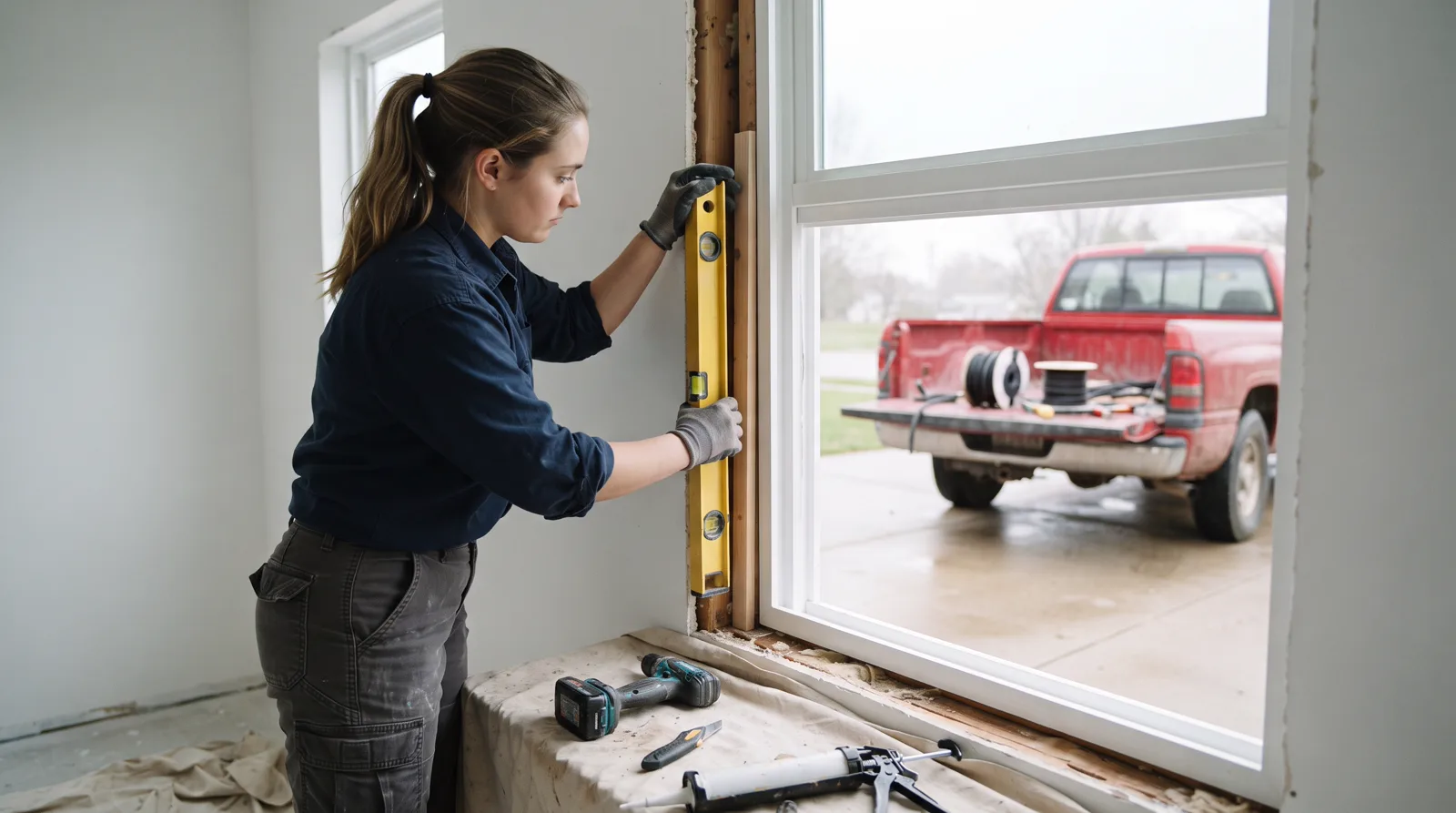
Vinyl Window Installation Built for Alberta Cold.
Low maintenance, energy-efficient vinyl windows installed to code. Local pros handle permits, match your brick, and warranty the seal.
Vinyl Window Services We Install
From single replacements to whole-home retrofits, sized and sealed for Alberta weather.
Retrofit Vinyl Window Replacement
Remove old window, install new vinyl unit into existing rough opening. Insulate perimeter with low-expansion foam, seal interior and exterior, match siding or stucco. Fastest option for occupied homes.
Triple-Pane Low-E Vinyl Windows
Argon or krypton gas fill, two low-emissivity coatings, warm-edge spacers. R-value 4.5 to 5.0. Reduces condensation and cuts heat loss by 30 to 40 percent compared to standard double-pane.
Basement Egress Vinyl Windows
Code-sized egress window (minimum 3.77 sq ft open area), window well, gravel base, ladder if required. Meets Alberta Building Code for basement bedrooms. Permit and inspection coordination included.
New Construction Vinyl Window Install
Nail-fin vinyl windows for new builds or additions. Flashed to house wrap, integrated with air barrier, backer rod and sealant joints. Coordinated with framing and siding schedule.
Bay and Bow Vinyl Window Installation
Multi-panel vinyl bay or bow window, structural support brackets, interior platform framing, insulated seat box. Roof above unit shingled to match. Custom order lead time 4 to 8 weeks.
Vinyl Patio Door Installation
Sliding or hinged vinyl patio door, heavy-duty rollers or multi-point lock. Sill pan and flashing, threshold insulated and sloped for drainage. Low-E glass standard, triple-pane available.
Why Vinyl Windows Work in Spruce Grove
🌡️ Cold Climate Performance Ratings
We spec vinyl windows with Alberta-rated performance: ER (energy rating) 34 or higher, A3 air leakage, and U-factor under 0.25. Frames stay flexible to negative 40 degrees Celsius without cracking. Low-E coatings tested for chinook temperature swings of 20 to 30 degrees in one day.
📋 Spruce Grove and Parkland County Permits
Window replacement typically requires a building permit if you change the opening size or install an egress window. We submit drawings, coordinate inspections, and provide stamped engineering for lintels when required. Permit fees run $75 to $150 depending on scope.
🧊 Condensation and Frost Control
Interior humidity at 35 percent RH and exterior temps at negative 30 can cause condensation on double-pane glass. Triple-pane with warm-edge spacers keeps the interior pane surface above dew point. We also detail the air seal and vapour barrier tie-in to prevent condensation inside the wall cavity.
⛈️ Hail Impact Resistance
Spruce Grove and Stony Plain see hail events every 2 to 3 years, some with stones over 2 centimeters. Vinyl frames flex on impact rather than denting like aluminum. We offer laminated or tempered glass upgrades for south and west exposures where hail hits hardest.
What it costs here
Everything About Vinyl Window Installation in Alberta
Frame types, glazing options, code requirements, climate performance, and what to expect from start to finish.
What Vinyl Window Installation Actually Involves in Spruce Grove
Vinyl window installation is a complete replacement process, not a repair or overlay job. The installer removes your existing window unit, frame and all, down to the rough opening in your wall. That opening gets inspected for rot, water damage, or structural issues before any new window goes in. In older Spruce Grove homes built before 2000, installers often find compromised framing or missing vapour barrier around the rough opening, which must be repaired before the new window can seal properly. This pre-installation work is not optional because Alberta's freeze-thaw cycles will exploit any gap or moisture path.
The new vinyl window arrives as a complete factory-assembled unit, typically a welded frame with insulated glass sealed inside. Quality vinyl windows use multi-chamber extrusions that trap dead air for insulation, and the glass is almost always double or triple pane with argon or krypton gas fill. The installer sets the unit into the rough opening, shims it level and plumb, then fastens it through the nailing fin or mounting flanges. Shimming is critical because a window that is even slightly out of square will bind when you operate it, and the seal between the sash and frame will leak air. In Parkland County, where winter temperatures regularly hit negative 30 Celsius, a poorly shimmed window costs you hundreds of dollars per year in heating.
After fastening, the installer seals the gap between the window frame and the rough opening with low-expansion polyurethane foam, then applies a continuous bead of exterior-grade sealant around the perimeter. Inside, they insulate the gap with fiberglass or foam, then reinstall or replace the interior trim. The final step is a full operational check, making sure every sash opens, closes, and locks smoothly, and that the weatherstripping makes solid contact all the way around. A professional installer will also verify that weep holes on the exterior sill are clear, because those small slots drain any water that gets past the glass seal, preventing rot in the frame.
Why Alberta Climate Demands Proper Vinyl Window Installation
Spruce Grove and Stony Plain experience some of the widest temperature swings in Canada. A January morning can start at negative 25, warm to plus 5 by afternoon if a chinook rolls through, then drop back to negative 15 overnight. That cycle repeats dozens of times each winter, and it wreaks havoc on windows that are not properly installed or sealed. When warm indoor air meets cold glass, condensation forms. If that moisture finds a path into the wall cavity through a gap in the installation, it freezes, expands, and cracks the framing or rots the wood. Vinyl windows themselves handle freeze-thaw well because the material does not absorb water, but the installation details around them determine whether your home stays dry and efficient.
Wind is the other major factor. Parkland County is exposed prairie, and sustained winds of 40 to 60 kilometers per hour are common from November through March. Wind-driven rain and snow will find every tiny gap in a window installation, and once moisture gets behind the siding or into the wall cavity, it stays there until spring. That is why exterior sealant and properly lapped building wrap are non-negotiable. A vinyl window installed without attention to the weather barrier will let water into your walls even if the window itself is high quality. In Acheson, where industrial buildings and open land create wind tunnel effects, installers often add an extra bead of sealant and use mechanical fasteners every six inches instead of every twelve to resist wind load.
Hail is a reality every spring and summer in this region. Golf ball sized hail is not rare, and it will crack single pane glass and dent aluminum frames. Vinyl frames resist impact better than aluminum, but the glass is still vulnerable. That is one reason why impact-resistant laminated glass or tempered outer panes are worth considering if your home faces south or west, where storms typically arrive from. Proper installation also matters because a window that flexes or rattles in its frame during a storm is more likely to fail under impact. The shims and fasteners that hold the window rigid are part of your hail defense, not just thermal performance.
How to Know You Need Vinyl Window Installation
Condensation between the panes is the clearest sign your windows have failed. If you see fog, water droplets, or a milky haze inside the glass unit, the seal has broken and the insulating gas has leaked out. That window is now performing like single pane glass, and you are losing heat through it at triple the rate of a sealed unit. In Spruce Grove, a failed seal in a south-facing window can add $30 to $50 per month to your heating bill through the winter. You cannot repair a failed seal. The entire glass unit, or often the entire window, must be replaced. Some homeowners try to live with fogged glass, but the moisture inside eventually leaves mineral deposits that permanently cloud the glass.
Drafts around the window frame, even when the sash is closed and locked, mean the weatherstripping has compressed or the frame has shifted. You can test this with a stick of incense or a candle on a windy day. Hold it near the edges of the window and watch the smoke. If it flickers or streams sideways, air is moving through. In older homes with the original builder-grade windows, the weatherstripping is often a simple foam tape that compresses flat after ten years. Replacing just the weatherstripping is possible on some windows, but if the frame itself has warped or settled, no amount of new stripping will seal the gap. That is when full replacement is the only solution that stops the draft and the energy loss.
Ice buildup on the interior glass or frame in winter is a red flag. It means warm, humid indoor air is reaching a surface cold enough to freeze it, which should not happen with properly functioning double or triple pane windows. Ice on the glass usually points to a failed seal or inadequate insulation in the wall around the window. Ice on the frame or sill can mean the frame itself is conducting cold, which happens with older aluminum frames or poorly insulated vinyl. Either way, ice means you are losing heat and risking water damage when that ice melts. In Parkland County, where winter humidity from cooking and showers has nowhere to go, interior ice is a common problem in homes with original 1980s windows.
Physical Damage and Operation Problems
Cracks in the glass, even small ones, compromise both the seal and the structural integrity of the pane. A crack will grow with temperature changes, and it allows outside air and moisture to bypass the sealed unit entirely. Vinyl frames can crack too, usually at the corners or around the mounting screws, if the window was over-tightened during installation or if the frame has been stressed by settling. A cracked frame cannot be reliably repaired because vinyl welding in the field does not achieve the same strength as factory fusion welding.
If your windows stick, bind, or require force to open or close, the frame has either warped or the installation was not plumb and square. This happens in new construction when the house settles in the first few years, and it happens in older homes when the foundation shifts or the framing dries and twists. A window that does not operate smoothly is not just inconvenient. It means the weatherstripping is not making even contact, so you are losing air seal, and if the sash binds hard enough, the stress can crack the glass or break the locking mechanism. In Spruce Grove, where soil conditions cause slow foundation movement, window operation problems often appear five to ten years after the original install.
The Vinyl Window Installation Process from Start to Finish
The process starts with an on-site assessment. The installer measures the existing window openings, checks for square and level, and inspects the condition of the surrounding framing and siding. They will note any rot, previous water damage, or structural issues that need repair before the new windows go in. This assessment determines the final price because Alberta homes built in different eras have different framing styles, and retrofit installations often require custom trim or additional framing work. A home in Stony Plain built in 1975 with 2x4 walls and no building wrap will cost more to retrofit properly than a 2005 build with 2x6 walls and modern weather barrier, because the older home needs more prep to meet current standards for air and moisture control.
Once you approve the quote, the installer orders the windows. Vinyl windows are typically manufactured to order, so lead time runs two to six weeks depending on the supplier and the complexity of the unit. Custom colors, special glass options like low-E coatings or laminated panes, and non-standard sizes all add time. While waiting for the windows, the installer schedules the work, usually booking a full day per five to seven windows depending on size and access. In cold months, some installers will only work when daytime temperatures are above minus 10 Celsius, because sealants and foam do not cure properly in extreme cold, and leaving a rough opening exposed in minus 20 weather can freeze your pipes.
On installation day, the crew removes the interior trim, cuts any paint or caulking seal around the existing window, and pulls the old unit out. If the old window is nailed in, they cut the nails with a reciprocating saw rather than prying, which could damage the framing. With the opening exposed, they inspect for damage, replace any rotted wood, and make sure the rough opening is clean, square, and ready. They apply sealant to the exterior sill, set the new window into the opening, and shim it level and plumb using a long level and tapered cedar shims at multiple points around the frame. They fasten through the mounting flanges or nailing fin into the framing, checking after each screw that the window has not shifted out of square.
After fastening, they test the operation, opening and closing each sash and checking that it latches and seals properly. They fill the gap between the window frame and the rough opening with low-expansion foam, being careful not to overfill, because too much foam can bow the frame and cause the window to bind. On the exterior, they lap the building wrap or house wrap over the nailing fin and apply a bead of exterior-grade sealant around the perimeter. On the interior, they insulate the gap with fiberglass batts or spray foam, then reinstall the trim or install new trim if the old was damaged. The final step is a full check of operation, seal, and weatherstripping contact, followed by cleanup and a walkthrough with the homeowner.
What Vinyl Window Installation Really Costs in Spruce Grove and the Tri-Region
A standard vinyl window replacement in Spruce Grove, Stony Plain, or Parkland County typically runs between $400 and $900 per window, fully installed. That figure covers a mid-grade vinyl frame, double-pane low-E glass with argon fill, professional removal of the old window, insulation of the rough opening, interior and exterior trim work, and disposal of the old unit. Larger picture windows, bay assemblies, or custom shapes push the range to $1,200 to $2,500 each. A whole-house project averaging ten windows lands between $6,000 and $12,000, depending on size, style, and the level of finish detail you choose.
Three factors drive the final invoice in the Tri-Region. First, labor accounts for roughly half the cost because Alberta winters demand careful air sealing and insulation work that takes time to do correctly. Second, glass package upgrades add $80 to $200 per window when you step from standard double-pane to triple-pane or high-performance low-E coatings that block summer heat and hold winter warmth. Third, disposal and permit fees contribute $50 to $150 per project. Spruce Grove and Parkland County both require a building permit for window replacement when you change the rough opening size or structural framing, and inspectors verify that new windows meet the energy performance minimums in the Alberta Building Code.
Climate preparation separates a basic swap from a long-lasting installation in this region. Contractors working through chinook cycles and deep frost know to extend the exterior casing at least twenty millimeters past the rough opening and apply a continuous bead of low-temperature sealant that stays flexible at minus thirty degrees. They also add closed-cell foam backer rod behind the interior trim to block convection currents that steal heat. These steps cost an extra fifteen to thirty minutes per window but prevent ice buildup, drafts, and condensation damage over the twenty to thirty-year service life of the vinyl frame.
Hidden costs catch homeowners off guard when old windows reveal rot, mold, or undersized framing that no longer meets code. Reframing a rough opening to accommodate modern window dimensions adds $150 to $400 per opening, and replacing water-damaged sheathing or sill plates can double that figure. Always budget a ten to fifteen percent contingency for structural surprises, especially in homes built before 1990 when insulation and vapor-barrier standards were less stringent. A reputable installer will flag these issues during the site visit and provide a detailed quote that separates window supply, installation labor, and any necessary carpentry or drywall repair so you know exactly what you are paying for.
Comparing Your Vinyl Window Options in the Tri-Region Market
Operating style is the first decision because it affects both price and long-term performance in Alberta weather. Single-hung windows, where only the bottom sash moves, are the most affordable at $400 to $650 installed and work well for bedrooms and secondary spaces. Double-hung units, which tilt in for cleaning, cost $550 to $850 and are popular for two-story homes where exterior access is difficult. Casement windows that crank outward offer the best air seal and unobstructed views but run $650 to $1,100 per unit because the hinge hardware and locking mechanism must withstand high wind loads during chinook events. Horizontal sliders are a good middle ground at $500 to $800 and suit wide openings where vertical clearance is limited.
Glass package quality determines how much heat you keep in winter and how much solar gain you block in summer. Standard double-pane glass with a low-E coating and argon fill between the panes delivers an insulation value around R-3, meeting Alberta code minimums for most Tri-Region homes. Upgrading to triple-pane glass with krypton fill pushes the R-value to 5 or higher, cutting heat loss by thirty to forty percent in the coldest months and reducing the load on your furnace. The upgrade costs $120 to $200 per window but pays back faster in larger openings that face north or west, where wind-driven heat loss is most severe. If you have rooms that feel cold near the glass or you see condensation on the interior pane in January, triple-pane glass solves both problems.
Frame quality separates budget vinyl from premium brands, and the difference shows up in color retention, structural rigidity, and fusion-welded corner strength. Entry-level vinyl extrusions use thinner walls and simpler reinforcement, which can bow or sag over time when you have wide spans or heavy glass packages. Mid-grade and premium frames feature multi-chamber extrusions with steel or aluminum reinforcement in the sash and frame, ensuring the window stays square and the weatherstripping maintains contact even after ten freeze-thaw cycles per winter. Premium lines also offer a wider range of exterior colors and woodgrain laminates that resist UV fading, important if you want a darker finish that complements your siding without chalking or warping under direct sun exposure on south and west elevations.
Mistakes and Contractor Traps That Cost Tri-Region Homeowners Thousands
Choosing a contractor based solely on the lowest bid almost always leads to regret in this market. Rock-bottom quotes typically mean the installer is cutting corners on air sealing, using the cheapest glass package that barely meets code, skipping proper flashing and caulking, or failing to insulate the gap between the new frame and the rough opening. You might save $1,000 up front, but within two winters you will notice drafts, ice dams above the windows, interior condensation, and higher heating bills that erase any savings. A fair quote breaks out window supply, labor, insulation materials, trim and finish work, disposal, and permit fees so you can compare apples to apples across three bids.
Inadequate measurement and site preparation cause most installation failures in older Tri-Region homes. A professional measures the rough opening from inside and outside, checks for plumb and level, and inspects the condition of the framing, sheathing, and sill before ordering windows. If the installer shows up with pre-ordered units that do not fit or discovers rot during removal and has no plan to address it, you are dealing with someone who skipped the site visit. Proper prep includes removing interior and exterior trim carefully so it can be reused or matched, protecting floors and furnishings with drop sheets, and having the right materials on hand to insulate, shim, and seal the new window in one visit without leaving the opening exposed overnight.
Skipping the air-sealing step turns new windows into expensive drafts. The gap between the vinyl frame and the wood rough opening must be filled with low-expansion foam designed for window and door installation, not the high-expansion type that bows frames and breaks the glass seal. After the foam cures, the installer should apply a continuous bead of exterior-grade sealant where the window nailing flange meets the sheathing and again where the exterior casing meets the siding. Inside, a vapor-permeable backer rod behind the trim prevents moisture from migrating into the wall cavity while still allowing any trapped humidity to escape outward. These steps add maybe twenty minutes per window but are the difference between an R-3 window that performs like R-3 and one that leaks air like a screen door.
Fly-by-night installers and missing warranties are a real risk when you hire based on a flyer in your mailbox or a door knocker with no local references. Vinyl windows carry a manufacturer warranty that covers frame defects, glass seal failure, and hardware for ten to twenty years, but that warranty is void if the window is not installed according to the manufacturer's instructions. A legitimate contractor provides you with the warranty registration, proof of WCB coverage, and liability insurance before starting work. If something goes wrong six months later and the installer has vanished or refuses to return calls, you are stuck paying another contractor to diagnose and fix the problem, often at greater cost than the original install.
Ignoring permit and code requirements invites trouble during a future sale or insurance claim. Parkland County, Spruce Grove, and Stony Plain all treat window replacement as a renovation that requires a permit when you alter the rough opening, change the window size, or convert a fixed window to an operable unit. The permit costs $75 to $150 and triggers an inspection to verify the new windows meet energy performance minimums, are properly flashed and sealed, and do not create egress issues in bedrooms. Skipping the permit saves a small amount of time but creates a disclosure problem when you sell and can void your home insurance if a storm damages improperly installed windows and the adjuster discovers unpermitted work.
How to Hire the Right Vinyl Window Installer in Spruce Grove and the Tri-Region
Start by verifying that any contractor you invite to quote carries at least two million dollars in general liability insurance. Ask to see the certificate, confirm the policy is current, and check that the business name on the certificate matches the name on the quote. WCB protects you if an installer is injured on your property, and liability coverage pays for damage to your home or belongings caused by the crew. Contractors who hesitate or claim they do not need coverage because they work alone are operating illegally in Alberta and should be crossed off your list immediately. You also want someone with at least three years of continuous operation in the Tri-Region, long enough to have worked through multiple winter seasons and built a reputation you can verify through online reviews and references.
During the quoting process, ask specific questions that reveal the installer's approach to quality and problem-solving. Find out what brand and grade of vinyl window they recommend and why, what glass package and frame reinforcement come standard, and what warranties are included on both the product and the labor. Ask how they handle air sealing, insulation, and flashing, and request a walk-through of the steps from old window removal to final trim installation. A knowledgeable pro will explain why they use low-expansion foam, how they ensure the frame stays square and level, and what they do if they find rot or structural issues during removal. If the answers are vague or the installer rushes through the site visit without taking measurements or inspecting the existing windows, move on.
Red flags to watch for include high-pressure tactics, requests for large deposits, quotes that are valid for only twenty-four hours, and reluctance to provide a written contract with a detailed scope of work. A fair contract lists every window by location and size, specifies the make and model of the vinyl unit, breaks out the cost of labor and materials, states the timeline for completion, and explains the payment schedule. Standard practice is a deposit of twenty-five to thirty percent to order materials, a second payment when the windows arrive and installation begins, and the final payment upon completion and your approval of the work. Never pay in full before the job is done, and never pay cash without a receipt. If anything feels off or the installer avoids answering your questions directly, trust your instincts and get additional quotes.
How Tri-Region Services Helps
We connect you to one pre-screened, insured local window installer who serves Spruce Grove, Stony Plain, Parkland County, and Acheson. Every contractor in our network tells us they carry liability insurance and liability coverage, holds the required permits, and has a proven track record of quality vinyl window installations in Alberta climate conditions. You get a free, no-obligation written quote with a clear scope of work and transparent pricing, so you can make an informed decision without the hassle of vetting multiple contractors yourself.
How We Keep Vinyl Window Jobs Honest
No fly-by-night crews. Every installer carries the coverage and credentials Alberta homeowners should demand.
liability insurance stated at signup, Before Job Starts
Every crew carries active Workers Compensation Board clearance. We provide the certificate number so you can verify online before we touch your home.
Liability Insurance Minimums Met
Two million dollars general liability on file. Covers property damage and injury during install. Certificate provided on request.
Local Tri-Region References Available
We provide phone numbers for recent jobs in Spruce Grove, Stony Plain, and Parkland County. Talk to the homeowner, see the finished install.
Permit Pulled and Inspections Coordinated
Local pros handle building permit applications and schedule inspections with Spruce Grove or Parkland County. You get the signed-off permit card for your records.
Written Warranty on Installation Work
Installation labour warranted for 2 to 5 years depending on installer. Manufacturer frame and seal warranties honored. Terms in writing before deposit.
Energy Advisor Coordination if Rebate Claimed
If you are claiming Canada Greener Homes or Enmax rebates, we coordinate with your energy advisor for pre and post-install documentation.
This page is not tied to a contractor's brand. Leads route straight to your one local partner. Verified reviews can appear here once that partner has them (never fabricated).
Serving the whole Tri-Region
7 Questions About Vinyl Window Installation
Do I need a permit to replace vinyl windows in Spruce Grove?+
How do vinyl windows perform in Alberta winters at negative 30 degrees Celsius?+
What is the difference between retrofit and new construction vinyl windows?+
How long does vinyl window installation take for a typical Spruce Grove home?+
Do vinyl windows qualify for energy rebates in Alberta?+
What R-value should I look for in vinyl windows for Spruce Grove?+
How do I maintain vinyl windows in Alberta climate?+
Can vinyl windows handle chinook temperature swings in Alberta?+
Get your free quote
Tell us what you need and a local pro will get right back to you.
- ✓ Sent straight to a local business
- ✓ You choose who you hire
- ✓ Free, with no obligation