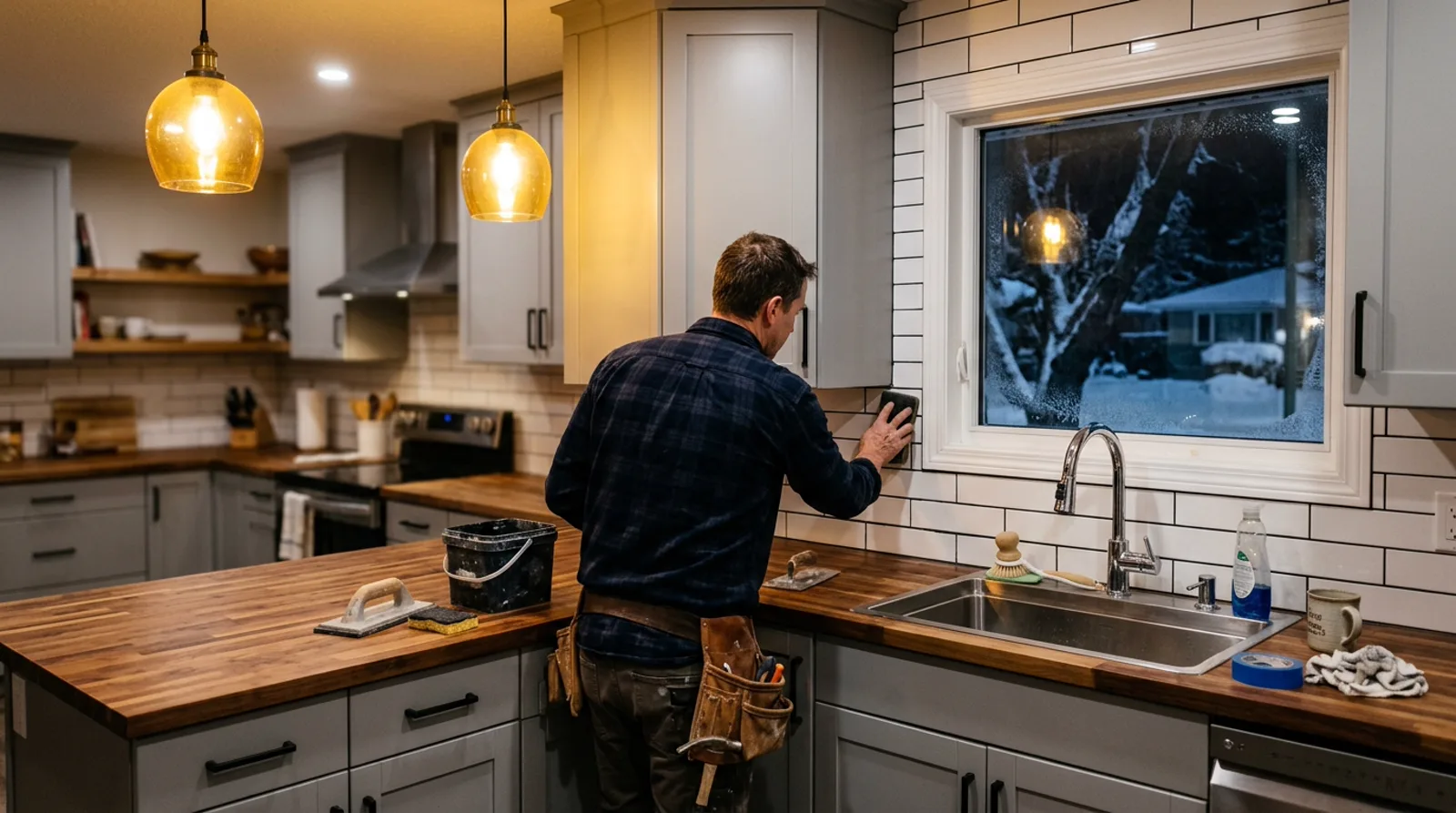
Whole Home Renovations Complete House Transformations.
Turn your entire house into the home you've always wanted. We coordinate every trade, manage every permit, and deliver a complete transformation from foundation to finish.
Complete Home Transformation Services
From single-level overhauls to full interior rebuilds, local pros handle projects that touch every room and trade.
Full Interior Gut & Rebuild
Strip to studs, rewire, replumb, insulate to modern standards, install new drywall, flooring, trim, paint. Includes kitchen, bathrooms, and all living spaces. Structural modifications extra.
Main Floor & Basement Combined Reno
Simultaneous renovation of both levels for efficiency. Kitchen, living areas, bathrooms upstairs plus full basement development or refinish. Minimizes disruption by doing it all at once.
Kitchen & All Bathroom Suite Upgrades
Replace every kitchen cabinet, countertop, appliance, and fixture plus renovate 2 to 3 bathrooms with new tubs, tile, vanities, plumbing. Includes electrical updates for modern loads.
Open Concept Conversions
Remove load-bearing walls between kitchen, dining, living areas. Includes engineered beam installation, permit, structural inspection, drywall, paint, flooring continuity. Popular in 1980s builds.
Second Story Additions
Add a full second floor with bedrooms, bathrooms, hallway. Includes roof removal, structural framing, new stairs, HVAC expansion, electrical, plumbing. Requires engineering and permits.
Aging Home Modernization Packages
Upgrade 1970s and 1980s homes with modern electrical panel, PEX replumb, insulation boost, vinyl windows, new furnace, updated finishes. Focused on efficiency, safety, and resale value.
Why Whole Home Renovations Are Different Here
❄️ Freeze-Thaw Foundation Realities
Older Spruce Grove and Stony Plain homes often have minor foundation settling or cracks from our annual freeze-thaw cycles. A whole home reno is the right time to address foundation repairs, install proper drainage, and prevent future water intrusion before you finish the basement.
🔥 Heating & Insulation for Alberta Winters
Homes built before 1990 often have R-12 walls and single-pane windows. A full renovation lets you upgrade to R-20 walls, R-50 attics, triple-pane windows, and a high-efficiency furnace. This cuts heating bills by 30 to 50 percent and makes the house comfortable in minus 30 cold snaps.
📋 Parkland County vs Municipal Permit Timelines
Spruce Grove and Stony Plain issue permits in 2 to 4 weeks. Parkland County acreage projects can take 4 to 8 weeks due to septic, water, and setback reviews. We plan timelines around your jurisdiction and handle all submissions, revisions, and inspections.
🛏️ Living Arrangements During Long Projects
A 4 to 6 month renovation often means moving out or living in one section while we work in another. We help you plan phased schedules, protect occupied areas with dust barriers, and coordinate utility shutoffs so your family stays safe and informed throughout the build.
What it costs here
Everything You Need to Know About Whole Home Renovations
From planning and permits to trade coordination and final inspections, here's how a full house transformation works in the Tri-Region.
What Whole Home Renovations Actually Mean in Spruce Grove
A whole home renovation in Spruce Grove means transforming multiple rooms or every room in your house in a coordinated project, usually over eight to sixteen weeks. This is not a kitchen refresh or a basement finish. It is a complete overhaul where walls may move, systems get replaced, insulation is upgraded, and finishes are renewed throughout. The scope typically includes structural work, electrical and plumbing updates to current Alberta code, new HVAC where needed, insulation to meet or exceed R-value standards for our climate, drywall, flooring, trim, paint, and fixtures in every affected space. Most projects in Spruce Grove and Stony Plain involve at least three trades working in sequence or overlapping, and the homeowner usually moves out or lives in one zone while the rest is torn apart.
The difference between a whole home renovation and a series of small projects is planning and integration. When you renovate one room at a time over several years, you pay mobilization costs repeatedly, you create mismatched systems, and you never address the hidden issues that span the whole house. A whole home approach lets the contractor open walls once, run new wiring and plumbing in one coordinated push, upgrade the breaker panel to handle modern loads, seal the building envelope properly, and ensure every finish decision works together. You also lock in one price, one timeline, and one warranty. In Parkland County, where homes range from 1970s bungalows to new builds, a whole home renovation often means bringing an older house up to the performance and layout standards that buyers and insurance companies expect today.
The cost in Spruce Grove for a whole home renovation typically falls between $150,000 and $400,000, depending on square footage, structural changes, and finish level. A 1,400 square foot bungalow with modest finishes, new windows, updated mechanical systems, one bathroom, and a refreshed kitchen might land near $180,000. A 2,200 square foot two story with high end finishes, a main floor layout change, two full bathroom renovations, and a new furnace and AC could push past $350,000. These numbers assume permits, engineering where required, and all work done to Alberta Building Code. They do not include temporary housing, storage, or furnishings. Every project gets a detailed scope and fixed price contract before demolition starts, so there are no surprises unless you change the plan mid stream.
Why Alberta Homes in Spruce Grove and Stony Plain Need Complete Renovations
Alberta's climate puts extreme stress on homes. We see temperature swings from minus 35 Celsius in January to plus 30 in July, and chinook winds in winter can shift the temperature 20 degrees in an afternoon. That freeze thaw cycle cracks foundations, shifts framing, and breaks down building materials faster than in gentler climates. Homes built in the 1970s and 1980s, which make up a large portion of Spruce Grove and Stony Plain housing stock, were insulated to lower standards and often used materials that have now reached end of life. Roofs last 20 to 25 years here because of hail and thermal cycling. Siding, especially old vinyl or aluminum, becomes brittle. Windows lose their seals. The result is that a 40 year old home in Parkland County often needs everything replaced at once, not because of neglect but because all the systems aged out together.
Local building code has also evolved significantly. Homes built before 2000 were not required to meet the energy efficiency or safety standards we have now. Electrical panels in older Spruce Grove homes are often 100 amp services with insufficient circuits for modern appliances, electric vehicle chargers, and home offices. Plumbing may be galvanized steel or older ABS that is prone to cracks. Insulation in walls might be R-12 when current code calls for R-22 in walls and R-50 in attics. Ventilation was minimal, leading to moisture problems and mold in attics and crawl spaces. A whole home renovation is the opportunity to bring everything up to current code in one coordinated project, which reduces insurance premiums, improves resale value, and makes the house far cheaper to heat and cool. In some cases, especially in Acheson or rural Parkland County, well and septic systems also need attention during a major renovation, adding another layer of complexity and cost.
Family needs change over decades, and the layouts that worked in 1985 do not work today. Open concept living, main floor laundry, primary suites with ensuites, mudrooms, and home offices are now standard expectations. Older homes in Stony Plain were built with closed off kitchens, small bathrooms, basements used only for storage and mechanicals, and no main floor bedroom option for aging in place. A whole home renovation allows you to reconfigure walls, move plumbing and HVAC, add or relocate stairs, and create the flow and function that modern families need. This is especially common when multi generational families move in together or when aging parents want to stay in the family home but need accessibility features like barrier free showers, wider doorways, and bedroom main floor conversions.
Signs Your Spruce Grove Home Needs a Full Transformation
If you are fixing something new every month, that is the clearest sign. When the furnace fails in November, the hot water tank leaks in January, the roof starts dripping in March, and the deck boards are rotting by May, your systems are failing in cascade. This pattern means the house was built or last renovated around the same time, and everything is aging out together. Homeowners in Spruce Grove often reach a point where the cost of reactive repairs over two or three years would equal or exceed the cost of a planned whole home renovation. The advantage of the renovation is that you choose what gets upgraded, you set the timeline, and you end up with a cohesive result instead of a patchwork of fixes. Reactive repairs also never address the underlying issues like poor insulation, outdated wiring, or structural settlement that cause the symptoms you keep paying to patch.
Another warning sign is that contractors keep finding hidden problems. You call someone to replace a bathroom vanity and they discover rotted subfloor. You want to paint the exterior and the siding inspection reveals water damage and missing vapor barrier. You replace a window and the framing around it is compromised by carpenter ants or moisture. These discoveries mean the building envelope and structure have been compromised over time, and spot fixes will not solve it. A whole home renovation strips the house back to studs in the affected areas, exposes all the hidden damage, and rebuilds it correctly. In older Parkland County homes, especially those with additions that were not properly tied into the original structure, this comprehensive approach is the only way to ensure the house is sound for another 30 years.
Layout frustration is the third major sign. If you have lived in the house for years and you constantly feel the space does not work, if you avoid using certain rooms, if your family fights over one bathroom while another sits unused, if your kitchen is too small to cook in or your living room is too closed off to feel welcoming, those are design failures that a whole home renovation can fix. Many Spruce Grove homeowners start planning a renovation when they price moving and realize that for the same money they can have the location they love with the layout they need. This is especially true for families in established neighborhoods near schools and parks, or for homeowners on acreages in Parkland County who do not want to leave their land but need the house to function better.
The Whole Home Renovation Process from First Call to Final Walkthrough
Initial Consultation and Scope Definition
The process starts with a consultation at your home. The contractor walks every room, takes measurements, photographs existing conditions, and listens to what you want to change and why. This meeting typically lasts 90 minutes to two hours. You discuss budget range, must haves versus nice to haves, timeline constraints, and whether you will live in the home during construction or move out. The contractor identifies structural concerns, code compliance issues, and potential surprises like asbestos insulation, knob and tube wiring, or foundation cracks that need engineering review. In Spruce Grove and Stony Plain, most contractors will also check attic insulation levels, crawl space conditions, and mechanical system age during this visit because those factors heavily influence scope and cost.
After the consultation, the contractor prepares a preliminary scope and budget estimate. This is not a final quote but a planning tool that breaks the project into phases such as structural work, systems, insulation and drywall, finishes, and exterior work. You review this document and adjust priorities. Some homeowners decide to defer the basement or scale back finish choices to stay within budget. Others add scope once they see the full picture. This stage also includes selecting an architect or design build team if the project involves significant structural changes like removing load bearing walls, adding square footage, or creating a second story addition. In Parkland County, projects on acreages may also need septic or well assessments and county permits, which add time and cost but must be resolved before construction starts.
Design, Engineering, and Permits
Once scope and budget are locked, the design phase begins. For whole home renovations, this usually means architectural drawings or detailed construction drawings that show the new layout, structural changes, electrical and plumbing rough in locations, and finish schedules. If load bearing walls are being removed or the roof structure is being altered, a structural engineer reviews the plans and specifies beams, posts, and fasteners. In Spruce Grove, the permit process through the town requires these engineered drawings, a completed permit application, and fees that typically range from $1,200 to $3,500 depending on project value. Permit review takes two to four weeks. Some contractors apply for permits on your behalf, others require you to be the permit holder. Either way, no demolition happens until permits are issued.
During this phase you also make finish selections. This means choosing flooring, countertops, cabinets, fixtures, paint colors, trim profiles, and appliances. Most contractors provide a selection deadline, often four to six weeks before installation, because lead times for custom cabinets, special order tile, or specific appliance models can stretch eight to twelve weeks. In Stony Plain and Parkland County, many homeowners work with an interior designer for this stage, especially if they are unsure about coordinating finishes or maximizing resale value. The design and permit phase typically takes six to ten weeks from the day you sign the contract to the day demolition is scheduled. Delays in decision making or permit approval can extend this, so staying on top of selections and responding quickly to engineering questions keeps the project on track.
Demolition, Structural Work, and Systems Rough In
Demolition day is loud, dusty, and fast. A typical whole home demo in Spruce Grove takes two to five days depending on size. Crews remove drywall, old flooring, cabinets, fixtures, and anything else being replaced. They also remove old insulation if it is contaminated or insufficient. Hazardous materials like asbestos floor tile or vermiculite insulation require certified abatement, which adds cost and time but is legally required in Alberta. Once the house is stripped to studs and subfloor, the structural work begins. This includes installing new beams and posts where walls were removed, repairing or reinforcing floor joists, fixing foundation cracks, and framing any new walls or openings. Structural work often takes one to three weeks and must pass a framing inspection before trades can rough in systems.
Rough in is when electricians, plumbers, and HVAC contractors install the guts of your new systems. Electricians run wire for outlets, switches, lights, and hardwired appliances, upgrade the breaker panel if needed, and install potlights or undercabinet lighting backing. Plumbers relocate or add water lines, drains, and vents for new bathrooms, kitchens, and laundry rooms. HVAC contractors install new ductwork, furnace, air conditioning, and HRV or ERV systems for ventilation. In Alberta, code requires balanced ventilation in new construction and major renovations, so an HRV or ERV is standard in whole home projects. Rough in takes two to four weeks, and each trade must pass inspection before insulation goes in. Inspections are scheduled through the municipality and usually happen within a few days of the request. Any deficiencies must be corrected and re inspected, so quality rough in work from experienced trades is critical to keeping the project on schedule.
Insulation, Drywall, and Interior Finishes
After rough in inspections pass, insulation crews fill the walls and top up the attic. In Spruce Grove, this means spray foam or batt insulation in walls to at least R-22, and blown cellulose or batt insulation in the attic to R-50 or higher. Proper air sealing around windows, doors, electrical boxes, and penetrations is just as important as insulation thickness, because air leaks waste more energy than missing insulation. A blower door test is sometimes performed at this stage to measure air tightness, especially if the homeowner is pursuing energy efficiency rebates through programs like the Canada Greener Homes Grant. Once insulation is in and inspected, drywall goes up. Drywall installation and taping takes one to two weeks for a whole home, followed by priming and painting.
Finish work follows painting. This includes installing cabinets, countertops, flooring, trim, doors, hardware, plumbing fixtures, light fixtures, and appliances. Finish carpentry such as baseboards, casings, and crown molding is cut and installed with precision. Tile setters lay backsplashes and shower surrounds. Flooring installers run hardwood, laminate, luxury vinyl plank, or tile throughout the home, ensuring transitions between rooms are clean and level. Each trade schedules their portion in sequence, and the general contractor coordinates to avoid conflicts. Finish work is the longest phase of a whole home renovation, typically four to six weeks, because it involves many trades and requires careful attention to detail. Homeowners often visit the site during this phase to see progress and address any last minute decisions like outlet placement or paint touch ups.
Final Inspections, Walkthrough, and Handover
When all finishes are installed, the contractor schedules final inspections with the municipality. In Spruce Grove, this includes a final building inspection, electrical inspection, plumbing inspection, and HVAC inspection. The inspector verifies that all work meets code, that safety devices like smoke alarms and carbon monoxide detectors are installed correctly, and that the building envelope is properly sealed. If any deficiencies are noted, the contractor corrects them and requests a re inspection. Once all inspections pass, the town or county issues an occupancy permit or a final approval letter. This document is essential for insurance and resale purposes, and you should keep it with your home records.
The final walkthrough happens after inspections pass. You and the contractor walk the entire home together, and the contractor demonstrates how new systems work, points out shut off valves and breaker locations, and answers questions. You create a deficiency list of any minor items that need touch up, such as paint nicks, squeaky floors, or trim gaps. The contractor schedules a punch list visit to address these items, usually within one to two weeks. Once the punch list is complete, you sign off on the project, final payment is made, and the contractor provides you with warranty documents, manuals for appliances and systems, and copies of all permits and inspection records. In Alberta, new construction and major renovation work carries a legal warranty that covers defects in workmanship and materials for at least one year, and structural defects for longer periods depending on contract terms. Keep all these documents organized, because they add value and provide protection if issues arise after you move back in.
What It Really Costs in the Tri-Region and What Drives the Price
A whole home renovation in Spruce Grove, Stony Plain, or Parkland County typically runs between $150,000 and $400,000, depending on the size of your home and the scope of work. A 1,200 square foot bungalow with cosmetic updates, new flooring, kitchen cabinets, and bathroom fixtures might land closer to $150,000 to $200,000. A 2,000 square foot two-storey that includes structural changes, a main floor reconfiguration, mechanical system replacements, and high-end finishes can easily push past $300,000. These are real numbers from Tri-Region projects, not national averages. Every home is different, and your final cost depends on what you change, what you keep, and how much existing work needs correction before new finishes go in.
Square footage is the single biggest driver of cost because labour, materials, drywall, flooring, and paint all scale with area. Contractors price most line items per square foot or per linear foot. A kitchen backsplash might cost $800 to $1,500 for a small galley kitchen, but the same tile and labour rate applied to an open-concept great room with a 20-foot island and floor-to-ceiling tile will run $4,000 to $6,000. The same multiplier applies to flooring, trim, electrical rough-in, and HVAC ductwork. If you are renovating 1,800 square feet instead of 1,200 square feet, expect the total to climb by roughly 40 to 50 percent even if the finish quality stays the same.
Scope choices have an outsized impact on the final invoice. Cosmetic updates like paint, flooring, light fixtures, and cabinet refacing are the least expensive per square foot because they require minimal demolition and no structural engineering. Moving walls, adding windows, raising ceilings, or reconfiguring plumbing and ductwork brings in carpenters, electricians, plumbers, HVAC techs, structural engineers, and building inspectors. A load-bearing wall removal in Spruce Grove requires a permit, an engineer's stamp, a steel beam, temporary supports, and drywall patching on both sides. That single change can add $5,000 to $10,000 to your budget. If your plan includes three or four structural modifications, you are looking at an extra $20,000 to $40,000 before any finishes go in.
Alberta-specific factors add cost and time that out-of-province guides ignore. Parkland County and Spruce Grove both require building permits for any work that touches structure, plumbing, electrical, or HVAC. Permit fees range from $500 to $2,000 depending on scope, and inspections add scheduling delays. Winter renovations in Stony Plain mean heating the site, protecting materials from freeze-thaw cycles, and managing snow removal for trades. Contractors often charge a premium for November to March work because productivity drops and site conditions are harder to control. Insurance are mandatory for licensed contractors in Alberta, and those costs are baked into every quote. A contractor who quotes 20 percent below the market is either cutting corners on coverage, skipping permits, or planning to nickel-and-dime you with change orders. Always ask what the quote includes and what it does not.
Comparing the Main Methods, Materials, and Options
You can renovate your entire home in one continuous project or break the work into phases spread over months or years. The all-at-once approach costs more upfront but delivers better value per square foot because trades are on site anyway, waste bins are already rented, and your contractor can negotiate bulk pricing on materials. You also live through the disruption once instead of three times. Phased renovations let you spread payments across multiple years and adapt the plan as you go, but you pay mobilization costs every time trades return, and earlier phases may need rework to match later design changes. If your kitchen flooring does not extend into the hallway during phase one, you will end up with seams or mismatched heights when you renovate the living room in phase two. For most homeowners in the Tri-Region, a single continuous project makes more sense unless cash flow or life circumstances force a phased approach.
Finish level is where budgets explode or stay under control. Builder-grade finishes include laminate countertops, vinyl plank flooring, flat-panel thermofoil cabinets, basic plumbing fixtures, and ceramic tile in wet areas. This package delivers a clean, functional result for $80 to $120 per square foot installed. Mid-range finishes upgrade to quartz counters, engineered hardwood, shaker-style painted cabinets, brushed nickel fixtures, and porcelain tile. Expect $130 to $180 per square foot. Premium finishes bring natural stone counters, solid hardwood or luxury vinyl tile, custom cabinetry, designer lighting, frameless glass showers, and high-end appliances. Costs jump to $200 to $300 per square foot or more. A 1,500 square foot renovation with builder-grade finishes might cost $160,000, but the same scope with premium finishes could reach $400,000. The structure, framing, drywall, and rough-in plumbing stay the same, but the finishes alone double or triple the invoice.
Mechanical system decisions shape your long-term comfort and operating costs. If your furnace, water heater, or main electrical panel is 20 years old or older, replacing it during the renovation avoids tearing into finished walls later. A new high-efficiency furnace for a 1,500 to 2,000 square foot home in Spruce Grove costs $4,000 to $7,000 installed. Upgrading from a 100-amp to a 200-amp electrical panel adds $2,500 to $4,000 but future-proofs your home for electric vehicle chargers, hot tubs, and modern appliances. Re-piping with PEX instead of patching old copper or galvanized steel eliminates future leak risks and costs $3,000 to $6,000 for a whole home. Central air conditioning installation runs $4,000 to $8,000 depending on tonnage and ductwork complexity. These upgrades are not glamorous, but they prevent emergency replacements and add real value in the Tri-Region resale market.
Insulation and building envelope upgrades make a dramatic difference in Alberta's climate. Older homes in Stony Plain and Parkland County often have R-12 or R-20 in the walls and R-30 in the attic, well below modern code minimums of R-22 in walls and R-50 in attics. Adding blown-in cellulose or spray foam during a gut renovation brings the home to current standards and cuts heating bills by 25 to 40 percent. Window replacement is another high-impact upgrade. Single-pane or early double-pane windows lose massive amounts of heat in January and let in excessive heat in July. New triple-pane vinyl or fiberglass windows with low-E coatings and argon gas cost $600 to $1,200 per window installed, but they pay for themselves in comfort and energy savings within 10 to 15 years. If your renovation includes exterior wall work, upgrading insulation and windows at the same time avoids redundant labour and scaffolding costs.
The Mistakes and Contractor Traps to Avoid
Vague contracts and missing details are the leading cause of renovation disputes in the Tri-Region. A proper contract lists every material by brand and model number, specifies all labour line items, includes a detailed payment schedule tied to milestones, and defines what happens when you request a change or encounter hidden issues. A one-page agreement that says 'complete home renovation for $200,000' leaves everything open to interpretation. When the contractor installs builder-grade tile instead of the porcelain you expected, or charges $8,000 extra for drywall repair, you have no recourse because the contract never specified those details. Change orders are normal, but they should be priced and approved in writing before the work happens. A contractor who adds charges to the final invoice without prior approval is either disorganized or dishonest. Insist on a detailed, itemized contract before signing anything, and refuse to proceed without one.
Unlicensed or uninsured contractors pose serious financial and legal risk. In Alberta, any contractor working on your home must carry liability insurance. If an uninsured worker falls off your roof or a plumbing mistake floods your basement, you are personally liable for medical bills, lost wages, and property damage. Verifying coverage takes two phone calls: one to WCB to confirm the contractor's account is in good standing, and one to their insurance broker to request a certificate of liability insurance naming you as an additional insured. Legitimate contractors provide this documentation without hesitation. A contractor who deflects, stalls, or offers a discount to skip insurance is operating illegally and will disappear the moment something goes wrong. Parkland County and Spruce Grove building inspectors sometimes catch unlicensed work during inspections, which can result in stop-work orders, fines, and mandatory rework by a licensed contractor at your expense. The short-term savings are not worth the long-term risk.
Paying too much upfront removes your leverage and funds contractor cash flow problems instead of your project. A reasonable deposit is 10 to 20 percent to cover initial material orders and mobilization costs. After that, payments should align with completed milestones: framing and rough-in complete, drywall and insulation complete, finishes installed, final walkthrough and deficiency list cleared. Never pay more than 10 percent ahead of completed work, and never pay the final invoice until every item on your deficiency list is fixed and you have signed off on the quality. Contractors who demand 50 percent upfront or request payment for materials not yet delivered are either undercapitalized, juggling multiple projects poorly, or planning to abandon your job midstream. If a contractor cannot finance normal material purchases and labour costs, they are not financially stable enough to handle a six-figure renovation. Protect yourself by tying payments to tangible progress and withholding at least 10 percent until the final inspection and cleanup are complete.
Skipping permits and inspections is a common shortcut that destroys resale value and creates liability. Every structural change, electrical panel upgrade, plumbing relocation, furnace replacement, and major renovation in the Tri-Region requires a building permit and inspections at specific stages. A contractor who says 'we do not need a permit for that' is either ignorant of the rules or deliberately avoiding oversight. When you sell your home, the buyer's lawyer and home inspector will ask for permits. Missing permits flag the home as high risk, scare off buyers, kill financing approvals, and force you to open walls for retroactive inspections or rip out completed work. Parkland County and Spruce Grove can also issue fines and liens for unpermitted work discovered years later. Permits cost $500 to $2,000 and add two to three weeks to the schedule, but they protect your investment and confirm the work meets code. If your contractor resists pulling permits, find a different contractor.
How to Hire the Right Pro
Start by verifying credentials before you even request a quote. In Alberta, general contractors do not need a provincial license, but they must carry liability insurance. Call WCB directly and provide the contractor's business name or account number to confirm their account is active and in good standing. Request a certificate of liability insurance from their broker showing at least $2,000,000 in coverage and listing you as an additional insured for the project duration. Ask for three recent references from clients who completed whole home renovations in the past 18 months, and actually call those references. Ask about communication, budget accuracy, timeline adherence, cleanliness, and how the contractor handled surprises. A contractor who refuses to provide references or whose references give lukewarm answers should be crossed off your list. Legitimate professionals have happy clients who are willing to vouch for their work.
Getting detailed written quotes from three contractors lets you compare apples to apples and spot red flags. Each quote should break down labour and materials separately, specify brands and model numbers for fixtures and finishes, include allowances for items you have not yet selected, outline the payment schedule, and state the estimated start and completion dates. If one quote is 30 percent lower than the others, dig deeper. Low quotes often exclude critical items like permits, waste removal, site protection, or drywall finishing, then add those costs as change orders once the contract is signed. High quotes sometimes include premium finishes or extra scope that you did not request. The goal is not to pick the cheapest bid but to identify the contractor who understands your project, communicates clearly, and prices fairly. A mid-range quote from a responsive, organized contractor with strong references is a better choice than a low quote from someone who avoids questions or rushes the estimate.
Communication and realistic timelines separate professionals from amateurs. A whole home renovation in Spruce Grove or Stony Plain takes 12 to 20 weeks depending on scope, weather, and inspection schedules. A contractor who promises to finish a full gut and remodel in six weeks is either lying, planning to cut corners, or has never managed a project of this scale. Ask how often the contractor will update you, who your main point of contact will be, and how they handle changes or unexpected issues. Professional contractors provide weekly progress updates, respond to calls and texts within 24 hours, and document all decisions in writing. They also build buffer time into the schedule for permit delays, material backorders, and Alberta winter weather. A contractor who goes silent for days, shows up inconsistently, or makes verbal promises without follow-up documentation is a lawsuit waiting to happen. Trust your gut. If the contractor feels disorganized or dismissive during the quoting process, those problems will only get worse once construction starts.
How Tri-Region Services Helps
Tri-Region Services connects you with one carefully vetted, fully insured general contractor in Spruce Grove, Stony Plain, or Parkland County who specializes in whole home renovations. Every contractor in our network tells us they carry liability insurance, pulls permits for all work, and has completed multiple large-scale residential projects in the area. You get one free, no-obligation written quote that breaks down labour, materials, timelines, and payment terms in detail. We do not send you a list of five contractors to research yourself. We match you with the single best fit for your specific project and location, saving you weeks of vetting and phone calls. If you are ready to transform your home with a contractor you can trust, request your free quote today.
How We Manage Complex Multi-Trade Projects
Whole home renovations require orchestration, communication, and relentless attention to detail. Here's what sets local contractors apart.
Licensed and insured
Every trade on site carries liability insurance . You never pay for injuries or accidents.
Single Point of Contact
One project manager coordinates all trades, orders materials, schedules inspections, and updates you weekly.
Detailed Scope & Fixed Timeline
You get a written scope, payment schedule, and timeline with milestones before we start. No surprises.
Permit & Code Compliance Guarantee
The contractor pulls permits, schedules inspections, and every trade must pass code. If it fails, they fix it at no cost.
Two Year Workmanship Warranty
All labor and installation covered for 24 months after final inspection. Materials covered by manufacturer warranties.
Transparent Change Order Process
Surprises happen when you open walls. Every change is documented, priced, and approved in writing before work proceeds.
This page is not tied to a contractor's brand. Leads route straight to your one local partner. Verified reviews can appear here once that partner has them (never fabricated).
Serving the whole Tri-Region
8 Questions Homeowners Ask Before Starting
How long does a whole home renovation take in Spruce Grove?+
Do I need to move out during a whole home renovation?+
What permits are required for a full house renovation in Parkland County?+
How much does a whole home renovation cost in the Tri-Region?+
What's the difference between a renovation and a remodel?+
Can you work around my schedule if I'm living in the house?+
What happens if you find problems when you open up the walls?+
Do you work through winter in Alberta?+
Get your free quote
Tell us what you need and a local pro will get right back to you.
- ✓ Sent straight to a local business
- ✓ You choose who you hire
- ✓ Free, with no obligation