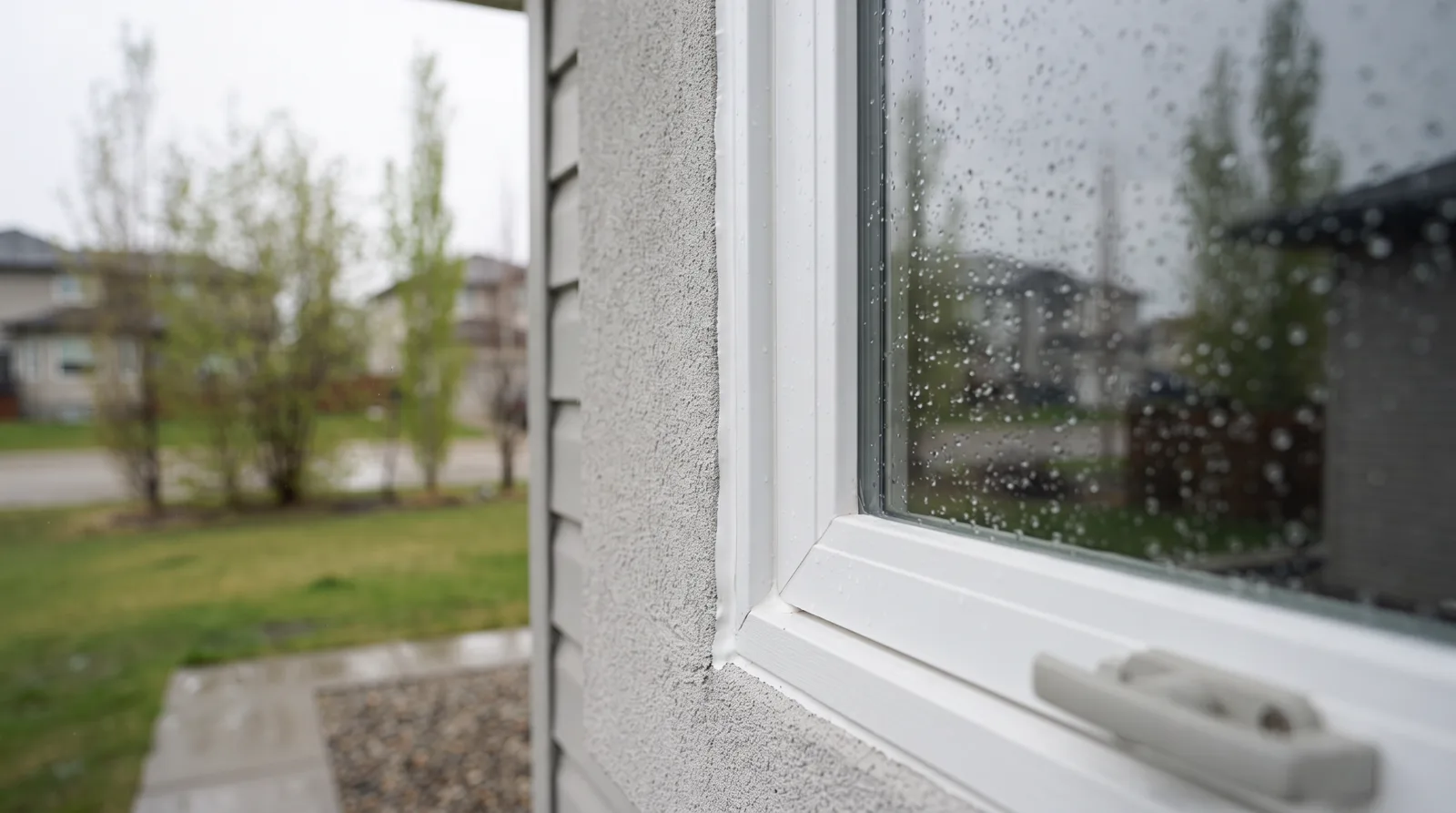
Window Replacement That Survives Alberta Winters.
Replace leaking, drafty windows with triple-pane models rated for minus 40°C and 120 km/h chinook winds.
Window Replacement Services
From single problem windows to whole-home retrofits, every install includes proper insulation, vapor barrier repair, and trim finishing.
Full-Frame Window Replacement
Remove the entire old frame, inspect and repair rough opening, install new Energy Star rated window with foam insulation and low-E glass. Includes interior and exterior trim, caulking, and vapor barrier seal. Standard for homes built before 2000 or when frames are rotted.
Insert Window Replacement
Slide new window into existing frame without disturbing interior trim or drywall. Faster install, less mess, works when frames are still square and solid. Common for newer builds or maintenance replacements. You lose about one inch of glass area per side.
Whole-Home Window Retrofit
Replace every window in your home in a coordinated two to five day project. Includes staging, protective floor covering, job-site cleanup, and disposal of old windows. Pricing depends on window count, size, and glass package. Most Spruce Grove bungalows have 10 to 14 windows.
Upper-Story & Roof Window Replacement
Scaffolding or boom lift access for second-story, dormer, or cathedral windows. Includes structural inspection of load-bearing headers, flashing replacement, and ice dam prevention detailing. Critical in Parkland County where spring melt and wind-driven rain test weak seals.
Patio Door Replacement
Remove and replace sliding or hinged patio doors with triple-pane low-E glass and multi-point locking. Includes threshold leveling, sill pan installation, and proper step flashing to prevent ice buildup. Sized openings from 5 feet to 12 feet wide.
Egress & Basement Window Replacement
Enlarge or replace basement windows to meet Alberta Building Code egress requirements for bedrooms. Includes concrete cutting, window well installation, grading, and drainage rock. Required for legal basement suites and resale compliance in Spruce Grove and Stony Plain.
Why Alberta Windows Need Different Specs
❄️ Minus 40°C Rated Frames
Vinyl and fiberglass frames must flex without cracking during deep January cold snaps. We spec North Star or LoE366 rated products tested to minus 50°C, not the builder-grade minus 20°C minimums that warp after five winters.
💨 Chinook Wind & Pressure Cycling
Temperature swings of 30 degrees in six hours create expansion and contraction that breaks cheap seals. Triple-pane argon fill with warm-edge spacers prevents condensation between panes and glass stress fractures common in Parkland County's wind corridor.
🧊 Frost Heave & Foundation Movement
Clay soil around Spruce Grove and Acheson shifts with freeze-thaw cycles, racking window frames out of square. We shim to allow 3mm movement, use flexible sealants, and avoid rigid foam that cracks when foundations settle or heave in spring.
🌨️ Snow Load & Ice Dam Prevention
Improperly flashed windows leak when snow melts, refreezes at the sill, and forces water under shingles. Every install includes step flashing, sill pans, and head flashing integrated with house wrap and vapor barrier per Part 9 of the Alberta Building Code.
What it costs here
Everything You Need to Know About Window Replacement in Spruce Grove
How to choose the right glass, frame material, and contractor for Alberta's extreme climate.
What Window Replacement Actually Involves in Alberta Homes
Window replacement in Spruce Grove and Parkland County means removing your existing windows down to the rough opening and installing new, energy-efficient units designed to handle Alberta's extreme temperature swings. The process differs significantly from simple repairs or reglazing. A full replacement addresses the entire window assembly: frame, sash, glass, seals, weatherstripping, and the critical junction between the window and your home's insulation envelope. In most cases, contractors remove the old window completely, inspect and repair the rough opening if needed, then install a new window that meets or exceeds current Alberta Building Code energy performance standards for Zone 7A climate requirements.
Two main approaches exist: full-frame replacement and insert replacement. Full-frame replacement removes everything including the exterior brick mould or siding return, exposing the studs and allowing inspection of the framing, moisture barriers, and insulation. This approach costs more upfront but solves hidden problems like rotted sills, inadequate insulation, or water damage that developed over decades of freeze-thaw cycling. Insert replacement, also called pocket replacement, leaves the existing frame in place and installs a new window unit into that opening. It's faster and less disruptive, but only works if the existing frame is square, solid, and free of rot. In Spruce Grove's older neighbourhoods where homes date back to the 1970s and 1980s, full-frame replacement often proves necessary because original frames have deteriorated from 40-plus winters of condensation and frost penetration.
Material choice matters enormously in Alberta's climate. Vinyl windows dominate the market because they don't rot, never need painting, and provide good thermal performance at reasonable cost. Expect to pay $400 to $900 per window for quality vinyl double-hung or casement units, installed. Fibreglass frames offer superior strength and insulation but cost $700 to $1,500 per window. Wood-clad windows, with wood interiors and aluminum or vinyl exteriors, deliver traditional aesthetics and excellent insulation for $1,000 to $2,500 per window, but require maintenance on the interior wood surfaces. Aluminum frames, once common, are now rare in new installations because metal conducts cold directly into your home, creating condensation and frost problems that Alberta winters punish relentlessly.
The glass package drives energy performance more than any other factor. Modern windows use two or three panes of low-E coated glass with argon or krypton gas fill between the panes. Low-E coatings reflect infrared heat back into your home during winter and block solar heat gain in summer. For Spruce Grove's climate, look for windows rated ER (Energy Rating) 34 or higher and U-factor below 0.25. These numbers directly translate to lower heating bills and better comfort during January cold snaps when overnight temperatures drop to minus 30 Celsius or colder. Triple-pane windows with krypton fill achieve ER ratings above 40 and virtually eliminate frost on interior glass, but they cost 30 to 50 percent more than double-pane units. The payback on that premium depends on your home's heating costs and how long you plan to stay, not on generic claims about energy savings that don't account for natural gas prices in Alberta.
Why Alberta's Climate Makes Window Replacement a Necessity, Not a Luxury
Alberta's climate subjects windows to punishment that would seem extreme anywhere else in Canada. The combination of deep frost, dramatic temperature swings, hail events, and powerful winds creates failure modes that homeowners in milder regions never experience. Understanding these stressors explains why windows that would last 40 years on the West Coast fail after 20 years in Parkland County, and why delaying replacement costs more than the windows themselves once you factor in wasted heating energy and potential water damage to your home's structure.
Freeze-thaw cycling destroys window seals and frames faster than simple cold. Edmonton and Spruce Grove experience dozens of freeze-thaw cycles each winter, especially during chinook events when temperatures can swing 20 to 30 degrees in a matter of hours. Window seals expand and contract with these swings, developing microscopic cracks that admit moisture. Once moisture enters the space between panes, it condenses and freezes, fogging the glass. That fog never clears because the hermetic seal has failed permanently. Replacing individual sealed units sometimes works as a temporary fix, but if one window has failed, others installed at the same time are likely close behind. Frames themselves expand and contract, working loose the caulking and weatherstripping. Wooden frames absorb moisture during thaws, then freeze and crack when temperatures plunge. Vinyl frames become brittle in extreme cold; older formulations crack at the corners where stress concentrates.
Hail damage is a chronic issue in this region. Parkland County and areas west of Edmonton see severe hail storms most summers, with stones large enough to crack window glass, dent vinyl siding, and destroy asphalt shingles. Even if hail doesn't shatter your windows outright, impacts can crack the outer pane of a double-pane unit or damage the seal. A cracked outer pane still functions temporarily, but moisture will infiltrate and the unit will fog within months. Insurance covers hail damage, but many homeowners discover that replacing a few windows triggers a decision to replace them all rather than live with mismatched units and know that the remaining old windows are equally vulnerable in the next storm.
Wind pressure cycling from Alberta's frequent high winds stresses window frames and seals in ways that calm climates don't. Chinook winds gust to 80 or 100 kilometres per hour, flexing windows in their frames. Over thousands of cycles, this flexing loosens the seal between the window and the rough opening, creating air leaks that bypass even intact weatherstripping. You feel these leaks as cold drafts on windy winter days, and you pay for them every month in higher heating bills. Modern windows install with expanding foam insulation around the entire perimeter, creating an airtight bond that old windows with fibreglass batt insulation simply cannot match.
Deep frost penetration in January and February reveals inadequate window performance in ways that warmer months hide. When outdoor temperatures stay below minus 20 for days at a time, single-pane windows and older double-pane units with poor seals develop thick frost on the interior glass and frames. This frost melts during the day or when indoor humidity rises, running down the glass and pooling on the sill. That water soaks into wooden sills and drywall, causing rot, mould, and paint failure. Homeowners often discover the extent of this damage only when replacing windows and finding that sills and framing need repair or replacement, adding $200 to $600 per window to the project cost. Preventing this damage by replacing failing windows before structural harm occurs saves money and preserves your home's integrity.
How to Know Your Windows Need Replacement: Real Warning Signs
Condensation between the panes is the clearest sign of seal failure and the most common reason homeowners in Spruce Grove decide to replace windows. When you see fog, moisture, or a milky haze between the glass layers that doesn't wipe away, the hermetic seal has failed and outside air has entered the space between panes. This usually happens gradually: you might notice slight fogging on cold mornings that clears during the day, then permanent haze as the damage progresses. Once the seal fails, no repair exists except replacing the sealed glass unit or the entire window. If multiple windows show this problem, especially windows installed at the same time, replacing all of them makes more sense than paying for individual glass unit replacements that only delay the inevitable.
Ice buildup on the interior of your windows during cold weather indicates serious energy loss and points to either single-pane glass, failed seals in double-pane units, or inadequate frame insulation. When warm, moist indoor air contacts glass that's near outdoor temperature, water vapour condenses and freezes. A properly performing modern window keeps the interior glass surface warm enough that frost doesn't form except in the most extreme conditions. If you see frost regularly on windows when outdoor temperatures drop below minus 15, those windows are costing you heating dollars every hour and making rooms uncomfortable. Frost that extends onto the window frame itself, not just the glass, signals that the frame has no thermal break and is conducting cold directly into your home. This is common in older aluminum-frame windows and in poorly made vinyl windows where the frame isn't insulated.
Difficulty opening, closing, or locking windows points to frame warping, sash misalignment, or hardware failure. Wooden frames swell when they absorb moisture and shrink when they dry, eventually warping to the point that sashes bind or won't latch securely. Vinyl frames can sag over time if they weren't properly reinforced during installation, causing the same binding and latching problems. Beyond the inconvenience, windows that don't close and lock properly create security vulnerabilities and massive air leaks. A window that's stuck open even a crack lets in cold air all winter, and one that won't lock invites break-ins. If you're forcing windows or propping them open because they won't stay up, replacement is overdue.
Visible rot, cracks, or warping in wooden window frames demands immediate attention because the damage extends beyond what you can see. Surface rot visible on the interior sill or jamb means the wood has been wet repeatedly, and the rot continues into the framing behind the drywall. Prodding the sill with a screwdriver reveals how deep the rot goes: if the wood is soft or crumbles, structural damage has occurred. Replacing the window without addressing rotted framing just mounts a new window to compromised structure, so expect additional carpentry costs. Vinyl and fibreglass frames don't rot, but they can crack from impact damage or UV degradation. Cracks admit water and air, negating any energy efficiency the window once had.
Skyrocketing heating bills that can't be explained by rate increases or usage changes often trace back to failing windows. Natural gas is relatively inexpensive in Alberta, so many homeowners tolerate drafty windows without realizing how much those leaks cost annually. A typical older home with 15 windows losing heat through failed seals and air leaks can waste $300 to $800 per year in extra heating costs compared to the same home with modern efficient windows. That waste continues year after year, meaning a $10,000 window replacement project can pay for itself in 12 to 15 years through energy savings alone, while delivering better comfort immediately. If your heating bills have climbed steadily even though you haven't changed your thermostat settings or added new heat-using appliances, failing windows are a likely culprit, especially in homes built before 1990 with original windows still in place.
The Window Replacement Process from Start to Finish
Assessment, Measurement, and Quoting
The process begins with an in-home consultation where a contractor measures your existing windows, assesses the condition of the frames and surrounding structure, and discusses your priorities: energy efficiency, appearance, budget, and timeline. Accurate measurement is critical because windows are custom-manufactured to your exact openings, and even small errors can delay installation or require expensive adjustments. The contractor measures the width and height at multiple points because older homes often have openings that aren't perfectly square. They also check the depth of the window jamb to ensure the new window will fit and that there's enough room for proper insulation around the perimeter.
During the assessment, the contractor should inspect for signs of water damage, rot, or structural issues that would require repair before new windows can be installed. This might involve removing interior trim to see the condition of the framing, or inspecting the exterior for damaged siding or brick mould. Honest contractors disclose these issues upfront and include repair costs in the quote, rather than surprising you with change orders during installation. Expect quotes to break down costs per window, noting any custom sizes or special features like grilles, tempered glass, or specific colours. A detailed quote also specifies the window manufacturer, the glass package (double or triple pane, low-E coating, gas fill, ER rating), the warranty terms, and the installation timeline.
Permits, Ordering, and Preparation
Window replacement in Spruce Grove and Parkland County generally does not require a building permit if you're replacing existing windows with new windows of the same size and type, but regulations can vary depending on the scope of work and whether you're changing the size or location of openings. If your project involves enlarging window openings, adding new windows, or significant structural work to repair damaged framing, a permit is required. Your contractor should know the local requirements and handle permit applications if needed. Even when permits aren't required, the work must meet Alberta Building Code standards for insulation, air sealing, and energy performance.
Once you approve the quote, the contractor orders the windows from the manufacturer. Lead times vary by season and manufacturer, ranging from two to eight weeks. Spring and summer are peak seasons for window replacement, so ordering in late winter or early fall can sometimes reduce wait times. While waiting for the windows to arrive, you can prepare by clearing window sills and removing curtains, blinds, and any furniture that would block access to the windows. Contractors typically move furniture and protect floors and walls with drop cloths, but clearing the area yourself speeds up the work and reduces the risk of damage to your belongings.
Removal, Installation, and Finishing
On installation day, the crew removes the interior trim carefully if you want to reuse it, then removes the old window. For full-frame replacement, this means cutting away caulking and possibly cutting through nails or screws that secure the window to the framing. The old window comes out as one piece or in sections, depending on its size and condition. With the opening exposed, the installer inspects the rough framing, cleans out old insulation or debris, and makes any necessary repairs to rotted sills or damaged studs. If the opening isn't square or level, the installer uses shims to correct it, because the new window must sit level and plumb to operate correctly and seal properly.
The new window sets into the opening and is secured with screws through the frame into the surrounding studs. The installer checks that the window is level, plumb, and square, adjusting shims as needed, then fills the gap around the perimeter with low-expansion spray foam insulation. This foam seals out air and moisture while allowing the window to operate without binding. Exterior caulking seals the joint between the window and the siding or brick, and interior trim is reinstalled or replaced to finish the opening. The installer tests the window operation, ensures it locks securely, and cleans up all debris. In a typical home, a crew can replace 10 to 15 windows in one or two days, depending on the complexity and whether any repairs are needed. Final inspection, if required by permit, confirms that the work meets code and the project is complete.
What Window Replacement Really Costs in Spruce Grove and Parkland County
Most homeowners in Spruce Grove and Stony Plain pay between $400 and $900 per window for a full replacement, including the new window, professional installation, and disposal of the old unit. A standard vinyl double-hung window with a quality Low-E double-pane package typically runs $450 to $650 installed, while larger casement or picture windows can push $700 to $1,200. Bay or bow windows, specialty shapes, or high-end wood-clad units can reach $1,500 to $3,500 each. A typical three-bedroom bungalow with 12 to 15 windows will cost $6,000 to $12,000 for a complete replacement, depending on the products chosen and any structural complications encountered during install.
Several factors drive the final price beyond the window itself. Window size and operating style make a big difference: a small bathroom slider costs far less than a large living room picture window or a complex bay window with multiple panels. Frame material matters too, with vinyl being the most affordable, wood-clad adding 30 to 50 percent to the cost, and fiberglass sitting in the middle. Glass package selection has a major impact on both upfront cost and long-term energy savings. Triple-pane windows with krypton gas fill and multiple Low-E coatings can add $150 to $300 per window compared to basic double-pane, but the payback in reduced heating bills in Alberta winters is real. Labor complexity also affects pricing: replacing windows in a two-story home requires scaffolding or lifts, older brick homes may need masonry work to re-seal openings properly, and stucco exteriors require careful patching and blending to avoid visible repairs.
Alberta-specific factors influence cost in ways that surprise homeowners used to national pricing guides. The provincial building code requires higher energy performance minimums than many other regions, so the cheapest windows available elsewhere often do not meet code here and cannot legally be installed. Permits are required for window replacement in most Tri-Region municipalities, adding $100 to $300 to the project depending on the number of windows and local fee schedules. Older homes in Parkland County and rural Acheson sometimes have non-standard rough openings, log or timber construction, or settling issues that require structural reinforcement before new windows can go in. Chinook wind exposure in foothills areas west of Spruce Grove can demand higher wind ratings, and hail damage history may push you toward impact-resistant glass or laminated options that add cost but protect your investment.
For a full-house window replacement, most Tri-Region contractors offer financing through third-party lenders at rates ranging from zero percent promotional deals to 8 or 10 percent depending on your credit. Monthly energy savings from upgrading single-pane or failing old double-pane windows to modern triple-pane units can reach $60 to $120 per month in the coldest months, making the payback period five to ten years depending on the price premium paid. Resale value also improves: buyers in Alberta actively look for newer windows with good warranties, and homes with visibly old or drafty windows take longer to sell and often need price concessions. If you plan to stay in your home five years or more, the combination of comfort, energy savings, and resale value usually justifies choosing a quality mid-range to upper-mid product rather than the cheapest option that barely meets code.
Comparing Window Frame Materials, Glass Packages, and Operating Styles
Frame Materials: Vinyl, Wood-Clad, Fiberglass, and Aluminum
Vinyl windows dominate the Spruce Grove replacement market because they deliver solid performance at an affordable price and require almost no maintenance. Quality vinyl frames resist warping and cracking even through Alberta's extreme freeze-thaw cycles, and they do not rot, peel, or need painting. The insulating value of vinyl is decent, though not as high as fiberglass or wood, and color choices are improving beyond basic white and beige. The main downside is that vinyl can become brittle after 20 or 25 years of UV exposure, and lower-end vinyl windows sometimes show slight warping or sagging in wide spans. In the Tri-Region climate, stick with vinyl windows that have welded corners rather than mechanical fasteners, multi-chamber frame construction for rigidity, and a manufacturer warranty of at least 20 years. Expect to pay $400 to $700 per window installed for good-quality vinyl double-hungs or casements.
Wood and wood-clad windows offer superior insulating performance and a traditional look that suits heritage homes and upscale builds, but they demand more maintenance and cost significantly more. A wood interior with an aluminum or vinyl-clad exterior combines the warmth and beauty of wood on the inside with a durable, weather-resistant shell that handles Alberta weather without constant painting. Wood-clad windows typically run $700 to $1,500 installed depending on size and hardware, and they can last 30 to 40 years if the exterior cladding remains intact and the wood interior is kept dry. The main risks are water infiltration around the cladding seams leading to rot, and condensation damage if indoor humidity is too high in winter. Wood windows make sense in historic Stony Plain homes or high-end rural properties where aesthetics and authenticity matter, but they are overkill for most replacement situations where vinyl or fiberglass will perform well for decades at half the cost.
Fiberglass frames are gaining traction in Alberta for their exceptional strength, dimensional stability, and insulating performance that rivals or exceeds wood. Fiberglass does not expand and contract with temperature swings the way vinyl does, so seals last longer and air leakage stays minimal over time. The material is virtually maintenance-free and can be painted if you want to change the color down the road. Fiberglass windows cost about 20 to 40 percent more than comparable vinyl, landing in the $550 to $900 range per window installed, but the longevity and energy performance justify the premium for many homeowners planning to stay put long-term. Aluminum-framed windows are rare in modern residential replacement because aluminum conducts heat and cold readily, leading to condensation and frost buildup on frames in winter. You will see aluminum in commercial buildings and some mid-century homes, but for a Spruce Grove house replacement, vinyl or fiberglass makes far more sense.
Glass Packages and Energy Performance Ratings
In Alberta, the choice between double-pane and triple-pane glass is one of the most important decisions you will make. Double-pane windows with Low-E coating and argon gas fill meet code and provide reasonable performance, typically achieving an Energy Rating (ER) in the mid-20s. Triple-pane windows with two Low-E coatings and krypton or argon gas fill push ER values into the mid-30s or higher, cutting heat loss by an additional 25 to 35 percent compared to standard double-pane. The upfront cost difference is $150 to $300 per window, but the payback in comfort and energy savings is measurable in the Tri-Region's long, cold winters. Triple-pane windows also reduce outside noise noticeably, which matters if you live near Highway 16A, the Yellowhead, or busy streets in central Spruce Grove. The main downside is slightly reduced visible light transmission and a heavier sash that can stress cheaper hardware over time, so if you go triple-pane, make sure the window is engineered for the weight with quality hinges and balances.
Low-E coatings are microscopically thin metallic layers applied to the glass surface that reflect infrared heat back into the room in winter and block solar heat gain in summer. A single Low-E coating on surface two or three (counting from outside in) is standard on most replacement windows, while dual Low-E coatings on surfaces two and four offer even better performance. Gas fills between the panes further reduce conductive heat transfer: argon is most common and inexpensive, while krypton performs slightly better in narrow gaps and costs more. In practice, the difference between argon and krypton is small unless you have a very thin insulated glass unit, so argon is usually the better value. Over time, gas can slowly leak out through the edge seals, but quality windows retain 80 percent or more of the fill for 20-plus years. Look for windows with warm-edge spacers made of foam, fiberglass, or composite materials rather than old-fashioned aluminum, which creates a thermal bridge and increases condensation risk on the glass edges.
Energy Star ratings and ER numbers give you an apples-to-apples way to compare products. In Alberta, Energy Star requires an ER of 25 or higher, and most quality double-pane windows hit 25 to 29 while triple-pane models reach 34 to 40. A higher ER means lower heat loss and better insulation. U-factor measures heat transfer (lower is better, with 0.20 being excellent and 0.30 being code-minimum), and Solar Heat Gain Coefficient (SHGC) measures how much solar heat passes through (lower blocks more heat, which matters less in cold climates where passive solar gain is helpful). For Spruce Grove, prioritize ER and U-factor over SHGC unless you have large south-facing windows that overheat in summer. Ask contractors to provide spec sheets showing certified ER and U-factor values, and verify the certification through the manufacturer's website or the Fenestration Canada database to ensure you are getting what you pay for.
Window Operating Styles: What Works Best in the Tri-Region
Double-hung windows are the most common replacement choice in Alberta because they fit standard rough openings, tilt in for easy cleaning, and offer good ventilation control with both top and bottom sashes operable. They work well in bedrooms, living areas, and upper floors where you want the flexibility to open from the top for security or air circulation. The main drawback is that the sliding sash mechanism and weatherstripping wear over time, and cheaper double-hungs can develop air leaks within 10 to 15 years. Casement windows, which crank open on side hinges, provide a tighter seal when closed because the sash compresses against the frame rather than sliding past weatherstripping. They are ideal for kitchens, bathrooms, and any location where maximum ventilation and a tight air seal matter. Casements generally cost $50 to $150 more per window than double-hungs, and the crank hardware can fail if not maintained, but the energy performance and ease of operation make them a smart choice in primary living spaces.
Picture windows and fixed-pane units offer the best energy performance and lowest cost per square foot because there are no moving parts, no weatherstripping to fail, and no hardware to maintain. They are the right choice for large living room or dining room windows where you want light and views but do not need ventilation. Pairing a central fixed picture window with flanking casement or double-hung windows gives you a balanced look with ventilation where you need it and maximum efficiency in the fixed section. Sliding windows (also called gliders) are less common in new construction but show up often as replacements in mid-century homes and basements. They work fine and cost slightly less than double-hungs, but they offer only 50 percent ventilation at any time since one sash is always closed, and the sliding track can collect dirt and ice in winter.
Bay and bow windows create interior space, add curb appeal, and flood a room with light, but they are complex to install and expensive. A quality vinyl bay window with two flanking casements and a center picture unit runs $1,800 to $3,500 installed, while bow windows with four or more panels can exceed $4,000. Structural support is critical: the unit must be properly braced and flashed, the roof over the bay must be built or replaced with care, and insulation under the seat area needs attention or you will have a cold spot in winter. Bay and bow windows make sense in a major renovation or when replacing an existing bay, but they are rarely cost-effective as a simple window-for-window swap. Awning windows, which hinge at the top and crank open at the bottom, are excellent for ventilation even during rain and work well stacked above or below fixed units in contemporary designs. They cost about the same as casements and seal just as tightly.
Common Mistakes and Red Flags When Hiring a Window Contractor
Skipping the permit or hiring a contractor who suggests you do not need one is the most common and costly mistake homeowners make. Window replacement requires a building permit in Spruce Grove, Stony Plain, Parkland County, and most other Tri-Region municipalities because it affects the building envelope and energy performance. A permit ensures the work meets code, the windows are correctly sized and installed, and the job is inspected for proper flashing, air sealing, and structural integrity. If you sell your home and the buyer's home inspector or the real estate lawyer discovers unpermitted window work, you may be forced to open walls for inspection, redo non-compliant installations, or reduce your asking price to cover the buyer's risk. Contractors who skip permits are also more likely to skip other quality steps like proper insulation, weatherproofing, and vapor barrier detailing. Permits typically cost $100 to $300 depending on the scope, a tiny fraction of the project cost, and they provide legal protection if something goes wrong.
Poor installation causes more window failures than defective products. The most common installation errors include inadequate or missing flashing around the perimeter, gaps in the air sealing and insulation causing drafts and condensation, improper shimming that leaves the frame racked or bowed so the sash binds or leaks, and failure to slope the sill correctly for water drainage. In Alberta's wet spring and freeze-thaw cycles, water infiltration around a poorly flashed window can soak the framing, rot the sheathing, and create mold inside the wall cavity within a couple of years. Ice damming in winter can drive water up under shingles and behind siding, finding every gap in the window installation. Insist that your contractor use a quality flexible flashing membrane, seal all penetrations with low-expansion foam or backer rod and sealant, and verify the rough opening is square and level before setting the window. Good installers take the time to protect interior finishes, clean up thoroughly, and walk you through the operation and maintenance of each window when the job is complete.
Warranty traps catch homeowners off guard years after installation when they discover the coverage is far more limited than they believed. Many window warranties cover the glass unit against seal failure and fogging for 20 years or even lifetime, but exclude frame defects, hardware, and finish after just 5 or 10 years. Labor to remove and replace a failed window is almost never covered, so even a lifetime glass warranty still leaves you paying $200 to $400 in labor if a seal fails. Transferability matters if you sell your home: some warranties transfer to the next owner with no restrictions, others require registration and a fee, and some are void entirely on transfer. Read the warranty document before you sign the contract, and ask specific questions about what is covered, for how long, and whether the manufacturer or the installer is responsible for making good on claims. A local contractor who has been in business 10 or 15 years is far more likely to honor workmanship issues than a fly-by-night crew working out of a truck.
Low-ball pricing is a giant red flag in the window replacement business. If a quote comes in 30 percent or more below competitors, the contractor is either using substandard products, cutting corners on installation, or planning to upsell you aggressively once the job starts. Bait-and-switch tactics are common: the low quote is for a builder-grade window that no one actually wants, and the salesperson pivots to a mid-grade or premium product at a much higher price during the in-home visit. Other red flags include high-pressure sales tactics, requests for large deposits upfront (10 to 20 percent is normal, 50 percent or more is suspicious), reluctance to provide references or proof of WCB and liability insurance, and vague or incomplete contracts that do not specify product models, installation details, cleanup, or timelines. Measurement errors are another common problem: if the contractor eyeballs your windows during a quick visit rather than carefully measuring each opening, expect issues when the units arrive and do not fit properly.
How to Choose the Right Window Replacement Contractor in Spruce Grove
Start by verifying that any contractor you consider is properly insured and registered. Request a copy of their WCB clearance letter to confirm they carry active workers' compensation coverage for their employees. If a worker is injured on your property and the contractor has no WCB, you can be held personally liable for medical costs and lost wages. Liability insurance is equally important: ask for a certificate of insurance showing at least $2 million in general liability coverage, and call the insurer to verify the policy is active. Check references by speaking with at least three recent customers whose projects were similar in scope to yours, and drive by those homes if possible to see the quality of the work firsthand. Online reviews on Google and Facebook can provide additional insight, but be wary of companies with only five-star reviews or no reviews at all. Established local contractors who have been serving Spruce Grove, Stony Plain, and Parkland County for a decade or more have reputations to protect and are far less likely to disappear or refuse to address problems after installation.
Ask detailed questions during the quoting process to separate knowledgeable professionals from order-takers. Find out how long the contractor has been installing windows in Alberta, whether their installers are employees or subcontractors, and what specific training or certifications the crew holds. Ask about their process for protecting your home during installation, how they handle unexpected issues like rot or structural damage discovered during removal of old windows, and what the cleanup and disposal plan includes. Inquire about lead times for ordering windows (typically four to eight weeks for custom sizes), how long the installation will take (one to three days for a typical house), and whether they will obtain the permit or if you need to handle it. A good contractor will explain the products they recommend, provide detailed spec sheets showing energy ratings, and walk you through warranty coverage without pressure or confusing jargon. Be cautious of contractors who show up with a truck full of windows ready to install the same day, or who claim their windows are the only ones that meet code, or who refuse to provide a written quote and contract before starting work.
Get at least three written quotes and compare them carefully, paying attention to what is included beyond the base price. Does the quote specify the exact make and model of window, the glass package and energy rating, the frame color, and the hardware finish? Are permits, disposal of old windows, interior and exterior trim, insulation, flashing, and cleanup all included, or are they listed as extras? What is the payment schedule, and does it align with progress milestones rather than big upfront deposits? How long is the quote valid, and what happens if material costs increase before you commit? A detailed, transparent quote from a contractor who spent time measuring and assessing your home is worth far more than a vague low-ball number from someone who barely looked. Once you have selected a contractor, insist on a written contract that spells out the scope of work, product specifications, start and completion dates, payment terms, permit responsibility, and warranty details before any deposit changes hands.
How Tri-Region Services Helps You Find a Trusted Window Contractor
Tri-Region Services takes the guesswork out of hiring by connecting you with one carefully vetted, fully insured local window replacement contractor who will provide a free written quote with no obligation. Contractors state that they carry liability insurance when they sign up, and we show that on their listing. We only work with professionals who have a proven track record of quality installations and customer satisfaction in Spruce Grove, Stony Plain, Parkland County, and Acheson. You get one qualified pro, not a dozen sales calls, and the quote you receive will be detailed, transparent, and based on an in-person assessment of your home. There is no cost to use our referral service, and you remain in full control of whether to move forward. Let us save you the time and risk of sorting through online ads and high-pressure sales pitches so you can focus on getting your windows replaced right the first time.
Why Homeowners Trust Our Window Installers
Every contractor in this network is licensed, insured, and accountable to real local customers.
Liability coverage Verified
liability insurance clearance letters and $2M liability certificates on file before any job starts.
Factory-Certified Installers
Trained and certified by window manufacturers to protect your product warranty.
Building Permit Coordination
The installer pulls permits when required and arranges inspections for egress and structural work in Parkland County and Spruce Grove.
Local References on Request
Talk to homeowners in your neighborhood who hired these crews in the past 12 months.
Old Window Disposal Included
Haul away and proper disposal of all removed frames, glass, and trim at no extra charge.
Written Warranty & Workmanship Guarantee
Manufacturer product warranties plus installer workmanship guarantees in writing before work begins.
This page is not tied to a contractor's brand. Leads route straight to your one local partner. Verified reviews can appear here once that partner has them (never fabricated).
Serving the whole Tri-Region
8 Questions About Window Replacement
How long does window replacement take in Spruce Grove?+
Do I need a building permit to replace windows in Parkland County?+
What is the best time of year to replace windows in Alberta?+
Should I choose vinyl, fiberglass, or wood windows for Spruce Grove weather?+
How much will new windows actually save on my heating bill?+
What does Energy Star mean for windows in Alberta's climate zone?+
Can I replace just one or two problem windows instead of the whole house?+
What happens if my window frames are rotted or the opening is out of square?+
Get your free quote
Tell us what you need and a local pro will get right back to you.
- ✓ Sent straight to a local business
- ✓ You choose who you hire
- ✓ Free, with no obligation