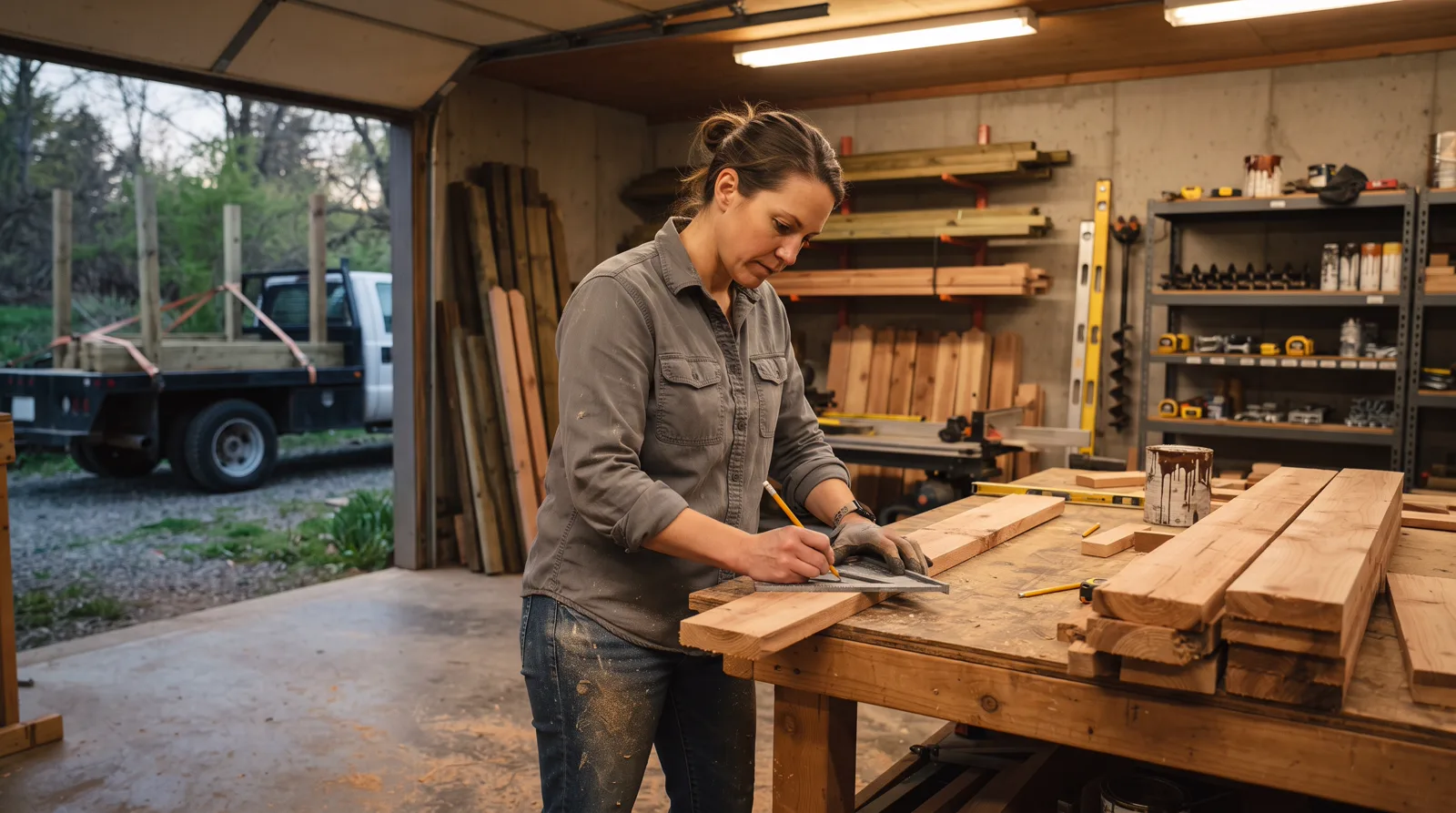
Wood Fence Installation Built for Alberta Winters.
Cedar and pine fences installed to proper frost depth with posts that stay straight through freeze-thaw cycles, chinook winds, and snow load.
Wood Fence Options for Tri-Region Properties
Privacy, boundary, and decorative wood fencing built to handle Parkland County weather.
Cedar Privacy Fence
Western red cedar boards milled to your height spec, pressure treated posts sunk 42 inches with concrete collars. Natural rot resistance and tight grain hold up to Alberta moisture cycles without splitting. Most popular choice for backyard privacy and sound buffering.
Pressure Treated Pine Fence
Ground contact rated pine posts and rails with ACQ chemical treatment for below grade protection. Lighter upfront cost than cedar with similar lifespan if maintained. Good option for boundary fencing, acreage perimeter, or budget conscious projects.
Horizontal Board Fence
Modern horizontal slat design in cedar or pine with steel or aluminum frame for clean lines. Boards spaced tight for privacy or gapped for airflow and style. Popular in newer subdivisions around Spruce Grove and Stony Plain where contemporary aesthetics match the home.
Board on Board Privacy Fence
Overlapping vertical boards on both sides of the rail create zero sightline gaps while allowing airflow to reduce wind load. Looks finished from both sides, which matters in Spruce Grove where neighbours are close. Adds structural strength against chinook gusts.
Split Rail Fence
Two or three rail rustic boundary fence in lodgepole pine or cedar, common for acreage properties in Parkland County. Defines property lines without blocking views or snowdrift patterns. Often paired with wire mesh if keeping dogs or livestock contained.
Fence Repair & Section Replacement
Replace rotted posts, broken rails, or damaged boards without tearing out the whole fence. Common after hail storms, vehicle strikes, or frost heave pushing posts out of plumb. We match existing wood species and stain when possible to blend repairs.
Why Wood Fences Here Need Alberta-Specific Installation
❄️ 42 Inch Frost Depth Requirement
Parkland County soil freezes 36 to 48 inches deep in a cold winter. Posts set shallower rise out of the ground as frost pushes up from below, leaving your fence leaning by spring. We dig to 42 inches minimum and use concrete collars that lock posts below the frost line so they stay plumb through freeze-thaw cycles.
💨 Chinook Wind Load Considerations
Chinook winds hit 80 to 100 km/h in Spruce Grove and Stony Plain during winter warm snaps, especially in open areas near Highway 16A and south of the Yellowhead. Solid privacy fences catch that wind like a sail. We space posts closer in exposed yards and use thicker rails to prevent racking and board blowout.
🏔️ Clay Soil and Moisture Movement
Most Tri-Region properties sit on clay-heavy soil that expands when wet and shrinks when dry, creating ground movement that stresses fence posts. Concrete footings poured around posts resist this shift better than tamped dirt or gravel. We also slope the concrete away from the post to shed water and prevent rot at ground level.
📋 Spruce Grove and Parkland County Permit Rules
Spruce Grove allows fences up to 6 feet in the backyard without a permit, but front yard fences are capped at 4 feet and require setback from the property line. Parkland County has similar rules but adds restrictions near corner lots and roads. We verify your address against local bylaws before install and handle permit applications when required.
What it costs here
Everything You Need to Know About Wood Fences in Spruce Grove
Species selection, installation depth, maintenance, permits, and how Alberta climate affects longevity.
Why Wood Fencing Works in Alberta's Extreme Climate
Spruce Grove, Stony Plain, and Parkland County experience some of the most demanding fence conditions in Canada. Winter temperatures regularly drop to minus 30°C or colder, spring brings rapid freeze-thaw cycles that heave posts out of alignment, summer hail storms can shred cheap materials, and chinook winds generate gusts strong enough to snap improperly braced panels. A wood fence built to survive here needs engineering that accounts for frost depths reaching 1.8 meters, soil movement during seasonal transitions, and the relentless expansion and contraction that splits inferior lumber within two seasons. Cedar and pressure-treated pine remain the dominant choices because they offer the flexibility to move with soil shifts without cracking like vinyl, and they can be repaired board by board instead of requiring full panel replacement when damage occurs.
Cedar fencing costs more up front, typically $35 to $50 per linear foot installed for a six-foot privacy fence, but it naturally resists rot and insect damage without chemical treatment. The wood contains oils that repel moisture, which matters during Alberta's long winters when snow piles against fence lines and melts slowly in spring. Pressure-treated pine runs $25 to $40 per linear foot and relies on chemical preservatives forced deep into the grain under high pressure. Both materials perform well in our climate when installed correctly, but each has trade-offs. Cedar weathers to a silver-grey patina unless stained every two to three years, while treated pine holds its color longer but can warp more aggressively if the moisture content was too high at installation. The critical factor is not the species but the installation quality: posts must sit below frost line, concrete footings must cure properly, and every board must be fastened with corrosion-resistant hardware that will not rust out after five freeze-thaw cycles.
Local building permits in Spruce Grove and Stony Plain require fences over six feet to be reviewed for setback compliance and structural adequacy. Most residential privacy fences land at exactly six feet to avoid triggering additional engineering requirements, but even at that height the municipality expects posts every eight feet maximum, horizontal rails properly toe-nailed or bracketed, and fence lines set back at least one foot from property pins unless a shared-line agreement exists with the neighbor. Parkland County has similar rules but enforces them inconsistently depending on whether your lot is within a hamlet or on a rural acreage. The permit process takes one to three weeks and costs $50 to $150 depending on fence length and height. Skipping the permit is common but risky: if a neighbor complains or you sell the house, you may be forced to move or remove the fence entirely, and some insurance companies will not cover wind damage to unpermitted structures.
Signs Your Property Needs a New Wood Fence
The most obvious warning sign is visible rot at the base of fence posts, usually appearing as dark, spongy wood that crumbles when you press a screwdriver into it. This happens when water pools around posts that were not set in proper drainage gravel or when the concrete footing was poured too high and traps moisture against untreated wood. Once rot takes hold in the post, the entire fence section becomes structurally compromised. A rotten post cannot hold the lateral load from wind or the weight of the fence panels, and it will snap at ground level during the next major storm. If more than two posts on a fence line show rot, replacement is usually more cost effective than trying to sister in new posts beside the old ones, because the rails and pickets are likely nearing the end of their lifespan as well.
Leaning or sagging fence sections indicate that posts have heaved out of the ground due to frost action or were never set deep enough in the first place. Alberta's freeze-thaw cycles push anything in the soil upward unless it sits below the frost line, and a post set only two feet deep will rise several centimeters each winter until it loses all lateral stability. You will see gaps appearing at the bottom of the fence as the top pulls away from level, and gates will bind or refuse to latch because the frame is no longer square. Temporary fixes like adding diagonal braces or resetting one post rarely solve the problem for long, because the surrounding posts continue to move and the fence line remains out of alignment. A proper fix requires pulling all affected posts, excavating to the correct depth, and resetting them in concrete with proper drainage aggregate at the base.
Widespread board splitting, warping, or missing pickets suggest the fence has reached the end of its serviceable life. Wood fences in Alberta typically last 12 to 18 years for pressure-treated pine and 18 to 25 years for cedar, depending on maintenance and exposure. Once the wood starts to check deeply, meaning long cracks that run with the grain, moisture enters the core and accelerates decay. Warped boards pull away from rails and create gaps that defeat the privacy purpose of the fence, and they cannot be straightened because the wood fibers have permanently deformed. Replacing individual boards is reasonable when only a few are damaged, but when more than 30 percent of the fence shows these symptoms, the underlying structure is usually compromised as well and a full replacement makes more sense than piecemeal repairs that will need repeating every season.
How Professional Wood Fence Installation Actually Works
A legitimate fence contractor will start with a property survey review or a physical measurement of your lot to confirm the legal property lines before driving a single stake. Many homeowners assume their existing fence sits on the boundary, but older fences were often built a foot or more inside the line to avoid disputes, and some were never on the correct line to begin with. The contractor will locate your property pins using the survey certificate from your land title or by hiring a surveyor if no recent survey exists. This step costs $300 to $600 if a new survey is required, but it prevents the nightmare scenario of building a fence on your neighbor's land and being forced to move it. Once the line is confirmed, the contractor will mark the fence route with stakes and string, noting any elevation changes, utility locations, or obstacles like trees and garden beds that will affect the layout.
The crew will contact Alberta One Call to request utility locates at least two full business days before digging. This is a legal requirement, not optional, because buried gas, power, phone, and fiber optic lines run through many residential yards in Spruce Grove and Stony Plain, and hitting one can cause explosions, electrocution, or service outages that cost thousands to repair. Alberta One Call dispatches locators from each utility company to paint the ground where their lines run, typically using color-coded spray paint: red for power, yellow for gas, orange for telecom, blue for water. The locate service is free to the contractor, but failing to call before digging can result in fines up to $100,000 under Alberta's Safety Codes Act and personal liability for all damages. Once locates are marked, the contractor will adjust post positions if necessary to avoid conflicts, sometimes shifting the entire fence line inward by a few inches or placing posts between marked lines.
Material selection happens during the quoting stage, but the contractor will verify dimensions and quality when the lumber arrives on site. Six-foot fence pickets should be rough-sawn cedar or pine stamped with a grade mark indicating treatment level for ground contact, typically 0.40 or 0.60 retention for pressure-treated wood. Posts must be four inches by four inches minimum for fences up to six feet, and six inches by six inches if the fence exceeds that height or will support a gate. Rails are usually two inches by four inches, and all fasteners must be hot-dipped galvanized or stainless steel to prevent rust streaking and structural failure. Some contractors substitute cheaper materials to increase their margin, so it is worth checking the lumber pile when it is delivered. If you see posts thinner than four inches, untreated wood touching the ground, or bright zinc-plated screws instead of galvanized, stop the job and demand replacements or walk away and hire someone else.
The Complete Installation Process: From Permit to Final Board
After the permit is issued and materials are staged, the crew will start by digging post holes using a gas-powered auger or, on rocky or clay-heavy soil, a jackhammer and manual digging bar. Holes must reach a minimum of four feet deep to sit below the frost line, though many contractors go to five feet for corner and gate posts that carry extra load. The hole diameter should be three times the post width, so a four-inch post needs a twelve-inch hole, to allow room for concrete and proper alignment. Loose soil at the bottom of the hole gets scooped out and replaced with four to six inches of three-quarter-inch drainage gravel, which prevents water from pooling under the post and provides a stable base that will not settle. The contractor will set the post in the hole, check it for plumb in both directions using a level, and brace it temporarily with diagonal stakes nailed to the post and driven into the ground.
Concrete gets mixed on site or arrives in pre-mixed bags that are poured dry into the hole and then hydrated with water from a hose. The standard mix is high-early-strength concrete that cures in 24 to 48 hours, critical in Alberta where sudden cold snaps can freeze wet concrete and ruin its strength. The contractor will pour concrete to within two inches of ground level, not all the way to the top, and slope the surface away from the post to shed water. Some crews add a cap of hydraulic cement or asphalt patch over the concrete for additional moisture protection, which extends post life by keeping the end grain dry. The posts must cure for at least 48 hours before any lateral load is applied, meaning no rails or pickets get fastened until the concrete has hardened fully. Rushing this step is the number one cause of fence failure in new installations, because the posts shift in the wet concrete and lose their alignment, and once the concrete sets the error is permanent unless you break it out and start over.
Once posts are cured and stable, the crew installs the horizontal rails, typically two or three depending on fence height and design. Rails get fastened to posts using galvanized brackets or by toe-nailing through the rail into the post at an angle, with at least two fasteners per connection. The top rail sits flush with the post top or one inch below, and the bottom rail is positioned six to eight inches above grade to keep it clear of snow and moisture. Fence pickets are then nailed or screwed vertically to the rails, starting from one end and working toward the other while maintaining consistent spacing. Privacy fences use pickets butted tightly together or with minimal gaps, while decorative fences space them an inch or two apart for airflow and a more open look. The contractor will trim the tops of the pickets to a uniform height using a chalk line and circular saw, then apply any optional post caps, trim boards, or decorative elements specified in the contract. Final inspection includes checking that all gates swing and latch properly, that the fence line is straight and plumb, and that no fasteners are left exposed where they can catch clothing or skin.
What Wood Fence Installation Really Costs in the Tri-Region
A standard six-foot cedar privacy fence in Spruce Grove or Stony Plain typically runs between $35 and $55 per linear foot installed, which means a 150-foot perimeter costs roughly $5,250 to $8,250. That price includes posts set in concrete, rails, boards, gate hardware, and labour. Pressure-treated pine fences come in lower, usually $28 to $42 per linear foot, while premium western red cedar with tighter grain and fewer knots can push past $60 per foot. The wide range reflects material grade, post spacing, whether you want a gate, and how much prep work the installer faces. A flat lot with no obstacles is cheaper than a sloped yard full of spruce roots and rocks.
Several factors drive the final invoice. Post depth matters more here than in milder climates because Alberta's frost line sits around four feet deep. Contractors who shortcut and sink posts only three feet will see heaving and lean after the first winter. Proper installation means digging or augering to at least 48 inches and backfilling with concrete and gravel, which adds time and cost but prevents expensive callbacks. Gate hardware is another variable. A simple gravity latch costs $30, while a commercial-grade self-closing hinge set with a keyed lock runs $150 or more. If you need two gates for equipment access, budget an extra $400 to $800 depending on width and hardware quality.
Material waste and site access also affect pricing. If the truck cannot back up to the fence line, installers hand-carry every post and board, which adds labour hours. Rocky soil in parts of Parkland County and Acheson means renting a skid steer or jackhammer to break through hardpan, sometimes adding $500 to $1,200 to the job. Cedar prices fluctuate with mill output and transportation, so quotes are typically valid for only 30 days. A contractor who locked in lumber early in the season can offer a better rate than one quoting in July when demand peaks and mills run low. Always ask how long the quote holds and whether the price includes haul-away of old fence debris and sod. Some crews charge $200 to $400 extra for disposal, which should be spelled out up front.
Comparing Cedar, Pine, and Pressure-Treated Options
Western red cedar remains the top choice for privacy fences in the Tri-Region because it resists rot naturally, weathers to a silver-grey patina, and holds up under Alberta's freeze-thaw cycles without chemical treatment. Cedar contains natural oils that repel insects and moisture, so even untreated cedar posts can last 15 to 20 years if set properly. The wood is lightweight, which makes installation faster, and it takes stain beautifully if you want to maintain the original honey tone. The downside is cost. Tight-knot cedar runs $4 to $6 per linear foot for boards alone, and supply shortages in recent years have pushed prices higher. If you plan to stain or seal the fence every three years, cedar rewards that maintenance with decades of service.
Pressure-treated pine offers a budget-friendly alternative, typically costing 30 to 40 percent less than cedar for comparable dimensions. The wood is infused with preservatives that guard against rot and insects, which makes it suitable for ground contact and harsh weather. Modern treatment methods use less toxic copper-based compounds, though you still want to wear gloves during installation and avoid burning offcuts because the chemicals release fumes. Treated pine is heavier and denser than cedar, so it can crack or warp if not properly kiln-dried before installation. The green tint fades to brown over time, and many homeowners paint or stain treated fences after a year of weathering. Lifespan ranges from 15 to 25 years if posts are set below the frost line and the wood is kept off direct soil contact at the base.
Untreated pine is rarely used for full privacy fences in Alberta because it rots quickly when exposed to snow melt and spring runoff. Some contractors offer it for decorative picket fences or short garden borders where the wood stays above grade and gets regular sealing, but even then, untreated pine needs annual maintenance and typically fails within seven to ten years. If a quote seems unusually low, confirm the contractor is pricing treated lumber, not raw pine. The material cost difference is significant, and using untreated wood in a climate with six-month winters is a setup for early failure. Hybrid approaches, such as treated posts and rails with cedar boards, can split the cost difference while keeping structural components protected underground.
Common Mistakes and Contractor Red Flags to Avoid
The single biggest mistake homeowners make is hiring based on the lowest bid without checking credentials. A bargain quote often means the crew skips proper post depth, uses thinner lumber, or forgets to pull a development permit. In Spruce Grove and Parkland County, any fence over 2.4 metres (about 8 feet) requires a permit, and even standard six-foot fences need approval if they sit within setback zones near the front property line. Reputable contractors know the local bylaws and include permit costs in their estimates. If a quote does not mention permits or setbacks, that is a warning sign. Building without a permit can trigger fines and forced removal, which means paying twice to get the job done right.
Another red flag is a contractor who insists on payment in full up front. Standard practice in the Alberta trades is a deposit of 10 to 30 percent to secure materials and scheduling, with the balance due on completion after a walkthrough. Anyone demanding 50 percent or more before breaking ground is either struggling with cash flow or planning to disappear once the money clears. Verify the company has liability insurance and commercial liability insurance. If a worker gets injured on your property and the contractor has no WCB, you can be held liable for medical costs and lost wages. Ask to see the WCB clearance letter and insurance certificate, and call the insurer to confirm the policy is active. Legitimate contractors expect these questions and provide documentation without hesitation.
Watch out for vague contracts that lack detail on materials, dimensions, or timelines. A proper fence agreement specifies board thickness (5/8 inch versus 3/4 inch makes a structural difference), post size (4x4 versus 6x6), rail count (two-rail versus three-rail affects strength), concrete depth, gate hardware brands, and stain or sealant if included. Avoid any contractor who says they will 'figure it out as we go' or who dismisses your questions about lumber grade. You also want a start date and estimated completion window in writing. Weather delays are common in Alberta, but a crew that ghosts you for weeks with no updates likely overbooked jobs. Finally, be wary of contractors who push exotic or imported wood species. Western red cedar and local treated pine are proven materials for this climate. Anything else is either overpriced or untested in Alberta winters.
How to Hire the Right Wood Fence Installer
Start by asking neighbours with recent fences who they used and whether they would hire that contractor again. Word-of-mouth referrals in Spruce Grove and Stony Plain carry weight because local reputations are hard to rebuild after a bad job. Once you have a shortlist, verify each contractor's business registration with Alberta Corporate Registry and check for any complaints or liens through the provincial court database. A company with multiple unpaid supplier liens is a risk because your property could be caught in a legal dispute if materials were not paid for. Also search online reviews, but focus on detailed accounts rather than star ratings. A five-star review that says 'Great job!' tells you nothing, while a three-star review explaining a fixable issue with clear communication shows honesty.
Request at least three written quotes that break down materials, labour, and extras such as permits, disposal, and staining. This allows you to compare apples to apples rather than guessing why one bid is $2,000 lower. During the site visit, pay attention to how the contractor assesses the property. A pro will measure carefully, note obstacles like utility boxes or tree roots, ask about your preferred board orientation (vertical or horizontal), and discuss gate placement for mower or equipment access. If someone eyeballs the lot and scribbles a number on scratch paper, they are guessing, and you will pay for their mistakes later. Good contractors also explain seasonal timing. Spring and fall are ideal because the ground is workable but not frozen, while summer heat can warp green lumber before it acclimates.
Once you choose a contractor, lock in the details with a written agreement before work starts. The contract should include a payment schedule tied to milestones, such as 20 percent deposit, 40 percent after posts are set and rails up, and the final 40 percent on completion and your approval. This structure protects both parties and ensures the job progresses as planned. Confirm the warranty terms. Most reputable installers offer at least a one-year warranty on workmanship, covering issues like post lean or gate misalignment caused by improper installation. Material defects, such as premature rot in treated lumber, are usually covered by the mill or supplier, but the contractor should coordinate claims on your behalf. Finally, plan a final walkthrough before releasing last payment. Check that all boards are flush, gates swing smoothly and latch securely, and the site is cleaned of debris and sod.
How Tri-Region Services Helps
Tri-Region Services routes you to one vetted, insured local fencing contractor who operates in Spruce Grove, Stony Plain, Parkland County, and Acheson. Every pro in our network tells us they carry commercial liability insurance, and a track record of permit-compliant installations. You submit one request, and we connect you with a qualified installer who provides a free written quote with a detailed scope, timeline, and cost breakdown. No bidding war, no spam calls from unlicensed crews, just a straightforward introduction to a contractor who knows Alberta building codes and climate realities. Whether you need a cedar privacy fence, a treated pine boundary line, or a custom gate solution, we match you with a professional who will get the job done right the first time.
Why Homeowners Trust Our Wood Fence Installs
Licensed contractors who follow Alberta building standards and back their work.
Insurance on file for every crew
All installers carry Workers Compensation Board coverage so you are not liable if someone is injured on your property during the fence build.
42 Inch Post Depth Standard
We dig below the frost line on every fence so posts stay locked in place through Alberta winters instead of heaving up by spring.
2 Year Workmanship Warranty
If posts lean, rails sag, or boards pull loose due to installation error within two years, we come back and fix it at no charge.
Pressure Treated Lumber for Ground Contact
Every post that goes below grade is rated for ground contact with proper chemical treatment to resist rot and insect damage in wet soil.
Permit and Bylaw Navigation
We look up setback rules, height limits, and permit requirements for your Spruce Grove or Parkland County address before starting so the fence passes inspection.
Free On Site Quotes Within 24 Hours
Text or call with your address and we will walk the property line, measure, check access, and email a line item quote the same or next day.
This page is not tied to a contractor's brand. Leads route straight to your one local partner. Verified reviews can appear here once that partner has them (never fabricated).
Serving the whole Tri-Region
8 Questions Homeowners Ask About Wood Fences
How deep do fence posts need to be in Spruce Grove?+
Should I use cedar or pine for a fence in Alberta?+
Do I need a permit to build a fence in Spruce Grove?+
How long does a wood fence last in Alberta winters?+
What is the best time of year to install a wood fence in Spruce Grove?+
How do I prevent frost heaving on my fence posts?+
Do wood fences need maintenance in Alberta?+
What affects the cost of a wood fence in Spruce Grove?+
Get your free quote
Tell us what you need and a local pro will get right back to you.
- ✓ Sent straight to a local business
- ✓ You choose who you hire
- ✓ Free, with no obligation